
328 views ·
10 replies
328 views
10 replies
Asbestos against brick facade and possible measures
Hello!
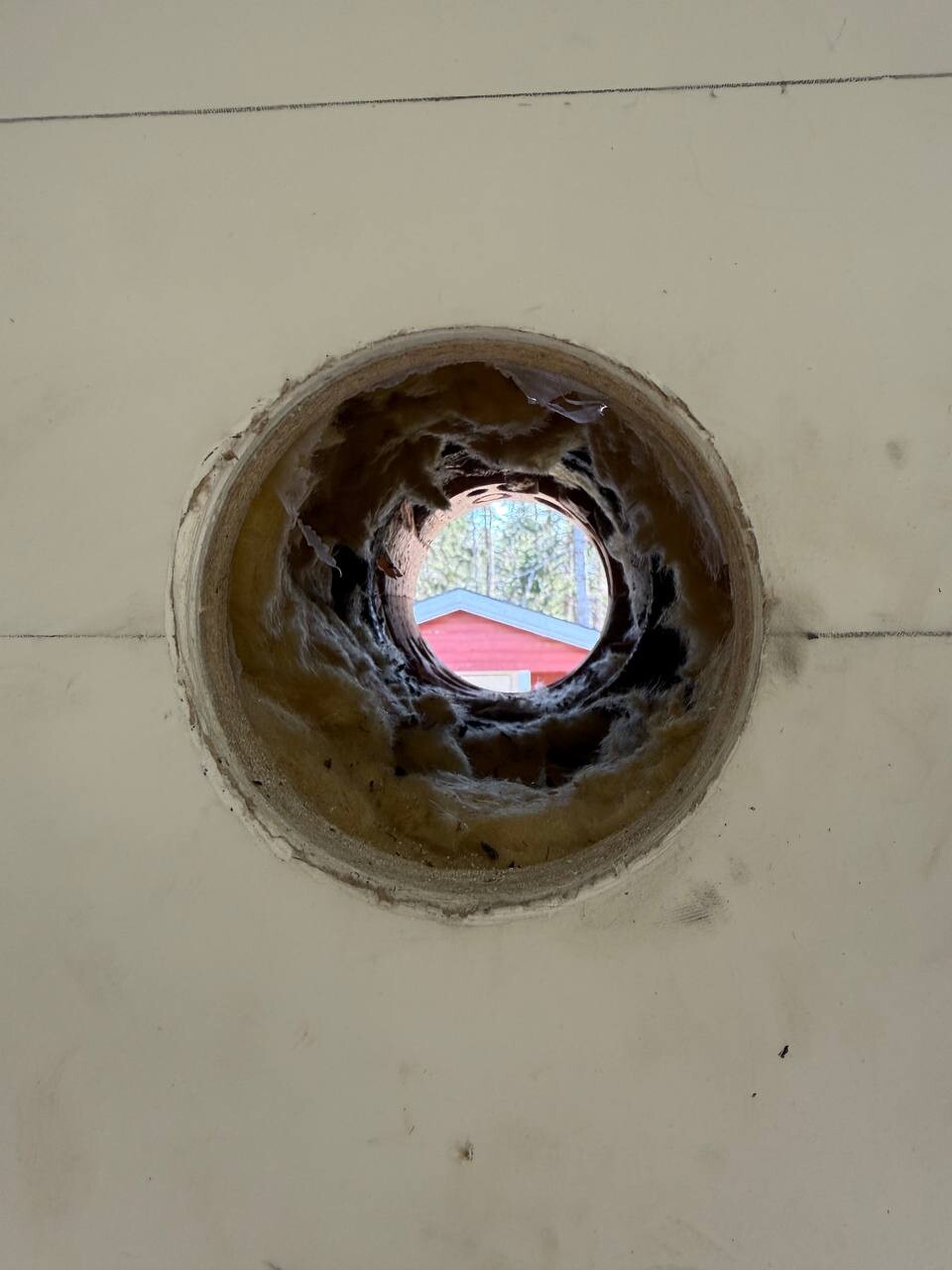
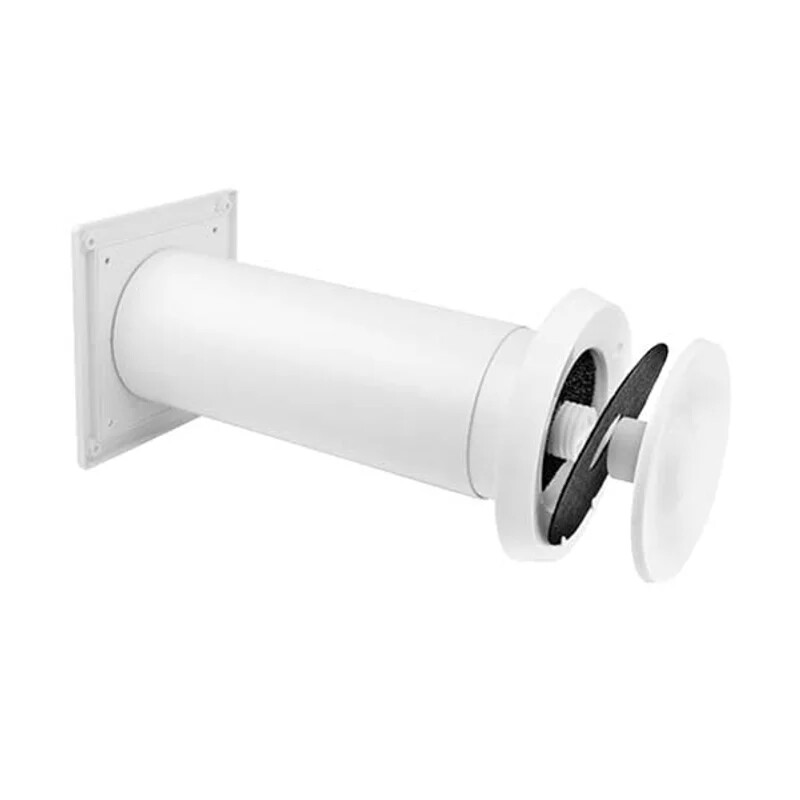
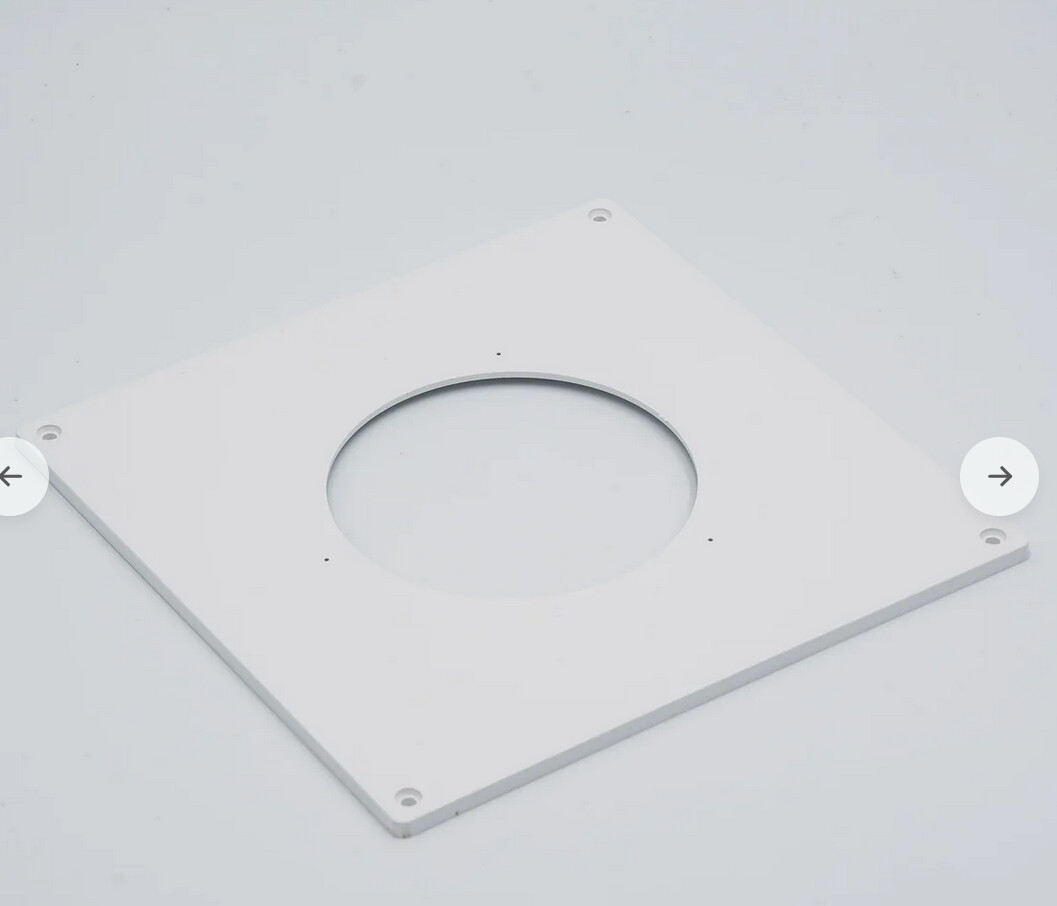
I have made three holes for fresh air vents in the bedroom and two offices. The holes are 105-120 mm in diameter, and an Airmove 3.0 duct has been inserted into these (see picture). On the outer wall, the vent is sealed with outdoor caulking, and on the inside around the pipe, it is first packed with mineral wool, followed by a 20x20 cm cover plate to be installed (see picture). The job is, so to speak, already done, and both outward and inward, it is "sealed."
The inner wall consists of renovation gypsum on chipboard followed by a layer of yellow fiber insulation. The facade consists of red brick. The house was built in 1980.
I have previously sent pieces of carpets and mortar from other parts of the house for asbestos analysis, but there has never been any found.
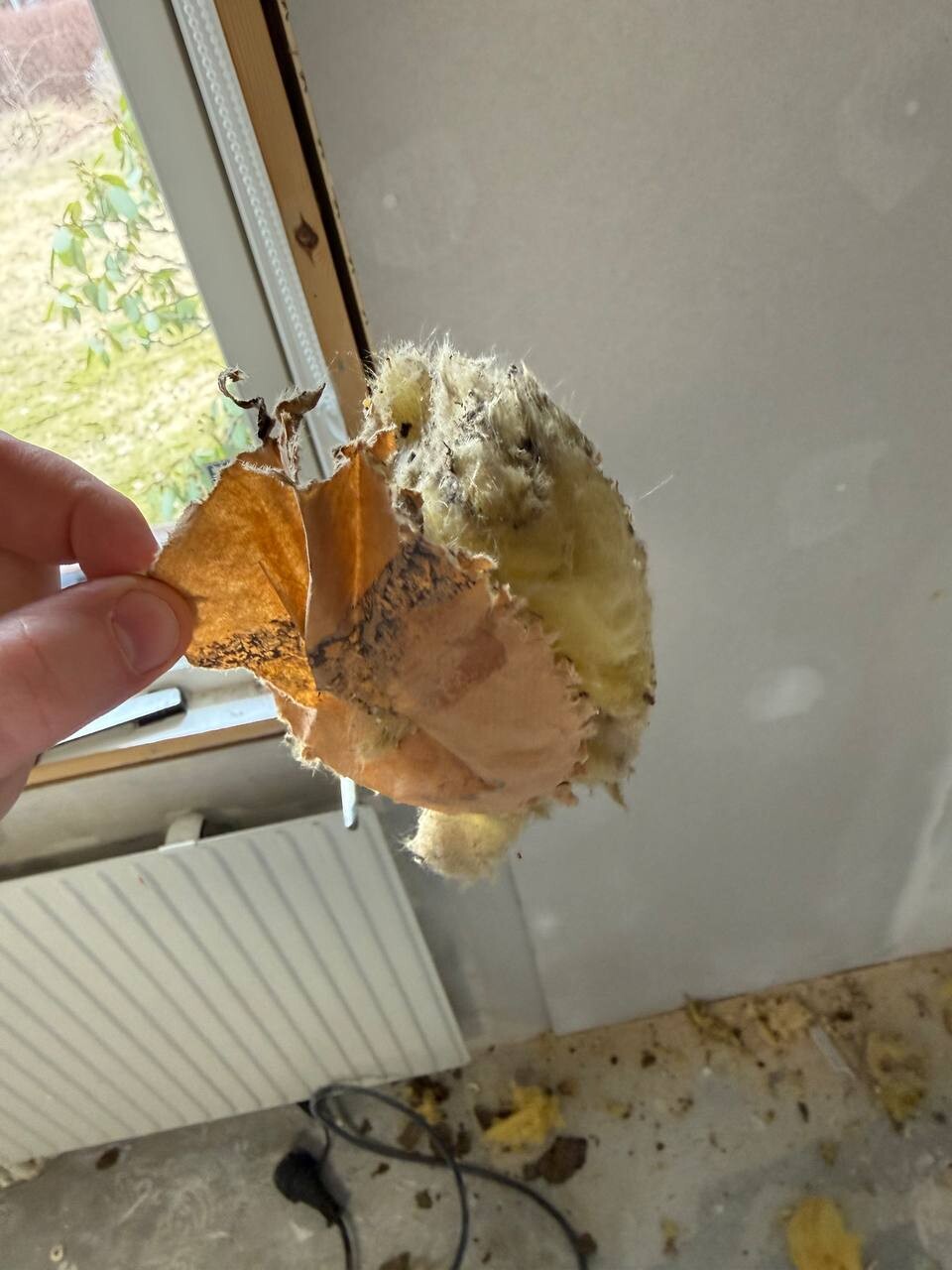
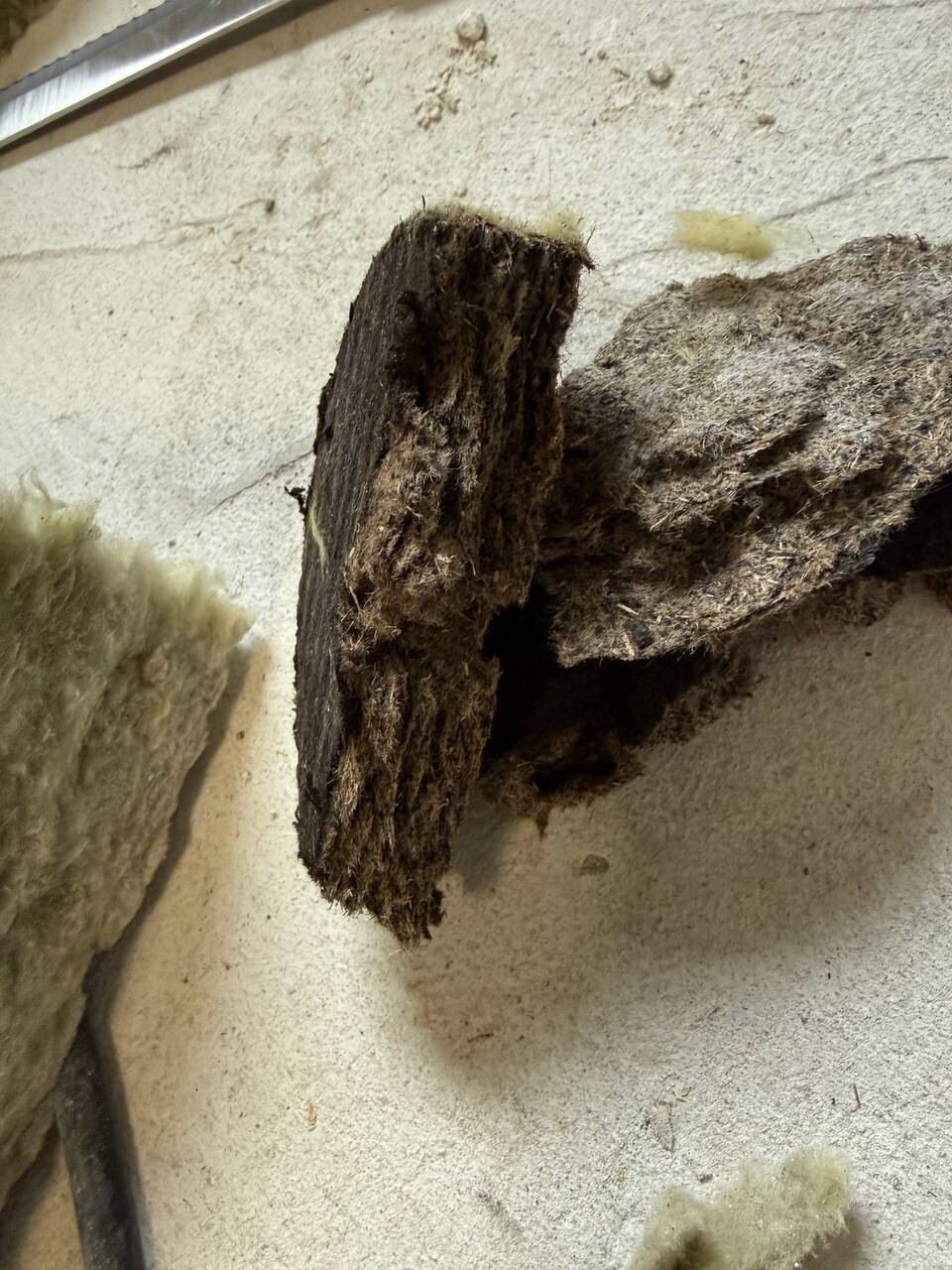
During the hole drilling, right behind the brick, there was a piece of paper with what looks like yellow fiber (see picture). Behind this, there was a board of a material I don't recognize. It is brown/black, doesn't feel rock hard. It’s such that it can be broken apart by hand.
During the drilling, I had a Dräger breathing mask, etc., and since the material was against the brick "inside" the wall, it didn't seem to dust much either as far as I could see.
I would greatly appreciate feedback on the following:
1. Thoughts on the material - do you recognize what it could be? Asbestos and if so, what type? I have never seen or worked with Tretex or other porous boards.
2. Should I send it for analysis?
3. The work is already complete, and the material remains "within" the wall - even if it is asbestos, is it even worth taking any action? In other words, no more fibers can be released than what would have already been released during the work. Both ends are sealed. Dispose of the material as waste and move on with life?
Thanks in advance!
I have made three holes for fresh air vents in the bedroom and two offices. The holes are 105-120 mm in diameter, and an Airmove 3.0 duct has been inserted into these (see picture). On the outer wall, the vent is sealed with outdoor caulking, and on the inside around the pipe, it is first packed with mineral wool, followed by a 20x20 cm cover plate to be installed (see picture). The job is, so to speak, already done, and both outward and inward, it is "sealed."
The inner wall consists of renovation gypsum on chipboard followed by a layer of yellow fiber insulation. The facade consists of red brick. The house was built in 1980.
I have previously sent pieces of carpets and mortar from other parts of the house for asbestos analysis, but there has never been any found.
During the hole drilling, right behind the brick, there was a piece of paper with what looks like yellow fiber (see picture). Behind this, there was a board of a material I don't recognize. It is brown/black, doesn't feel rock hard. It’s such that it can be broken apart by hand.
During the drilling, I had a Dräger breathing mask, etc., and since the material was against the brick "inside" the wall, it didn't seem to dust much either as far as I could see.
I would greatly appreciate feedback on the following:
1. Thoughts on the material - do you recognize what it could be? Asbestos and if so, what type? I have never seen or worked with Tretex or other porous boards.
2. Should I send it for analysis?
3. The work is already complete, and the material remains "within" the wall - even if it is asbestos, is it even worth taking any action? In other words, no more fibers can be released than what would have already been released during the work. Both ends are sealed. Dispose of the material as waste and move on with life?
Thanks in advance!
If it's asfaltsboard, like asfaboard, does that mean at the time of construction (1980) it likely contains asbestos then?Intet said:
I'm thinking about how I should handle the very small amount of waste I've gotten (3 pieces 1cm 1.5cm thick rounds with 105mm diameter), and if I should do anything now that the work is complete.
Is remediation really necessary if the material is still inside the wall?
No no no!B bearcave said:If it's asphalt board, like asfaboard, does it mean at the time of construction (1980) that it likely contains asbestos then?
I'm wondering just how I should handle the very small waste I've got (3 pieces of 1cm 1.5cm thick rounds of 105mm diameter), and if I should do anything now that the work is done.
For example, is remediation really necessary if the material is still inside the wall itself?
Asfaboard contains wood and tar.
If you have a fireplace, you can conveniently dispose of the pieces there. If not, put them in the trash bin.
The asbestos phobia reaches new heights.😀
Asfaboard does not contain asbestos, you can sleep easy and don't need to worry about the wall or the holes you've made in it.B bearcave said:If it's asphalt board, like asfaboard, does it mean that at the time of construction (1980) it likely contains asbestos then?
I'm thinking about how I should handle the very small waste I've got (3 pieces 1cm 1.5 cm thick circles with a diameter of 105 mm), and if I should do anything now that the work is done.
Does it really require remediation if the material is still inside the wall?
Haha, easy to get paranoid when you want to do the right thing and are not so experienced. Thanks for the feedback 😌👍


Asbestos is not toxic. It is a mineral with tiny fibers that was used as reinforcement. Just like fiberglass. So pondering about "sanitation" of three small pieces while entire houses are covered with it, becomes a bit amusing.😀B bearcave said:


Click here to reply