According to information, they are supposed to contain asbestos.
Of course, I will send in a piece for analysis before we take them down and replace the roof, but I would like to hear if there is any opinion on what they are made of?
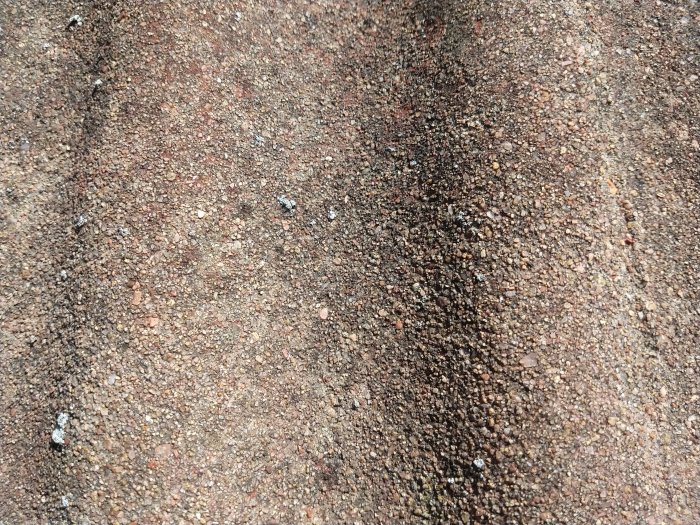
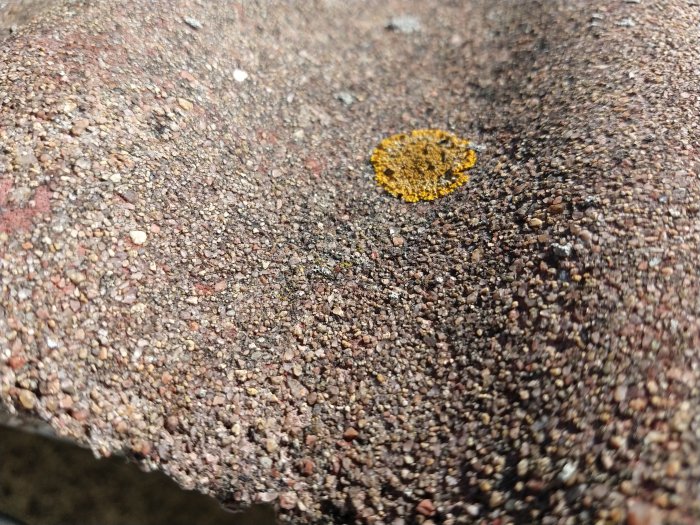
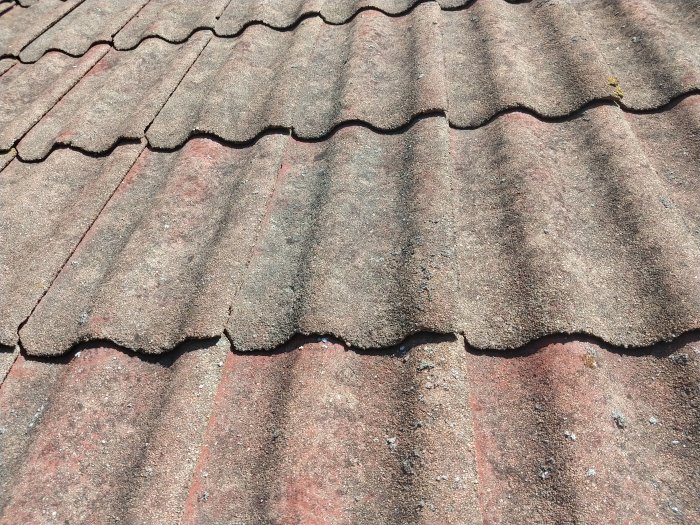
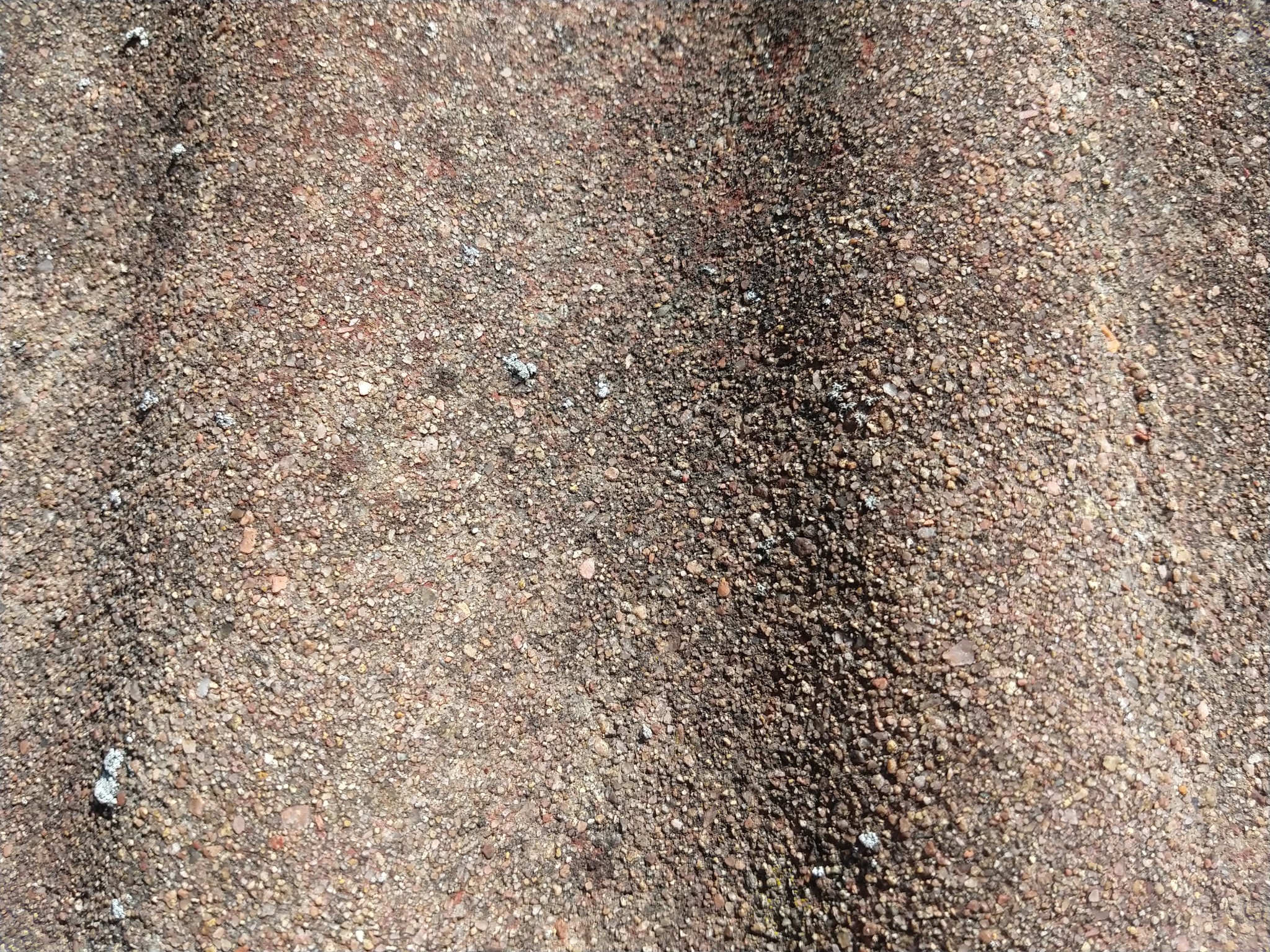
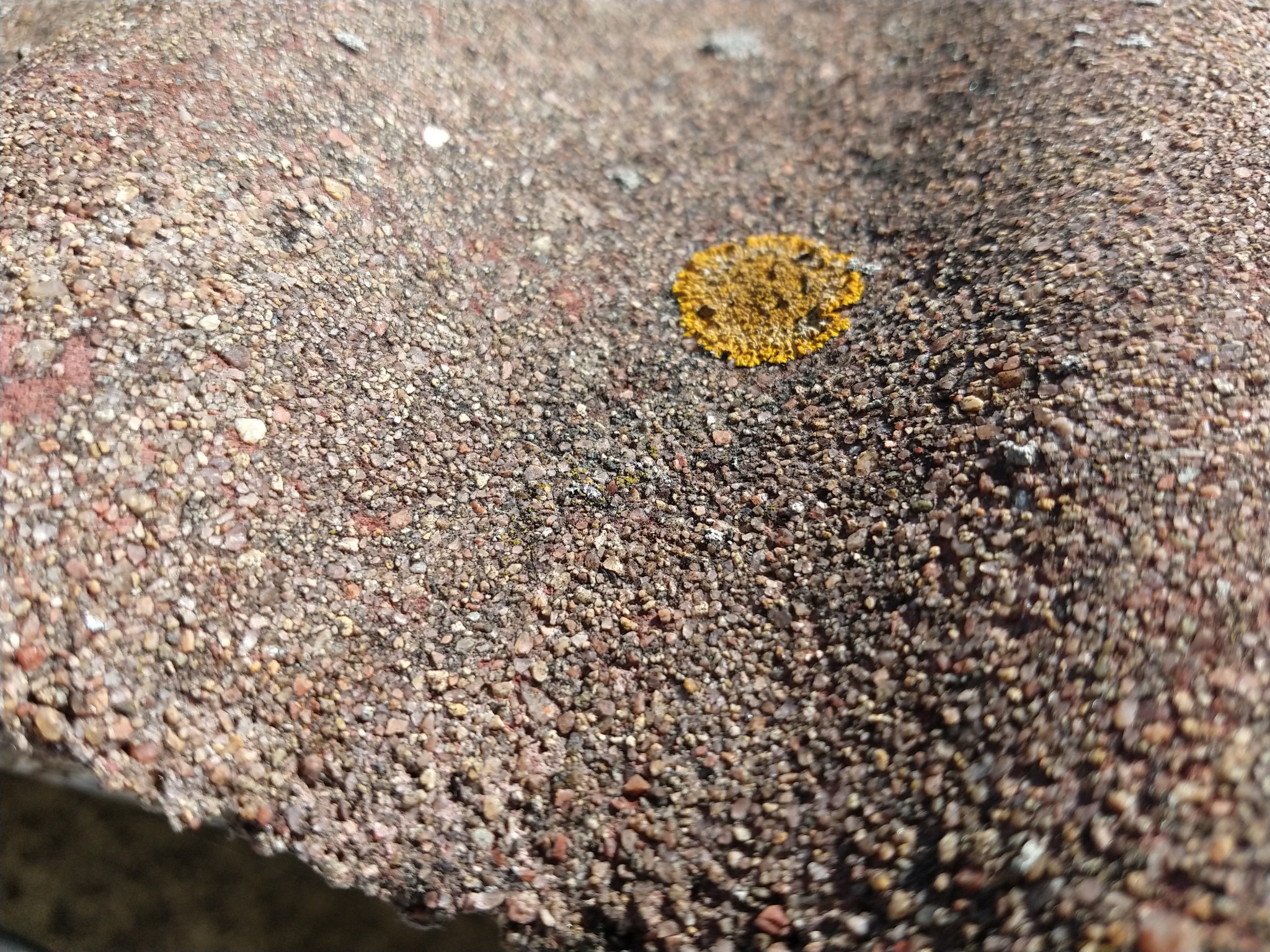
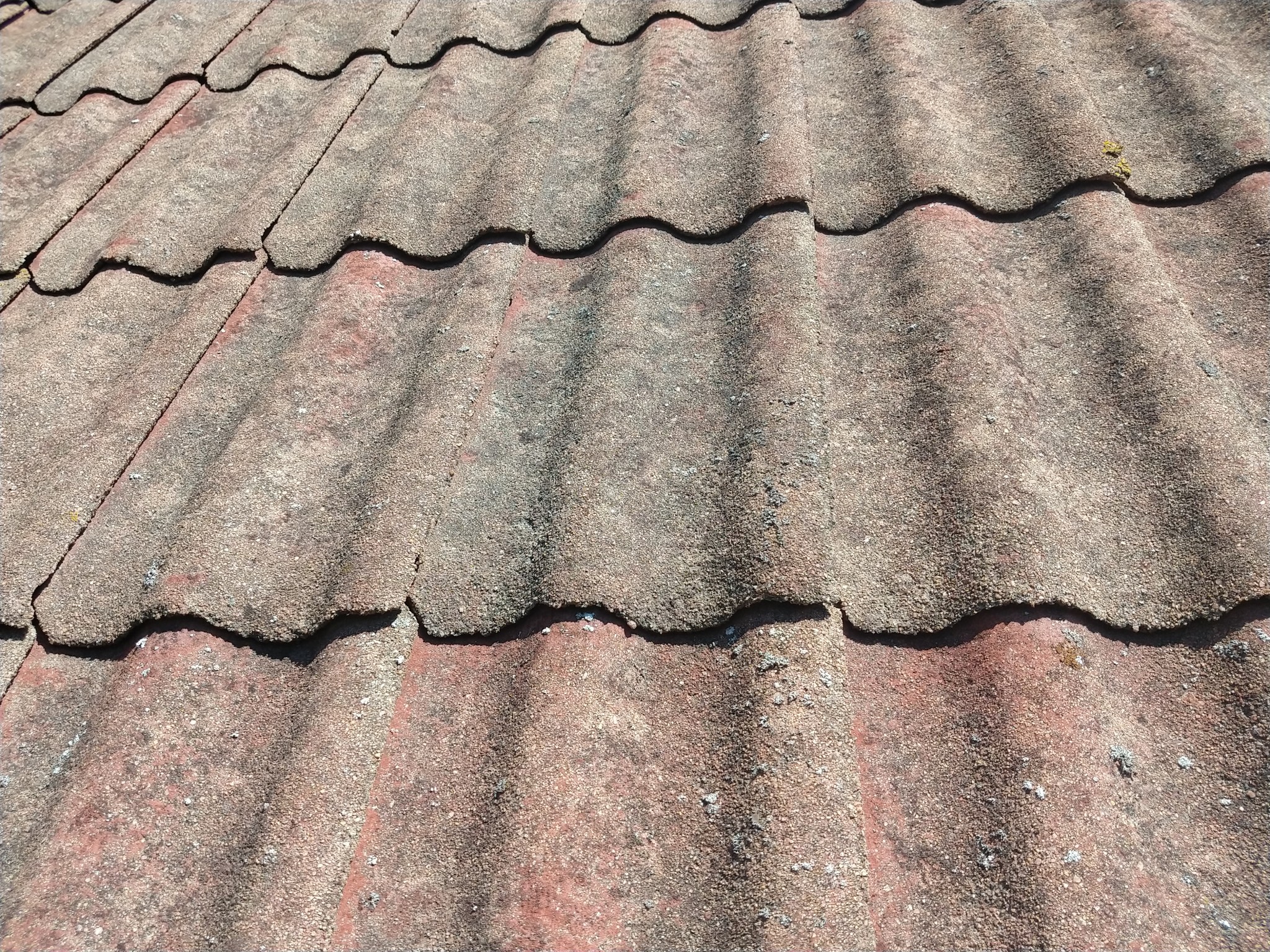
Hmm, I don't think it looks like eternit. That sandy texture is usually more weathered concrete tiles. If you can post a few more pictures, I might change my mind, but my guess is not asbestos.
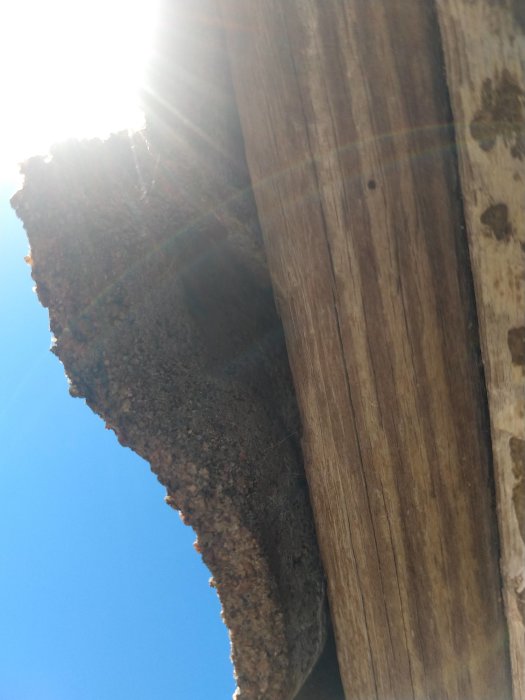
The surface looks like old concrete tiles that are weathering, normally. But they are thinner than concrete usually is. It may be due to heavy weathering. The thickness resembles more of eternit. But eternit is usually in larger sheets, which can still be wavy.
If it needs to be taken down, there's no danger even if it is eternit. If you're unsure, you can wear a breathing mask for safety.
If it were eternit, I think you would see loose fibers in the weathered surface, and they probably wouldn't have weathered so much, part of the appeal with eternit.
They need to come down because there is no paper underneath, and a chimney needs to be demolished. They are thin and have been that way their entire lifespan, I guess. It's the thinness that makes me and perhaps others think there is asbestos in them.
They don't resemble eternit in appearance at all. Not like eternit roofs on barns anyway.
If there were paper underneath, it would really be unnecessary to remove the roof, but as it is now, the tiles are weathering and the weathered pieces fall through the eaves. If there's asbestos in that debris, it's quite unpleasant.
The building is a storage facility that I plan to convert into a livable house.
An analysis will have to be done on them, if they don't contain asbestos, it will feel a bit more enjoyable to carry out the renovation.
Most likely really old weathered concrete tiles.
The picture shows what an old corrugated roof looks like.
Take down a tile and look at the part that is under the overlapping tile, it probably hasn't weathered as much there.
Corrugated roofs were generally in much larger sheets.
It was kind of the whole point of corrugated that, thanks to the reinforcing ability of asbestos, you could make thin strong roofing panels.
It would be completely backwards to make small roof tiles out of corrugated.
Moreover, aren't corrugated roofs also nailed?
Yes, eternittak is screwed with a square screw head, or laid as "shingel." Also, wavy eternittak usually has a characteristic ridge tile that is more triangular-shaped than circular-shaped.
You may have Sandapannor, they should look like that.
A bit surprised by several assertive statements in both directions.
Does not resemble traditional asbestos but neither concrete tiles. Very thin, with such extensive weathering of concrete tiles, some should have cracked if they are not reinforced in some way.
Product development also occurred during the first half of the 1900s. Could it be that a heavier/thicker "tile-like" variant of asbestos was manufactured in a small series? I actually think you can discern a longitudinal pattern on the top side.
According to information, they are asbestos-containing.
Of course, I will send a piece for analysis before we take them down and replace the roof, but I would like to hear if there is any opinion on what they are made of?
GoC said:
[image]
Most likely really old weathered concrete tiles.
The picture shows what an old asbestos cement roof looks like.
Take down a tile and check the part that lies underneath the tile above, there it likely hasn't weathered as much.
Asbestos cement roofs were generally in significantly larger sheets.
The whole point of asbestos cement was that thanks to asbestos's reinforcing ability, you could make thin strong roofing sheets.
It would be completely backwards to make small roof tiles out of asbestos cement.
Moreover, asbestos cement roofs are also nailed.
Did you send anything for analysis?
I have a roof with the same type of tile that will soon be replaced. I would never have thought about asbestos in this tile if I hadn't read this post.







GoC said:
[image]