
3,112 views ·
15 replies
3k views
15 replies
Asbestos in kitchen in back layer?
Hello,
I live in a house built in the early 1900s. We decided to hire craftsmen to remove the tiles in parts of the kitchen. The tiles were installed about 15 years ago, so we ruled out the risk of asbestos, etc. But when we got home, we saw that parts of the wall came down during the demolition, and there are layers of a lot of different materials behind, which came off as well. So, thoughts about old plaster with asbestos, wallpaper, wallpaper glue, paint, etc. started to arise, especially considering the kitchen and near the stove.
Additional pictures show the different layers. I know nothing can be said without testing, but what do you think? Is there any of the materials there that should raise suspicion?
I live in a house built in the early 1900s. We decided to hire craftsmen to remove the tiles in parts of the kitchen. The tiles were installed about 15 years ago, so we ruled out the risk of asbestos, etc. But when we got home, we saw that parts of the wall came down during the demolition, and there are layers of a lot of different materials behind, which came off as well. So, thoughts about old plaster with asbestos, wallpaper, wallpaper glue, paint, etc. started to arise, especially considering the kitchen and near the stove.
Additional pictures show the different layers. I know nothing can be said without testing, but what do you think? Is there any of the materials there that should raise suspicion?
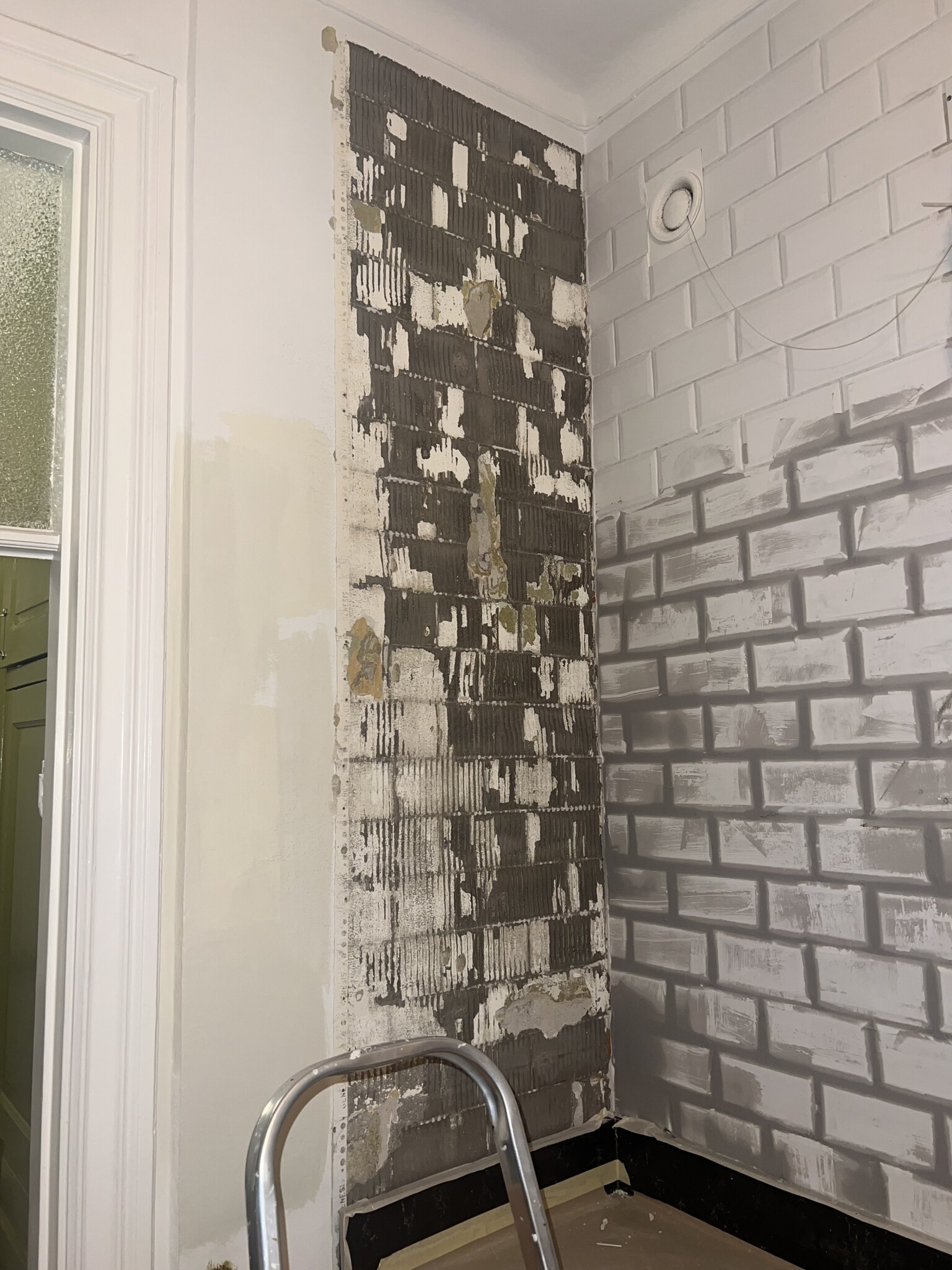
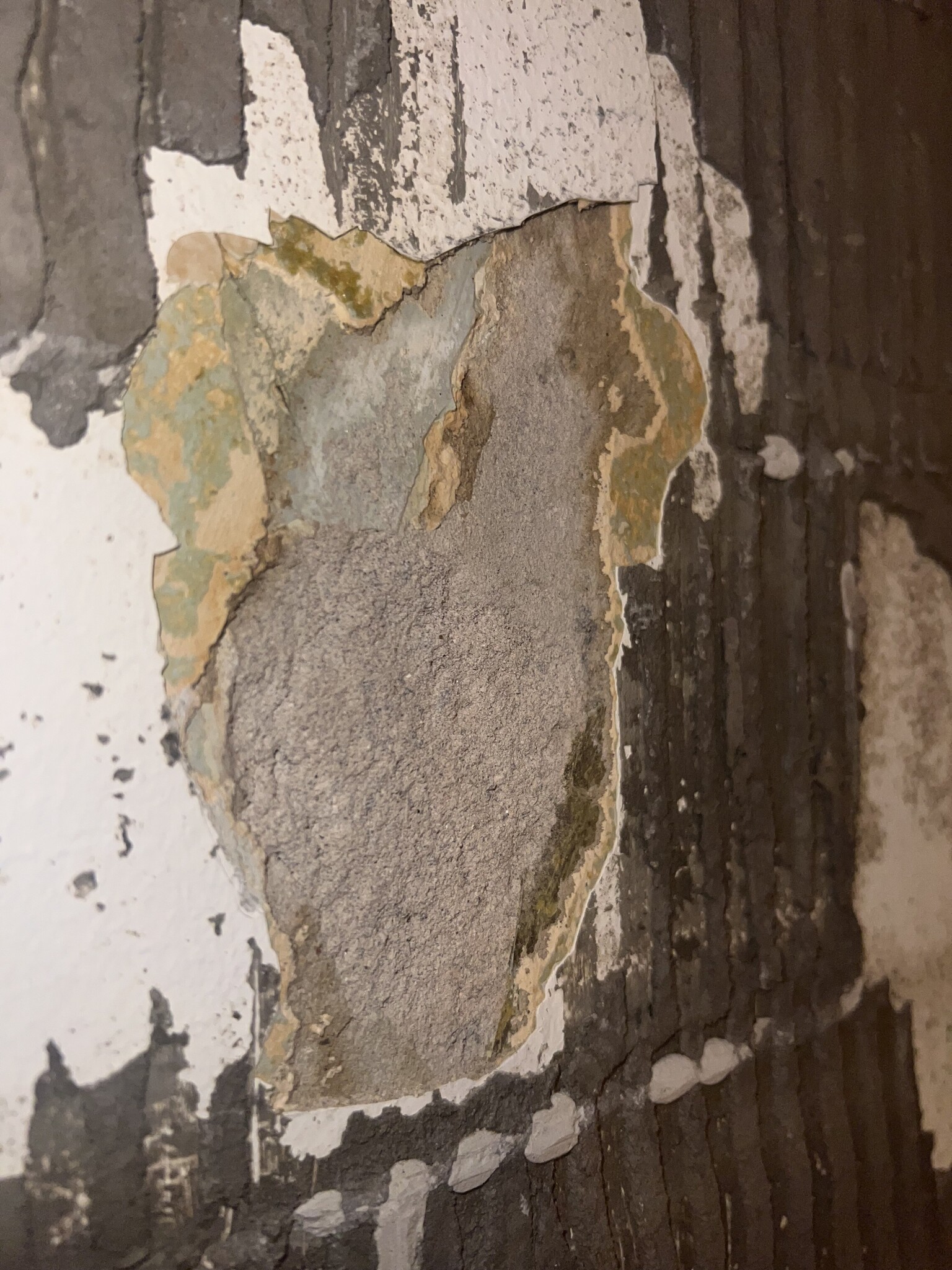
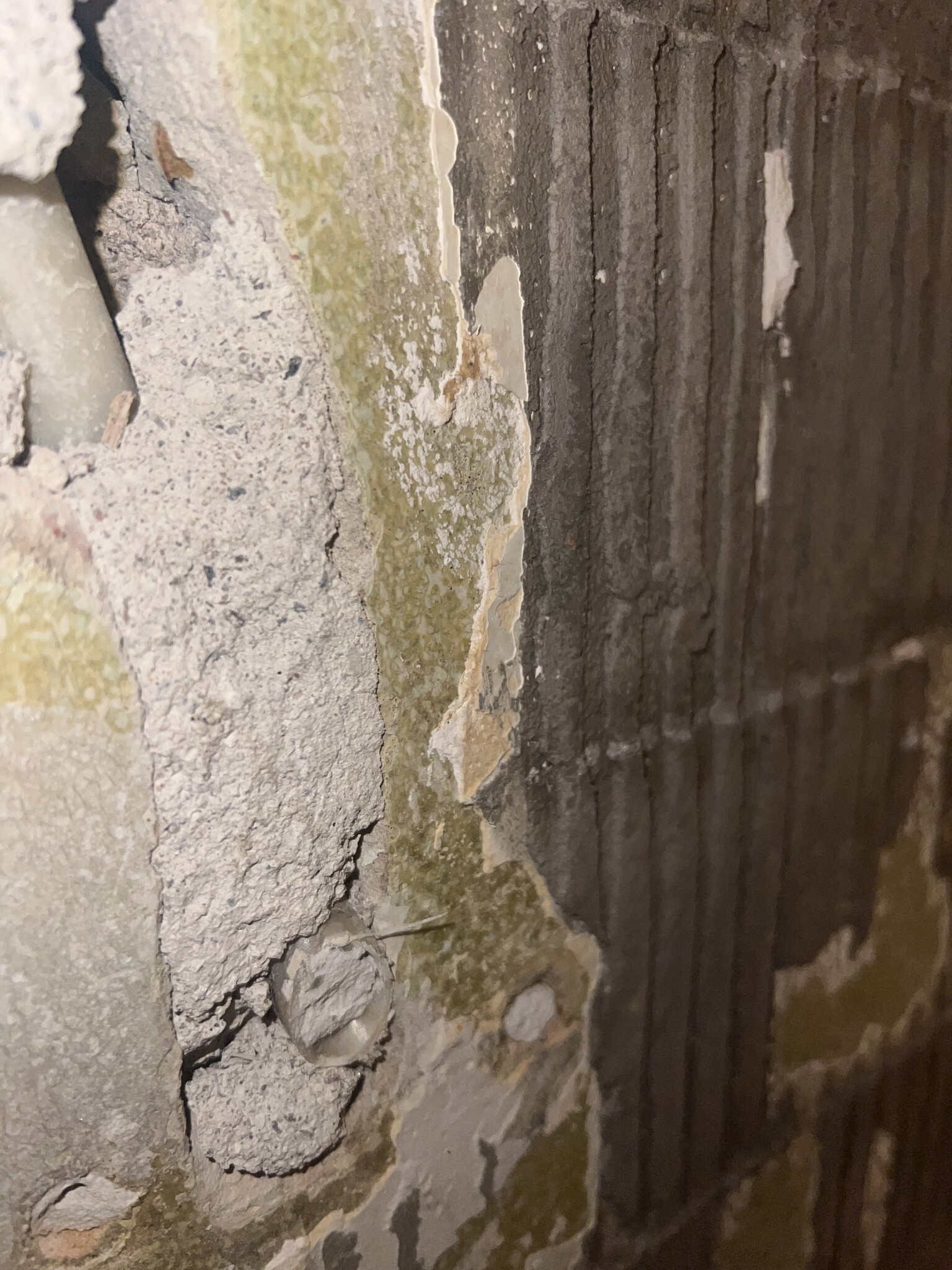


Unlikely that there is asbestos. It looks like there are different layers of plaster and paint. Plaster usually does not contain asbestos.
Want to claim that there is no asbestos in this, what's going up on the wall now?
Thinking the same. But if it were to be found in one of the layers, for example in some wallpaper/glue, or if it is in some of the plaster. Is the amount judged by the picture even worth worrying about?H hempularen said:
Thanks for the reply! It's torn down and dust + gravel/bits are scattered here and there. So if it's present somewhere, it's definitely been released.D Dilato said:
It will be plastered and painted, the part that hasn't been torn down will have plaster on top of the tiles. A bit doubtful about that, but the craftsmen promised a good result.R Rickard.lj said:
Now that I've started thinking about asbestos, I'm glad not all the tiles are coming down.
Spray bottle, mist binds the dust, sweep up gently, problem solved.S Sophiaellen said:
All construction dust is "hazardous" so avoiding inhalation is the solution.
Not everything is asbestos...normal precautions against dust are all you need.
Anyone else have any thoughts based on the images?
Member
· Västernorrland
· 12 077 posts
I would completely let go of the idea of asbestos.......as mentioned, it's just visible regular plaster and wallpaper.
Thank you for the response! If anyone has any more statements, it would be greatly appreciated.
Now the association says the kitchen was renovated in the 60s, but it has been renovated several times after that. Hence a bit of concern about whether the underlying layers might contain asbestos. The craftsman doesn't seem very knowledgeable on the subject. The association says it MAY be present in older layers in the house, which is always possible in older houses.
How common was it to mix asbestos in wall plaster next to a stove? Is there anything in the pictures that looks like old tile adhesive?
How common was it to mix asbestos in wall plaster next to a stove? Is there anything in the pictures that looks like old tile adhesive?

People didn't use to have asbestos in plaster, wallpaper, or wallpaper paste (also unlikely that anyone had wallpaper right by the stove). It's not a wood stove that gets hot.
It's impossible to tell from a photo if there might be any remnants of fixative from the 60s.
It's impossible to tell from a photo if there might be any remnants of fixative from the 60s.
Let's say there are some remnants left that came with some tile that was knocked down now, is it something I should bring in a remediation expert for? Or is the amount in that case so small that it's negligible?BirgitS said: