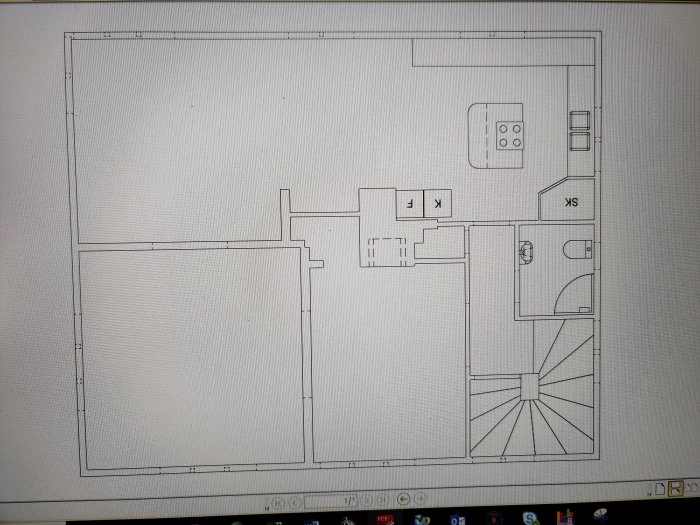
We are in the process of renovating, and thus want to tear down the old bathroom to create a kitchen and dining area that spans the entire length of the house, on one side of the house, on the second floor.
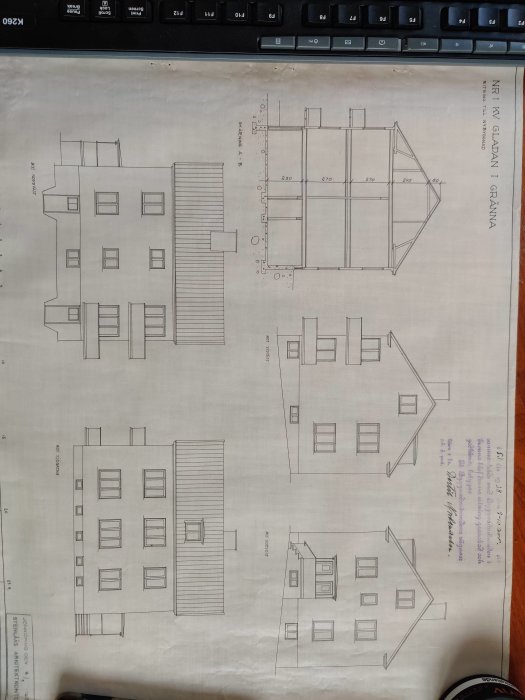
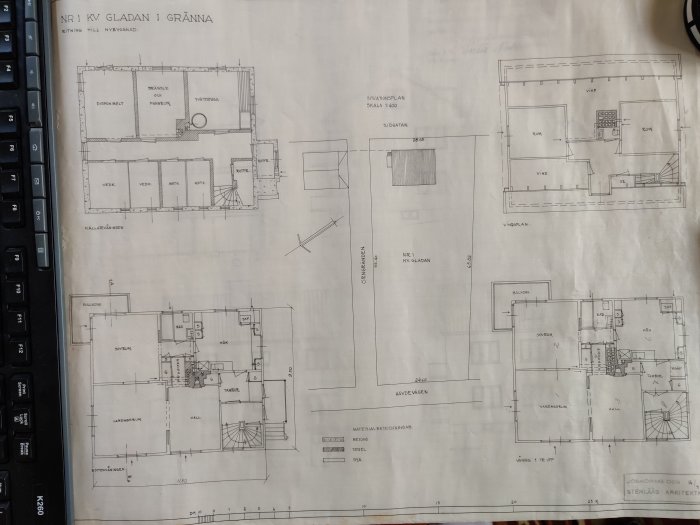
See attached images.
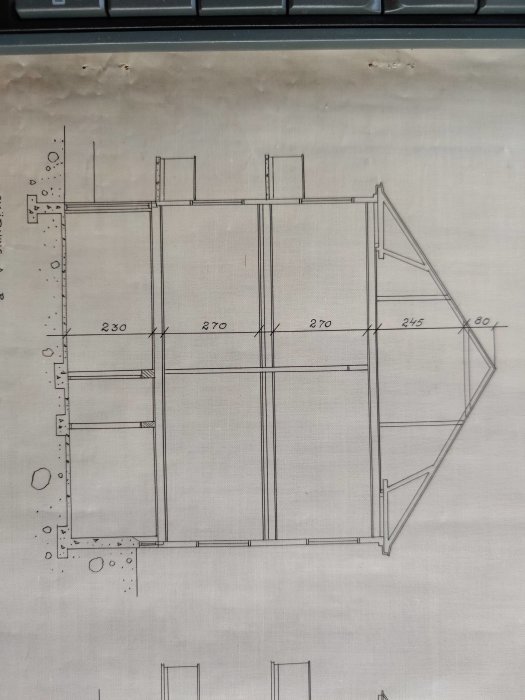
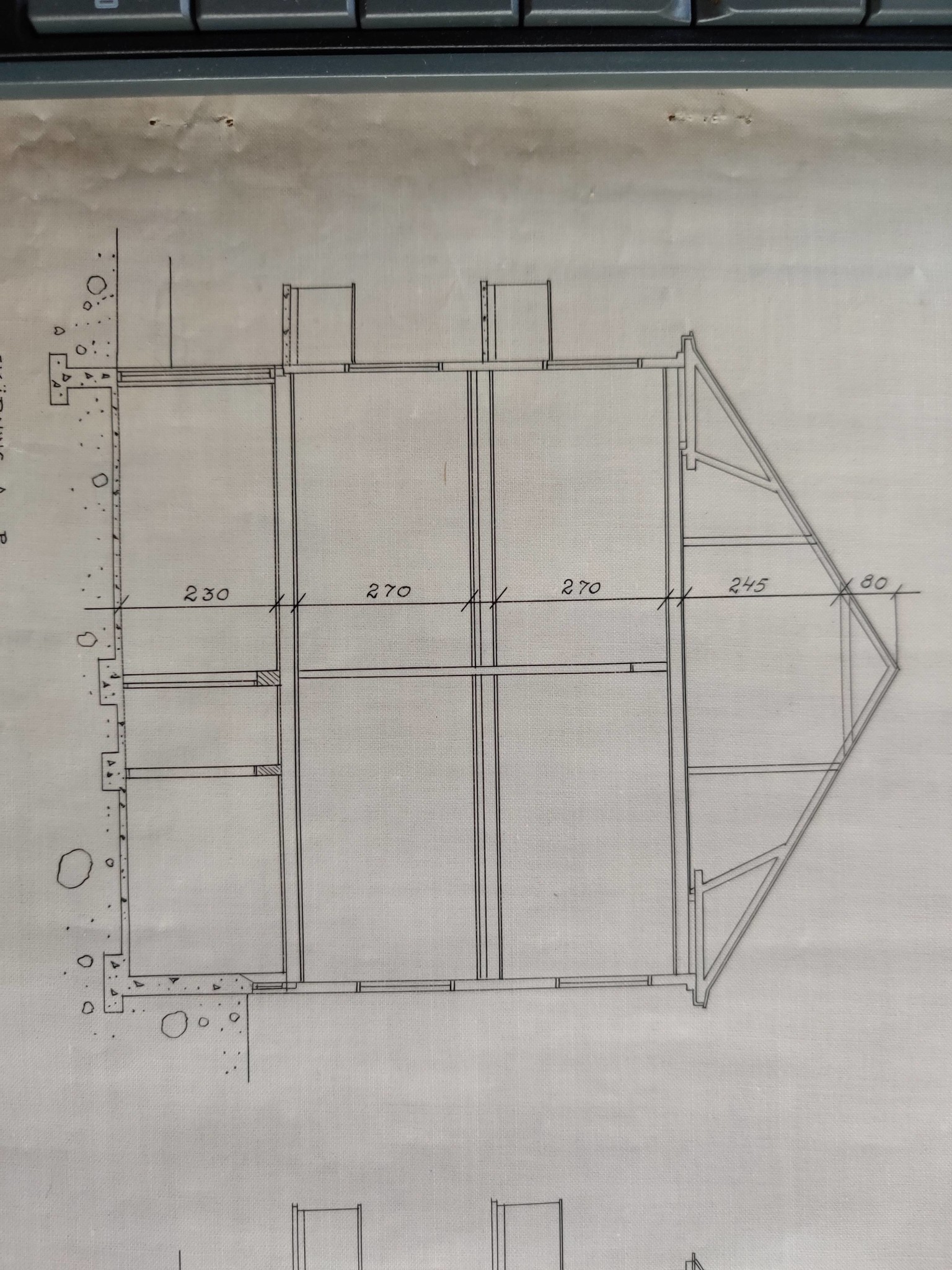
The house was built in 1939. The facade and walls are made of standing planks and there is a chimney in the middle... The roof structure/load-bearing for the rafters is shown in one of the images.
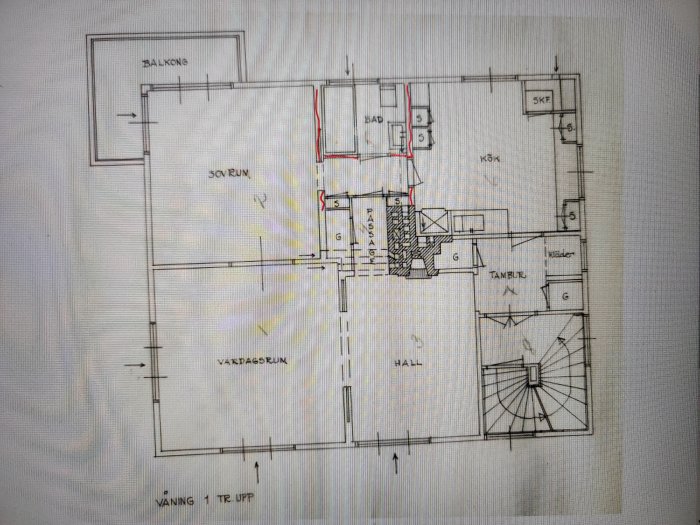
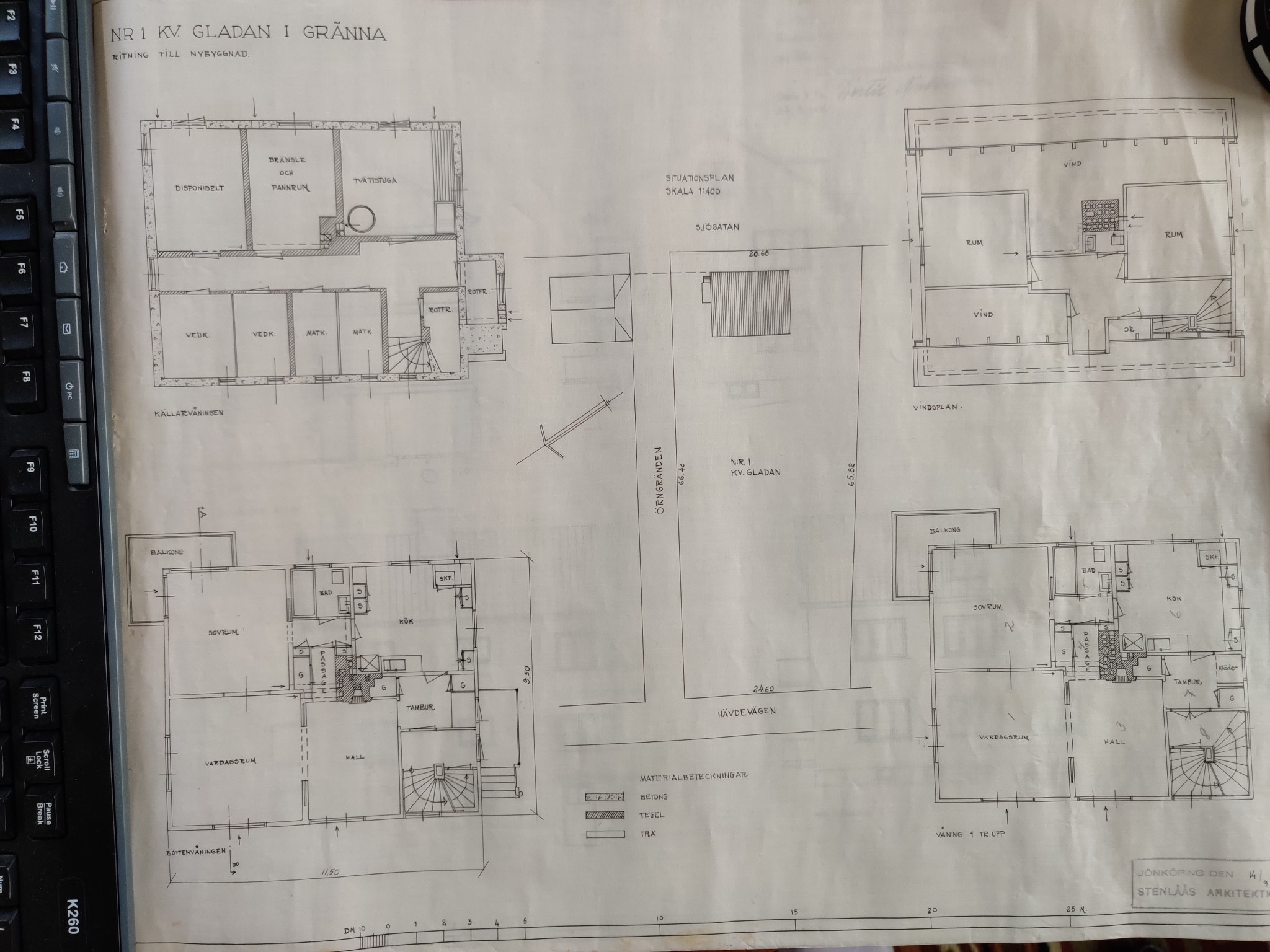
The walls that are relevant for removal are marked in red by me on the image with the original drawing.
It is a two-apartment house with identical layouts on both floors, but it is the upper floor that is the subject of this intervention.
But as mentioned: Are these walls load-bearing, or stabilizing for the house?
Happy to provide more information upon request!
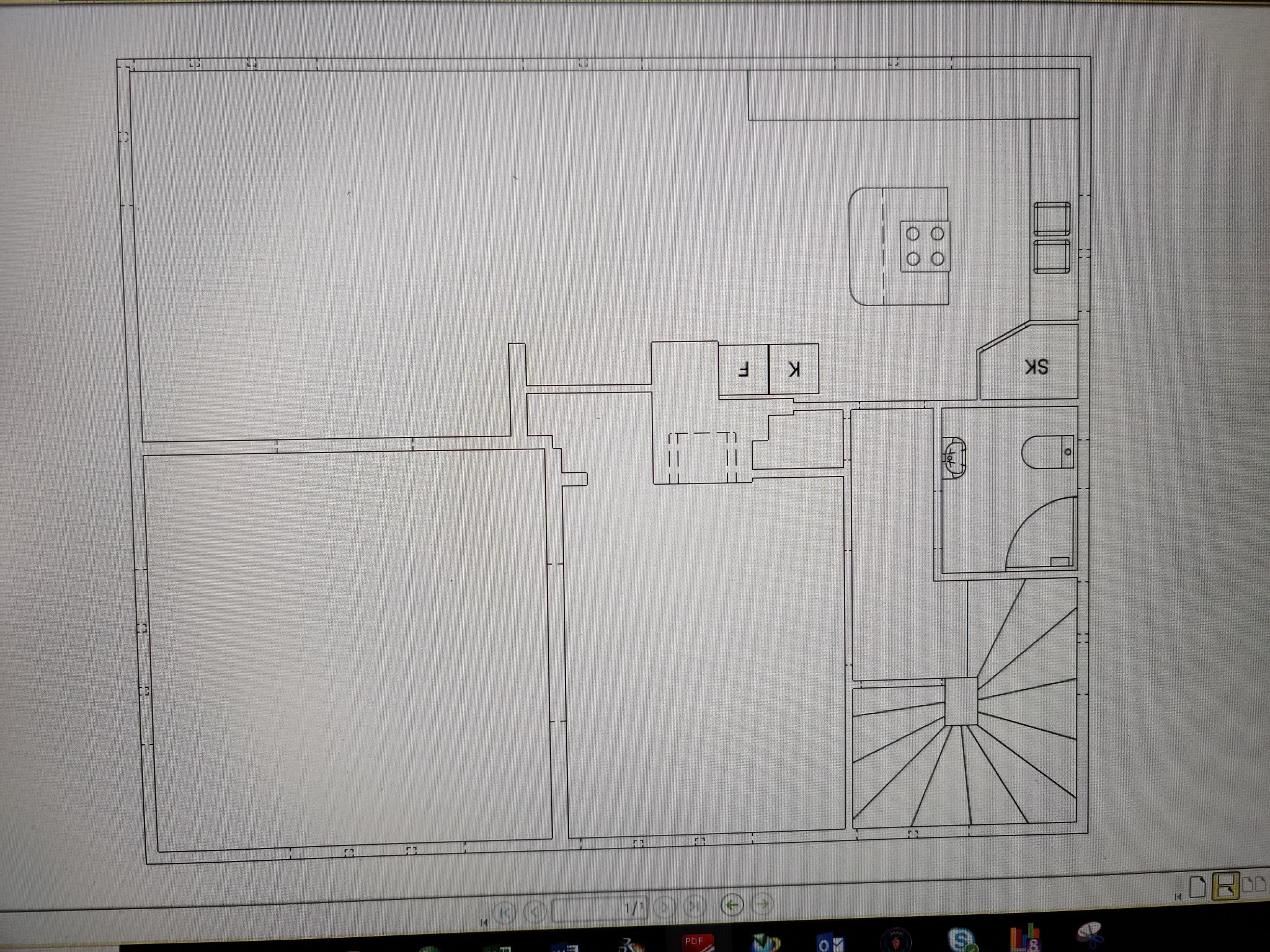
I am also attaching a sketch of how the layout is intended to be.
It is difficult to provide a definitive answer without having been on site. However, I am quite sure that the wall between the kitchen and the bathroom is load-bearing. Due to the chimney's bulky design, it is hard to imagine a transfer of load in another way. Crosswalls always provide stability in plank frameworks, but some can be removed. Additionally, it is not known if they are interlocked with each other.
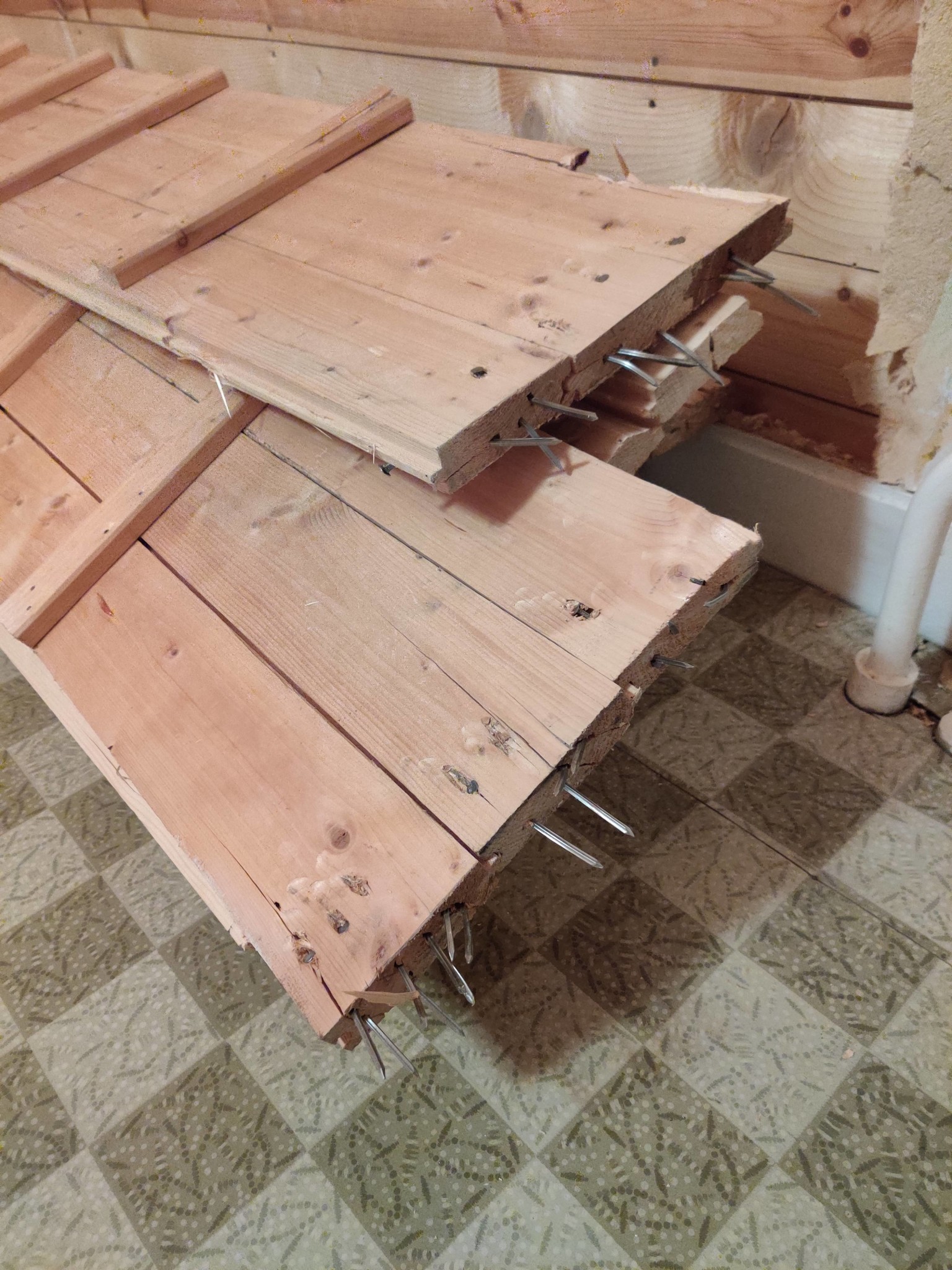
Since you are not asking for more information, I choose to respond as follows: Everything is built into everything in this house. Attached, you find the end of a wardrobe wall I recently tore down here...
I am happy to provide measurements etc. if any expert (including you, most recent respondent) needs more information to answer my question.
I suggest you examine the wall between the kitchen and bathroom a little closer. If it is load-bearing, it will need to be replaced in some way. I suspect there is a floor joist above the wall. If you leave a plank closest to the exterior wall of a transverse wall, it helps to stabilize.
I suggest you examine the wall between the kitchen and bathroom a bit more closely. If it is load-bearing, it needs to be reinforced in some way. I suspect there's a floor joist on top of the wall. If you leave a plank closest to the outer wall of a cross wall, it helps stabilize.
How do you mean I can examine that wall?
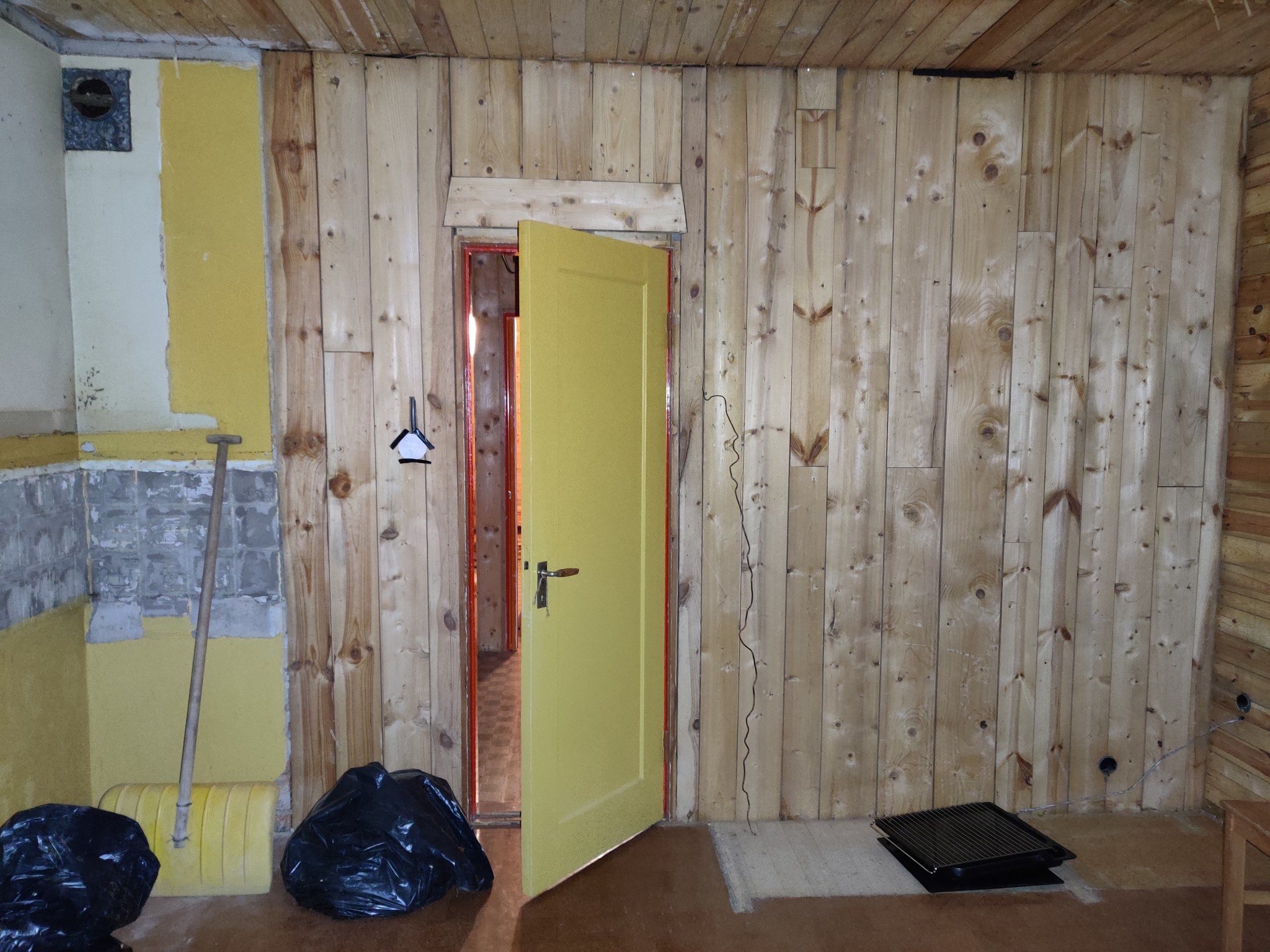
I've taken a picture of the wall we're talking about... It's taken from inside the kitchen. Chimney on the left and outer wall on the right (duh).
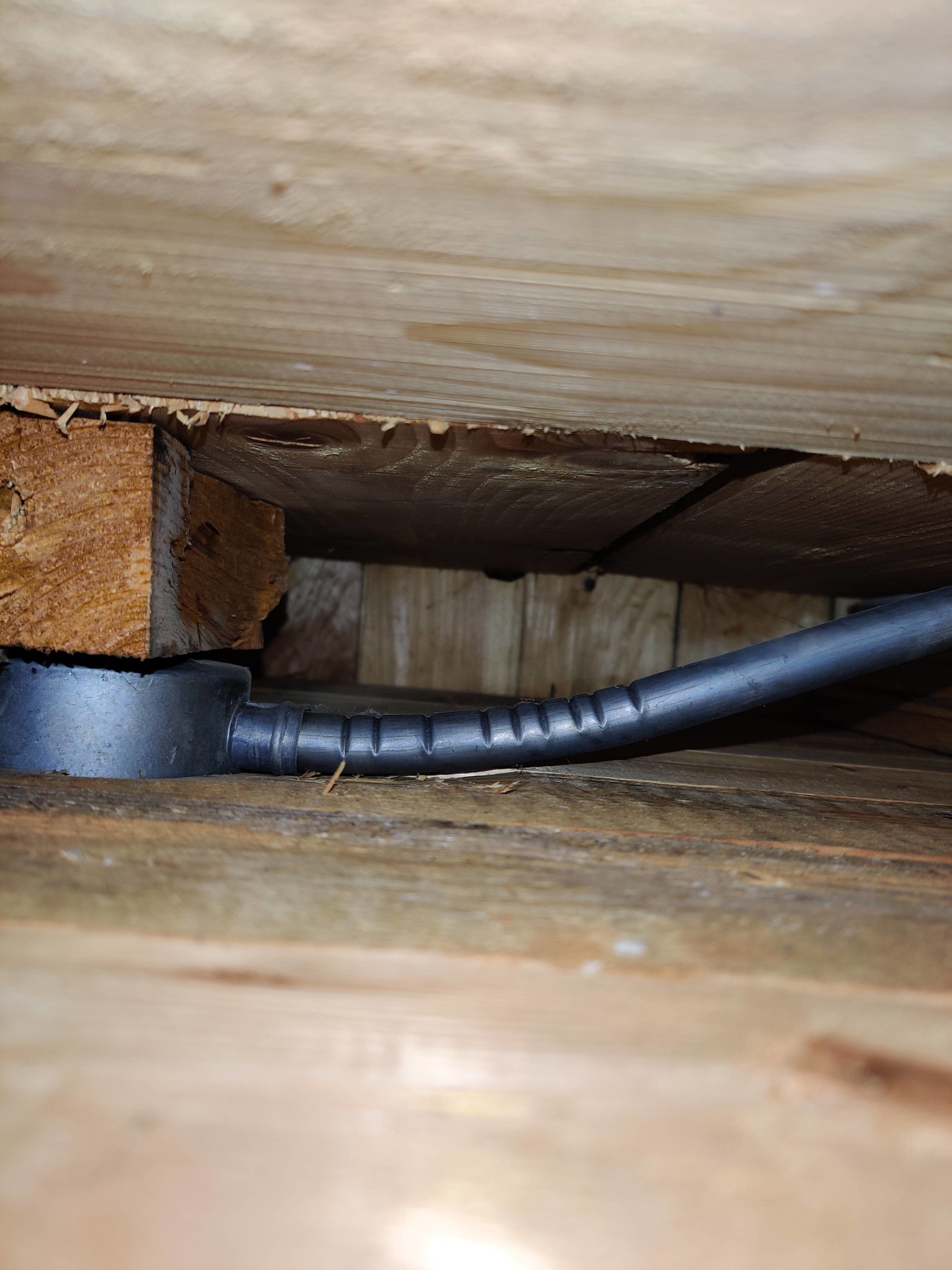
There is an air gap above the door frame where I managed to wiggle the phone in and capture what appears to be ceiling planks... (see attached image) The picture is taken inside the wall, facing upwards towards the ceiling. Would the floor joist be hiding behind those planks then? It's undeniably hard to inspect...
If you consider saving about 60 cm of that wall towards the outer wall, could that be good enough?
I understand these are difficult questions to answer with such insufficient information... But I appreciate the effort nonetheless
Jjustusandersson said:
I suggest you examine the wall between the kitchen and bathroom a bit more closely. If it is load-bearing, it needs to be reinforced in some way. I suspect there's a floor joist on top of the wall. If you leave a plank closest to the outer wall of a cross wall, it helps stabilize.
I meant to examine the wall like this... If there is no material resting directly on the standing planks, then they are not load-bearing. Saving 60 cm against the outer wall is great.
That's what I meant by examining the wall... If there's no material resting directly on the standing planks, they are not load-bearing. Saving 60 cm towards the outer wall is great.
Alright! What would you say is the best way to visually confirm whether the wall in question is load-bearing or not? Is it to damage the ceiling planks to expose how it looks above the standing planks? Or to open the floor in the floor above/attic and dig down to the wall, through half a meter of wood shavings?
I just saw the guide you wrote about load-bearing walls. Very well written! Despite this excellent document, there are still loads of questions about _how_ to find out what rests on the wall...
Both methods you describe are fine. Choose the one that causes the least disruption.
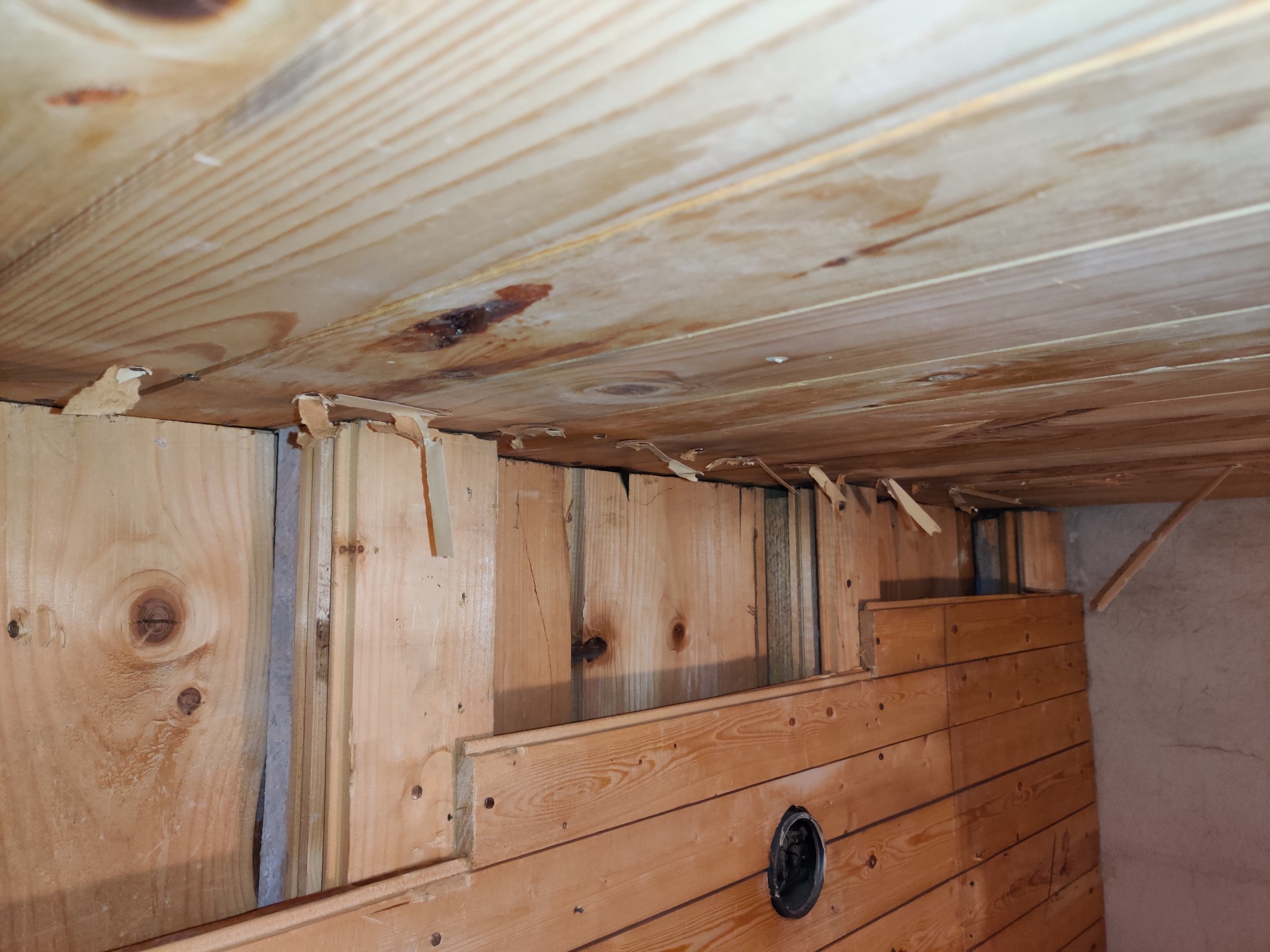
Good evening again... I removed some boards from the wall against the kitchen, but just outside the bathroom door, hoping to see if anything rests on the wall, but to my dismay, it's ceiling planks going all the way into the wall... Does that mean some of these planks need to be cut to see what's hiding above them? Or can it be determined from the picture below that nothing rests on the wall? Sorry for the duplicate picture.
The last pictures clearly show, in my opinion, that the wall between the kitchen and bathroom was added after the ceiling boards were nailed. The question is, what is holding the joists up? You could try using a stud sensor on the floor in the room above.
Click here to reply
Vi vill skicka notiser för ämnen du bevakar och händelser som berör dig.