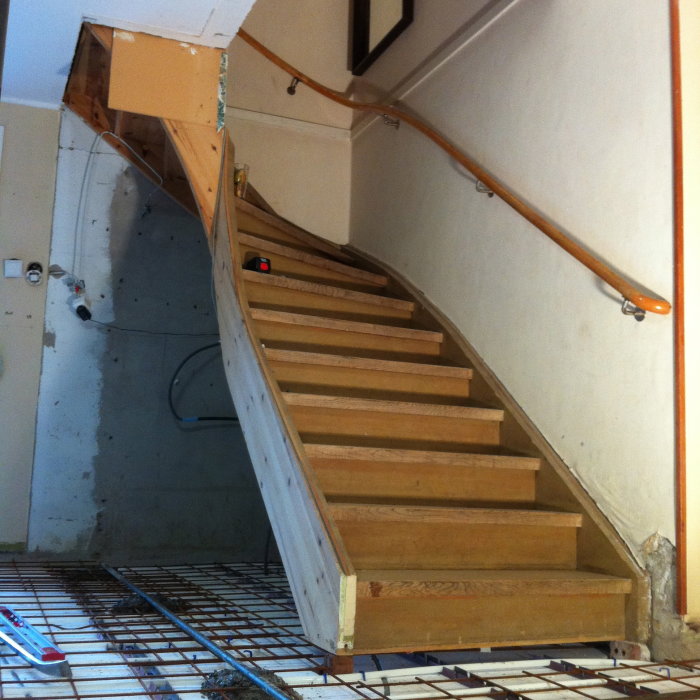
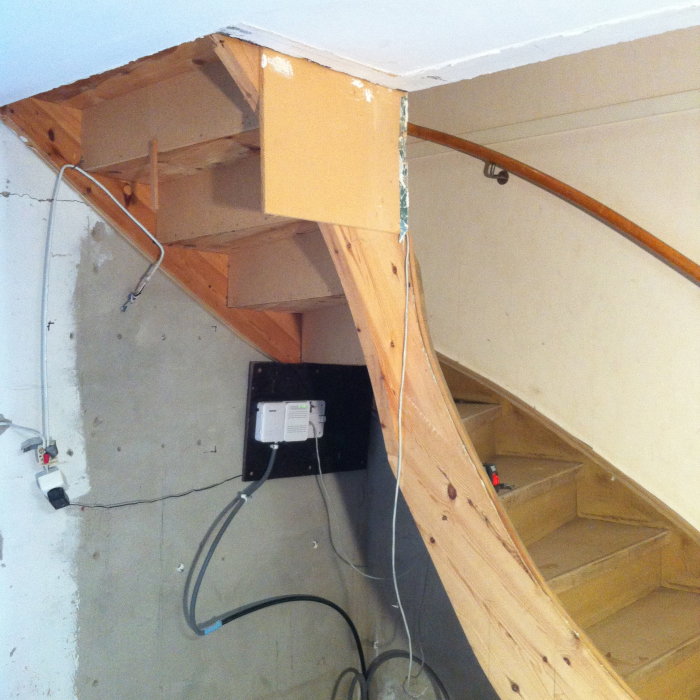
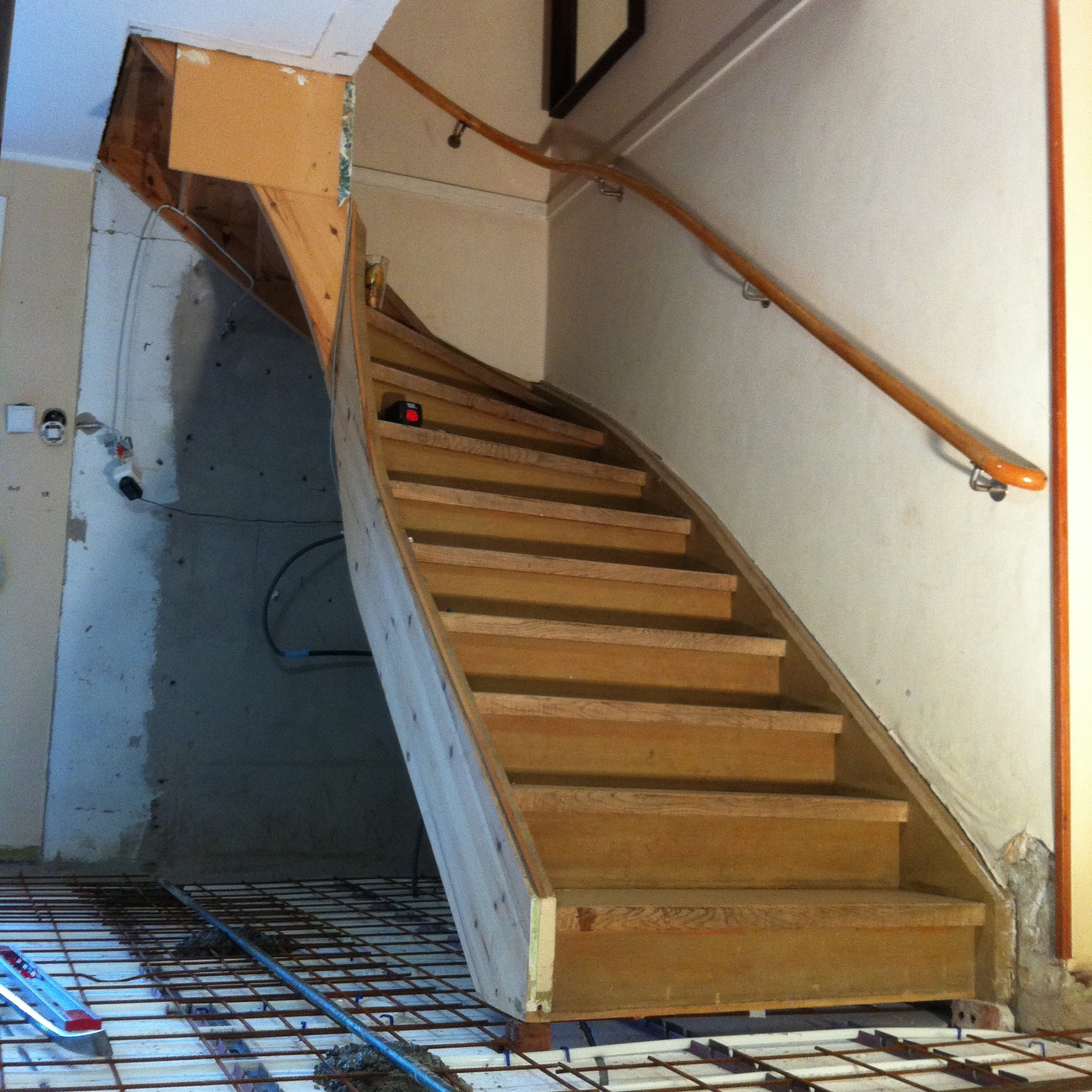
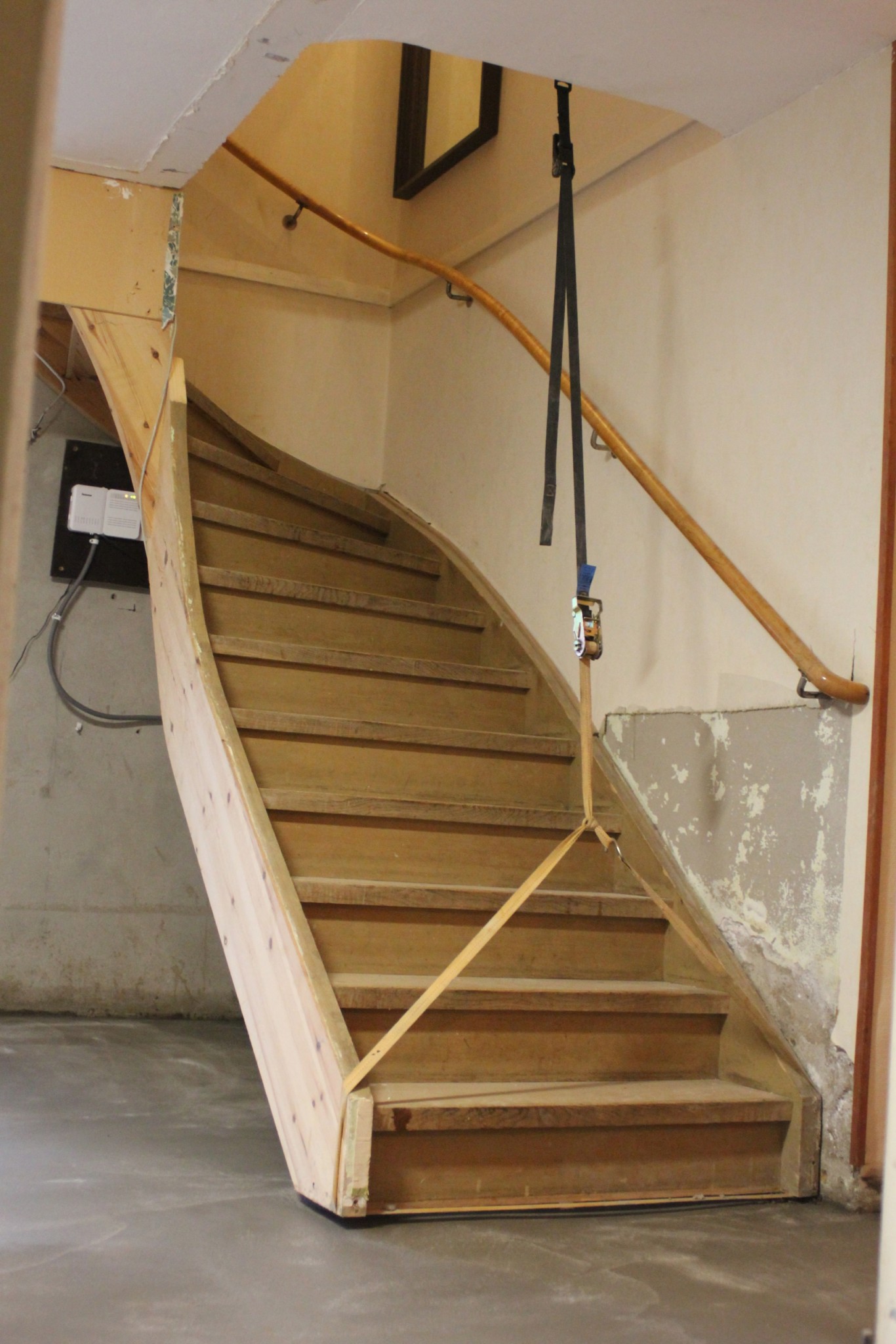
A question just in time, the floor is being poured this Saturday. Is there anyone who knows the construction of such a staircase? What kind of anchoring is needed?
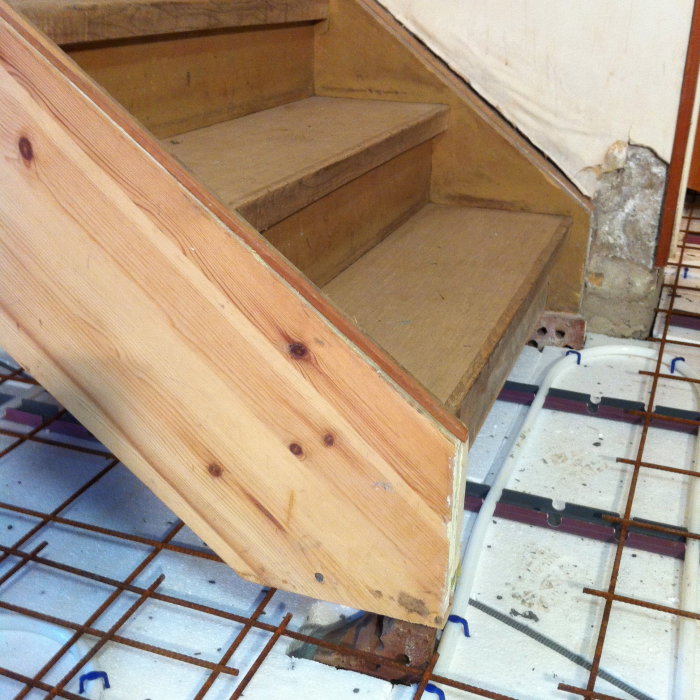
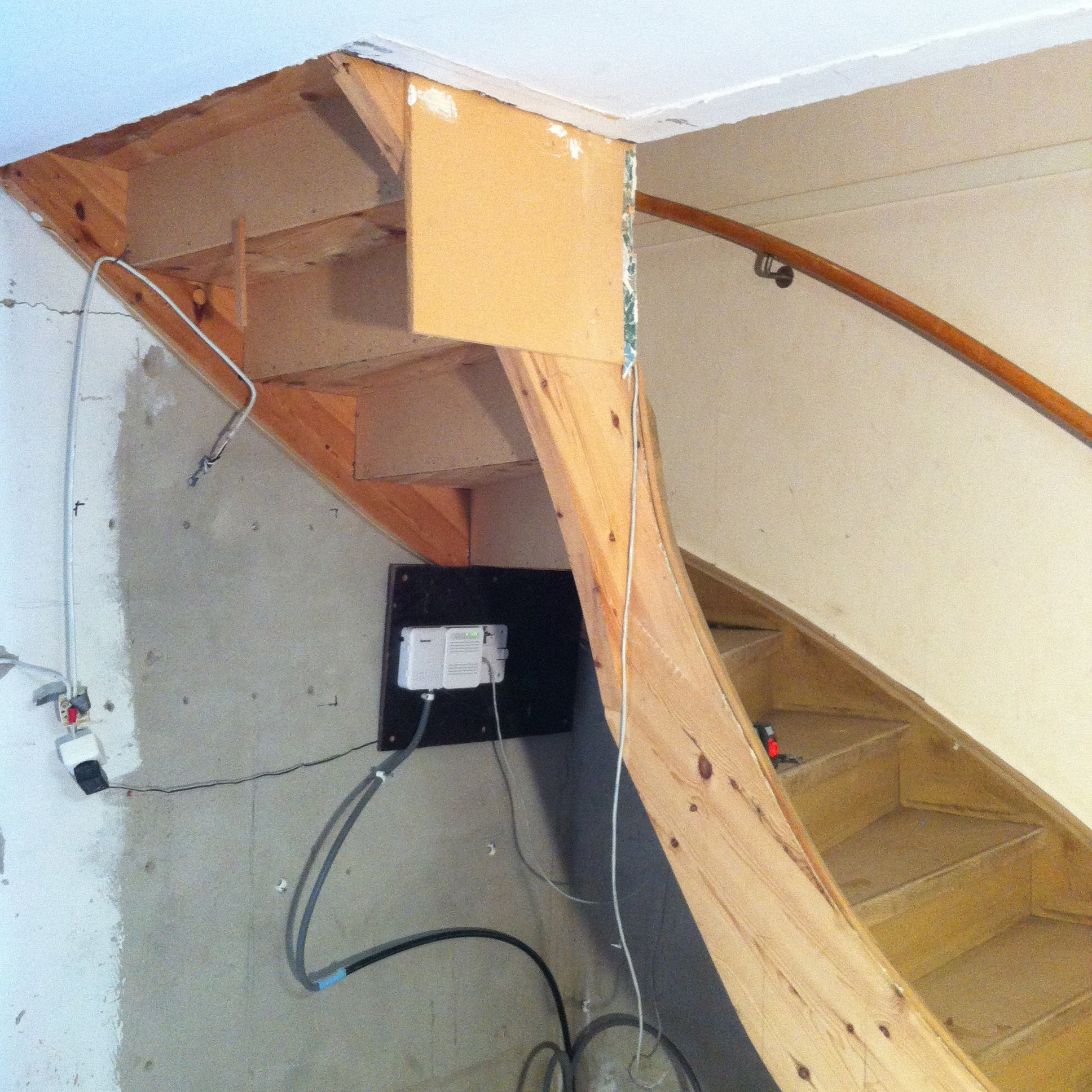
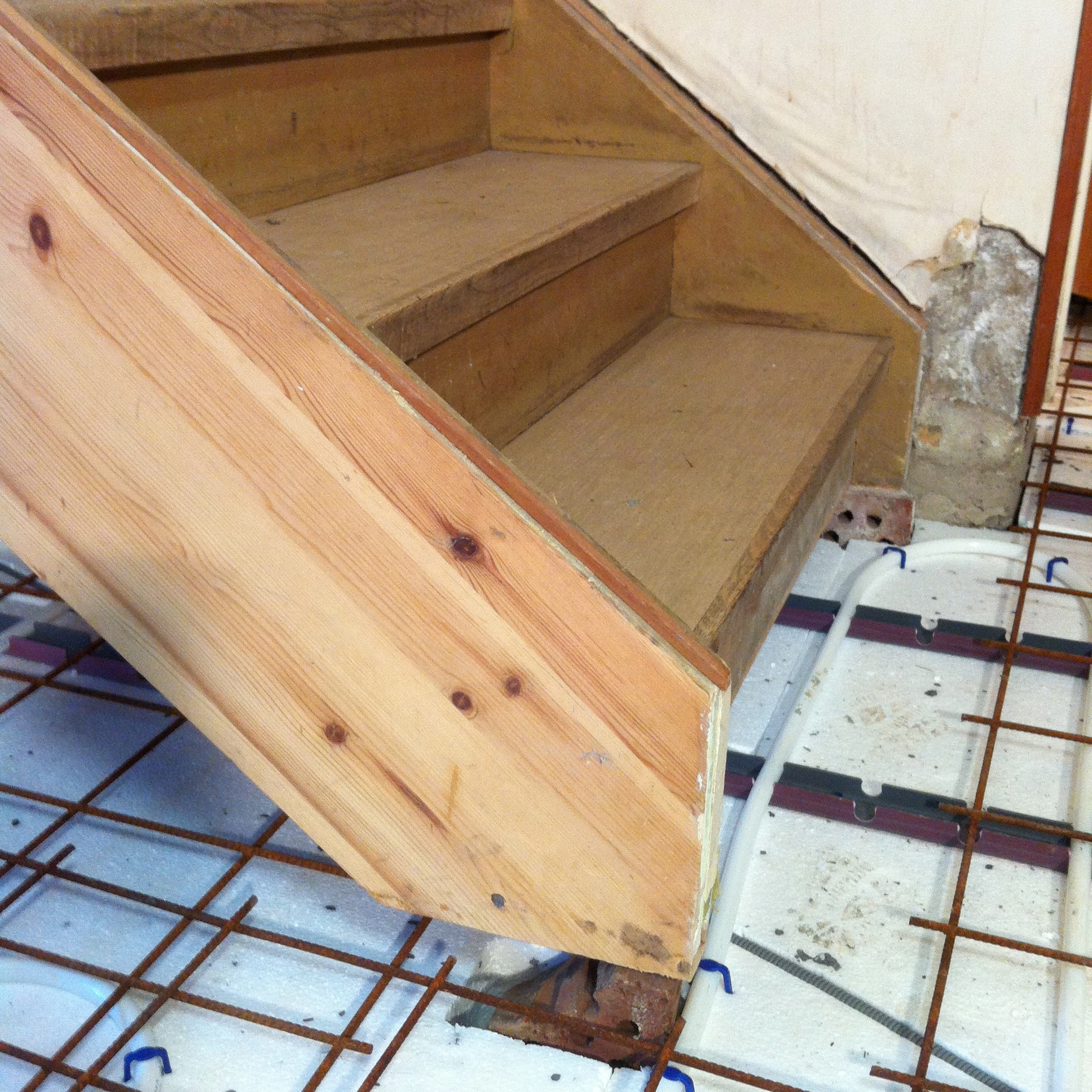
The stringers rest on the concrete ceiling at the top, against the concrete walls and on the floor at the bottom (temporarily on bricks).
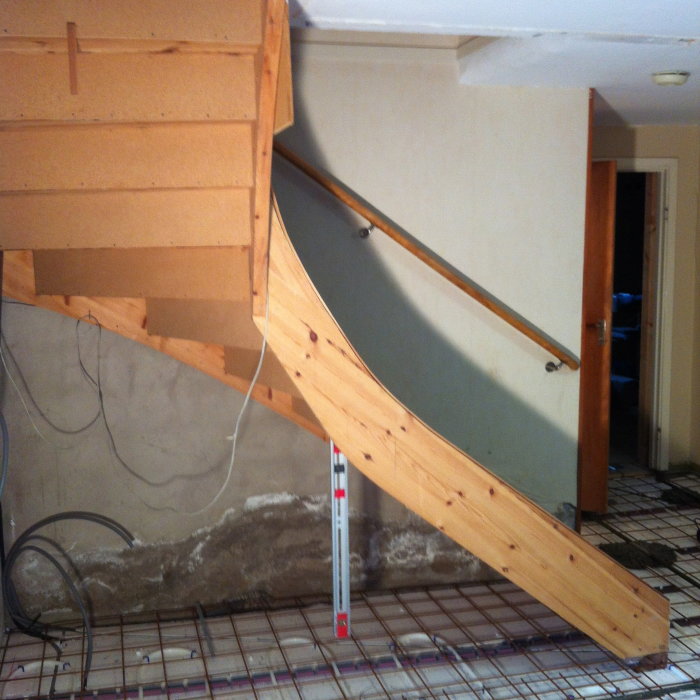
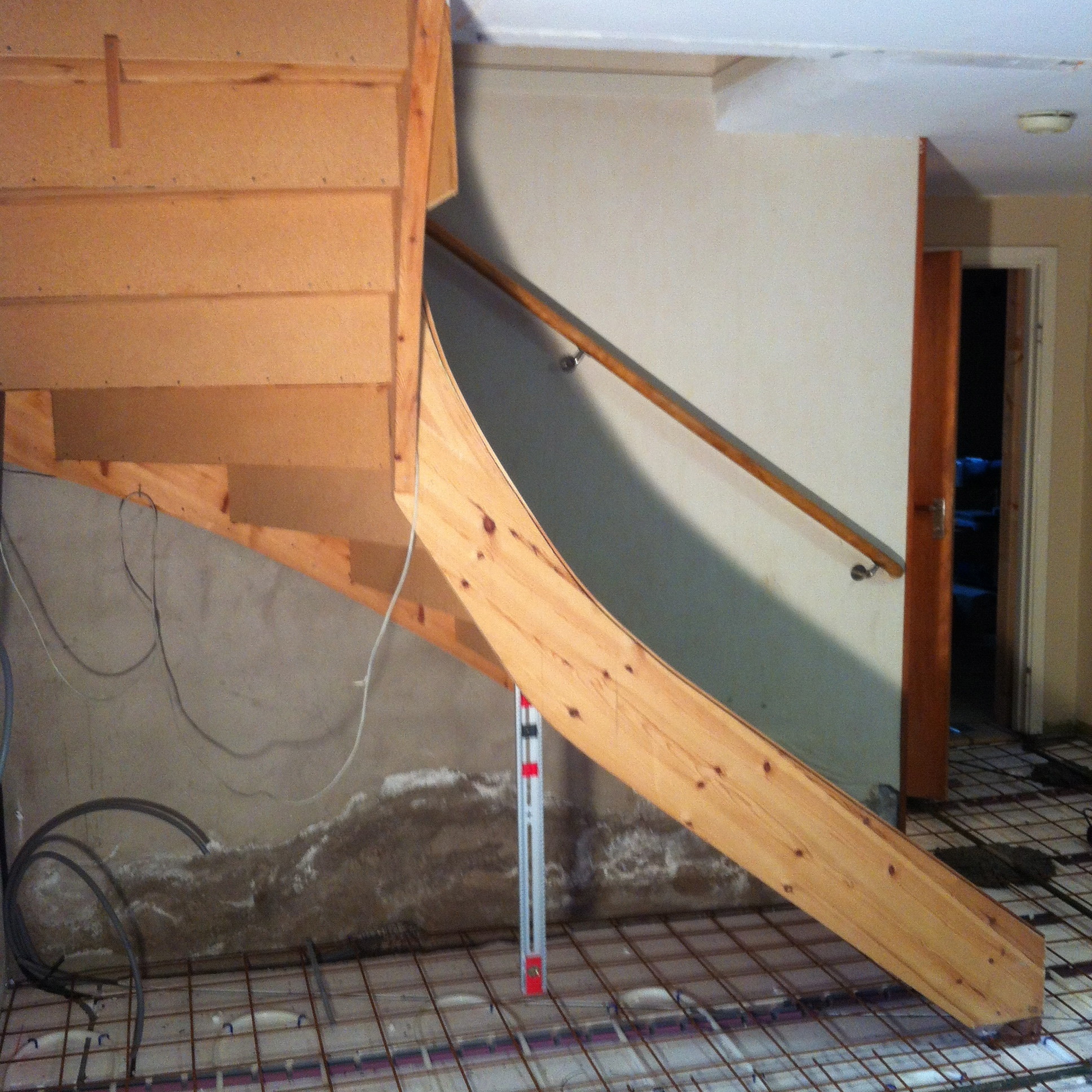
The foundation is concrete. I would like to attach the staircase at the bottom to a cast plinth. Is that enough or do I need a leg about halfway to distribute the force (see picture, by the spirit level) and/or for example long French screws in the concrete wall?
Previously, the stringers were nailed to the floor joists/studs at the bottom and the staircase was enclosed in paneling. Now we're going to have it relatively open. There seems to be no anchoring to the concrete walls. You can see on the wall that the staircase has sunk a few cm during the time we've been renovating, but I assume that's because there's nothing taking up the horizontal force that occurs at the bricks at the bottom.
On similar stairs one has seen, there has usually been some form of support. Most often a trellis hanging in the joists above.
Obviously, the stairs should be screwed into the wall.
It seems that the staircase, since its construction in '65, has only been "wedged" into the corner of the room via the attachment points at the top and bottom in the previous floor framework. My idea was to lift the staircase slightly, cast support at the bricks, and then attach the stringers to these, nothing more. Currently, the staircase only rests on these points, no screws in the walls or similar. The only thing that has happened is that, as mentioned, it has sunk slightly as the stringers have slid out horizontally, due to a lack of support.
The ones who enclosed the staircase seem to have had an idea of as few attachment points as possible, maybe so that it would hang freely and thus avoid creaking noises? Otherwise, they would have had plenty of opportunities to screw into walls, wooden beams, and panels, but they did not do so. Of course, one can go overboard with screws and such "for safety's sake," but I want to know how it should be attached according to all the rules of the art. I think there is a risk of creaking noises arising if attachment points are used indiscriminately.
Our carpenter wants, as you suggested, to attach the staircase to the wall with expansion nails. If this is done, I think there should be something that absorbs the force on the other side. My knowledge of statics suggests that one must achieve equilibrium.
The staircase was hung up with tension straps for enjoyment. The attachment is still unclear. The carpenter thinks it should be screwed into the walls. I'm not entirely convinced. Any experts who can offer good advice?