I'm one of those who doesn't always seek the simplest solution, but rather the more elegant/complicated ones... because it's fun. 😃
I think you should go for an electromagnet, it's not simple like my previous suggestion and it gives you the opportunity to read up, develop, and experiment to come up with an exclusive solution.
Place four pins in the plank and corresponding tubes on the inside. Taper the tips of the pins and chamfer the holes. Set them slightly downtilted, meaning the plank is inserted "from above" and slides into place. Make them in corrosion-resistant material and lubricate from time to time when you have to access the hatch anyway.
Put four pins in the plank and corresponding tubes on the inside. Taper the tips of the pins and countersink the holes.
Place them slightly tilted downwards, so the plank is mounted "from above" and slides into place.
Make them rust-resistant and grease them from time to time when you're going into the hatch anyway.
I was considering pins, but only on the right short end that then goes into the fixed plank to the right. (What might not be clear from the picture is that all the boards are mitered at the corner, which limits the removal of the loose board to straight out.)
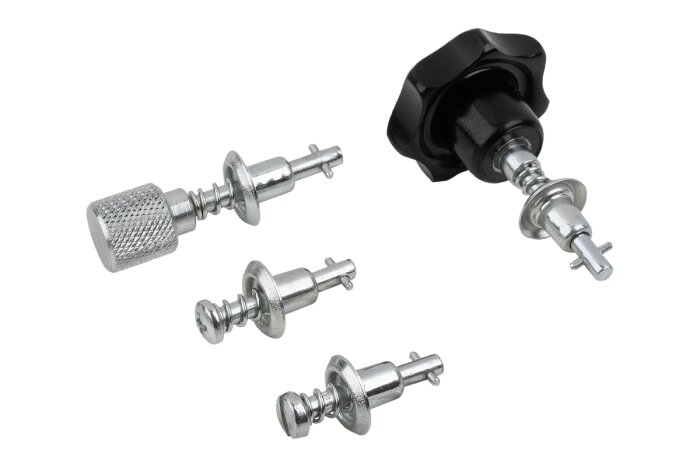
Then I only need to arrange a fastening on the left end. One thing spinning in my mind is the kind of lock found in the aviation industry, where you press something that pops out and then twist it to open an inspection hatch or fuel pipe. However, I have no idea what they're called, and if they even exist in versions for regular consumers. 😁
I was considering a pin, but only on the right short end, which then goes into the fixed plank on the right. (What may not be clear from the picture is that all the boards are mitered in the corner, which limits the removal of the loose board to straight out.)
Then I only need to arrange a fastening on the left end. One thing that's spinning in my head is the type of lock found in the aviation industry, where you press something that pops out and then you turn it to open an inspection hatch or tank pipe. However, I have no idea what these are called, or if they even exist in variations for everyday consumers. 😁
I feel very doubtful that they would not rust where I need to have mine...but the magnetic track is still tempting for several reasons. You should be able to spray some rust protection paint on the magnets. 🤔
If you have any old hard drives to dismantle (only tested with large, 3.5 inch), they contain magnets strong enough that you can encase them in something protective. I taped a couple inside a jar lid and then jested by hanging up a glass jar under the gutter.
I considered dowels a bit, but only on the right short end that then goes into the fixed plank on the right. (What might not be so clear in the picture is that all the boards are mitered in the corner, which limits the removal of the loose board to straight outwards.)
Then I only need to arrange a fastening on the left end. One thing that's swirling in my head is the type of lock found in the aviation industry, where you press on something that pops out and then you turn it to be able to open some inspection hatch or fuel pipe. However, I have no idea what these are called, or if they even exist in versions for ordinary consumers. 😁
The mitre probably doesn't matter much, it's the gap above that determines how many degrees of angle you can have on the dowels. You can also mitre the inside of the board if space is tight.
Why does the plank need to be removed? If it's just to install a hose, maybe a permanent solution for the hose can be implemented instead so that access to the space isn't needed as frequently?
I made large parts of the skirt on our deck removable. Built modules that are attached with an A2 8x80 construction screw with a T40 head every 1.2m. Nothing that disturbs or protrudes. Easy to remove and replace.
Thanks for all the creative suggestions in this thread! I really love forums in that respect, you ask a question and get a bunch of different suggestions/answers that you can take with you. Sometimes it's the solution you're looking for and sometimes it's things you can take to other projects.
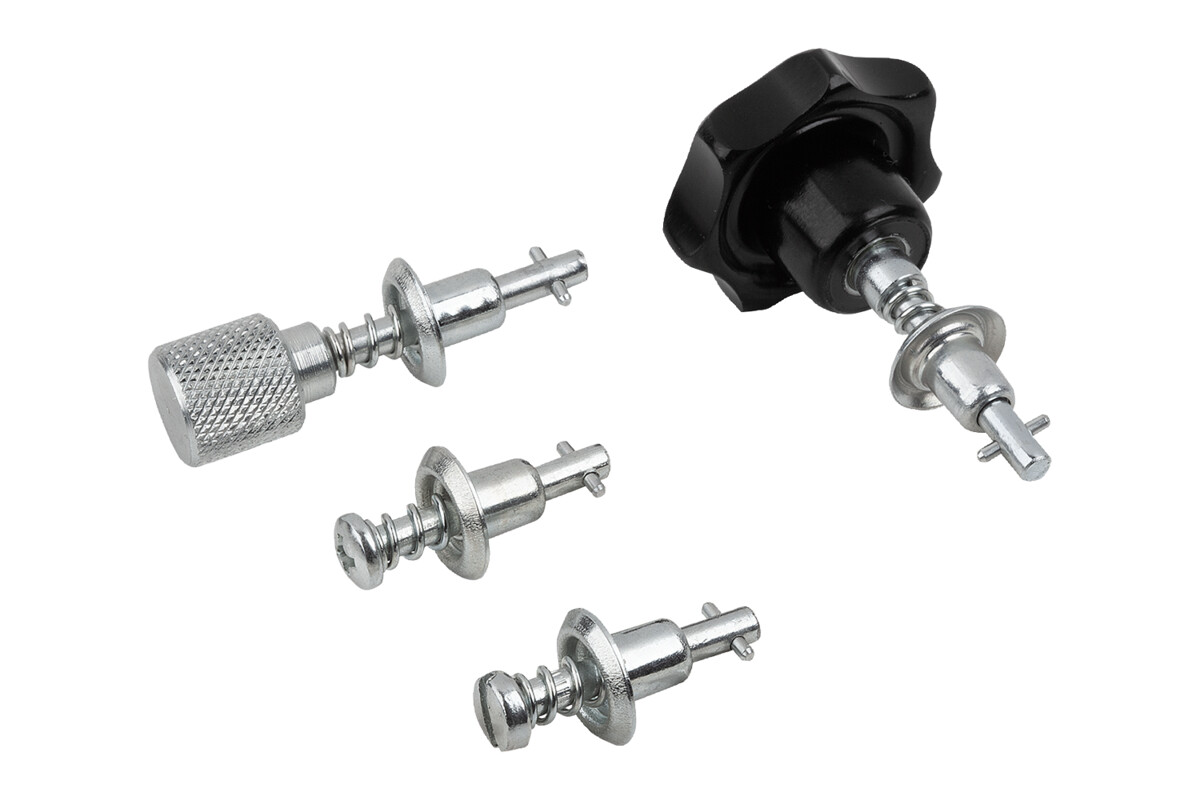
I think I'm getting close to the solution I've had in mind but couldn't define. It leans towards pins on the right short end, as it's easy to align everything. To fix the left end and lock the board, I will try to find something similar to this:
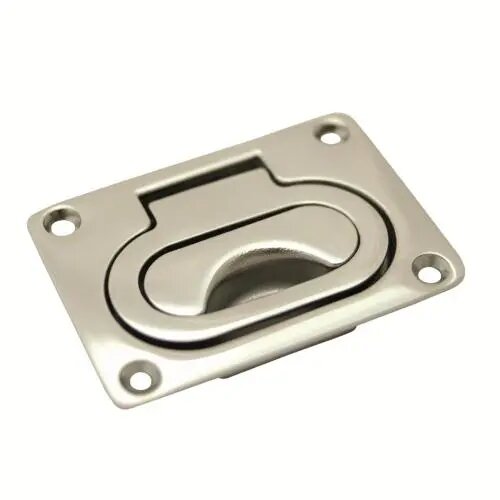
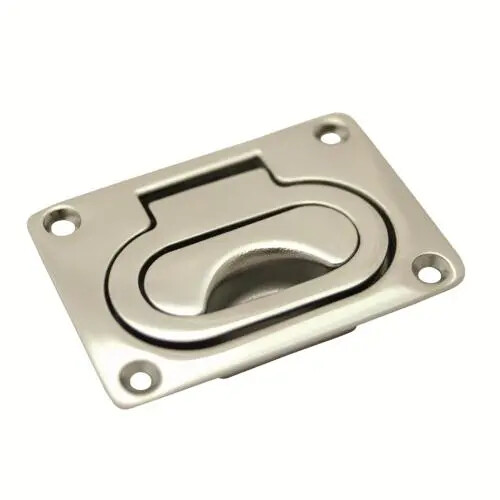
This is called a "quarter-turn lock," i.e., a lock that turns a quarter turn to lock and unlock. It's just a matter of finding one in the right size and with the "right" type of handle. Ideally, I would like to find one with the type of handle common on boats, meaning ones that are recessed when not in use. We have some hatches on the deck where I've used this variant:
I don't like protruding things on/around the deck. You move around barefoot, with thin loose clothing, and bare legs... and you don't want to risk getting caught or scraped.
I need some help brainstorming a solution to easily remove/replace a plank in our deck skirt. Inside the skirt is the filter pump for our small pool, and when the filter needs backwashing, the plank in the picture must be removed to attach the hose that drains the dirty water.
As seen in the picture, the plank is currently secured with four regular deck screws. I don't like this solution because screws threaded for wood that are screwed in and out will eventually make the holes too large. It also requires me to fetch a screwdriver with the right bit every time I want to remove the plank.
I feel there must be a better way to secure the plank so it sits as it should, but still makes it easy to remove. Magnets have been suggested to me, but it's tricky to find the right strength and they tend to rust, so that doesn't appeal much.
Anyone have a good idea?
[image]
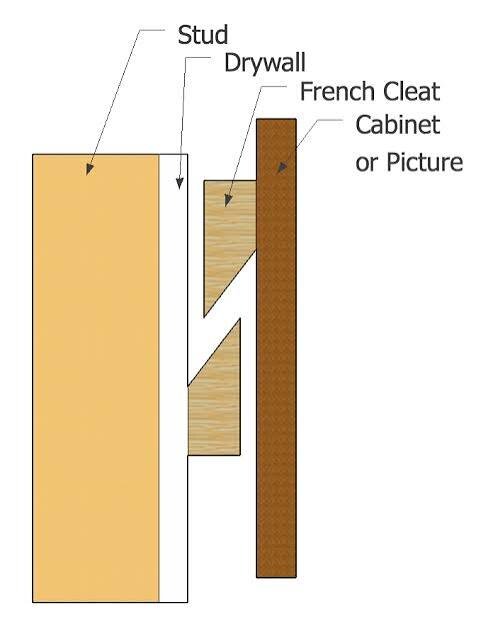
Would the solution I have used since childhood with birdhouses work, that is, to have a piece of wood somewhere with an upward-pointing inward cut, so that you can easily remove the piece of wood by pulling upward?
Would it work with the solution I have used since childhood with birdhouses, that is, somewhere you have a piece of wood cut at an upward slant inward, so that you can easily remove the piece of wood if you pull upwards?
Do you mean like Thomas_Blekinge suggested in post #26?