During my renovation, I had wished to quickly get an understanding of the different types of gypsum available, their advantages/disadvantages, etc. Now that I have gone through several of these types, I thought I'd share some experiences in case anyone is interested. I have also conducted a small test to see how well they stand up to minor damage.
Fibergips
This is a mixture of 80% gypsum and 20% cellulose, which is supposed to make the board harder and more screw-resistant, as well as better soundproofing. The board weighs 15 kg / m2, which is 67% heavier than regular gypsum. It requires special screws or hard gypsum screws. Available in widths of 600 or 900 mm.
Experiences: I chose to build two walls with the bottom layer of fibergips instead of OSB, mainly because I wanted to try it and desired the best soundproofing possible in these walls. The board is significantly heavier than regular gypsum and more stable, which can certainly contribute to better soundproofing. The claim that it is screw-resistant I find a bit exaggerated, at least compared to OSB. The board is difficult to work with as a 900x2500 board weighs 34 kg and must be sawn, it cannot be broken by hand. Sawing creates an extreme amount of dust, so it needs to be done outdoors. The board has no cardboard, which makes it sensitive on the edges, it's quite easy to knock off corners. Additionally, it cannot be painted directly; the entire surface needs to be skim-coated. I also found that you need to smooth around the screw heads since the lack of cardboard causes the material to bulge around the screw head. I chose to install the fibergips horizontally (as the bottom layer), which you can do and is almost necessary since they only seem to be available in 600 and 900 widths, which becomes tricky on 60 cm stud centers. This works well as long sides must be glued together with the accompanying glue. In summary, despite using 45 mm studs initially, the wall became very stable with fibergips underneath and hard gypsum on top, almost resembling a plaster wall more than a gypsum wall but overall it's a difficult board material to work with.
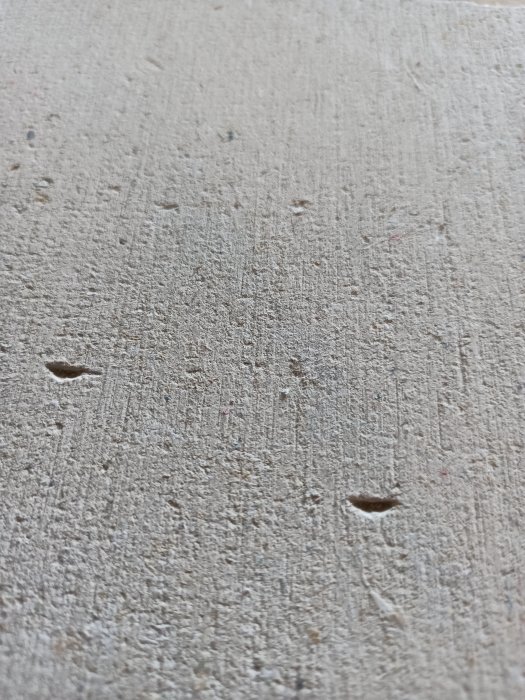
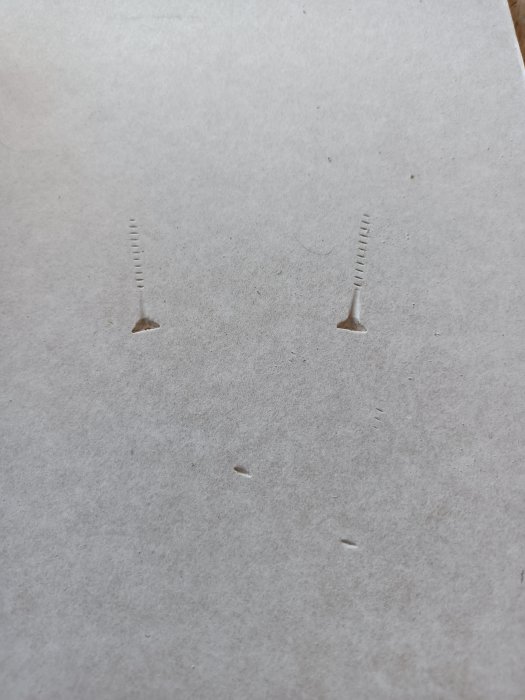
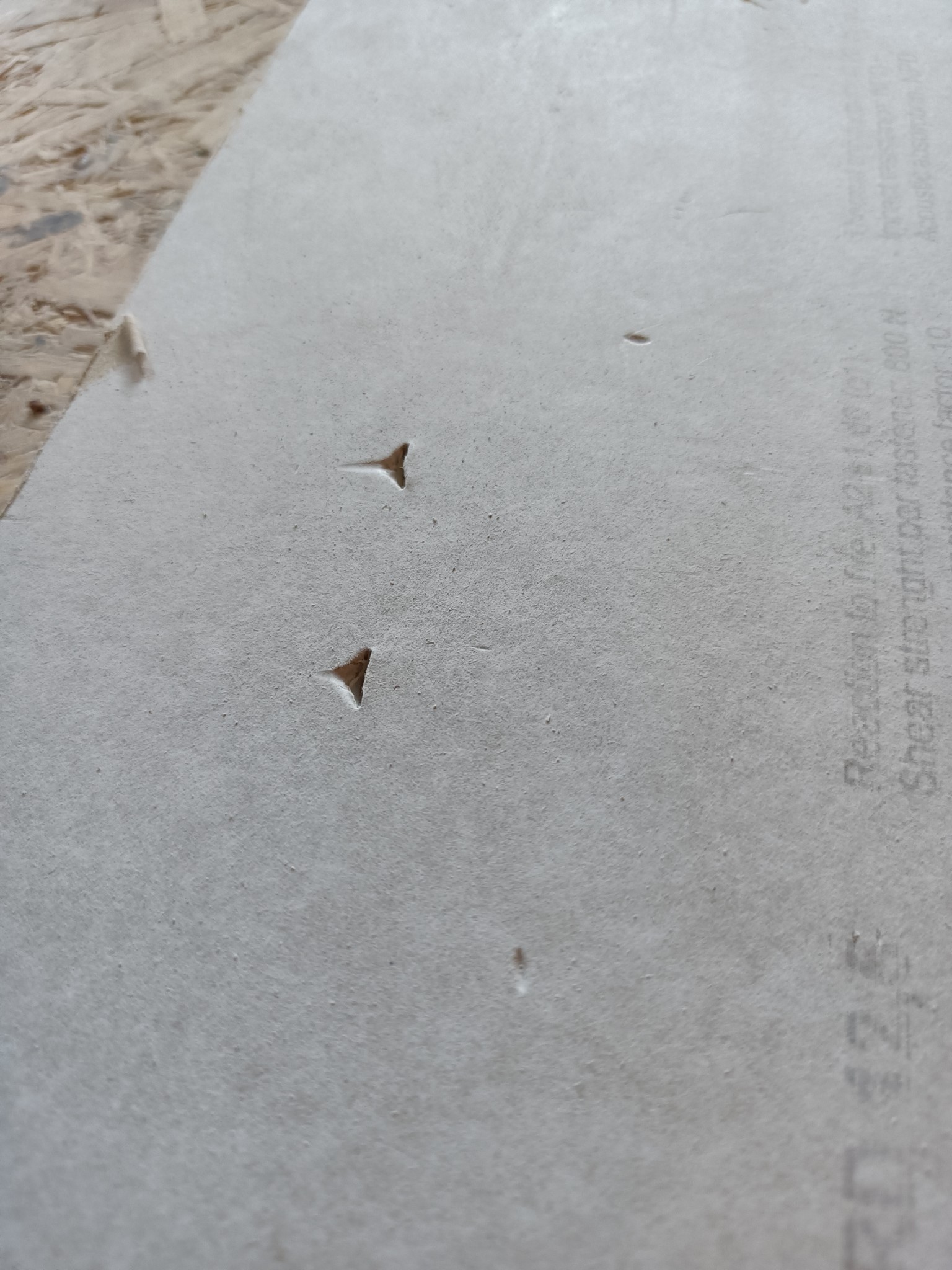
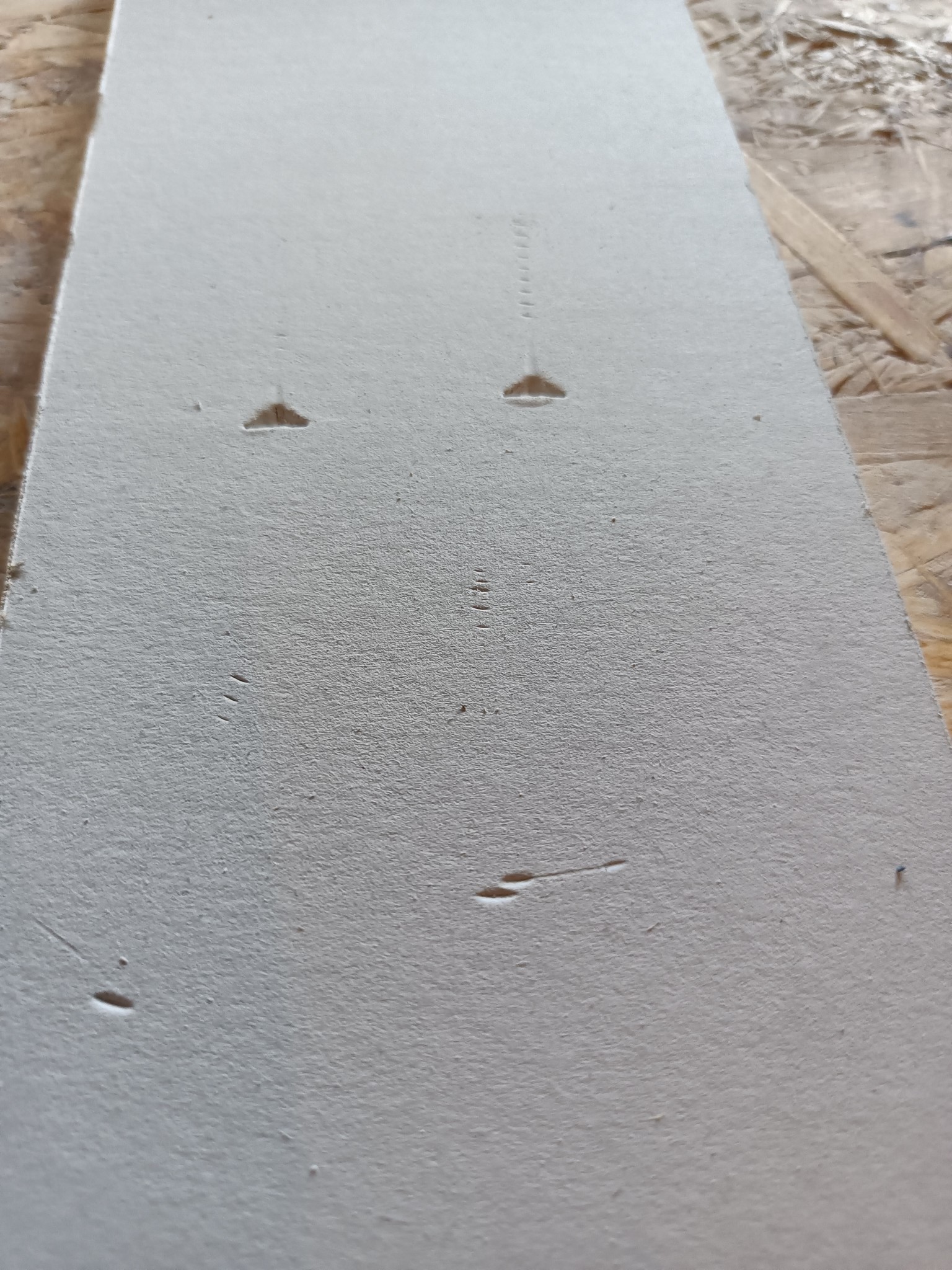
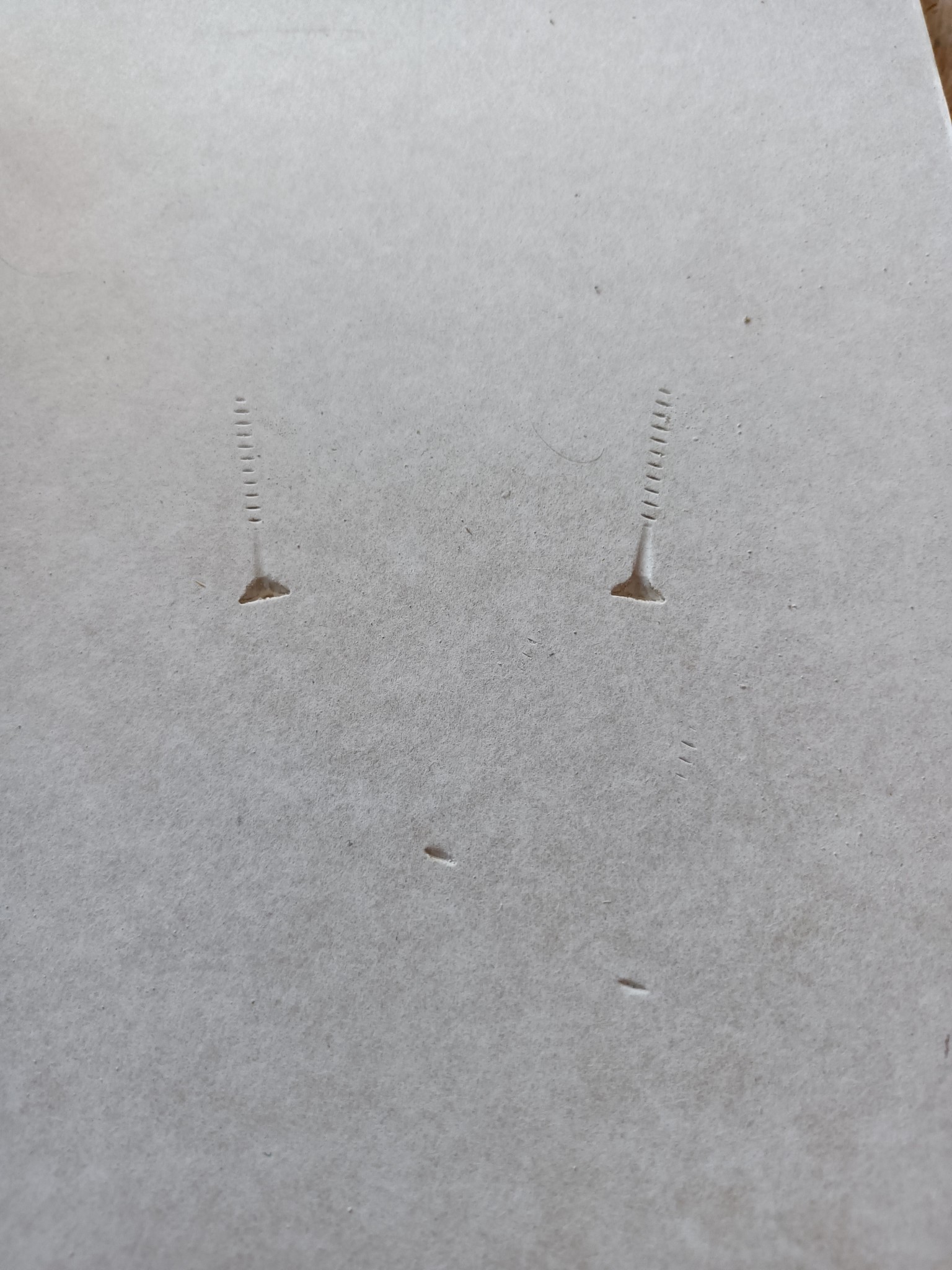
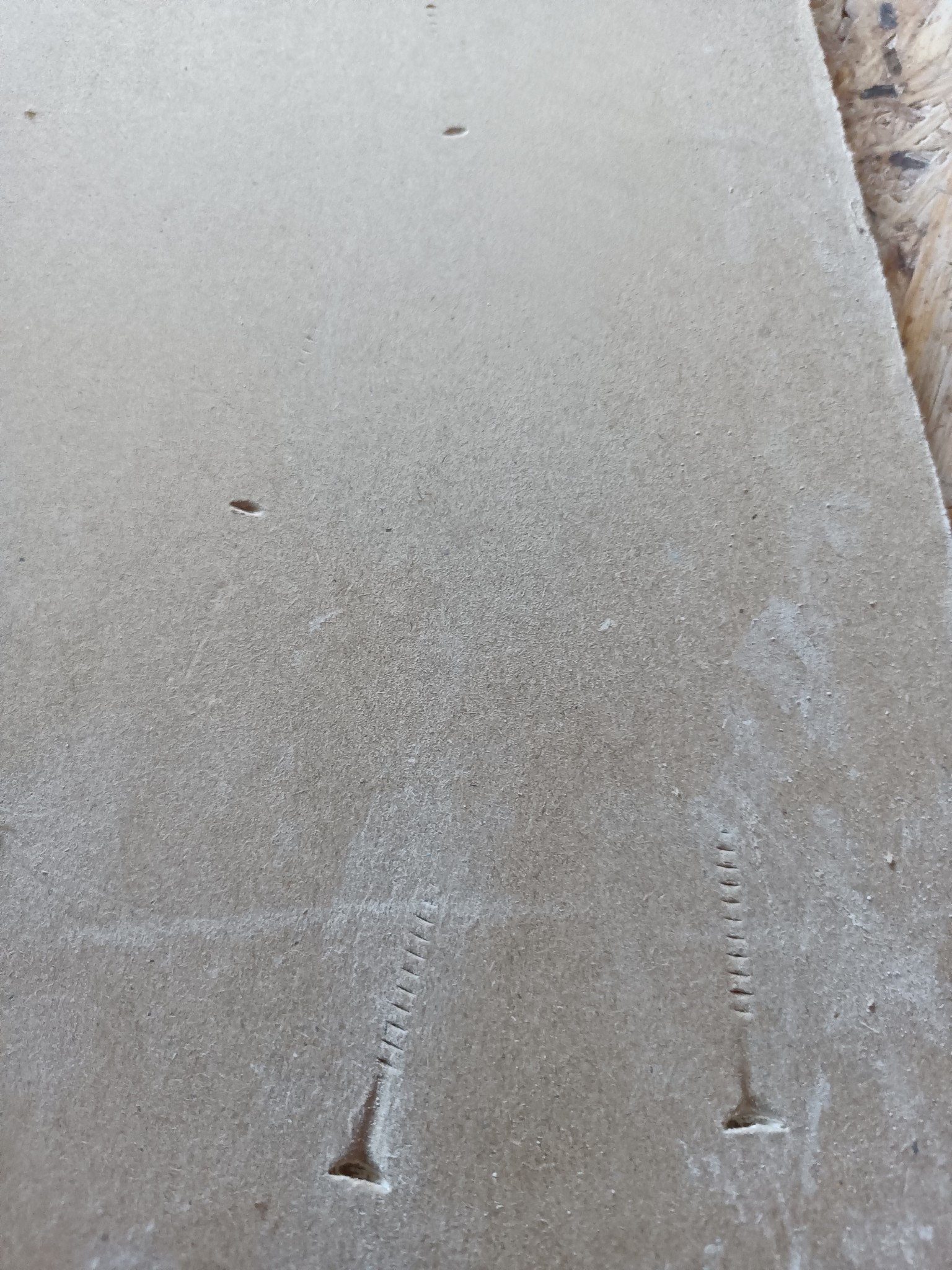
Test load approximately 80 kg. Standing with a work shoe on a screw with the board as a base, seen as the upper marks in the image below. Then standing with a work shoe on a stone slab against the screw, the lower marks. As can be seen, barely visible marks in the first test.
Ultra board
This is a gypsum board marketed by the various gypsum manufacturers as their hardest gypsum board. It is supposed to be fiber-reinforced, though it's unclear what type of fiber, and also marketed as screw-resistant. The board weighs 12 kg / m2. Hard gypsum screws should be used. Available in widths of 900 and 1200, but the latter seems very hard to find, which might be for the best considering the weight.
Experiences: I needed to replace a gypsum board and bought an ultra board, which costs about twice as much as a regular gypsum board. The board is significantly heavier and more rigid than regular gypsum. The cardboard is relatively similar to regular gypsum. Breaking these was considerably trickier and required deeper scoring than usual. The claim they are screw-resistant, similar to fibergips, I also find questionable compared to OSB.
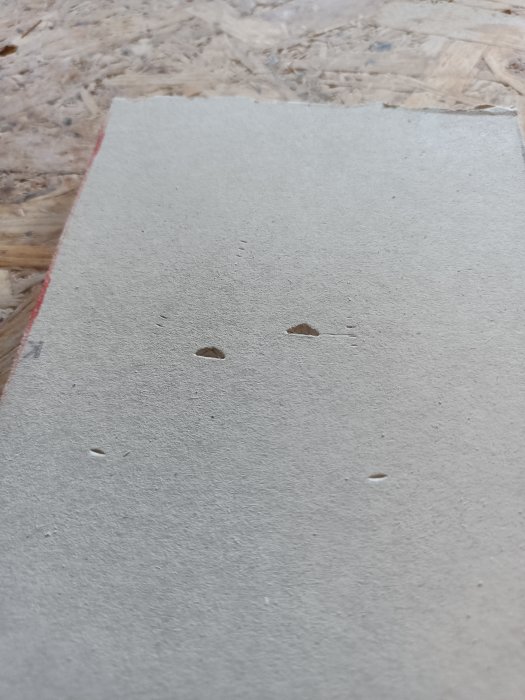
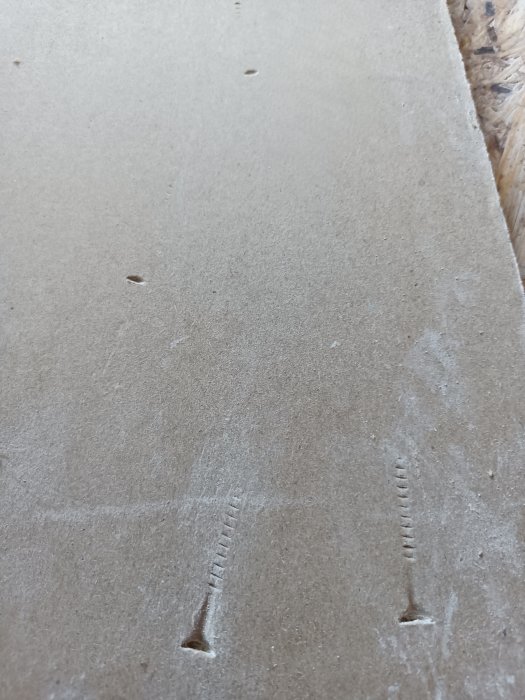
Test: Load approximately 80 kg. Standing with a work shoe on a screw with the board as a base, seen as the lower marks in the image below. Then standing with a work shoe on a stone slab against the screw, the upper marks. Somewhat deeper marks than the fibergips board.
Hårdgips
This is a glass fiber reinforced gypsum board with reportedly stronger cardboard, which together should withstand better in more exposed environments. The board weighs 12 kg / m2. Requires hard gypsum screws. Available in widths of 1200 mm. Not marketed as screw-resistant.
Experiences: I ordered about 20 hard gypsum boards as the outer layer on walls with existing standard gypsum to create walls with double gypsum. Cost about 180 SEK per board. Boards with a width of 120 cm and weight about 35 kg are not for the faint-hearted to carry up to an upper floor, etc. Otherwise, they are relatively easy to work with, breaking like regular gypsum. I don't have a wall with standard gypsum x2 to compare with but find that the walls became notably stable and rigid. Additionally, I think the cardboard feels stronger, or rather smoother on the surface than regular gypsum.
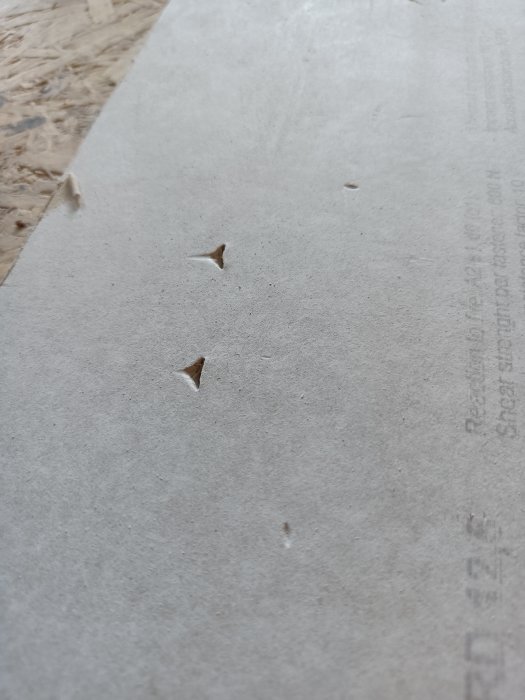
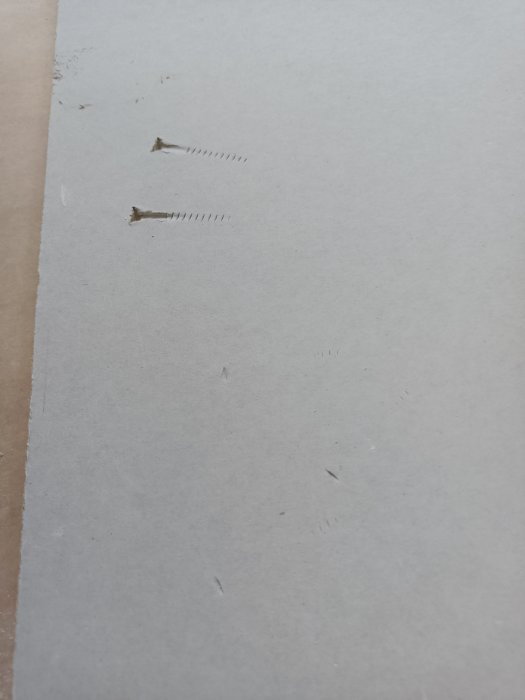
Test: Load approximately 80 kg. Standing with a work shoe on a screw with the board as a base, seen as the marks to the right in the picture. Then standing with a work shoe on a stone slab against the screw, the marks to the left in the picture. Also, note the indentation of the screw's neck unlike the Ultra board.
Renoveringsgips
These are used to create a smooth and even surface where spackling is deemed too much work or for some other reason not feasible. The boards are reinforced with glass fiber and may have slightly stronger cardboard than regular boards. The boards weigh about 5.5 kg / m2. To prevent the board from rising around the screw head, hard gypsum screws are recommended.
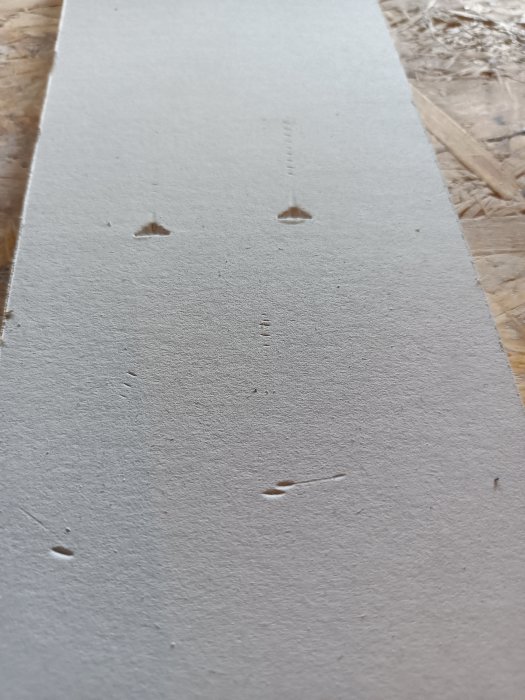
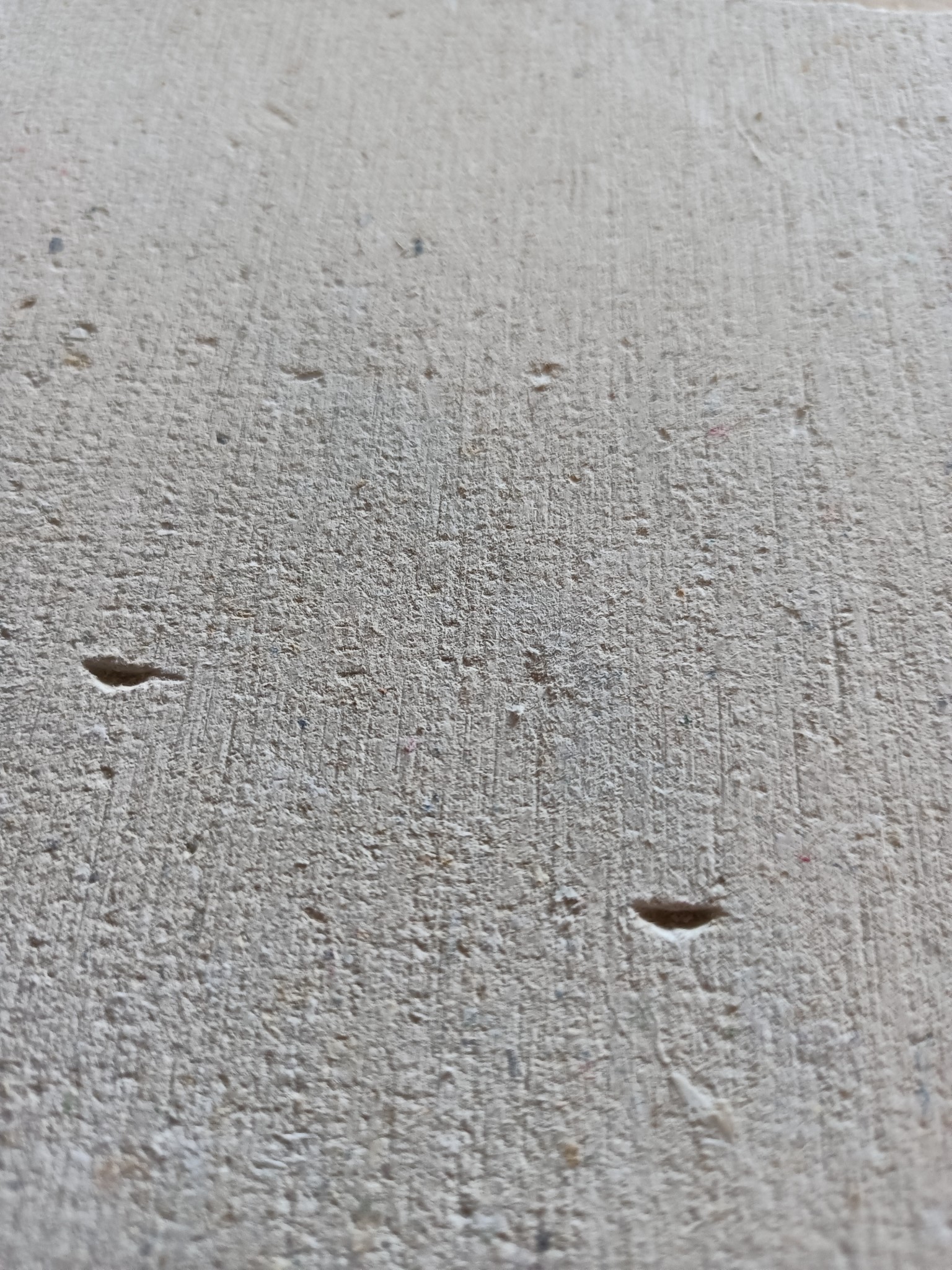
Test: Load approximately 80 kg. Standing with a work shoe on a screw with the board as a base, seen as the marks at the bottom of the picture. Then standing with a work shoe on a stone slab against the screw, the marks at the top of the picture. Somewhat surprisingly, the renoveringsgips performs better than both fire-resistant gypsum and standard gypsum.
Brandgips
This is a thicker gypsum board at 15 mm, where at least Norgips fireboard has a core reinforced with clay and vermiculite. The board weighs 12.5 kg / m2. I don't think this requires hard gypsum screws. Available in widths of 1200 mm.
Experiences: I used this in a couple of places to cover glue-laminated beams and align them with other gypsum. The board feels weaker than hard gypsum and the ultra board, uninstalling a screw is significantly easier than from the Ultra board. Otherwise, relatively easy to work with.
Test: Load approximately 80 kg. Standing with a work shoe on a screw with the board as a base, seen as the marks at the bottom of the picture. Then standing with a work shoe on a stone slab against the screw, the marks at the top of the picture. Here you can see the indentation of the entire screw.
Vindskyddsskiva
These come in various forms and are slightly differently created by different manufacturers. They are 9.5 mm thick. Boards weigh about 7-7.2 kg / m2. Gyproc's wind board GU reportedly has a core reinforced with glass fiber and impregnated cardboard back and front. Norgips wind board X9 (red) has no reinforced core and is impregnated on the front side. The boards should not contain any toxic substances.
Experiences: For some reasons, a wind protection board was needed to align a wall. My perception is that despite impregnation, these can be painted on, as spackling seems to adhere normally. Painting directly on the boards seems more uncertain. Gyproc's boards feel possibly somewhat more stable than Norgips, but the cardboard on the front feels thinner.
Test: Load approximately 80 kg. Standing with a work shoe on a screw with the board as a base, seen as the marks at the top of the picture. Then standing with a work shoe on a stone slab against the screw, the marks at the bottom of the picture. Here you can see the indentation of the entire screw. The board, however, performs better than standard gypsum and is equivalent to fire-resistant gypsum, which in this case could possibly be due to the board having, according to reports, glass fiber reinforcement.
Standard gips
Boards weigh about 9 kg / m2.
Test: Load approximately 80 kg. Standing with a work shoe on a screw with the board as a base, seen as the marks at the bottom of the picture. Then standing with a work shoe on a stone slab against the screw, the marks at the top of the picture. Here you see even more indentation of the entire screw. The standard board (in this case from Siniat) performed the worst of all boards.
"Experiences: I chose to build two walls with the bottom layer of fibergips instead of OSB, mainly because I wanted to try it and desired the best possible sound insulation in these walls."
How did you attach the standard drywall to the fibergips? Can it be done with regular drywall screws, or did you use fibergips screws there too?
When I renovated 10 years ago, I used OSB boards as the base and hard gypsum on top. I was very satisfied with the result; the walls became really stable.
Both Norgips and Saint-Gobain offered hard gypsum, but Norgips was far superior in quality. On a broken Norgips board, you could see that the fiberglass was evenly distributed. On a broken Saint-Gobain board, you could see the fibers were in clumps, almost like the mixture hadn't been stirred properly. My colleagues who installed the boards confirmed that the Norgips board was indeed stronger.
Now, this was 10 years ago, and it might have just been a bad batch, but if you're interested, it might be worth checking into.
tømmerman:
How did you attach the standard drywall to the fiber drywall? Can you use regular drywall screws, or did you use fiber drywall screws there as well?
There are hard drywall screws from, for example, MFT and Essve. MFT has slightly smaller heads and more taper on the neck, slightly higher risk of it bulging than Essve, I noticed, but with Essve, several screws broke off at the neck when screwing into Ultraboard.
Fiber drywall screws are more like chipboard screws that completely drill down into the drywall, so they should only be used for fiber drywall, which is very hard.
Regular drywall screws have too large a head, making it difficult to get the head into the drywall as it is quite hard, also risking it bulging.
Click here to reply
Vi vill skicka notiser för ämnen du bevakar och händelser som berör dig.