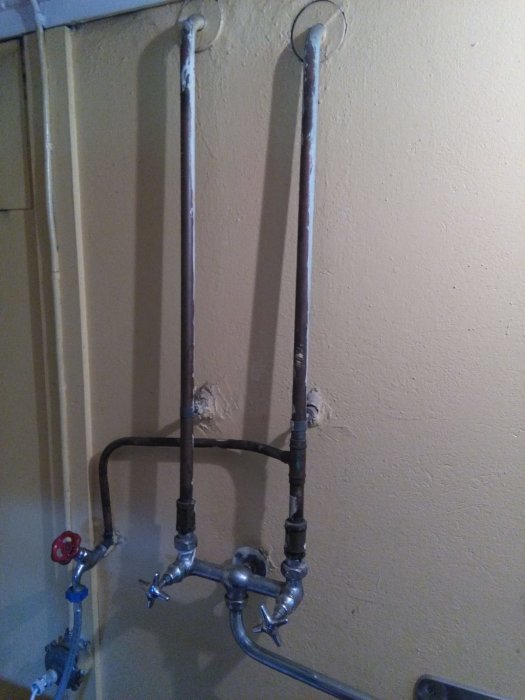
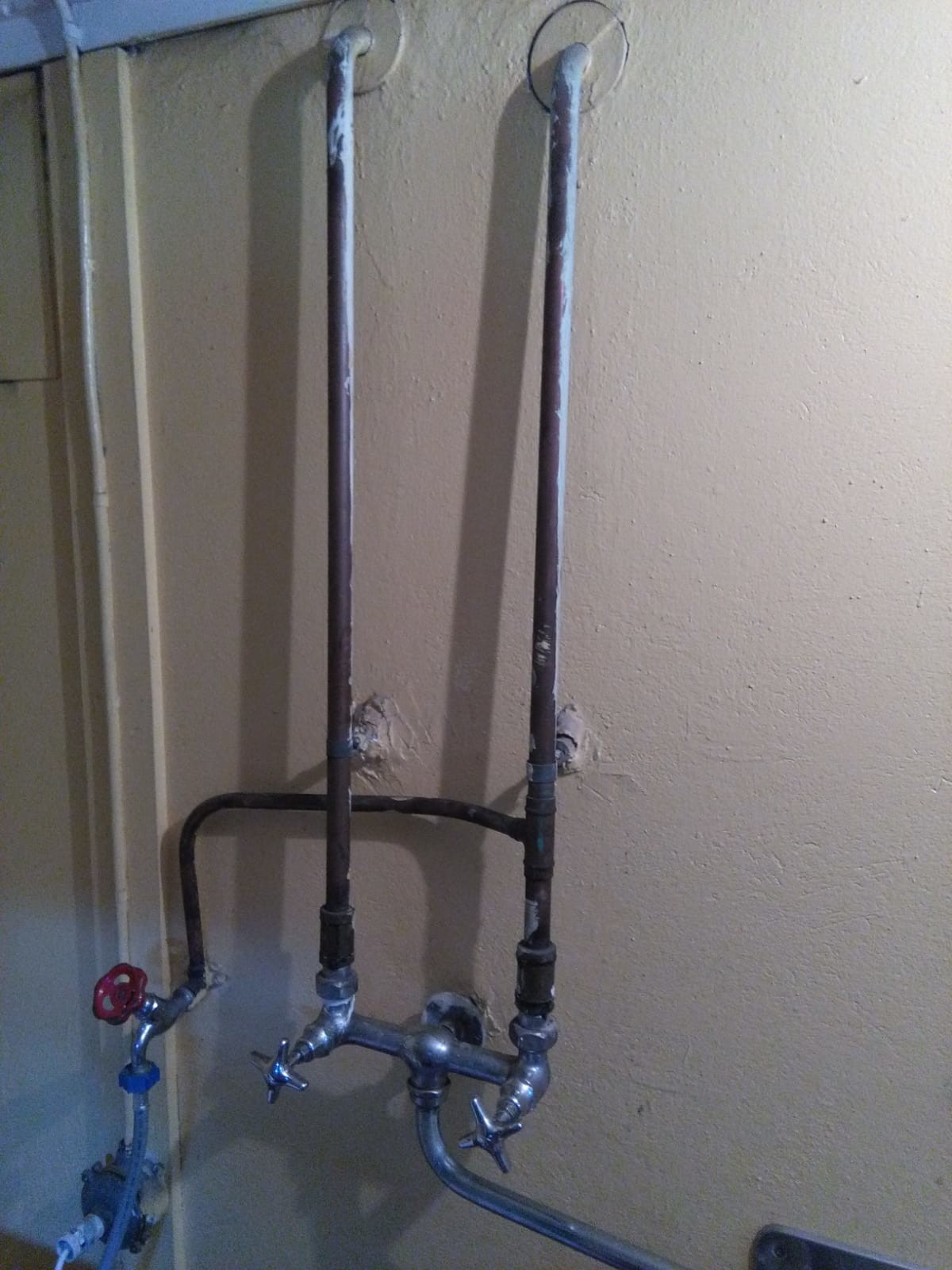
I have a 22mm galvanized pipe that needs to be connected to a garden hose bib. The hose bib has a Dy15 connection.
In the room where I want to install the hose bib, there's no easy way to connect anything without cutting the galvanized pipes and re-threading them, as I understand it.
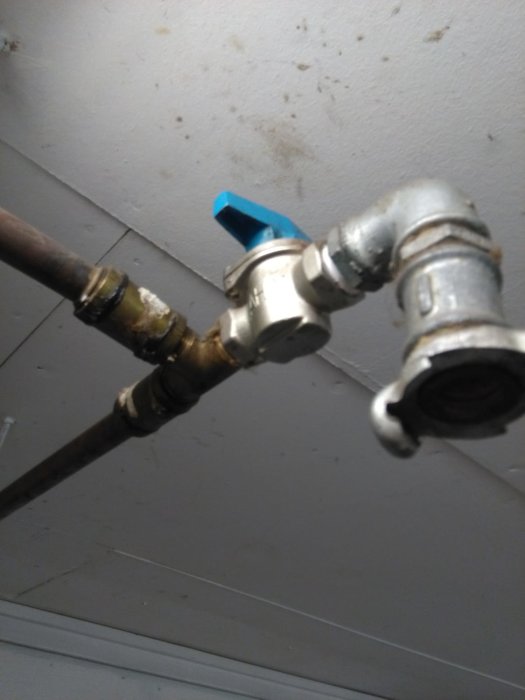
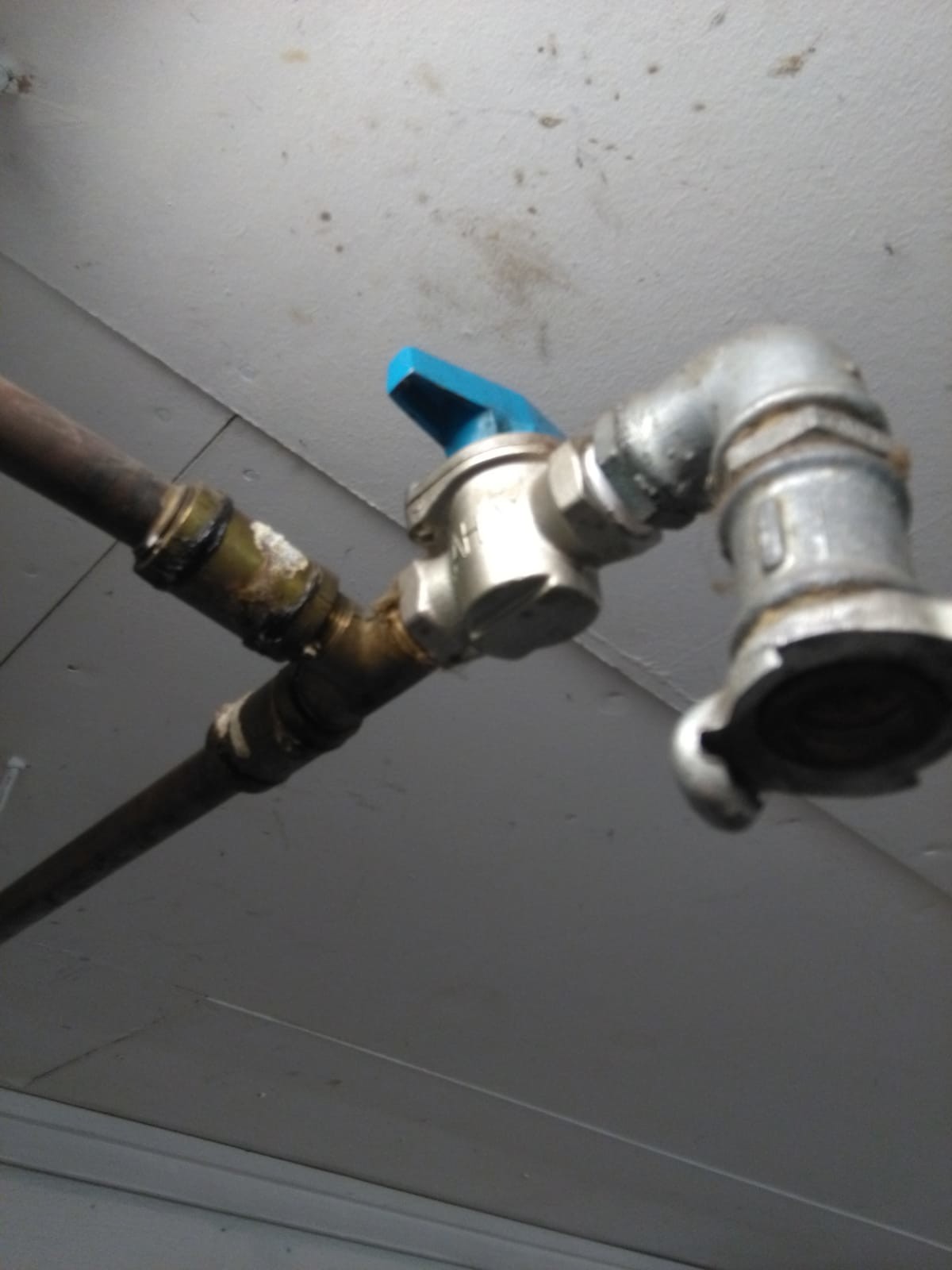
But in the previous room, there is a ball valve with some sort of hose connection. I can remove that hose connection and connect some sort of 22mm galvanized pipe to a 15mm copper pipe fitting there instead and then run the copper pipe along the ceiling, through the wall, and into the hose bib. Is this the simplest and cheapest solution for my problem without having to buy a lot of special threading tools etc.? And if so, what kind of fitting do I need to connect the copper pipe to the ball valve?
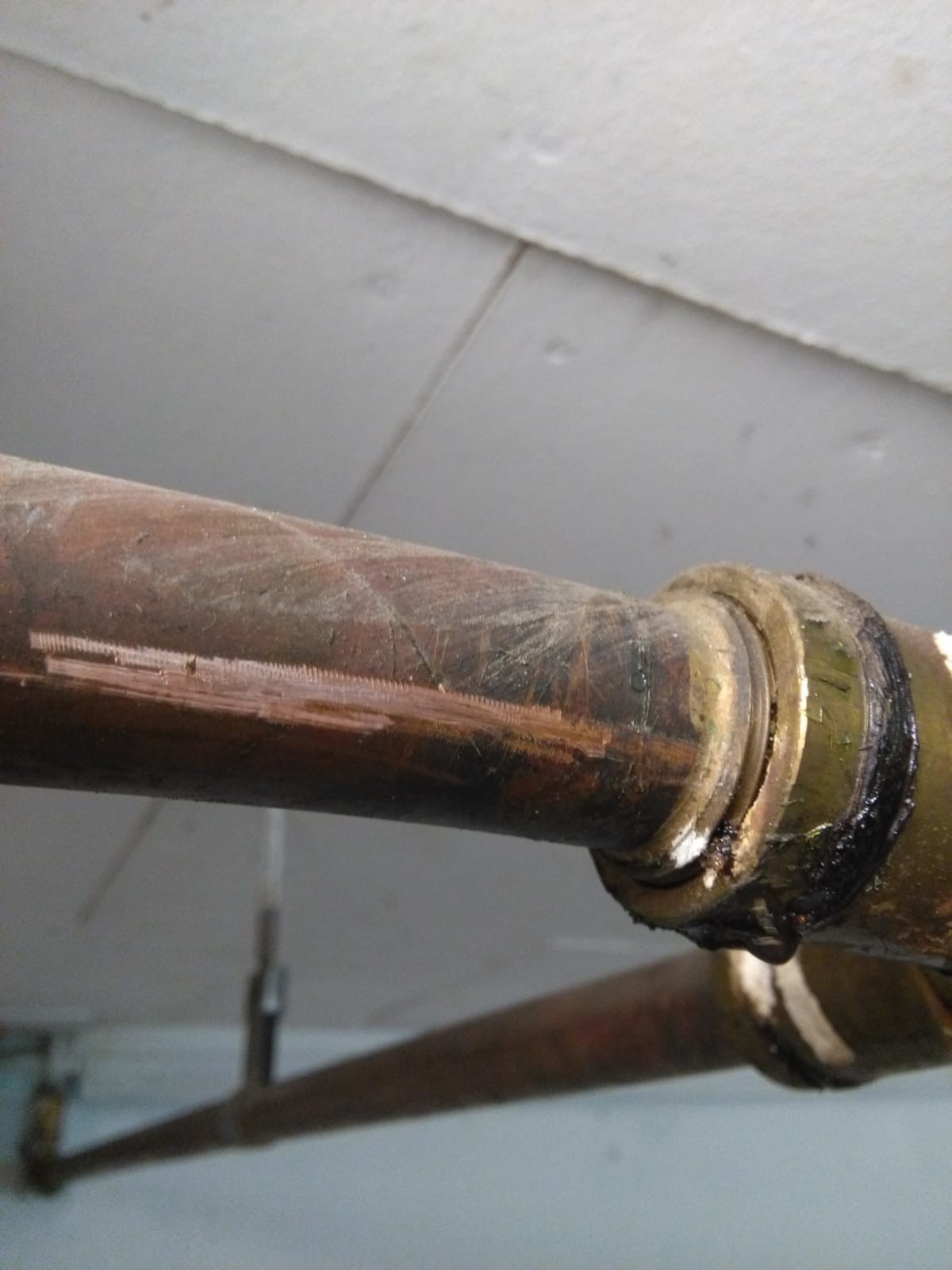
I think it looks like copper pipes everywhere except after the valve.
But I may be wrong.
If it's iron pipes, it should be 21 mm, copper pipes are available in 22 mm.
Scrape the pipes a little and the difference will soon be visible.
I think it looks like copper pipes everywhere except after the valve. But I could be wrong. If it's iron pipes, it should be 21 mm, copper pipes are available in 22 mm. Scrape the pipes a bit and the difference will soon be visible.
Protte
Now you'll have to excuse me for being an idiot, but I didn't think copper pipes were threaded, which these seem to be? They do look copper-colored when I scrape them, though, so have I misunderstood something? They are also definitely 22 mm.
The thread is soldered onto the pipe, so I would say it's copper.
Measure with calipers that it really is 22 mm, there are some old pipes with other dimensions, and then the easiest is a compression fitting if you can't solder.
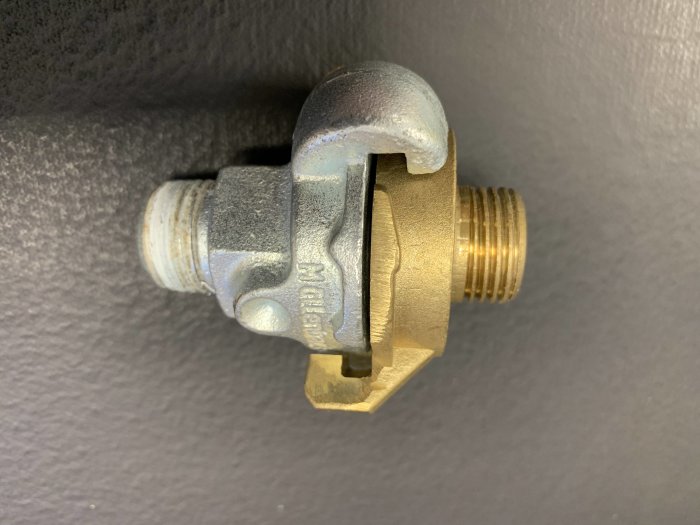
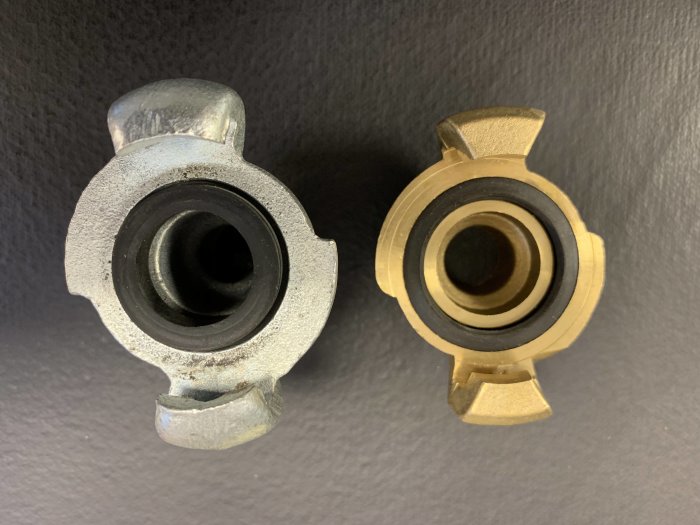
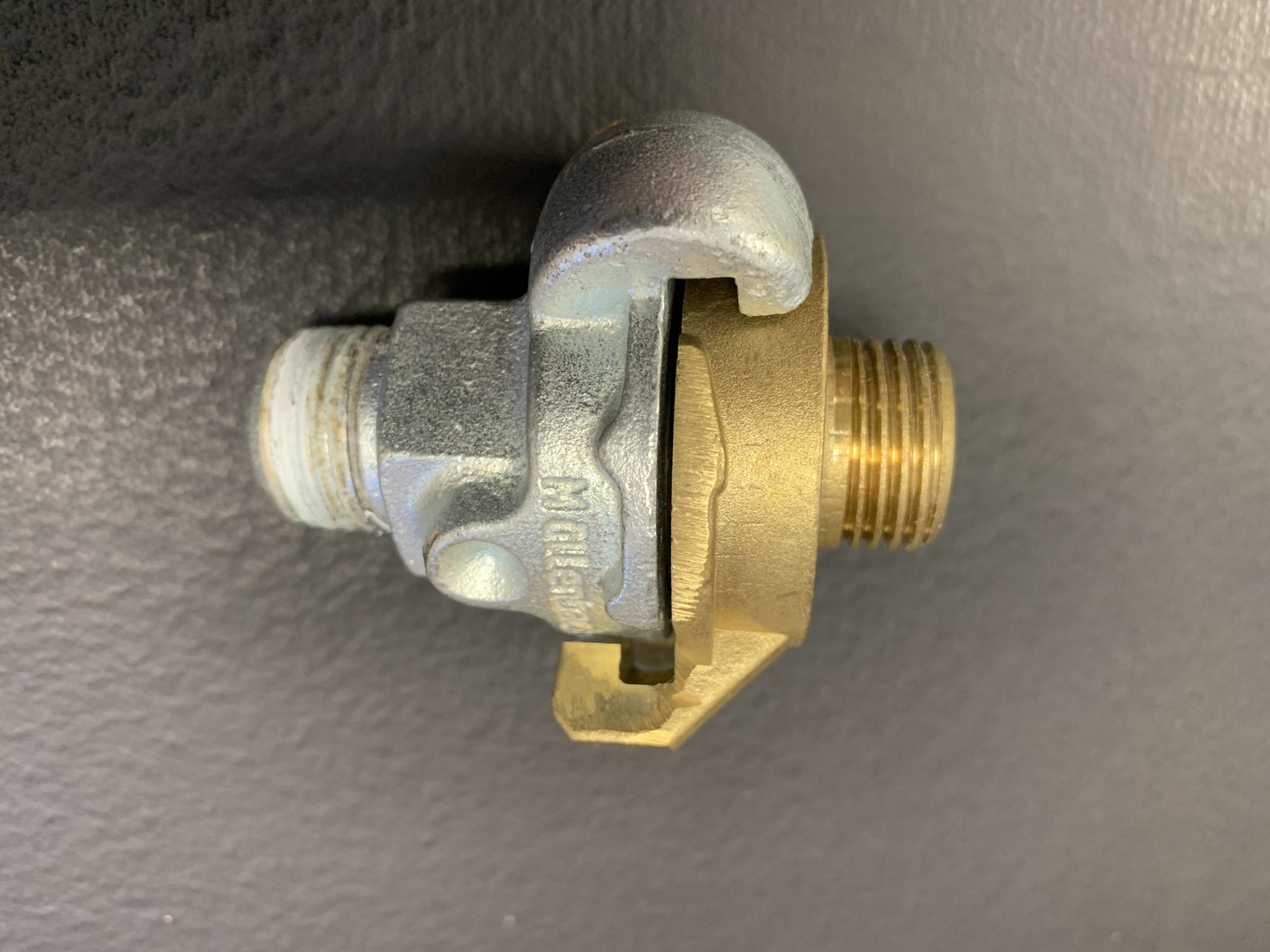
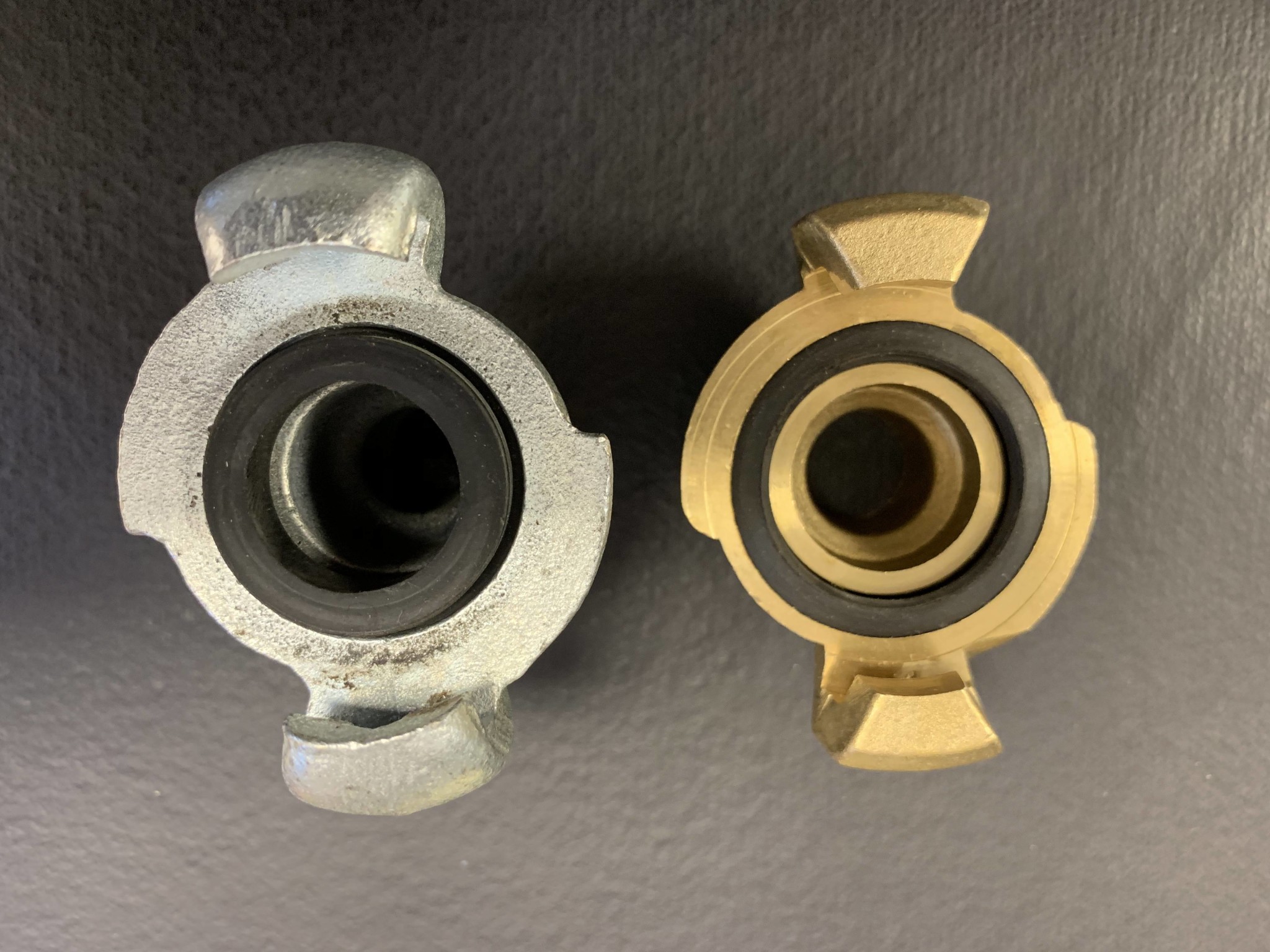
A little more OT, here are two pictures of claw couplings, the silver one for air & the brass one for water:
See the difference in the locking mechanism, can only turn them halfway
Different sized seals, the one for air goes inside the one for water.
A little more OT, here are two pictures of claw couplings, the silver one for air & the brass one for water:
[image]
See the difference in the locking mechanism, it can only be turned halfway
[image]
Different sizes of seals, the one for air fits inside the one for water.
Ok, then I have to ask why my cold water pipe has a claw coupling for air in it?
Regarding claw couplings, there are at least two different types in brass as well. Those that do not fit with the steel pneumatic coupling are generally of the "Geka" type and are seen occasionally in connection with garden irrigation and similar situations where larger flows are required than what garden hose couplings can handle.
Then there are claw couplings according to SMS (1175, 1176, 1179, 1180, etc.) used for fire hoses. They are slightly larger than Geka claw couplings and therefore often fit somewhat with steel claw couplings for compressed air. However, they do not fit at all with Geka.
I can imagine that a previous owner had good access to used fire hoses or compressed air hoses and used these as water hoses in some context. However, SMS claw couplings in brass are disgustingly expensive if available at all, so it is surely tempting to use the cheaper pneumatic coupling which at least works reasonably well for water too.
Agree with PNO, I had no idea there was a difference between water and air so if I had a fitting lying around, I probably would have used it, regardless of type.
Furthermore, compressed air usually contains some water and water some gases.
I think it looks like copper pipes everywhere except after the valve.
But I could be wrong.
If it's iron pipes, it should be 21 mm, copper pipes are 22 mm.
Scrape the pipes a little, and the difference will soon be visible.
Protte
I have a soft-soldered T-piece where the connection that goes out of the pipe is damaged, is it possible to desolder and resolder a new piece of pipe without all the solder on the T-piece coming loose? It's 15mm pipe.
Click here to reply
Vi vill skicka notiser för ämnen du bevakar och händelser som berör dig.



Demmpa said:

