

Self-builder
· Stockholm
· 39 posts
I have only built walls of wood, plaster, and steel before, so I'm a bit at a loss on how to fix this corner in a neat way. The wall consists of slag concrete and plaster. On the other side where it is framed, I will attach plaster and OSB.
As you can see, the fracture surface isn't very pretty. My idea is: plumb the stud in the corner and attach it firmly, then fill the space with something. Then bring the OSB and plaster to the corner and mount a corner profile that I will plaster over.
What would you fill with? Do you need some primer on the stone surface? Or is the whole idea doomed, and I should switch to lace-making instead?
As you can see, the fracture surface isn't very pretty. My idea is: plumb the stud in the corner and attach it firmly, then fill the space with something. Then bring the OSB and plaster to the corner and mount a corner profile that I will plaster over.
What would you fill with? Do you need some primer on the stone surface? Or is the whole idea doomed, and I should switch to lace-making instead?
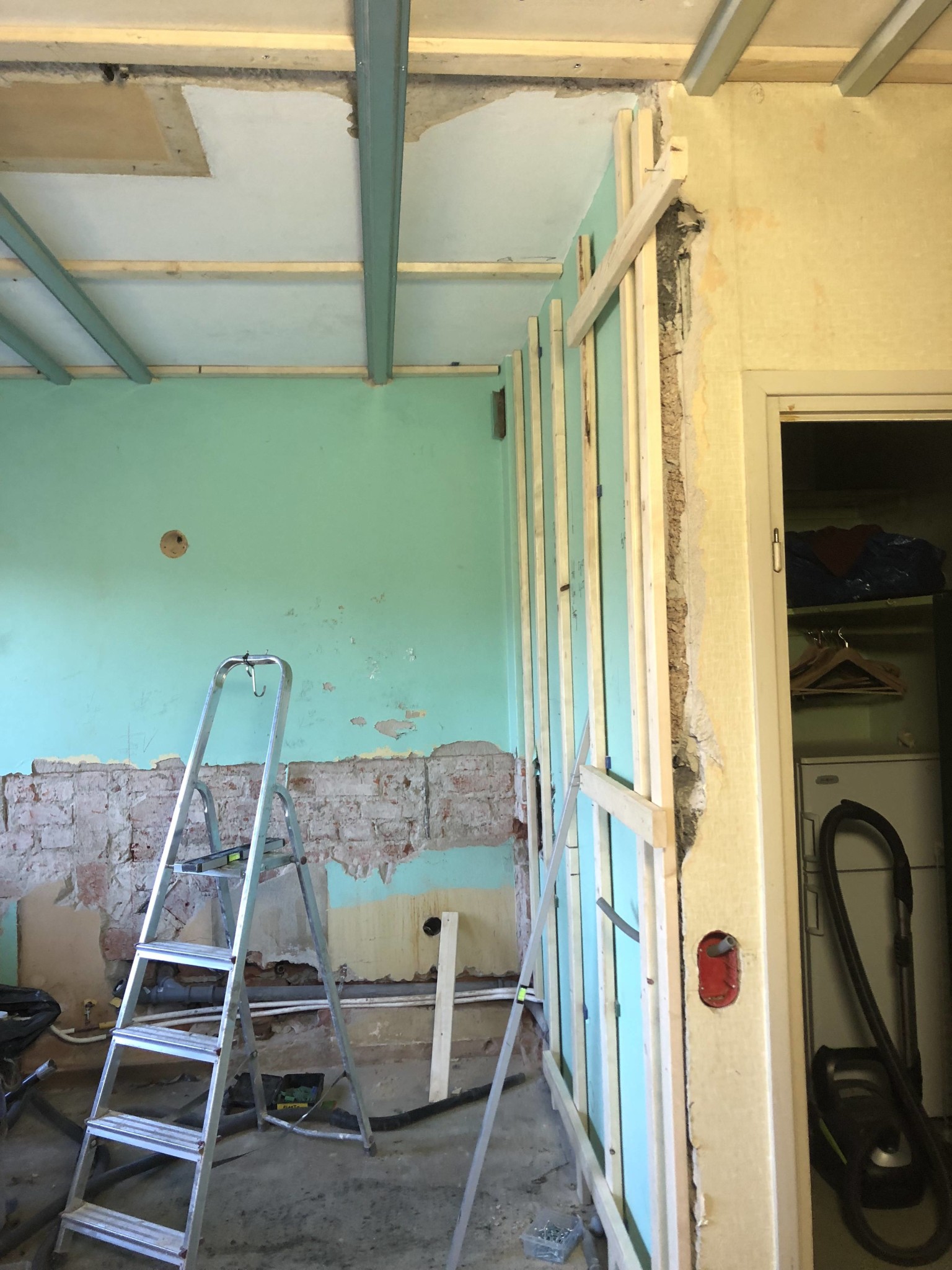
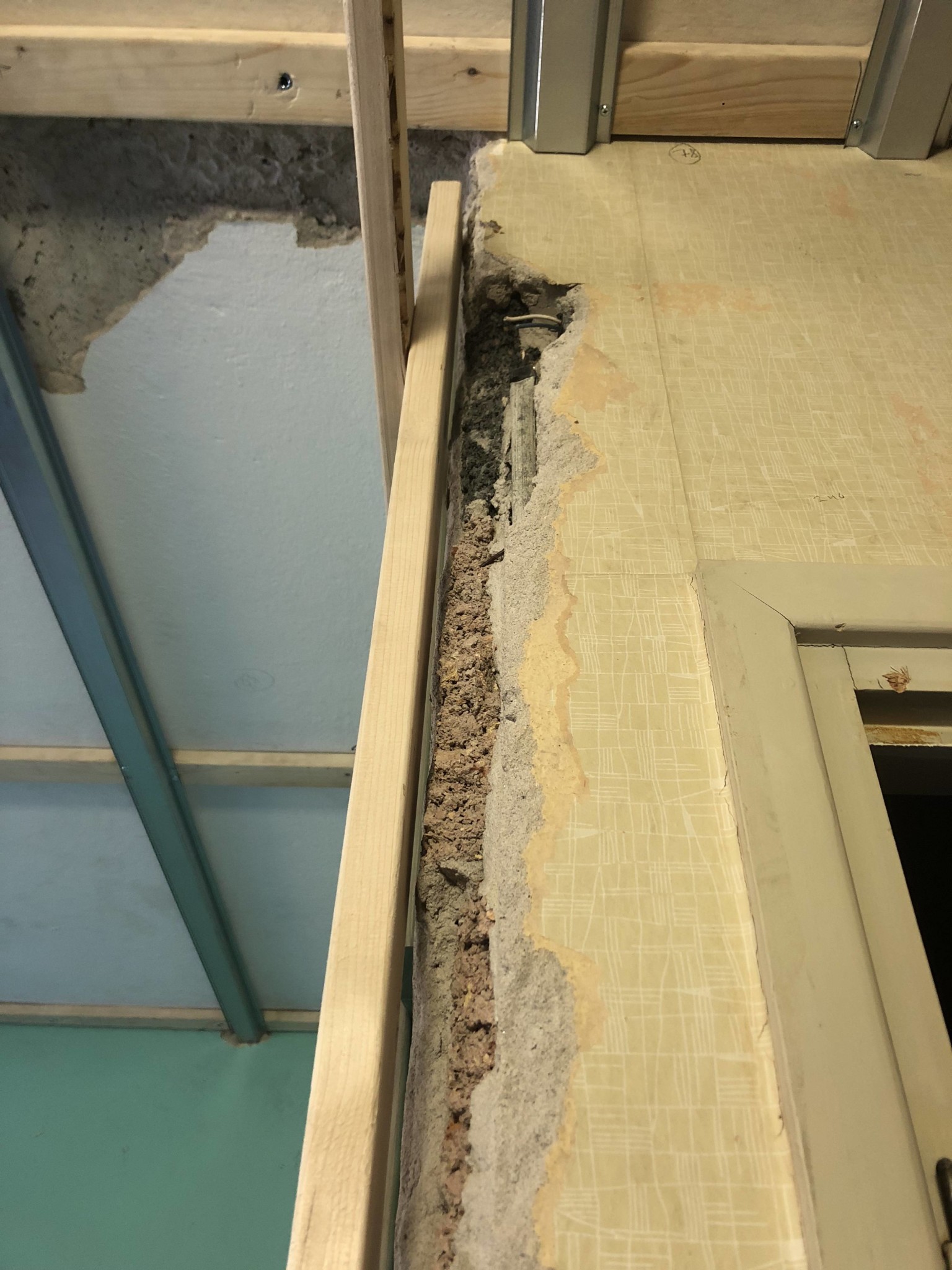
You are definitely on the right track - Try to avoid wood out towards the corner and perhaps choose two strips of gypsum towards the end instead of OSB/gypsum. (Wood moves and can lead to cracks in the future). Shower on with primer to bind loose dust and get better adhesion, as it doesn't look like this wall will be exposed to moisture from the outside, I would use something like Finja Gipsputs or equivalent to fill in. If you then want to put on a gypsum corner, why not, and finish with regular sand filler.
Should work excellently!
Should work excellently!
Self-builder
· Stockholm
· 39 posts
Thanks for the quick and good response! Correct, there will only be a stovetop a bit away. I also suspected that wood all the way out wasn't good, so I set it just 2 plasterboard thicknesses from the opposite wall's surface.slacker said:
You're definitely on the right track - Try to avoid wood extending to the corner; perhaps choose two strips of plasterboard towards the end instead of OSB/plasterboard. (Wood moves and can lead to cracks in the future).
Shower on with primer to bind loose dust and get better adhesion; since it doesn't look like this wall will be exposed to moisture from the outside, I would use something like Finja Gipsputs or equivalent to fill it in. If you then want to apply a plasterboard corner, why not and finish with regular sand filler.
Should work excellently!
Then I'll probably do that – scrape away a little more plaster on the opposite wall so there's room for a reasonably wide plasterboard strip. Maybe I can attach it with the plaster mix even?
Exciting! Never worked with plaster mix before.
Best answer
The gypsum plaster will adhere to both the plaster and the concrete, so you'll also get a certain amount of adhesion from that. In my opinion, gypsum plaster is an excellent product as the tools are easier to clean, it can be sanded to some extent, and it's easy to work with compared to concrete-based products like husfix and similar ones (which are also more expensive).
I don't think you need to chip away much more as it will only make it harder to repair against the door frame—cover what you can with plaster, then just apply primer and plaster.
You could certainly get a straight edge and, with a strip that can be somewhat attached, it would be a good solution, I believe.
Where you've also chipped away tile—it should be fixed in the same way, primer and then apply plaster. If new tiles are going up, you tile directly—if it’s going to be painted, finish with filler.
I don't think you need to chip away much more as it will only make it harder to repair against the door frame—cover what you can with plaster, then just apply primer and plaster.
You could certainly get a straight edge and, with a strip that can be somewhat attached, it would be a good solution, I believe.
Where you've also chipped away tile—it should be fixed in the same way, primer and then apply plaster. If new tiles are going up, you tile directly—if it’s going to be painted, finish with filler.
Click here to reply