
7,902 views ·
17 replies
8k views
17 replies
Wood and treatment for cutting boards
Hobby carpenter
· Bjärehalvön
· 379 posts
Not entirely sure if this thread belongs here, but let's give it a try.
I'm interested in making a couple of cutting boards and have read a bit about types of wood. Preferred types of wood would be beech, maple, cherry, walnut, and the ones to avoid include oak and pine.
I've tried a few different ones but would like a slightly different tone in the wood, that doesn't lean too much towards yellow. Do you have any recommendations on methods or wood types to use to achieve this? I know Osmo has a hard wax oil called "Nature" which is somewhat white pigmented but it feels way too strong to use on a cutting board.
For example, could you let the wood sit and soak for a few months under the sun? Wood naturally grays in weather and wind. I also recall that regular tea can have a "bleaching" effect. Maybe let it sit and soak for a while in tea water...? Just shooting from the hip here I want to keep it as natural and untreated as possible. Maybe in the end, it's just about finding the ultimate type of wood?
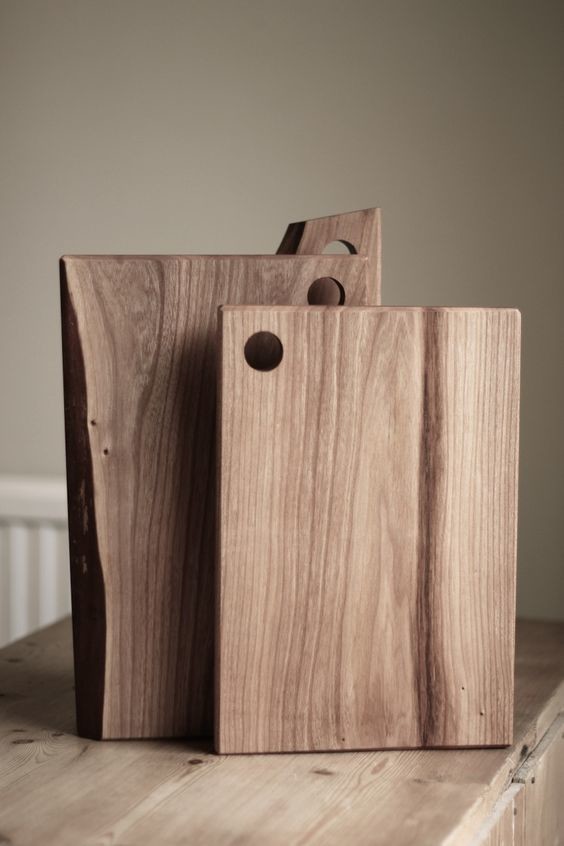
See picture for reference on nice treatment and tone.
Grateful for your input!
I'm interested in making a couple of cutting boards and have read a bit about types of wood. Preferred types of wood would be beech, maple, cherry, walnut, and the ones to avoid include oak and pine.
I've tried a few different ones but would like a slightly different tone in the wood, that doesn't lean too much towards yellow. Do you have any recommendations on methods or wood types to use to achieve this? I know Osmo has a hard wax oil called "Nature" which is somewhat white pigmented but it feels way too strong to use on a cutting board.
For example, could you let the wood sit and soak for a few months under the sun? Wood naturally grays in weather and wind. I also recall that regular tea can have a "bleaching" effect. Maybe let it sit and soak for a while in tea water...? Just shooting from the hip here
I want to keep it as natural and untreated as possible. Maybe in the end, it's just about finding the ultimate type of wood?See picture for reference on nice treatment and tone.
Grateful for your input!
Hobby carpenter
· Bjärehalvön
· 379 posts
I was also surprised when I heard it! (a video on YouTube where a carpenter went through various types of wood) but apparently, the reason is that oak is a type of wood that has "open grain" and thus absorbs moisture. But I don't know, I think oak is really nice and seems to work well.K kniv said:
What a great tip! How does that oil feel after a while? Do you need to treat it often?
Please link it. Many use oak specifically for cutting boards, so I'm somewhat skeptical of that claim until proven otherwise. So a bit more evidence there, please.C carlfredrik said:I was also surprised when I heard that! (a video on YouTube where a carpenter went through various types of wood) but apparently the reason is that oak is a wood with "open grain" and thus absorbs moisture. But I don't know, I think oak is really nice and seems to work well.
What a great tip! How does that oil feel after a while? Do you need to treat often?
The final result depends so much on your wood, and you can do the same thing to two vastly different pieces (but the same type of wood) and get completely different results regardless of the oil you use.
But I think it's super good, outperforms Odies hard wax oil and especially beats Herdins oils, which is still a large and well-known brand. I've mostly used the unpigmented one, but it's the same oil base as I understand it, just a bit of white pigment in "Natural Wood" specifically to counteract the yellowing effect you might experience at times. Hozon also has hard wax oil and only wax where you can combine all products exactly as you wish.
All my cutting boards, whether bought or homemade, need a little love occasionally. Once every six months or once a year is usually enough, it all depends on how much wear they get and whether it's end grain or flat side. I have often used pure olive oil before, it worked well but needed to oil them more often that way.C carlfredrik said:I was also surprised when I heard that! (a video on YouTube where a carpenter went through various types of wood) but apparently the reason is that oak is a wood that has "open grain" and therefore absorbs moisture. But I don't know, I think oak is really nice and seems to work well.
What a great tip! How does that oil feel after a while? Do you need to treat it often?
Hobby carpenter
· Bjärehalvön
· 379 posts
Absolutely right, you have to be skeptical. Here's the video:K kniv said:Please link. Many use oak for cutting boards, so I am somewhat skeptical of that statement until proven otherwise. So a bit more supporting evidence would be appreciated.
The final result depends so much on your wood, and you can do the same thing on two very different pieces of wood (but the same type of wood) and get completely different results regardless of the oil you use.
But I think it's great, beats Odies' hard wax oil and especially surpasses Herdins oils, which are still a large and well-known brand. I've mostly used the unpigmented one, but it's the same oil as I understand it, just with a bit of white pigment in "Natural Wood" to counteract the yellowing effect you can sometimes experience. Hozon also has hard wax oil and just wax, where you can combine all products exactly as you wish.
Watched a bunch of videos and just listed the different types of wood under "To Use" and "To Avoid," and under avoid, oak ended up there after I saw this video. It's very possible that the reason she mentions is completely irrelevant. I know nothing about that.
Hobby carpenter
· Bjärehalvön
· 379 posts
But if I, for example, give away a cutting board that is treated with "Natural Wood", won't the whitening effect disappear over time if the person I gave the board to doesn't maintain it with the same oil?K kniv said:All my cutting boards, whether bought or homemade, need some love every now and then. Once every six months or once a year is usually enough, all depends on how much wear they get and if it's end grain or flat side. I've often used pure olive oil before, worked well but need to oil them significantly more often then.
How long is over time.. All oils and wood age over time, so that risk is likely regardless of the oil, I think. But I believe that a basic treatment will last a long time, and if you maintain it regularly (regardless of the oil), it should be able to retain its color/shape quite well. But it's hard to say without actually testing this over several years - we can test it on a board and return here in 3-5 years or something...C carlfredrik said:
I'm not a professional on all oil products, so that's probably a good question to ask Alex, who is behind Hozon. You will get a response within a day or so, he is great to deal with, top service! https://www.wikstrominterior.se/kontakt/
Thanks, I'll check it out later tonight.C carlfredrik said:Absolutely right, one must be critical of sources. Here is the video:
[media]
I watched a bunch of videos and just listed the different types of wood under "To use" and "To avoid" and under avoid fell oak after seeing this video. It's quite possible that the reason she mentions is completely irrelevant. I know nothing about that.
Hobby carpenter
· Bjärehalvön
· 379 posts
Great! Appreciate your help. I will probably send an email to Alex!K kniv said:How long is over time... All oils and wood do change over time, so that risk exists regardless of the oil, I think. But I believe that a basic treatment will last a long time, and if you maintain it regularly (regardless of oil), it will probably be able to retain its color/shape quite well. But it's hard to say without actually testing this over several years - we could try it on a board and return here in 3-5 years or something...
I am not a pro on all oil products so that's probably a good question to ask Alex, who is behind Hozon. You'll get a response within a day or so, he is great to deal with, top service! [link]
I am still very skeptical. Find incredibly little on the subject in general, and if it is as bad as she claims, several times, she shouldn't be the only one contributing to the debate. And generally, my impression of her is weak when the video is so heavily edited. And also the fact that viewers are absent makes me a bit more doubtful. Moreover, she also claims that cherry must be 50mm thick if end grain is to be used, without further arguments to back up that statement. There are a few more question marks that she doesn't elaborate on, so overall, I don't think much of that video.C carlfredrik said:Absolutely right, you have to be critical of sources. Here is the video:
[media]
I watched a bunch of videos and just listed the different types of wood under "To use" and "To avoid" and under avoid, oak ended up after I saw this video. Very possible that the reason she mentions is completely irrelevant. I don't know anything about that.
But the whole basis is a single argument that the fibers of oak will absorb so much water and bacteria that it will then mold. What happened to the finish and saturating the wood with oil? She completely omits that. And doesn't she clean them only to then let them sit in the dark and damp for a long time?
Nahhhh. An oak board of end grain or flat side, well saturated with oil and possibly wax, cleaned after use and wiped dry (not air drying), used daily/often and then gets some new oil as needed will last long and not be any problem at all.
Hobby carpenter
· Bjärehalvön
· 379 posts
And with that, I'm moving "oak" from my "To avoid" list to my "To use" list.K kniv said:I remain very skeptical. I find incredibly little on the subject in general, and if it is as bad as she claims, multiple times, she shouldn't be the only one contributing to the debate. And generally, my impression of her becomes weak when the video is so heavily edited. And even the fact that the viewers are absent makes me a bit more doubtful. Furthermore, she also claims that cherry must be 50mm thick if end grain is to be used, without more arguments to support that statement. There are a few more question marks that she doesn't elaborate on, so overall I don't think much of that video.
But the whole thing she bases it on is a single argument that oak's fibers will absorb so much water and bacteria that it will then have time to mold. What happened to the finish and saturating the wood with an oil? She leaves that out completely. And doesn't she clean them and then let them stand dark and damp for a long time?
Noooo. An oak board of end grain or flat side, well saturated with oil and possibly wax, cleaned after use and wiped dry (not air drying), used daily/often and then gets a bit of new oil when needed will last a long time and won't be any problem at all.
Thanks for the professional input!
If it's lighter woods you're after, ash is almost white. However, I don't know how suitable it would be for cutting boards. It's hard but very porous. If it's just the treatment you're concerned about, you could always try walnut oil. It doesn't become as yellow as linseed oil. Paraffin can also be used (food safe) and maybe beeswax works, though I haven't tested that. Hope that was of some help!C carlfredrik said:Not entirely sure if this thread is right here, but we'll test.
I'm interested in making a couple of cutting boards and have read a bit about wood types. Preferred woods would be beech, maple, cherry, walnut and woods to avoid include oak and pine.
I've tested a few different ones but would like a slightly different tone in the wood, one that doesn't lean too much towards yellow. Do you have any recommendations on methods or types of wood to use to achieve this? I know Osmo has a hard wax oil called "Nature" that is somewhat white-pigmented but I think it feels way too strong to use on a cutting board.
For example, could you let the wood sit for a few months under the sun? Wood naturally greys in weather and wind. I also have a feeling that regular tea can have a "bleaching" effect. Maybe let it soak in tea water for a while...? Just shooting from the hip here
See picture for reference on fine treatment and tone.
Grateful for your input!

Maybe best to take a couple of pieces of wood and test different treatments.
I personally only use a homemade mixture of beeswax and paraffin for my wooden cutting boards, but I don't think much about appearance, just function.
I personally only use a homemade mixture of beeswax and paraffin for my wooden cutting boards, but I don't think much about appearance, just function.

I THINK tea colors dark, depending on the tea, of course, since it can be anything. Tying a bunch of cutting boards to the shoreline for a year might give the effect you're looking for. Here, I THINK the fibers in the wood would be ground down and torn apart by sand, water, sun, and salt. That is, a potential surface that feels like sandpaper longing to soak up fat and moisture. You could test with lye to etch out the wood. It would probably look nice. The next question is how to maintain the finish but make it hydrophobic/impregnated. Carnauba wax isn't supposed to darken wood notably, beeswax not much either but I believe it does a little bit. Mineral oil would be the oil to use, linseed oil turns very yellow although it looks nice on oak. Perhaps white-pigmented wax oil is your solution? As someone says in the thread: all woods react differently. Oak becomes warmly rich and nice with linseed oil, birch doesn't turn as nicely yellowish. You have to try, but that's what's so fun!C carlfredrik said:Not entirely sure if this thread ends up right here, but let's try.
I'm keen on making a couple of cutting boards and have read up a bit on wood types. Preferred wood types would be beech, maple, cherry, walnut, and woods to avoid include oak and pine.
I've tried different ones but would like a slightly different tone in the wood, not leaning too much towards yellow. Do you have any recommendations on ways or wood types to use to achieve this? I know Osmo has a hard wax oil called "Nature" which is somewhat white-pigmented, but it feels way too strong to use on a cutting board.
Could one, for example, let the wood sit for a few months under the sun? Wood naturally greys in the weather. I also seem to remember that regular tea can have a "bleaching" effect. Maybe let it soak in tea water for a while...? Just shooting from the hip here
See the picture for reference on fine treatment and tone.
Grateful for your input!