I don't think this matters too much and it's hard to say it should be a certain way because there are too many different factors involved, but…
I'm sitting here thinking about what to do with outer corners where two exterior walls meet.
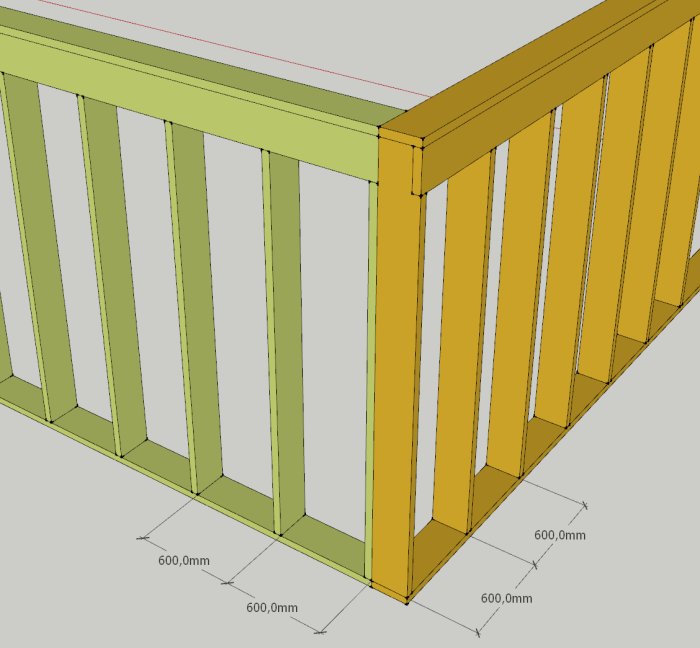
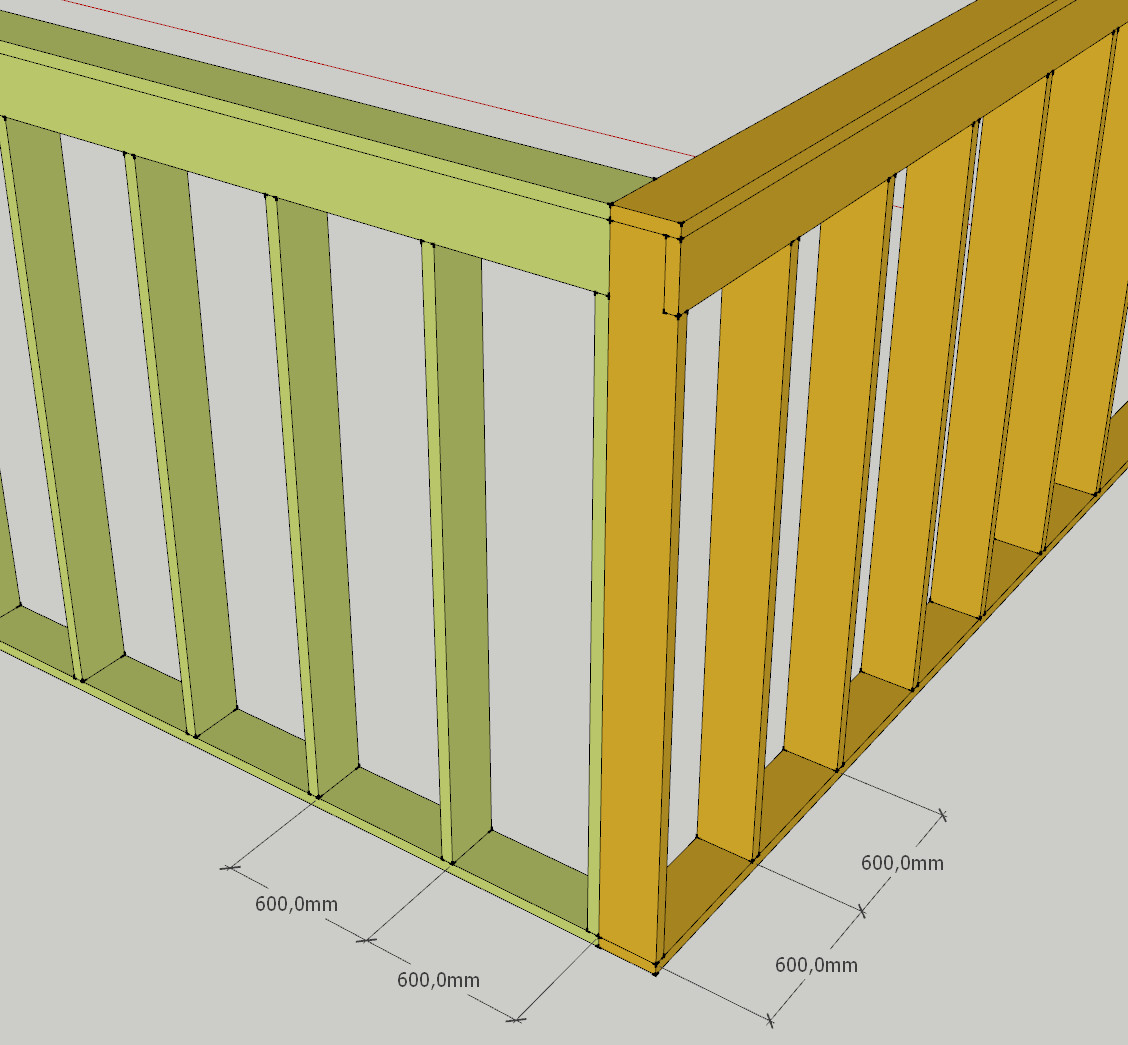
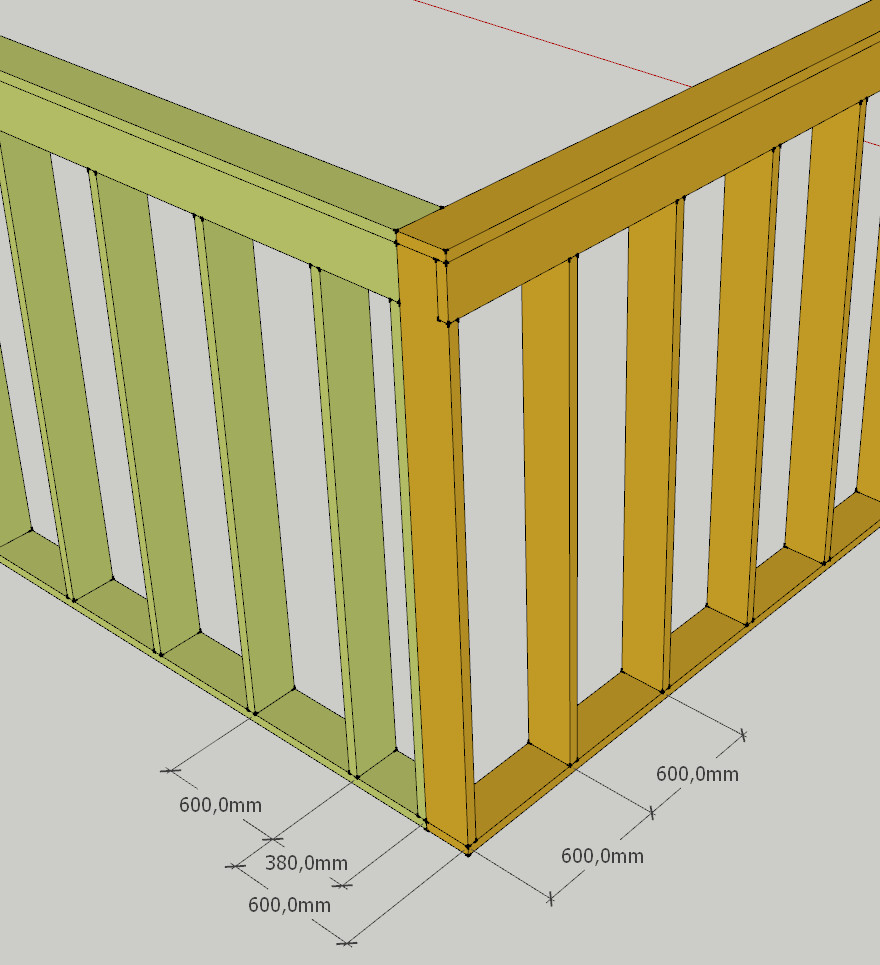
A carpenter I spoke with said you set up the walls independently of each other. That is, you build the walls c/c 600 and then just join them according to this image:
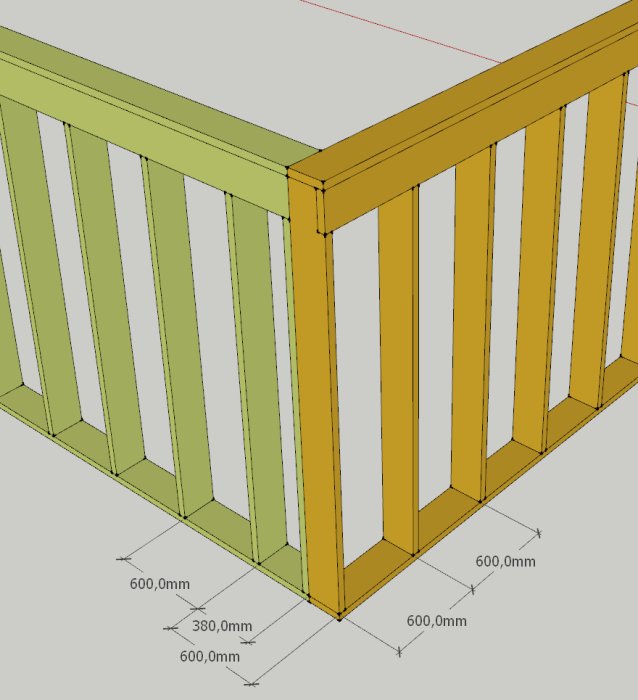
But by offsetting the first c/c 600 stud by the width of the other wall, you can create two walls where you can avoid cutting the drywall according to this image:
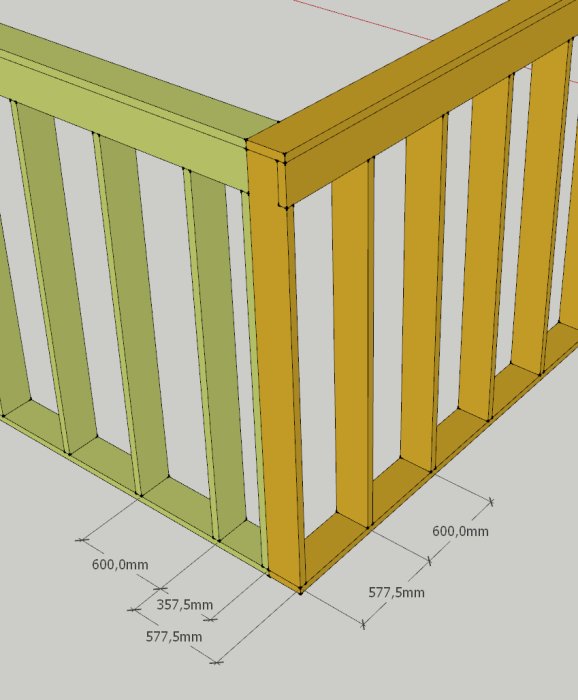
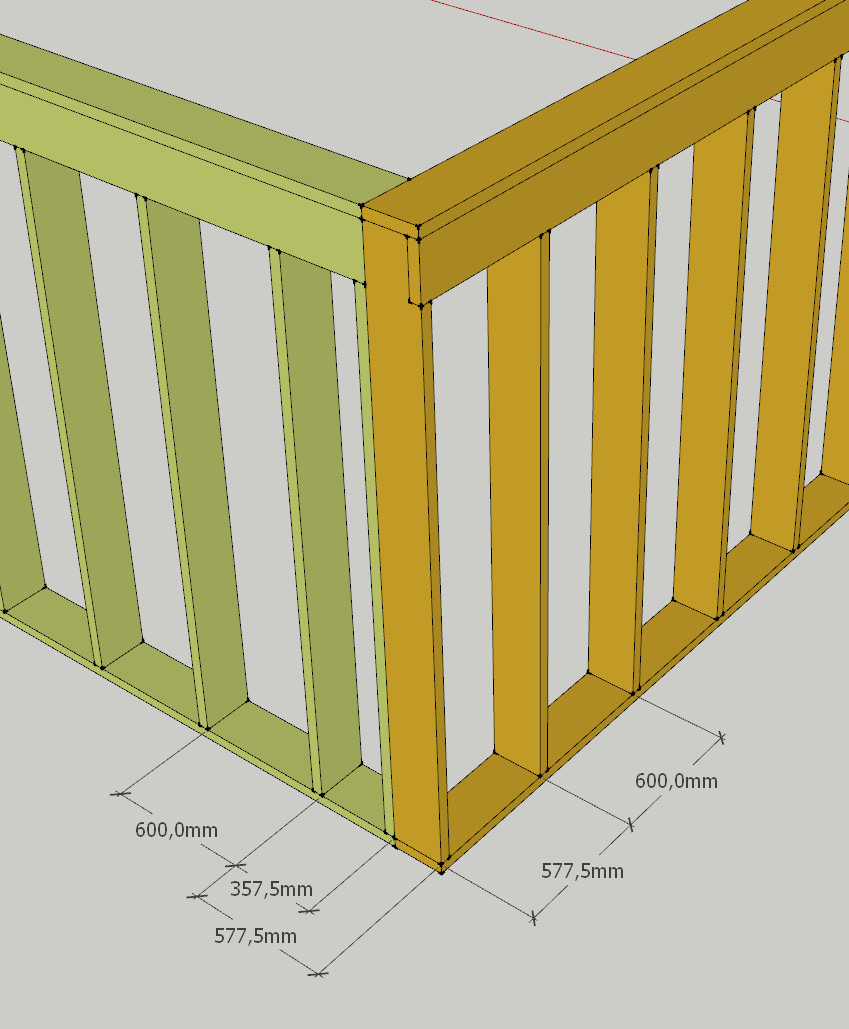
And to be completely correct, you need to consider that the drywall should land in the middle of the stud, so the measurements become:
Notes on the image:
1. There is no additional stud to avoid having nothing to nail into from the inside because this is a wall that has nothing directly inside.
2. The drywall is assumed to be 1200 or 1197 wide.
By doing that, you'll have to cut the insulation instead, unless you're going to use lösullsisolera?
Then maybe you want to do like most people today and have a wooden board under the drywall... then the joints need to be staggered... so you can't avoid adjusting some part of the material.
While we're on the topic of wall plates... I've seen people place their transfer beams under the wall plate on the "inside" instead of the "outside". Is there any advantage to this other than having less wood exposed to the outside?
If you have a truss with a parallel horizontal beam, the wall plate should bear the same load regardless.
In my case, I have a parallel roof, so the point where the trusses meet the wall plate is on the "outside". Admittedly with a wedge, but I assume the pressure is highest there.
It is probably most common that the standing top plate is recessed on the outside because it becomes a bit simpler to insulate from the inside when you don't have the top plate obstructing the view to fit the insulation, and you want to avoid turning the wall panels on the nailing table.
But as for the placement otherwise, I don't know if it plays any rock 'n' roll!
Regarding the last mentioned, I have no idea, but an educated guess is that if the wedge is tight and good, it becomes equivalent to a notching that should transfer the load evenly to the top plate without any point load.