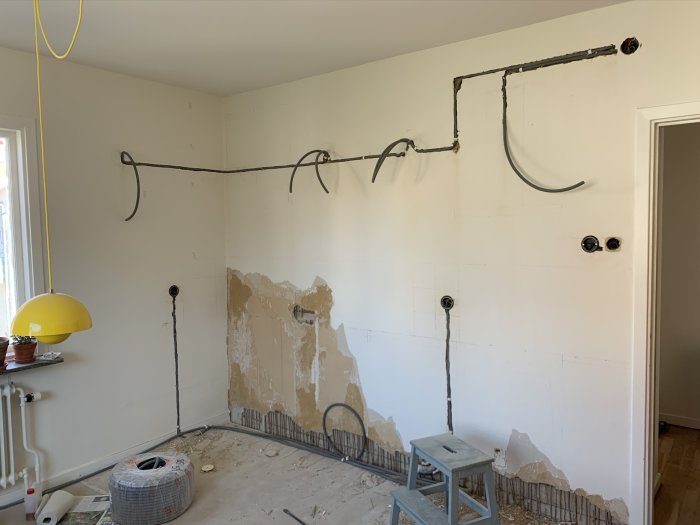
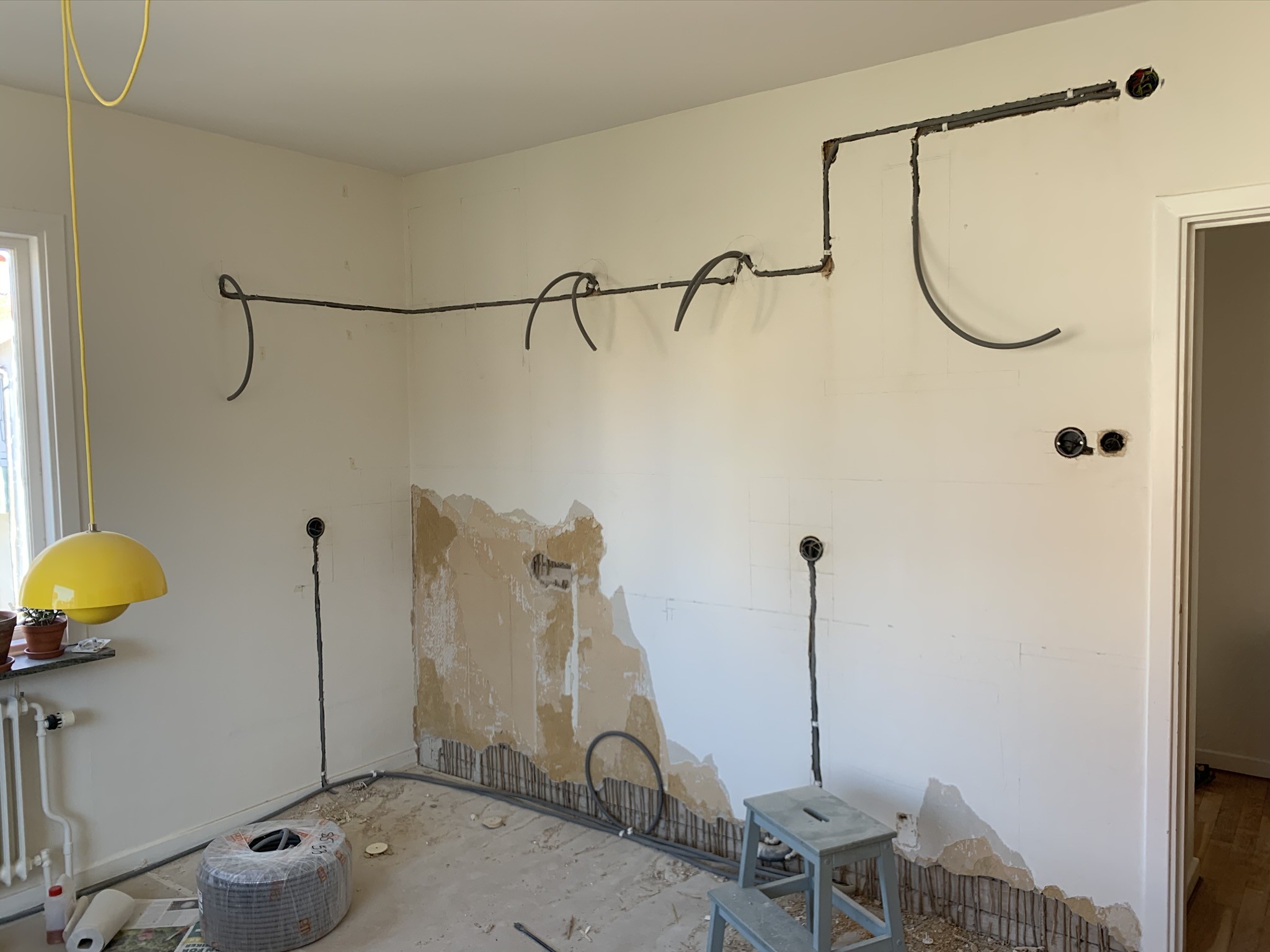
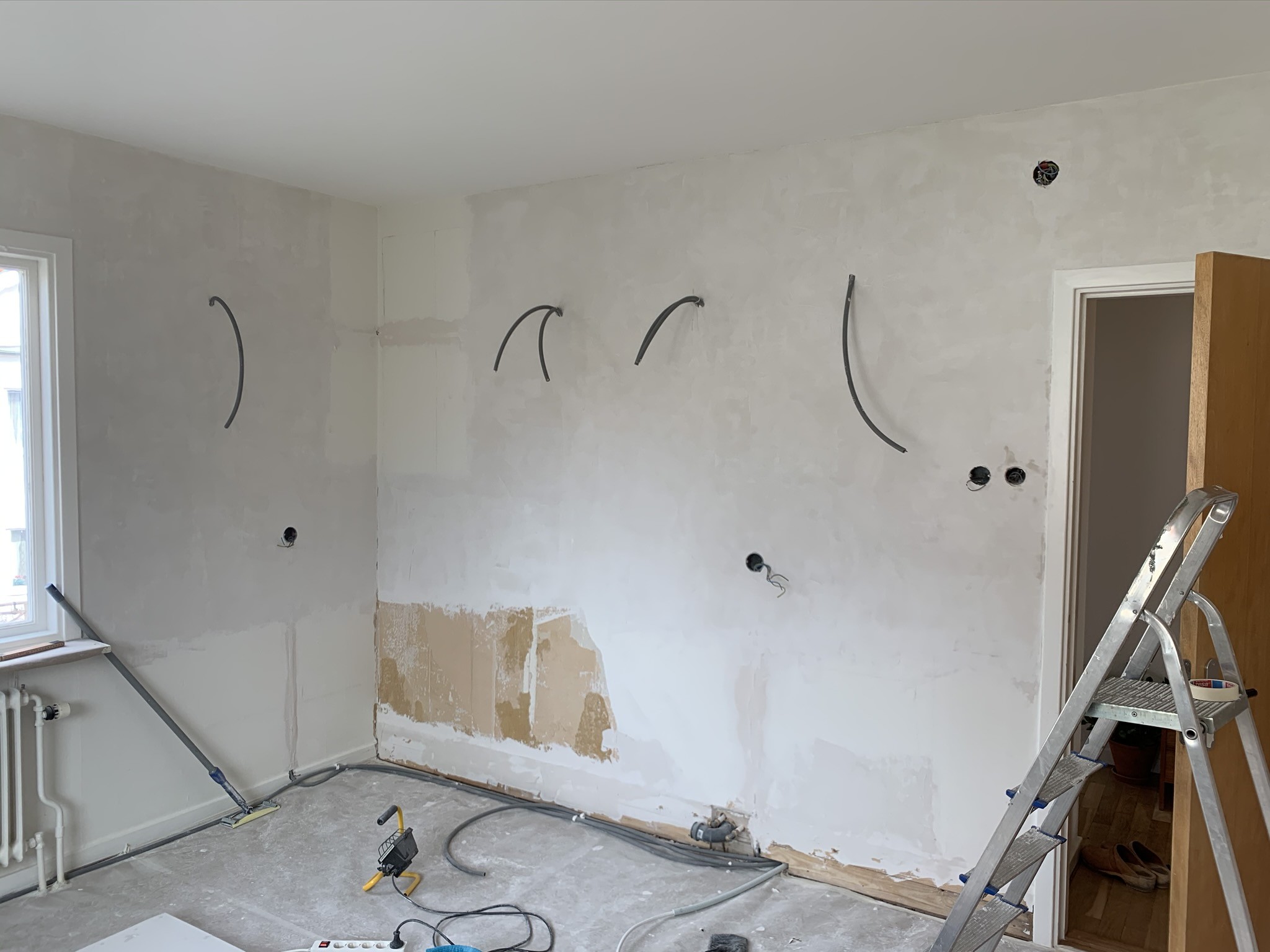
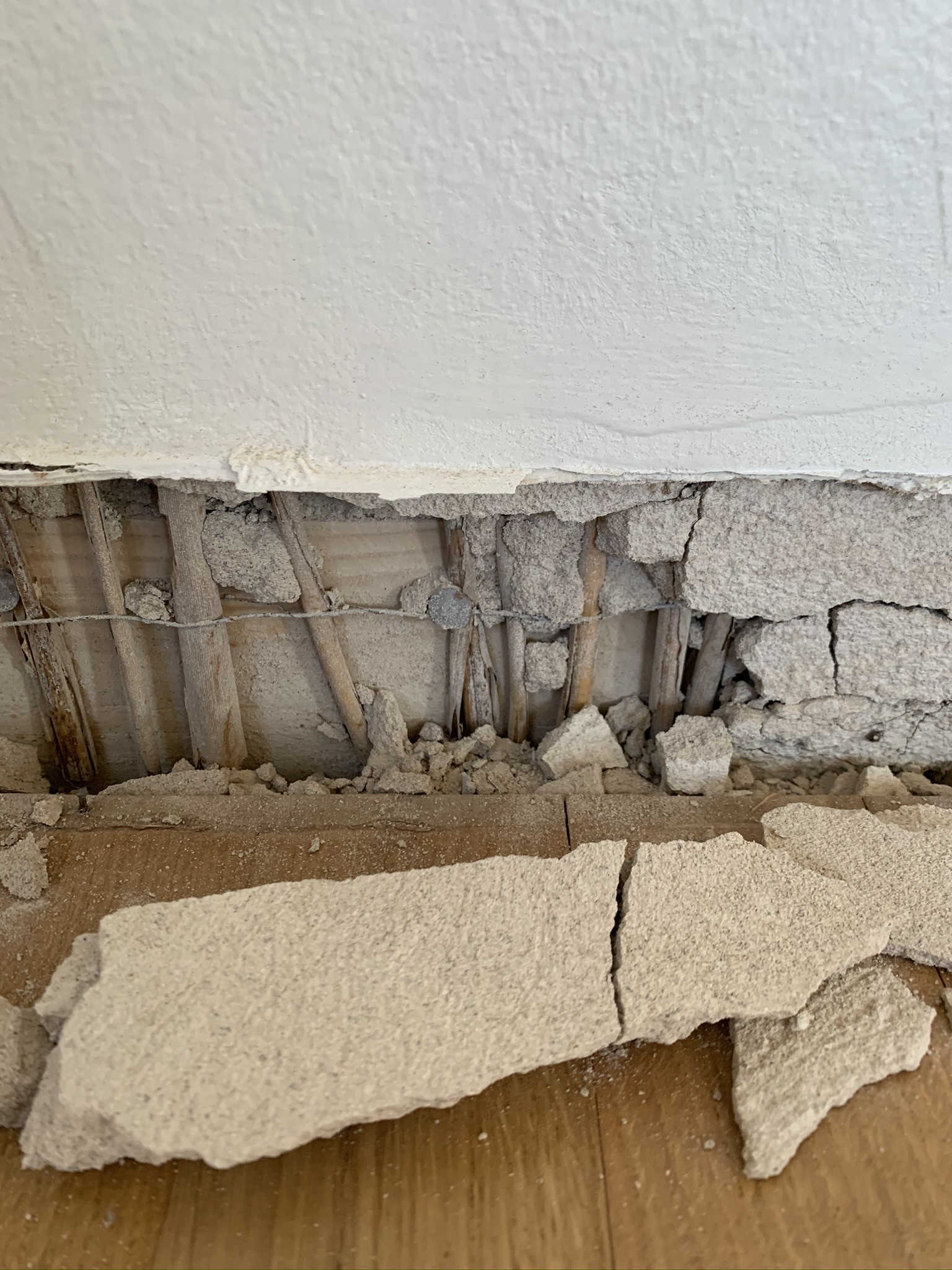
I'm moving the kitchen to a new room. The wall where the tiles and electrical work will be done is a plank wall with reed and plaster. The plaster is loose, at least at the bottom where pieces came off when I removed the baseboard.
What do you think I should do? Remove the plaster and reed down to the bare wood, or just remove the loose parts and use a wide filler? If I remove it to the bare wood, I think it will be easier to make channels for the electrical work and then put up drywall afterwards. But it will be more work...
House from '49. I'm not a builder myself, but I can probably handle one solution or the other with more or less effort...
Maintain the plaster and repair it where needed (lime plaster). It is a quality asset that is very costly to restore. Use the baseboards for routing VP pipes / flex conduit as much as possible.
I have experienced the same thing in the alcoves in my previous house. Patched and repaired the walls and applied micro-fiber before wallpapering. It was still nice when the house was sold 15 years later.
There's some micro fabric on it today, but not very neatly done.
Assuming the plaster isn't loose everywhere, I'm inclined to keep it but remove the micro fabric > route for electricity (lights will be in the middle of the wall, and electrical outlets will be on the tiles so restoration isn't as important there) > repair any plaster > skim coat.
The alternative is to run surface-mounted electricity to the lights, run kulo along the ceiling and then branches down to the lights. It's a retro funkis kitchen, so not entirely wrong.
Framing a new wall is too much work for too little gain If it's absolutely not possible to keep the plaster, I'll remove it and put up drywall, but I'd prefer to avoid that.
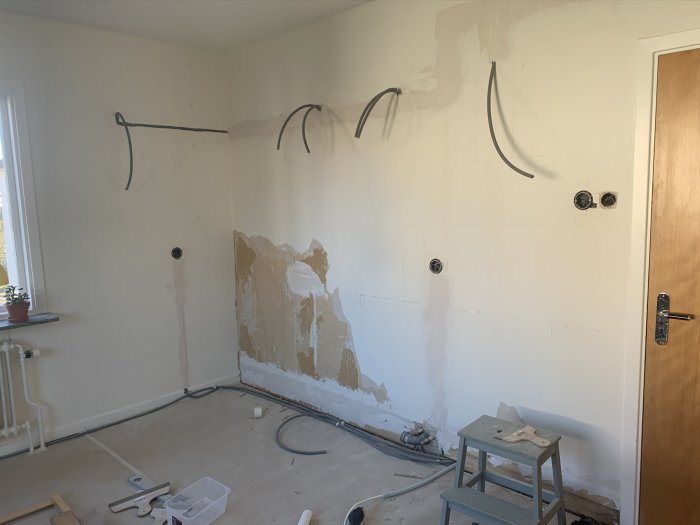
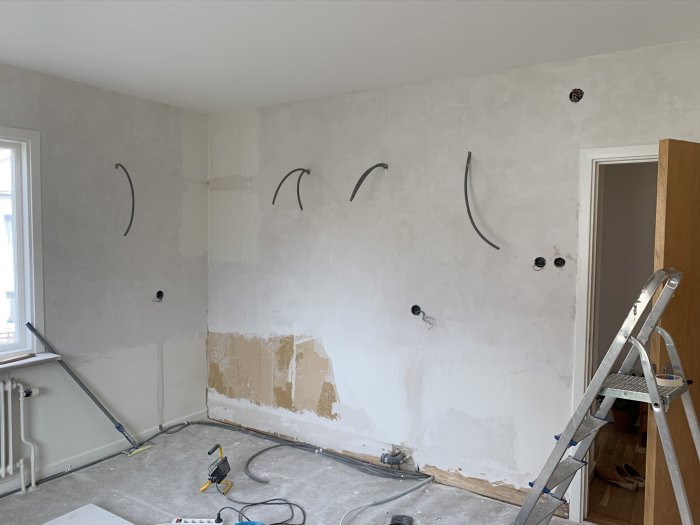
...and so it happened.
1. Drilled for electricity (i.e., drilled into the loose plaster and cut through reeds with a morakniv).
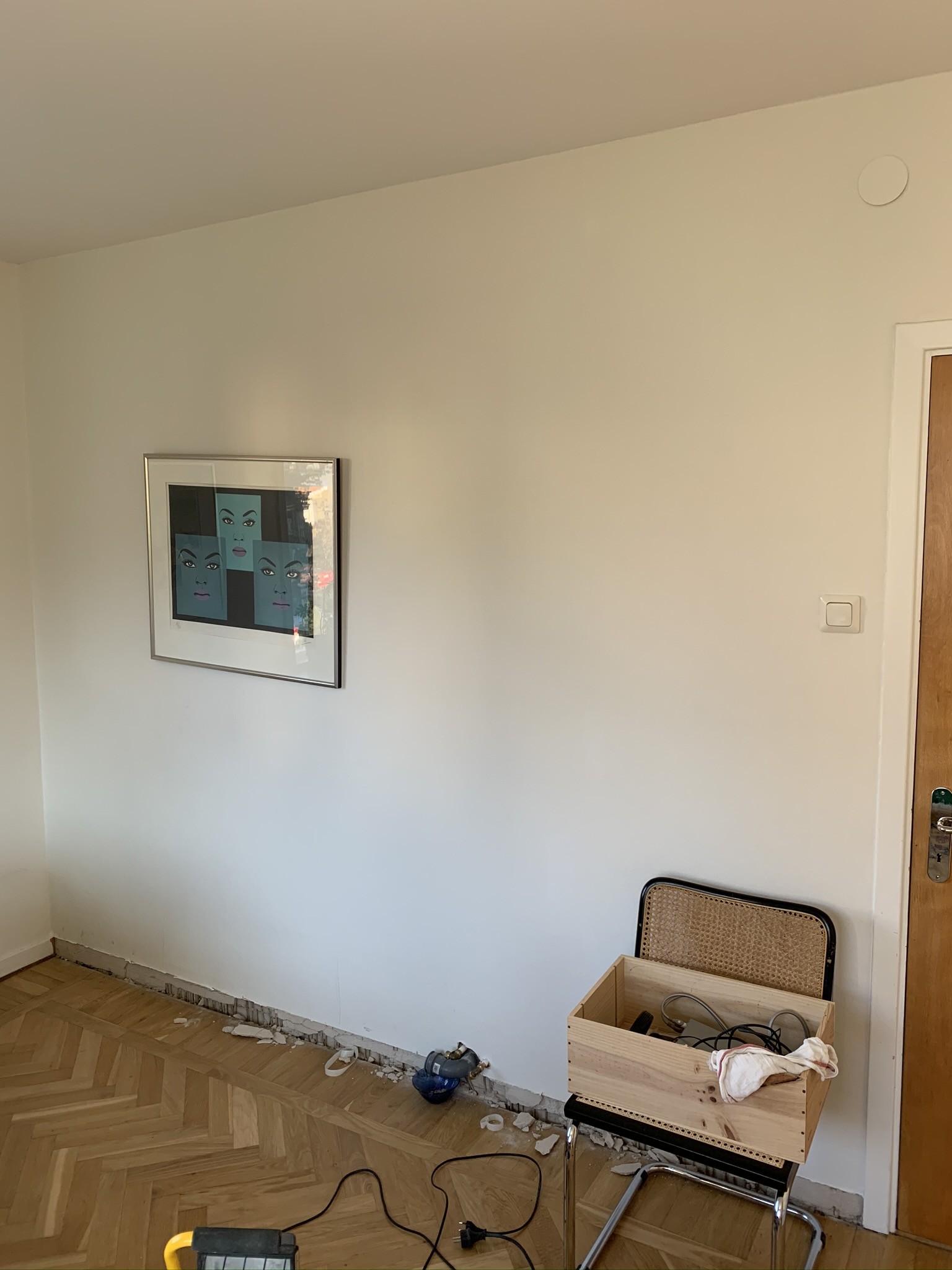
2. Spackled over the tracks. I covered the large areas without plaster along the floor with a couple of planks instead to avoid having to spackle everything again. In some places, the tracks were not deep enough (the plaster was of varying depth) and required a bit too much spackle, creating bumps. Therefore, I couldn't put the renovation plasterboard directly on but had to level out the bumps.
3. Due to point 2, I might as well finish with wide spackling instead of renovation plasterboard. End of story.
Click here to reply
Vi vill skicka notiser för ämnen du bevakar och händelser som berör dig.




 If it's absolutely not possible to keep the plaster, I'll remove it and put up drywall, but I'd prefer to avoid that.