
3,471 views ·
20 replies
3k views
20 replies
Which foundation will be the most stable?
Assume a flat and padded gravel bed that is hard. On this bed, a smaller house with dimensions 7m * 4.5m is to be placed.
Which configuration of 10 laid-out Lecabalkar makes the foundation on which the house is to be placed most stable? See attached images. Option A or E?
Would option E become more stable if 2 extra beams were added in the middle? (The dashed lines in the sketch)
If you have suggestions on how the foundation can be solved in a similar way by laying out concrete sleepers or similar, I'm all ears. However, I do not want to pour at all.
Which configuration of 10 laid-out Lecabalkar makes the foundation on which the house is to be placed most stable? See attached images. Option A or E?
Would option E become more stable if 2 extra beams were added in the middle? (The dashed lines in the sketch)
If you have suggestions on how the foundation can be solved in a similar way by laying out concrete sleepers or similar, I'm all ears. However, I do not want to pour at all.

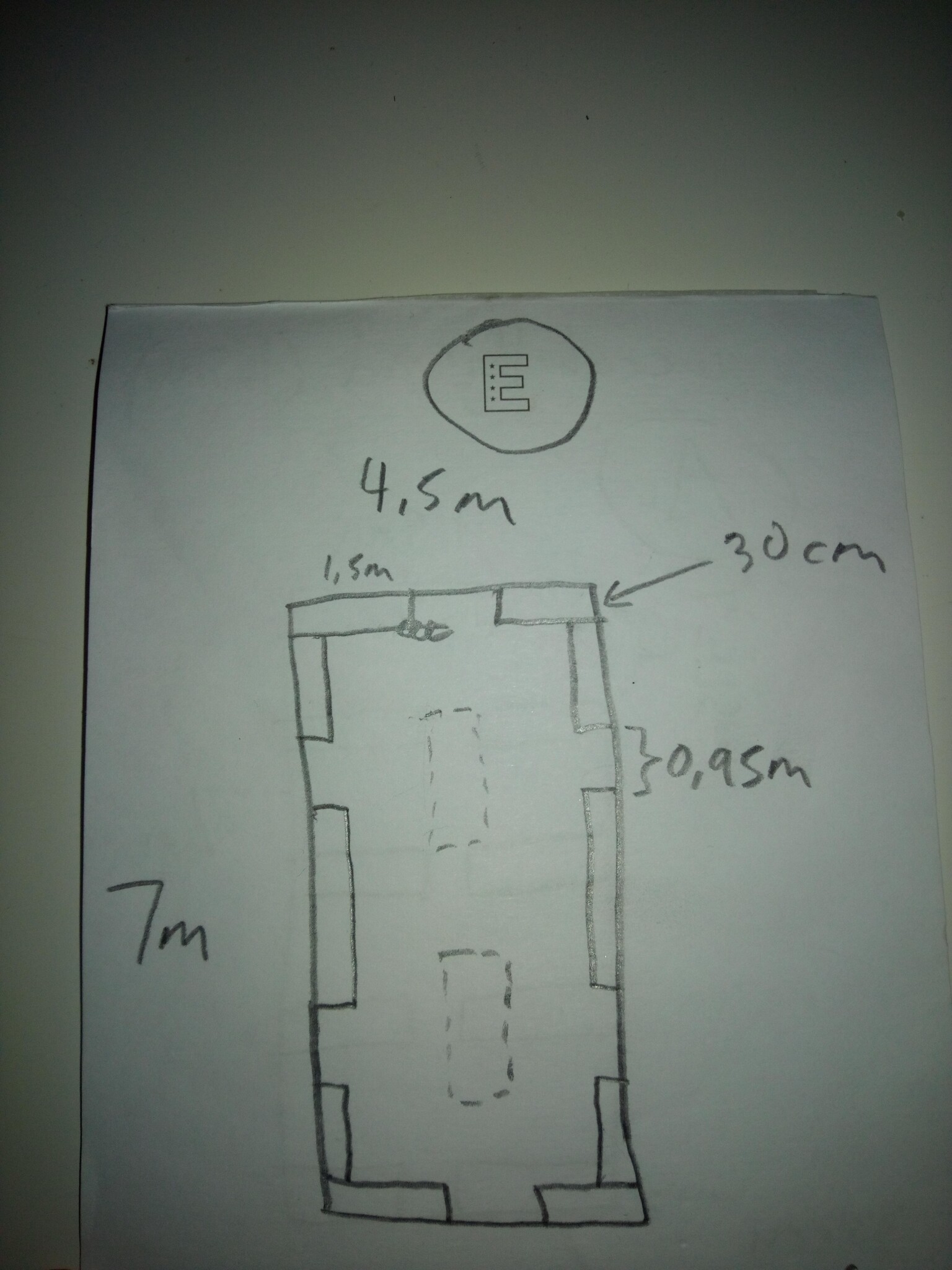

The house will be transported there. Unfortunately, I haven't been able to find out how the beams and girders are positioned. I assume they run from long side to long side. I have been in the house and test-drilled in the floor but haven't been able to figure it out since the entire floor structure is insulated. The house is currently loosely on an uninsulated concrete slab on the ground.Karrock said:
The house is loosely placed on an uninsulated slab but has a raised floor. It is uncertain if the beams are spacers for insulation or reasonably load-bearing over 4.5m. I assume you already have the lecabalkar. Three continuous lines, long sides, and the middle is probably a fairly safe approach if more information can't be obtained. Supplement the middle line with regular lecablocks if that's not sufficient, and place sill paper and beams on top.
Check if you can find cc measurements and height of the beams, and compare it with the Swedish wood dimensioning tool to see if a span of 2.2m is reasonable.
Check if you can find cc measurements and height of the beams, and compare it with the Swedish wood dimensioning tool to see if a span of 2.2m is reasonable.
Thank you for the response. No, I don't have the lecabalkarna yet. Your suggestion has made me rethink. I have found lecabalks that are 6m long, see attached image. What do you think about laying out 3 of them as in the second attached image? Is it unwise to leave 2 corners completely unsupported?The house stands loosely on an uninsulated slab, but has a raised floor. It is, of course, uncertain if the joists are spacers for insulation, or reasonably supporting over 4.5m. I assume you already have the lecabalkarna. Three continuous lines, long sides and middle, I think is a fairly safe way if more cannot be determined. Supplement the middle line with regular lecablocks if it is not sufficient, and place sill paper and joist on top.
Check if you can get the center-to-center measurements and height of the joists, and compare with the Swedish wood dimensioning tool to see if a span of 2.2m is reasonable.
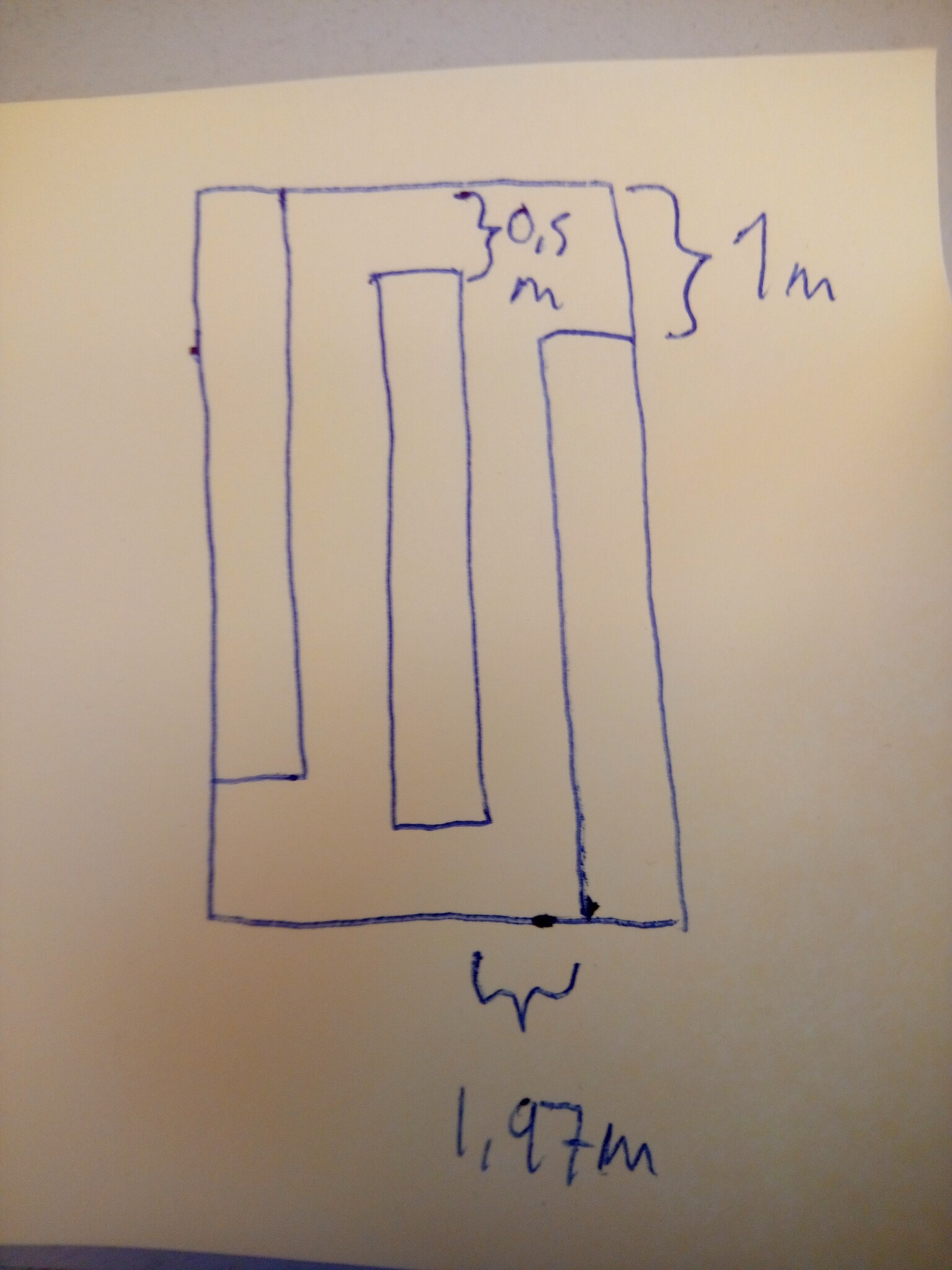

Ok. I don't think it's good to leave the corners. But if you supplement with 6 regular lecablock, it will also be enough for that. Unsure if you gain anything from beams or if it's just as good with regular blocks.
Then, the next issue. You usually have a baseboard or something similar underneath, is there one? Have you thought about how to handle the transition from resting on a slab to pillars in terms of mouse, moisture, and wind issues?
If pouring concrete is out of the question, maybe the whole setup is better with a layer of paving stones or xps insulation underneath instead.
There are probably several here who can have good ideas, but more information about the house itself is needed. Maybe consider getting help on site, but it's uncertain if it should be an inspector, structural engineer, or building physicist who would be best to turn to.
Then, the next issue. You usually have a baseboard or something similar underneath, is there one? Have you thought about how to handle the transition from resting on a slab to pillars in terms of mouse, moisture, and wind issues?
If pouring concrete is out of the question, maybe the whole setup is better with a layer of paving stones or xps insulation underneath instead.
There are probably several here who can have good ideas, but more information about the house itself is needed. Maybe consider getting help on site, but it's uncertain if it should be an inspector, structural engineer, or building physicist who would be best to turn to.
The trossbotten is well insulated. I drilled into the floor to try to figure out the distance between the beams, etc. but only saw glass wool. There is at least 20 cm of glass wool in the entire trossbotten.
I'm planning to lay a layer of tar paper on top of the plinths before the house is placed on them. With respect to moisture, I think the foundation will be better ventilated now that it will rest on plinths rather than previously when it was on an uninsulated concrete slab.
The question cannot be answered until you inform how the sill/floor joists are placed.E Einh said:Assume a flat and padded gravel bed that is hard. On this bed, a small house measuring 7m * 4.5m is to be placed.
Which configuration of 10 laid-out lecabalks will make the foundation on which the house is to be placed most stable? See attached images. Alternative A or E?
Would alternative E become more stable if 2 extra beams were added in the middle? (The dashed lines in the sketch)
If you have suggestions on how the foundation can be solved in a similar way by laying out concrete sleepers or similar, I'm all ears. However, I don't want to pour at all.
Ok. But you don't know if the fiberglass stays on the slab when the house is lifted. I wouldn't want to crawl around under a hanging house trying to push back and fasten the insulation again with crawl space boards.E Einh said:The crawl space is well insulated. I drilled a test hole in the floor to try to figure out the distance between the support beams, etc., but all I saw was fiberglass. There's at least 20 cm of fiberglass throughout the entire crawl space.
I was thinking of laying a layer of tar paper on top of the piers before setting the house on them. In terms of moisture, I think the foundation will be better ventilated now that it will be on piers compared to when it was on an uninsulated concrete slab.
Moving smaller houses is a reasonable routine task. Changing the type of foundation from slab to piers requires a bit more knowledge than you currently have. You seem determined (fixated?) on finding used concrete blocks to place the house on. All houses with slab-on-grade foundations are laid on EPS or XPS insulation with a strength rating from 80-300. It holds and is easy to work with. If you go with a wide layer of XPS, the house is likely to sit nicely.
Yes, I believe the insulation will remain because the house was lifted into place on the slab sometime in the 70s.Ok. But you don't know if the fiberglass insulation remains on the slab when the house is lifted. I wouldn't want to crawl around under a suspended house and try to push back and secure the insulation again with battens. Moving smaller houses is a reasonable routine task. Changing the type of foundation from slab to stilts requires a bit more expertise than you currently have. You seem determined (fixated?) on finding used concrete blocks to place the house on. All houses with slab-on-grade foundations are built on EPS or XPS insulation with a strength from 80-300. It holds up and is easy to work with. If you go for a spread-out layer of XPS, the house will sit nicely.