Brief:
We are finally going to furnish a new laundry room in the basement, and I plan to install spotlights in the ceiling.
Should I tear down the old ceiling or install the new one over the old?
Longer explanation:
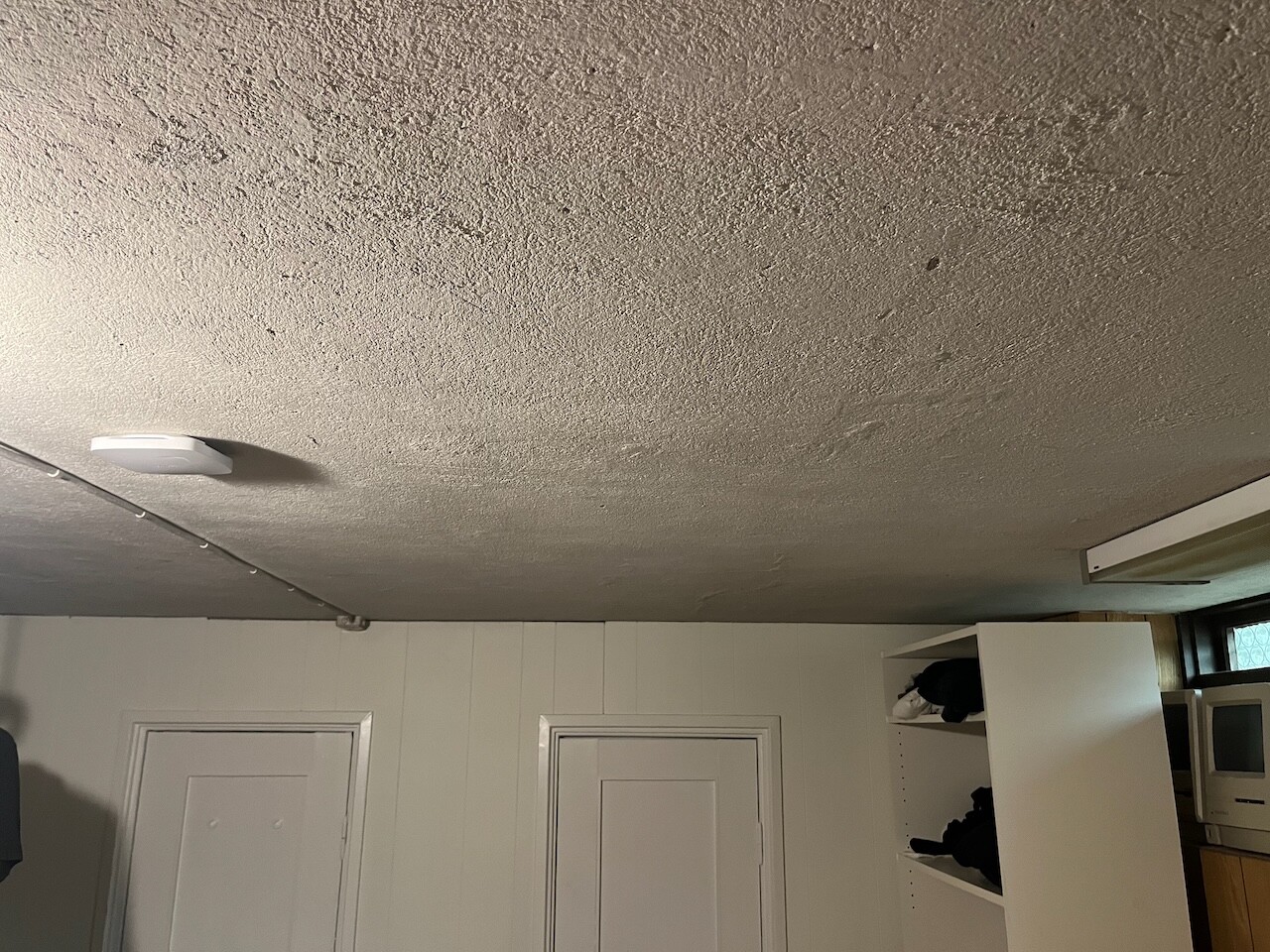
The house is from 1926, and the basement ceiling is made of some type of plaster.
I initially thought of putting battens over the ceiling and drywall on that to install the spotlights in. To attach the battens, I need to find the ceiling joists.
However, it's impossible to find the joists with the stud finder because (I assume) there's chicken wire as a base for the plaster. The stud finder detects joists "everywhere" (and it's a reasonably good model from Bosch).
So, to find the joists, I have to cut in strategic places and check manually. It's doable, of course, but then I started thinking, "If I'm going to start cutting anyway, I might as well remove the old ceiling, save a few cm in ceiling height, and strengthen the joists (since the kitchen directly above tends to vibrate slightly when walked on).
I've googled a bit but can't find anything concrete about how basement ceilings from this time were typically built. Will it be a nightmare with tons of sawdust as insulation to deal with, or is it manageable?
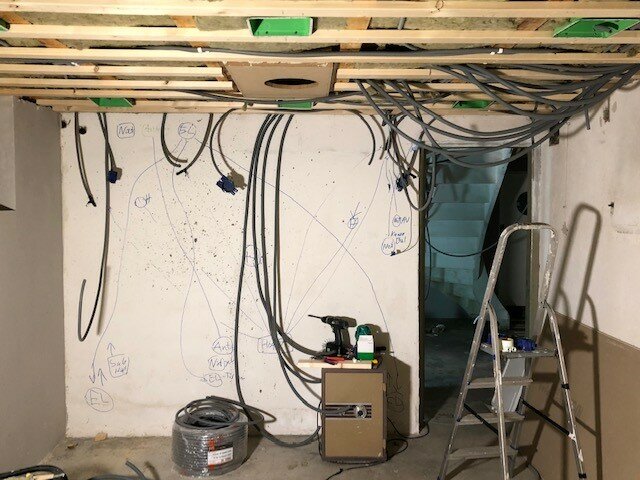
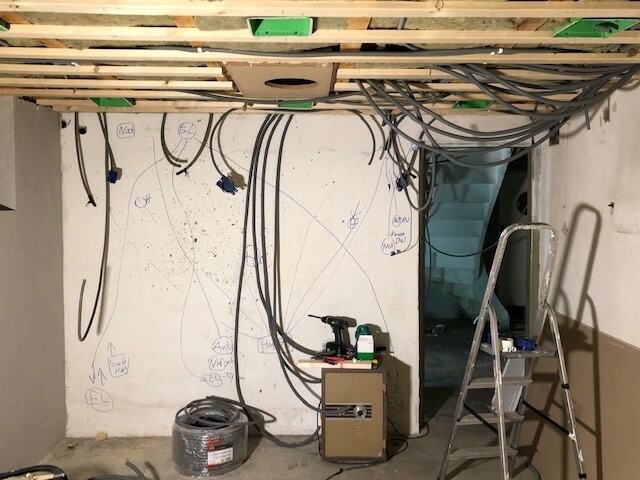
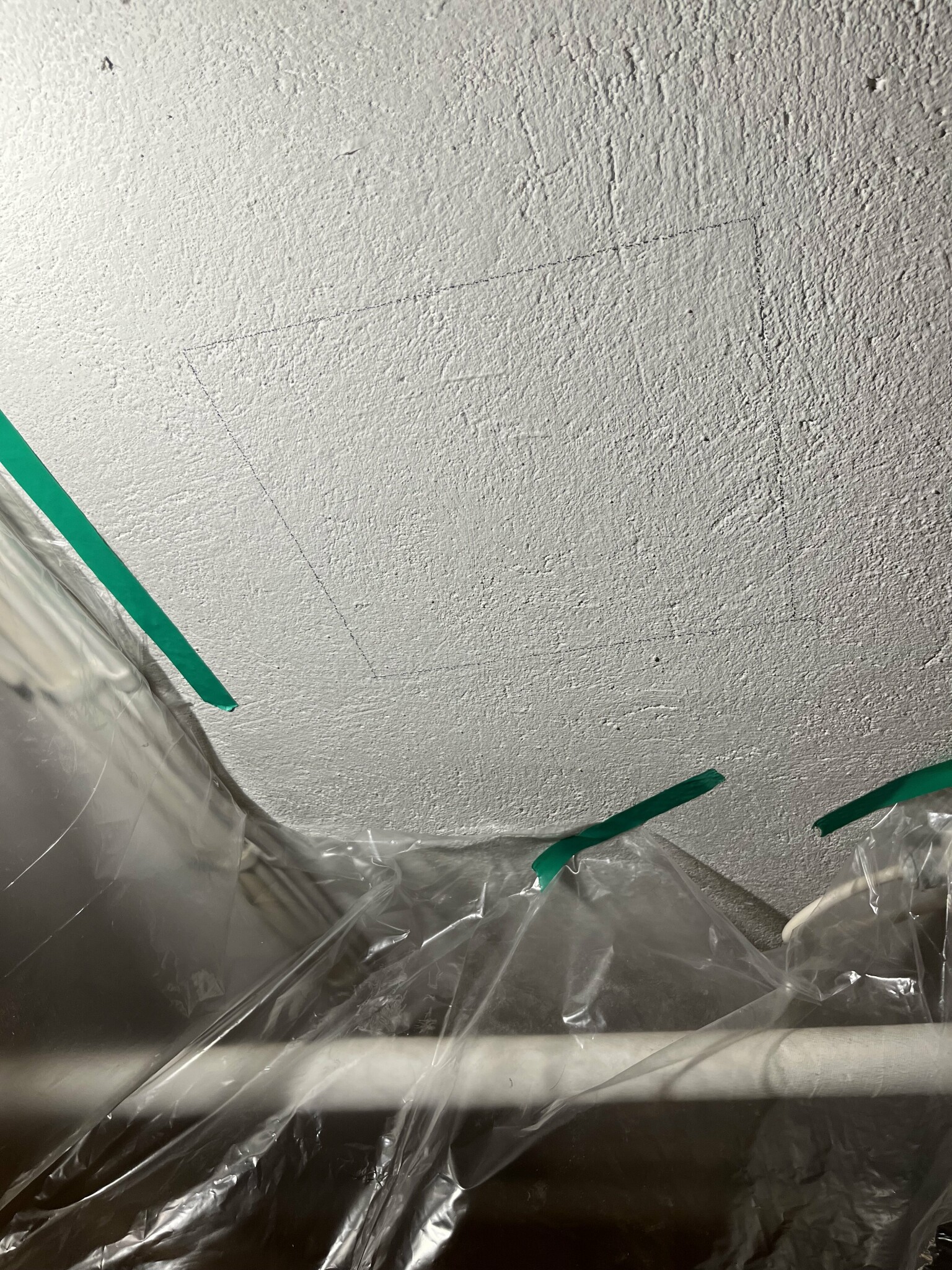
As you can see in the pictures, there are quite a few electrical wires here too, and we will be replacing the pipes with more modern ones. But it doesn’t feel like that would be the biggest issue.
If there is plaster on chicken wire, there is likely a plank above it, and it should be possible to screw lighter items into the planks everywhere. Compare cloisonné wall.
Update!
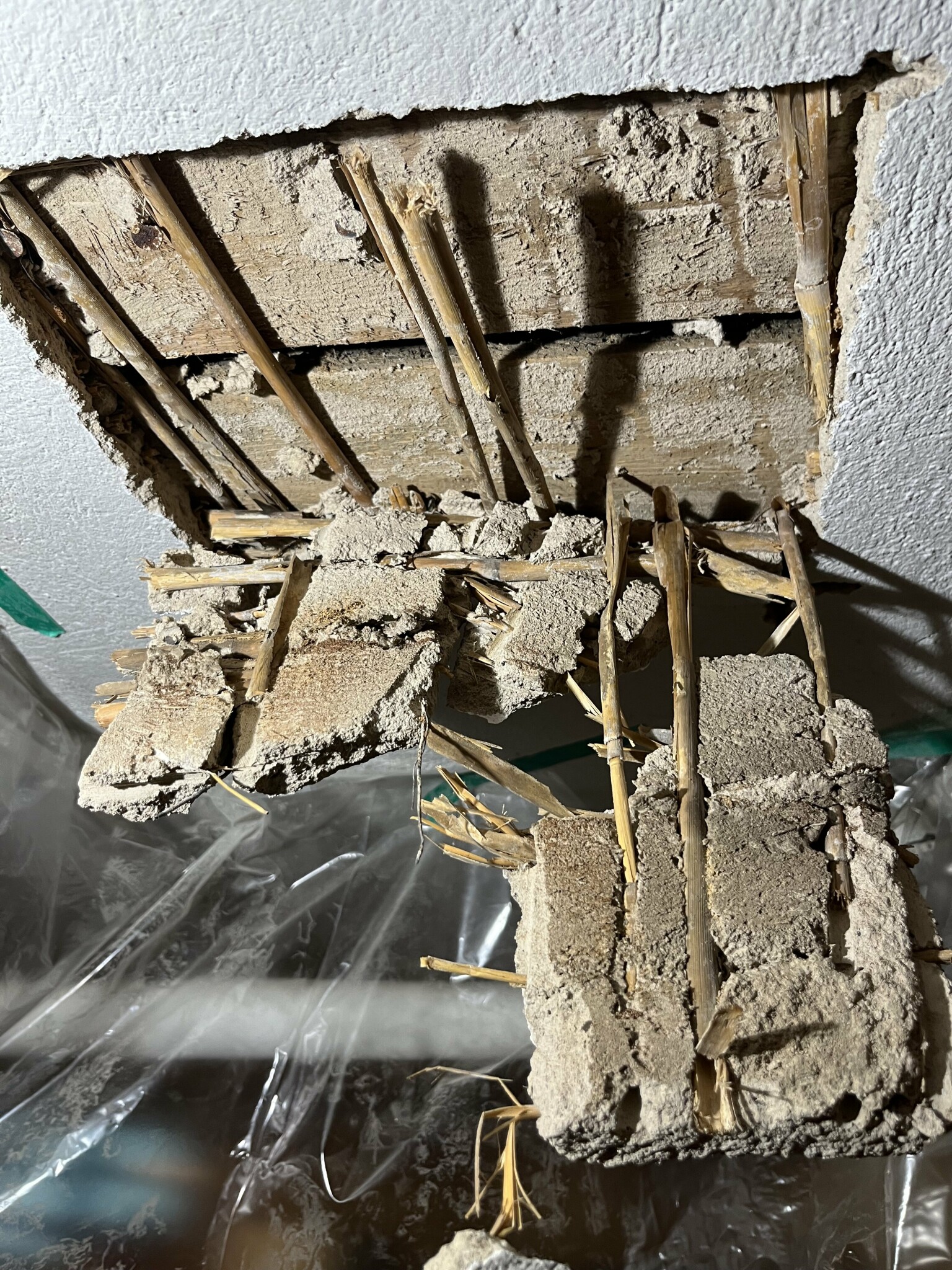
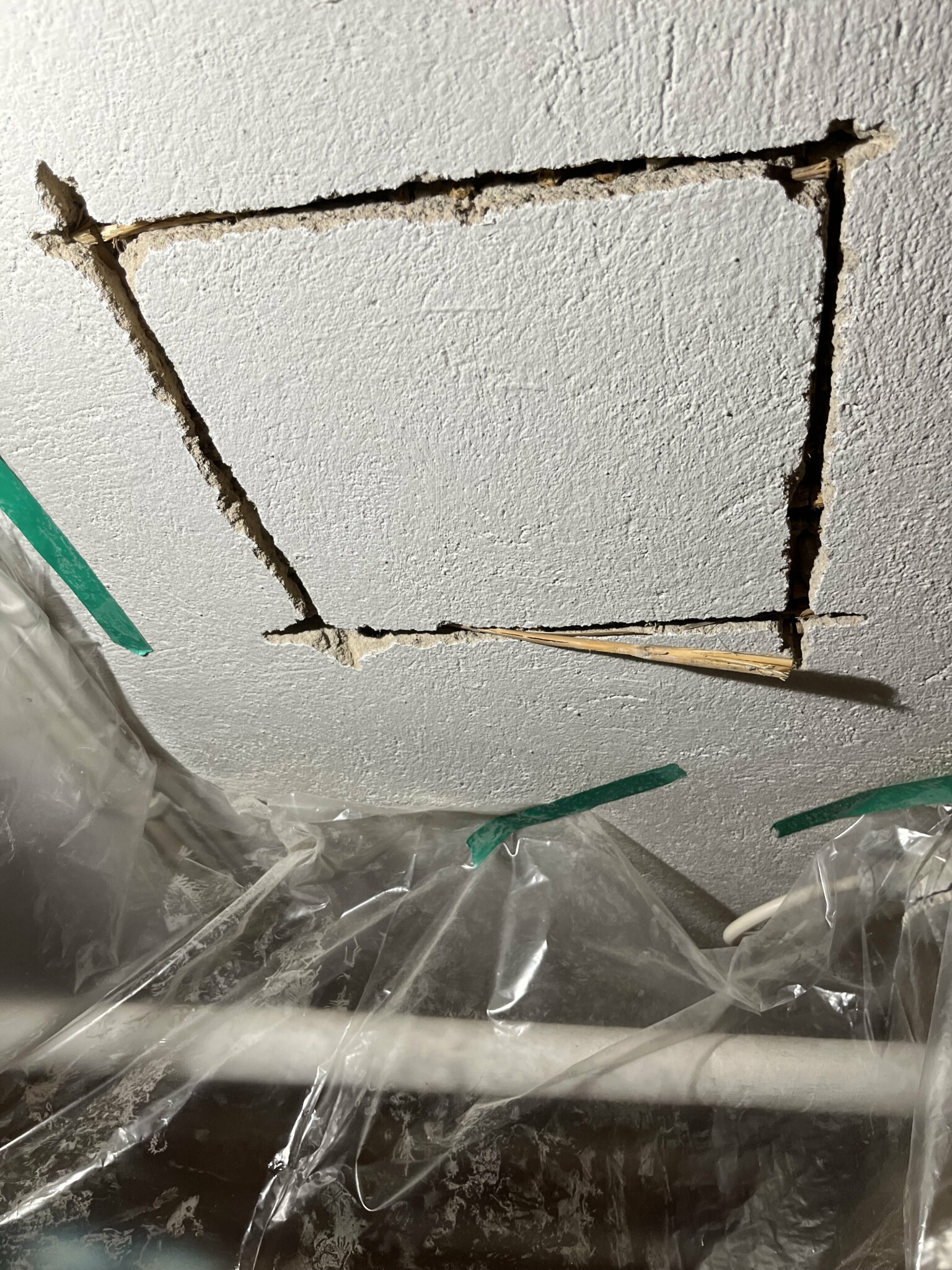
I've cut a piece of the ceiling to see how it looks. I don't think it gets dustier than this, it's insane, I tell you! 😆
The plaster is just over 2 cm thick, and it's held up by reeds, which in turn are held up with nails. There was a bit of wire as well. I guess that's how they did it 100 years ago, but now I'm tearing it down and replacing it with gypsum!
(The idea of installing more joists was because I thought you could reach the existing joists from below, but that's not the case here, so that's not happening.)
I'm planning a whole day for tearing down the entire ceiling. It's going to be unpleasantly dusty, considering buying some kind of protective suit...
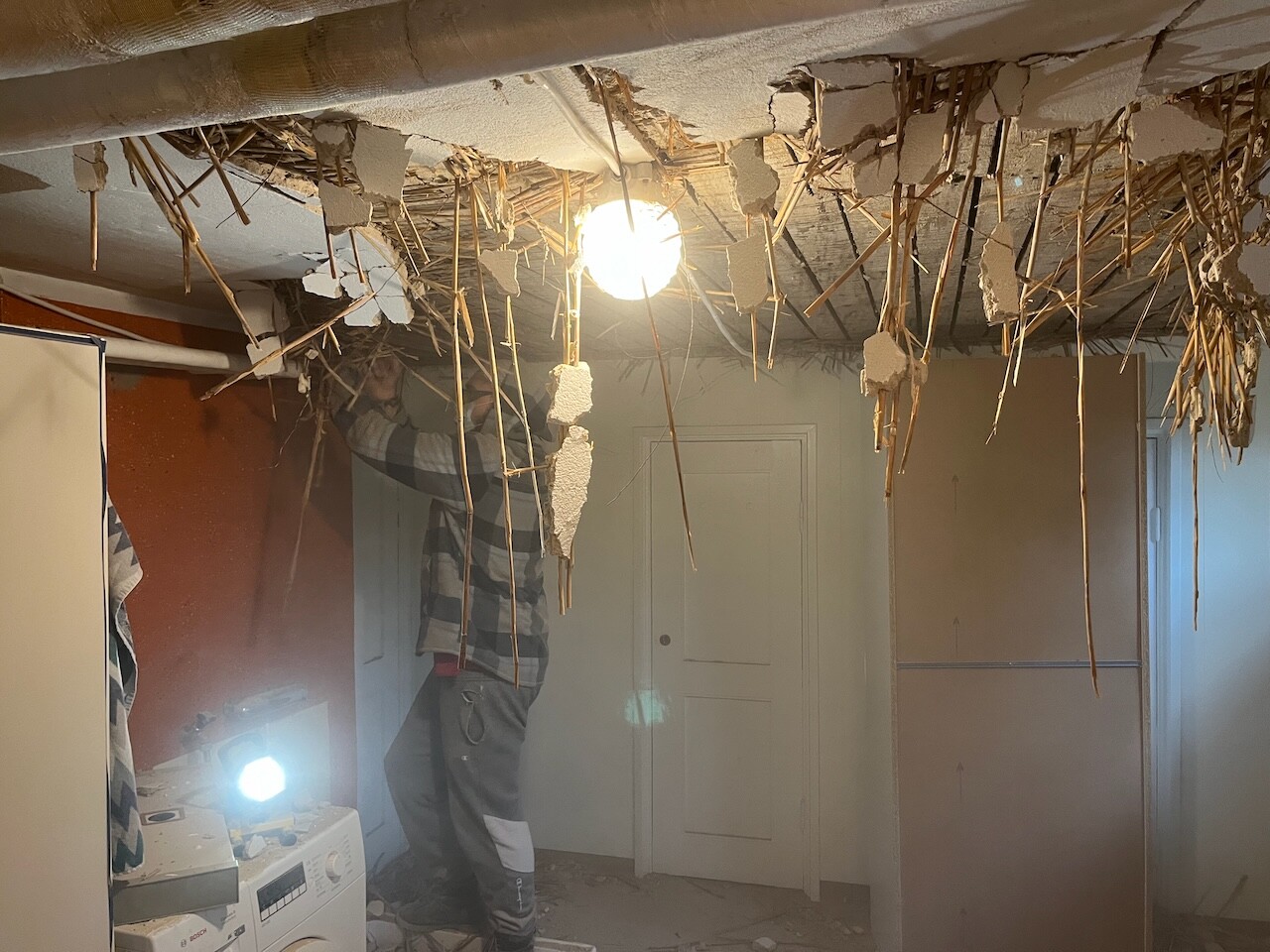
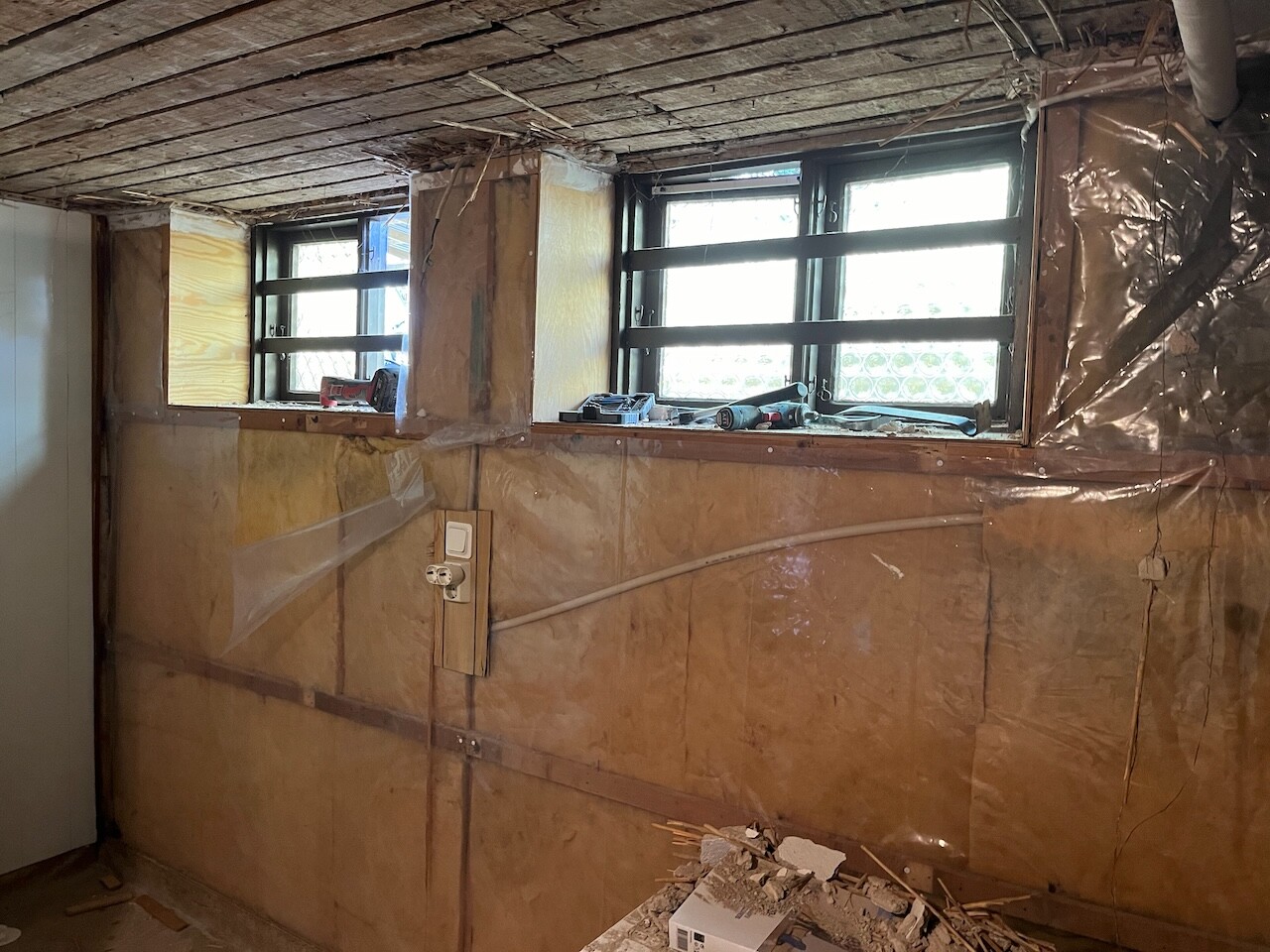
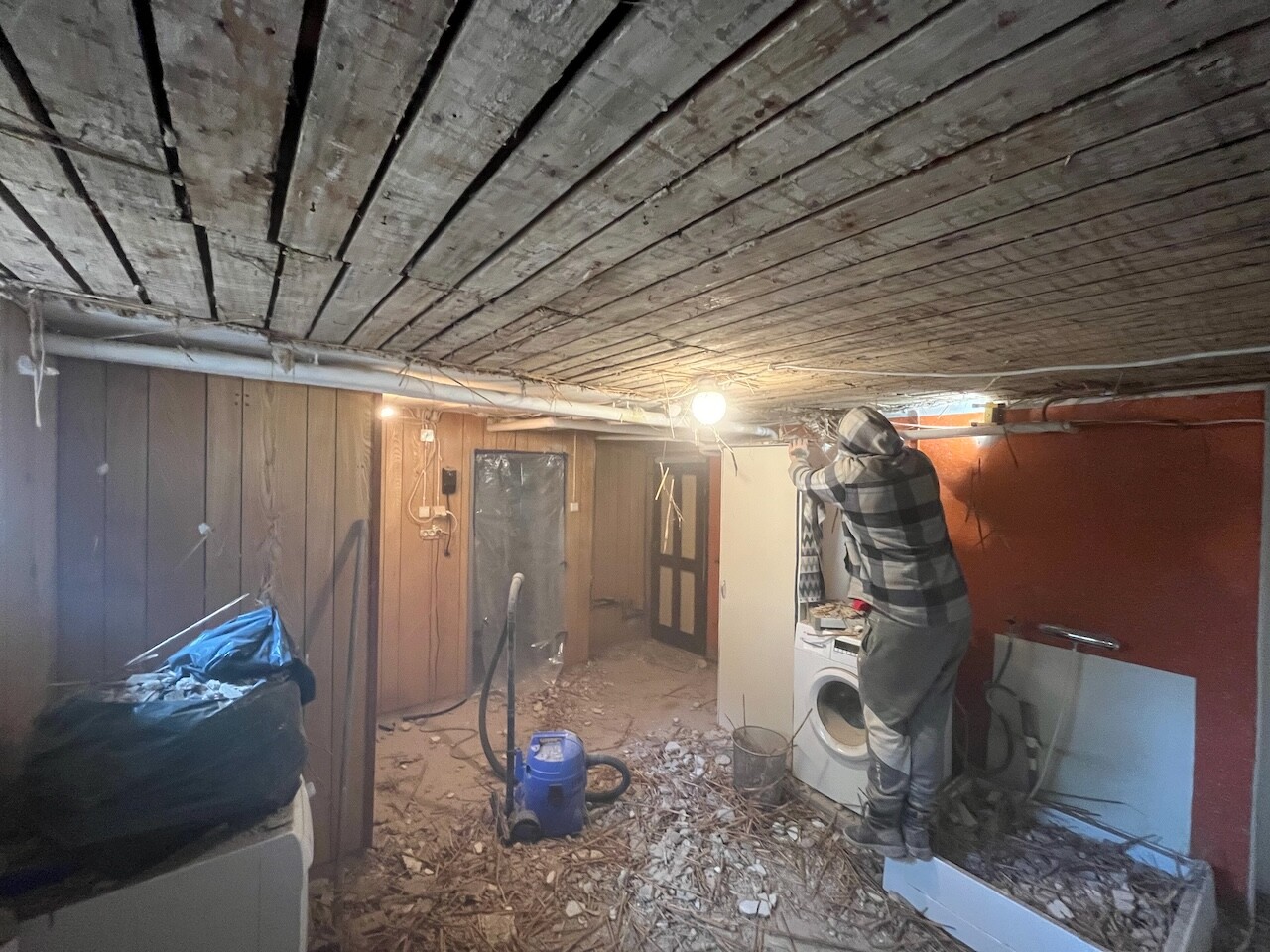
Yesterday was Sunday, and I amused myself by tearing down the ceiling and the panel against the basement wall.
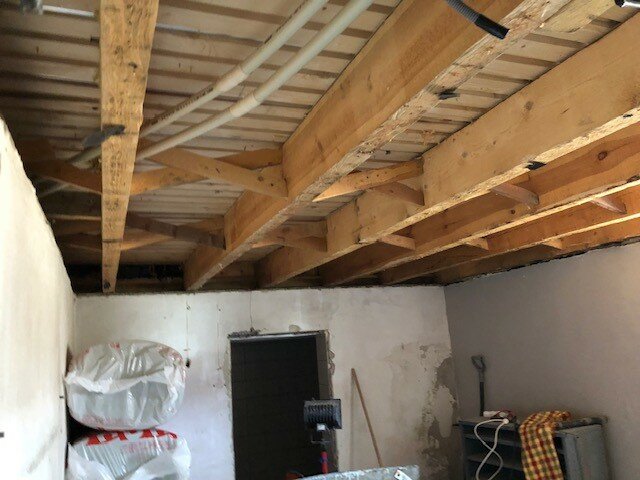
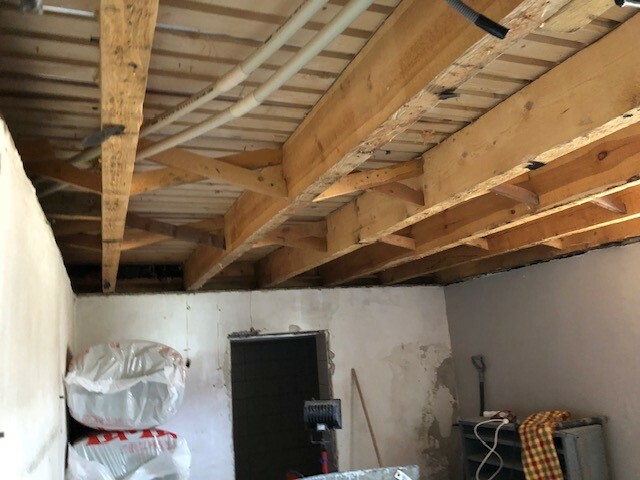
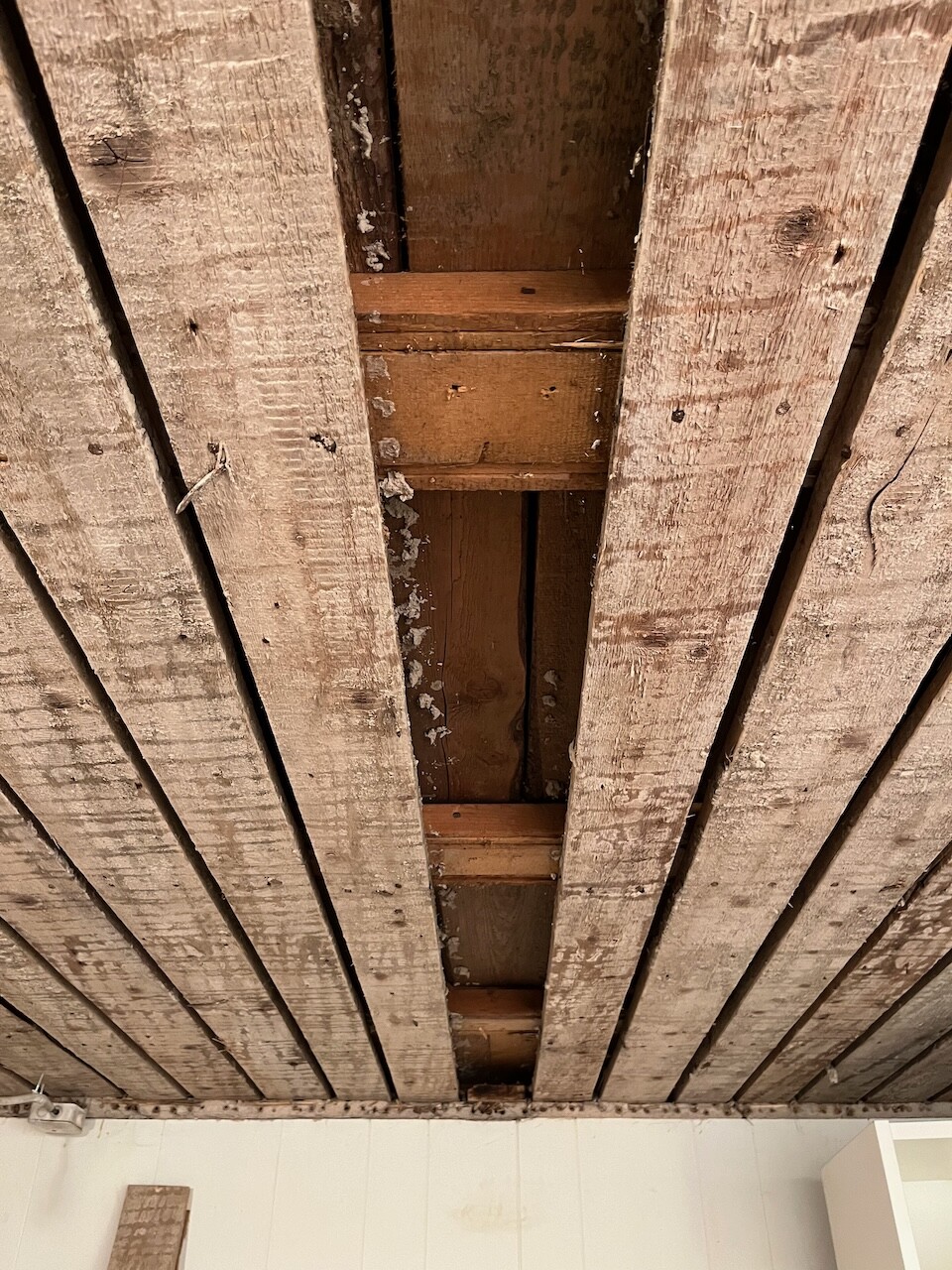
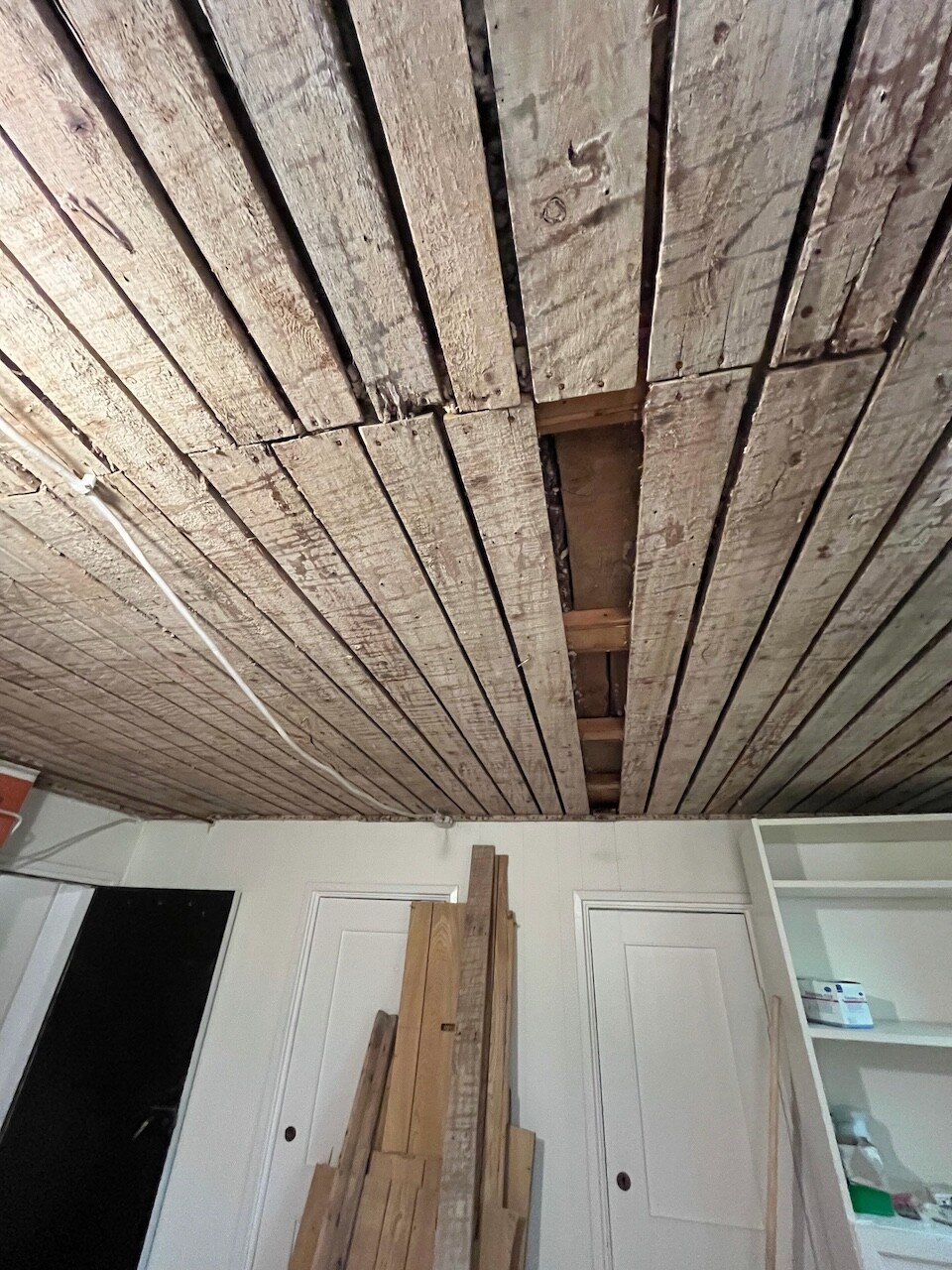
Here's what an exposed ceiling from 1926 looks like!
A billion nails are holding up a mesh of wire and reed, which is where the plaster was applied. It has held up surprisingly well, but it's nice to be able to replace this with drywall.
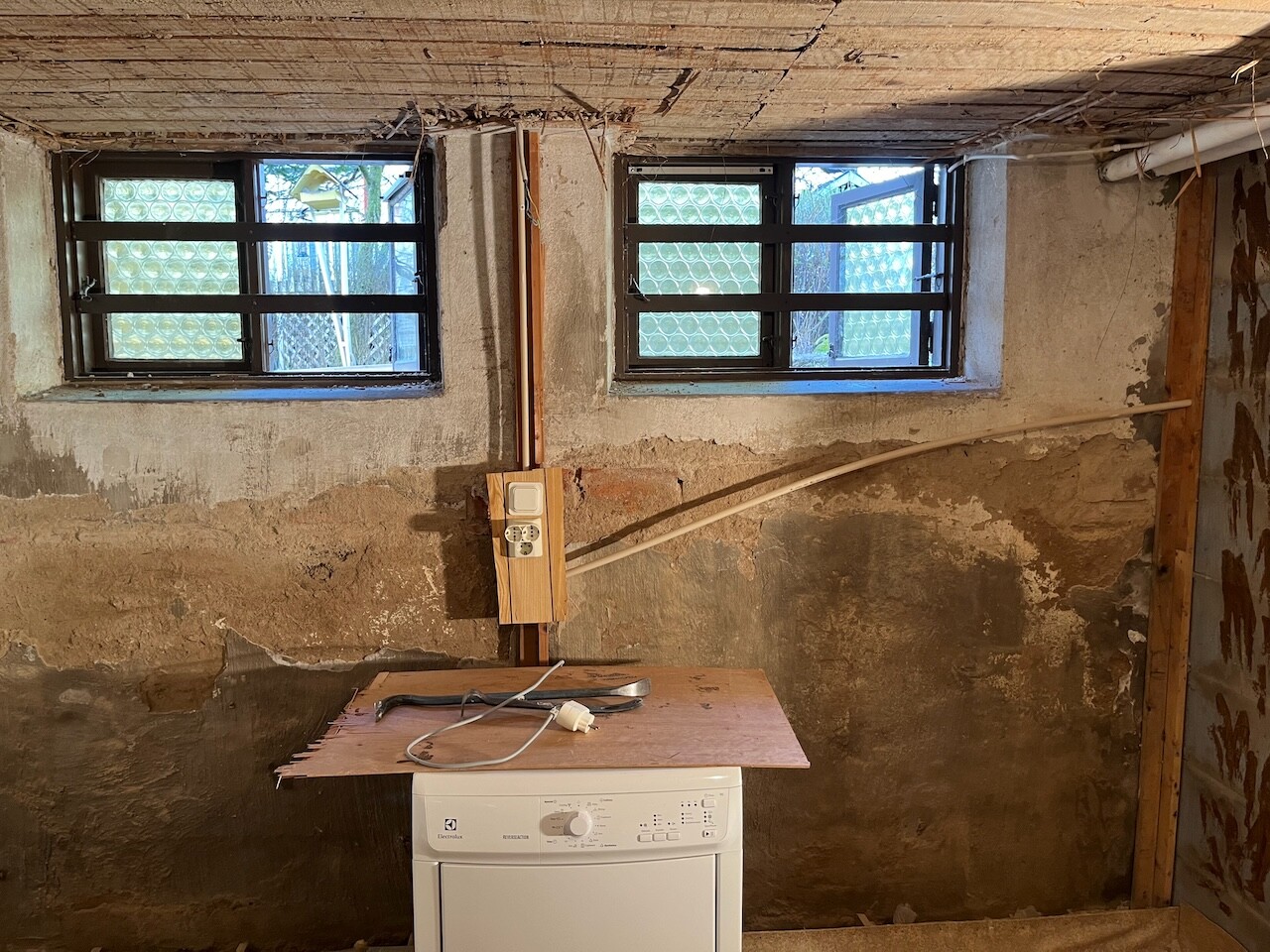
The panel against the outer wall consisted of fiberglass insulation that was lying right up against the outer wall. It doesn't feel great, and it has also loosened up the mortar, which in many places needs to be redone. Is it C-bruk you use?
Some comments for those embarking on the same journey:
- Consider renting a dust cleaner (apparently they exist, unfortunately, I was not well aware of this).
- Wear protective clothing, glasses, and a mask. I don't think there's anything directly toxic in the dust, but it's tough to be in it all day.
The next step (after removing even more nails, vacuuming the ceiling, and installing electricity for spotlights) is to set the battens on which the drywall will be mounted.
Should I take the opportunity to do something useful with the old wooden ceiling before I install the new sub-ceiling? 🤔
Definitely the right choice to remove the ceiling and replace it with a new one if you ask me.
How well drained is the wall in the basement in the film? There are some indications that there is or has been moisture seeping through due to insufficient drainage.
Exciting. I'm working on a very similar project and also tore down the ceiling this weekend. It had the same construction with mortar, gypsum, and wire. The paneling underneath (above) is even and nice, so I'm planning to attach drywall directly against it. I assume you're installing battens solely to be able to recess spotlights?
Exciting. I'm working on a very similar project and also took down the ceiling over the weekend. It had the same construction with plaster, gypsum, and wire. The panel under (or above) is smooth and nice, so I plan to attach plasterboards directly. I assume you're putting battens only to be able to recess spotlights?
It's definitely right to remove the inner ceiling and replace it with a new one if you ask me.
How well-drained is the basement wall in the film? There are some indications that moisture has penetrated due to poor drainage.
In 100 years, moisture has undoubtedly penetrated. None of the houses in the area are drained, we are on a slope, so there appears to be natural runoff. But we had an inspector visit the house who said it doesn't need to be drained—just repair the damages that occur and save a few hundred thousand. We also had a mason over today who also thought it looked very good for not being drained. So we're choosing to go that route instead.
I have renovated my basement in two different ways.
Phase 1, 15 years ago, I removed the plastered reeds just like you did. But I installed foil-covered chipboard against the wooden ceiling instead of gypsum. Back then, recessed LED spotlights did not exist, so large pots were recessed between cut wooden boards. It's not just the plaster that creates dust, the sawdust is quite cozy too😅 The downside is that the old boards are not always completely smooth/level, which is why I preferred chipboard over gypsum.
2-3 years ago, it was time for the next phase. I also needed to install significantly more conduit in the ceiling. One room would become a TV room, another became a focal point for conduits coming from a new upper floor, etc. (About >30 flex pipes in the ceiling). So I decided to also clear the boards and remove the sawdust. (It doesn't matter how good a mask you have. I can still taste wood in my mouth.)
Once this was cleared, it became significantly easier to run new electrical conduits, install in-ceiling speakers, and spotlights (eventually installed real pots here too despite LED spots). Insulated with new rock wool. Then battens and gypsum.
It was quite a bit more work, but I feel it was worth it. I'm annoyed that I still have sawdust left in two rooms now, and some surface-mounted elements that I could've recessed, etc.
So my recommendation is still to clear the ceiling, tear down the boards, re-insulate, and then rebuild with battens and gypsum. It will cost you one or two more weekends, and a number of respirators and a few bales of insulation.
I also have limited ceiling height, so I felt that every cm counted.
PS. Regarding the exterior walls, I insulated them internally with multipor and silicate paint. It has worked fantastically well. Good climate, warm walls that breathe, and no air gaps, etc. Insulation directly against the wall and plastic as it is done today is not a good idea. https://www.xella.se/sv_SE/brand-multipor.
If I lived alone, I would have torn down the rest as well, but my wife wants to have the opportunity to do laundry, so I'll skip the extra 15 mm height this time. Even if it does hurt my OCD soul a bit...
Then I’m thinking about whether to use 6mm gypsum or 12mm? Are there any pros and cons? (the spotlights will fit regardless)
If I were living alone, I would have torn down the rest too, but my wife wants to have the option to do laundry, so I'm skipping the extra 15mm height this time. Even though it pains my OCD soul a bit...
I'm also pondering whether to use 6mm plasterboard or 12mm? Are there any advantages or disadvantages? (the spotlights will fit regardless)
6mm plasterboard (renovation plasterboard) follows the substrate when screwed in and can become bulgy, it can be tricky with screws going straight through. Only used when the substrate is even. 13mm is stiffer and will be flat.
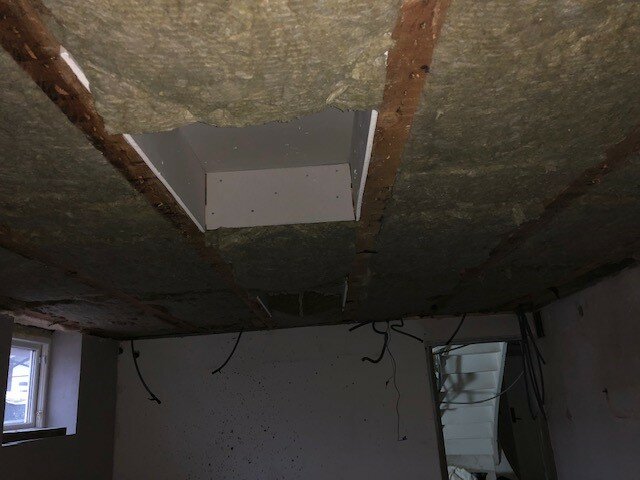
I couldn't resist the thought of opening up, so I loosened a board! 😆
It's not quite the same construction technique as Mojjen's roof. But this means there are no problems with pulling down the old battens and putting in new ones!
But a question: Will the rigidity of the rafters be lost as a result!? I think that the existing battens are attached with three nails in each joist (which in turn are somehow attached to the rafters), if you remove them, you might create unwanted instability? The new battens/slat panel will be set at 30 cm centers, so it won't be nearly the same amount of wood holding it all together...
It looks like there is no insulation in the joist layer. You can advantageously remove every other board, everything is connected to what is above. Just make sure not to remove one that should stay to secure the gypsum. It will require measuring, then it might be good to lay pipes for electricity above, now that it's open anyway. Otherwise, you don't care, only if there are going to be electrical conduits.
Thanks for the input!
I'm taking everything down because the ceiling is so uneven that I have to use adjusting screws when installing the drywall, and then it simply becomes easier to install new paneling.
Vi vill skicka notiser för ämnen du bevakar och händelser som berör dig.








AndersJoh said:
Exciting. I'm working on a very similar project and also took down the ceiling over the weekend. It had the same construction with plaster, gypsum, and wire. The panel under (or above) is smooth and nice, so I plan to attach plasterboards directly. I assume you're putting battens only to be able to recess spotlights?
J_P_K said: