Hello
I am renovating an old house from 1938, as usual with old houses it has been expanded to the right and left, and small things become big challenges.
Now I am a bit stuck in the “thinking” on the upper floor and need advice.
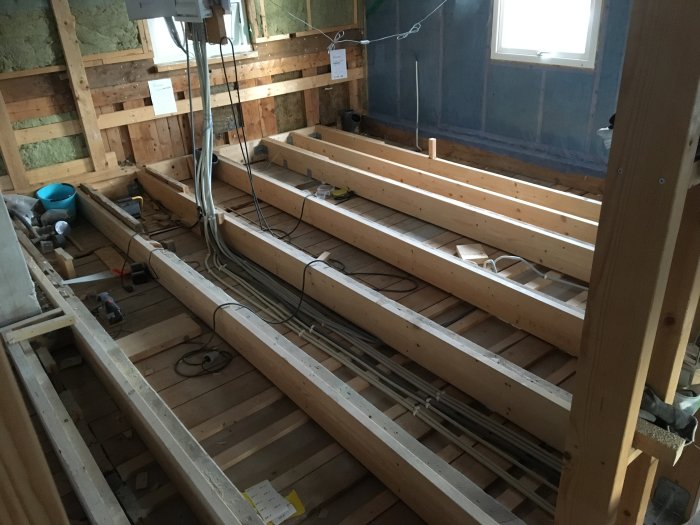
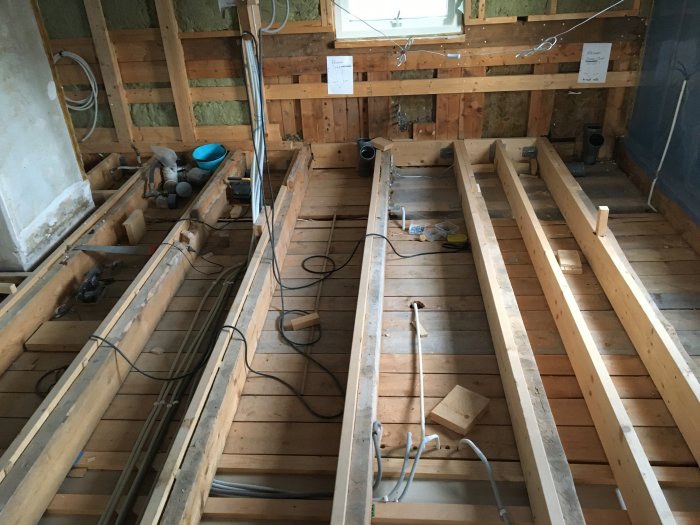
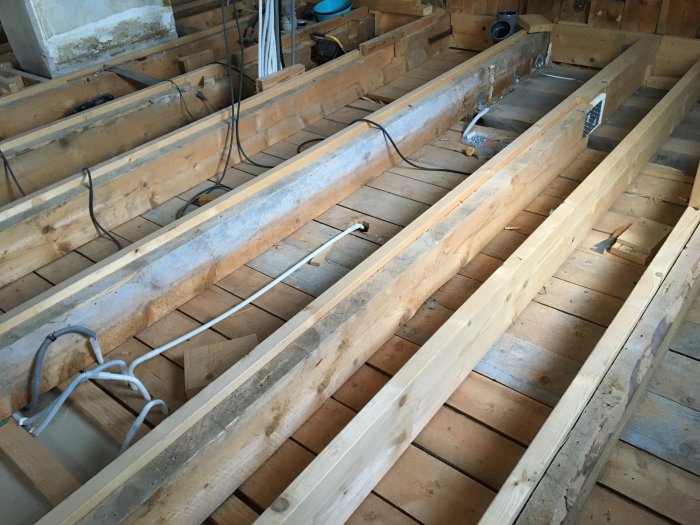
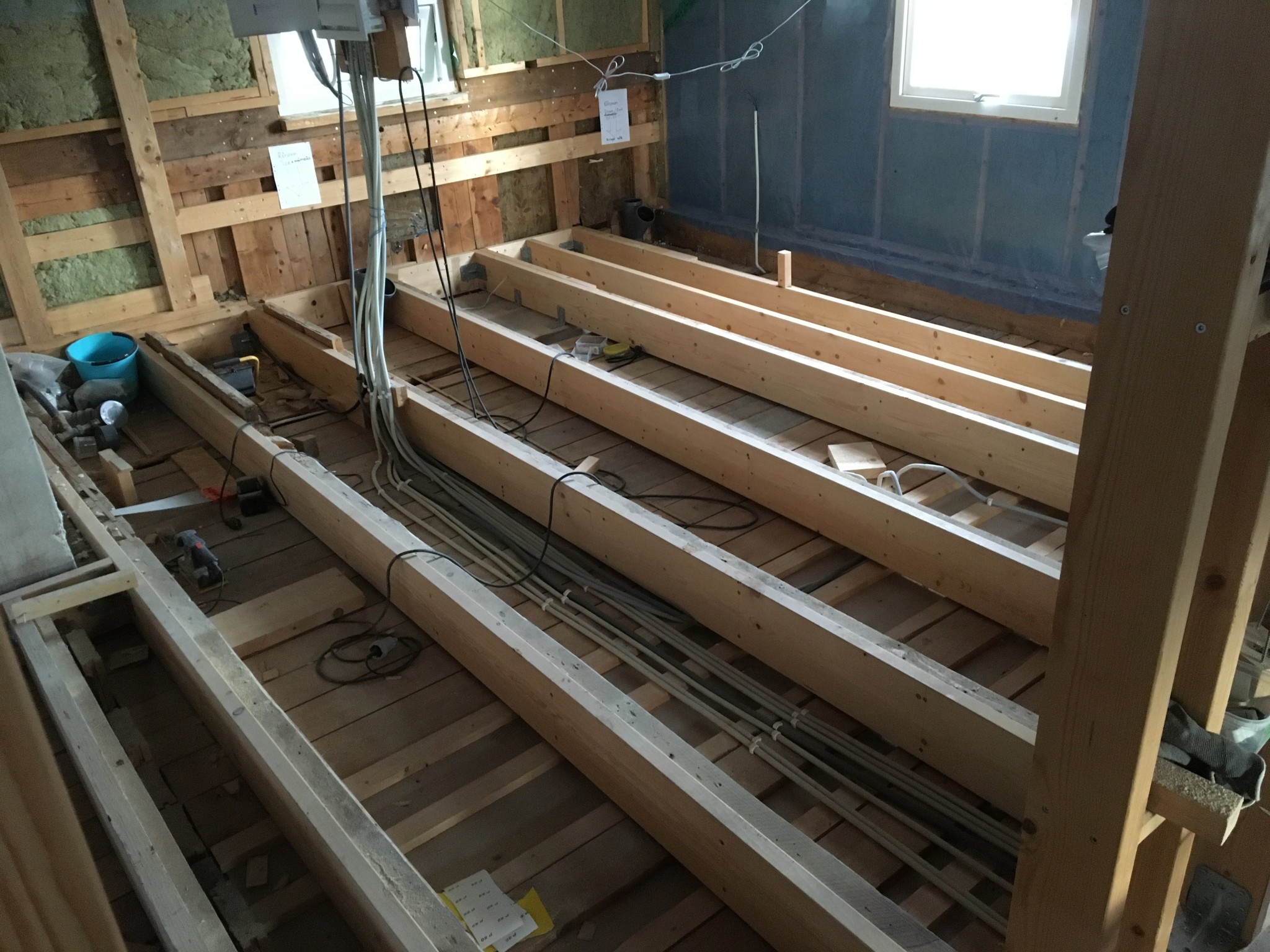
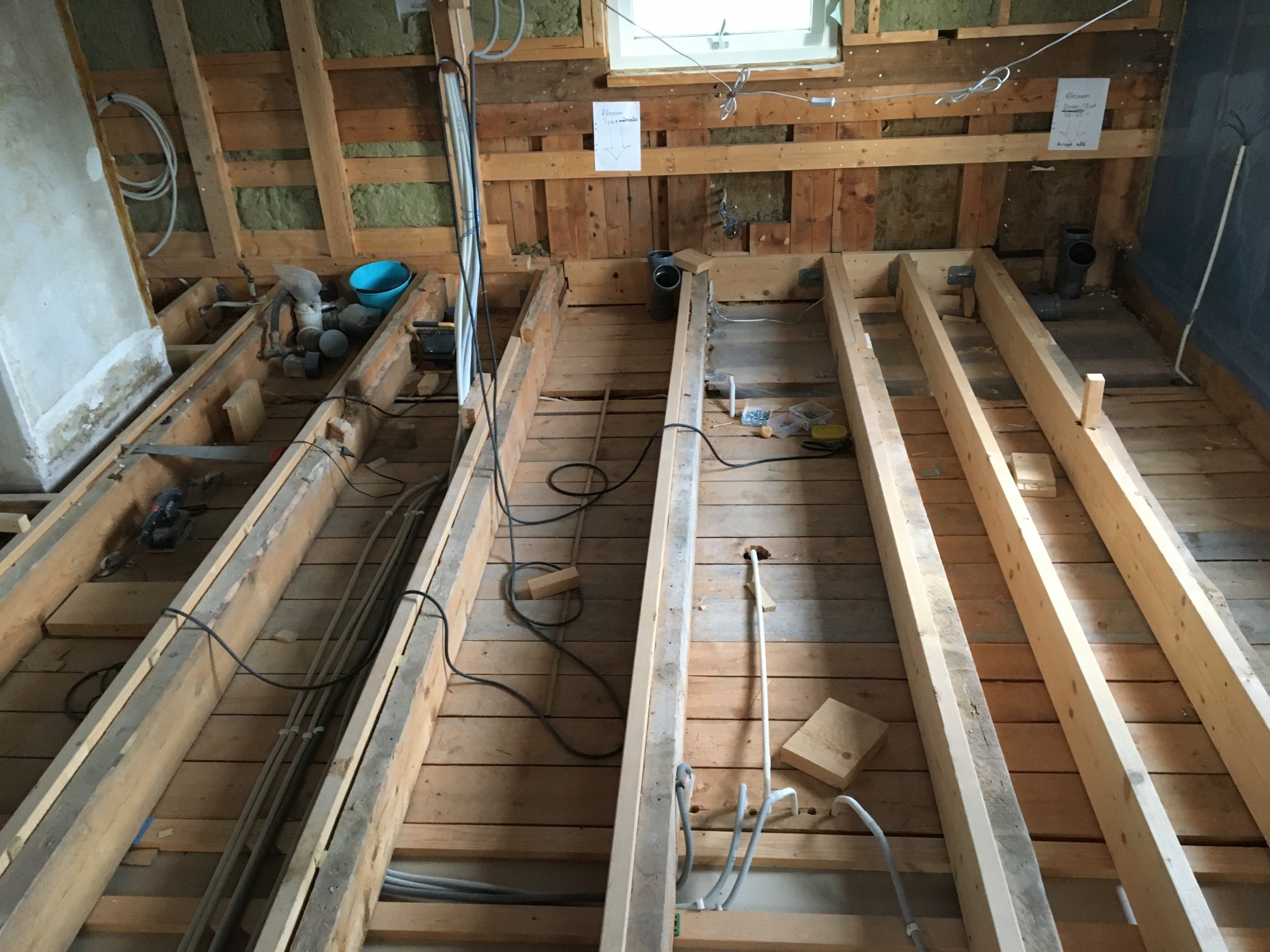
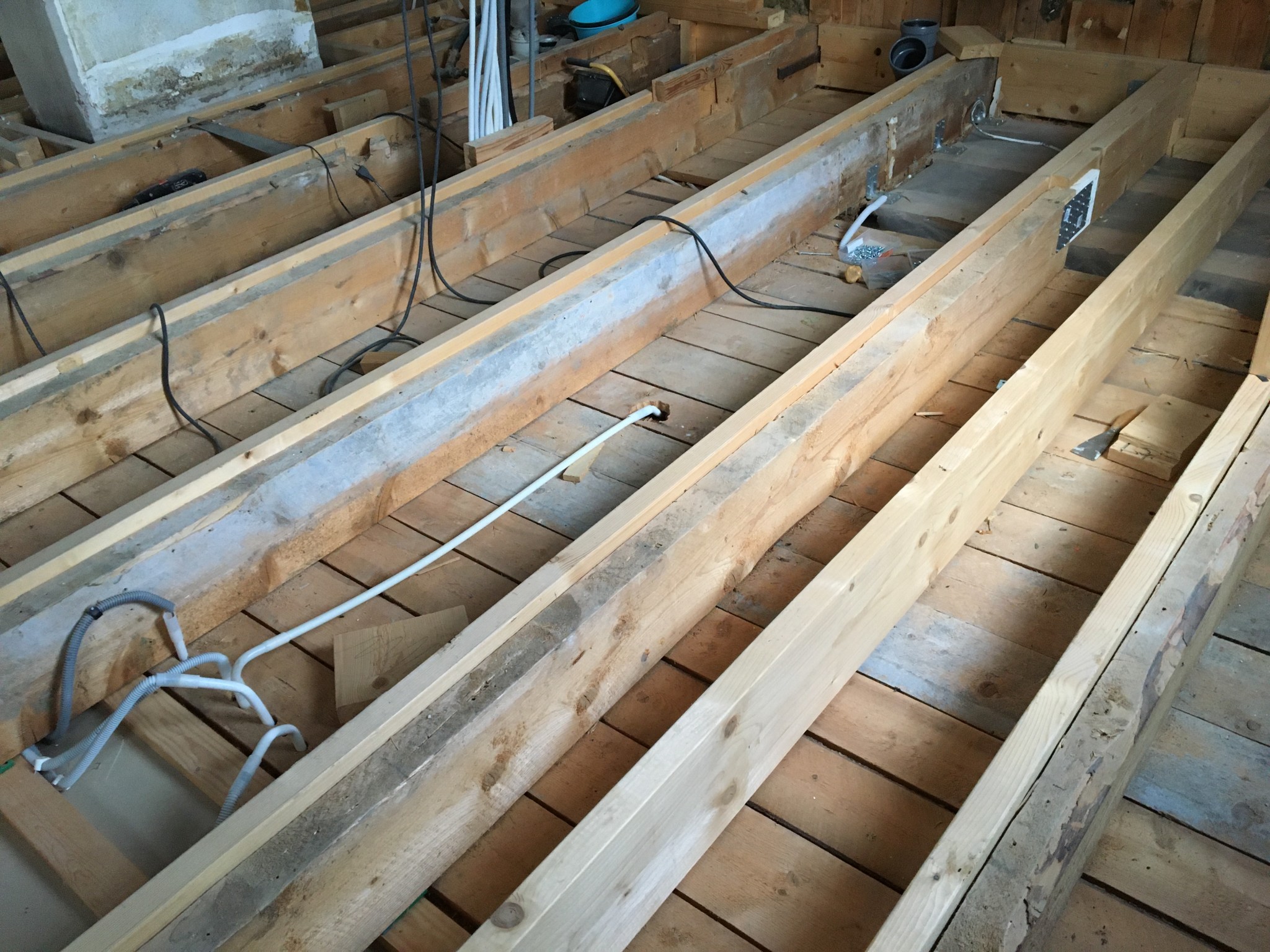
The idea is to make a large bathroom there with underfloor heating and tiles. What worries me is that the beams, which are almost five meters (4950x3960), become shaky and that the tiles crack in the joints. I don't know what to do as I don't want it to become too heavy either. Worth mentioning is that there is no load-bearing wall underneath.
I have been advised that cc 30 (45x220) and noggings are sufficient, the question is if it is enough?. I would rather put in a bit more work so that it’s done right than for it to become “fiddly”.
Thanks in advance
There are quite good instructions from BKR regarding substrates for tiles.
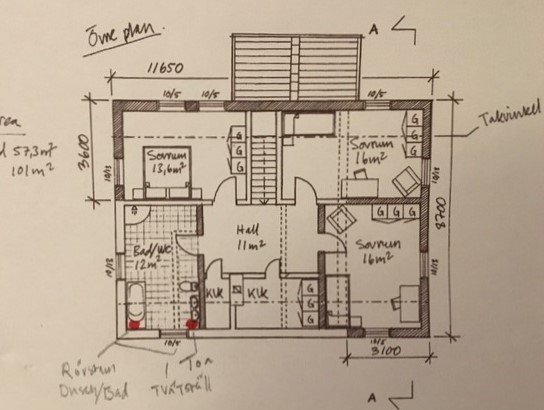
A completely different comment. Is it good to have a sink under a slanted ceiling?
There are quite good instructions from BKR regarding substrates for tiles.
A completely different comment, is it good to have a washbasin under a slanted ceiling?
Hi Åsa
Apologies for the old drawing, the toilet and washbasin have swapped places. It's not visible on the drawing, but the ceiling height is quite high, so the sloped ceiling starts at 1.60. My problem is not making it stable, but more how to solve it in the best constructional way
Regards
22mm chipboard flooring and then floor gypsum glued with Ardex S48 or similar, then leveling compound with reinforcement should "hold" it
Sounds reasonable, but as mentioned, I am planning to have underfloor heating with pipes beneath the tiles, and the ceiling height is a problem, ending up at about 2.30m
Regards
The hose is sparse between the joists but there's a lot to be heated...
Electric heating then? It can be laid in the compound without significantly affecting the thickness.
I am also thinking about electric heating. You control it completely separately, and you can have nice heat even in late spring and early autumn without affecting the rest of the system.
The hose is sparse between the studs but there will be a lot to heat...
Electric heating then? It can be laid in the filler without significantly affecting the thickness
Worth considering, but I was thinking of having water radiators and was planning to run hose everywhere, so I thought I might as well do the bathroom too,
It will never be really good with 45x220 and c/c 300, as the span is too long. In this case, noggins won't help. It's a bit hard to see from the images what the most appropriate action is. There are two strategies. One: Insert new glulam beams between the existing beams or Two: Reinforce the existing beams by screw-gluing more material onto them.
140x225 glulam c/c 600 with screw-glued particle board on top meets the requirement.
It will never be really good with 45x220 and c/c 300, because the span is too long. In this case, noggins won't help. It's a bit difficult with the help of the pictures to see what the most suitable action is. There are two strategies. One: Insert new glulam beams between the existing joists or Two: Reinforce the existing joists by screw-gluing more material.
140x225 glulam c/c 600 with screwed plywood on top meets the requirement.
The original joist is today screw-glued/aligned with 45x220, if I screw-glue 45x220 on the corresponding/opposite side of the original joist I get about 140... or do I need glulam/Kerto?
Best regards



Åsa Lund said:
nino said:
