
12,878 views ·
20 replies
13k views
20 replies
Suddenly, cracks have appeared in the plastered chimney
Hello Forum
Sudden changes that one doesn’t understand create discomfort. So, the past few weeks, it has sometimes sounded strange. A crackle we have heard but couldn’t comprehend. Yesterday, we discovered that small thin cracks have appeared in the plaster on the chimney breast both in the basement, ground floor, and upstairs. We renovated in 2010 and it has been perfectly fine since then. Some parts were plastered then and everything was painted. It is just plaster directly on the brick. Nothing else mtr.
What do you think is causing these cracks that are appearing now? And what should we do?
Sudden changes that one doesn’t understand create discomfort. So, the past few weeks, it has sometimes sounded strange. A crackle we have heard but couldn’t comprehend. Yesterday, we discovered that small thin cracks have appeared in the plaster on the chimney breast both in the basement, ground floor, and upstairs. We renovated in 2010 and it has been perfectly fine since then. Some parts were plastered then and everything was painted. It is just plaster directly on the brick. Nothing else mtr.
What do you think is causing these cracks that are appearing now? And what should we do?
What does the chimney stack look like on the roof? Is there a risk of moisture penetration? I have seen a chimney stack where a piece of plaster had come off on the roof, making the entire chimney stack wet in the winter (metal stuff on the fireplace got rusty). I assume that if moisture gets in, it can also cause frost damage.
Thank you for your response. There are no construction works happening nearby. The house was built in 1930 and we completely renovated it in 2010. New drainage, sealed three channels in the chimney. Removed all old floors and installed new ones with underfloor heating from a modern geothermal system.Anna_H said:
Regarding the cold, it has been cold recently - now around -10 degrees. But the house is fully heated with geothermal heat and sometimes with a fireplace, but only briefly for ambiance. The fire inspection checked that everything looked okay on the roof this fall. To me, it doesn't seem like anything abnormal.
When it comes to settling, it's more difficult. In October, we had a minor flood when it rained heavily, and the stormwater pump broke. 1-2 cm of water across the entire basement. There was some repair needed for gypsum walls that absorbed the water. And a wooden floor that we have now replaced with tiles. And for a few weeks, we had a dryer running to dry everything. Since 2010, we have heating coils throughout the basement, which also helped to dry it out.
A question is whether the elevated water level might have affected under the house and under the chimney stack? Or if the new pump might have a different start and stop level so that it lowers the water level under the house. I'm grasping at straws here...
As I wrote in another reply, the fire inspection was up and checked the chimney on the roof without any remark. Three flues have recently been sealed. And we have heating in the house as before. And the cracks we have now seen have occurred on every floor where it is warm, so there cannot be frost damage there.T Provrundan said:What does the chimney look like on the roof? Risk of moisture seeping in? Have seen a chimney where a piece of plaster had come off on the roof so the entire chimney became wet in the winter (metal things on the open fireplace rusted). Suppose that if moisture gets in, it can also cause frost damage.

Can you photograph some of the cracks? The crack pattern can clearly indicate the cause in some cases.
Changed groundwater level can definitely cause subsidence.
The change in the heating system should have caused problems already two years ago when it was properly cold last, but certainly changing to geothermal energy can generally have such effects since the chimney is no longer heated.
One thought is if a lot of moisture has entered the chimney now (and hasn't done so before), which has frozen and caused the cracking? A wild imagination.
The change in the heating system should have caused problems already two years ago when it was properly cold last, but certainly changing to geothermal energy can generally have such effects since the chimney is no longer heated.
One thought is if a lot of moisture has entered the chimney now (and hasn't done so before), which has frozen and caused the cracking? A wild imagination.
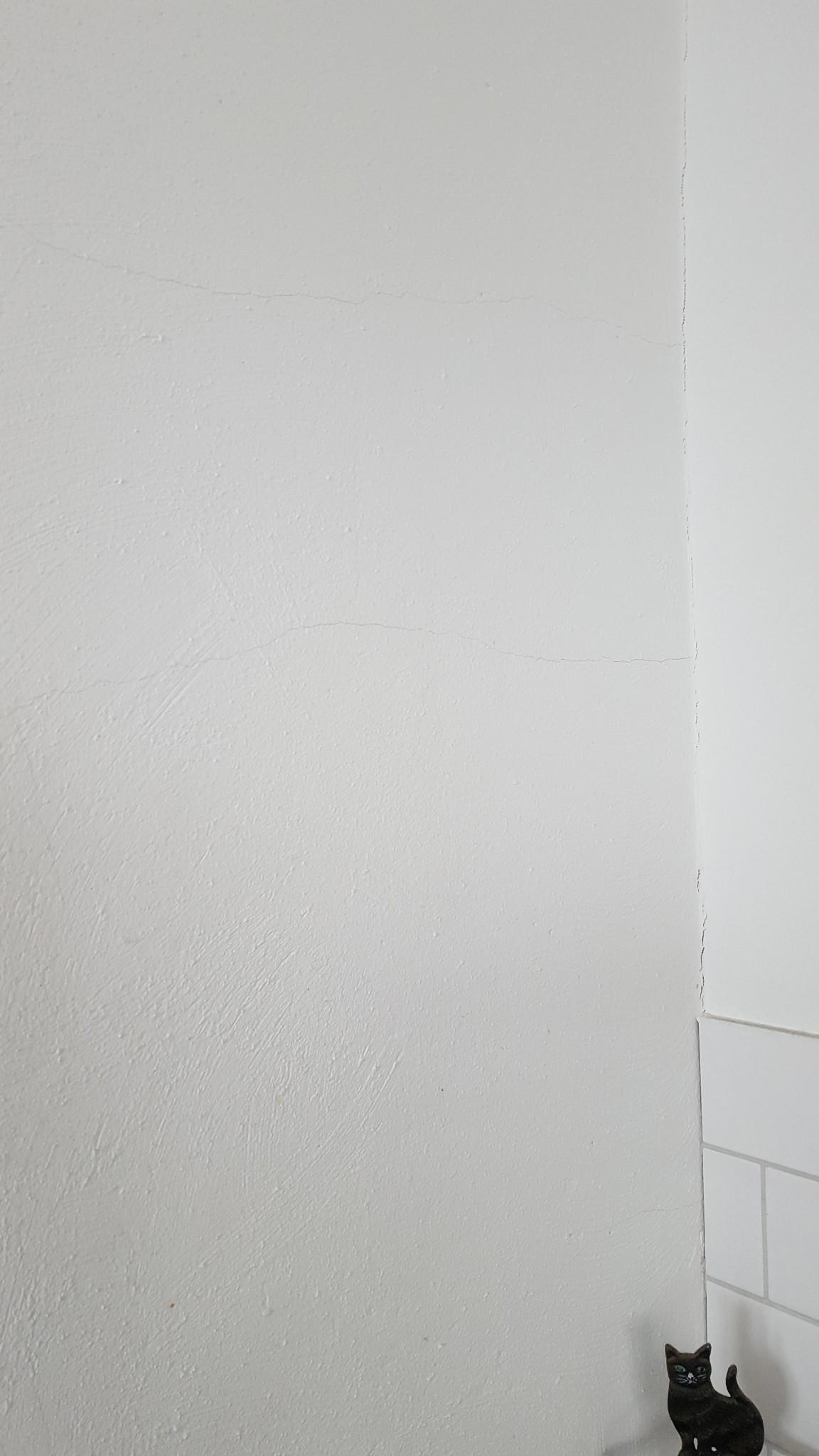
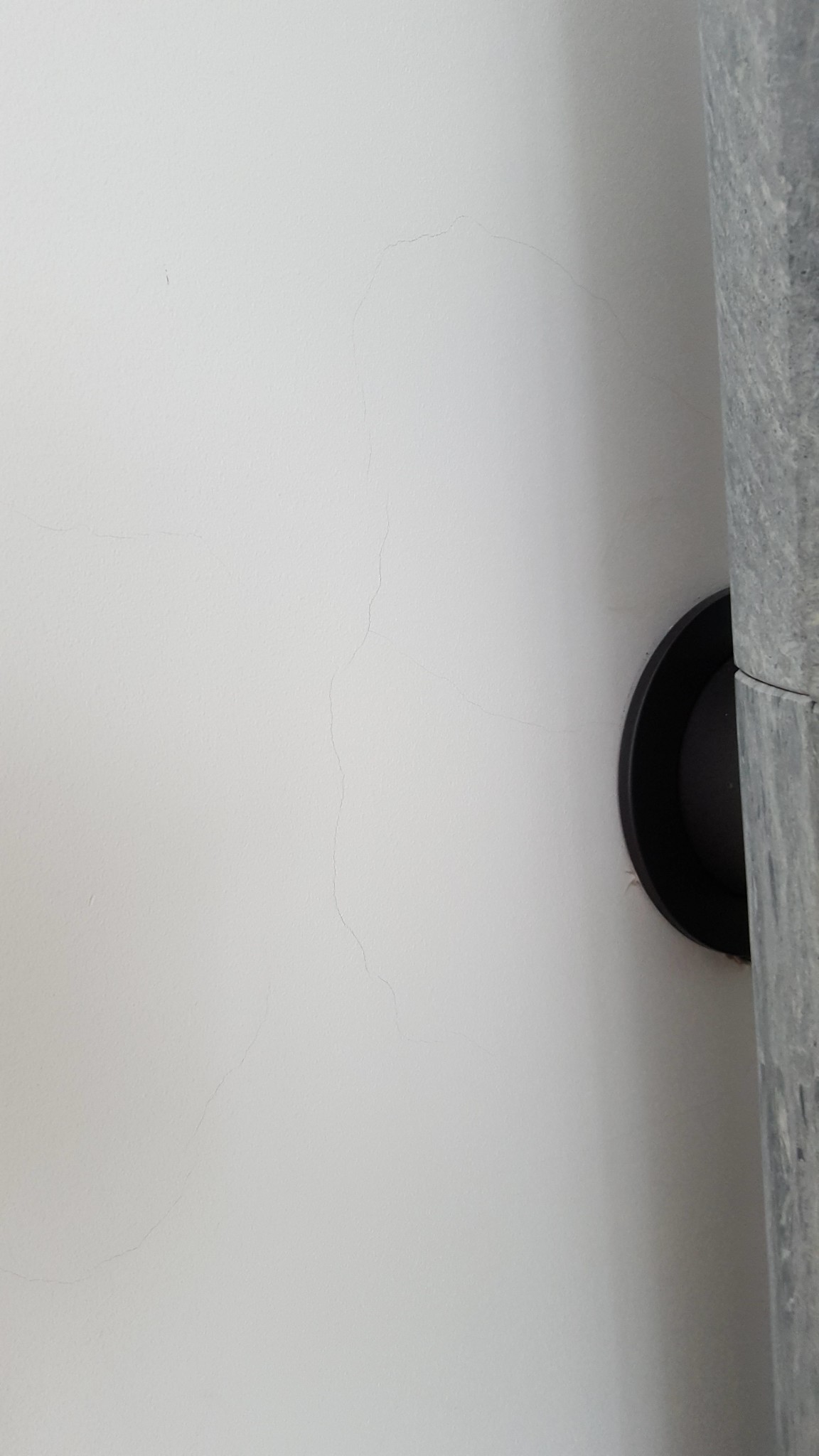
Here, the cracks are horizontal in the kitchen, more vertical in the basement, and in a circle on the upper floor. Sorry that the attached images were difficult to get sharp. You have to zoom in to see.J justusandersson said:



I believe in cold February - it's dry so all the wood shrinks, this is obviously related to the chimney in one way or another, maybe it's leaning a bit against a stud that has shrunk or something like that.
The diagonal cracks are typical so-called shear cracks, which is a fairly sure sign of settlements in the chimney itself. You need to go down to the point where the chimney is founded to find the cause.
Member
· Västernorrland
· 11 692 posts
The most interesting thing is what you plastered with, right? If it's something like cement mortar, then it's way too hard for a chimney in an older house that likely moves quite a lot.
Some of it is old plaster, so I'm not sure about that, but what was plastered in 2010 during our renovation, I'm quite certain is mortar with lime mixture.S Stefan1972 said:
If the cracks are the result of settling in the chimney, it doesn't matter which plaster mortar has been used. How is the chimney founded?
And the foundation under the chimney is not accessible now. We have new floors throughout the basement with built-in water-based heating. What might possibly affect it is that we have a drainage pump in a well (a pipe about 40 cm in diameter) under the garage floor. It receives overflow from a gravel trap and pumps it up to the stormwater drain. Last fall, the pump broke, and we got a new one. I don't know if it has the same set level for water drainage. Primarily, it should pump out when the gravel trap becomes full. But if it's open at the bottom, it might also affect the groundwater level under the house. Feels a bit far-fetched, but it's still a thought since this changed in October. It has been extra rainy during the fall. But now it has turned to winter and no precipitation for the gravel trap or the ground. My question is whether this could cause the settlement of the chimney?J justusandersson said: