
2,689 views ·
24 replies
3k views
24 replies
Studs through floor/ceiling - load-bearing?

Hello,
I have a 2 ½ story house with a hallway wall that we plan to remove to create a larger hall. The walls were covered with masonite and then horizontal, tongue-and-groove boards. Behind them are studs that appear to continue up through the ceiling and floor on the second floor. Upstairs, the wall continues to the second-floor ceiling and stops there. The question is whether a wall with such long studs can be load-bearing? I should add that the house is insulated with sawdust between the studs (one of the reasons they built the wall this way? So they could pour sawdust into long "channels") and that the house was built around 1919.
I have a 2 ½ story house with a hallway wall that we plan to remove to create a larger hall. The walls were covered with masonite and then horizontal, tongue-and-groove boards. Behind them are studs that appear to continue up through the ceiling and floor on the second floor. Upstairs, the wall continues to the second-floor ceiling and stops there. The question is whether a wall with such long studs can be load-bearing? I should add that the house is insulated with sawdust between the studs (one of the reasons they built the wall this way? So they could pour sawdust into long "channels") and that the house was built around 1919.

100 years ago, there were not many (or rather none..) building standards, so it could be built in any way. Simply taking down a wall with a floor above often requires some form of relief (such as a glulam beam). In your case, you need to consult a structural engineer who can calculate whether it is possible at all and come up with calculated solutions.
Darn, I had hoped it was the other way around. Well, then I'll have to bite the bullet and contact another structural engineer.
I talked with my neighbor, who is a structural engineer and lives in a similar house, and he thought we could take down the wall. But at the same time, he said, "if the house settles a bit, you can insert a beam." So the credibility of his statement never felt a hundred percent.
I probably need to talk to another one and get it in writing so I can feel secure about the situation.
I talked with my neighbor, who is a structural engineer and lives in a similar house, and he thought we could take down the wall. But at the same time, he said, "if the house settles a bit, you can insert a beam." So the credibility of his statement never felt a hundred percent.
I probably need to talk to another one and get it in writing so I can feel secure about the situation.
Hello again,
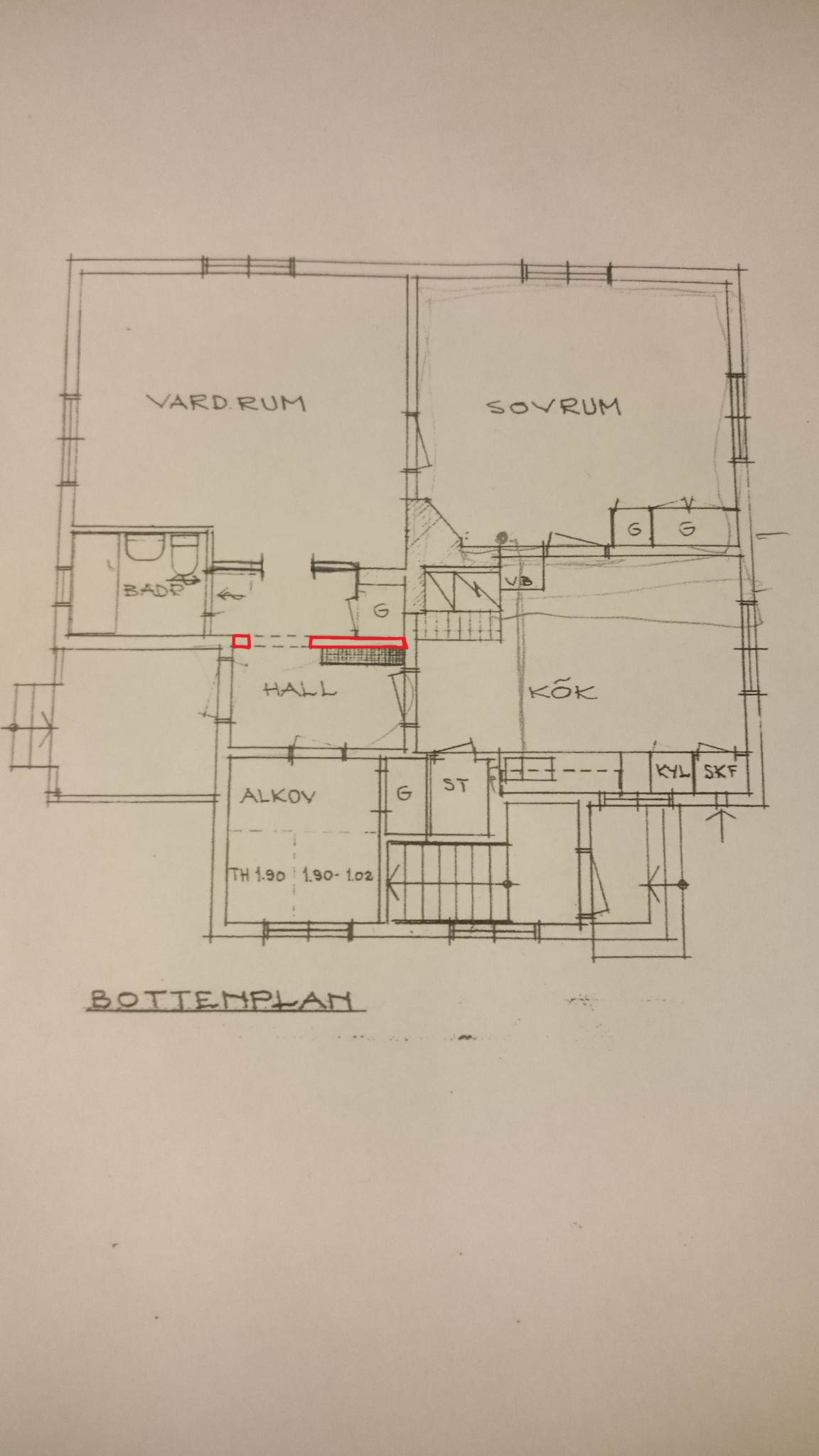
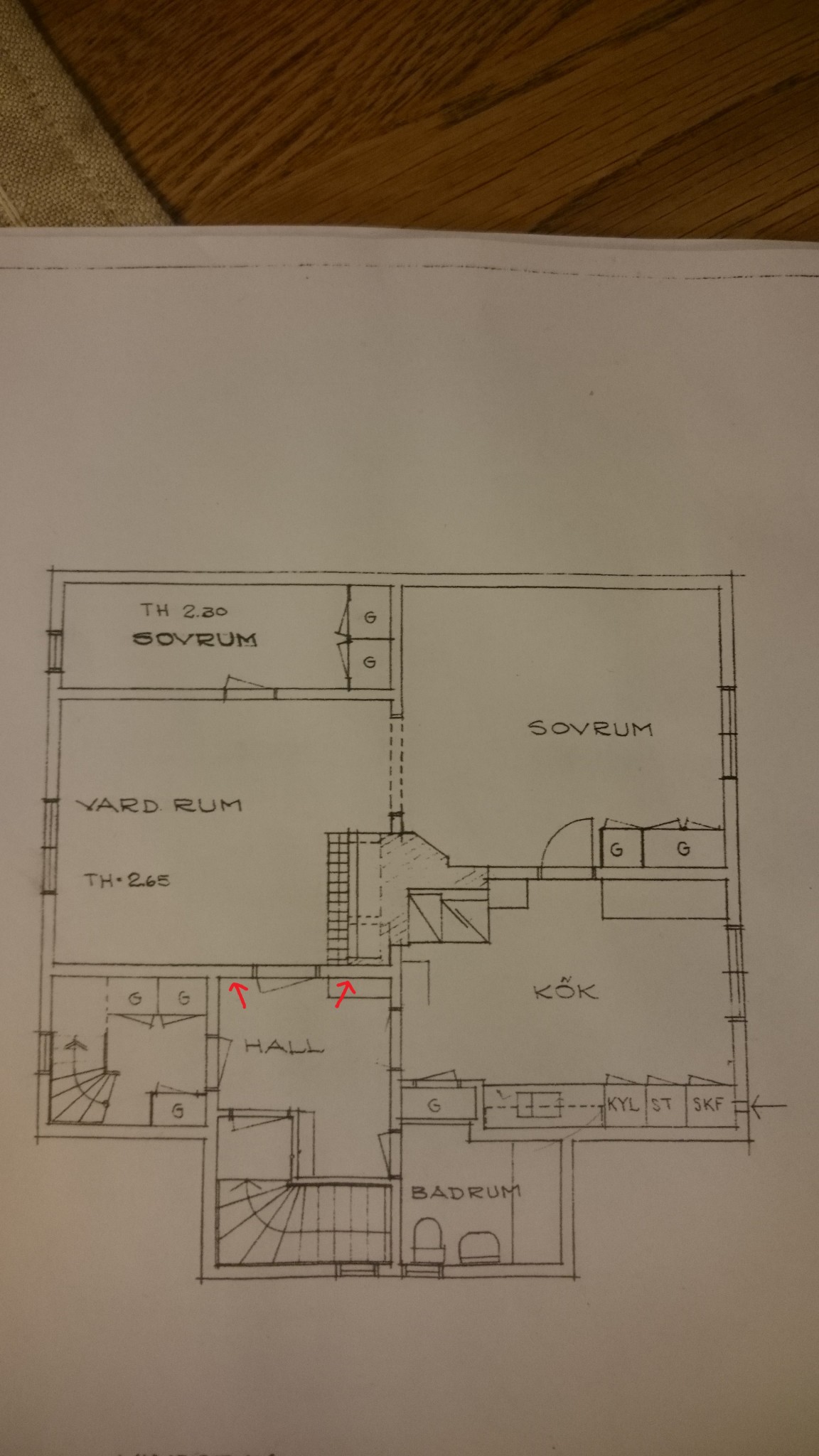
I am including the floor plan to show more clearly where the wall is. I think the walls around it look larger and more load-bearing, but understand that this may not be the case. In the attic, there are no walls except for the outer walls.
I have marked in red which wall it concerns and arrows pointing at the wall on the upper floor.
I am including the floor plan to show more clearly where the wall is. I think the walls around it look larger and more load-bearing, but understand that this may not be the case. In the attic, there are no walls except for the outer walls.
I have marked in red which wall it concerns and arrows pointing at the wall on the upper floor.

The current wall is most likely load-bearing. One can consider the red-marked wall and its extension, as well as the wall between the kitchen and bedroom, as core walls with some displacement. I have a feeling that the house has also been extended, which might complicate the assessment but doesn't change what I wrote in the first sentence.
Yes, I was worried that it was about that: displaced heart wall. However, I can inform you that the house has not been extended in any way: it is q1-marked, so it's original from 1919. Darn, now I have to find a structural engineer and pay for it. Any idea what such a visit might cost?J justusandersson said:The current wall is very likely load-bearing. You can consider the red-marked wall and its extension, as well as the wall between the kitchen and bedroom, as heart walls with some displacement. I get the feeling that the house has been extended, which might complicate the assessment but doesn't change what I wrote in the first sentence.
What do you want to do?
It is not a completely uncomplicated task. Most walls in houses built in 1919 are usually plank walls (tongue and groove planks 2 1/2 - 3 inches thick) that can be considered as panel structures. Now you have to trace the studs all the way up to see what loads can rest on them. You can make it a bit easier by considering max scenarios all the way. Since the span is limited, the dimensions of the supporting beam still don't need to be super large.
You need to find a designer, i.e., a person who is used to calculating similar problems and who usually works at a construction consultancy company. This person can be a building engineer, a university engineer, or a civil engineer. Building engineers (i.e., high school-educated engineers) can be active in a variety of fields and do not necessarily have to be particularly knowledgeable about this specific issue.
You need to find a designer, i.e., a person who is used to calculating similar problems and who usually works at a construction consultancy company. This person can be a building engineer, a university engineer, or a civil engineer. Building engineers (i.e., high school-educated engineers) can be active in a variety of fields and do not necessarily have to be particularly knowledgeable about this specific issue.
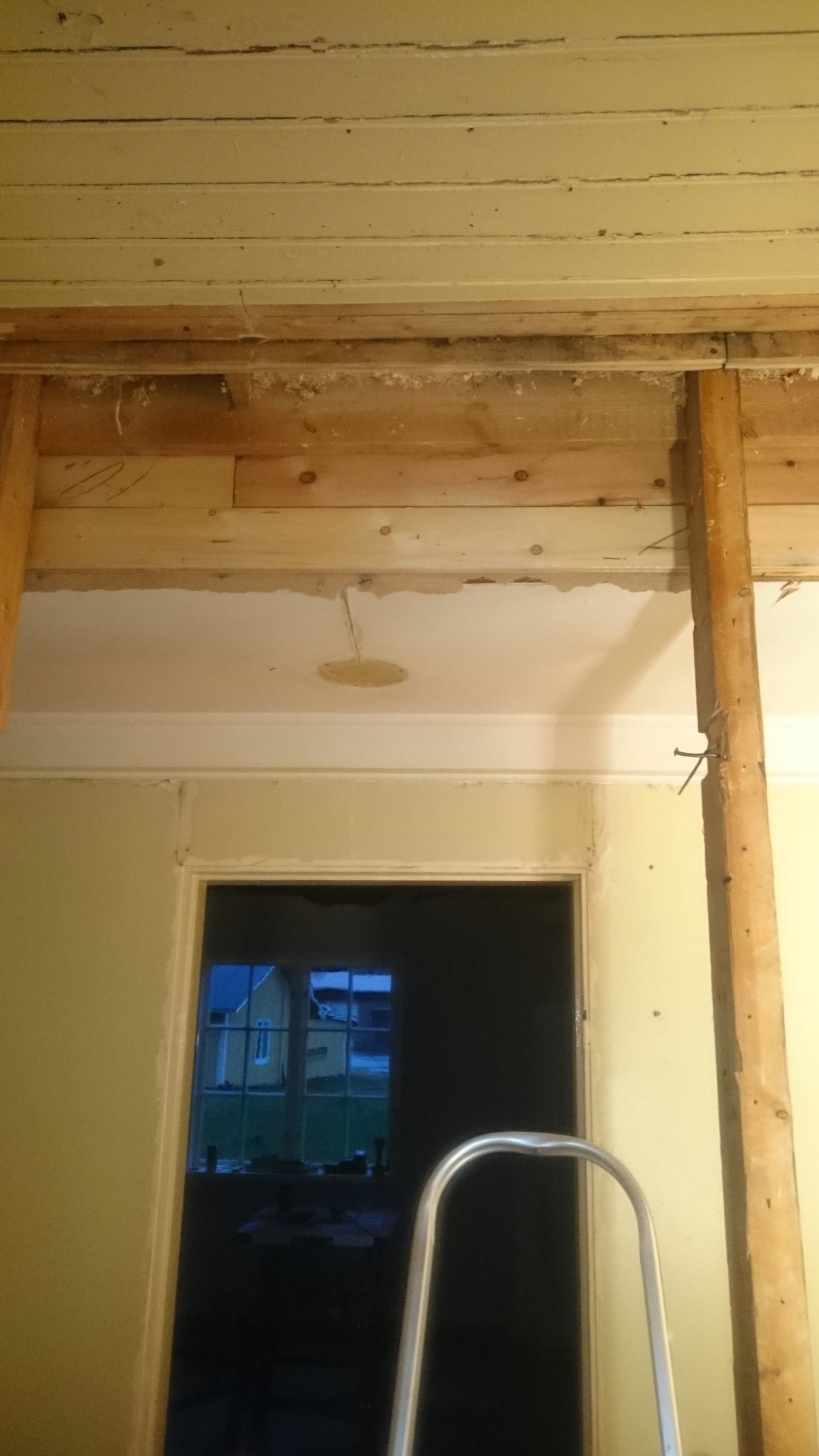
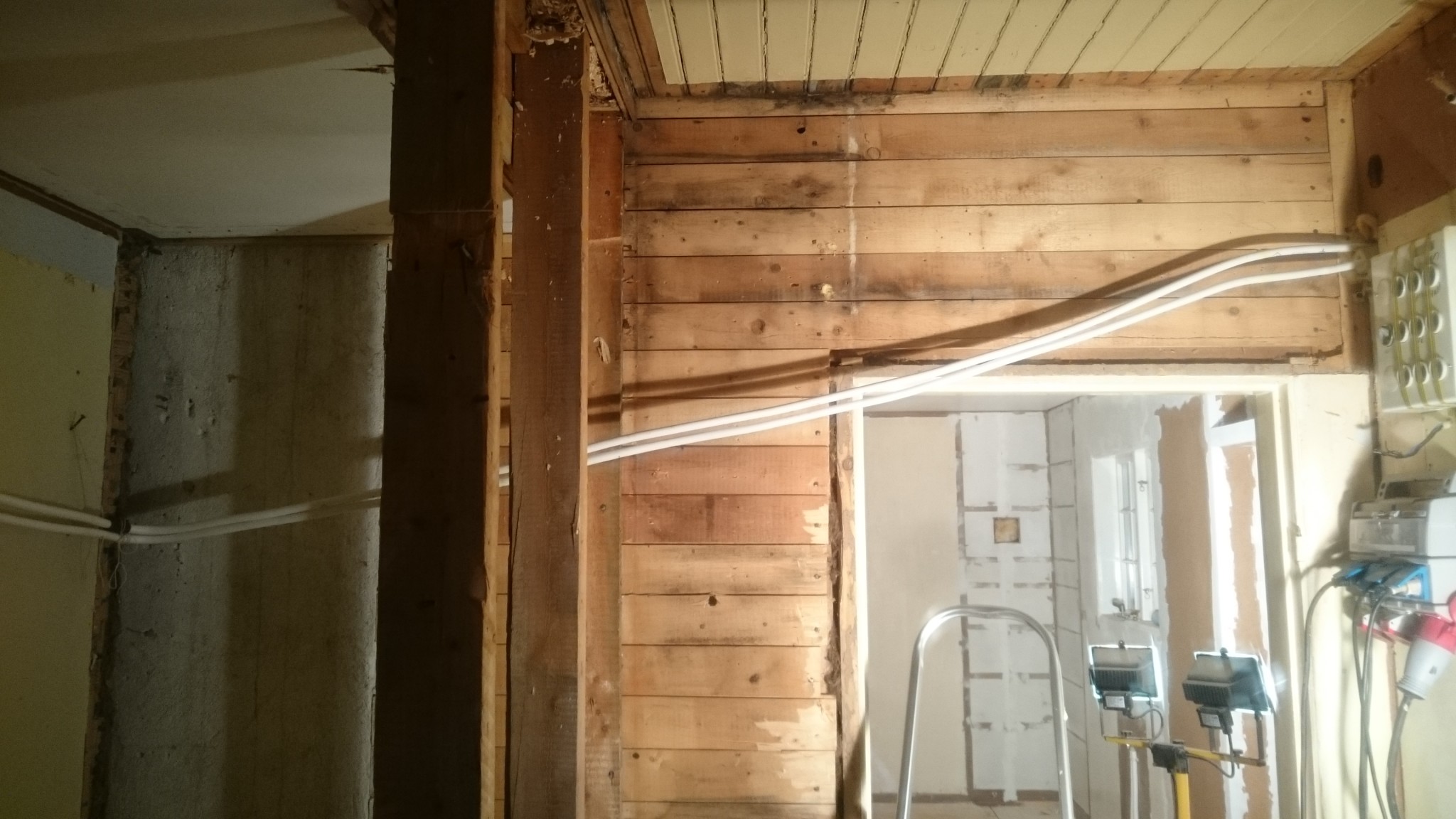
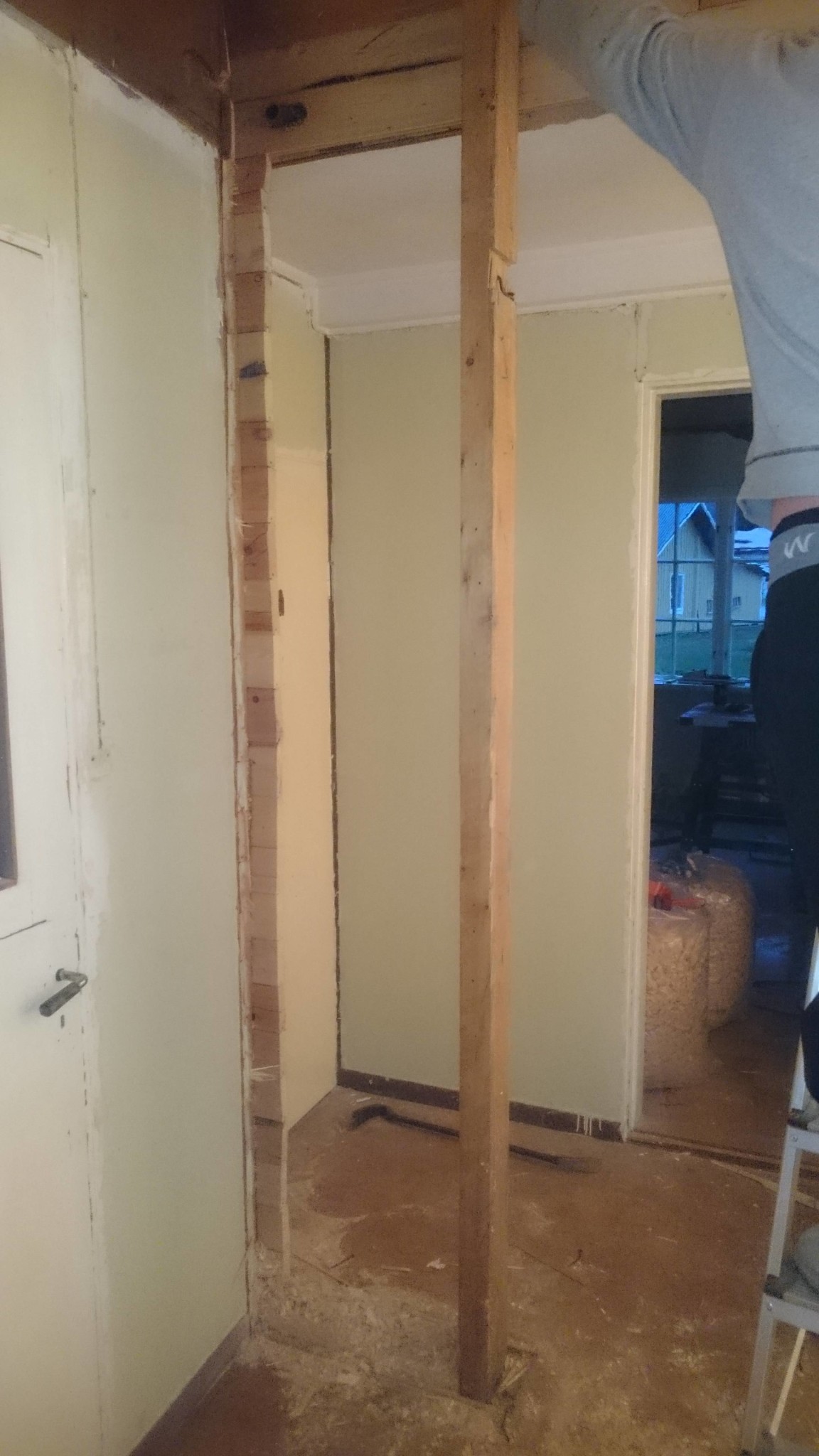
What you wrote about the construction is very accurate. It's tongue and groove boards and then sawdust in between and masonite in front. I wrote to a company today and hope to hear from them after the weekend. Here in the pictures, you can see how it looks right now. The studs seem to continue upward at least, but it's a bit difficult to see for myself because it is so packed with sawdust.J justusandersson said:It's not an entirely uncomplicated task. Most walls in houses built in 1919 are usually plank walls (tongue and groove planks 21/2 - 3 inches thick) that can be considered as panel constructions. Now you need to trace the studs all the way up to see what loads can rest on them. You can make it a bit easier by calculating with maximum scenarios all the way. Since the span is limited, the dimensions of the replacement beam don't need to be very large.
You need to find a structural engineer, i.e., a person who is experienced in calculating similar problems and who usually works at a structural consulting firm. He/She can be a building engineer, a university engineer, or a civil engineer. Building engineers (i.e., engineers with secondary education) can be active in a variety of areas and do not necessarily need to be particularly knowledgeable about this specific issue.
What is the opening measurement?