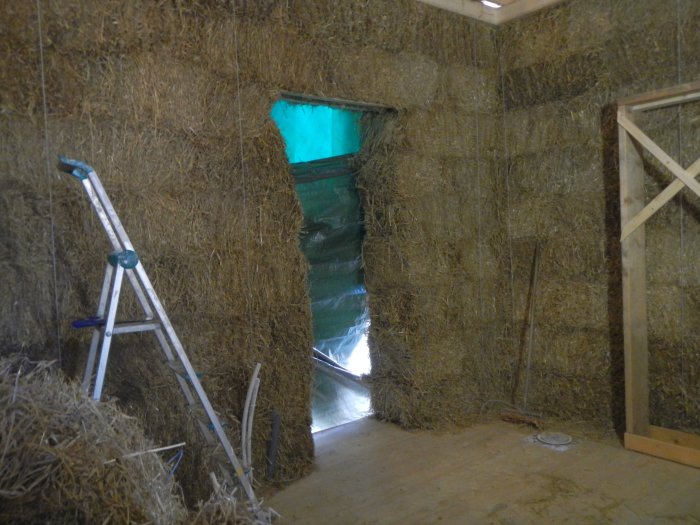
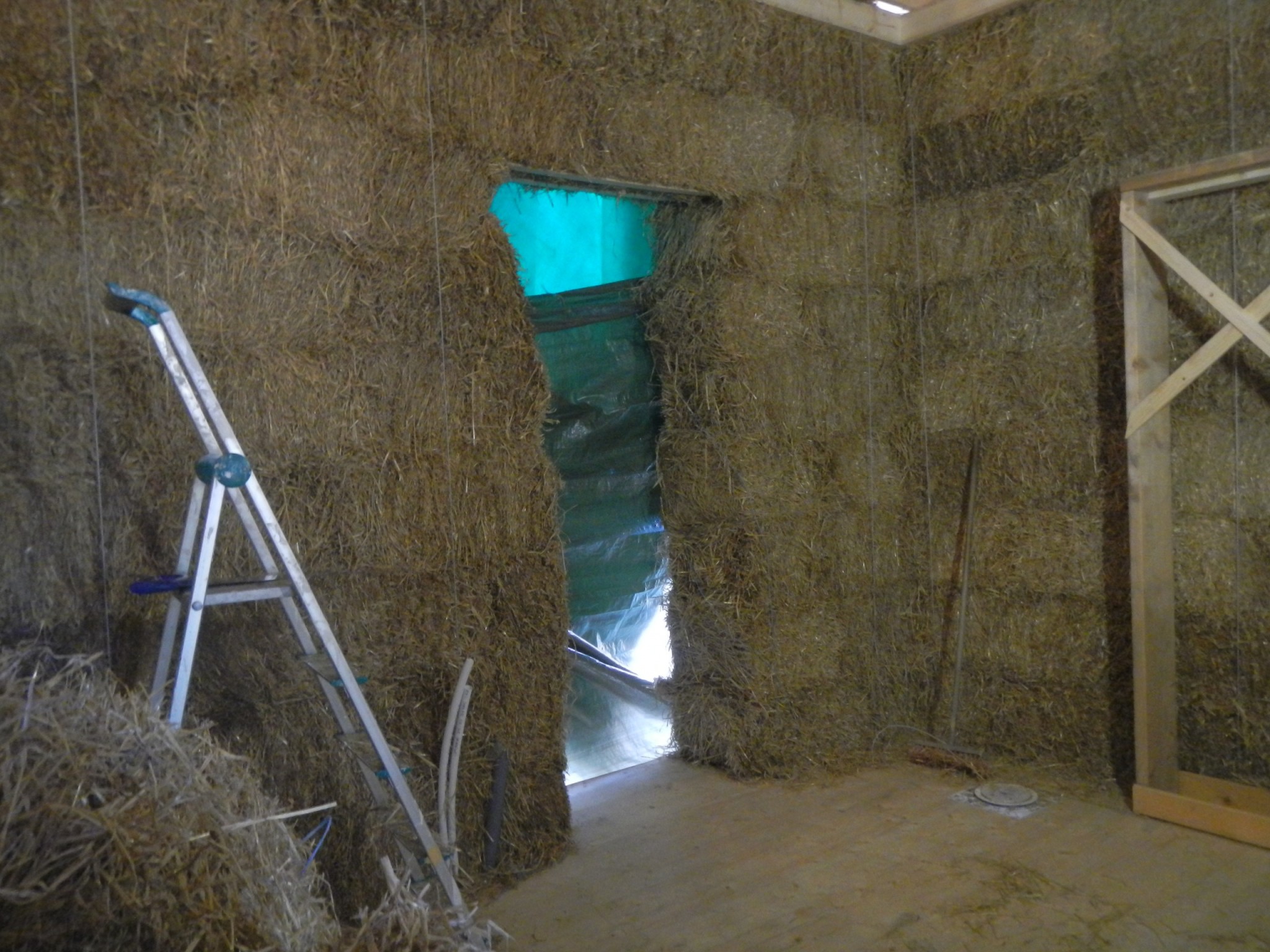
It would be appropriate if an expert on straw bale houses answers the question and not someone who has to guess.
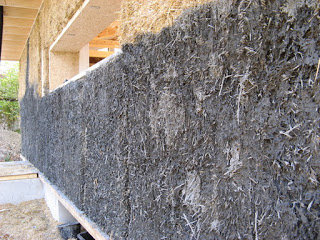
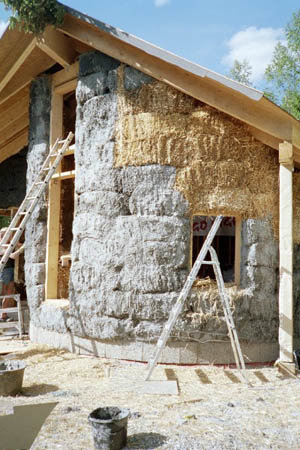
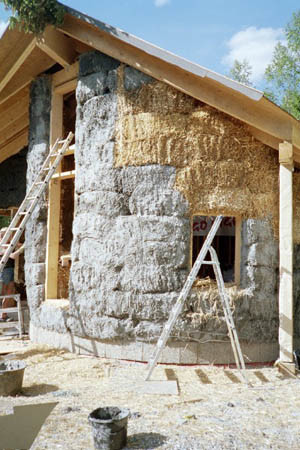
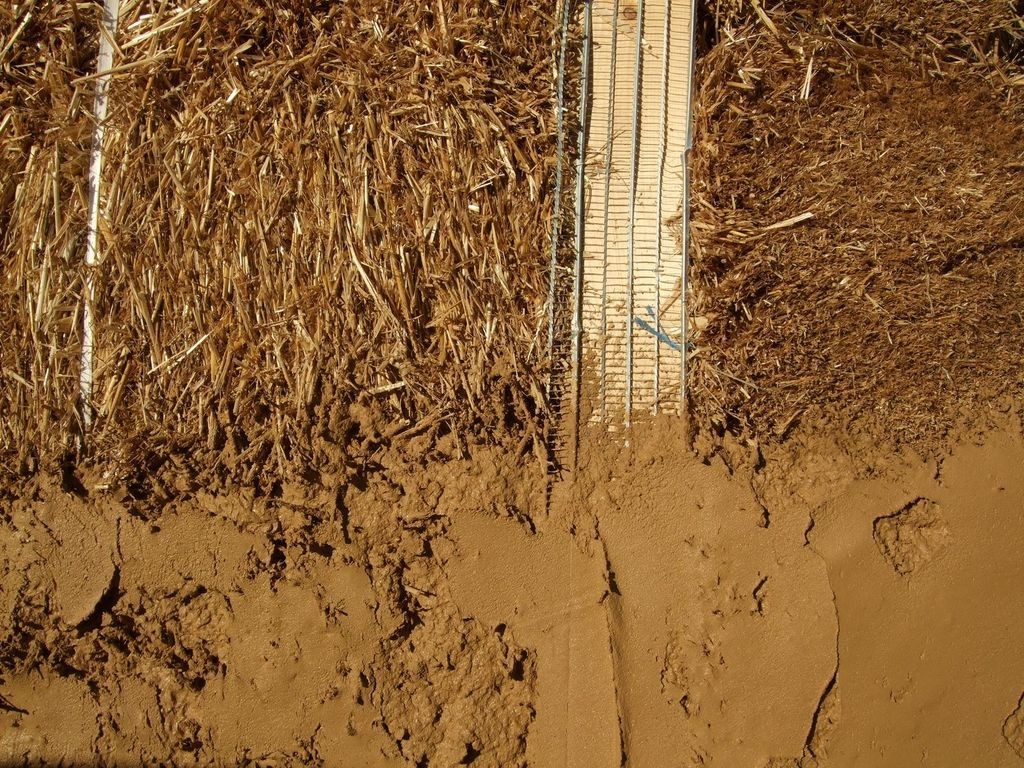
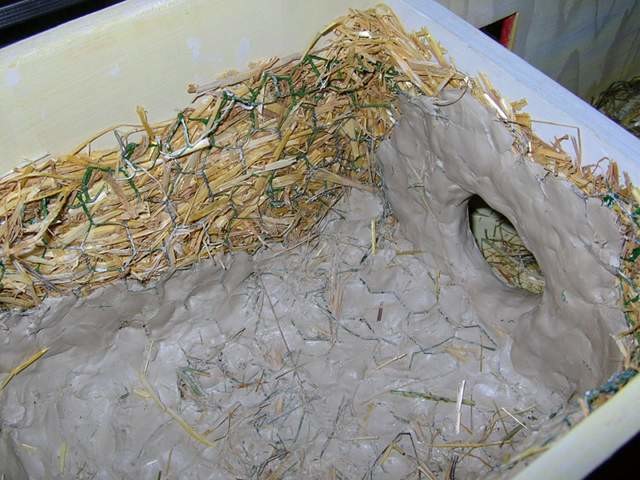
The straw bales in these houses are compressed, stitched together with steel wire and chicken wire around which acts as reinforcement for the plaster. I see no problems with the bale strings coming loose since the bales are fixed in all possible directions and I assume that one expects a significantly longer lifespan than 20 years for these houses.
I will get back to this when I have asked those I know who are real experts on this so we can also avoid my somewhat qualified but still guesses.
The straw bales in these houses are squeezed in, sewn together with steel wire, and surrounded by chicken wire that acts as a reinforcement net for the plaster.
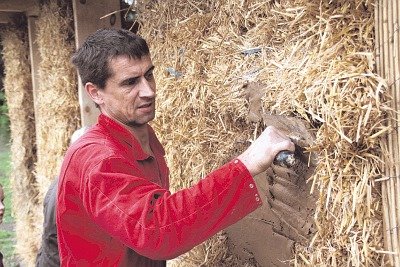
In Europe, this is rarely the case as most houses are plastered with clay or lime plaster that adheres directly to the straw. In (North) America, however, a lot of cement plaster is used, which requires chicken wire or similar.
I've thought about the issue and don't think it will be a problem. Even if the bales are not held in place by chicken wire, they are held in place by each other and the plaster, so I believe that even if the bale strings break, the bales will maintain their shape.
Since there are hardly any houses with that type of string older than 30 years, it's a bit early to give any guarantee.
The hay bales in these houses are squeezed in, sewn together with wire and surrounded by chicken wire which acts as reinforcement mesh for the plaster..
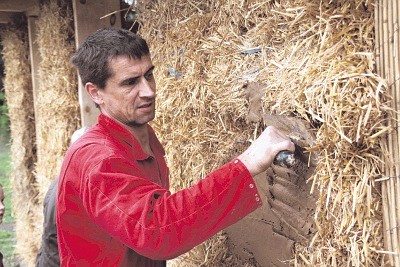
In Europe, it's rarely like this as most houses are plastered with clay or lime plaster that adheres directly to the straw.
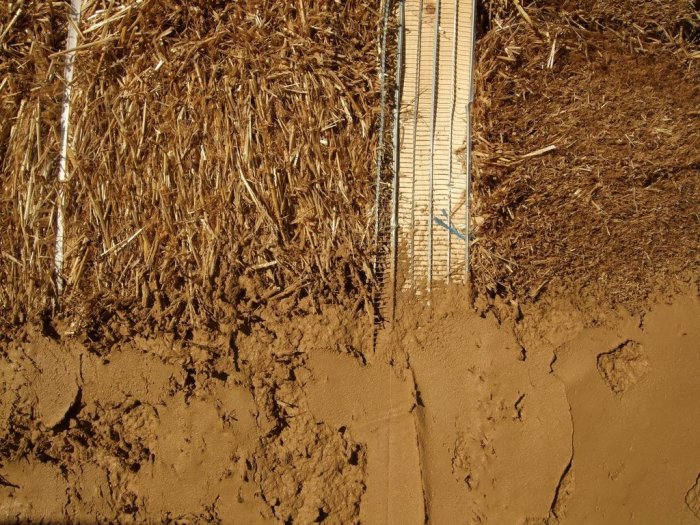
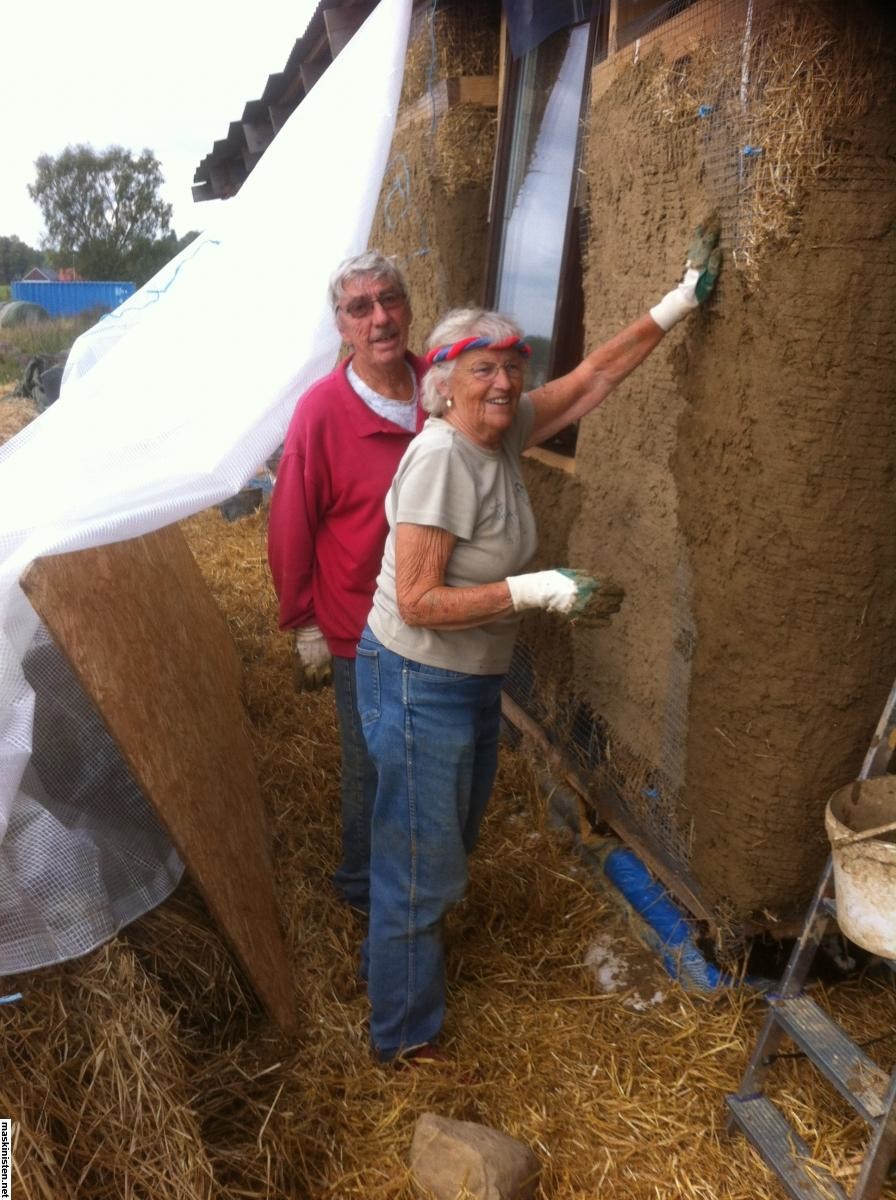
Where do you get that from? The straw bale houses I've helped build, which several of my relatives and friends live in, and even the prototypes of these are built just like this in Sweden, with clay mortar. No one in our circles as far as I've heard advocates plastering without the chicken wire. It's not so much about the plaster sticking better as it is about reinforcing it.
See no field for it. Directly after the answer comes "The most recently answered questions:" with a barrage of questions and under that the black field with article descriptions...
How closely have you looked? Have you participated in constructions yourself? There are certainly many different approaches and there are surely people who apply clay plaster on straw bales without mesh, but still. You seem to have decided that no one in Europe ever uses mesh, but that's your opinion.
...You can definitely find pictures where you can see the mesh clearly too. From Sweden...
Of course, there is, but only because people have read straw theory from the USA.
Additionally, I am skeptical about wrapping the house in a net and essentially turning it into a Faraday cage.
Ask a farmer, they are probably the expert in this case. An ordinary bale twine (balband, pressgarn) is either made of sisal twine (natural product) which lasts long if not exposed to moisture, or made of synthetic material (polyester?) which lasts a long time if not exposed to sunlight. Neither material is desirable for any kind of pests.
Building with straw by Gernot Minke and Friedmann Mahlke:
Compared to earth render, cement plaster is fairly brittle and crack will develop more easily as a result of movements of the substructure, wind loads or creeping of the bales. They should therefore be reinforced with glass fibre or metal meshes.
Hahaha, I know you think no one ever nets earth-plastered straw bale houses. You can believe that if you want, but the thread is about the strings. I will get back to them.
Where did I say that? Of course, there are people who use nets for clay plastering.
What I'm saying (and which I have support for) is that they do it unnecessarily.
It's possible that the thread is about strings - and that's an interesting discussion.
It was when you introduced the wrong parameters that I had to tell how it really is.
Where did I say that? Of course, there are people who use mesh for clay plastering. What I'm saying (and which I have support for) is that they do it unnecessarily.
Maybe the thread is about strings - and it's an interesting discussion. It was when you introduced the wrong parameters that I had to explain how it really is.
Okay. I will clarify my first post. Primarily, the chicken wire isn't directly related to the plaster, although it reinforces and thus stabilizes this layer. I suppose it was when I mentioned that it functions as reinforcement mesh for the plaster that you reacted...
As I wrote, they stitch (if they are building in the way that the people I know have done) the straw bales with wire and chicken netting around it. This stabilizes and compacts the entire structure and has been done by many here in Sweden for 15 years, perhaps longer. The following film shows what I mean, from 3.40 onwards. Feel free to watch the entire film and part 2, they show how many build straw houses here in Sweden. At least on the west coast, this method is widespread:
"Wrong parameters" I don't know if I'd say that, maybe different parameters than what you'd obtain from studying the subject theoretically, but the fact is that many who are passionate about this in the circles I know of are not much for publishing everything they do on the internet all the time but rather focus on actually building the houses and then living in them. "How it really is" - I don't really know, it's probably different for different people.
I was actually at Franz Yzermans' (the filmmaker) home when I was working on my thesis.
Unfortunately (for this discussion), using the net was not something we discussed.
Baling twine:
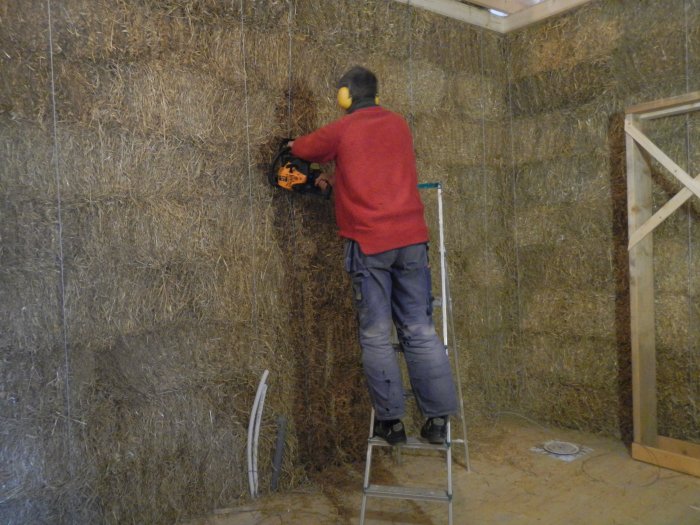
When I made openings for doors/windows, I cut the bales without doing anything to the twine. They were not left open for more than a few hours at most before I inserted the frames, but there wasn't even a hint of collapse.
Click here to reply
Vi vill skicka notiser för ämnen du bevakar och händelser som berör dig.