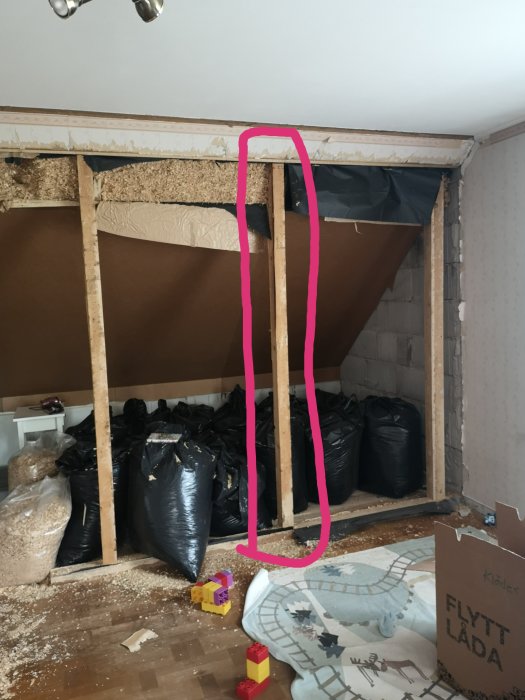
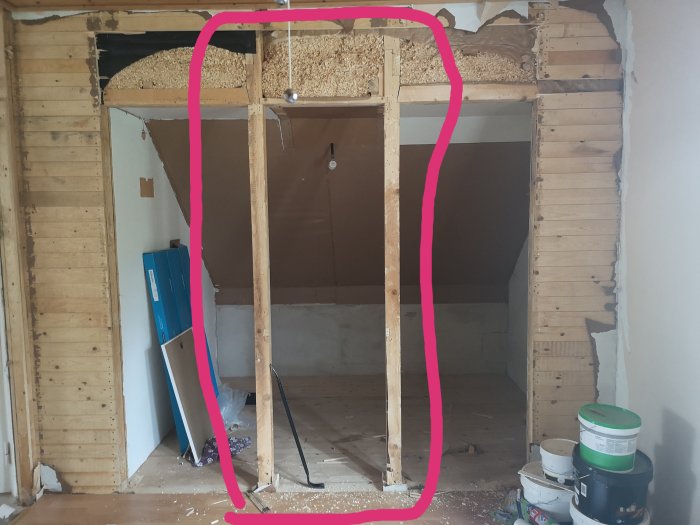
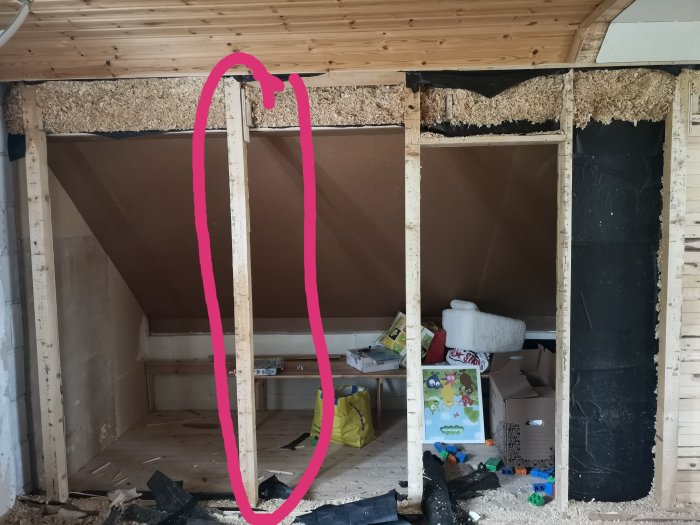
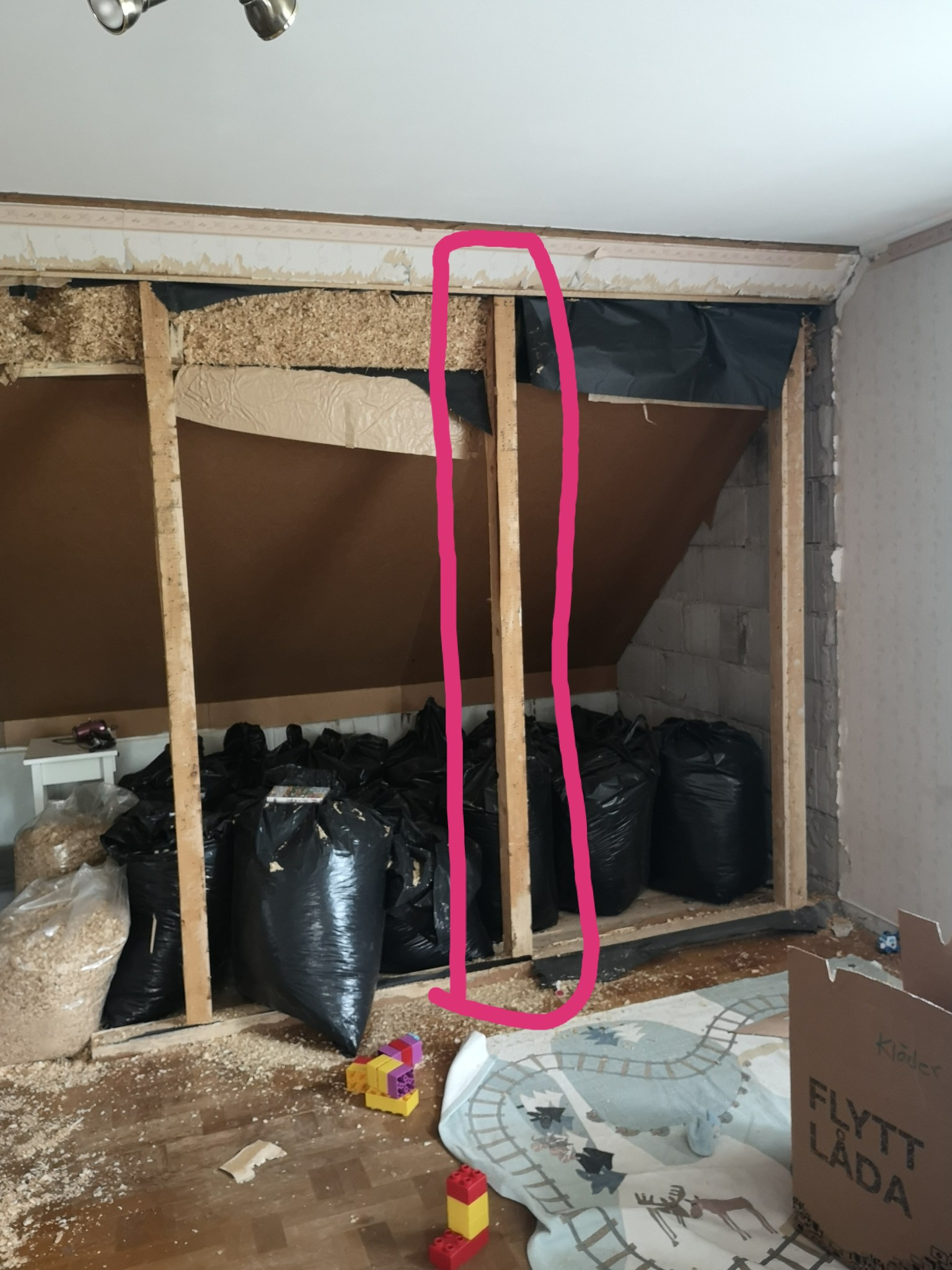
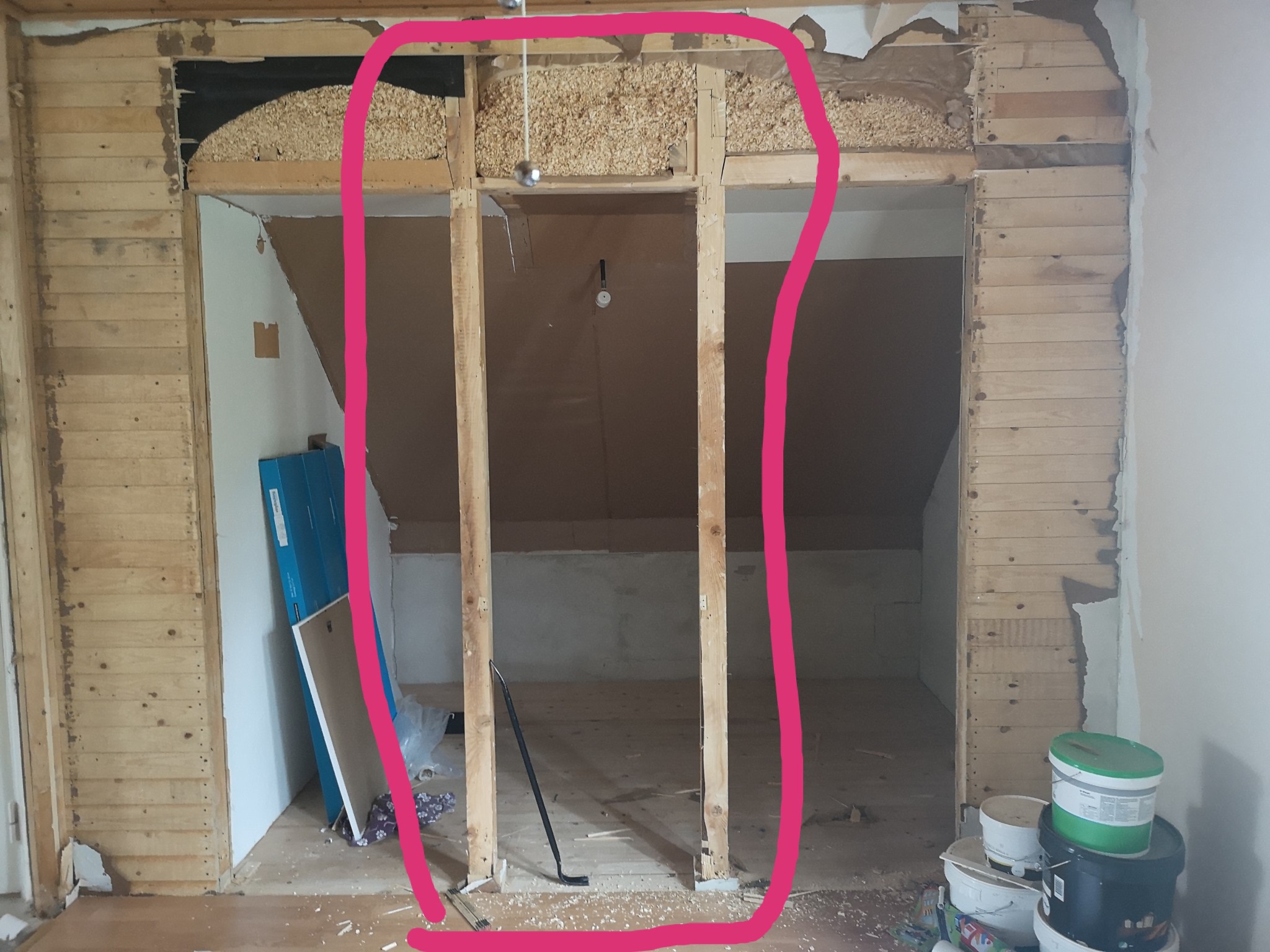
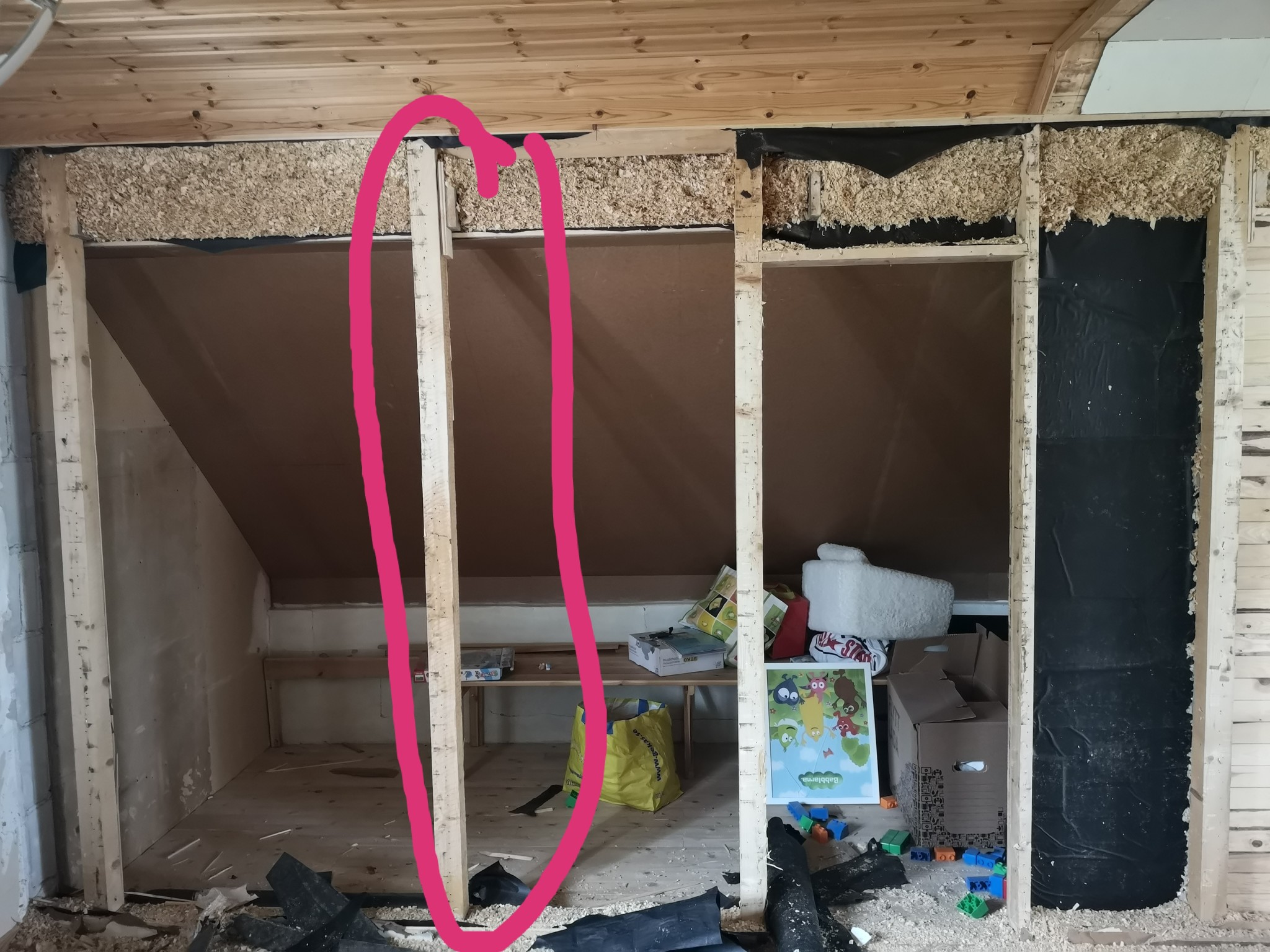
Now it's time to move/remove/replace the support legs. So I thought I'd ask a bit about how I should proceed. Marking on pictures which ones should be removed.
The plan is to build 120x200 beds so only a "gap" is needed so you can crawl in.
Interior view of a room with wooden studs exposed, plastic bags on the ground, a pink outline marking specific studs, and children's toys on the floor.
Two wooden support beams marked for removal in a partially renovated room, with construction materials and debris on the floor.
Wall under construction, with pink markings highlighting studs to be removed. Ceiling has wooden panels, and room contains some boxed items and toys.
Image 2 and 3 are from each side of the same room. But the support legs are not aligned with each other?
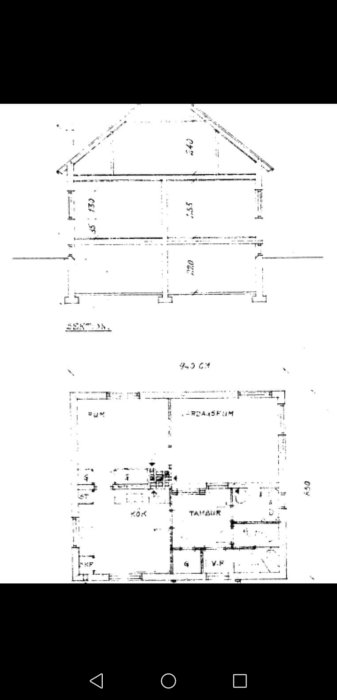
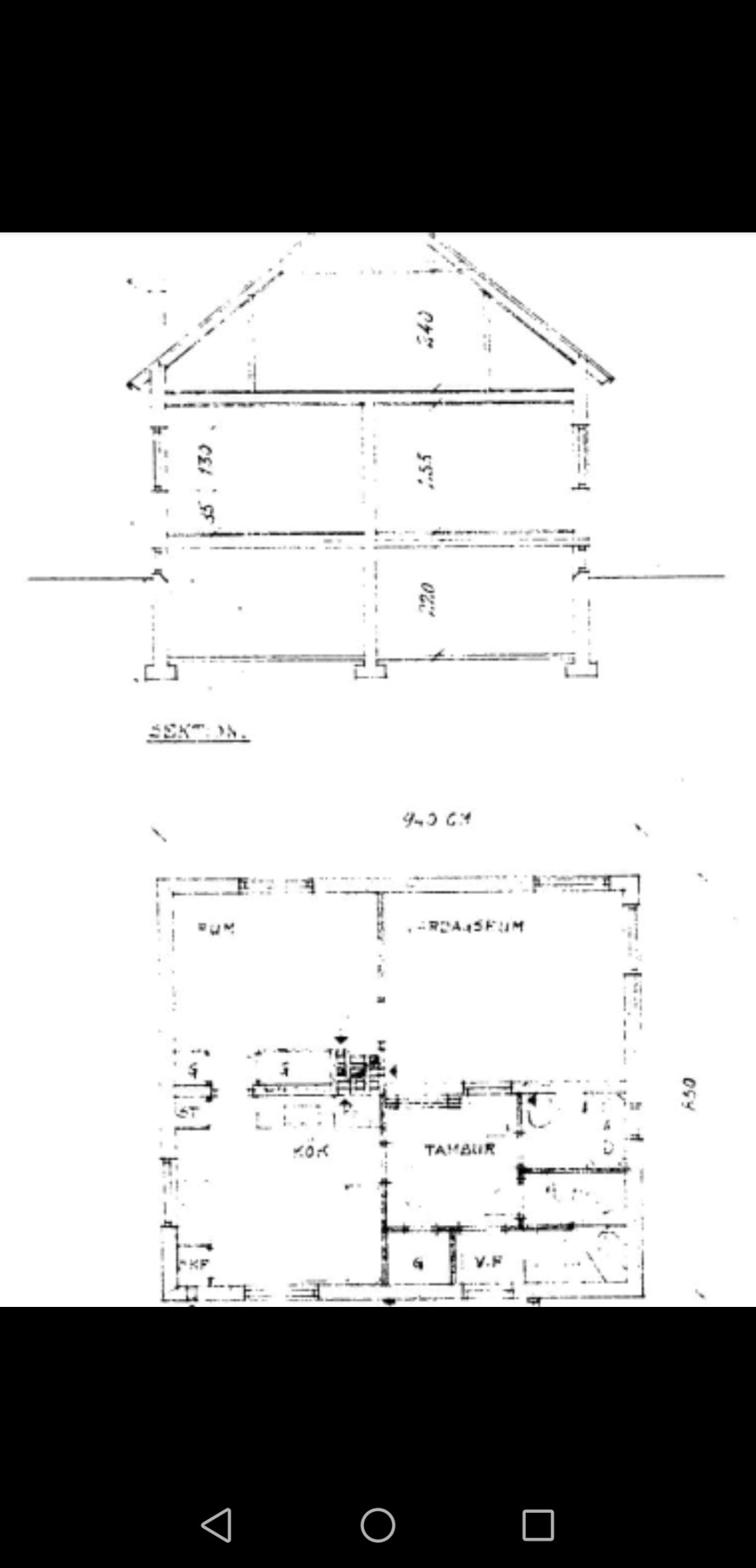
Floor plan and section view of a 1950s house showing room layouts and structural details in preparation for a renovation project.
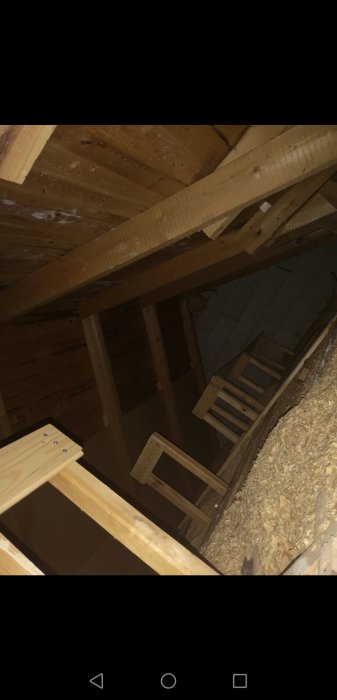
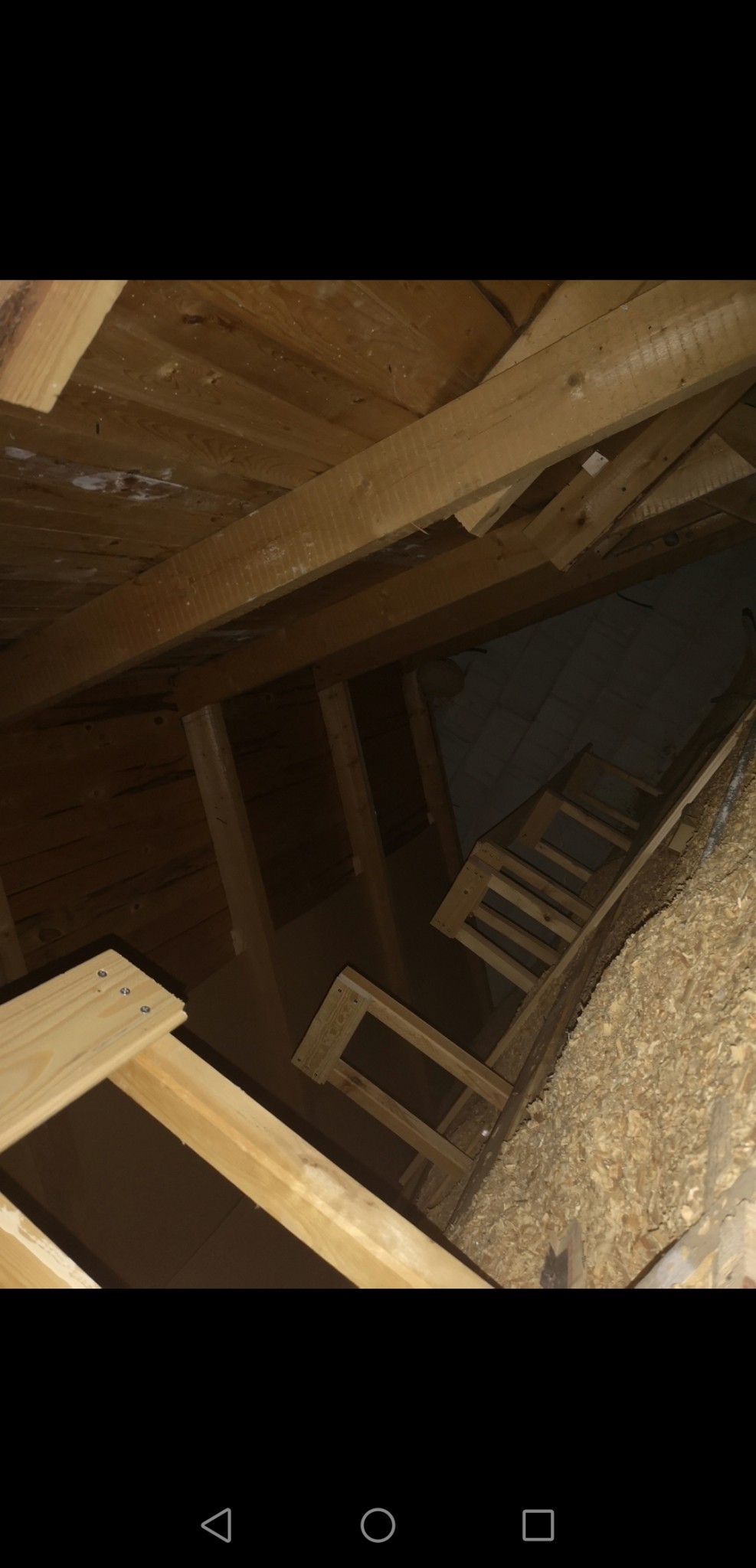
Wooden support beams inside an attic space, part of a renovation project. The wooden framework is visible, highlighting the structure of the roof.
The house was built in 1950 and is located in Dalarna.
Grateful for help and answers.
 
First, it's important to find out if it's a matter of support beams and if so, which of the studs are support beams. A "real" support beam is part of the truss and can't be removed just like that. However, the trusses are not as closely spaced as your studs are, so not all can be support beams. A better photo from the attic might be a good start.
 
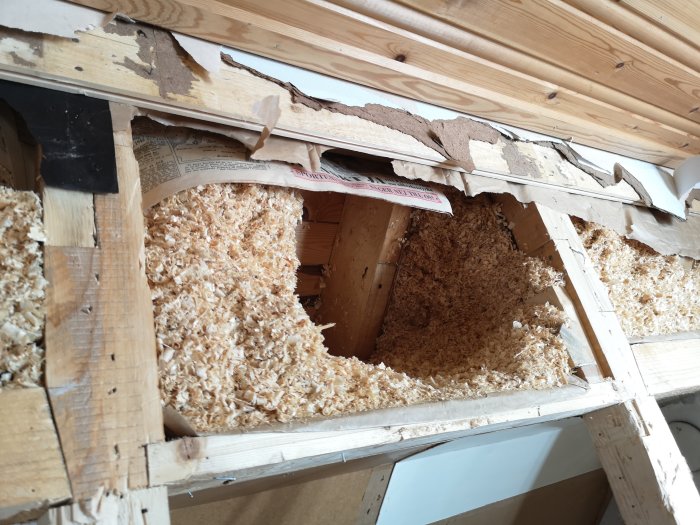
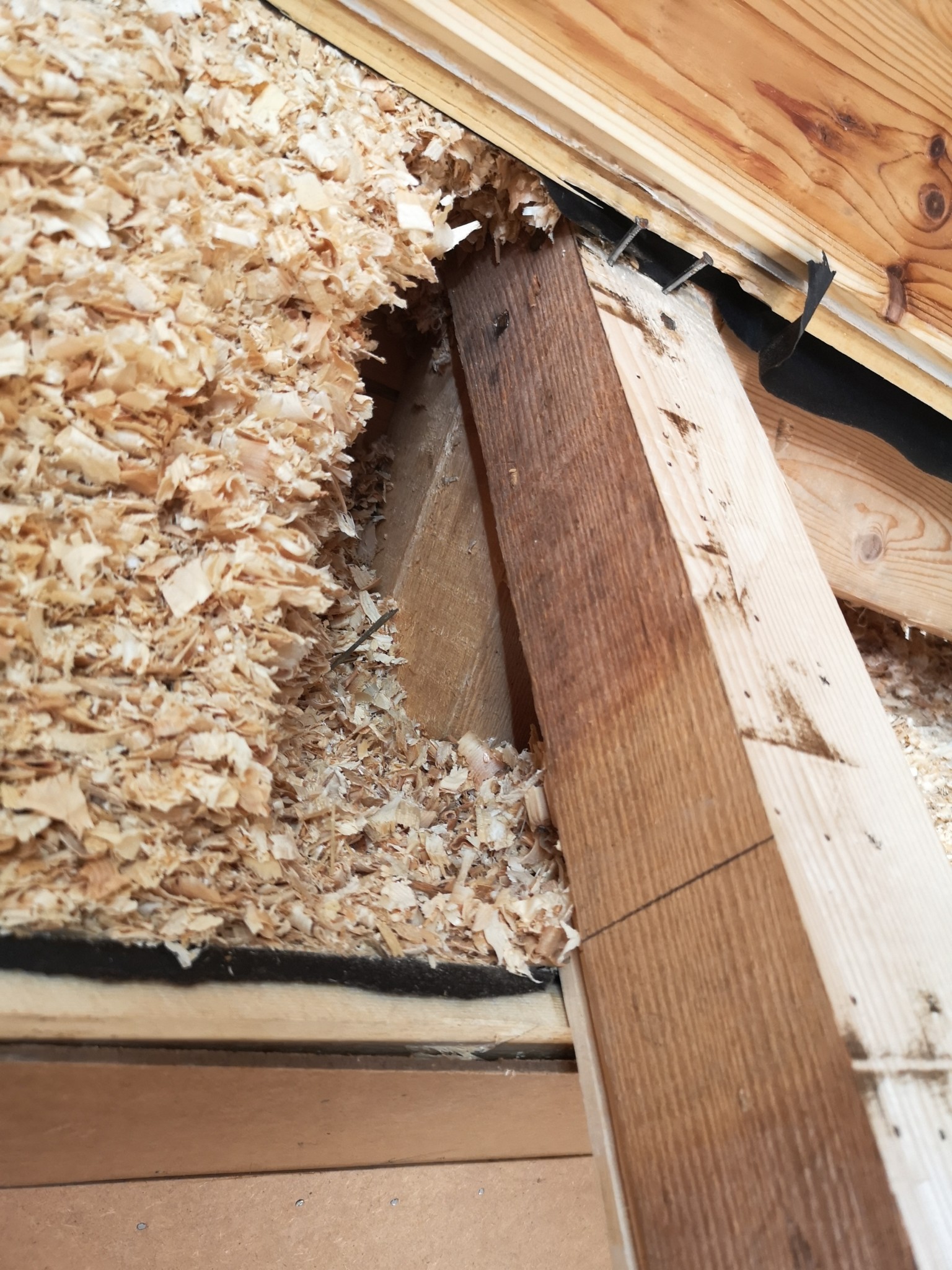
Was up and dug a little in the sawdust now. On one side of the house, the legs are attached to the rafters.
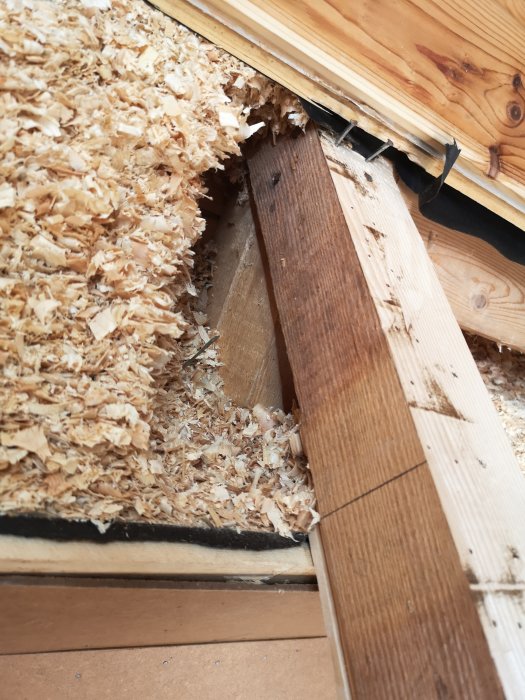
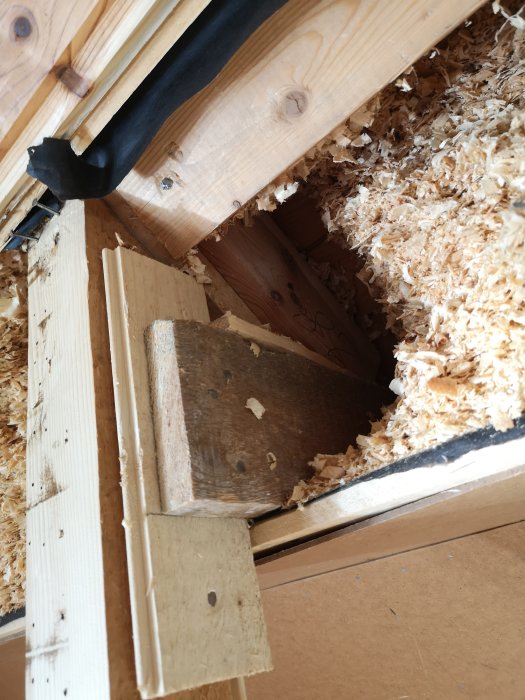
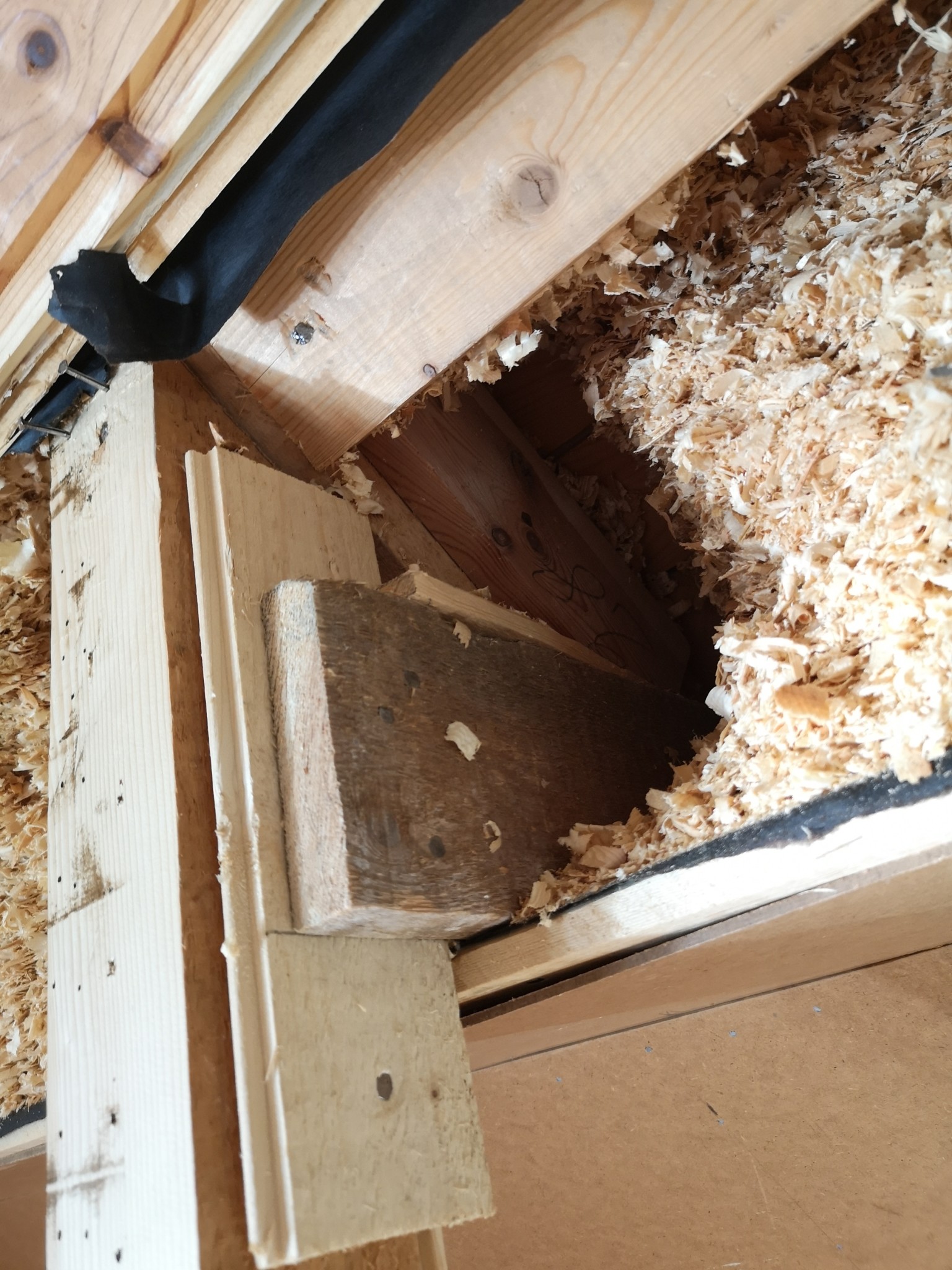
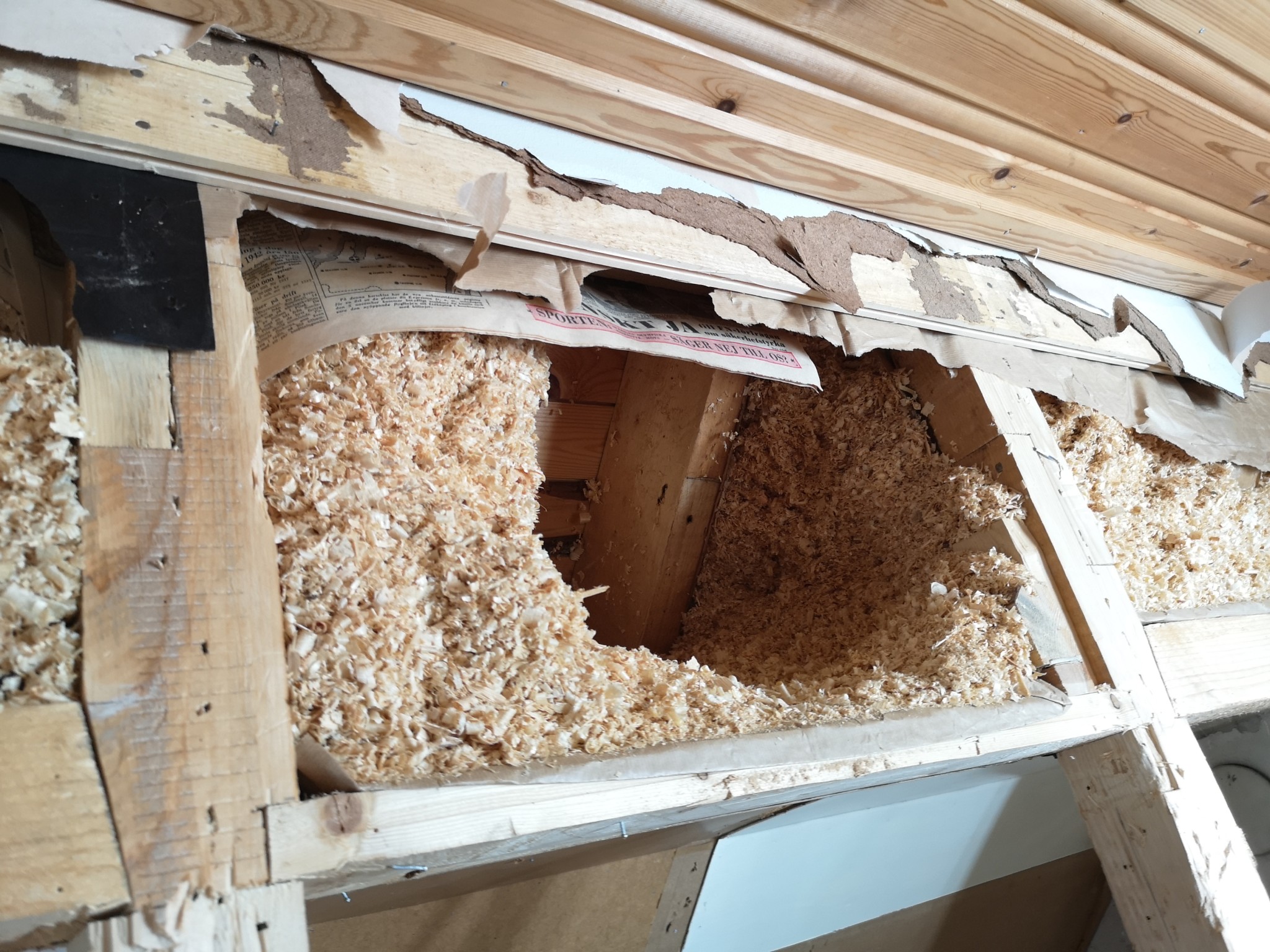
Where they were placed a little closer, they seem to have used 4 legs to support a 70x70 beam against the rafters a. If I check the rafters a, I see that there have been nail holes there before. Sending some new pictures
Sawdust in attic with wooden beams and nails visible, part of roof renovation inspection.
Close-up of wooden beams and sawdust in an attic space, showing joints and previous nail holes on rafter beams of a house under renovation.
Wood shavings and structural beams inside a house’s ceiling cavity with visible paper layers and old nail holes.
 
That's what I suspected. A 70x70 beam for support is way too weak. I would consider putting back the original support legs except for one that you adapt between the surrounding rafters. The appropriate size of a supporting beam depends on the house's dimensions, snow load zone, and the beam's span. An exterior photo often says a lot.
 
The width of the house is 940x850 according to the drawing.
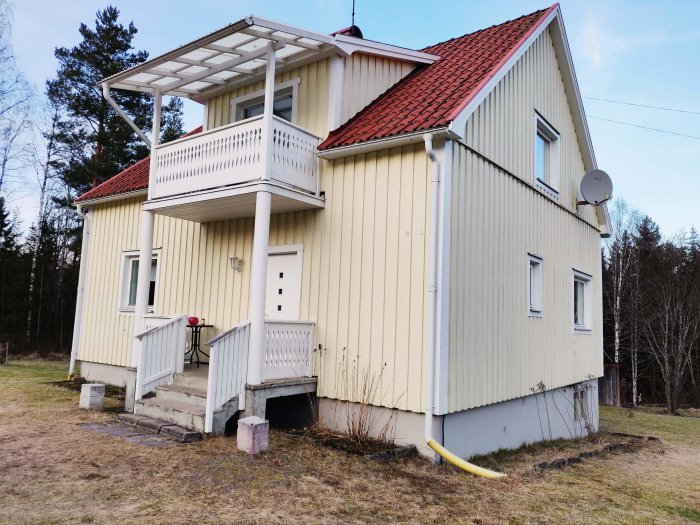
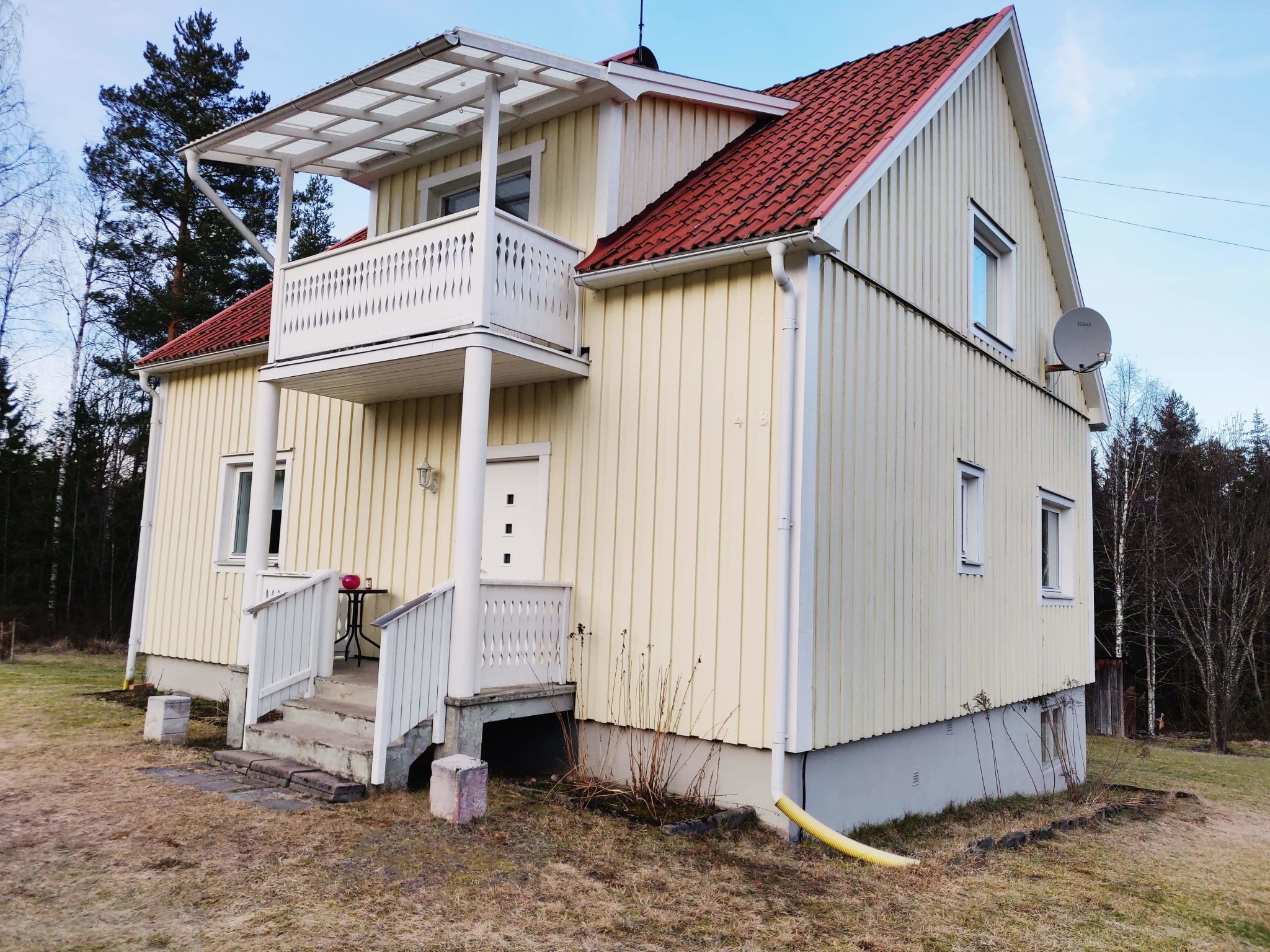
Inserting a picture of the exterior.
Should a beam be placed between the new support legs and the roof truss from which one leg is removed, do you mean?
Glulam or? Both posts or is it enough with just a beam?
A yellow two-story house with a red roof and a small balcony, set in a rural area, surrounded by trees.
 
The span will be approximately 200-220cm.
 
Where is the house located? = snözon.
 
Dalarna snow zone 2.5
 
Roughly estimated (=on the high side), 45x195 C 24 might be sufficient as an offset. Are there three-inch beams in the trusses?
 
Okay. I get them to about 70x150.
What measurements should I use for the new support legs and new posts for the beam?
 

Best answer

People used inch measurements, as with all construction until a few years into the 1970s. Three by six in the rafters, i.e., 75x150 mm. The best is if you can get 75x100 mm cut for the support legs and 75x150 for the crossbeam.
 
Okay. Do you fit the beam between the truss and the post or is it a separate construction on the inside of the support leg, if you know what I mean?
 
Squeeze it in between the truss and the support leg.
 
Thank you so very much for the answers. You are a hero ❤️
 
@justusandersson
Checked with a few companies now and 75 timber seems difficult. What dimensions do you recommend if I go down to 45 c24?
 
Vi vill skicka notiser för ämnen du bevakar och händelser som berör dig.