Layman's answer.
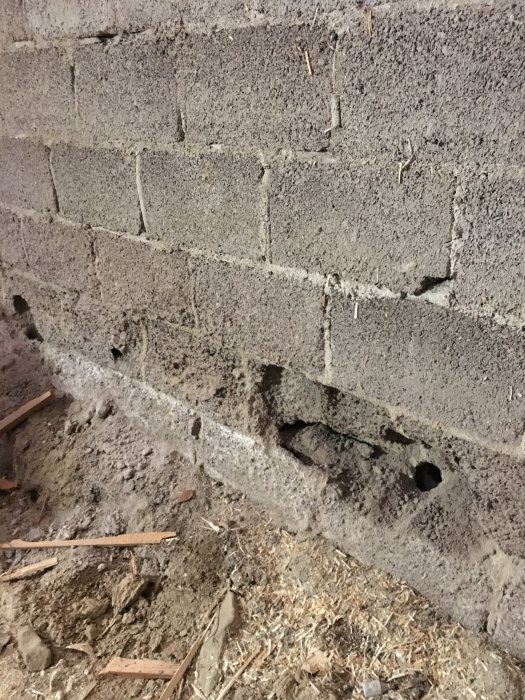
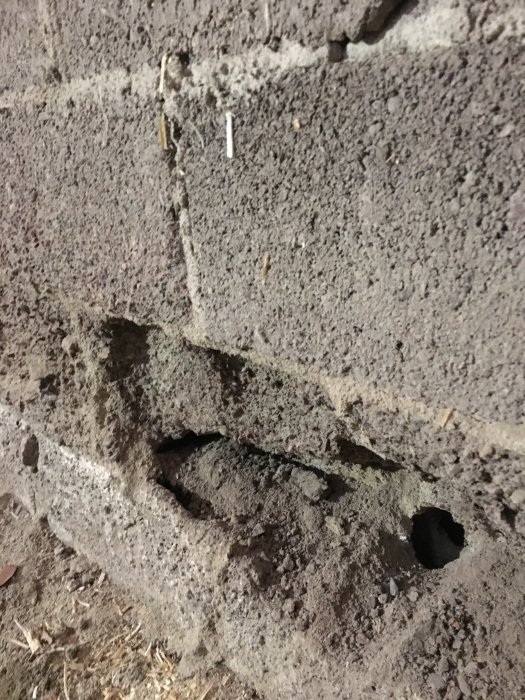
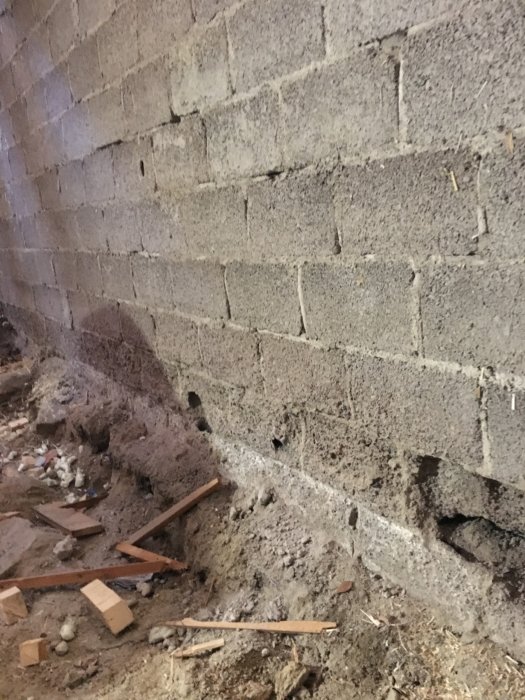
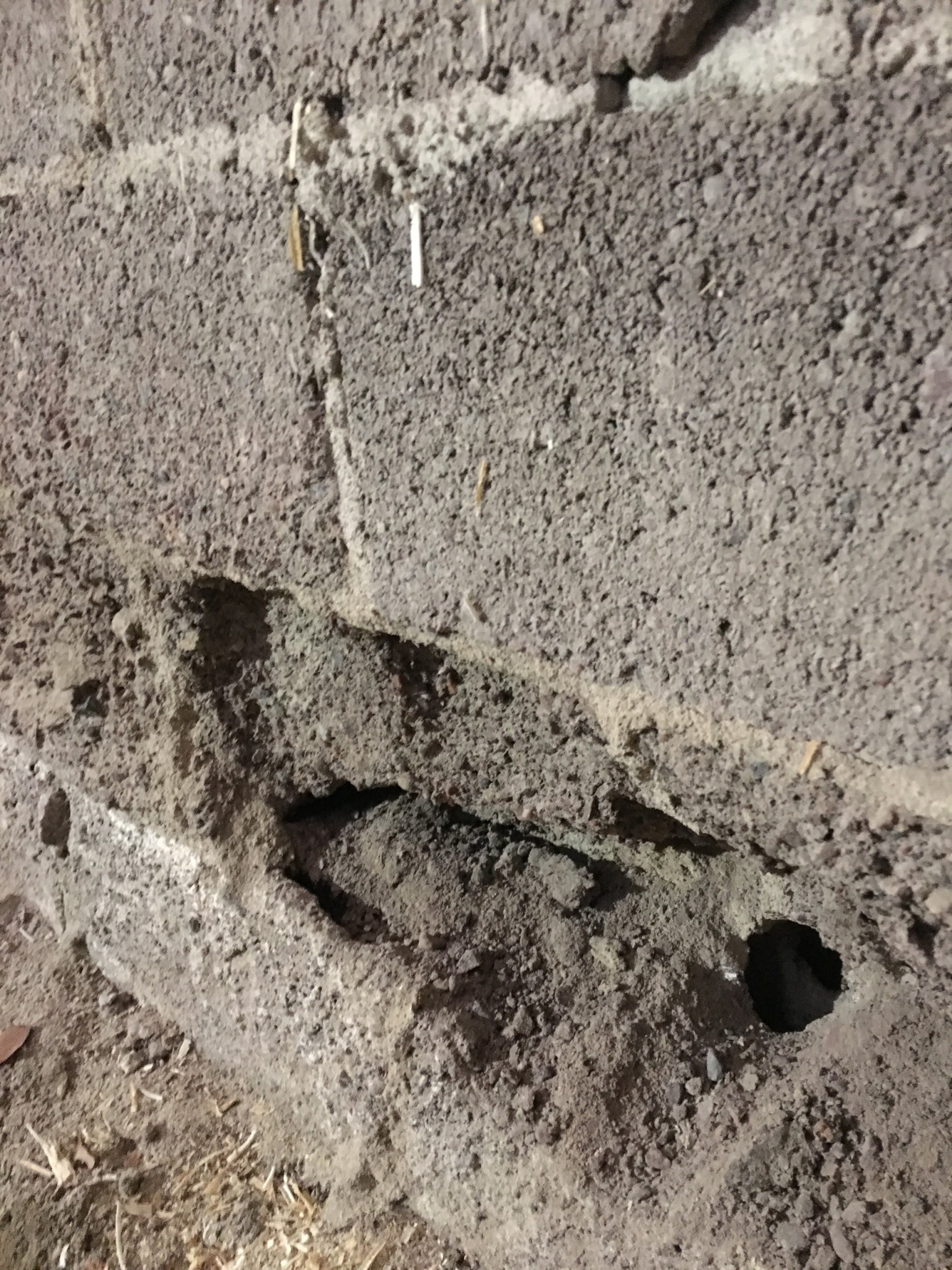
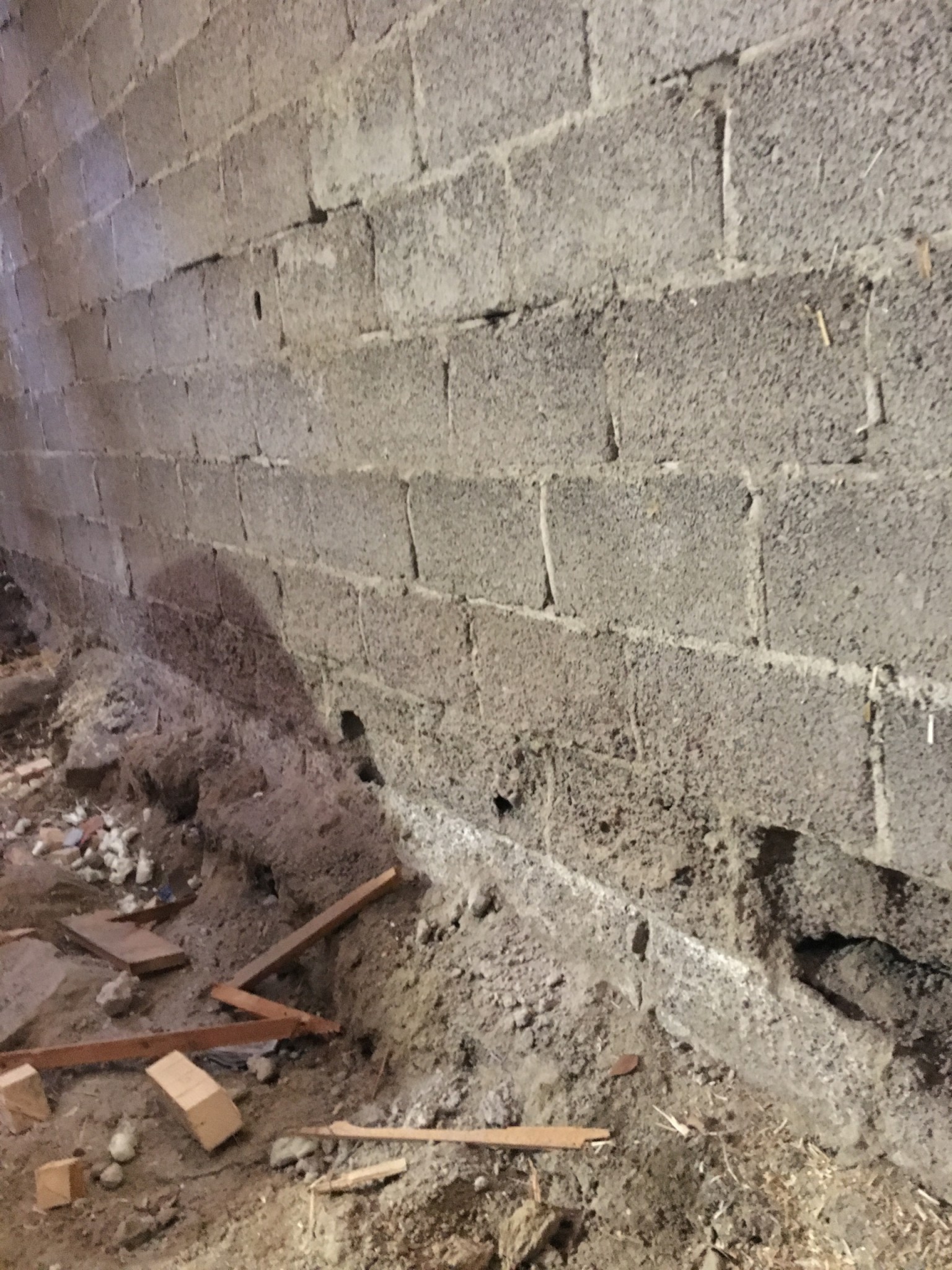
I'm considering if you should try to remove as much loose/porous material as possible and then make a mold that you can press in after you've filled the space with concrete.
The question is whether berong becomes too "hard". The concrete block doesn't feel as strong as a new one, maybe some form of rendering mortar should be used?
Concrete hollow block is made of concrete and there should be no problem repairing it with concrete. We had a basement with walls made of concrete hollow block in our previous house. The basement had been quite damp without the blocks being affected.
Has it been freezing in the basement or why has the block broken?
Just need to cast with concrete. But where is the moisture coming from, has it been addressed?
It looks like you're going to do something about your basement, but what?
Yes, this has been a completely unused part of the basement. The stone is directly in the ground.
I would like to reinforce and plaster, maybe use some reinforcing mesh.
Replace damaged stones, or alternatively fill with concrete.
Is it only when you are touching up plaster that you can't use a harder material than what's already there? No worries that concrete won't adhere to these more porous stones?
It's only plaster you're thinking about, you don't want cracks, not that it doesn't adhere. Dig down 50 centimeters deep into the clay and cast, when it has hardened, take another 50 centimeters, I would never do more than a third away at a time. Use mesh when you plaster the wall so it looks nice. Now you can possibly put in some rebar if you want.
Concrete is a mixture of cement, aggregate materials, and water. If the concrete block is made with cement as a binder, other binders such as lime cement or just lime should probably not be used.
The wall is a shell structure that can tolerate some bad pieces, but not an entire course. Your repair strategy must be based on the extent and location of the damage. If a limited number of stones are damaged, you basically don't need to do anything other than what can be described as cosmetic improvements. However, if many stones are damaged, the load-bearing capacity must be improved. The best results will probably come from replacing an appropriate number of stones entirely.
Regardless of the appearance of the stones, the wall should have a proper support. One way to do this could be to cast a foundation from both sides into the middle of the wall and do it in segmented stages. Connect the parts with longitudinal outer edge reinforcement. The foundations must be cast directly against the compacted ground. There is thus no room for any drainage layer.
To cast a foundation, I suggest using coarse concrete. You can either purchase pre-mixed dry mortar which you mix with water, which can be quite expensive if you're making larger quantities, or you mix it yourself. Pure cement is not that expensive. Find a recipe for coarse concrete so you get the right fraction sizes of the aggregate and borrow, rent, or buy a mixer.
Vi vill skicka notiser för ämnen du bevakar och händelser som berör dig.