
3,169 views ·
19 replies
3k views
19 replies
Remove load-bearing steel beam
Hello!
An interesting site with a lot of knowledge. I'm wondering if it's possible to replace load-bearing beams with another solution since I want to increase the ceiling height in my basement by 20 cm. 220 instead of 200.
The floor joists for the upper floor are 20 cm with 60 cc. For a floor that is about 6.60 wide, where 50% have floor joists with approximately 6.60 length and the remaining 50% have floor joists with a length of about 9 m.
Since I want to furnish the basement, it would be interesting to achieve a better ceiling height even if 2 m is good. See image.
Thanks in advance for any tips.
An interesting site with a lot of knowledge. I'm wondering if it's possible to replace load-bearing beams with another solution since I want to increase the ceiling height in my basement by 20 cm. 220 instead of 200.
The floor joists for the upper floor are 20 cm with 60 cc. For a floor that is about 6.60 wide, where 50% have floor joists with approximately 6.60 length and the remaining 50% have floor joists with a length of about 9 m.
Since I want to furnish the basement, it would be interesting to achieve a better ceiling height even if 2 m is good. See image.
Thanks in advance for any tips.
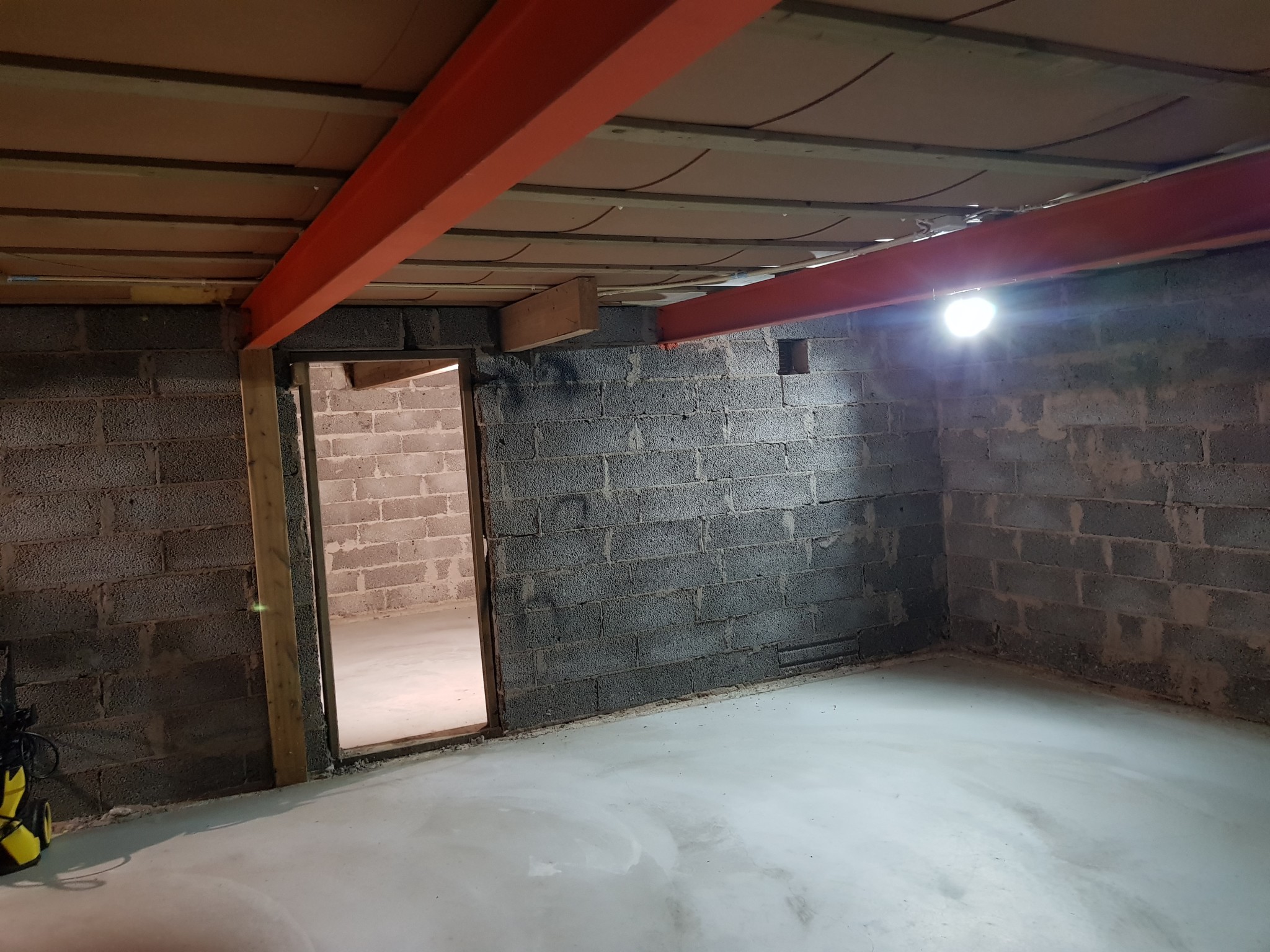

It is possible to embed steel beam structures in the floor. This means that your wooden joists only run between the steel beams, instead of resting on them.
But then you probably need to demolish the entire floor and start over from scratch.
But then you probably need to demolish the entire floor and start over from scratch.
A good idea since the beam is as it is. Of course, it is possible to cut from below if you prop up the existing floor between the levels and then using a jack or another solution, lift up the steel beam.H hempularen said:
I think you would need a beam with an HEA profile or similar. And the joists should rest on the lower flange of the beam. They need to "insert" into the beams.
If you are going to do something like this, you must hire a structural engineer. The stiffness of the joists is also negatively affected if they go as stumps between the steel beams. More beams might be needed.
If you are going to do something like this, you must hire a structural engineer. The stiffness of the joists is also negatively affected if they go as stumps between the steel beams. More beams might be needed.
One needs to get a significantly better overview of the entire structure in order to give any advice. A floor plan where the positions of the beams are drawn in, as well as information about their dimensions. Inserting steel beams from the outside afterwards can become complicated.
It is an HEA beam. Going to go down and measure dimensions.H hempularen said:I think in that case you need a beam with an HEA profile or something similar. And the joists should rest on the lower flange of the beam. So they need to be "inserted" into the beams.
If you're going to do something like that, you need to hire a structural engineer. The stiffness of the joists is also negatively affected if they go as stubs between the steel beams. More beams may be needed.
Will see if I can get a drawing of how the beams are placed.J justusandersson said:
Unfortunately, I don't want to do that. I've put in insulation and floor heating pipes with a slab of 10 cm. If no smart solution exists, I'll have to settle for a height like a "Gillestuga." One way is to, on the drawing I now include to respond to another post, conceal large parts of the beam with walls. Now, the floor plan isn't exactly like the drawing I'm putting out.Violina said:
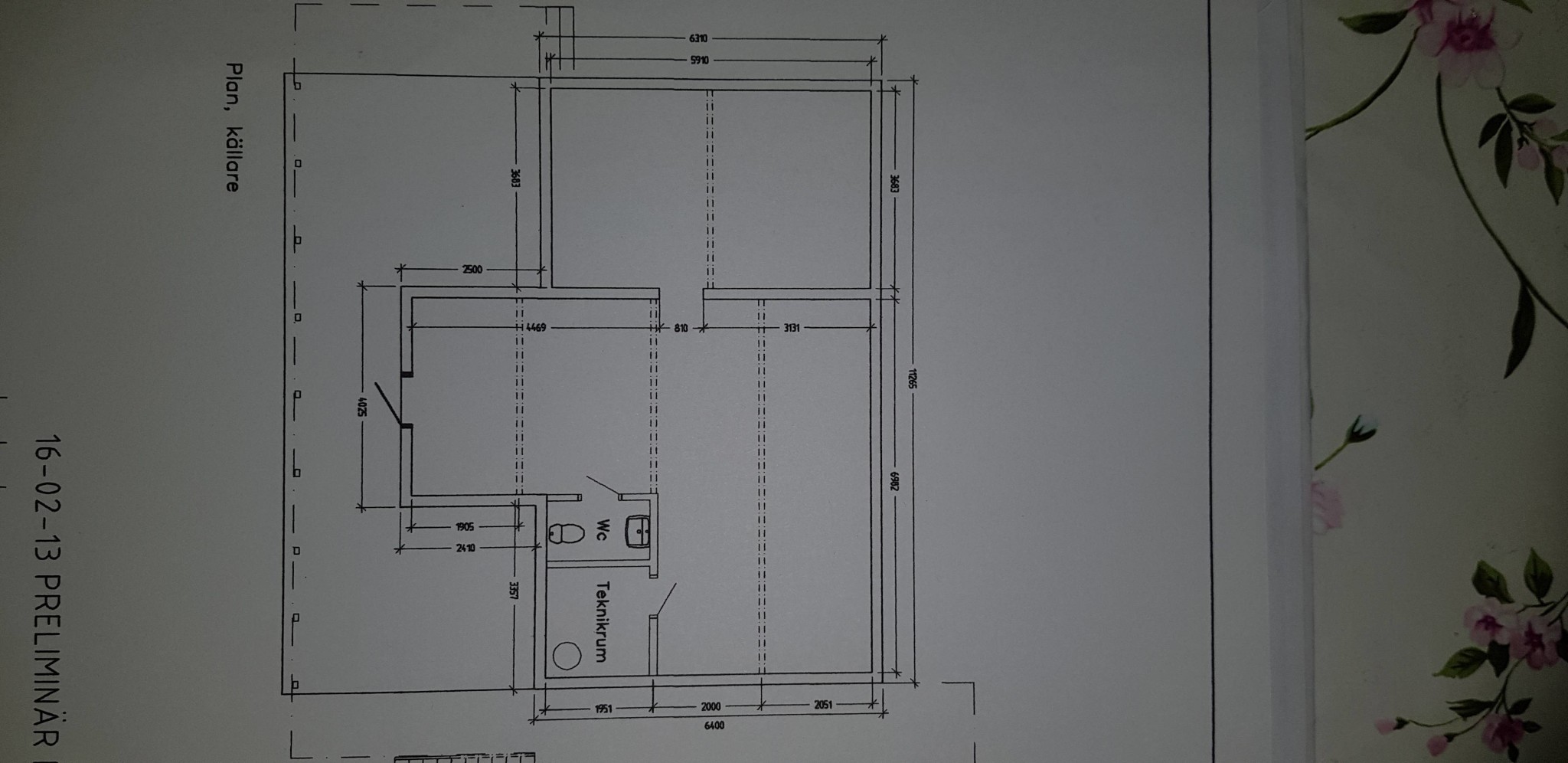
Checked the beams and they look like HEA but maybe a bit thin.O OTG said:
Dimensions of the two longer ones are
20 x 10 cm with an "HEA" depth of about 4.5 cm on each side.
The length is 6.98 and they probably extend at least 10 cm on each side.
The shorter beam according to the drawing is 3.50 and probably extends 10 cm on each side.
The glulam beam visible in the small room is 22x9 cm with a length of 3.6 m.
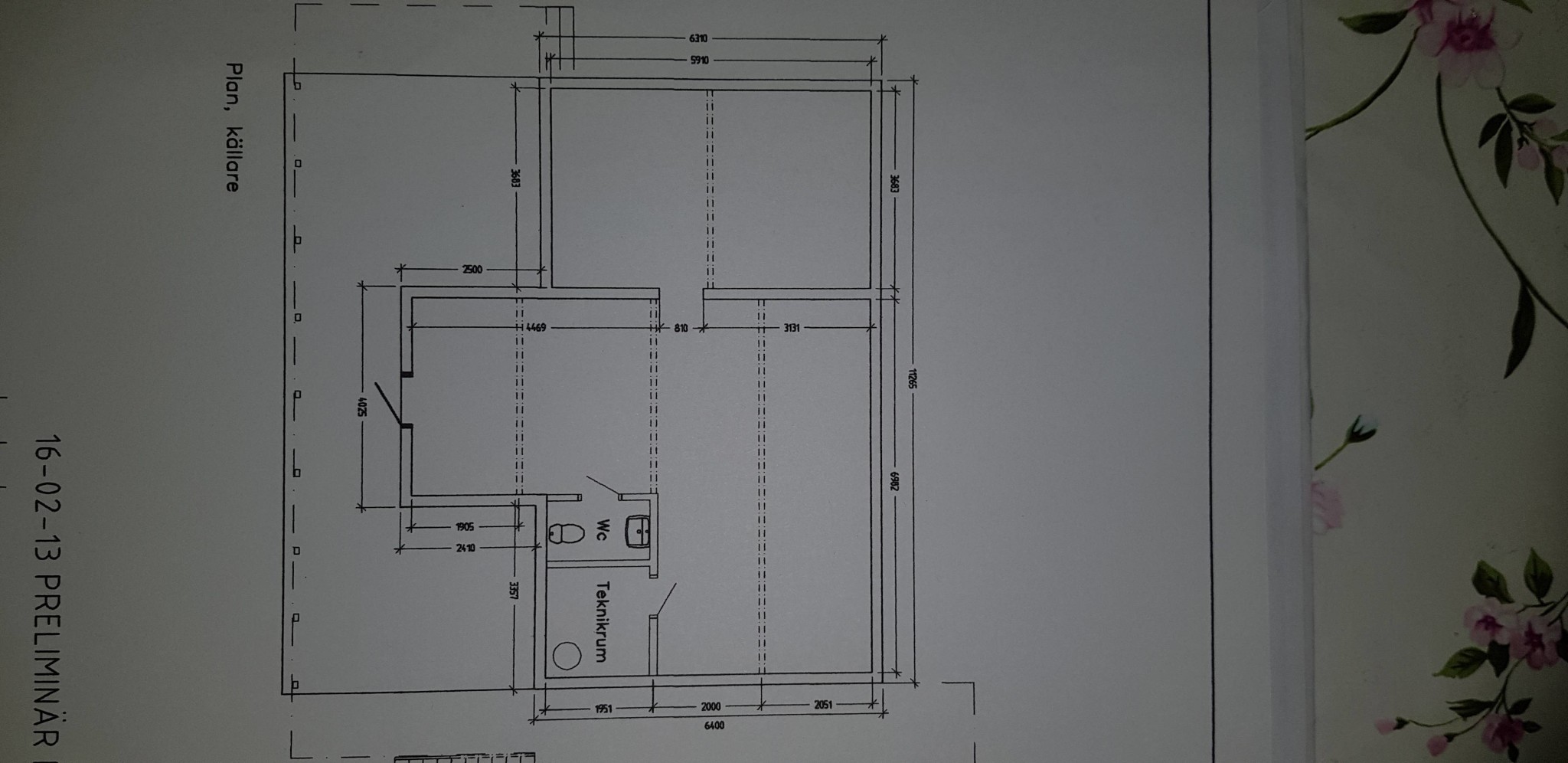
Additionally, part of a longer beam will not be hidden by a wall.O OTG said:Checked the beams and they look like HEA but maybe a bit slight.
Dimensions of the two longer ones are
20 x 10 cm with an "HEA" depth of about 4.5 cm on each side.
The length is 6.98 and they probably go in at least 10 cm on each side.
The shorter beam according to the drawing is 3.50 and probably goes in 10 cm on each side.
The glulam beam visible in the picture in the small room is 22x9 cm with a length of 3.6 m.

richardtenggren said:
Ok. Thanks. Then perhaps the pocket is too weak to hold up the floor joists for the upper floor, where we are currently residing.O OTG said:
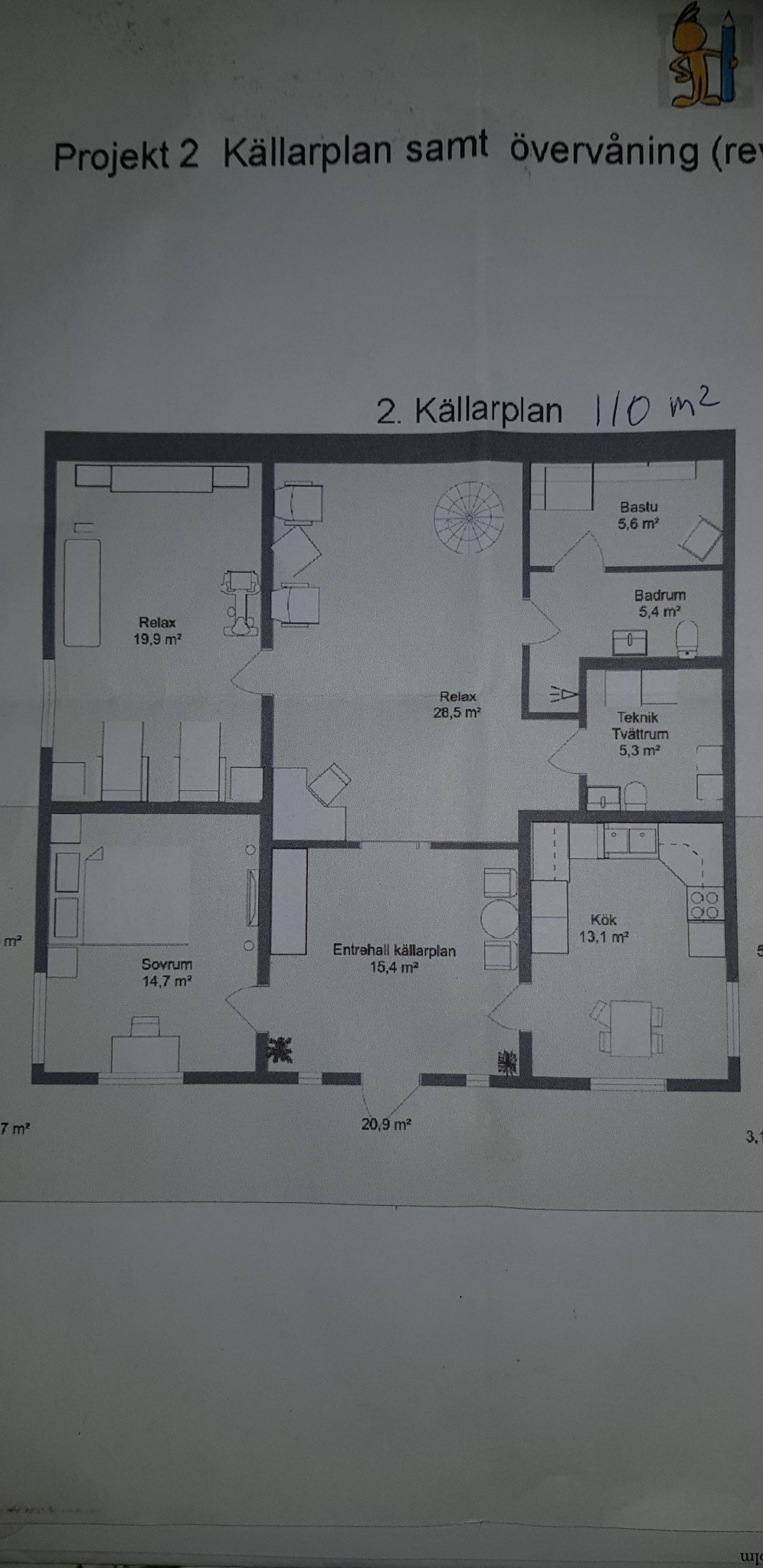
We will get municipal water and sewage this year or in the next 2-3 years and have been playing with a floor plan like in the picture when it becomes a terraced house. The kitchen might potentially become a room.
It means we are thinking of extending forward.
IPE 200 can be replaced by HEA 180 or HEB 160. By using glulam in the floors, one can manage without steel beams, but it is a major renovation.