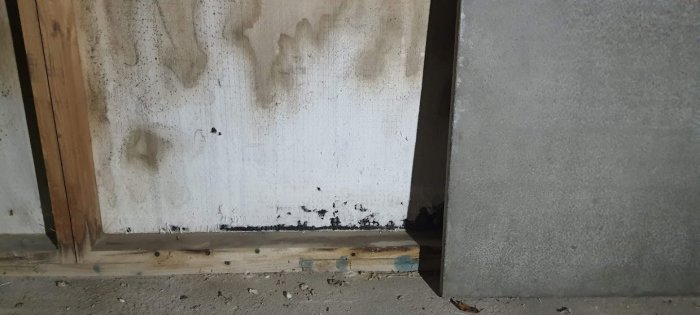
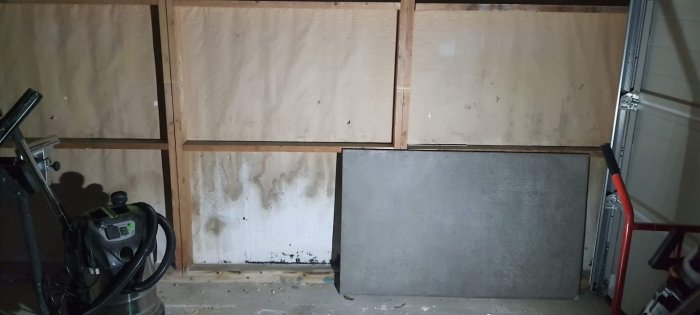
Hello, I have an uninsulated garage with a slab on grade that has some strange moisture problems. I could use your help on the forum to try to figure out what the cause might be and what I can do to fix it. I'll start by showing some pictures:
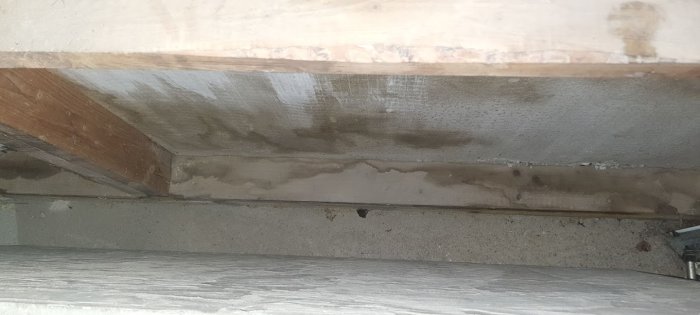
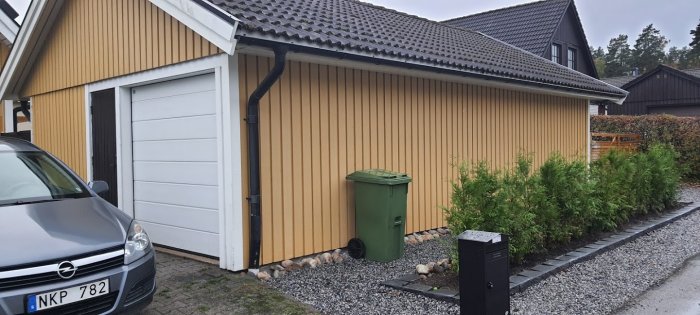
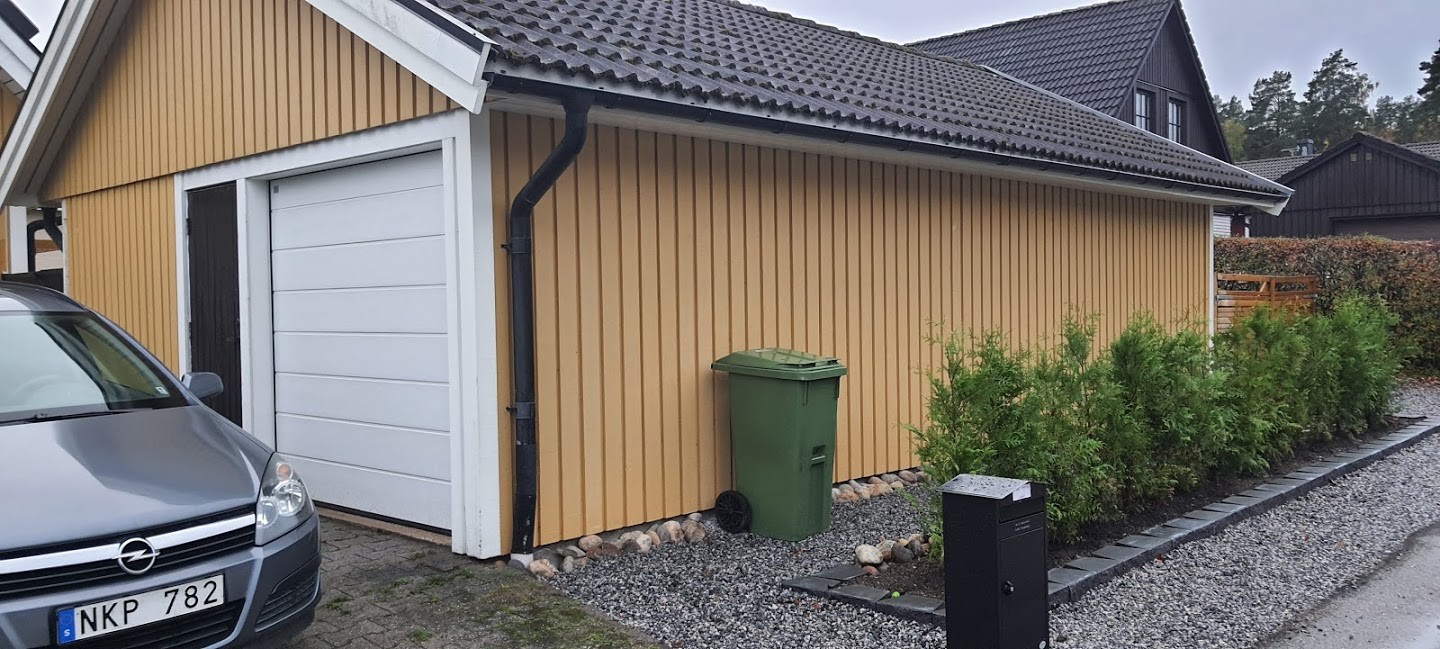
The last picture shows the outside of the wall that has the most problems.
It's an uninsulated slab on grade, the sill consists of a frame with sill paper underneath. When we moved in 1.5 years ago, it had looked like this for a few years, and the inspector was unsure what it could be but suspected capillary rising moisture. Since then, I've had several construction experts here, none of whom have been able to really explain what it might be due to. We know that the previous owner parked the car here in the winter, so one reason could be that it's melted snow that the sill has absorbed. We've also considered that it could be water running in under the new door they installed fairly recently.
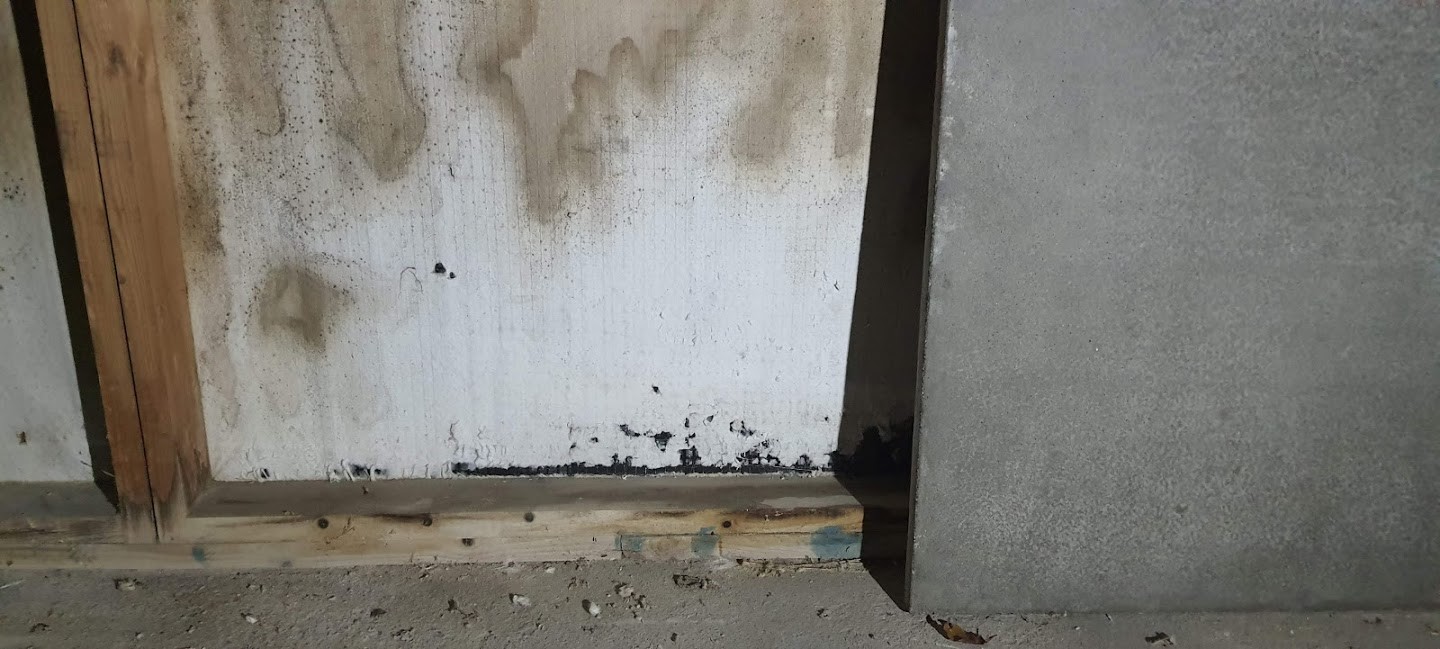
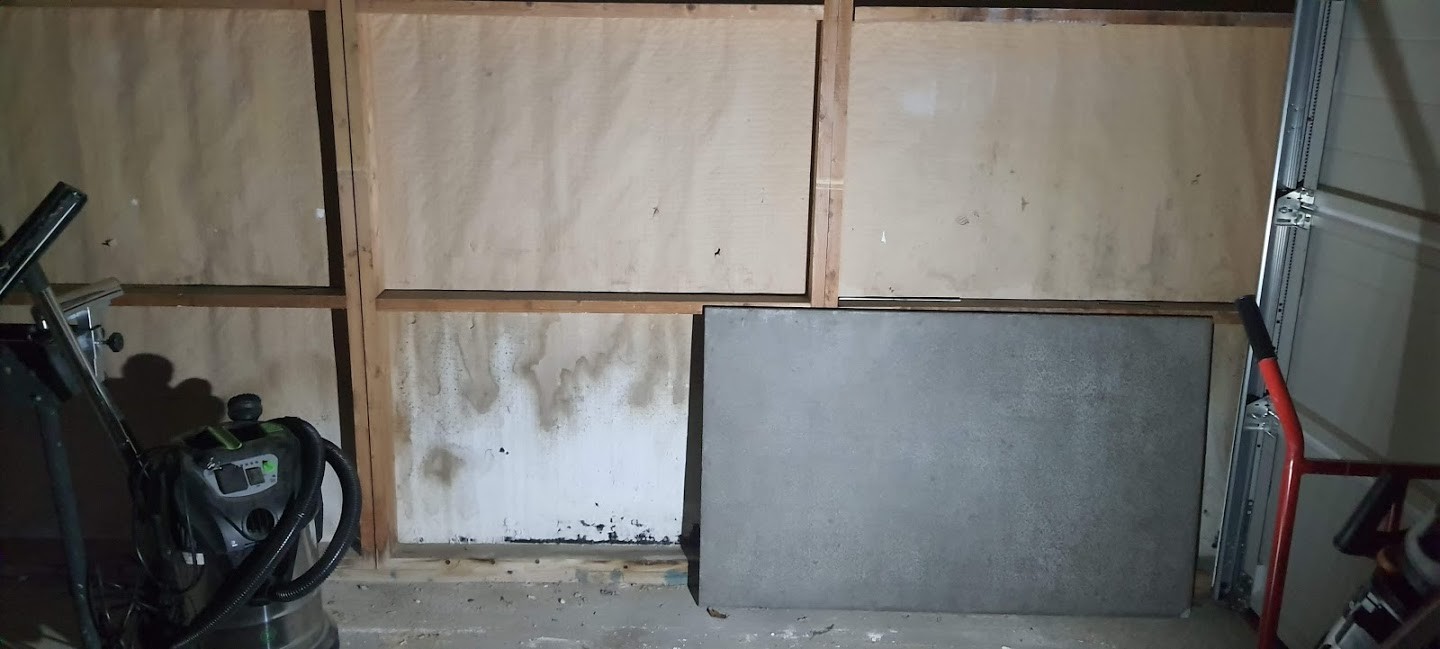
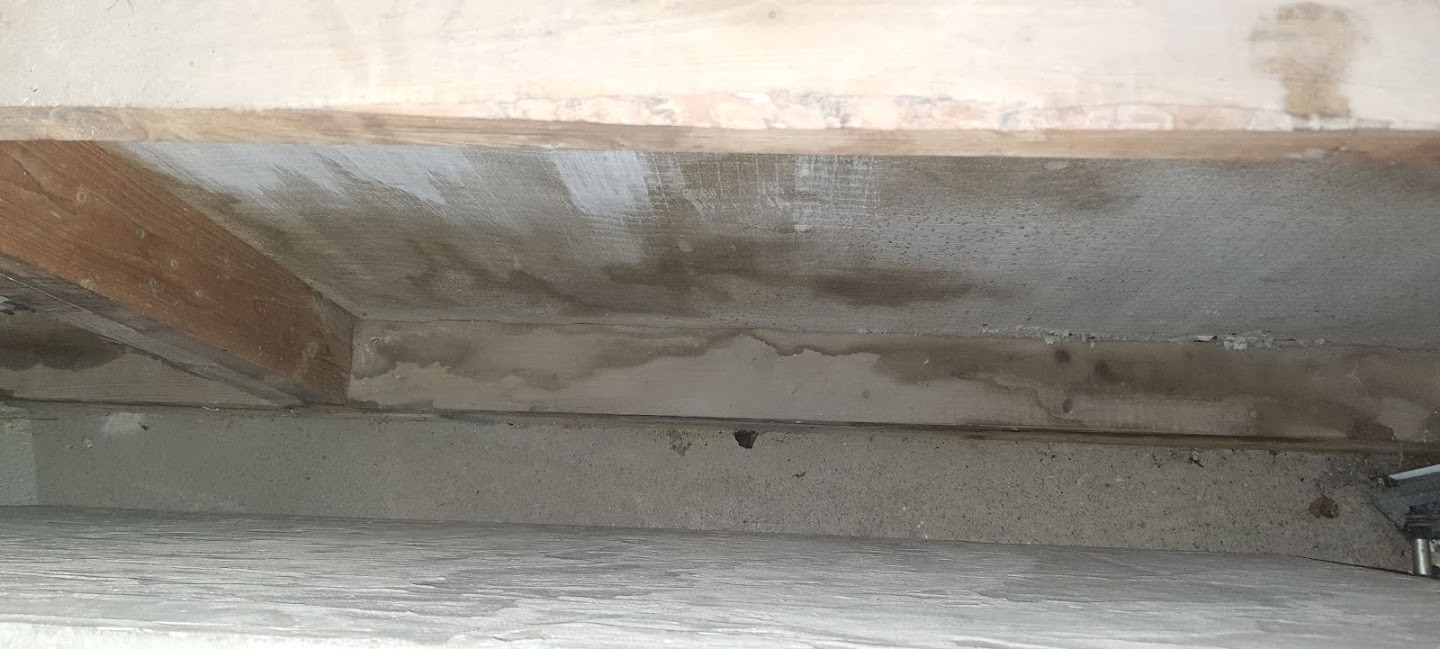
However, I've noticed that this fall, when it gets damp outside and starts raining more, the problem has escalated. I usually check when it rains and feel that the sill is wet again, indicating that it's not just older moisture damage. But the strange thing is that it's the "top side" of the sill board that is wet; if you look closely at the pictures, you can see that the moisture damage is on the top of the upper sill board, while the lower sill board is completely dry.
What could this be due to? I had plans to insulate the walls and ceiling and generally spruce up the garage, a thought I'm now starting to give up on. Without addressing this issue, I'm hesitant to insulate and enclose the problem, without then being able to check if it gets worse or not.
What does it look like from the outside, how close is the outer panel to the ground, is it in the middle of the wall, in a corner, what do we see in the picture, a plasterboard.
What does it look like from the outside, how close is the outer panel to the ground, is it in the middle of the wall, in a corner, what do we see in the picture, a plasterboard.
happened to post the thread before I finished writing, there is more information and pictures in the post now.
Is it a gypsum board we see that is water damaged
Is the water damage in a corner
Is the water damage near the door
No, it's the wind barrier you see where the moisture has traveled upward (or downward). The walls consist of a framework-wind barrier-clapboard. The water damage is spread out, but the main problem area I've photographed is near the corner right by the door, then there are smaller areas further in with only minor visible moisture marks.
Then the moisture damage is near the downspout. Where does the rainwater go?
Seen it before, moisture damage near the gate. Likely, humid outdoor air is drawn in through an unsealed gate.
When my own garage was uninsulated but had a roof / exterior paneling / door / gate / window / wind barrier / insulated slab, the floor was wet with moisture near the gate + windows were damp on the inside.
My own exterior paneling is 25 cm from the ground, the slab 5 cm from ground level, the wooden wall stands on aerated concrete blocks.
An uninsulated cement slab where the sill is so close to the ground / cement slab is not optimal, unfortunately.
Then the moisture damage is near the downpipe. Where does the rainwater go?
Seen it before, moisture damage near the door. Probably moist outdoor air is drawn in through an unsealed door.
When my own garage was uninsulated but had roof/outer panel/door/port/window/windproof membrane/insulated slab, the floor was wet with moisture near the door + windows were moist on the inside.
My own outer panel is 25 cm from the ground, the slab 5 cm from the ground level, the wooden wall stands on aerated concrete blocks.
An uninsulated cement slab where the sill is so close to the ground/cement slab is not optimal, unfortunately.
Yes, it sounds like a probable cause, unfortunately. It is an extremely unsuitable construction they chose to build in 1981, which the house is from. Haven't seen any problems with the downpipes, but haven't looked closely at it either, so will check that as well.
They replaced the door about 10 years ago, I've been considering that the problems may have escalated after that. Now it's an overhead garage door that should seal with a rubber strip at the bottom. Unfortunately, they have laid the driveway too high, so there is about 1 cm height difference between the garage and the driveway, and that, together with a very short eave in that direction, means that when it rains, rainwater collects in a half-moon inside the door. But for that moisture to travel 5-6 meters and damage the sill so far away?
Do all the walls look the same (on the inside)
From your pictures, it looks like the moisture damage is worst where the trash can is!
It's worst where I have the picture, approximately where the trash can stands. But it exists in several places further inside the garage as well. On both long sides, on the other long side the problems were probably worst under the windows. But there it is not as noticeable.
The walls consist of framework-breathable membrane-paneling.
Does it blow often where you live/where the garage is located?
Paneling is not waterproof. Most likely, it's rainwater running along the paneling that moistens the breathable membrane, and if it blows a bit, more water is pushed in, leading to moisture streaks even on the top side of the sill.
It looks in the pictures like there's no air gap, the breathable membrane and the facade boards are in direct contact?
If that's the case, you probably need to address it before you can insulate.
In our house, we have paneling directly against a wind barrier, wind-exposed, but we have asfaboard as a wind barrier. It resists water much better. We replaced the paneling on the most driving rain-exposed gable last year. The asfaboard was worn after 40 years of service, but completely healthy. Even on the inside against the insulation. The sill was completely unaffected by moisture.
In the garage, which like yours is still uninsulated, I see it has moistened through at a joint between two asfaboard sheets. I'm completely convinced it's because the inside is not wind-tight. Then the wind can push in water. If it had been insulated and covered with wind-tight material, such as joint-compounded drywall, on the inside, the wind wouldn't have been able to push any water into the joint.
Now your breathable membrane is destroyed by mold, so it needs to be removed regardless.
Does it often blow where you live/where the garage is located?
The cover panel is not watertight. Most likely, it's rainwater running along the panel and dampening the wind barrier, and if it blows a little, more water is pushed in and it causes moisture streaks even on the top of the sill.
It looks in the pictures like there is no air gap, and that the wind barrier and facade boards are in direct contact?
If so, you probably need to address that before you can insulate.
In our house, we have paneling directly against the wind shield, wind-exposed, but we have asphalt board as a wind barrier. It withstands water much better. Last year, we replaced the panel on the most rain-exposed gable. The asphalt board was worn after 40 years of service, but completely healthy. Even on the inside against the insulation. The sill was completely unaffected by moisture.
In the garage, which like yours is still uninsulated, I see moisture seeping through a joint between two asphalt boards. I'm convinced that it's because the inside is not wind-tight. Then the wind can push water in. If it had been insulated and covered with wind-tight material, like joint-compounded drywall, on the inside, the wind wouldn't be able to push any water into the joint.
Now your wind barrier is ruined by mold, so it has to go regardless.
I wouldn't say it blows more than normal there. But I think your explanation sounds likely in this case. As you write, the panel with a lock is directly against the wind barrier.
If this is correct, that rainwater has been pressed through the panel and wind barrier and caused moisture damage to the sill, there is no other solution than to replace the panel and then install something like horizontal locks to create an air gap?
Is the ceiling open to the ridge or is there a false ceiling? Condensation protection?
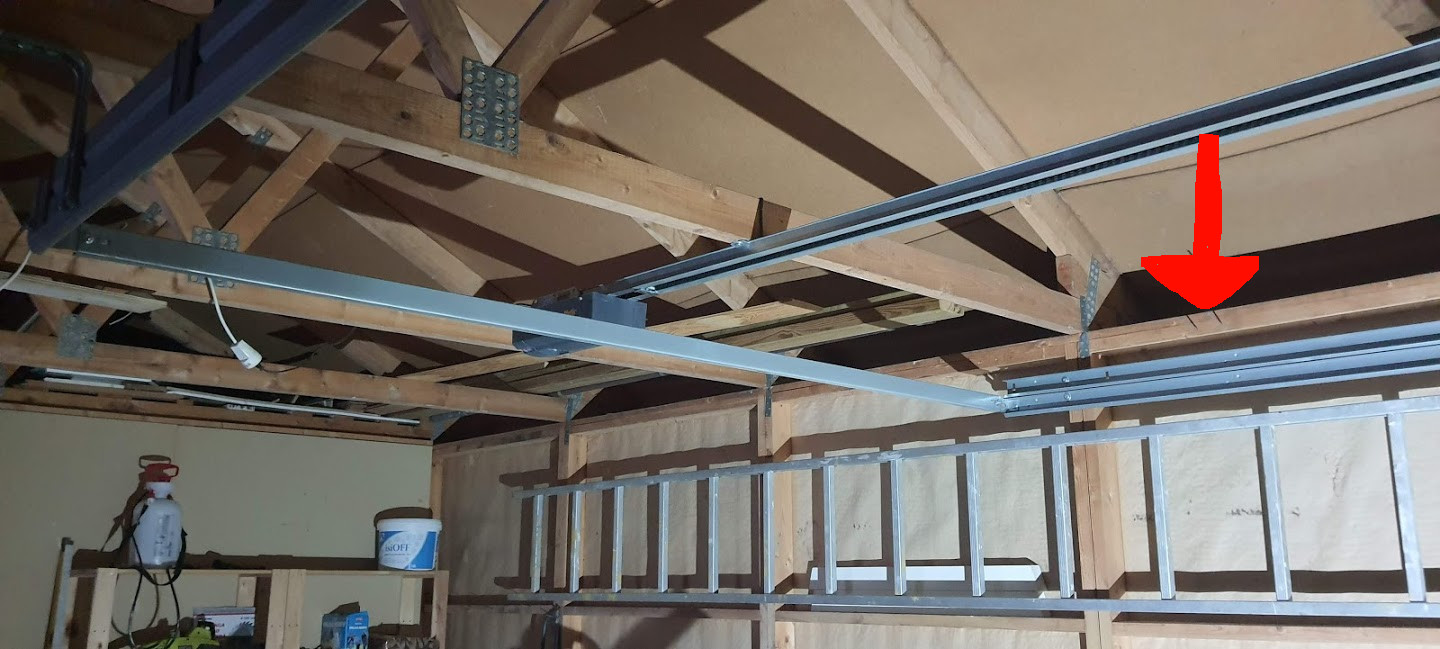
There are ventilation grilles high on one of the long sides. It is also open along the entire long sides at the eaves. There is only insect mesh and sparse paneling. See photo:
As can also be seen in the photo, it is open to the ridge, and I don't think there is any condensation protection. The wind barrier, which is now starting to mold away, consists of a smooth surface outward, like modern wind barrier but thinner. Then the other side of the wind barrier is a more paper-like material.
Vi vill skicka notiser för ämnen du bevakar och händelser som berör dig.

Tomture61 said:
AntonSandegren said:
Oldboy said:
Does it often blow where you live/where the garage is located?Immobil said: