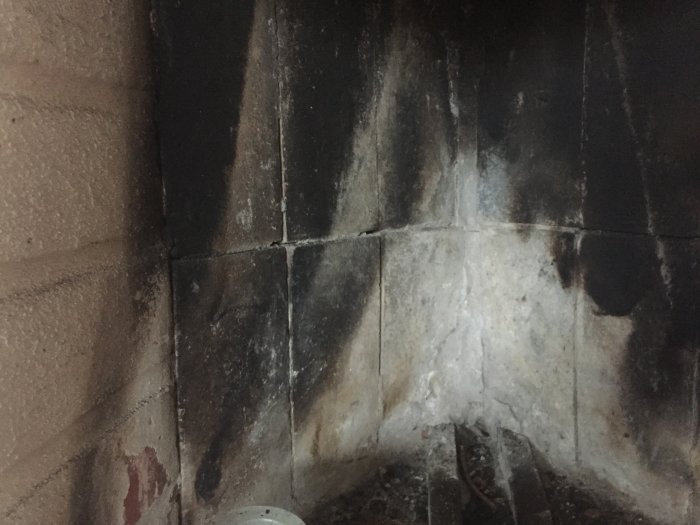
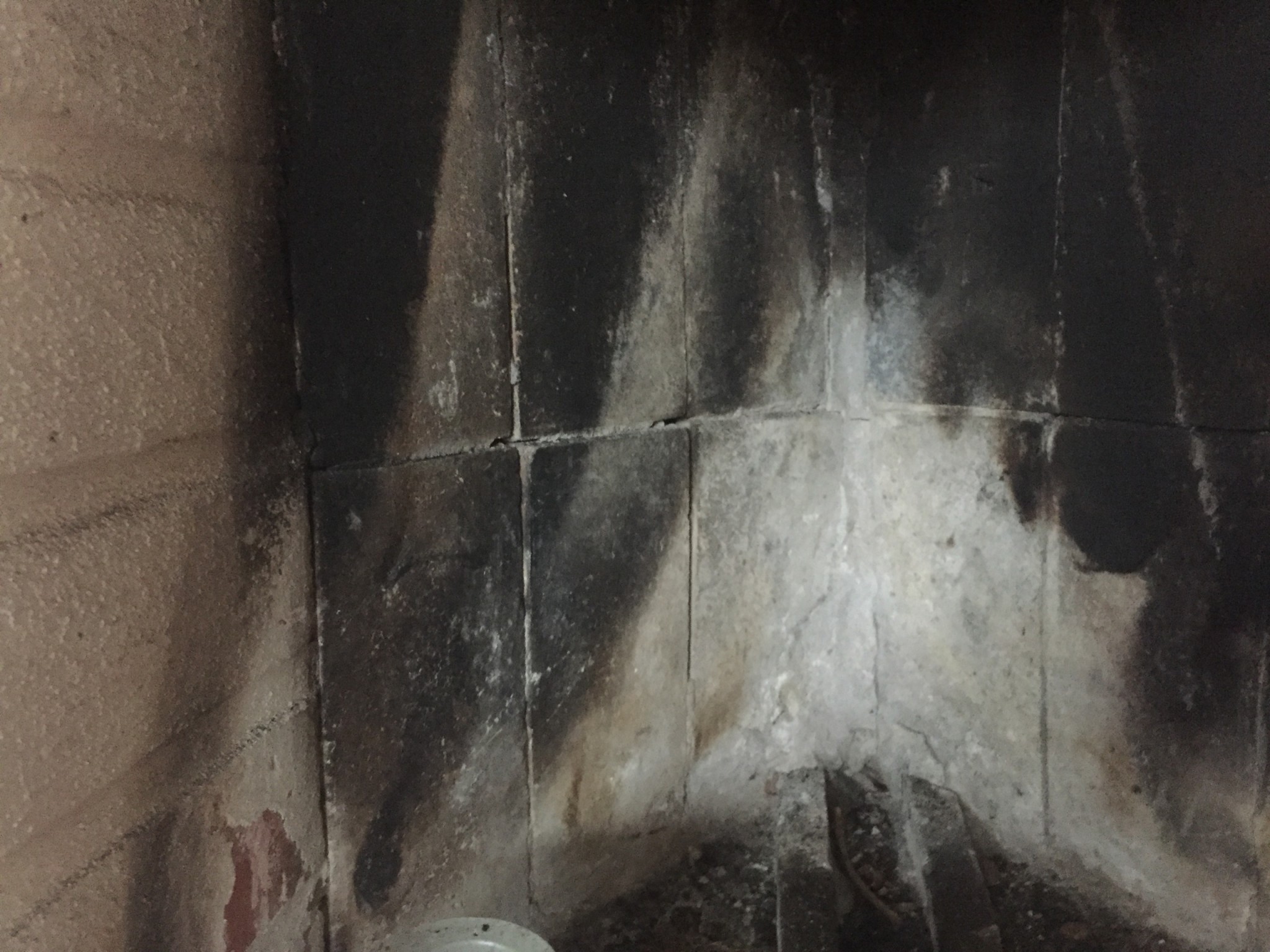
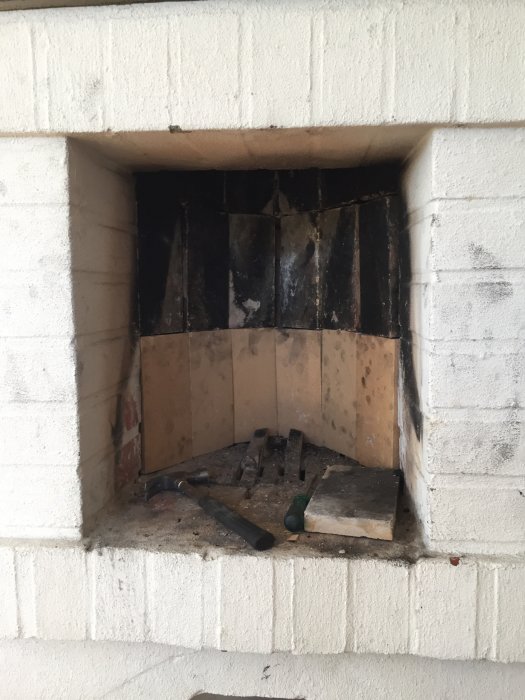
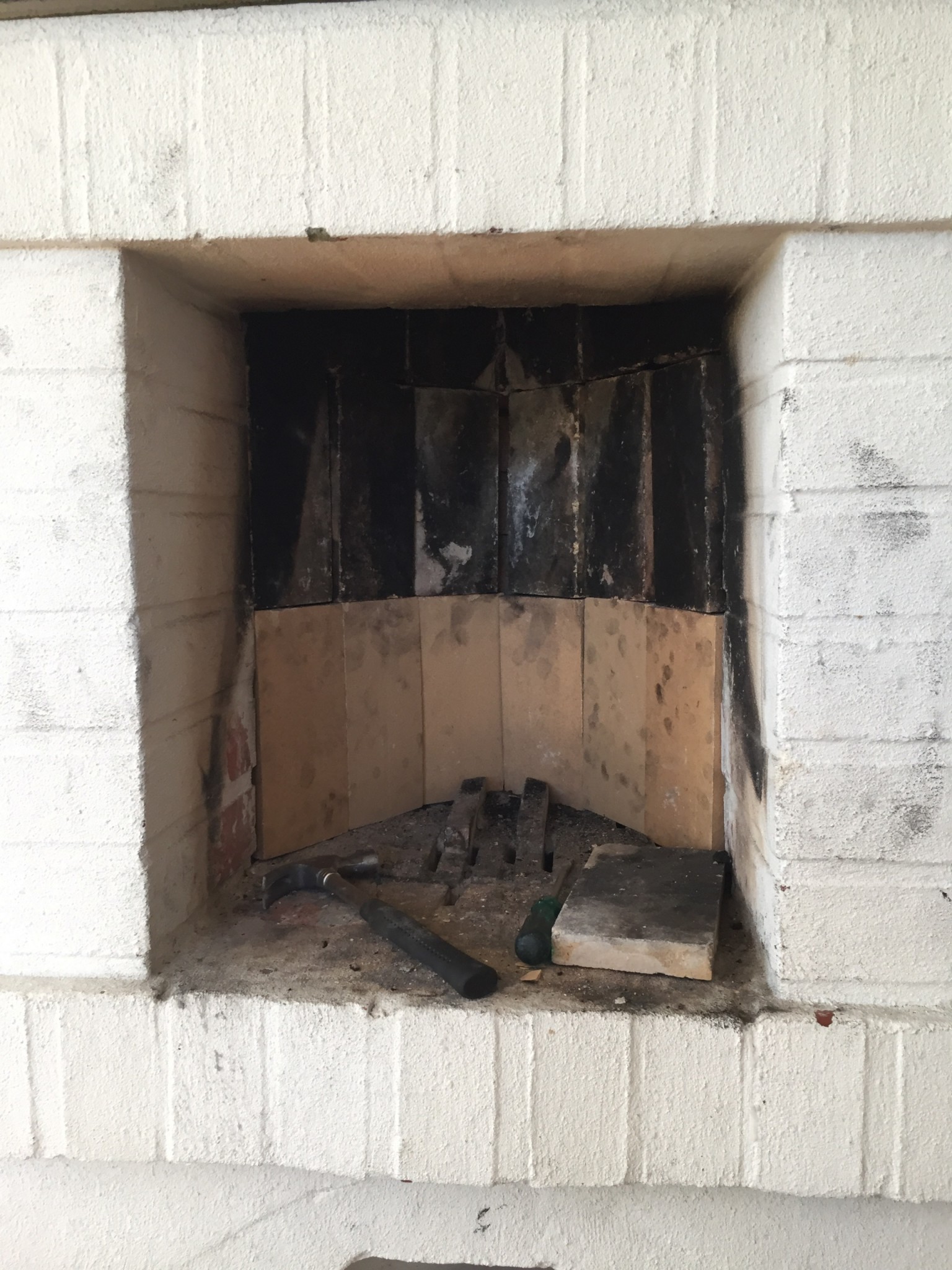
I have an open fireplace in the living room. Some of the mortar has come off and the tiles on the sides are loose. It's mostly there for the cozy factor and doesn't have any direct function today.
How should I proceed to make it usable again? Plaster the bottom and just use some grout around the tiles on the sides?
Exactly, fix the refractory bricks so that they are secure and the joints are intact. You can apply a plaster layer on the bottom if there isn't refractory brick there. Plastering refractory brick is difficult - it falls off.
If the fireplace hasn't been used for a long time (i.e., hasn't been swept or fire-safety checked according to regular intervals), you should also call the chimney sweep appointed by the municipality who will conduct a fire safety check of the fireplace and flue before you use it again.
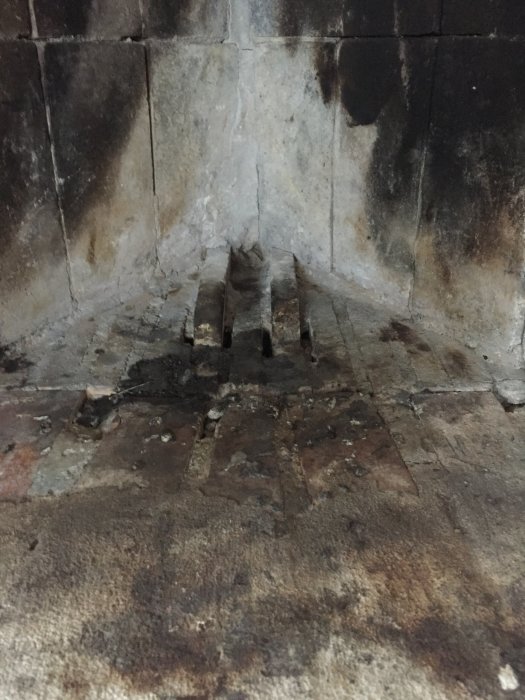
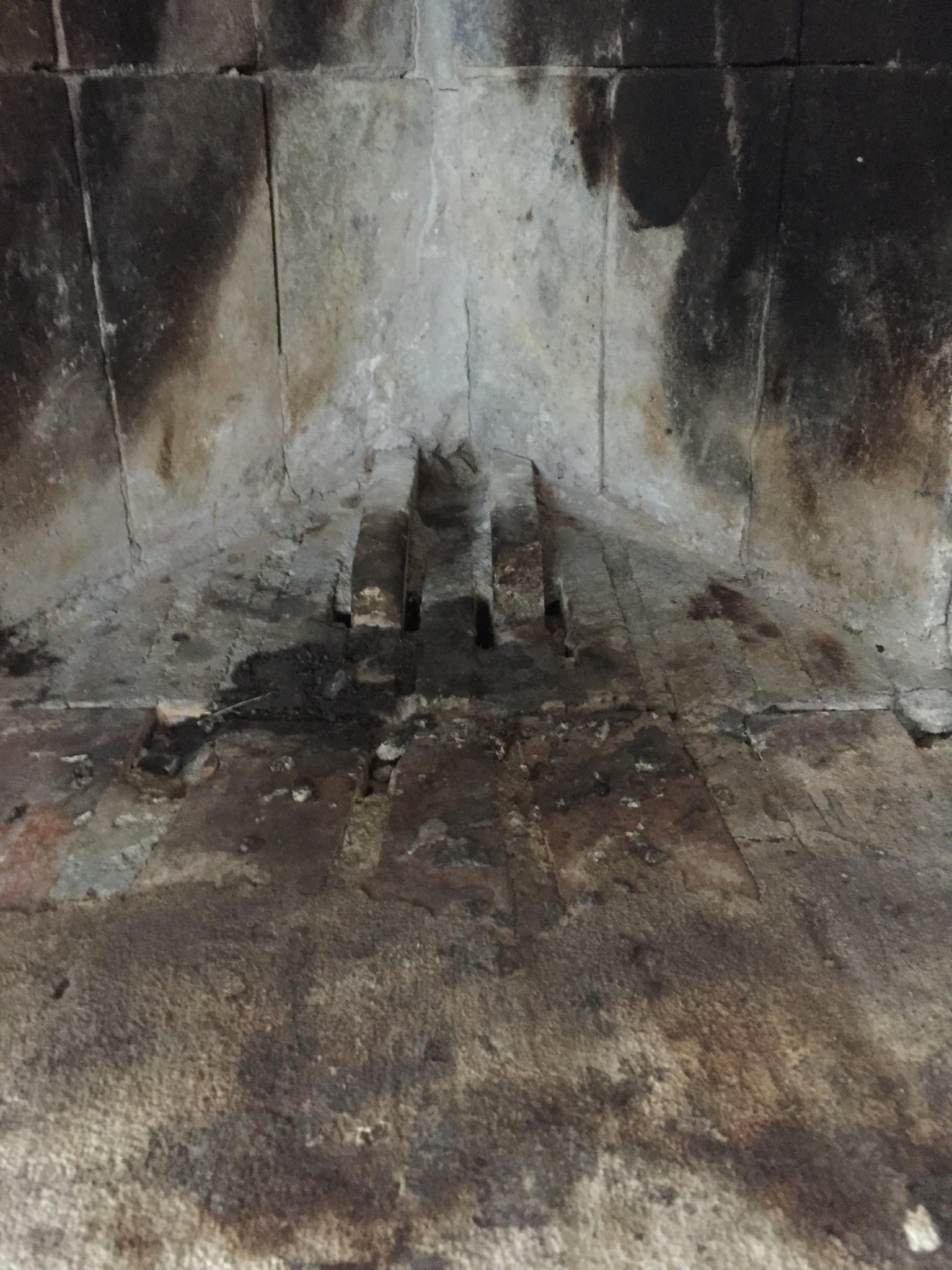
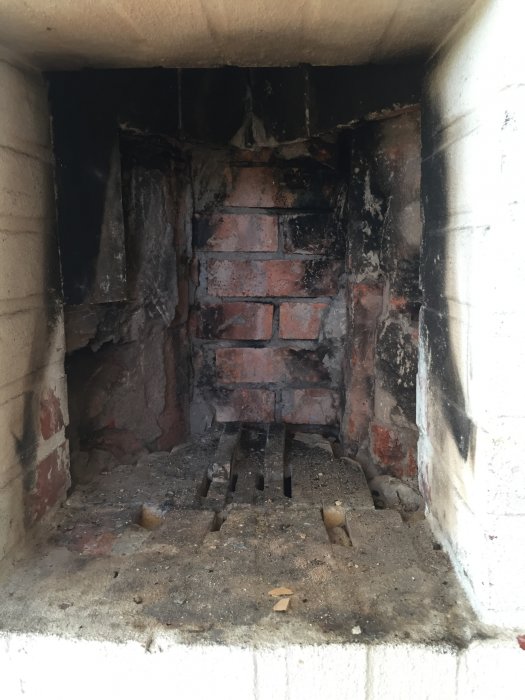
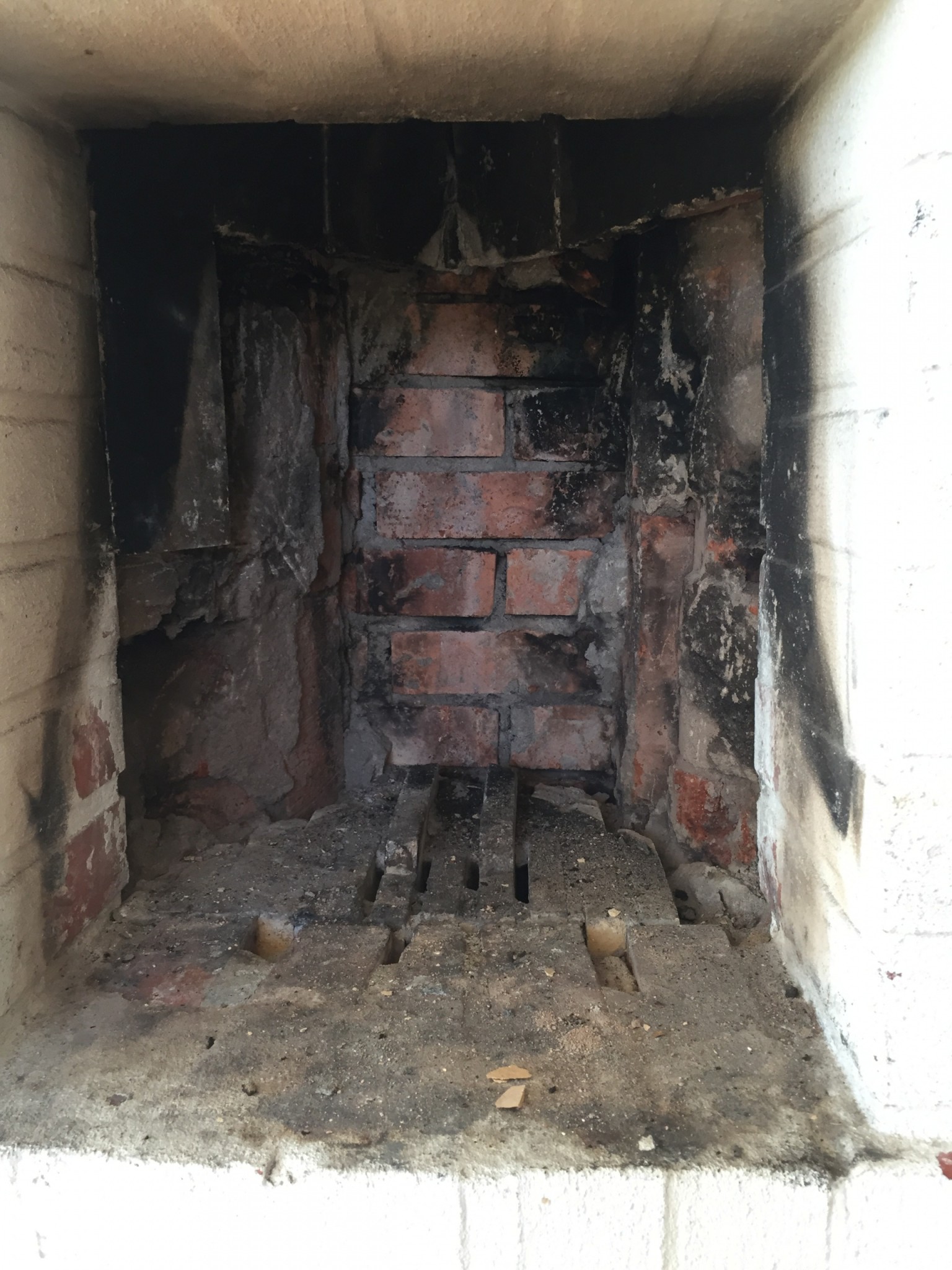
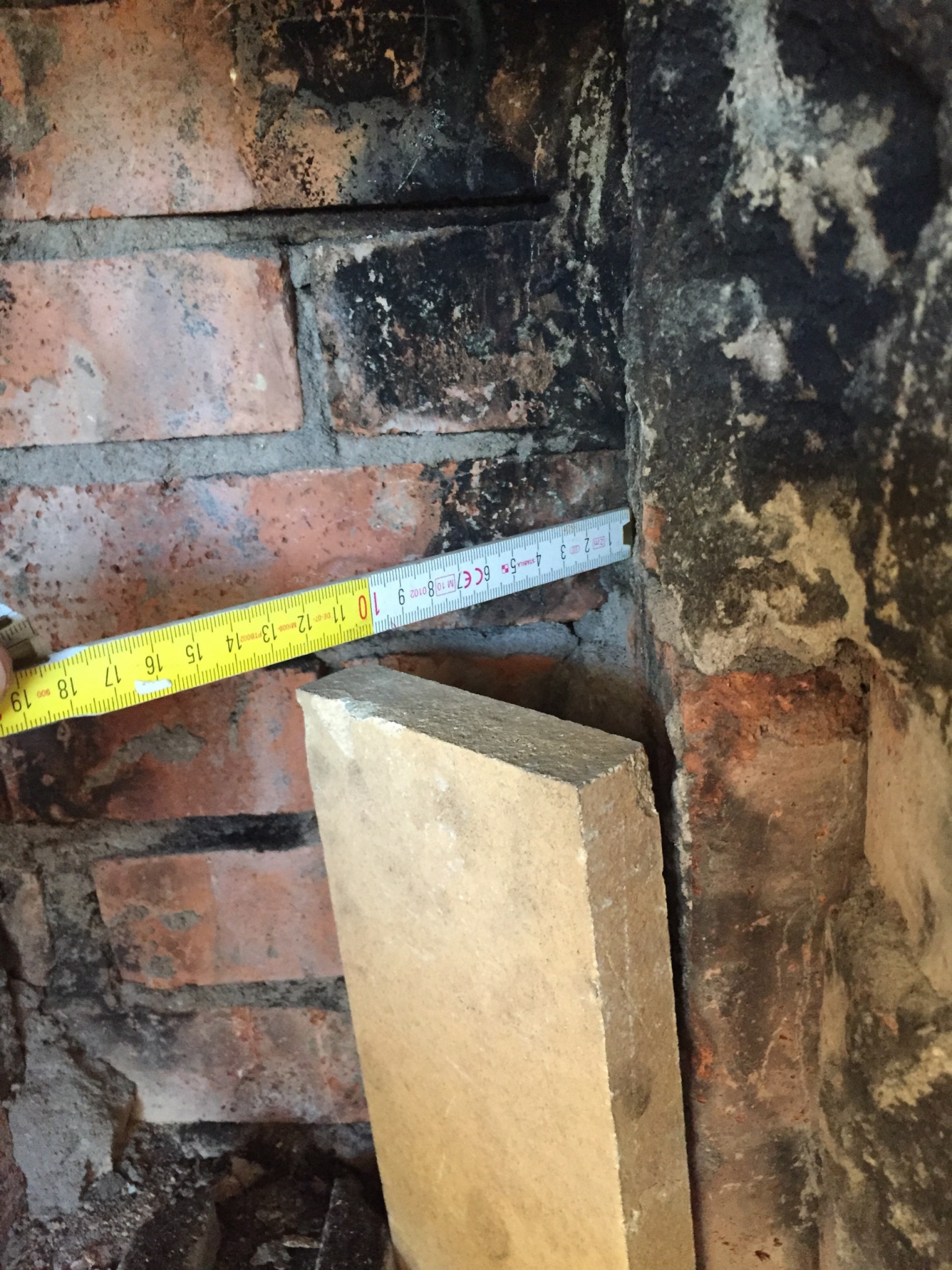
It has been in use, as recently as last winter. I recall there was a note about the stones, that they were loose. It seems the previous owner patched the bottom, but it has now come loose, he patched the holes again, as seen in the picture, they have come loose and there are holes there again. I don't know what those holes are for though. I will call the chimney sweep and ask him to inspect again to see if it's fire-safe or not. Is it enough to use sealant from a tube? I'm thinking like this: remove the loose stones, maybe all of them, apply fireproof sealant around and push them back in. Add more sealant in the joints and spread it out. Knock away the old seal at the bottom and spread out new seal with regular sealant that you mix yourself. I've looked for a guide, but most are unfortunately about tile stoves.
Could it be that the holes in the bottom are air intakes? Do you have a fresh air vent under the fireplace? Alternatively, it could just be that the fire has eroded the joints.
I would have repaired all the damaged parts with the same mortar. Buy a bag of fireproof mortar and fix both the bricks and repair the joints at the bottom with it.
The chimney sweep keeps a record of all fireplaces, so they can help you with the information on whether the fireplace is OK to use or not.
It's probably as you say, the fire must have hollowed out the joints. But are the tiles on the roads bricks? They seem to be only a few cm thick. I guess I'll have to try to take a couple of pieces loose and smear joint compound on. Some joints are only a few mm wide on the walls, not sure how I'm going to get mortar in there.
The tiles are refractory bricks. If you pry them out, you will likely find a regular red brick wall behind. Chip away the mortar behind the tile, wet the underlying bricks with a spray bottle, and press the refractory brick into refractory mortar.
This is going to be harder than I thought.
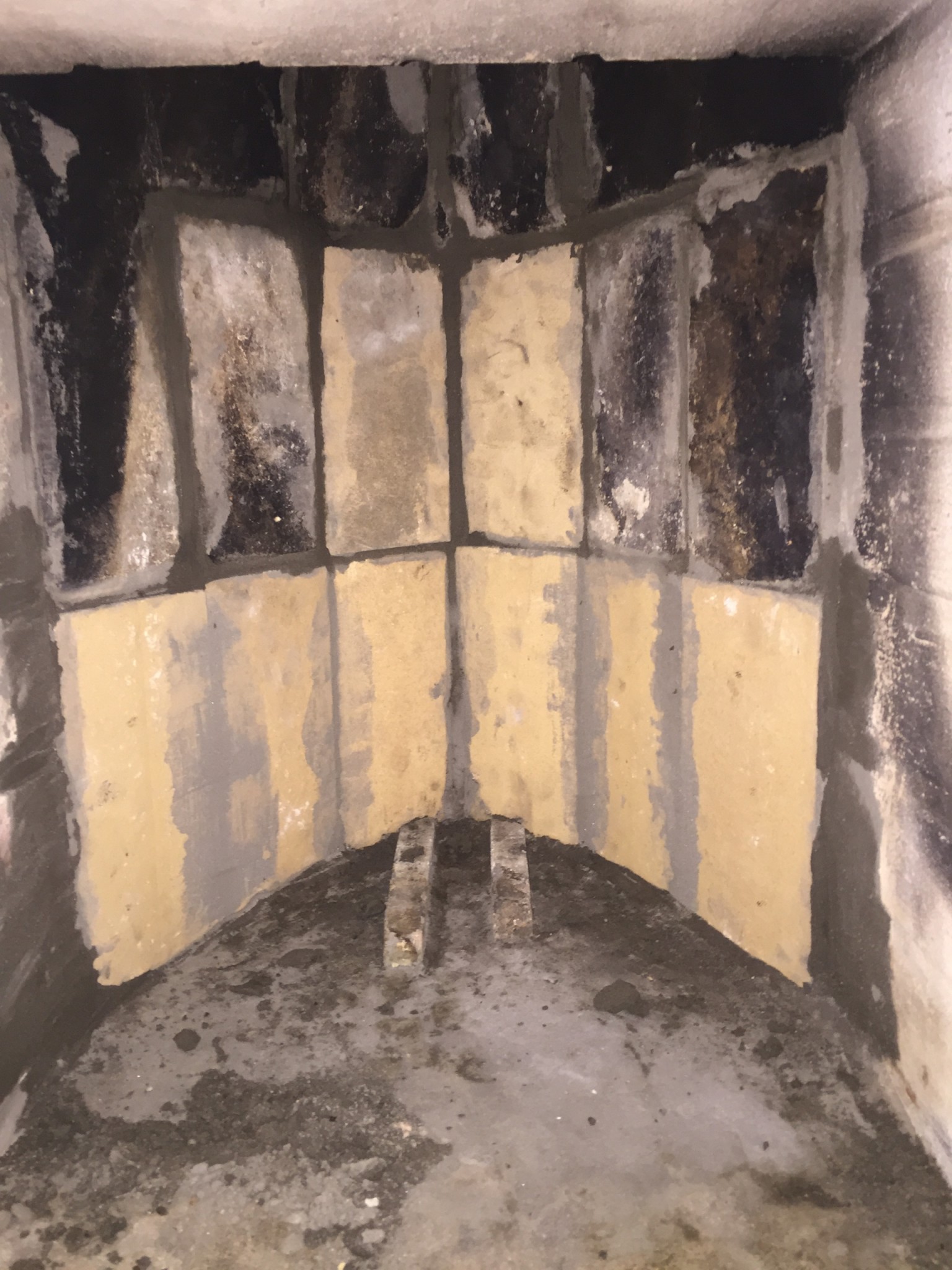
In the picture, you can see how it looks without the stones:
I need a lot of mass if I'm going to press in new stones. Bought a couple but they were not the same size, anyway it wasn't just a matter of replacing. Had to use some old and some new.
I haven't fixed them in place but have tried a bit how they should sit;
They won't sit completely against the brick behind.
I'm wondering how I should get your stones on? Cast in stages? Place them reasonably and then plaster them in with fireproof clay?
Tips are welcome
You mix a bucket of refractory mortar according to the instructions on the bag. Then you throw it on with a trowel onto the moistened exposed red brick wall. After that, you press the thin, refractory bricks into place. Then fill the joints between the refractory bricks. Done.
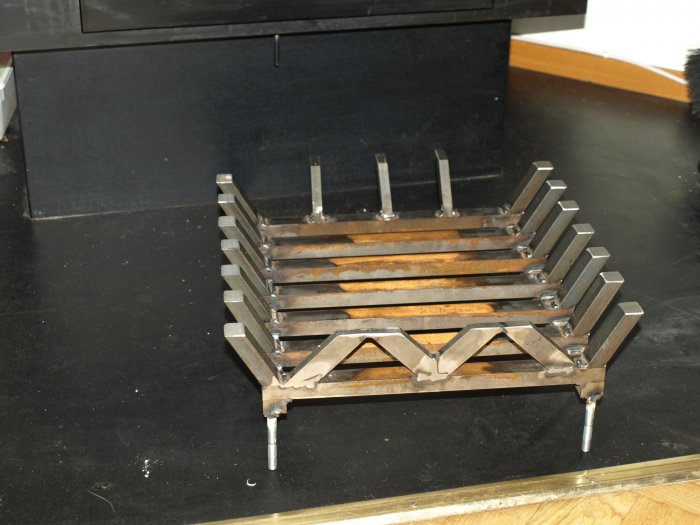
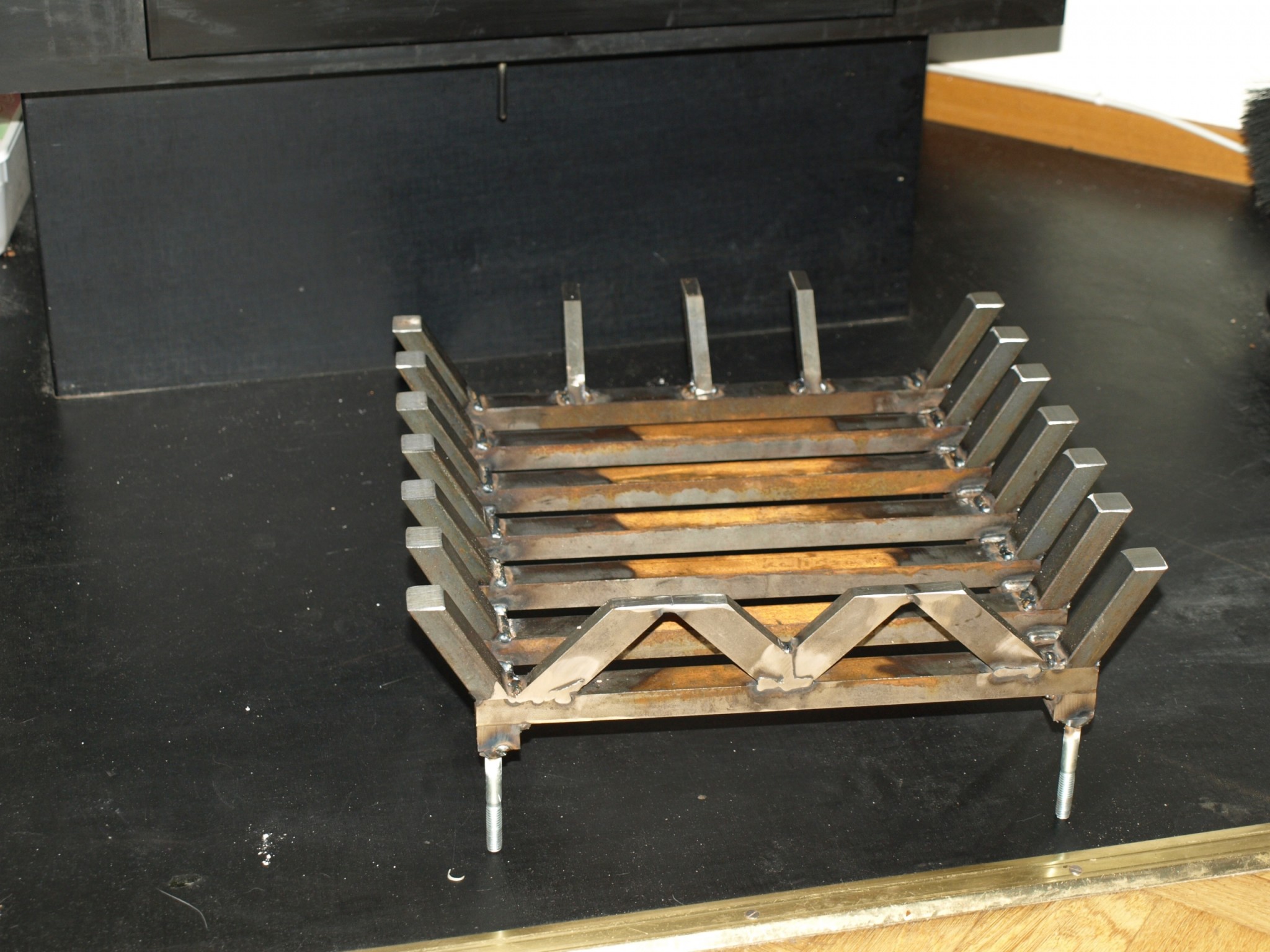
You can make a grate with legs and place an ash box underneath so the fire doesn't wear on your bottom and it becomes easy to empty the ash.
It doesn't have to be such an advanced build but still keeps the wood in its place.
Good idea! I have a bunch of smiths at work who are just hanging around right now, I'll have a chat with them.
But my big problem is the spark guard! I can't find anything that fits my measurements. The previous owner took it with them, I even think it was custom ordered.
Vi vill skicka notiser för ämnen du bevakar och händelser som berör dig.