Tore down an old deck today as a new and larger one is planned.
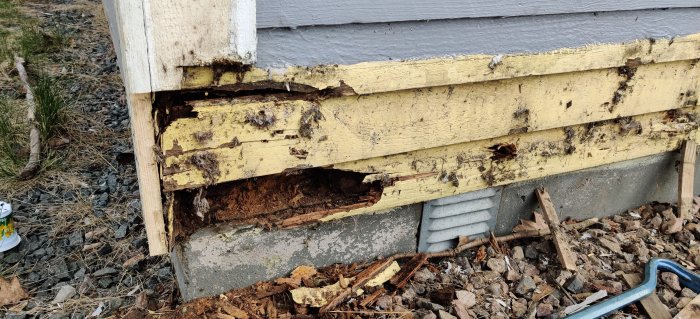
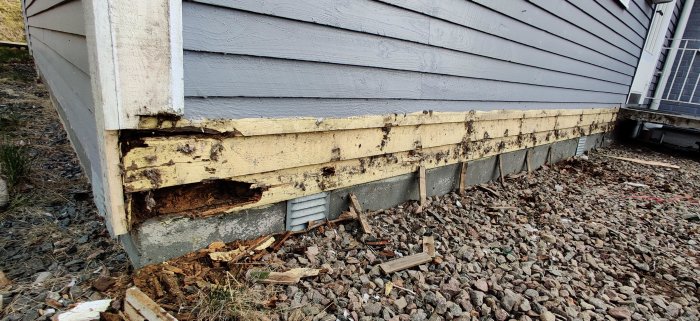
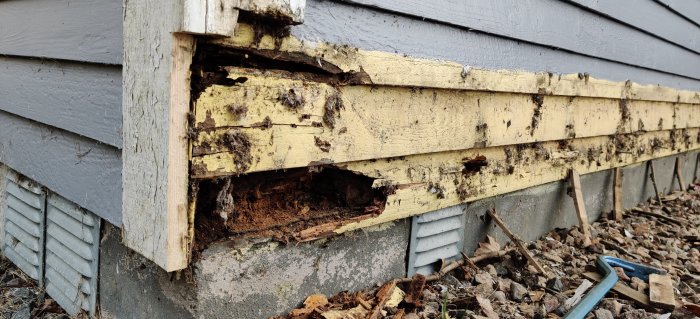
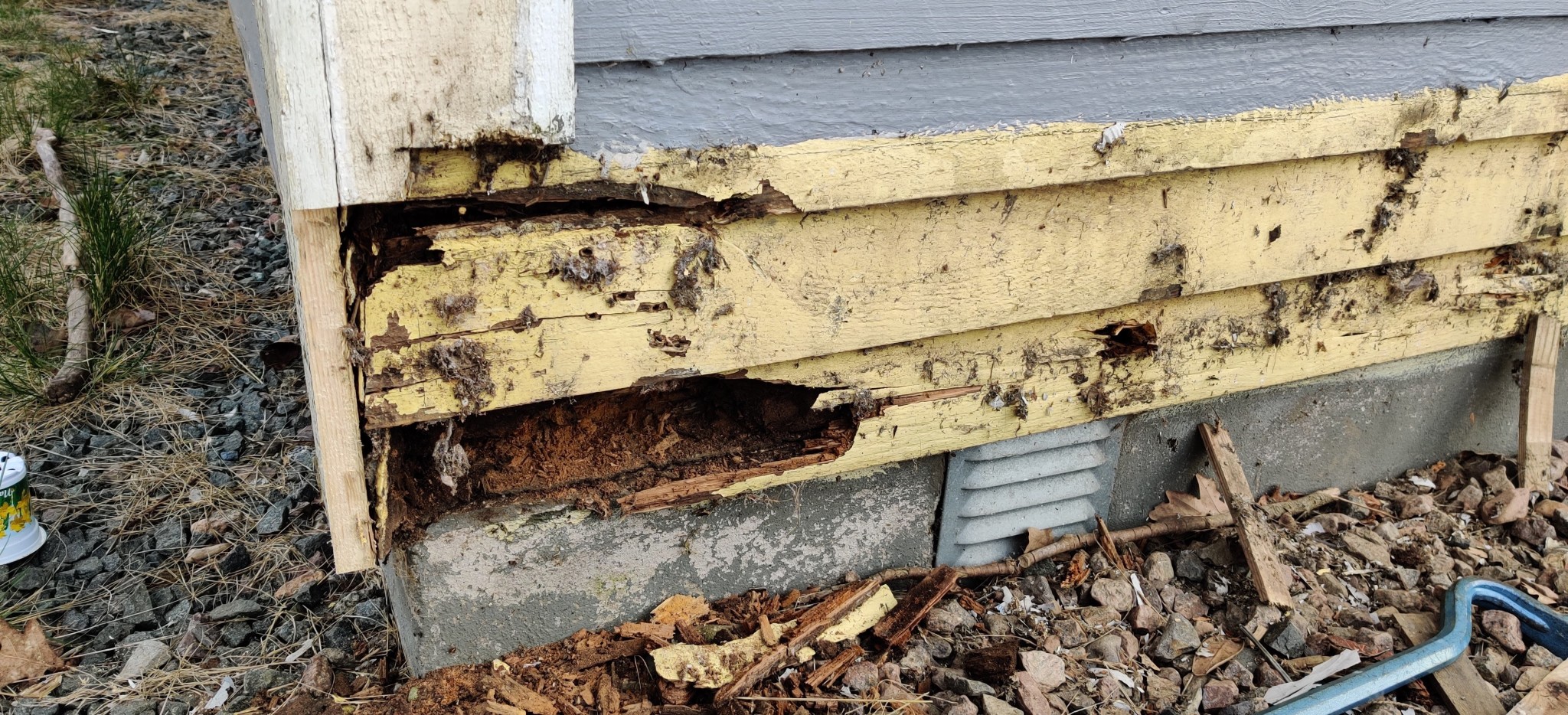
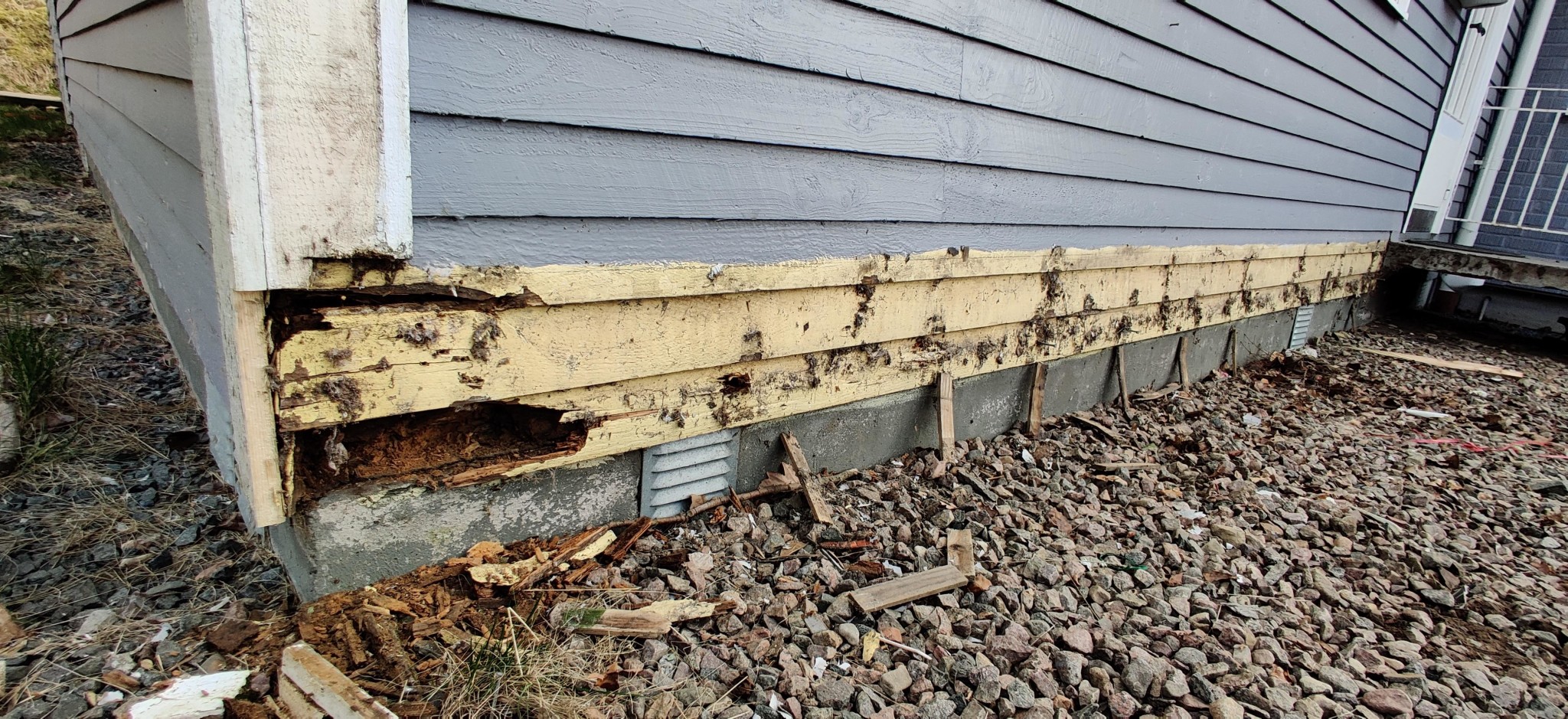
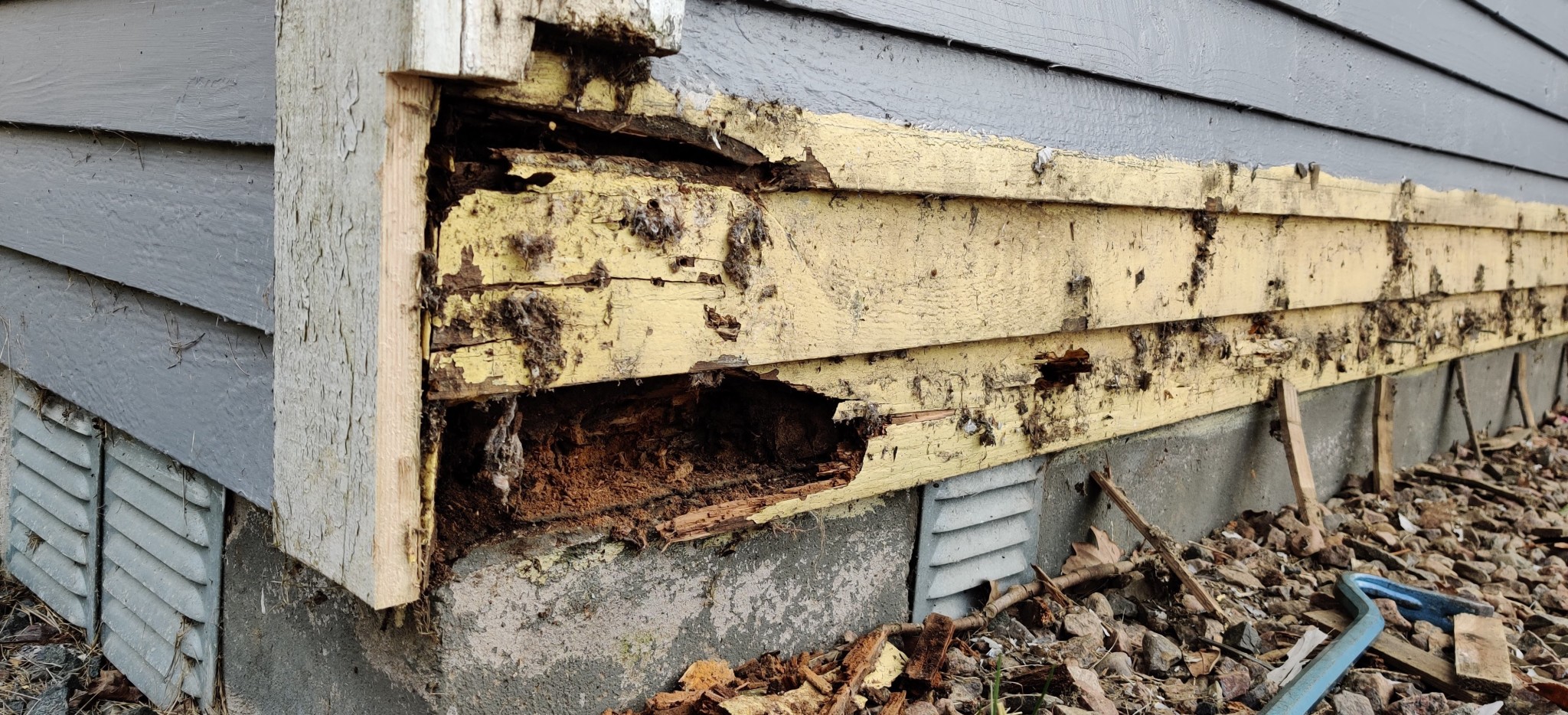
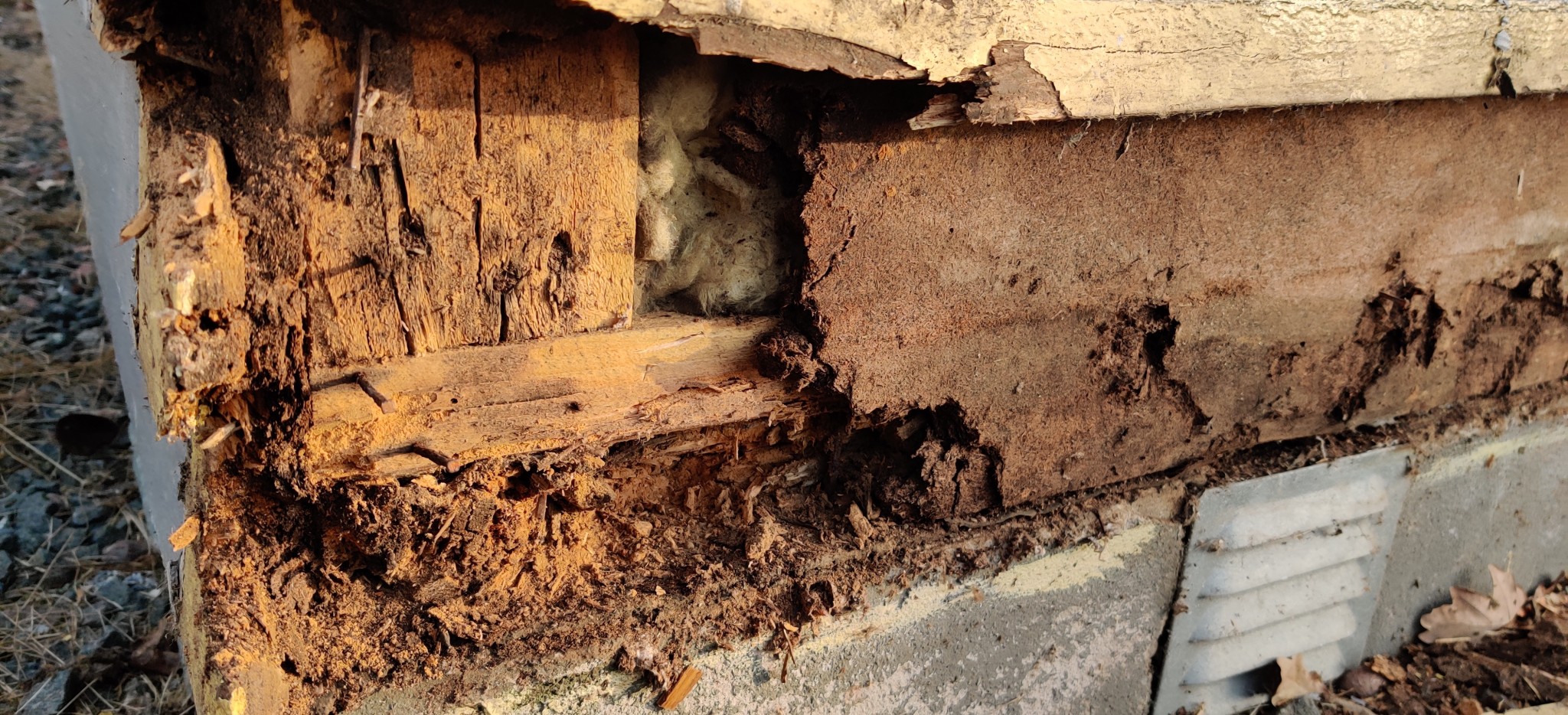
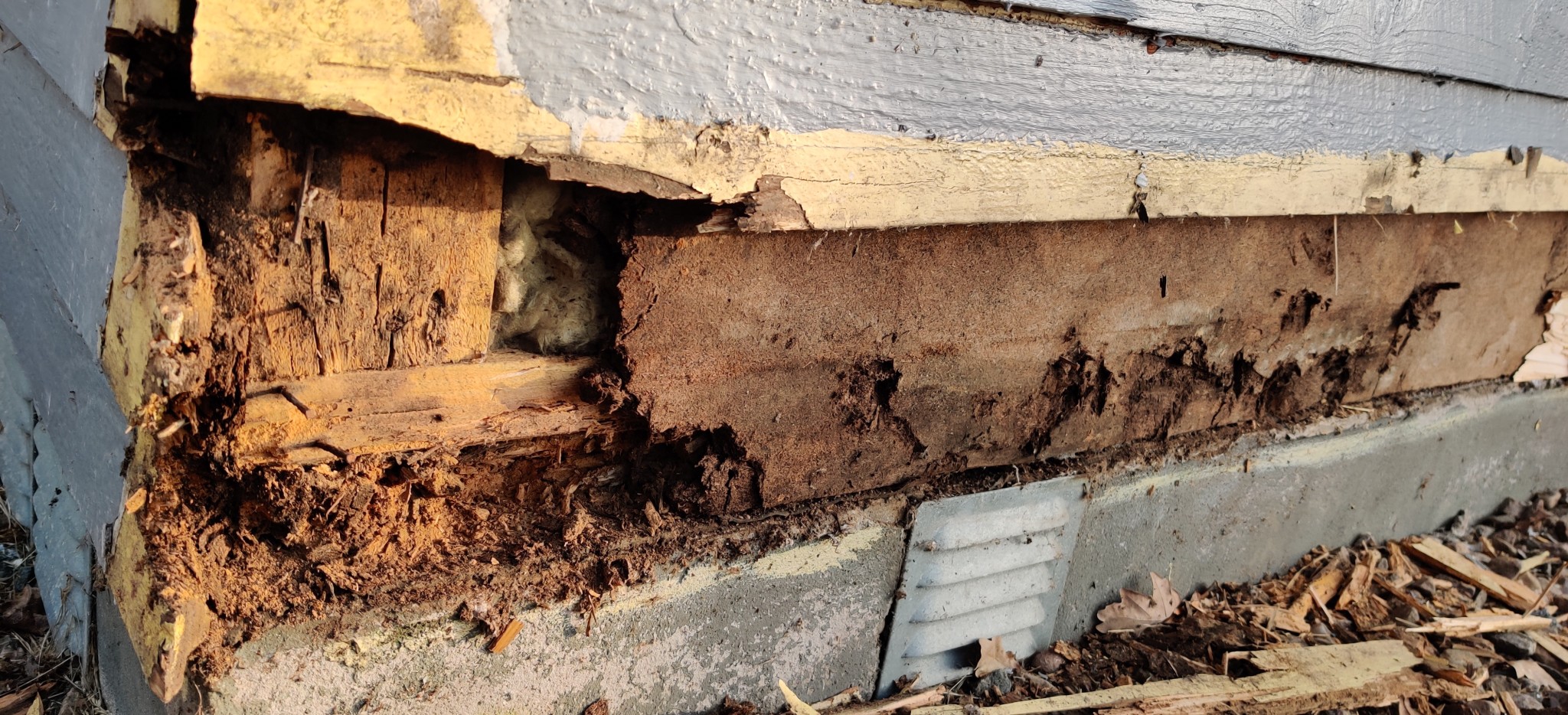
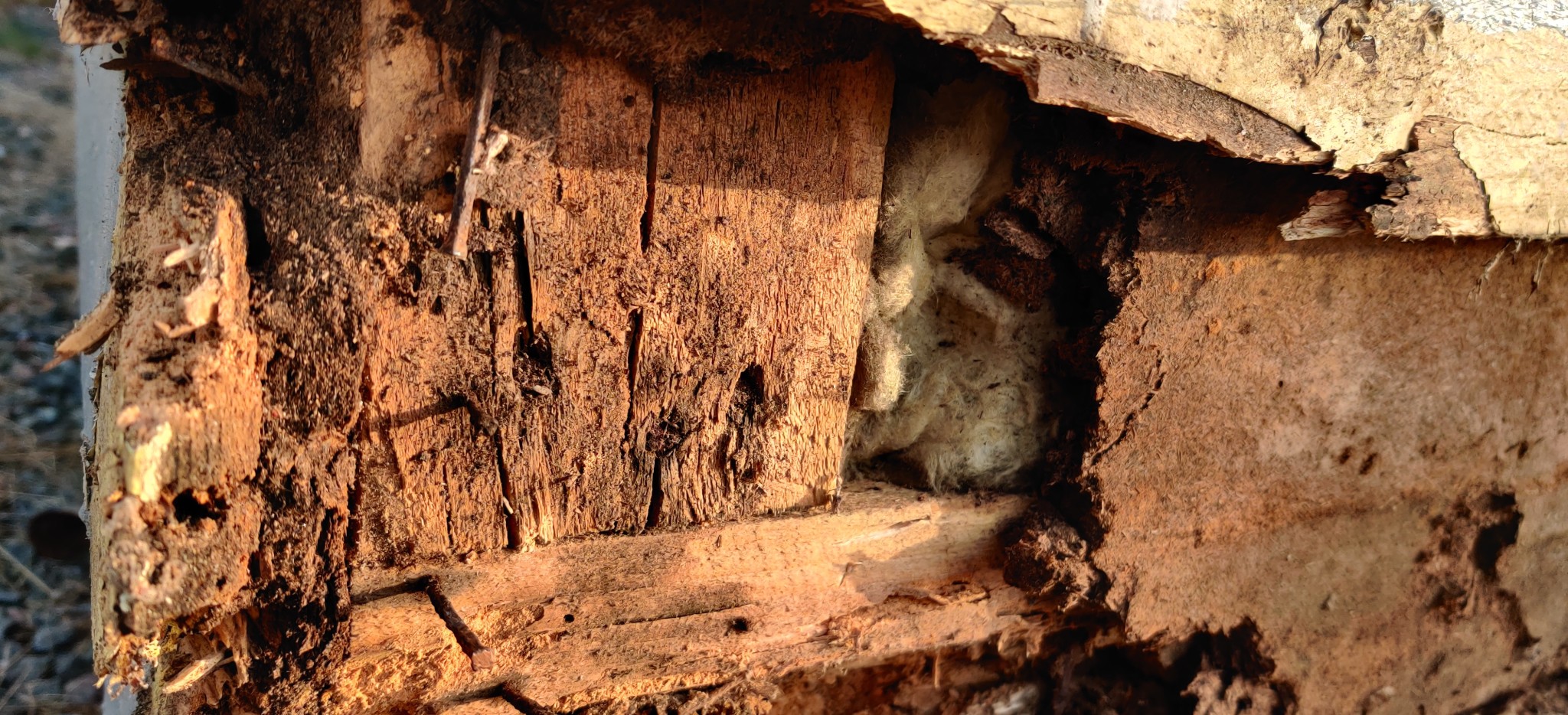
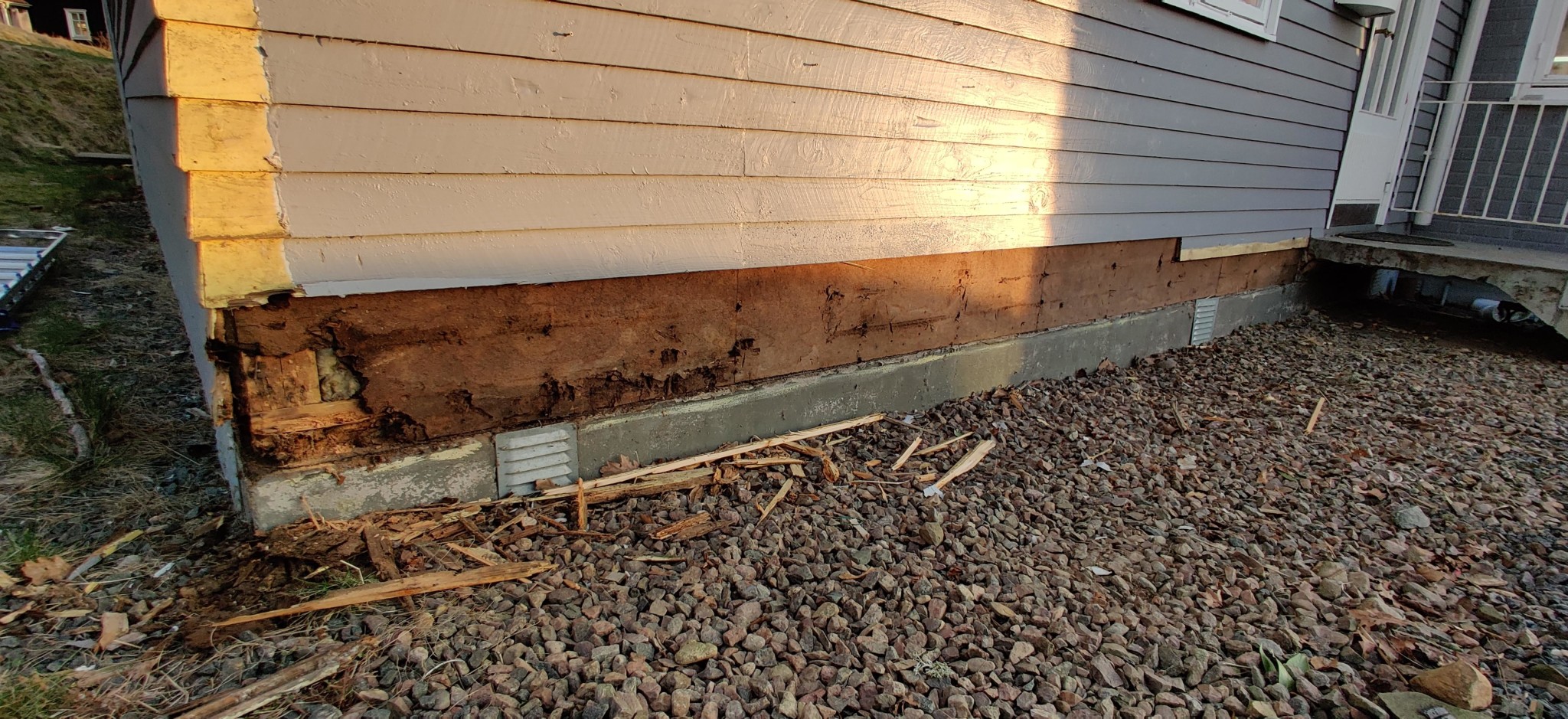
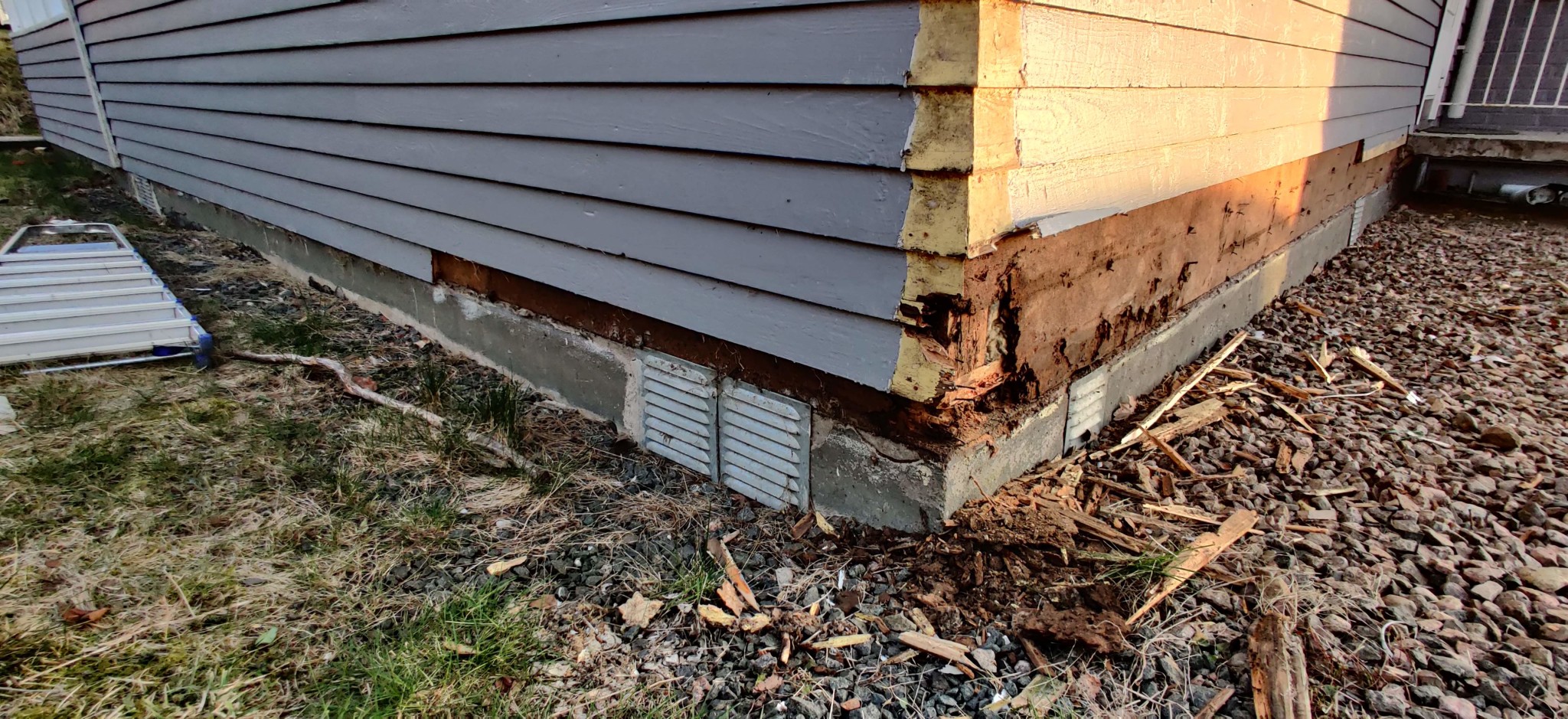
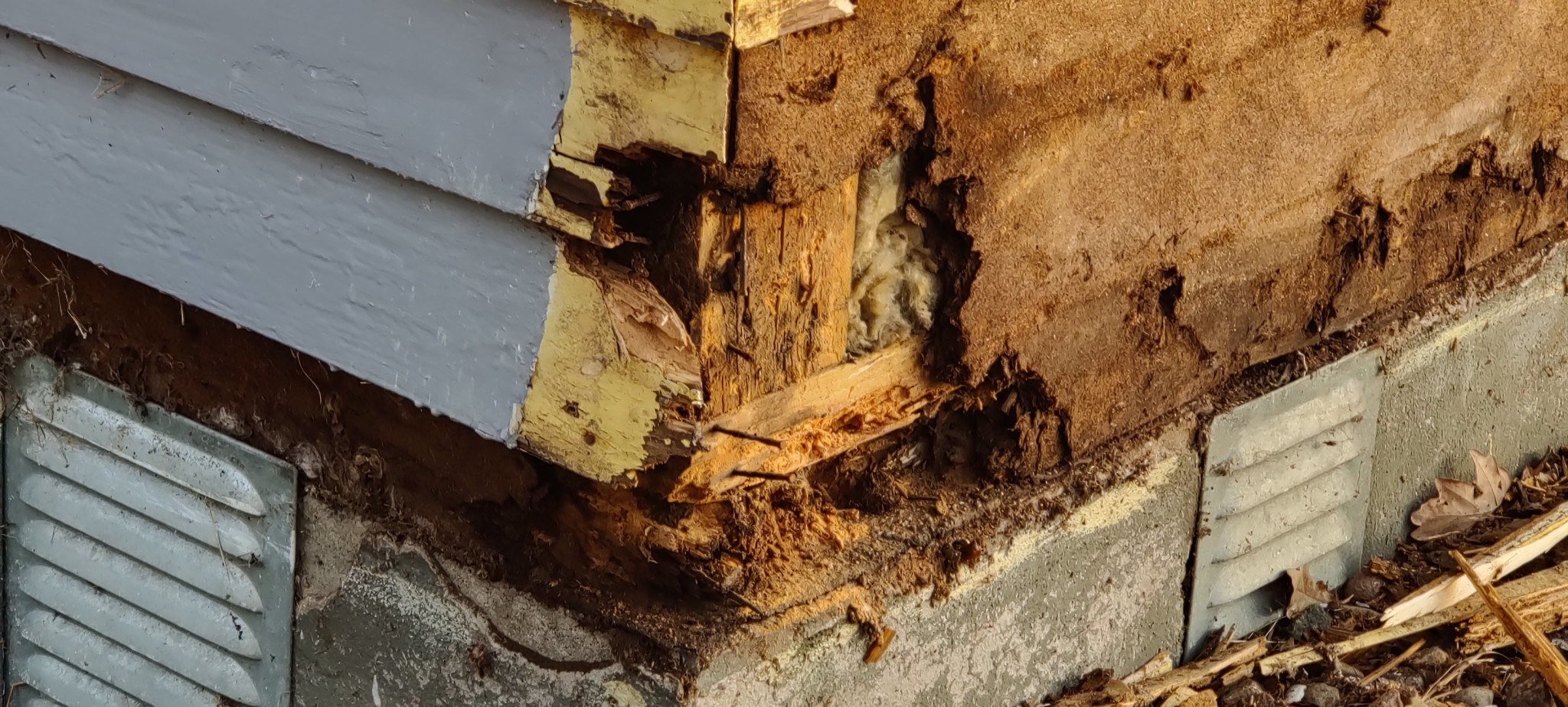
A beam was nailed to the outer wall, and when it was removed, we noticed it was rotten at the bottom of the facade. After some probing, the hole became larger and larger. Parts of the sill are also rotten, how is this best handled?
I have not yet removed the lowest panel board, so I don't know how far this extends, but there were some long nails from the old deck further along the board, and they were really tight, so I hope it's healthier further along.
I'm attaching a couple of pictures so you can see the mess.
You didn't ask a question but yes, it seems like the old deck caused water to seep in there.
No, I didn't really ask a question. But my concern is how to proceed. Is it costly to replace what is rotten, is it something one can actually do oneself?
Then there's some sort of board behind the paneling. Does anyone have an idea what it could be? It's about 8-10 mm thick and feels very porous.
We've noticed a musty smell in the room behind, but thought it came from underneath as there was some old wood there before that has now been removed. But when we smell the board (even the one at the other end), we can tell the smell is coming from it. So I guess we need to take down all the paneling so we can remove the old boards. This is an extension to our house that was done sometime in the 60s-70s.
Take a slim chisel and press it into the wood, you can immediately feel how rotten it is, it might be a bit tricky to replace the sill and stud, most likely there will be a new deck there, it should not be attached to the wall/foundation but float on its own on the surface. Regarding the installation of a new one, read this thread https://www.byggahus.se/forum/threads/borra-i-betongen-i-en-platta.370252/
We have sensed a musty smell in the room behind, but thought it came from below since there used to be some old timber there that has now been removed. But if we smell the board
It is moisture damaged but usually doesn't go all the way up. What feels a bit uncomfortable is that it could be rot all the way into the room, and replacing it yourself might not be ideal since it requires a fair amount of knowledge about propping up that part of the house. In which part of the country do you live, nothing too specific?
Is the demolished terrace built in the 60s-70s or part of the main structure of the house? At that time, pressure-treated wood or even creosote was often used, which can smell bad if it gets damp.
It is water-damaged but usually not all the way up. What feels a bit unsettling is that there might be rot all the way into the room; replacing it yourself might not be advisable since it requires a good deal of knowledge about supporting the house in the affected area. In which region do you live, not exactly?
We live in the Jönköping area. No, I don't think we will do it ourselves, but it can be good to know how extensive the job might/will be.
Was the demolished deck built in the 60s or 70s or part of the house structure? At that time, they often used pressure-treated wood or even creosote, which can smell bad if it gets damp.
I don't know exactly when the deck was built, but I would guess the 80s, and it was not part of the house structure. There was a joist nailed to the house structure that the deck rested on.
Get quotes from several companies, because this is not a simple thing and can end up costing quite a bit. It totally depends on the condition of the parts of the wall; probably the entire lower part of the wall will need to be replaced/joined, along with the sill. Sad but true.
If you are handy, you can do it yourself, but it requires some knowledge. We usually use strong jacks when replacing sills on houses. Since it can be a time-consuming job, you save a lot of money if you can handle it yourself. But as I said: it's important to know what you're doing.
In other respects, I agree with the above, i.e. get multiple quotes if you are going to subcontract the job. And go for the one that seems most professional, not the cheapest.
Get quotes from several firms, because this is not a simple matter and may end up costing quite a bit. It entirely depends on how parts of the wall look; most likely the entire lower part of the wall needs to be replaced/joined, along with the sill. Unfortunate but true.
It doesn't sound very promising, but this is probably the charm of owning a house.
If you're handy, you can do it yourself, but it requires some knowledge. We usually use strong jacks when replacing base plates on houses. Since it can be a time-consuming job, you save a lot of money if you can manage it yourself. But as I said: important that you know what you're doing.
Otherwise, I agree with the above, that is, get several quotes if you're going to contract the job out. And go for the one that seems most professional, not the cheapest one.
Thanks for the advice. We will definitely contract out the job as I'm not at all sure how to do it. Annoying money though.
Vi vill skicka notiser för ämnen du bevakar och händelser som berör dig.



lärjungen said:
If you're handy, you can do it yourself, but it requires some knowledge. We usually use strong jacks when replacing base plates on houses. Since it can be a time-consuming job, you save a lot of money if you can manage it yourself. But as I said: important that you know what you're doing.