
27,191 views ·
15 replies
27k views
15 replies
Molly shredded the drywall
Hello,
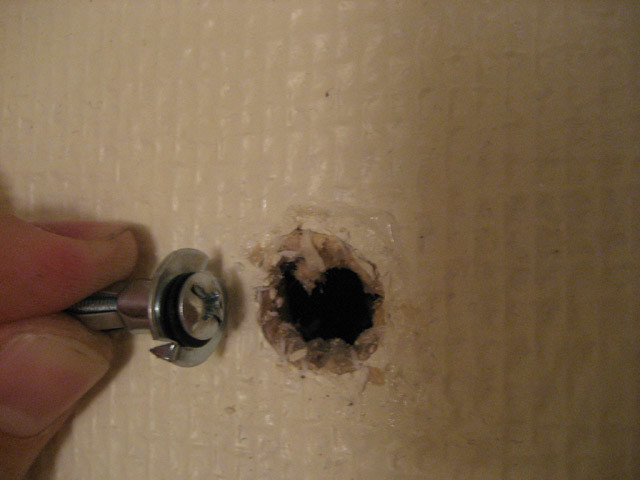
I tried to screw up a cabinet in the bathroom. The wall is made of gypsum and about 10mm thick. I used molly (I think that's what it's called anyway) 8mm in diameter for 10-16mm walls.
It has worked well many times before, but this time the molly tore the gypsum wall apart. Desperately, I placed a larger washer between the wall and the molly, but it only resulted in an even bigger hole.
After my mishap, I read on the forum that one should use a special tool and not a screwdriver like I did. I also used bathroom silicone, which might have worsened the situation even more.
Now I know how to do it in the future, but my problem remains, I still need a stable screw exactly where the gaping hole is now. I need advice, tips, and smart ideas!
The only thing I can think of is to drill up a large metal plate, one with pre-drilled holes, but I don't know...
Help! :eek:
I tried to screw up a cabinet in the bathroom. The wall is made of gypsum and about 10mm thick. I used molly (I think that's what it's called anyway) 8mm in diameter for 10-16mm walls.
It has worked well many times before, but this time the molly tore the gypsum wall apart. Desperately, I placed a larger washer between the wall and the molly, but it only resulted in an even bigger hole.
After my mishap, I read on the forum that one should use a special tool and not a screwdriver like I did. I also used bathroom silicone, which might have worsened the situation even more.
Now I know how to do it in the future, but my problem remains, I still need a stable screw exactly where the gaping hole is now. I need advice, tips, and smart ideas!
The only thing I can think of is to drill up a large metal plate, one with pre-drilled holes, but I don't know...
Help! :eek:

What you can do is take a piece of flat iron and either drill and thread it or weld a nut onto it. Then take a washer that covers the hole and make sure it's tight when you screw it in. Just don't drop the iron.
The width of the iron should fit through the hole and the length should cover the hole with ease.
Since it's behind a cabinet, maybe it doesn't matter if it's a bit ugly?
The width of the iron should fit through the hole and the length should cover the hole with ease.
Since it's behind a cabinet, maybe it doesn't matter if it's a bit ugly?
Isn't there a workshop nearby where you can have this made? It can hardly cost even 100 kronor.
You have a screwdriver, so you can buy, say, 1 dm of flat iron of "suitable" dimension. Drill a hole in the middle, then knock in a T-nut and screw it on. Make sure the hole is of a suitable dimension so that this nut doesn't spin, which they _can_ do since they are not really intended for iron.

Feel free to bend the iron away from the hole so it becomes slightly V-shaped (2-3 degrees) to distribute the load.
You have a screwdriver, so you can buy, say, 1 dm of flat iron of "suitable" dimension. Drill a hole in the middle, then knock in a T-nut and screw it on. Make sure the hole is of a suitable dimension so that this nut doesn't spin, which they _can_ do since they are not really intended for iron.
Feel free to bend the iron away from the hole so it becomes slightly V-shaped (2-3 degrees) to distribute the load.

The purpose of a Molly is for the wings to expand on the backside and distribute the pressure. What you're holding between your fingers is not an expanded Molly. Instead, you have (with the help of the screwdriver) used the Molly as a sort of primitive drill, where the two wings meant to go into the drywall on the front to prevent the Molly from spinning have served as drill bits.
Assuming you want to hang something exactly where the hole is now? In that case, do the following: Draw a square (approximately 10x10 cm) on the wall around the hole. Cut along the lines with a sharp knife and tilt the blade as much as you can from the center on the front. Knock out the cut piece. Take a piece of 12 mm drywall (ask at the lumber yard) and cut a piece of the same size and ensure it fits well in the hole. Take a piece of wooden strip (about 20 cm long, 7 cm wide, and 1 cm thick). Drill a small hole in the center of it. Tie a string with a knot on the back. Insert the stick into the hole with the string anchored on the outside. You should have glue on the ends of the stick and pull these against the backside of the wall with the string. Let it sit and cure. Cut the string off when you've confirmed it's set. Put glue on the drywall piece and press it in place. Skip the Molly and drill the hole where you need it and hang what you need to hang on a screw/hook.
In the future, learn to:
A. partly expand the Molly in advance before inserting it into the hole by screwing by hand until the wings start folding outward
B. not always use the screwdriver, especially not in combination with Molly.
If you also want a proper fastening with Molly, buy a Molly expander at Clas Ohlsons. Item no: 30-4101 at 98:- Insert the Molly screw into the tool and press the screw into the hole. Pump the handle until you have full contact on the backside. Release the tool with the latch. Then you can unscrew and screw in the screw with the screwdriver
_____________
The Builder
Assuming you want to hang something exactly where the hole is now? In that case, do the following: Draw a square (approximately 10x10 cm) on the wall around the hole. Cut along the lines with a sharp knife and tilt the blade as much as you can from the center on the front. Knock out the cut piece. Take a piece of 12 mm drywall (ask at the lumber yard) and cut a piece of the same size and ensure it fits well in the hole. Take a piece of wooden strip (about 20 cm long, 7 cm wide, and 1 cm thick). Drill a small hole in the center of it. Tie a string with a knot on the back. Insert the stick into the hole with the string anchored on the outside. You should have glue on the ends of the stick and pull these against the backside of the wall with the string. Let it sit and cure. Cut the string off when you've confirmed it's set. Put glue on the drywall piece and press it in place. Skip the Molly and drill the hole where you need it and hang what you need to hang on a screw/hook.
In the future, learn to:
A. partly expand the Molly in advance before inserting it into the hole by screwing by hand until the wings start folding outward
B. not always use the screwdriver, especially not in combination with Molly.
If you also want a proper fastening with Molly, buy a Molly expander at Clas Ohlsons. Item no: 30-4101 at 98:- Insert the Molly screw into the tool and press the screw into the hole. Pump the handle until you have full contact on the backside. Release the tool with the latch. Then you can unscrew and screw in the screw with the screwdriver
_____________
The Builder
The wall looks messed up, shoot in some narrow wooden pieces like 1"X1" or thin plywood pieces and screw them in on the side, then screw what you want directly into the wood from the 1"X1", possibly a little PL-400 as reinforcement.
It happens to everyone with single-layer drywall, the 70s were crap ,-)
Regards, jawen
It happens to everyone with single-layer drywall, the 70s were crap ,-)
Regards, jawen
What happens to everyone with single-layer drywall? - I have single-layer drywall @ 70s and probably a couple of hundred molly... don’t really see the problem... (though you can have bad luck) however, they are nailed... by a clumsy person in the 70s, so the boards are broken in places... but that's another thing.. =)jawen said:The wall looks shabby, shoot in some narrow wooden pieces like 1"X1" or thin plywood pieces and screw them on the side, then screw what you want fastened straight into the wood from the 1"X1", possibly using some PL-400 for reinforcement.
It happens to everyone with single-layer drywall, the 70s were crap ,-)
Sincerely, jawen
Sincerely, Marcus
Thank you for all the great tips! What a good forum this is!
I haven't quite decided which technique to use, but cutting and gluing a batten sounded good. I'll visit Optimera tomorrow to get the materials. I'll get back to you when it's done.
I haven't quite decided which technique to use, but cutting and gluing a batten sounded good. I'll visit Optimera tomorrow to get the materials. I'll get back to you when it's done.

Clas O has a type of ceiling mount that might work.
http://clasohlson.se/Product/Category.aspx?id=251414&_path=251882;251746;251414
I know there are other types of anchors like it, but I don't know where to get them.
The plumber at work hung brackets on the wall with such anchors.
http://clasohlson.se/Product/Category.aspx?id=251414&_path=251882;251746;251414
I know there are other types of anchors like it, but I don't know where to get them.
The plumber at work hung brackets on the wall with such anchors.
Avendere:
If you seriously think that the 70s construction with nailed/screwed single gypsum boarding on 60cc studs was good, then you are not serious.
These walls are among the worst built in Sweden of all time, the whole walls shake if you hit them a little and if it concerns bathrooms, it's best to screw double gypsum or tear down and stud tighter.
Then you might have screwed 3000 molly into your wall, that doesn't mean that 60cc with single gypsum is a good construction.
Best regards, Jawen
If you seriously think that the 70s construction with nailed/screwed single gypsum boarding on 60cc studs was good, then you are not serious.
These walls are among the worst built in Sweden of all time, the whole walls shake if you hit them a little and if it concerns bathrooms, it's best to screw double gypsum or tear down and stud tighter.
Then you might have screwed 3000 molly into your wall, that doesn't mean that 60cc with single gypsum is a good construction.
Best regards, Jawen