We are considering tearing down the interior wall between 2 of our bedrooms on the lower floor! But how do you know if a wall is load-bearing? Älvsbyhus built in 1981.
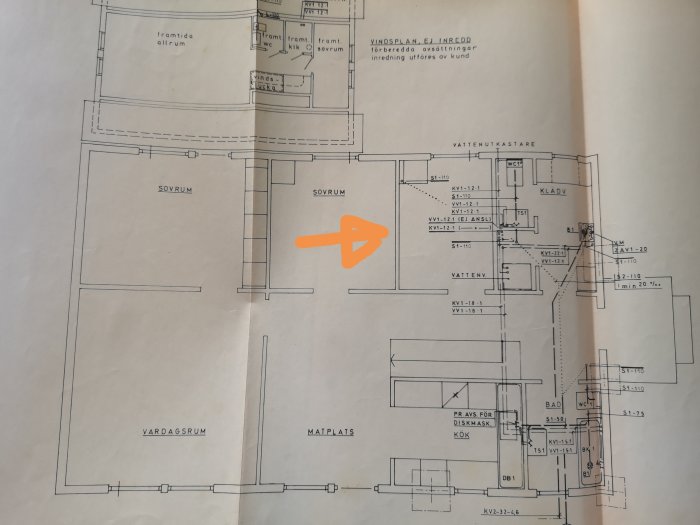
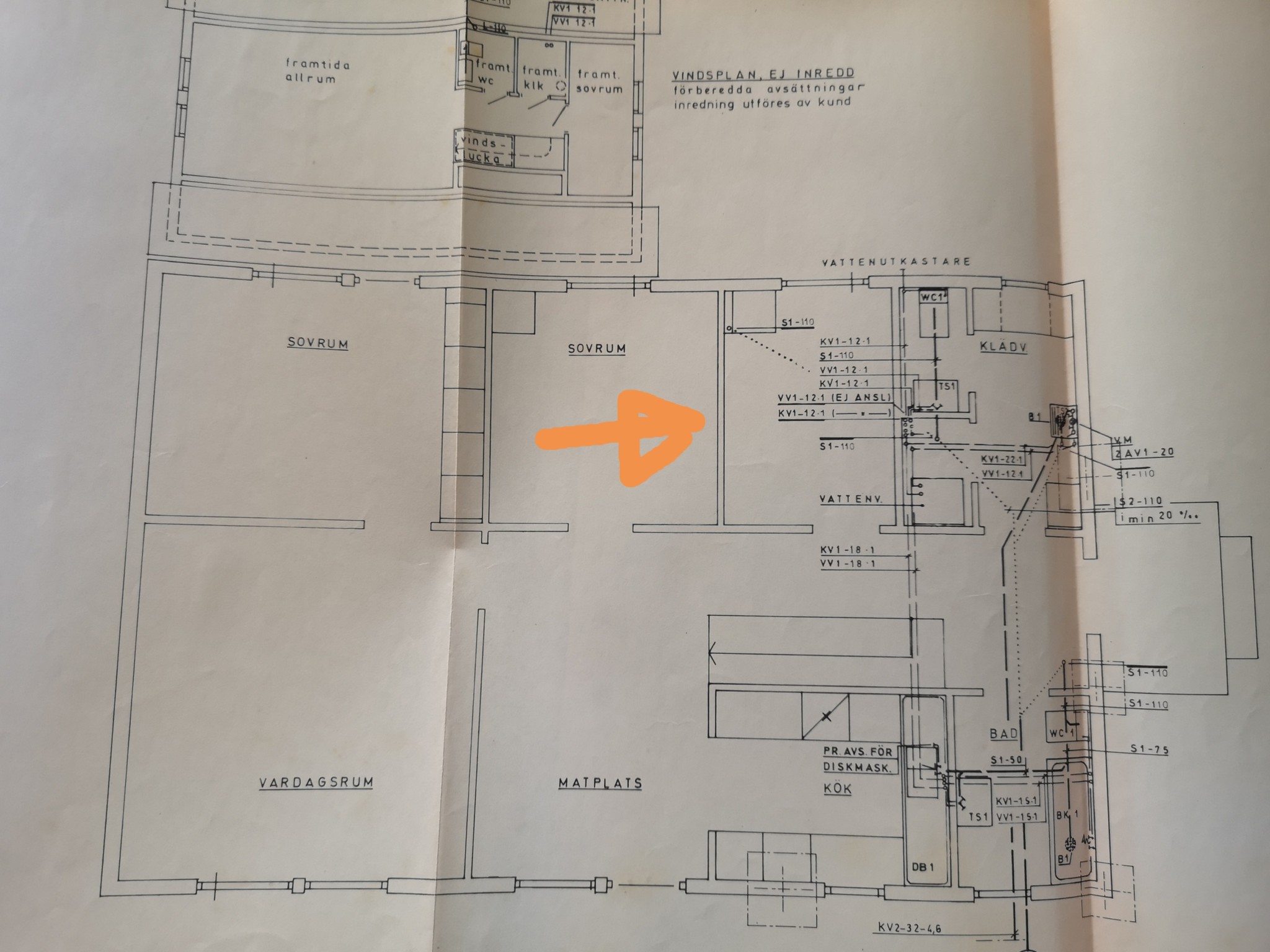
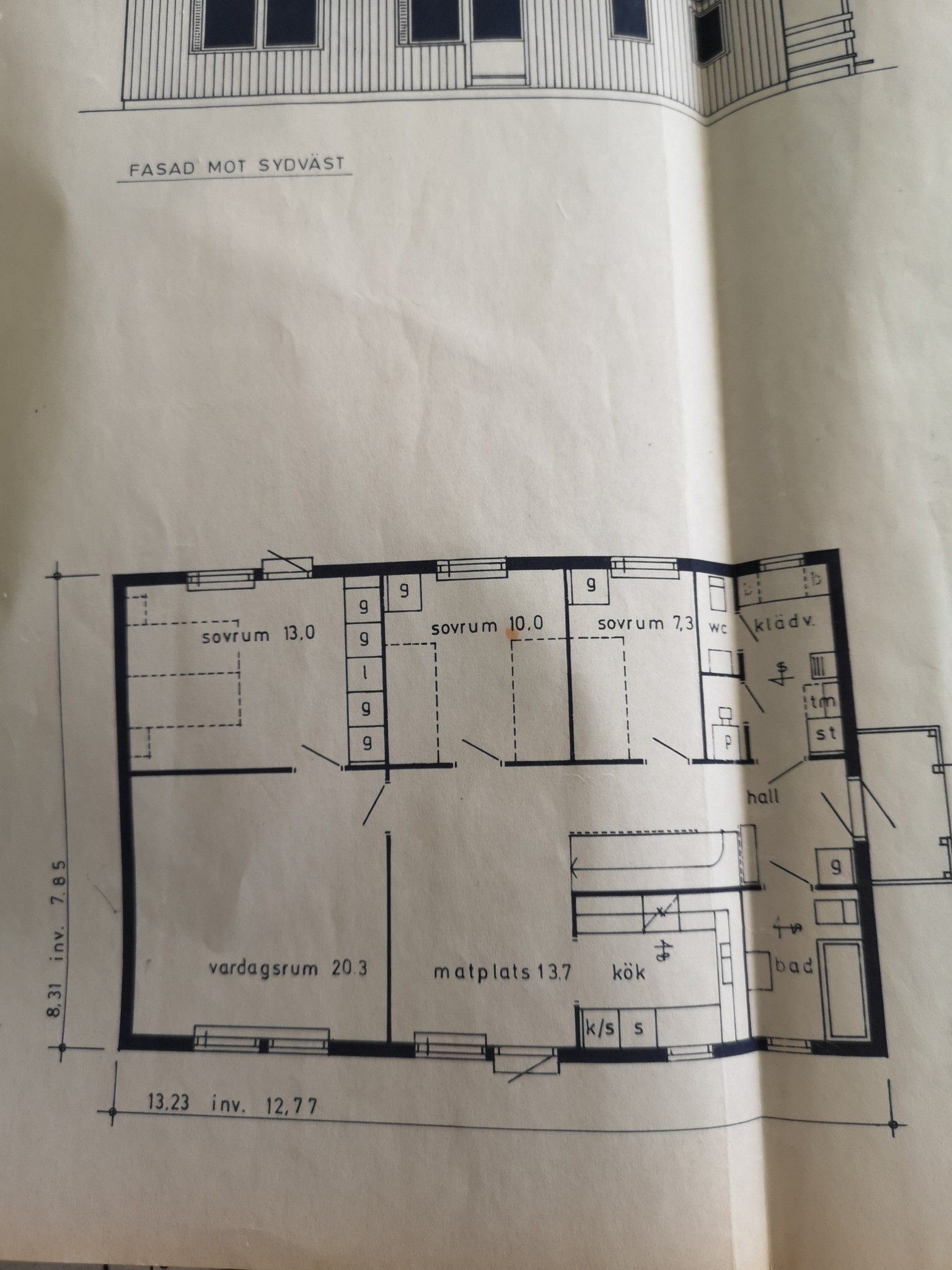
Is it possible to decipher from this drawing?
From what I can make out, the wall I want to remove is narrower than the walls that run along the house in the middle? Or is there another drawing I need?
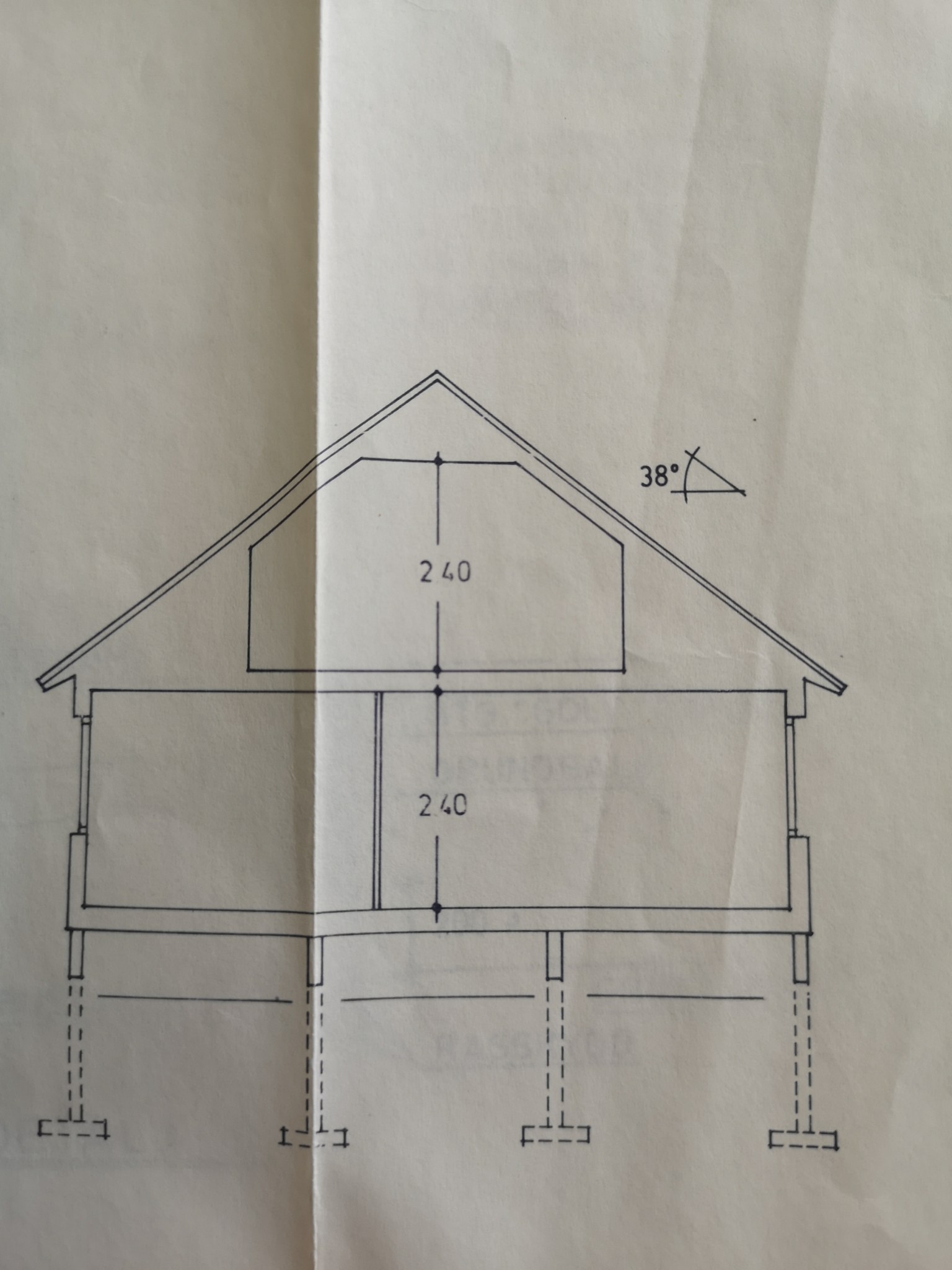
Those who know about such things often want to see a sectional drawing. But normally, walls in that direction are not load-bearing; it is walls that run under or along the ridge that tend to be load-bearing (is that the thicker wall in your case?).
Those who know this stuff often want to see a section drawing. But normally, walls in that direction are not load-bearing; it is walls that go under or along the roof ridge that tend to be load-bearing (I guess that's the wall that's thicker for you?).
I'll check if I have any more drawings!
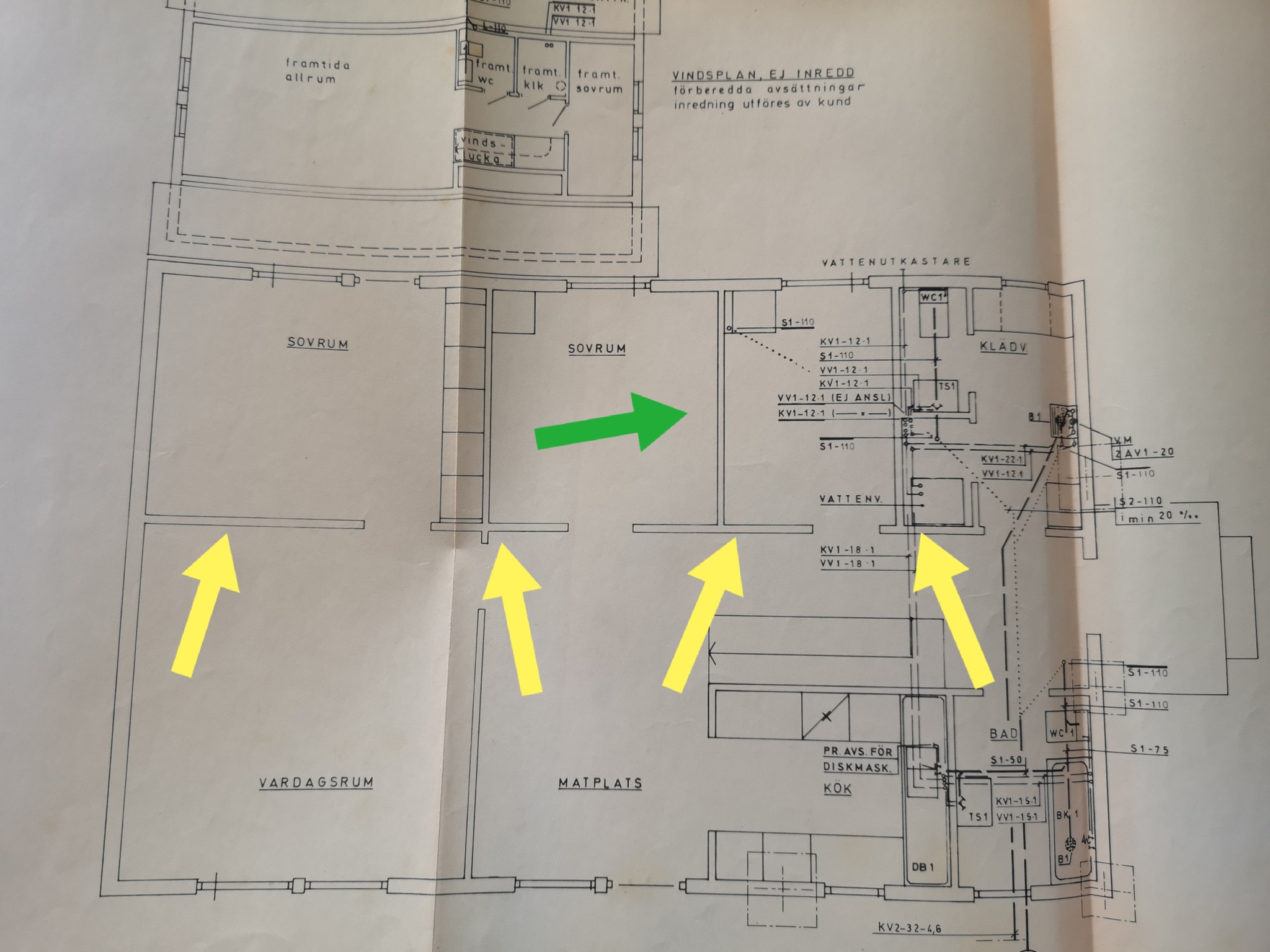
Yes exactly! The walls pointed at by the yellow arrow are the ones running along the roof ridge, the green arrow is the wall I want to tear down
It is a plumbing diagram that is not entirely ideal for this type of assessment. But I also don't believe that the current wall is load-bearing. I'm basing this on your description of how the trusses are arranged. Never use the wall's construction as a starting point. It can be wrong, especially in a typical house.
It's a plumbing drawing that isn't entirely ideal for this type of assessment. But I also don't believe that the current wall is load-bearing. I'm basing this on your description of how the rafters are arranged. Never use the construction of the wall as a starting point. It can lead to errors, especially in a type house.
Okay! Not many drawings in the house folder that the previous owner left behind, but I found a few more, though I don't know if they'll help? 
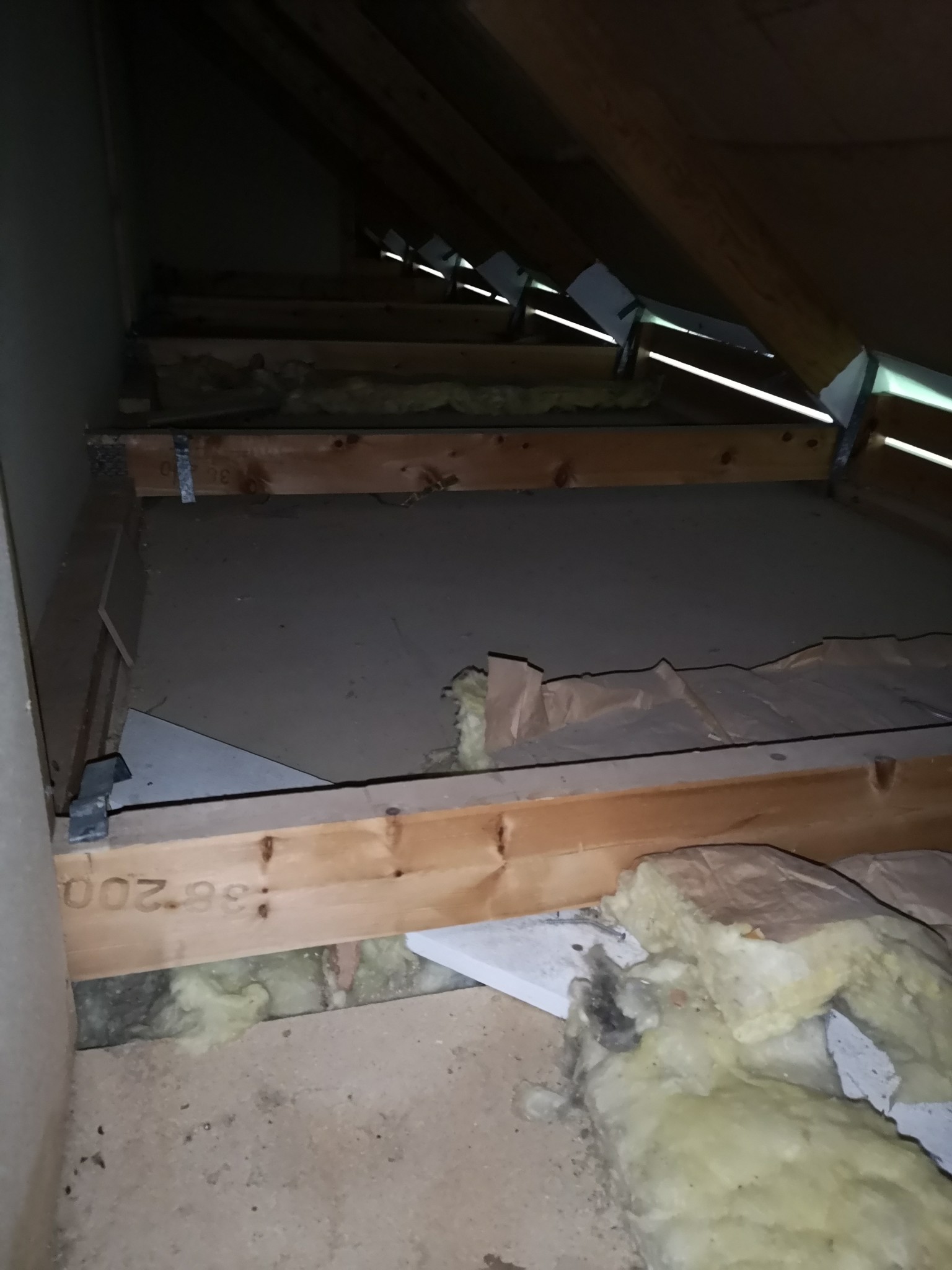
 The room above is just a small closet, unscrewed the inspection hatch there and checked what it looked like... I'll throw in a picture from there too if it's of any help
There were better drawings. Among other things, the staircase to the upper floor is correctly drawn. There is no doubt that the wall you want to remove lacks a load-bearing function.
They were better drawings. For example, the staircase to the upper floor is correctly drawn. There is no doubt that the wall you want to remove lacks a load-bearing function.
What a luxury with particle board over the insulation under the eaves; at my place, they've filled up with wood shavings to above the height of the rafters and put up some planks so it doesn't spill over the edges. Do you possibly have an exhaust fan on the roof? I would need to know how the exhaust air ducts are routed, actually. I'm planning to convert to FTX. I'm quite tired of 30 degrees indoors one half of the year and 17 degrees the other half.
What a luxury with chipboard over the insulation under the eaves; at my place, they have filled it with wood shavings up to above the truss height and placed some boards so it doesn't spill over the edges. Do you possibly have an exhaust fan on the roof? I need to know how the exhaust air ducts are routed, namely. I'm going to try to convert to an HRV system. Quite tired of 30 degrees indoors one half-year and 17 degrees the other half-year.



BirgitS said:

frisken said:
What a luxury with chipboard over the insulation under the eaves; at my place, they have filled it with wood shavings up to above the truss height and placed some boards so it doesn't spill over the edges. Do you possibly have an exhaust fan on the roof? I need to know how the exhaust air ducts are routed, namely. I'm going to try to convert to an HRV system. Quite tired of 30 degrees indoors one half-year and 17 degrees the other half-year.