
I am considering casting two foundations on rock for a zip line. The distance between the foundations, i.e., the length of the zip line, will be approximately 30m.
I was thinking of inserting two VKR pipes into the foundations.
What do you think is needed for the size of the foundations?
Thickness of the VKR pipes?
I'm thinking that the pipes should protrude about 2.5m from the foundations; then I can weld brackets for the wire. The idea is to only reinforce and anchor the foundations in the rock, without any cross braces or the like.
I was thinking of inserting two VKR pipes into the foundations.
What do you think is needed for the size of the foundations?
Thickness of the VKR pipes?
I'm thinking that the pipes should protrude about 2.5m from the foundations; then I can weld brackets for the wire. The idea is to only reinforce and anchor the foundations in the rock, without any cross braces or the like.

Know-It-All
· Västra götaland
· 10 991 posts
Is it a correct assessment?
If so, my judgment is that you need a really substantial VKR....
If you can attach the cable behind the post, it will drastically reduce the requirements...
Tip might be to look at how the zip lines at playgrounds are built and copy that straight off....
Yes, I looked a bit, and you do have the challenge with a "single failure" that breaks a foundation, and as I can see, most of them have a "counterhold."D Derbyboy said:I'm planning to cast two foundations on rock for a zip line. The distance between the foundations, i.e., the length of the zip line, will be approximately 30m.
I was thinking of sticking two VKR-tubes into the foundations.
What do you think the size of the foundations should be?
Thickness of the VKR-tubes?
I’m thinking the tubes should protrude about 2.5m from the foundations, then I can weld mounts for the cable. The idea is to just reinforce and anchor the foundations into the rock, without any cross braces or the like.
Example
https://www.naturlekplatser.com/linbana
Know-It-All
· Västra götaland
· 10 991 posts

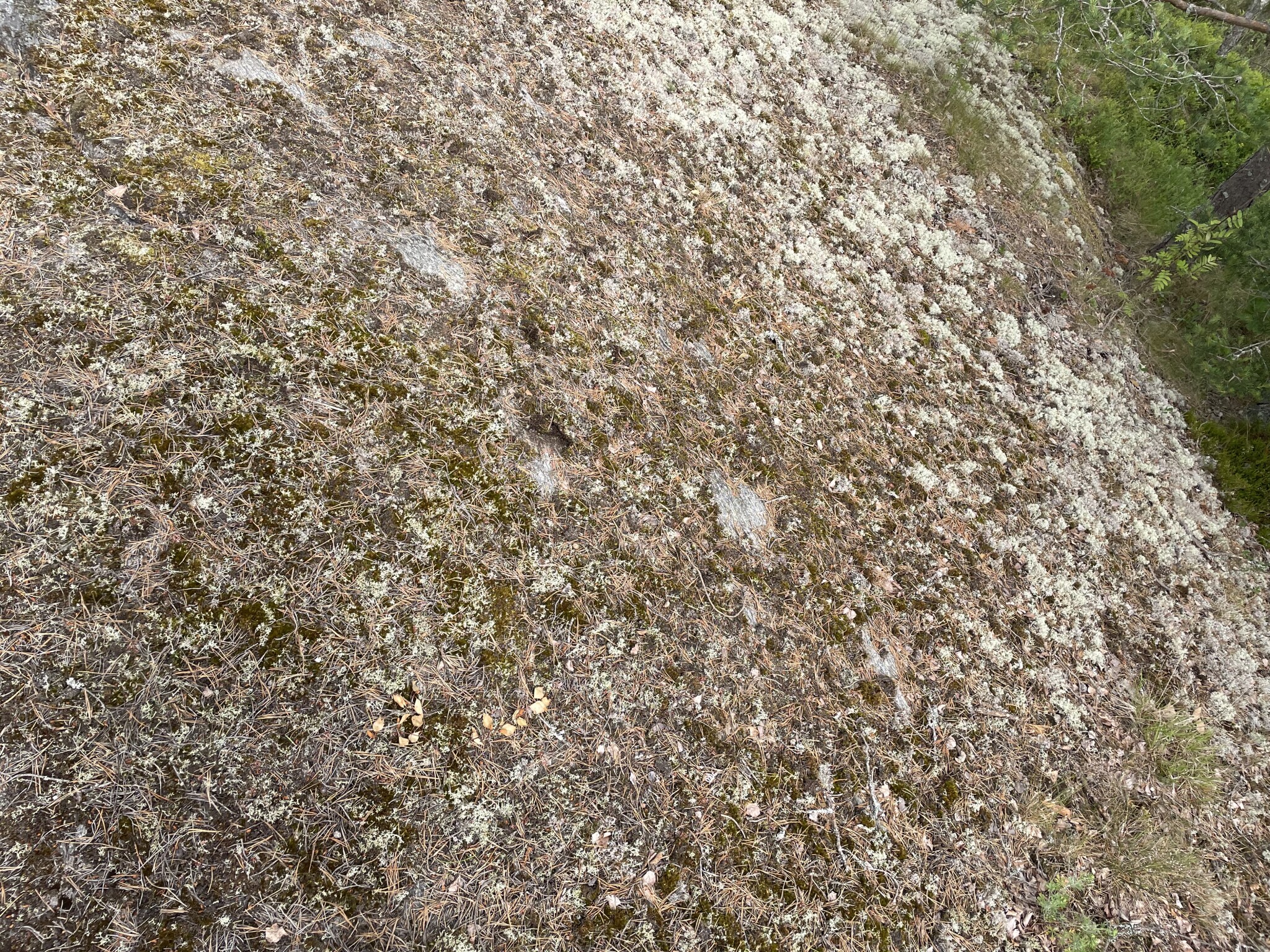
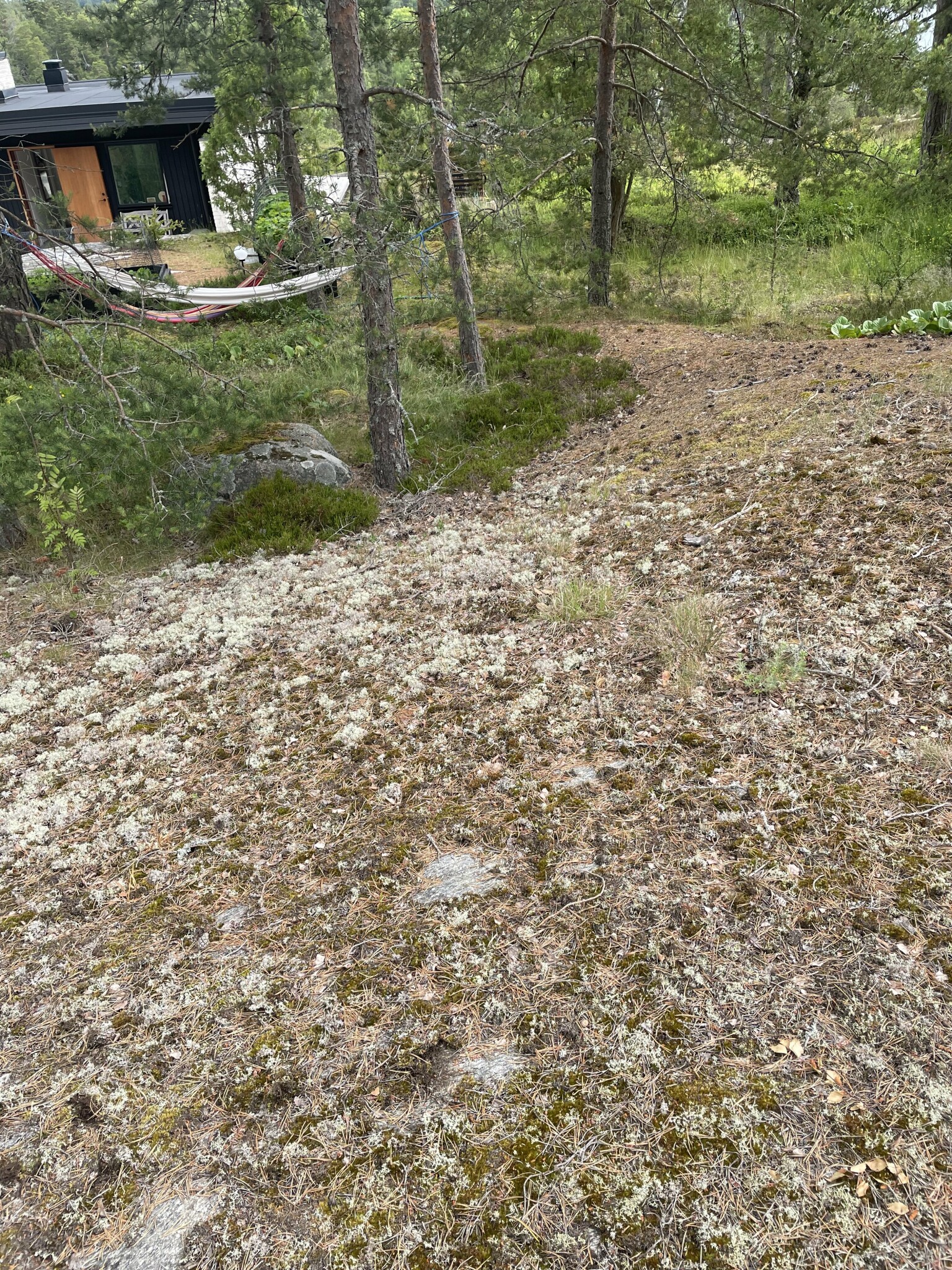
If you have rock outcroppings, it must be much easier to build like in the playground, with two poles in pressure-treated timber "forward" and one backward that is attached directly to the rock...

If a person is to ride in the cable car, more information is needed than just assuming the dimension. Extending the cable and anchoring it to the mountains behind the poles along the cable car's extension is a good way to keep the poles at a reasonable dimension and load them in compression downward instead of bending towards the cable car. There are significant tensile forces in the cable.
It is important to consider that the transmission in the direction of pull/down becomes enormous with a tight line. With some slack, the forces are significantly smaller. Some flexible element in the direction of pull is probably good to limit the forces. The line and foundation also flex, but something extra more controlled is probably good.
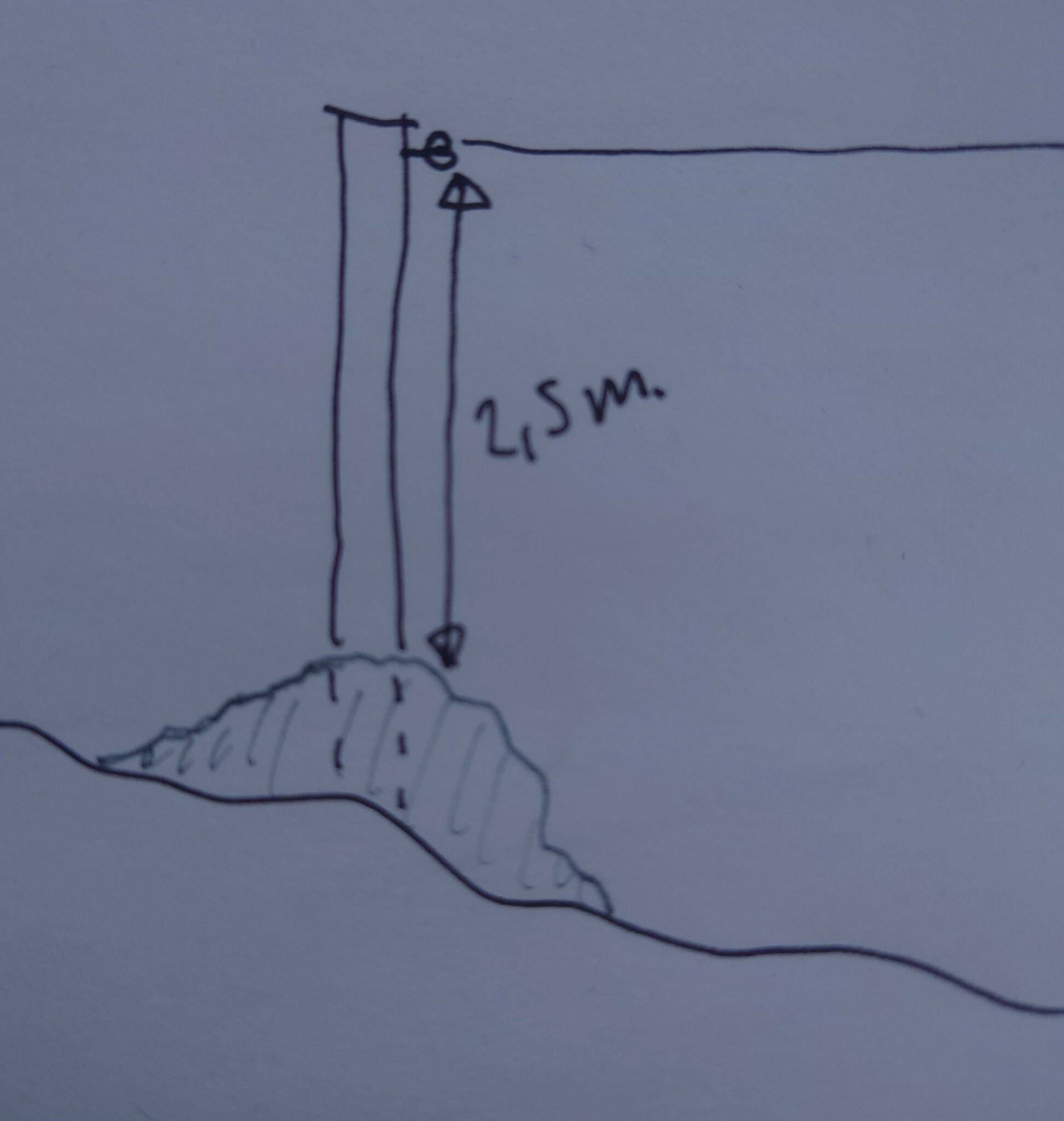
Yes, it is possible to attach the cable behind the post but there isn't much margin. Let's say I can attach it 1.5-2m behind.[image]
Is this a correct understanding?
In that case, my assessment is that you need a really juicy VKR....
If you can attach the cable behind the post, it will drastically reduce the requirements...
A tip might be to look at how the zip lines on playgrounds are constructed and copy it directly....
I think I will be able to go with a less tight wire that hangs more between the poles.B Bjober said:Important to remember that the gearing in the pulling direction/down becomes enormous with a tight line. With a little sag, the forces become significantly less. Some springy element in the pulling direction is probably good to limit the forces. The line and foundation also have some give, but something extra more controlled is probably good.
I borrow your nice illustration, Dan.
If I were to calculate this with highly amateurish calculations, I would assume 5000kg in the cable's pulling direction.
Pole's height 2500mm/Pole's width (square tube) 150mm=16.6 times gearing.
That is, 5000kg x 16.6 times=83333kg will want to tear apart the lower left side of the pole.
Thus bending the pole.
With 150mm side x 6mm material thickness, it becomes 900mm2 of material that has to take 83.3 tons.
83333/900=92.6Kg per mm2. Not even high-strength steel can hold that.
Those who can really calculate this would of course take into account the material in the entire pole, but for me, this simplified method has worked very well as a rough guide to whether it will work when I construct for myself.
What we also see is that if we widen the pole, as suggested with a point a meter to the left in the image, the gearing and forces decrease dramatically.
Smart constructions beat heavy iron every time!
D Derbyboy said:Planning to cast two foundations on rock for a zip line. The distance between the foundations, i.e., the length of the zip line will be about 30m.
I was thinking of inserting two VKR pipes into the foundations.
What do you think about the size of the foundations needed?
Thickness of the VKR pipes?
I am thinking that the pipes should extend about 2.5m from the foundations, then I can weld attachments for the cable. The plan is to just reinforce and anchor the foundations in the rock, no cross braces or the like.
The original poster also needs to consider the construction of the weld/installation at the top...B Bjober said:I'm borrowing your nice illustration Dan.
If I were to calculate this with very amateurish calculations, I would assume 5000kg in the direction of the line's pull.
Pole height 2500mm/Pole width (square tubing) 150mm=16.6 times leverage.
So 5000kg x 16.6 = 83333kg will want to tear apart the lower left side of the pole.
Thus bending the pole.
With a 150mm side x 6mm wall thickness, it becomes 900mm2 of material that will take 83.3 tons.
83333/900=92.6 Kg per mm2. Not even high-strength steel can hold that.
Those who really calculate such things obviously consider the material of the entire pole, but for me, this simplified method has worked very well as a rough indication if it will work when creating something myself.
What we also see is that if we widen the pole, as suggested at a point somewhere meters to the left in the image, the leverage and forces decrease dramatically.
Smart constructions beat thick iron every time!
Those 5 tons will stress the weld.
5 tons include a safety margin?
You need cross-braces unless you go up to comic dimensions. Like a proper I-beam. The force from the line should press down the pole, not bend it.D Derbyboy said:
Were you thinking of a zip line with a harness? In that case, maybe you can skimp a bit on the thickness of the sandbed over the stretch. Looks like a rock outcrop.
5 tons was an assumed figure without calculation.S skaraborgsfakir said:
But if we try... with a 0.3-meter sag on a 30-meter rope, we get a 100-fold leverage. With 50 kg hanging on the rope, we get 5000 kg in the pull direction. So no, there's no margin.
(Sitting and pondering whether to calculate on half the rope's length... but it doesn't make much difference... the forces quickly become large anyway.)
Sandbed? They can ride over the rock, sounds great I think.J Jaggatagga said:You need a brace unless you go up to comical dimensions. Like a solid I-beam. The force from the line should push down the pole, not bend it.
Were you thinking about a zip line with a harness? In that case, you might be able to save a bit on the thickness of the sandbed over the stretch. It looks like bedrock to me.
