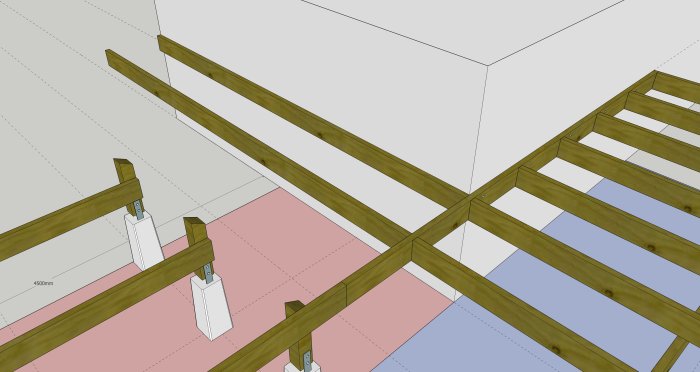
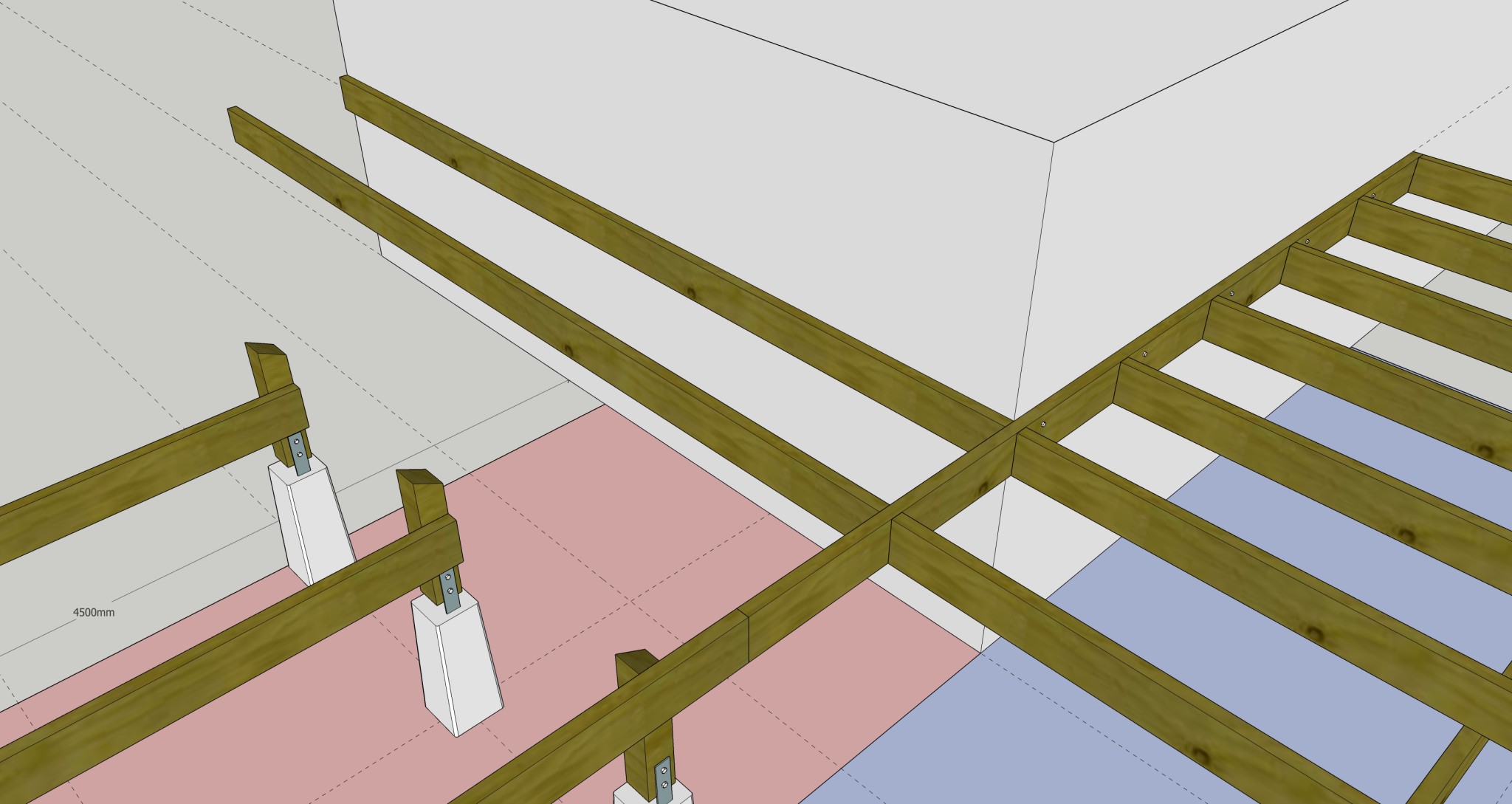
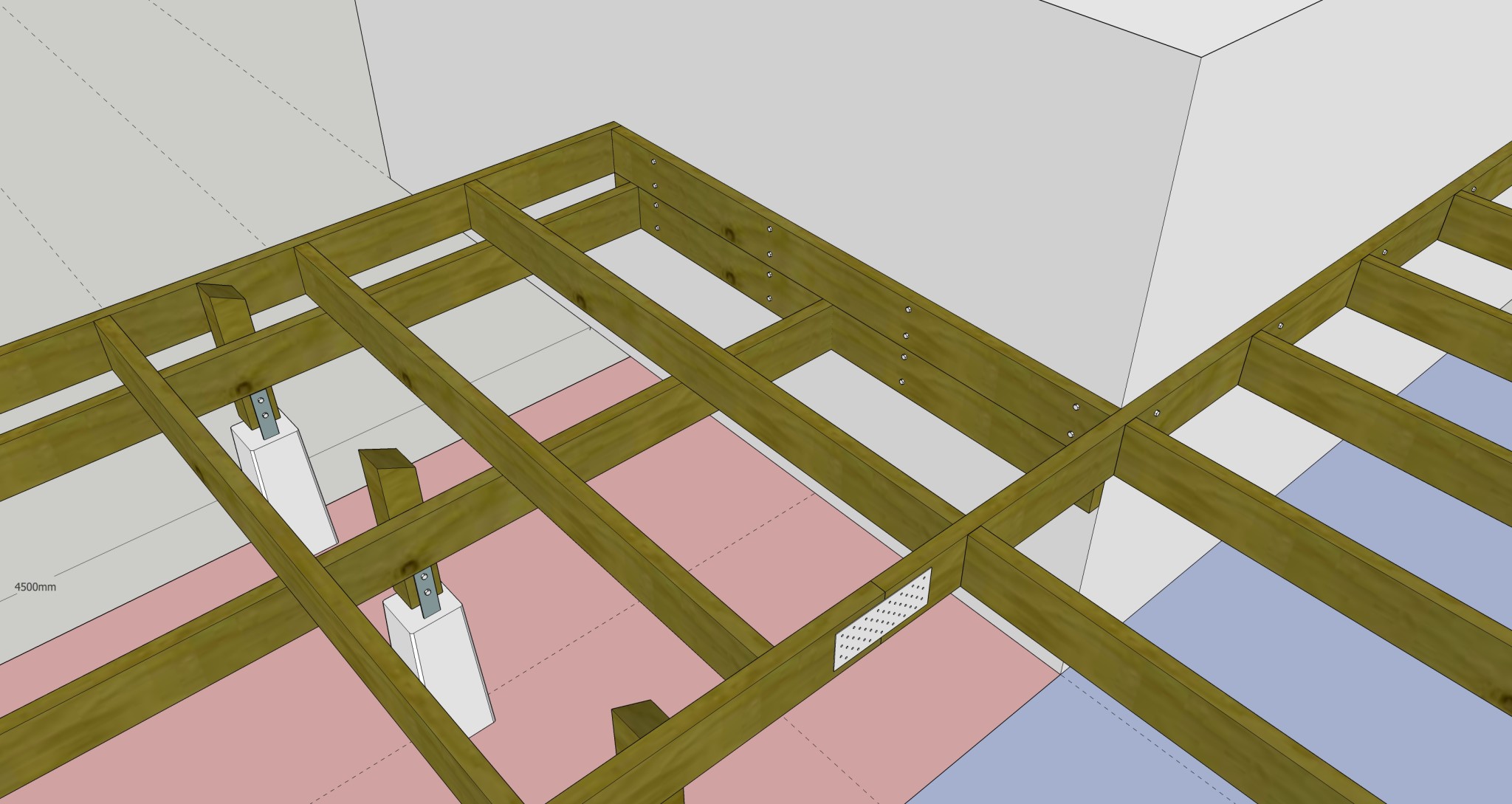
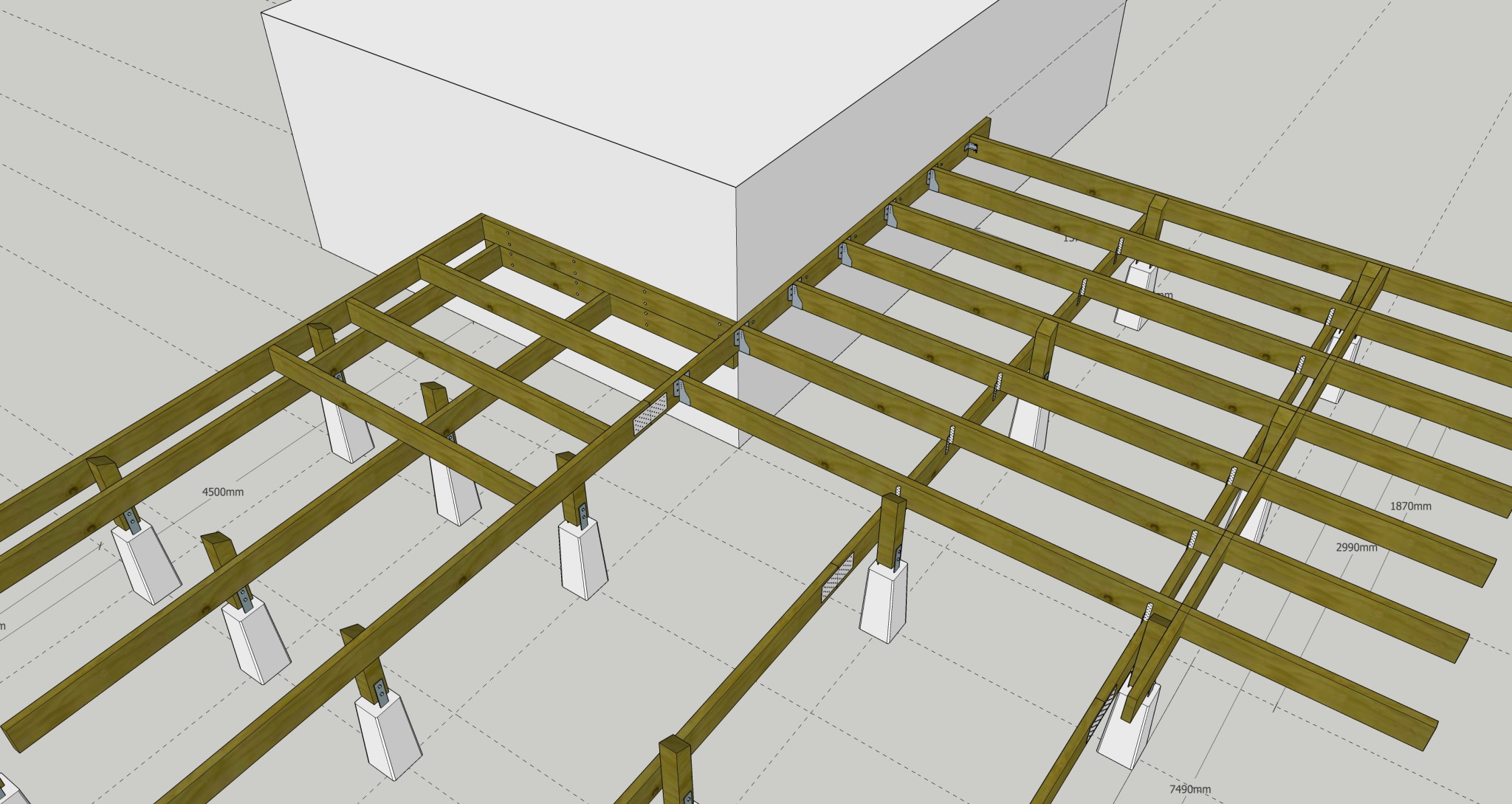
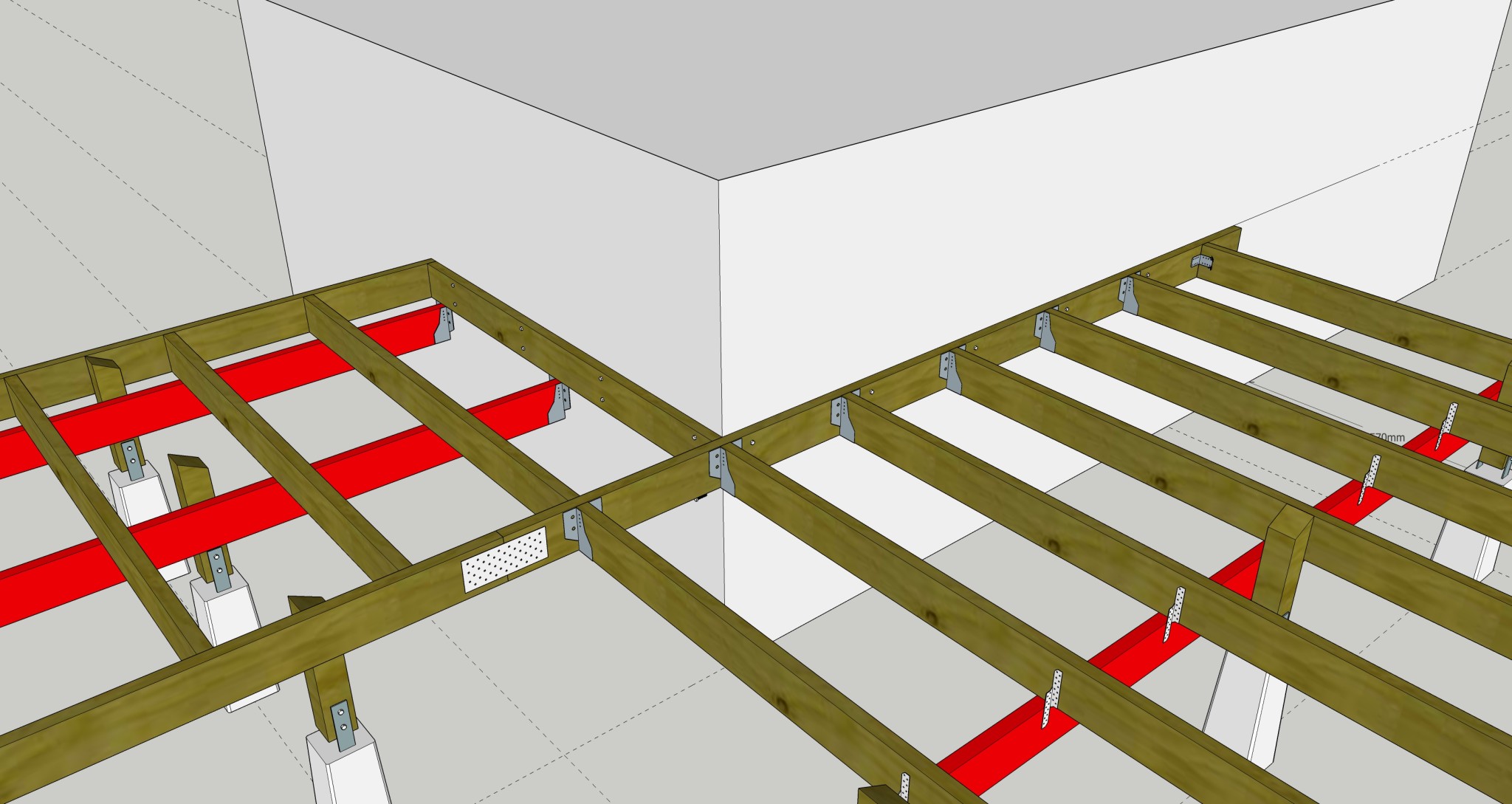
Hello, I am now going to extend my deck, which will be L-shaped.
I have now drawn up the deck but have gotten stuck with the support beam.
Both support beams should be attached to the wall.
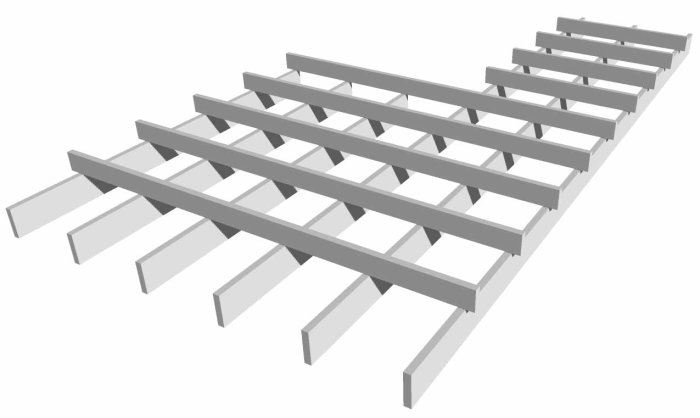
I want the decking to run in the same direction on both sections.
How do I solve the support beam to achieve this?
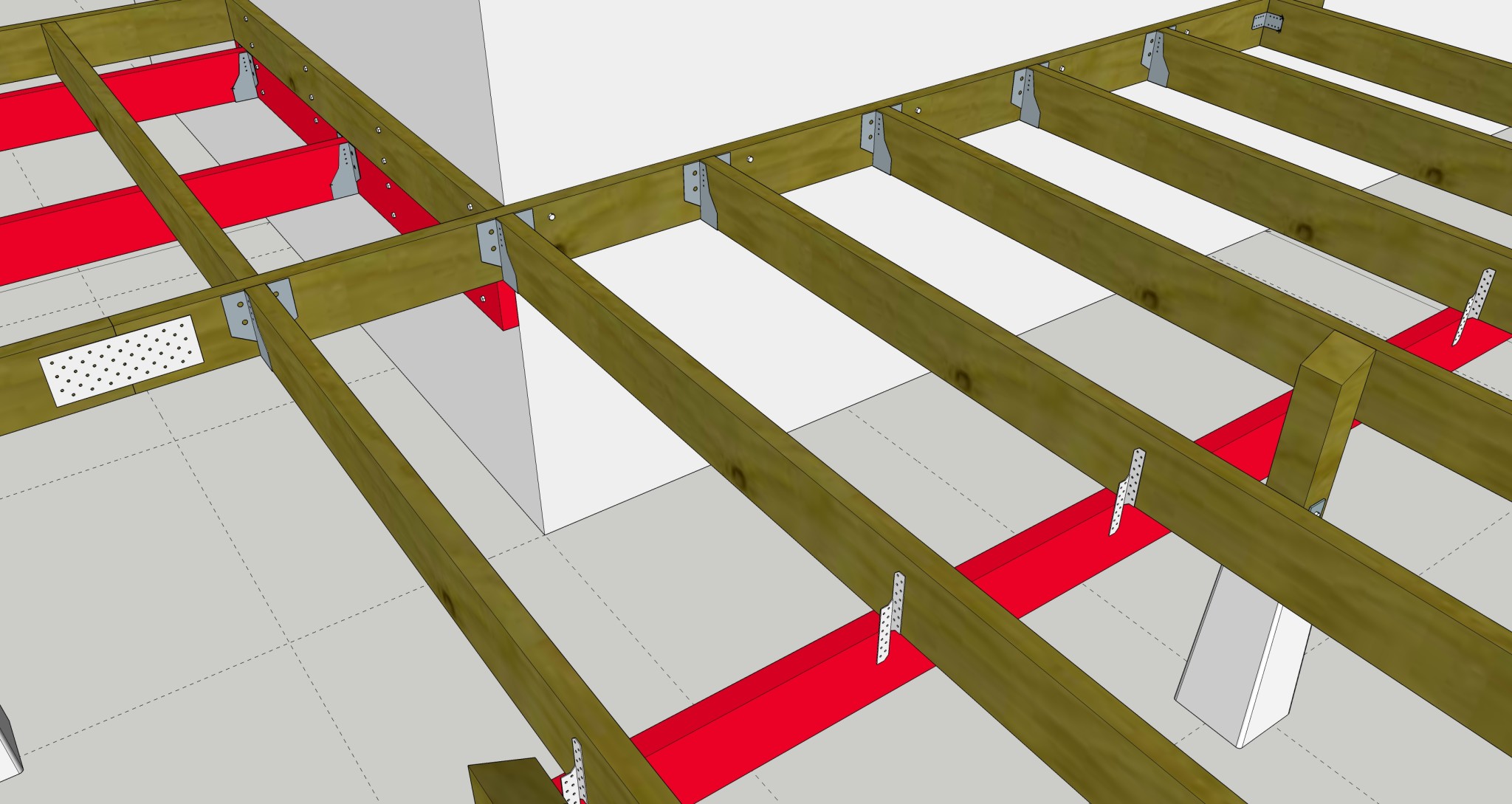
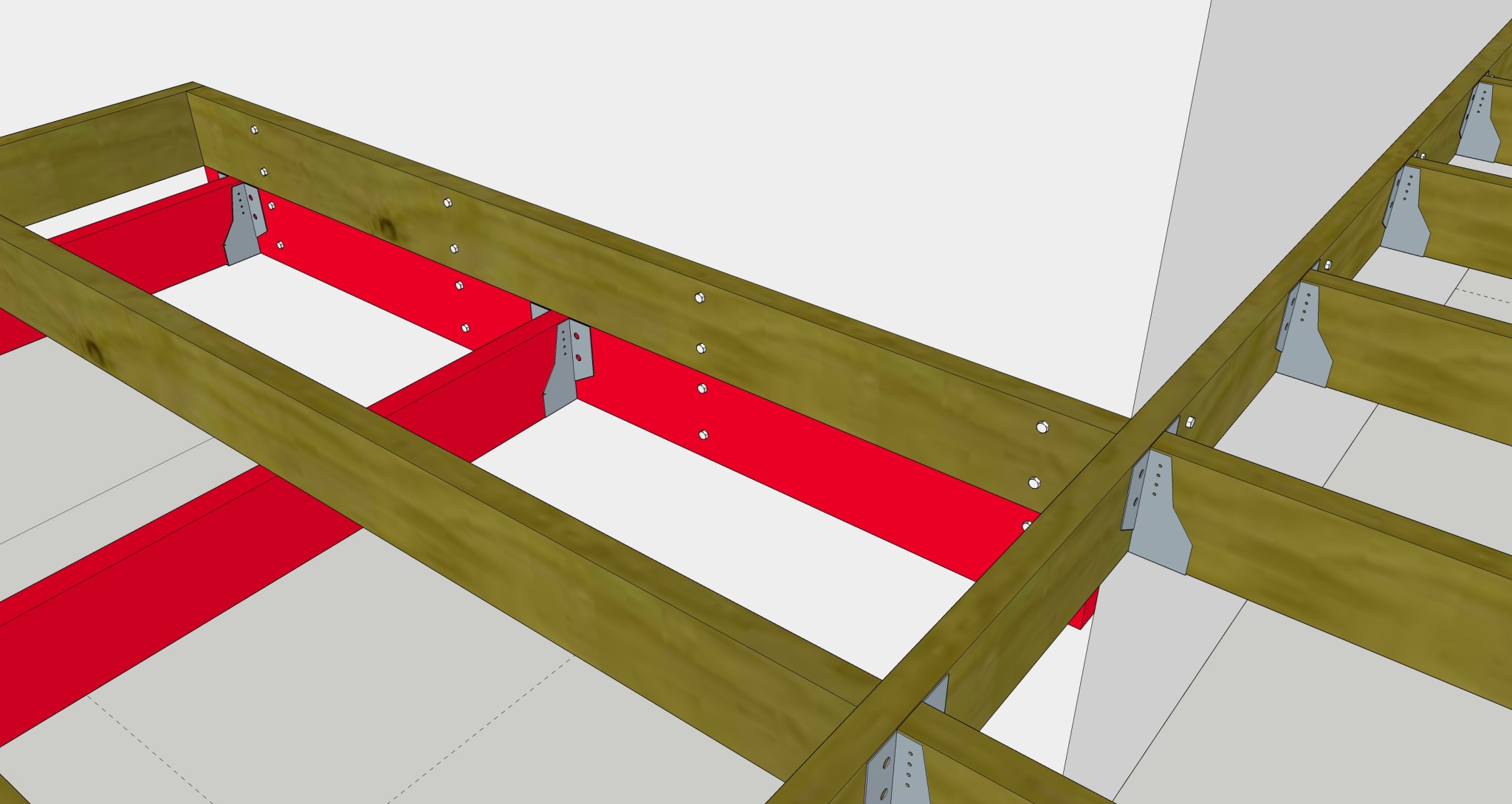
If you have an older house with a solid plank wall, you can attach joist hangers directly to the facade (with sufficiently long screws), otherwise not.
It is often not necessary to attach a support beam to the facade. It can stand on pillars, and intersecting secondary support beams can be attached with joist hangers to the facade paneling. However, there are situations where it is necessary, and mounting with spacers is unsuitable due to the wall's construction. I agree that in such cases, it might be appropriate to protect the wall connection with flashing. Much also depends on the quality and surface treatment of the facade paneling.
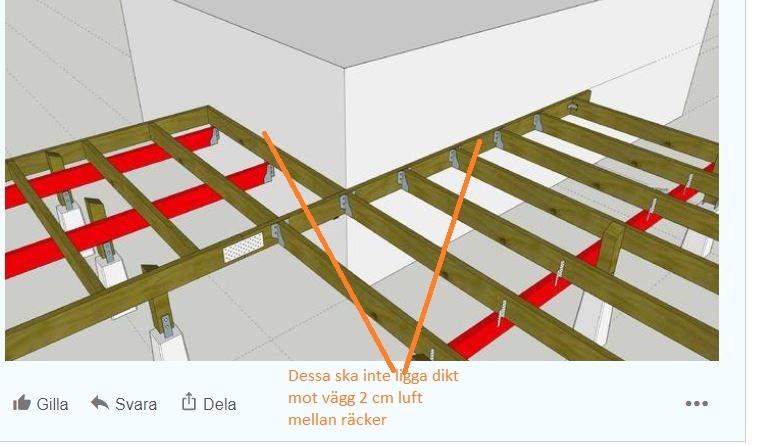
Regarding the OP's latest image, I repeat what I said earlier: Support beams can only be attached with joist hangers to the wall if the wall can handle those attachments. A plank wall can, but not all framed walls.
Regardless of what the support beam rests against, there will be dirt and moisture in between. A deck should not be attached to the house; it should live its own life and not pull on the house when they move. Sometimes it does not work out well; it depends on the conditions. Then you need to create a gap. If there is something inside the panel to anchor with lag bolts, then place some large galvanized washers as spacers or use joist hangers.
I agree that extensions generally should not be attached to the house; there should always be an expansion joint. Extensions (including decks) have a different foundation that can cause unwanted tensile forces. Therefore, it is best that the deck is not fastened to the house.
Vi vill skicka notiser för ämnen du bevakar och händelser som berör dig.