I would like to remove a wall between our kitchen and dining room and wanted to check if those of you who are knowledgeable can deduce from the drawings whether this wall is load-bearing. I find it hard to believe it is, but I don't have much knowledge in the area. My guess is it consists of slag stone. When I drill into it, it is very porous and a black powder comes out from the core of the wall.
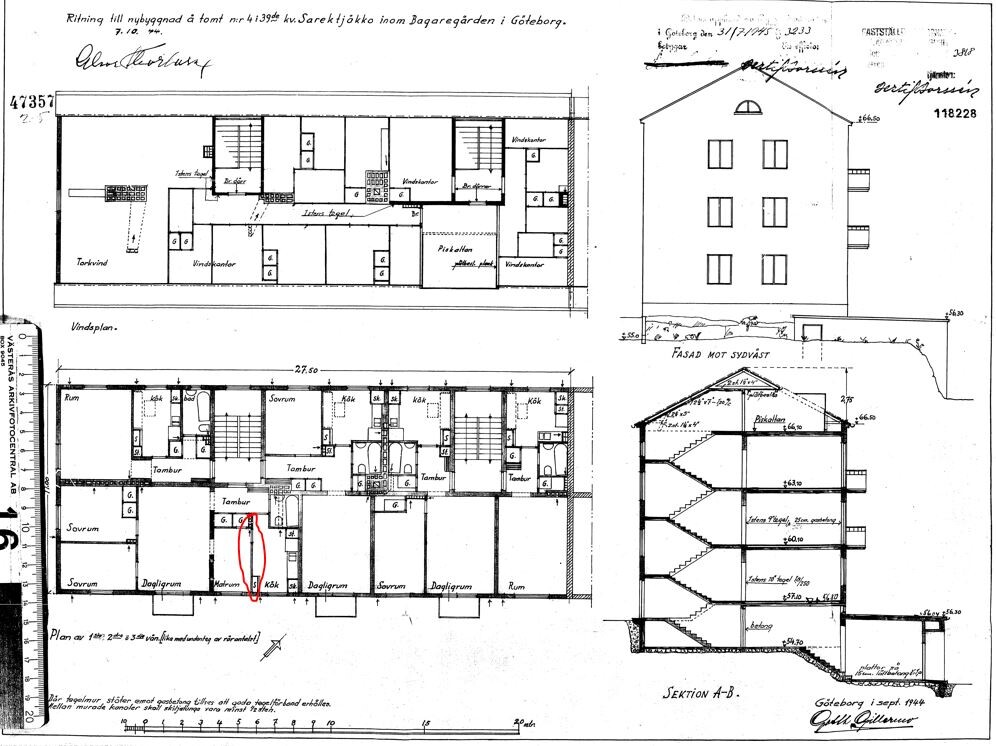
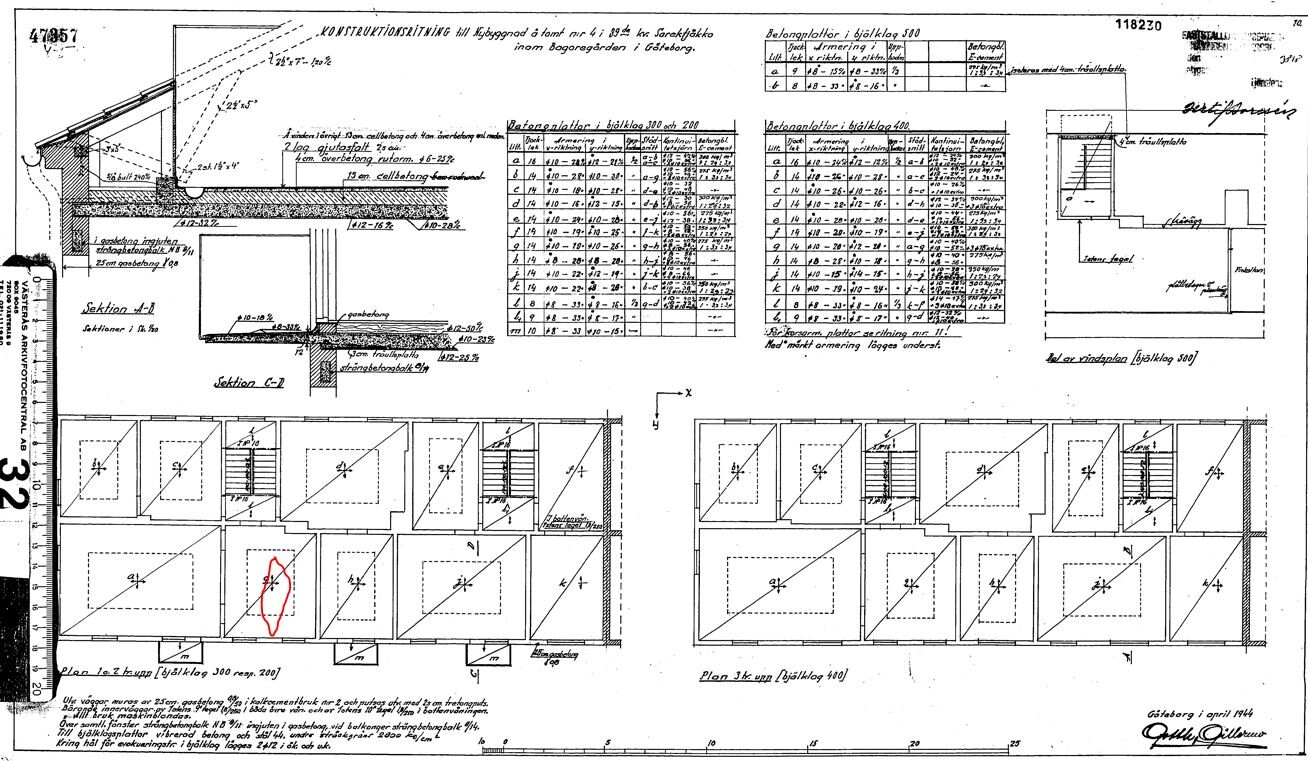
The first image shows the floor plan with the wall I want to remove marked. The second image, I guess, shows the load-bearing structure, and that mentioned wall is not visible there, but I have marked where it is.
I would like to take down a wall between our kitchen and dining room and wanted to check if you experts could discern from the drawings whether this wall is load-bearing. I find it hard to believe that it is, but I don't have much knowledge in the area. It seems to consist of slag stone is my guess. When I drill into it, it is very porous and a black powder comes out from the core of the wall.
The first image shows the floor plan with the wall I want to take down marked. The second image, I guess, shows the load-bearing structure and the mentioned wall is not visible, but I have marked where it is.
Can you discern it?
Most likely it is the outer walls and the heart wall in the middle that are load-bearing I would say based on those drawings.
Thanks for the response! I just noticed that the drawing states it should be "1stens 9' brick" in load-bearing interior walls, which indicates that walls without brick are not load-bearing.
They appear to be two-way concrete slabs, that is, those that are supported on all four sides and thus have reinforcement in both directions. So it's a bit difficult to talk about a "shear wall" in this case, as even the transversal walls included in the structural drawing are load-bearing, plus they brace the longitudinal facade and central walls.
However, the wall you want to remove is not load-bearing - it stands on top of one of these slabs. Sure, there might have been a bit of creep/sagging in the concrete floors that has practically shifted some of their weight onto such a wall, but the house won't collapse if you remove it
Oh, thank you for taking a look at the drawings and for the detailed response! I know so little about house construction that I'll need to google some of the terms, but it feels hopeful to be able to get rid of the wall 😊
Oh, thank you for taking a look at the drawings and thanks for the detailed response! I know so little about house construction that I will need to google some of the terms, but it feels hopeful to be able to remove the wall 😊
No problem, it didn't take many seconds - the constructor's drawing is crystal clear.
If you want to avoid googling, let me know which terms require an explanation, it's easy to get stuck on technical terms even though I try to avoid it.
Note that the wall between your "dagligrum" and "matrum" is load-bearing, and the joist slab resting on (among other things) that wall is unusually large. If you are tempted (I was immediately 😇) to widen the door between the living room and dining area to a fancy glass double door à la patrician apartment, so the view can sweep along all three windows, it is absolutely possible - but you must hire a constructor to calculate the support (easiest with two L-profiles that you mill in and then remove underneath).
You must, of course, also get approval from your brf, but don't you need that even to remove the non-load-bearing wall?
Aha, does the second drawing show the concrete slabs? And I guess cross bracing is to stabilize laterally?
There's actually no door there; the floor plan was slightly changed before construction started, I realized, but there is an opening that I guess might be prepared with beams to make a hole. But I haven't checked that. If we are going to open it up, we'll probably do it further out towards the outer wall to save a longer wall in the living room, which makes furnishing easier!
A tip is to check with your board before you start tearing down and making changes. They probably have a lot of information about the house's structure and there could be other things affected as well.
Aha, does the second drawing show the concrete slabs? And cross-bracing, I guess, means they stabilize laterally?
1. The drawing shows the load-bearing elements of the building on that particular floor - both walls and floors.
2. Exactly - brick walls can bear a lot of load directly downwards, but they are rather weak laterally, so cross walls are needed at regular intervals.
AAndreaseas said:
There's actually no door there because the floor plan was changed a bit before the construction started, I realized, but there's an opening that I guess could be prepared with beams for cutting through. But I haven't checked that. If we do open up, we'll probably do it more towards the outer wall to preserve a longer wall in the living room which will ease the furnishing!
Yes, it mostly looks like a later sealed original door opening.
If you're going to break through right next to the outer wall, then a structural engineer will particularly need to look at this since you're breaking the continuity of the brick slab (it won't be "a hole in the wall" but an "indent from the side"). The lateral bracing of the outer wall will disappear on that stretch, and the support right in the corner of the large concrete slab. The load transfer over the opening must occur a bit into the outer wall - which is 250 mm lightweight concrete and moves slightly differently than the bricks.
Everything can be fixed, but it would be much simpler (and better constructive logic) to leave a part of the cross wall by the façade, so the opening is only made in the bricks. Then you leave a piece of the wall by the façade, which still interacts with the rest of the stiffening wall slab, and forms a simpler support for the transfer beam (beams, if it’s two L-steels).
A tip is to check with your board before you start tearing down and tinkering. They probably have a lot of information about the house's construction, and there may be other things that are affected as well.
A tip is to check with your board before you start tearing things down and getting to work. They probably have a lot of info about the building's construction, and there might be other things that are affected as well.
I will do that, but I'm on the board myself and unfortunately, we don't have much knowledge about this!
Yes, it mostly looks like a later filled original door opening.
It really does look like that and it could be so, but on floor plans from a year later (I think before construction started) the door opening is gone and the opening seems to be bricked up rather than filled in a simpler way.
Everything can be fixed, but it would be significantly easier (and better constructive logic) to leave a part of the transverse wall by the facade, so the opening is only made in the brick. Then you've left a piece of the wall by the facade that still collaborates with the rest of the stiffening wall panel and provides a simpler support for the transfer beam (beams, if it's two L-steel).
Sounds very reasonable! Approximately how much wall do you think needs to be left before the outer wall? If we are going to do it, of course, a structural engineer will need to look at it, but it might be good to have an idea of approximately how we should have it.
Sounds very reasonable! About how much wall do you think should be left before the outer wall? If we decide to do it, a structural engineer will naturally have to look at it, but it could be good to have an idea of roughly how we should do it.
There are some complicating factors here - for example, the corner of the extra-large concrete slab (also with an overhanging balcony slab next to it), the fact that the outer wall is not brick and I can't see how they are built together, that there are large openings nearby (one of which is a balcony door down to the floor), that the house was built during wartime when times were hard and building materials were scarce, and shortcuts were often taken on constructions (before the war, the outer walls would certainly have been built in brick), and so on.
There might also be some special reinforcement, reinforcements and anchors in this complex corner, which might be shown in some detailed drawing or description, that I/you haven't seen.
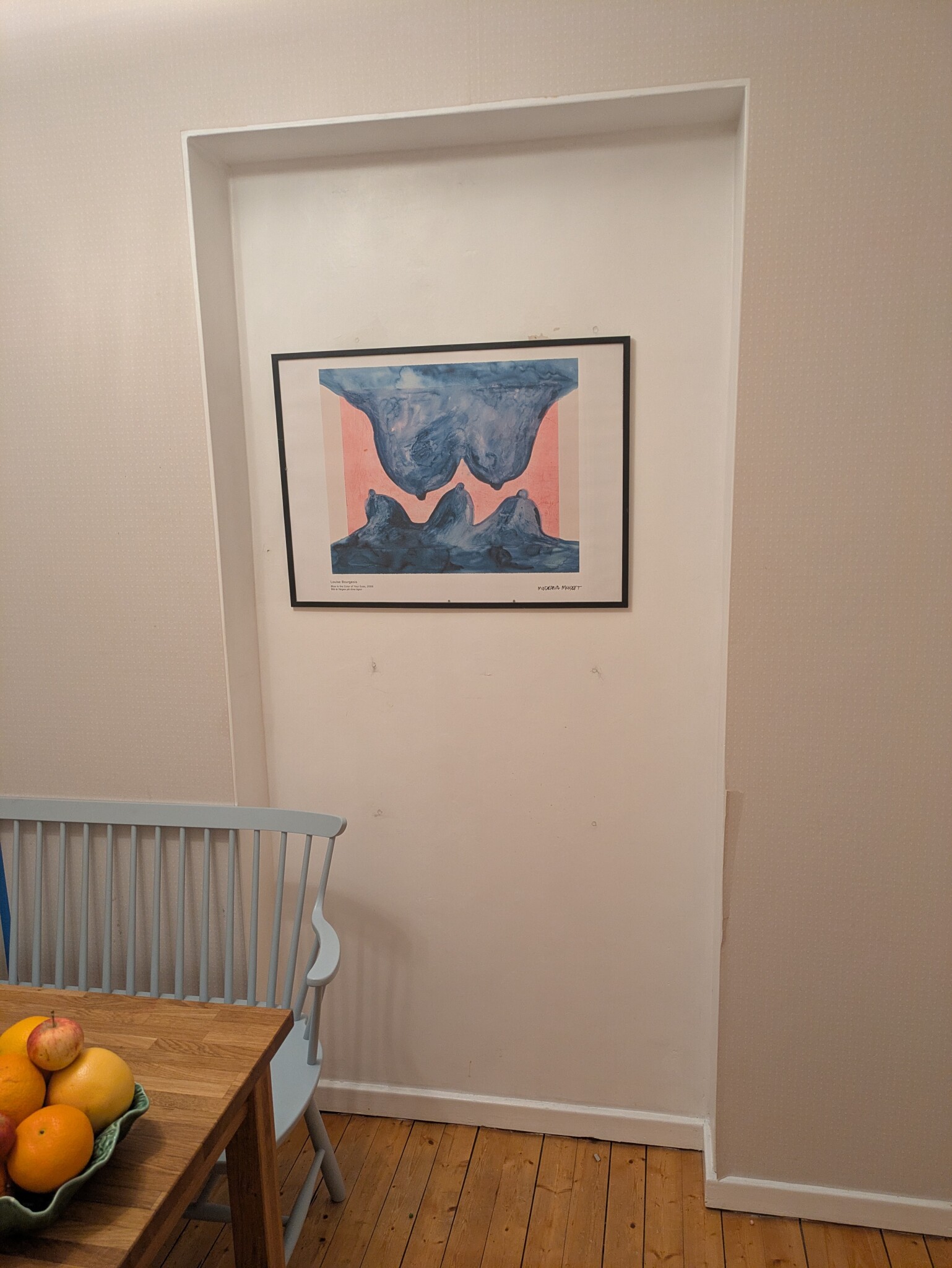
On the other hand, I actually see on the k-drawing (the structural engineer's drawing), that one of the two door openings in this cross wall is located very close to the facade! The question is then when it was moved further into the room according to the architect's drawing - was it before the house was built, so the accompanying lintel followed. If something happened afterwards, you might be in luck and the original lintel is hidden in the wall - and then you just need to scrape out the filling . Where along this wall is the wall niche/blocked opening, as shown in your photo?
With all this said, you understand I am reluctant to guess outright. In a more "normal" case without various enigmas and with the cross wall fully bonded with an outer wall made of single-brick stone, it would reasonably be at least the thickness of the brick wall (one brick, 250 mm), so you would at least get the entire beam support inside the cross wall plus a bit more. It also depends on the intended width of the opening.
Instead, I would take advantage of the line of sight through the next door (to the bedroom), and that position also seems to match the structural engineer's shown location for the "lost"/moved opening (look for the two cross lines in the load-bearing cross wall on his drawing). Then you get a "enfilade-feeling" through all the rooms, plus some furnishable corners in each.
Summary: if it's about a new lintel in the supporting cross wall, a structural engineer must check on the spot, calculate, and draw everything that day, and you will need to submit a building notification where that investigation is included.
Opening the sealed opening, however, you can do yourself
Ahhh...
Now I have blown up the A-drawing and I can make out a couple of lines (?) and some mysterious rings (?) even on that, in the location of the constructor's specified door opening! But the image is much too low-resolution for any reliable interpretation. Knock on the walls, or find a definitely valid drawing
I can understand the architect's intention to side-shift the door. In HIS position, you have a view from the dining room, through the living room, and all the way out to - and through - the gable window in one of the bedrooms. A small nice consideration, but he could have placed the other bedroom window in line. But he prioritized an old-fashioned symmetrical gable facade over the room experience. Sad, at that time many beautiful modernist houses with corner windows had already been designed.
In reality, he has wasted the potential of this fine gable position in the southeast/southwest. It "disappears" now in two smaller, often closed rooms. There you would have wanted to have the open social rooms: kitchen towards the chimney (with all installations), a stylish dining room with corner windows, and then in line through the living room with the balcony. That's what his more skillful colleague did around the same time: :
(excuse the nerdiness, but I think you might find this kind of reasoning about room, light, and sight lines useful when planning changes to your lovely apartment)
Vi vill skicka notiser för ämnen du bevakar och händelser som berör dig.



Discoman said: