Hello!
I live in a Sävsjö modular house from 1990.
And I'm renovating the laundry room.
And when I tore down the drywall, I see what I believe is a load-bearing wall.
Maybe it's not?
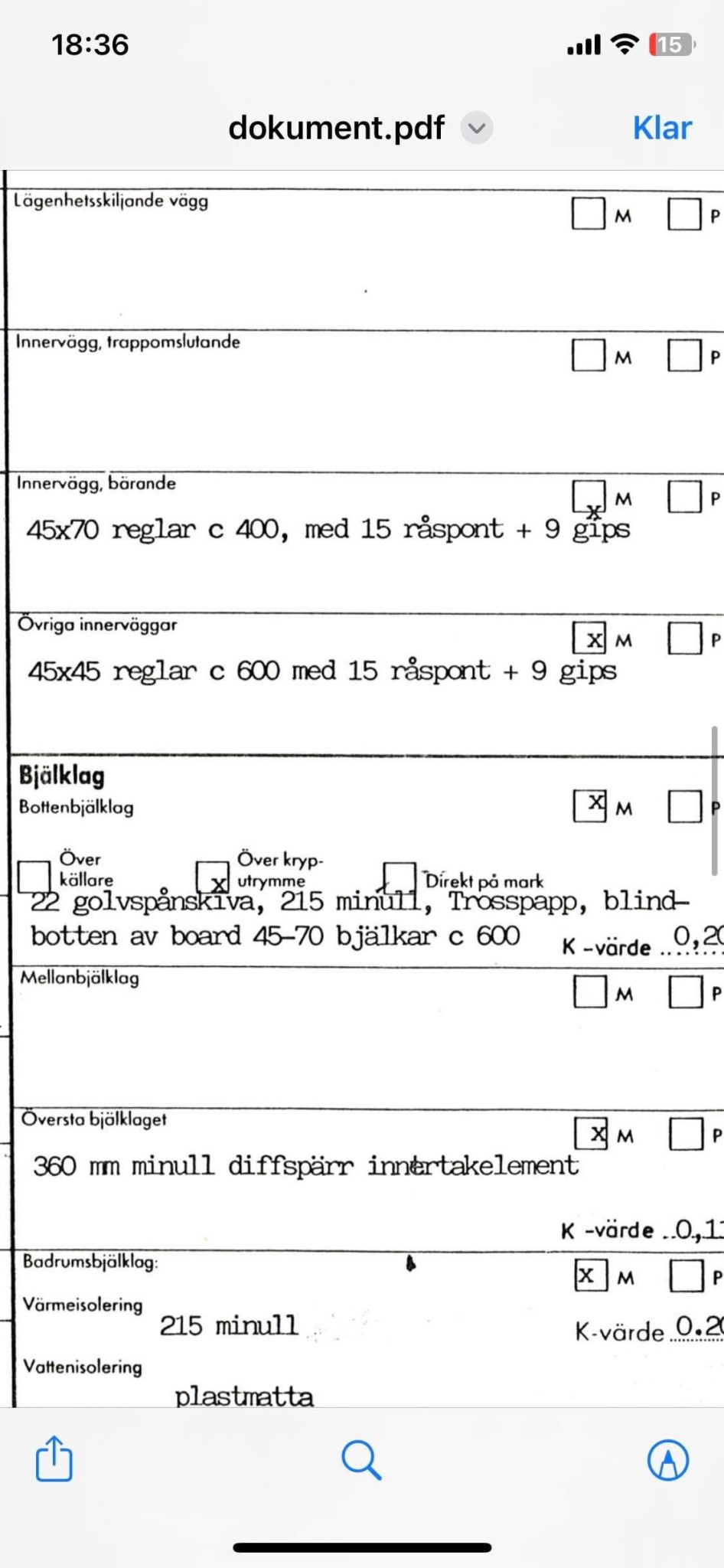
In the documents I have, it says that load-bearing walls should be 45x70 cc40 with rough paneling and drywall. So a 118mm thick wall..
And other interior walls are 45x45 studs with rough paneling and drywall. So 93mm thick.
This is the "heart wall," meaning the wall that runs through the middle of the house...
But I've measured a bit and all the walls are 93mm thick..
Is it a two storey house? It looks like a ground floor ceiling that houses the installations and stiffens the module during transport. However, the load-bearing structure of the second floor floor is above and is part of another module. They can prove it. The total thickness of the ceiling in such houses can be as much as 50-60 cm.
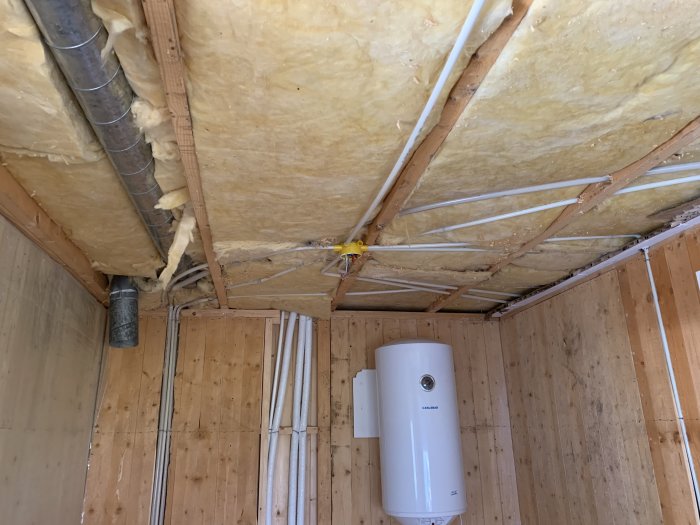
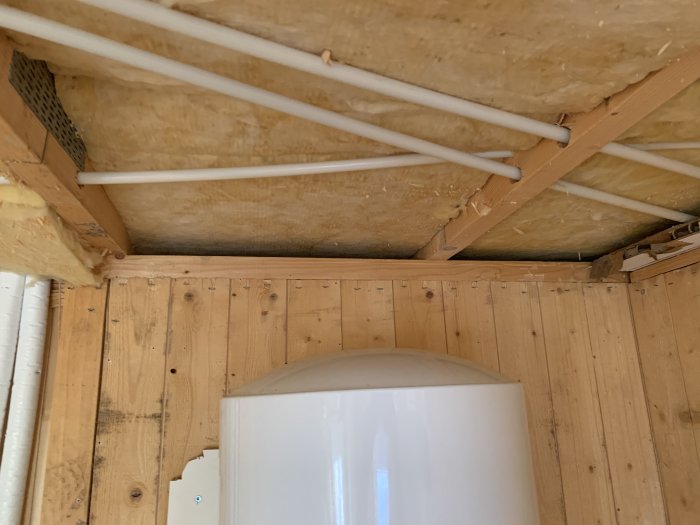
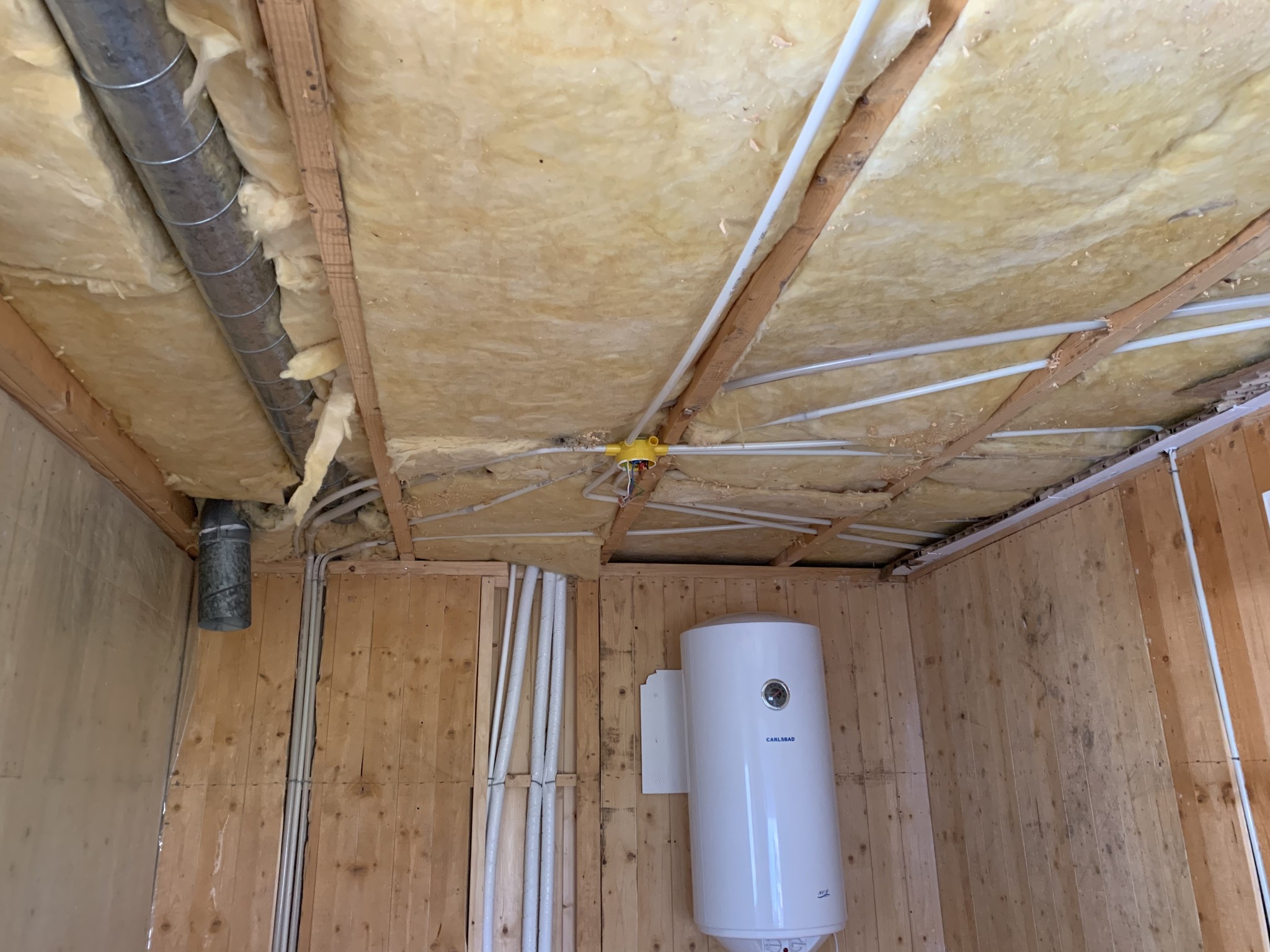
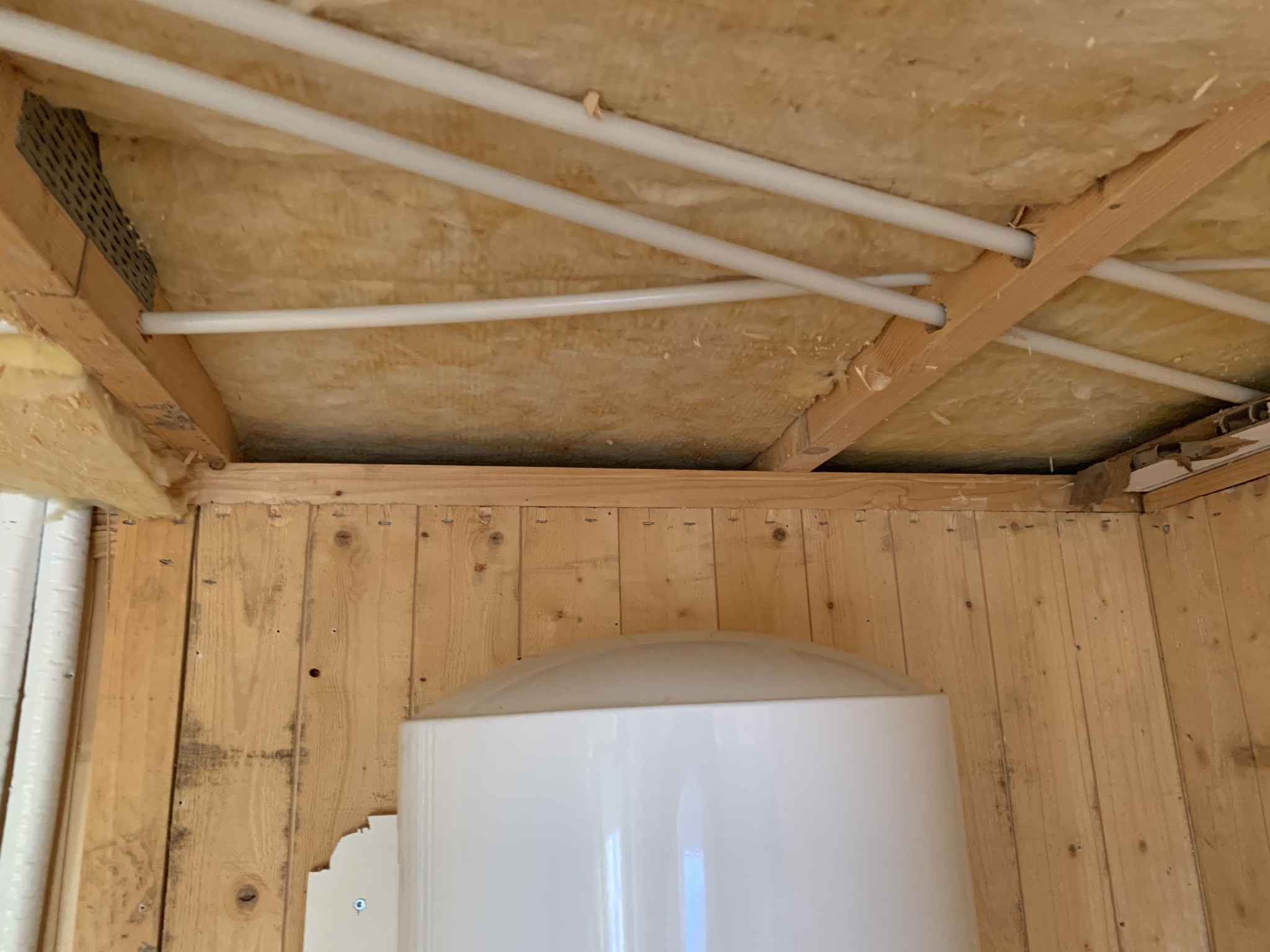
It's not possible to tell based on those pictures. Do you have a drawing? What are we looking at in the picture, the rafters? Is it an intermediate floor? The placement of the joint/gusset plate to the left in the second picture suggests that the wall is not load-bearing but that it is self-supporting rafters. If the wall had been load-bearing, you would reasonably have placed the joint directly above it?
It can't be determined based on those pictures. Do you have a drawing? What are we seeing in the picture, the trusses? Is it an intermediate floor? The placement of the joint/metal plate to the left in the second picture makes one suspect that the wall is not load-bearing but that the trusses are self-supporting. If the wall had been load-bearing, one would reasonably have placed the joint directly above it?
FFinndjävel said:
It can't be determined based on those pictures. Do you have a drawing? What are we seeing in the picture, the trusses? Is it an intermediate floor? The placement of the joint/metal plate to the left in the second picture makes one suspect that the wall is not load-bearing but that the trusses are self-supporting. If the wall had been load-bearing, one would reasonably have placed the joint directly above it?
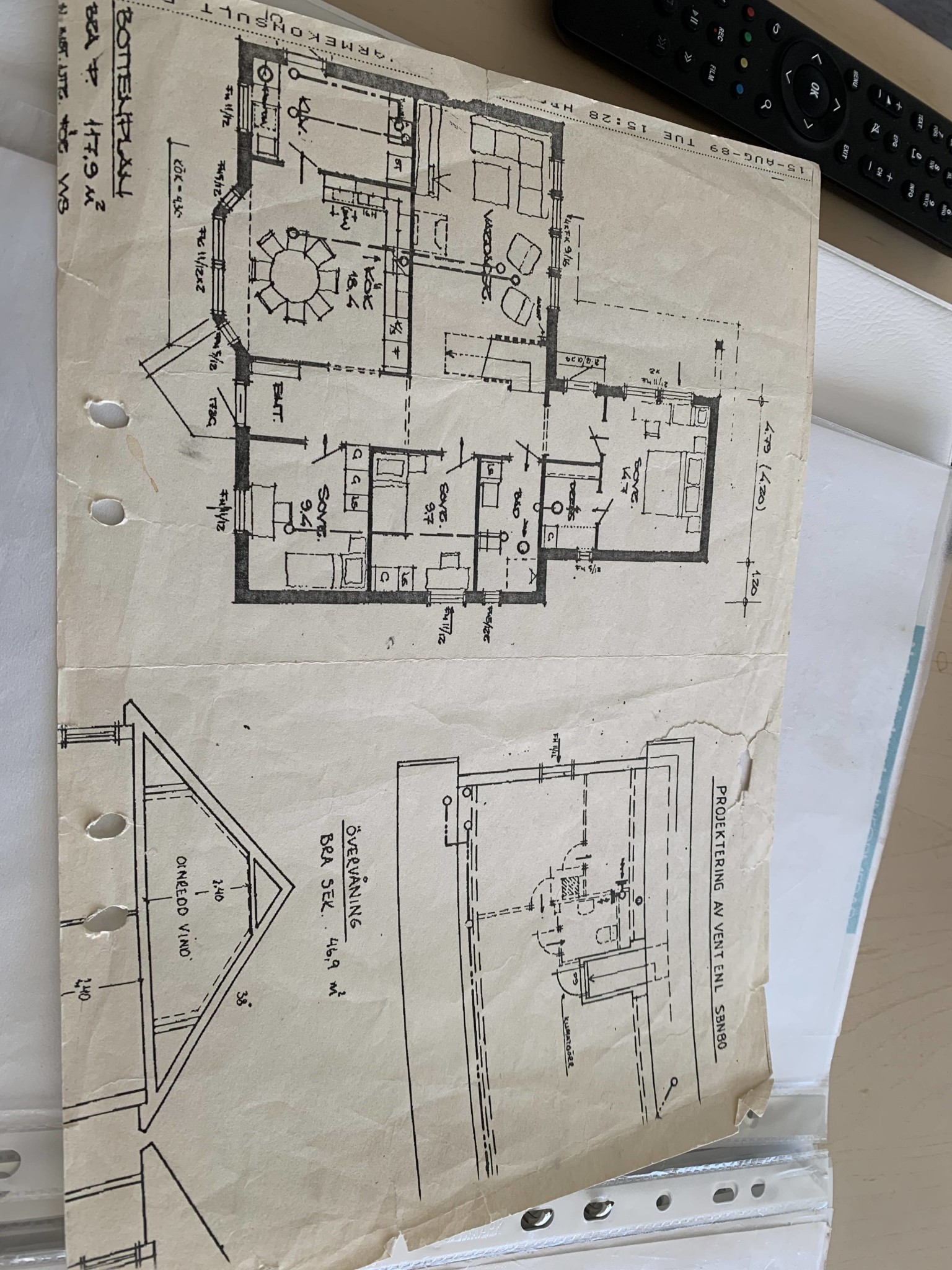
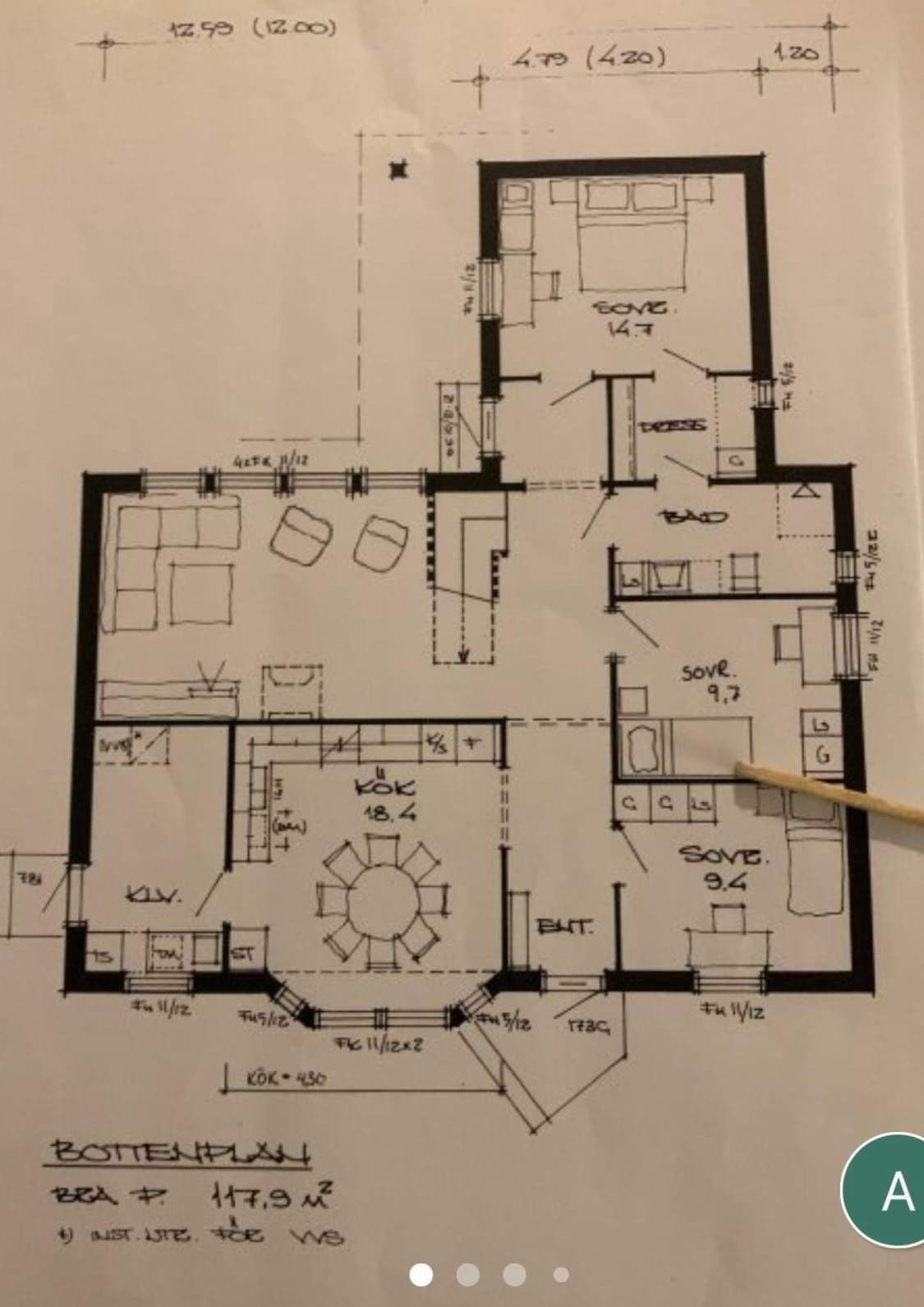
sorry for the poor information. This is the type of info I have in the house papers. The room is the one called KLV and the wall is the one towards the living room. There is an upper floor above. With a sloped roof. So 1.5 stories. I find it strange that it states the measurements of load-bearing inner walls and non-load-bearing ones. But I have no load-bearing ones that I can measure myself. Then it says in the building permit that the outer wall is load-bearing?
From what you see on the drawing, I wouldn't remove that wall without relieving it with a beam.
no, I haven't planned on doing that.
In the last picture where the matchstick is pointing, the previous owner put in a beam when they opened it up.
However, I have built the wall again. But the beam remains...
I'm just confused because it says the load-bearing walls are 45x70 and I can't find such a wall?
From what you see on the drawing, I wouldn't remove that wall without relieving it with a beam.
would you dare to remove the råspont without relieving it?
Just temporarily to open up and possibly insulate.
It's a laundry room so I think a little insulation might not be a bad idea.
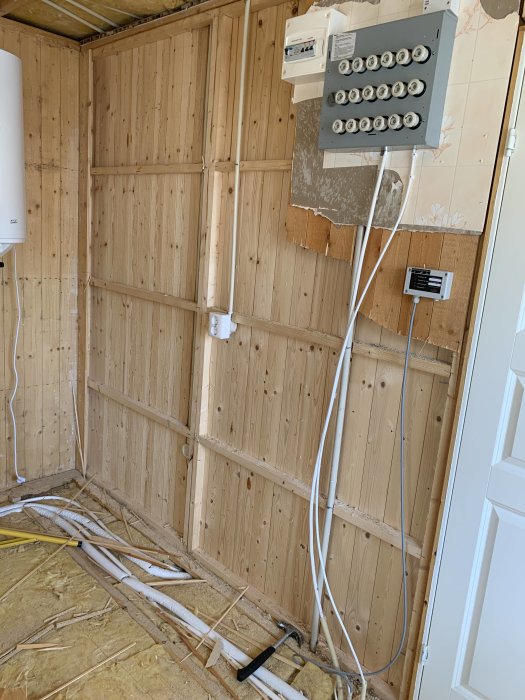
seems to be built in the same way as the other wall I put a picture of here.
The trusses you have are not self-supporting and need intermediate support near the center of the house. The previous owner has therefore done the right thing by reinforcing at an opening, and you should do the same.
To get it properly dimensioned, you need to hire a structural engineer, or at least an experienced carpenter. Also, remember that changes to load-bearing structures require a notification.
Truss roofs like yours are not self-supporting and require intermediate support near the middle of the house. The previous owner has therefore done the right thing by reinforcing at an opening, and you should do the same.
To get it properly dimensioned, you need to hire a structural engineer, or at least an experienced carpenter. Also, bear in mind that changes to the load-bearing structure require notification.
Yes, I am well aware of that
But I just find it odd that it says 45x70 on load-bearing interior walls.
But there are none like that.
I also asked the municipal building permit department.
If I open the wall and replace the sheathing with something like plywood.
I was told that it does not need to be reported.
Since the sheathing is there to have something to screw things into.
But now it seems there are no load-bearing walls with the dimensions specified in the papers...
What do you mean I should reinforce?
I'm not going to remove the wall.
Sorry, read carelessly!
Anyway, the wall has a load-bearing function, even if it has smaller dimensions than the drawing states. It's not the first and not the last time something like this happens.
I heard a while ago about a construction company that didn't install all the roof trusses according to the drawings because they didn't think that many were needed...
Sorry, read carelessly! Anyway, the wall has a load-bearing function, even if it has smaller dimensions than the drawing suggests. It's not the first and won't be the last time something like this happens. I heard a while ago about a construction company that didn't install all the roof trusses according to the drawings because they didn't think that many were needed…
mexitegel said:
Framework trusses like you have are not self-supporting but need intermediate support near the middle of the house. The previous owner has done the right thing by reinforcing at an opening, and you should do the same. To get it properly dimensioned, you need to hire a structural engineer, or at least an experienced carpenter. Also, keep in mind that changes to load-bearing structures are a notifiable action.
no worries!
feels like most walls are built from blocks that are 120 wide and then horizontal studs... and then these are nailed together through the sheathing... I will not tear down this wall. The idea is only to replace it with plywood because I need to open it up... but there is quite a big difference between 45x70 cc 40 and 45x45 cc 60... Which are horizontal even... They are 120 between the verticals.
Would you dare to remove the raw timber without support?
Only temporarily to open it up and possibly insulate.
It's a laundry room so I think a bit of insulation might not be too bad.
It seems to be built in the same way as the other wall I posted a picture of here.
Yes, it's fine to remove it temporarily. The wall is mainly needed to support the floor joists to the attic so that they don't become wobbly. You'll need to put up some temporary supports.
The fact that the wall is weaker than the drawing is probably because the house manufacturer deliberately skimped to increase profit. That's how they are.
Yes, it is possible to temporarily remove it. The wall is mainly needed to support the joists to the attic so that it doesn't become wobbly. You should put up some temporary props.
The fact that the wall is weaker than the drawing is likely because the house manufacturer deliberately skimped to increase profits. That's how they are.
yeah okay!
I'll have to avoid jumping around on the upper floor when I've removed the boards.
pretty insane really.. you'd hope they've done a calculation that the thickness is enough.
do you think it would have been useful to insulate that wall?
The other side is the living room.
And the heat pump will be positioned here..
We have heard the old one humming.




mexitegel said:
Truss roofs like yours are not self-supporting and require intermediate support near the middle of the house. The previous owner has therefore done the right thing by reinforcing at an opening, and you should do the same.