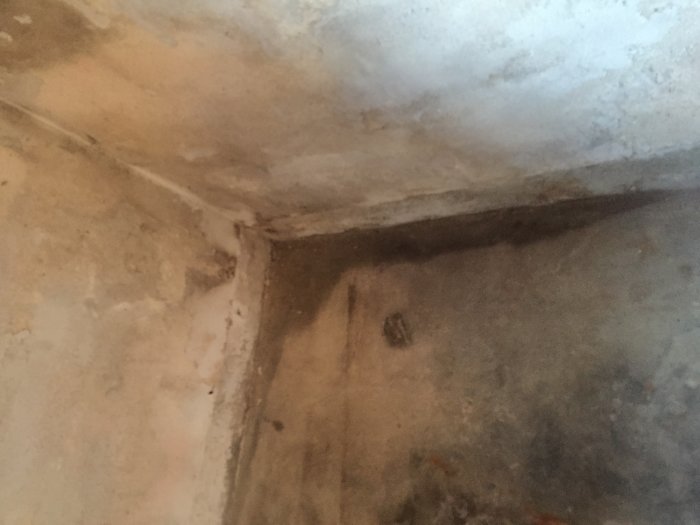
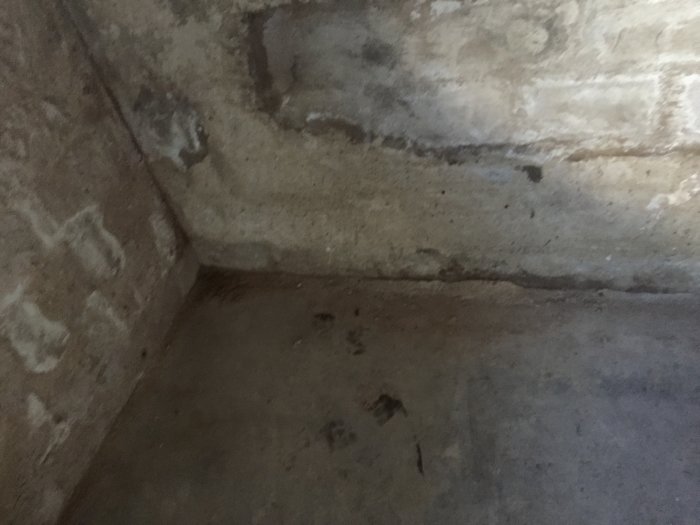
Hello, I have looked at my first house, may eventually bid but have some questions for you. There was some moisture in 2 of the rooms in the basement (concrete basement) that goes a bit on the floor and up a meter on the wall, not very large but not very small either, about 1m2 in total. Should I be worried that drainage will be needed immediately? Since everything in the basement is concrete, I think it doesn't take damage immediately? Any other ideas what it could be due to? Very hard to describe^^ but there is some moisture at least... Is it common for there to be moisture or is drainage the only solution? Then about the inspection? MUST you hire an inspector? I read that they basically only do a visual inspection if you don't pay more, which I don't intend to do, but in my opinion, we have found all the defects, etc., all visual, etc... So I don't see the point of inspecting it? Or am I thinking completely wrong there? Hope someone has an opinion!
Hi, I've checked out my first house, might bid but have some questions for you. There was a bit of moisture in 2 of the rooms in the basement (concrete basement) that goes a bit on the floor and up a meter on the wall, nothing huge but not very small either, about 1m2 all in all. Should I be worried that drainage will be needed immediately? Since everything in the basement is concrete, I think it won't be damaged right away? Any other ideas what it could be due to? Very hard to describe^^ but there is some moisture anyway... Is it common for there to be moisture or is drainage the only solution? Then about inspection? Do you HAVE to bring an inspector? I read that it only does a visual inspection in principle unless you pay more, which I won't do, but in my opinion we've found all the defects etc, all the visual ones etc... So I don't see the point of inspecting it? Or am I completely wrong there? Hope someone has an opinion!
Kind regards, Fredrik
It depends a bit on what you want to use the basement for. If you plan to furnish and live there, you should definitely check the current status of the drainage. If you're only thinking of storing things in the basement or similar, there is no rush. Remember not to place things directly on the floor, also leave an air gap against the wall, otherwise, it can become moldy.
Advising/disadvising on an inspector is always tricky. I don't know how skilled you are at looking at houses?
A good inspector often finds defects that even an experienced house hunter might not think to look for. It can also be pure assessments of, for instance, the age of the plumbing.
As an example, the inspector we hired when buying our current house looked at the roof. He described that the underlay beneath the roof tiles had reached an age where it was watertight through the "blotting paper principle" instead of being sealed. That is, it absorbed the water that came onto it, which works until a lot of water comes.
My partner and I bought a house for the first time about a year ago and paid for a transfer inspection. We think it was/is worth the money. For essentially two reasons.
He found things that were not mentioned in the seller's inspection or in the property description.
We could ask follow-up questions to understand how urgent certain actions were. Establish a priority.
My limited experience with inspections ordered by the seller through the realtor is that they are often fluffy. I assume this is because they want to embellish the property but at the same time cover themselves if the sale leads to legal issues later.
You may have more knowledge than we do when it comes to assessing a house. But for us as first-time buyers and two viewings totaling 75 minutes, it seemed like a good idea to bring in an inspector. I think it cost 8k, which is a lot of money. But in the context, a very small part of the transaction.
If you are going to conduct your own inspection, bring in your own inspector, not the same one the seller used. The biggest winners if you use the same one are the seller and the inspector. The realtor will surely advocate for it and emphasize that it will be cheaper than bringing in a new one. But that inspector will likely just go through their old report and elaborate a bit. They can’t say that the original report is wrong/incomplete. At the same time, they want more assignments from the realtor.
Hello, thanks for all the answers! It's
A "raw basement," so completely without heat or anything like that, just concrete, there is a washing machine. So you don't consider there to be any risk with moisture if you don't furnish there? Can old drainage pipes be flushed with good results, or is it unnecessary? The house is from '49.
We are not very "experienced" in checking houses/property. But we still think we know quite a bit, and my father knows quite a lot.
What we've noticed is
Moisture in the basement
Bathroom needs to be completely replaced.
Windows need to be replaced, the roof seems okay, we'll check the inside of the roof this week to see if it's damp or similar.
Some cracks on the facade don't seem serious, just some paint peeling.
Otherwise, there doesn't seem to be much more to criticize directly!
I bought my first house at the end of last year. As previously mentioned, a transfer inspection is quite expensive, but considering it was my biggest purchase so far in life, I had one done. I think it's worth every penny it costs because it gives you a clearer picture of what might need to be done or potential problems that could arise.
Has it never been re-drained since 49? Then it's likely that clay pipes are used for drainage. As far as I know, these are difficult or even impossible to flush; is there even a flushing well? As long as you don't plan to furnish the basement more than today or if you're not experiencing a bad smell in the house, you don't need to re-drain. I re-drained the house I bought in the spring, and there was a significant change in the house's smell. I'm the type who likes to do things properly—better that it takes a little longer and is done well than to build internally and then have to tear down and redo because the drainage is poor.
Yes, many of the windows are quite rotten, unfortunately :/ hmm yes, then maybe you have to do a drainage! What do you think about municipal water? Will it increase the value of the house or is it just a + for a potential buyer later? The house costs 750,000, water must be connected by 2021, at a cost of at least 150k... I'm a bit hesitant now to even buy the house because of this... But what do you think? Will you get more in a potential sale for having fixed municipal water?
Yes, many of the windows are quite rotten unfortunately :/ hmm yes, then you might have to do some drainage!
What do you think about municipal water? Will it increase the value of the house or is it just a plus for a potential buyer later?
The house costs 750,000, water must be connected in 2021, at a cost of at least 150k...
I'm a bit unsure about even buying the house because of this... But what do you think? Will you get more in a potential sale for having fixed municipal water?
The discussion has come up in other threads regarding municipal water and sewer, it is not value-enhancing at all; unless the private water is unusable.
However, there is another side to the coin.
When I was looking at houses, I almost dismissed all houses with private water, because I saw that the municipality was expanding the network.
I didn't want to buy a house for 2.5 million to throw out another 200 in the first year.
If it's not until 2021 that municipal will come, it's enough to set aside a few thousand a month so you can pay it in cash when it comes.
The final word hasn't been said either, it's probably a first price indication.
My coworker first heard 320k for his place, but the bill ended up being 180 in the end.
A good inspector can find faults that you might have missed yourself. However, check what is included in the inspection and what is not.
How is the electrical wiring, is it original or rewired, that is a point I think of spontaneously.
Regarding the basement, a dehumidifier can keep the humidity in check until a re-drainage can be done. The humidity in the basement can vary over the year, how does it look in the spring for example and how high is the groundwater level then. Probably no danger, as long as you avoid organic materials in the basement and make sure you don't, for instance, place any wooden closets or similar directly against the floor/wall.
The thing with municipal water is tricky to calculate with money. If the buyers, however, think that municipal water = worry-free, it might be positive, i.e., you don't lose the entire installation cost, but you probably won't get it all back either, on the other hand, your own water will probably need some reinvestments over time. Is the inflow good or not, water quality okay, age of the pump and pressure tank, etc.
In an area where an acquaintance bought a house, house prices basically dropped equivalent to the water installation costs when it became clear that there would be a mandatory connection to the municipal network. That is, house prices remained the same as before if you had paid and connected the house. It was a bit bitter for him as he, of course, was going to move at that time and sell the house.
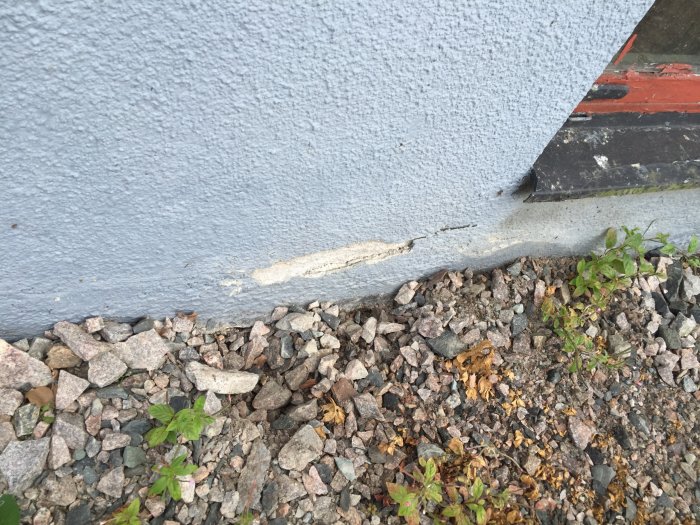
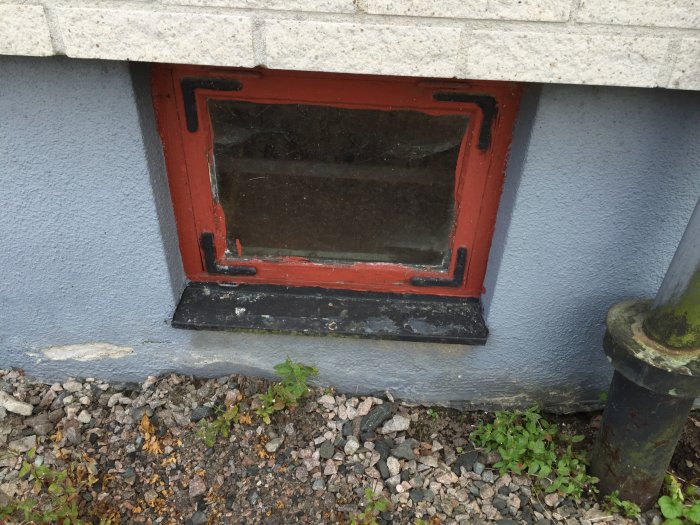
Hi, went to check the house today, the moisture in the basement seems almost completely gone (it's been rain-free for a while now) so it seems like a positive sign. As mentioned, it slopes a bit towards the house, so it might be where water collects. What do you think? There are some cracks in the foundation, visible if you stand outside and look down towards the basement.
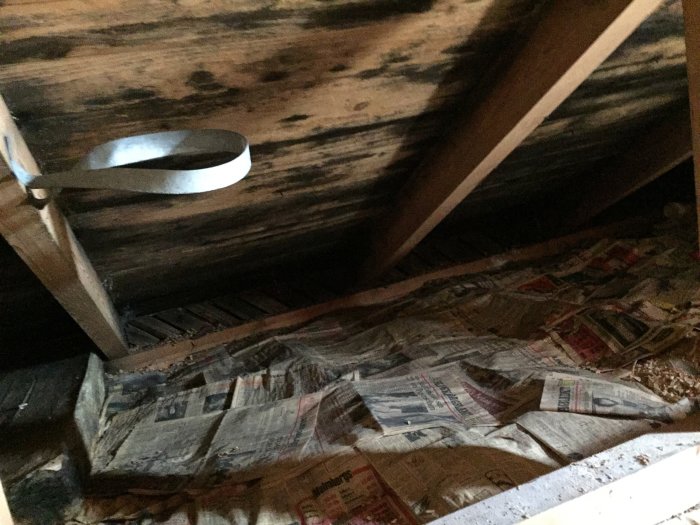
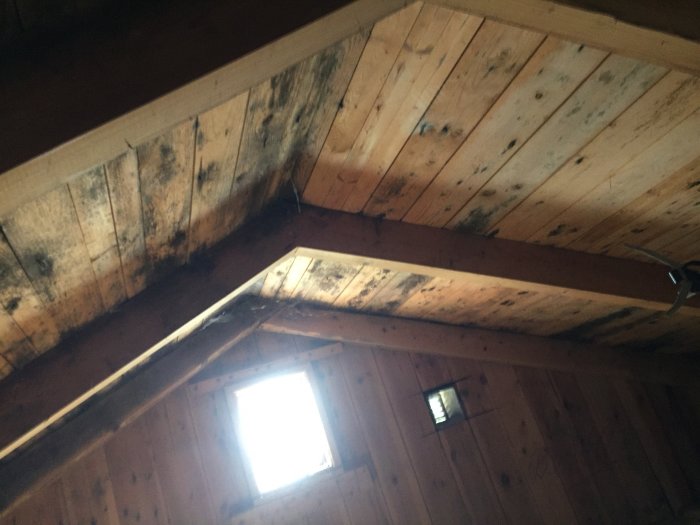
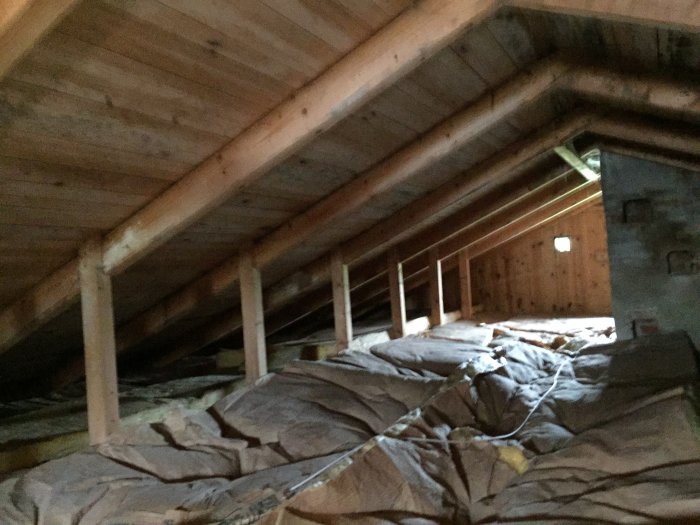
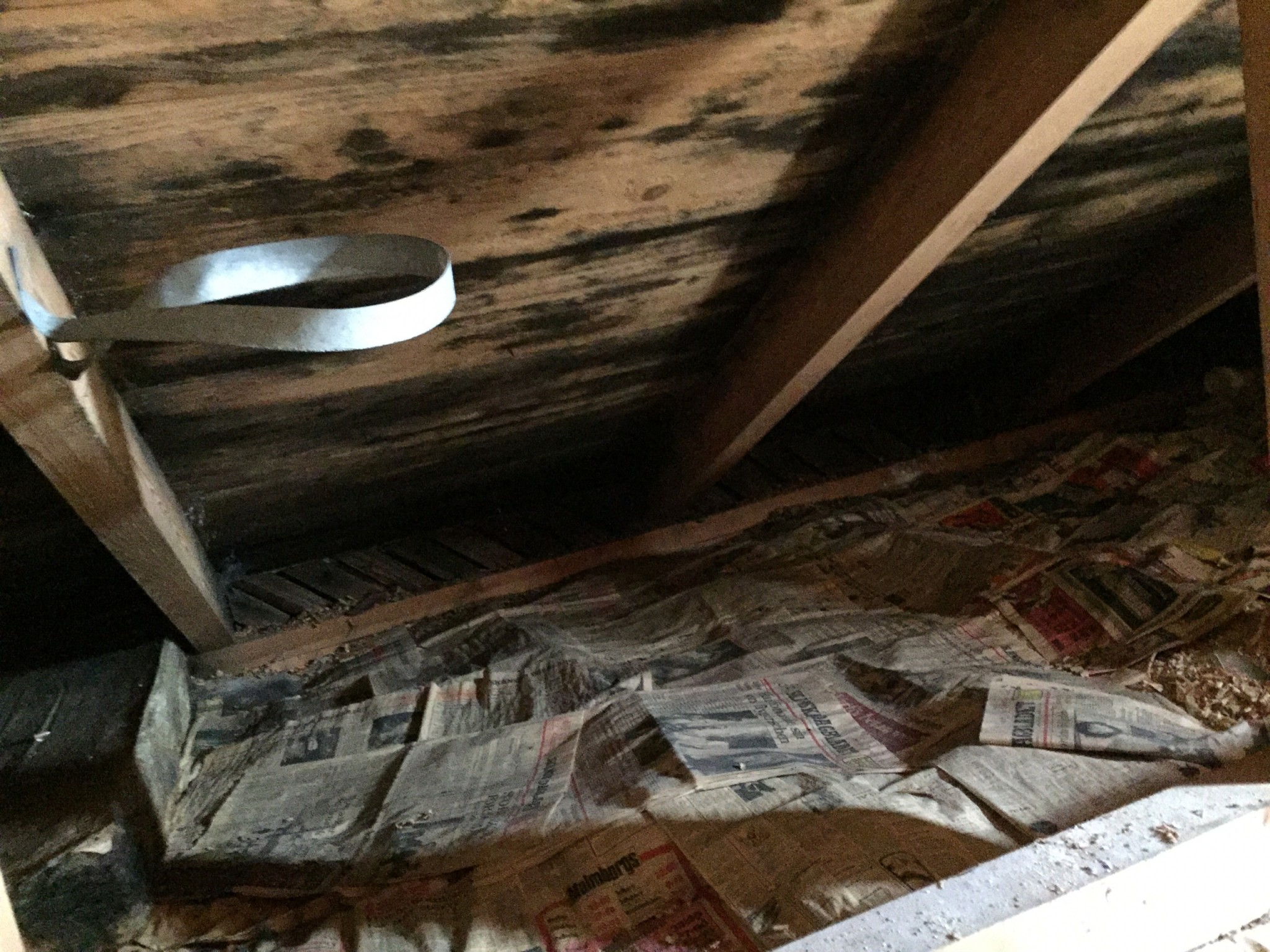
But what do you think about this ceiling on the attic? The realtor said you could spray something to tackle the issue, and that it's warm air seeping up to the attic causing condensation, it doesn't seem to be rotten so it apparently doesn't come from outside! What can be done there? Is it true, as the realtor says, that you can spray something? It seems to be mostly around the attic hatch which doesn't have any sealing, just a board essentially!
The cracks are just some damage in the plaster, you can easily patch it up if it bothers you. The corners you've photographed, are they façade? It's a sign that it should be drained.
I can't comment on how bad the roof actually is, but I believe in this case that the realtor is right. I had some growth in the attic when I moved in, removed it with a wire brush and some solution I was advised on, it was obviously condensation. When I renovated indoors, I also tore down the ceiling and found hundreds of holes in the vapor barrier. I have replaced it in all rooms and now have no growth in the attic.
Most likely, a house from '49 is built with walls standing on a footing + a floor with a concrete slab directly on sand.
If it is not on clay ground or in waterlogged soil, drainage is wasted money. Spend that money on water drainage and lead it away to a soakaway. It has a much greater effect.
Since there is probably no capillary-breaking layer under the footing, the walls will always draw moisture from below unless you prop up and dig under the entire house.
Vi vill skicka notiser för ämnen du bevakar och händelser som berör dig.