2,772 views ·
25 replies
3k views
25 replies
How to fix sloping floors, upper floor
Hello hello 👋 and thank you in advance!
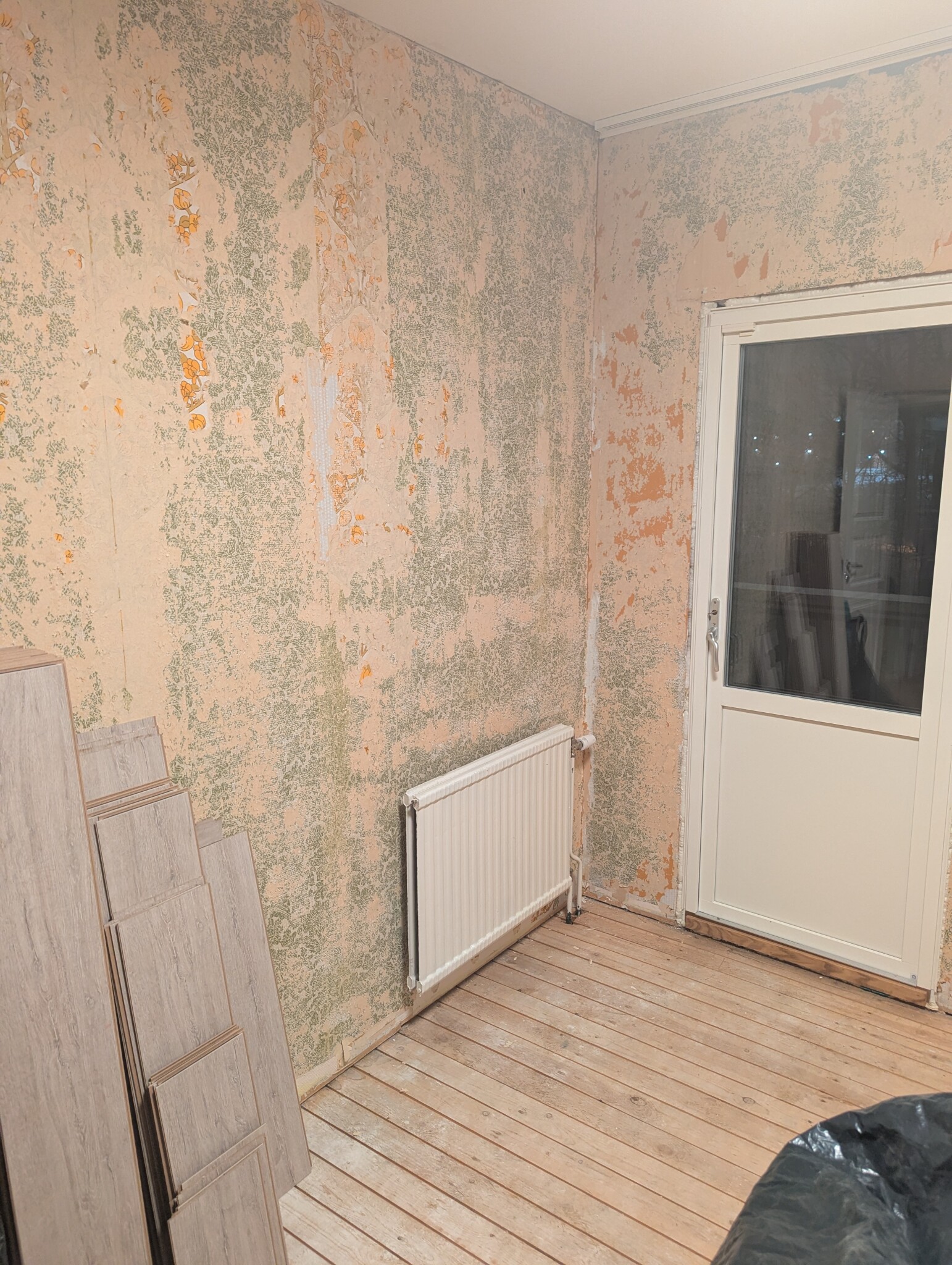
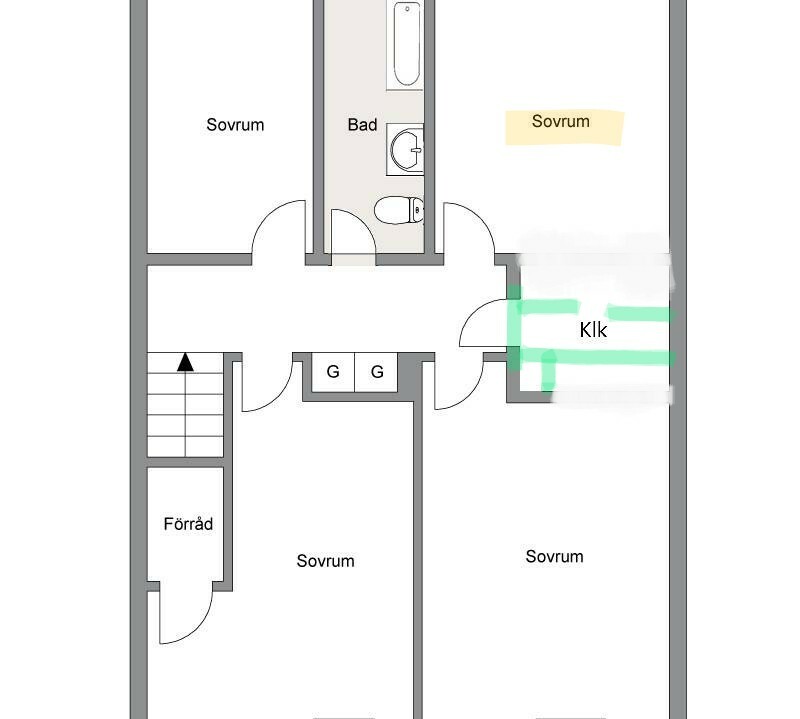
We have started renovating our future bedroom (marked in yellow on the floor plan) where we plan to install parquet flooring. However, the floor slopes towards the bathroom door by up to 50 millimeters in the room. We have debated back and forth about different solutions, the options we have come up with are:
1. No intervention, let the parquet slope.
2. Build up the floor where it is lowest with
a. Board or masonite in different layers.
b. Make long wedges, like cutting beams at an angle and then laying board on them.
c. Use self-leveling compound? The permanence of this makes me want to abstain. If we later have the opportunity to straighten out the joists, this would be a hassle to remove.
d. Correct the joists? Since the walls and floor to the bathroom are supported by and consist of the tongue and groove planks, I am worried about what would happen if we tried to replace or cut these to access the joists. Since we do not know how long the floors have been sloping in relation to when the bathroom was built, I am concerned that correcting the joists could lead to cracks in the tile joints and the waterproofing in the bathroom.
Which option or options would you choose and why? Is there any option I have missed?
We have started renovating our future bedroom (marked in yellow on the floor plan) where we plan to install parquet flooring. However, the floor slopes towards the bathroom door by up to 50 millimeters in the room. We have debated back and forth about different solutions, the options we have come up with are:
1. No intervention, let the parquet slope.
2. Build up the floor where it is lowest with
a. Board or masonite in different layers.
b. Make long wedges, like cutting beams at an angle and then laying board on them.
c. Use self-leveling compound? The permanence of this makes me want to abstain. If we later have the opportunity to straighten out the joists, this would be a hassle to remove.
d. Correct the joists? Since the walls and floor to the bathroom are supported by and consist of the tongue and groove planks, I am worried about what would happen if we tried to replace or cut these to access the joists. Since we do not know how long the floors have been sloping in relation to when the bathroom was built, I am concerned that correcting the joists could lead to cracks in the tile joints and the waterproofing in the bathroom.
Which option or options would you choose and why? Is there any option I have missed?
Hobby carpenter
· Västra Götaland
· 1 496 posts
As I see it, there are two sensible options.
1. Let it lean.
2. Do it properly, but find out why the house has settled. Is it the ground floor? The outer corner of the house?
Break up the subfloor and plane down the beams or build up with wedges. Then screw on a new subfloor (boards) or put back the current planks.
Keep in mind that the house may settle more if you don't investigate the issue. Perhaps something has rotted, or the soil conditions have changed.
Also, remember that the house/ground changes with the seasons.
1. Let it lean.
2. Do it properly, but find out why the house has settled. Is it the ground floor? The outer corner of the house?
Break up the subfloor and plane down the beams or build up with wedges. Then screw on a new subfloor (boards) or put back the current planks.
Keep in mind that the house may settle more if you don't investigate the issue. Perhaps something has rotted, or the soil conditions have changed.
Also, remember that the house/ground changes with the seasons.
Thanks for the reply!S Småbrukaren said:As I see it, there are two sensible options.
1. Let it slant.
2. Do it properly, but find out why the house has settled. Is it the ground floor? Outer corner of the house?
Break up the subfloor and plane down the beams or build up with wedges. Then screw on a new underfloor (boards) or put back the current planks.
Keep in mind that the house can settle more if you don’t investigate the issue. Maybe something has rotted or the ground conditions have changed.
Also, remember that the house/ground changes with the seasons.
S Småbrukaren said:As I see it, there are two sensible options.
1. Let it slant.
2. Do it properly, but find out why the house has settled. Is it the ground floor? Outer corner of the house?
Break up the subfloor and plane down the beams or build up with wedges. Then screw on a new underfloor (boards) or put back the current planks.
Keep in mind that the house can settle more if you don’t investigate the issue. Maybe something has rotted or the ground conditions have changed.
Also, remember that the house/ground changes with the seasons.
These rooms are on the upper floor.
The downstairs doesn't slant to the same extent or even obviously in the same direction. The joist for the ground floor is, unlike the upper floor, in concrete.
I’m not really sure how to access the joist for the upper floor either as I don't know if I can remove the plank floor without risking the waterproofing in the adjacent bathroom.
The alternative, I suppose, is to tear down the ceiling under the beams where the slant is greatest, but I'd prefer to avoid that as it’s a bigger job to restore. Is it a structural engineer I should perhaps contact?
Hobby carpenter
· Västra Götaland
· 1 496 posts
You can trim the boards along the wall that slants and a bit inward. See if it's possible to straighten it and then screw them back. Use a circular saw so the bathroom isn't affected.
No walls are leaning. The floor slopes the most next to the bathroom into the bedroom and next to the bathroom door in the hallway outside. The beam that I think might be the problem is about 30 centimeters in under the bathroom.S Småbrukaren said:
Hobby carpenter
· Västra Götaland
· 1 496 posts
I understand that it's the floors that are slanted haha. I meant that you should cut along the wall outside the bathroom.
You should not move the beam that goes into the bathroom. Just build on it/plane it down. In the hallway, that is.
You should not move the beam that goes into the bathroom. Just build on it/plane it down. In the hallway, that is.
Hobby carpenter
· Västra Götaland
· 1 496 posts
The part of it that affects the laying of the new floor, that is.

Stick-builder
· Kristinehamn
· 141 posts
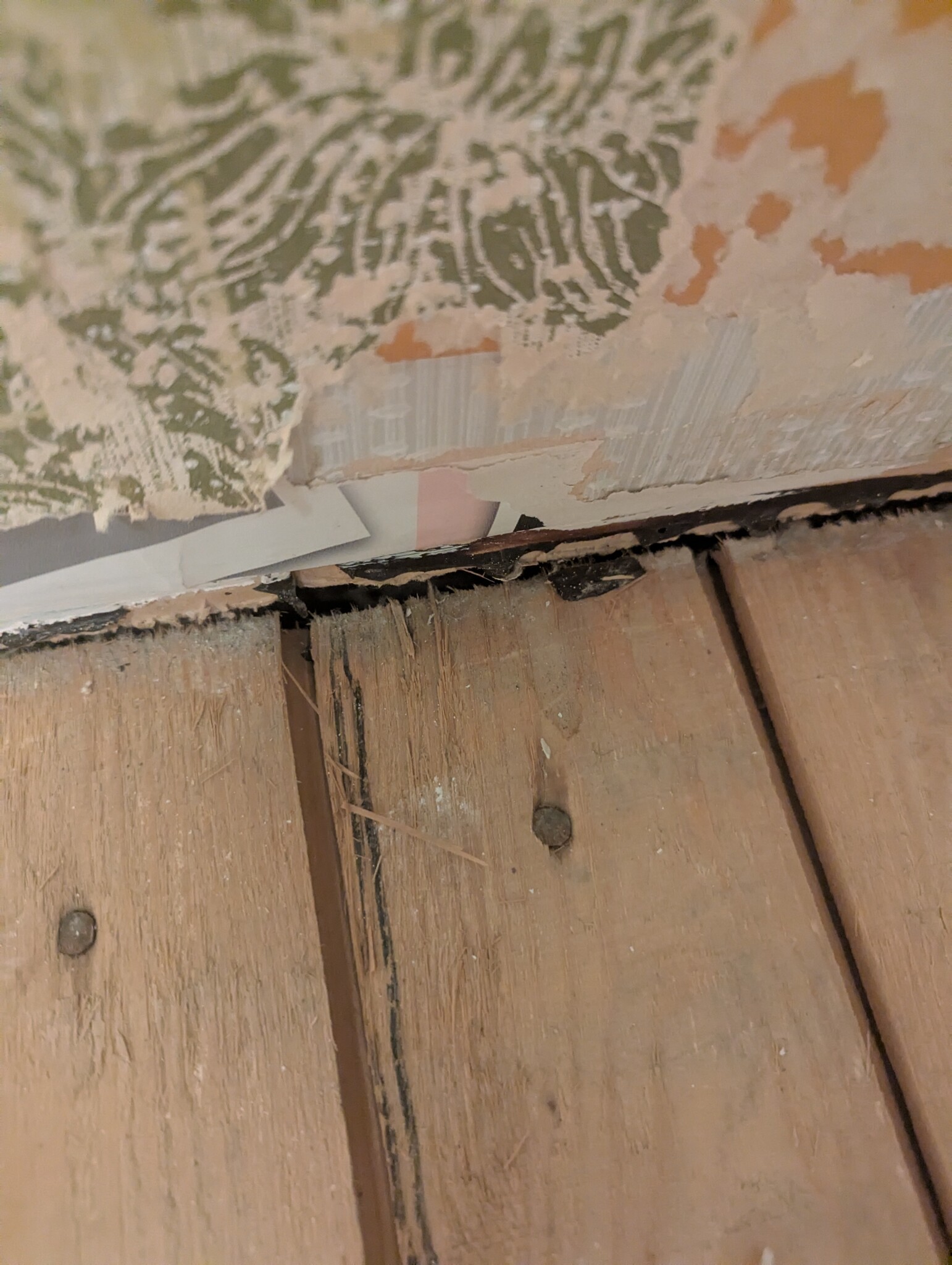
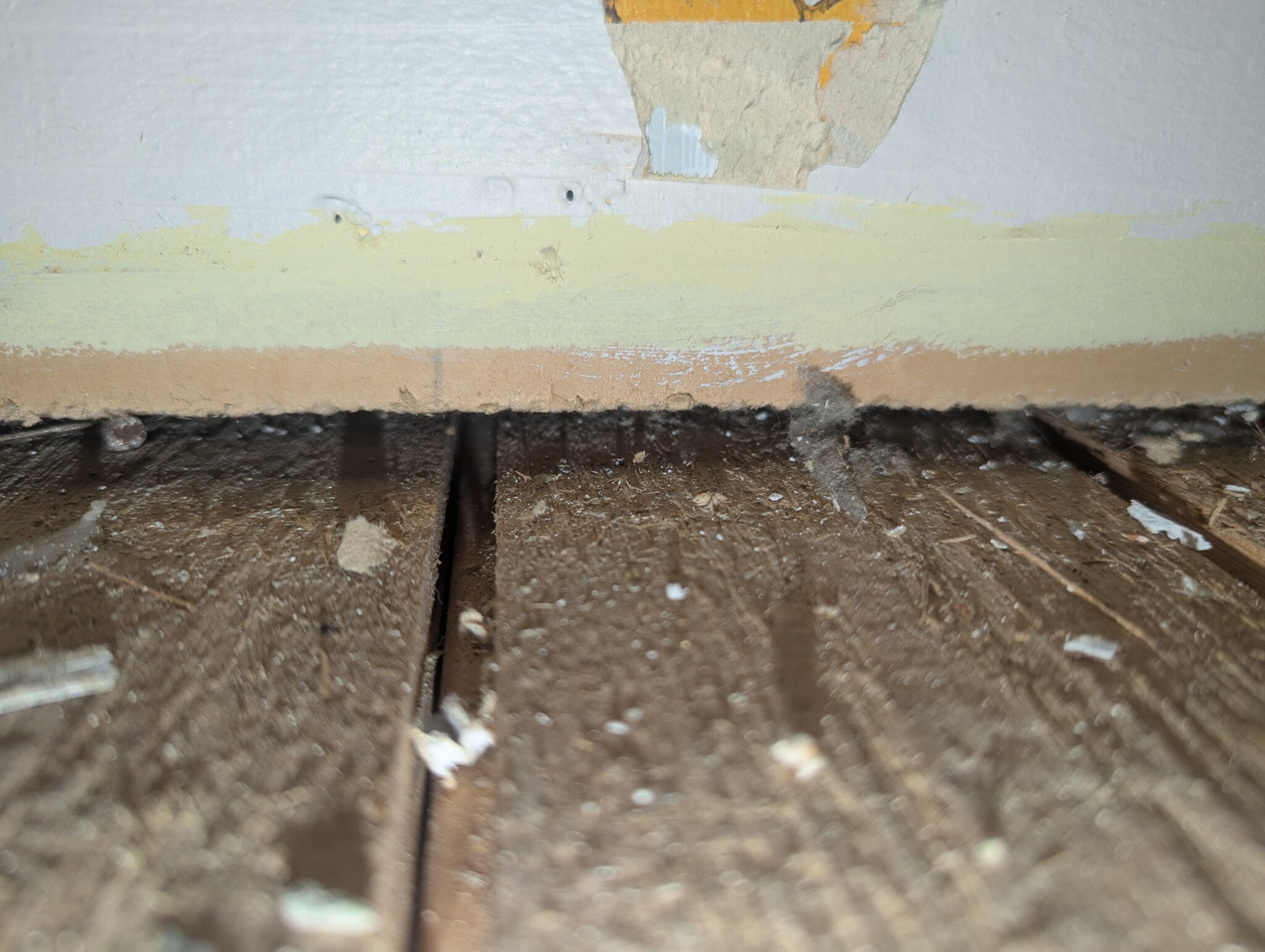
Am I interpreting you and the pictures correctly, that the planks go under the wall and at the same time a part of the bathroom floor?aelamik said:
Hello hello 👋 and thanks in advance!
We have started renovating our future bedroom (marked in yellow on the floor plan) where we plan to lay parquet. However, the floor slopes towards the bathroom door with up to 50 millimeters in the room. We have debated various solutions, and the options we have come up with are:
1. No intervention, let the parquet slope.
2. Build up the floor where it is lowest with
a. Board or masonite in different layers.
b. Make long wedges, like cutting beams at an angle, which we then lay board on.
c. Self-leveling compound? The permanence of this makes me want to abstain. If we have the opportunity to straighten out the beams later, this would be a hassle to remove.
d. Correct the beams? Since walls and floors to the bathroom stand on and consist of the rough plank, I am worried about what would happen if we tried to replace or cut these in any way to access the beams. Since we do not know how long the floors have been sloping in relation to when the bathroom was built, I am concerned that correcting the beams could lead to cracking in the tile joints and seals in the bathroom.
Which option or options would you choose and why? Is there any option I have missed?
Stick-builder
· Kristinehamn
· 141 posts
Read again and now understand that they go in under to the bathroom. Then you can't possibly cut the planks as they will lose their rule and hang in the air, leaving no support inside the bathroom!? 50 mm is too much deviation, I would create wedges (joists) on CC 45 or 60 on top of the old planks and lay a new floor.
But how does the rule that the boards rest on go, is it under the wall to the bathroom?Read again and now understand that they go under to the bathroom. Then you can't possibly cut the boards as the boards will lose their support and hang in the air, and then they have no support inside the bathroom!? 50 mm is too much deviation, I would create wedges (rules) on CC 45 or 60 on top of the old boards and lay a new floor.
Stick-builder
· Kristinehamn
· 141 posts
Stick-builder
· Kristinehamn
· 141 posts