
8,771 views ·
16 replies
9k views
16 replies
How do I best replace a load-bearing wall?

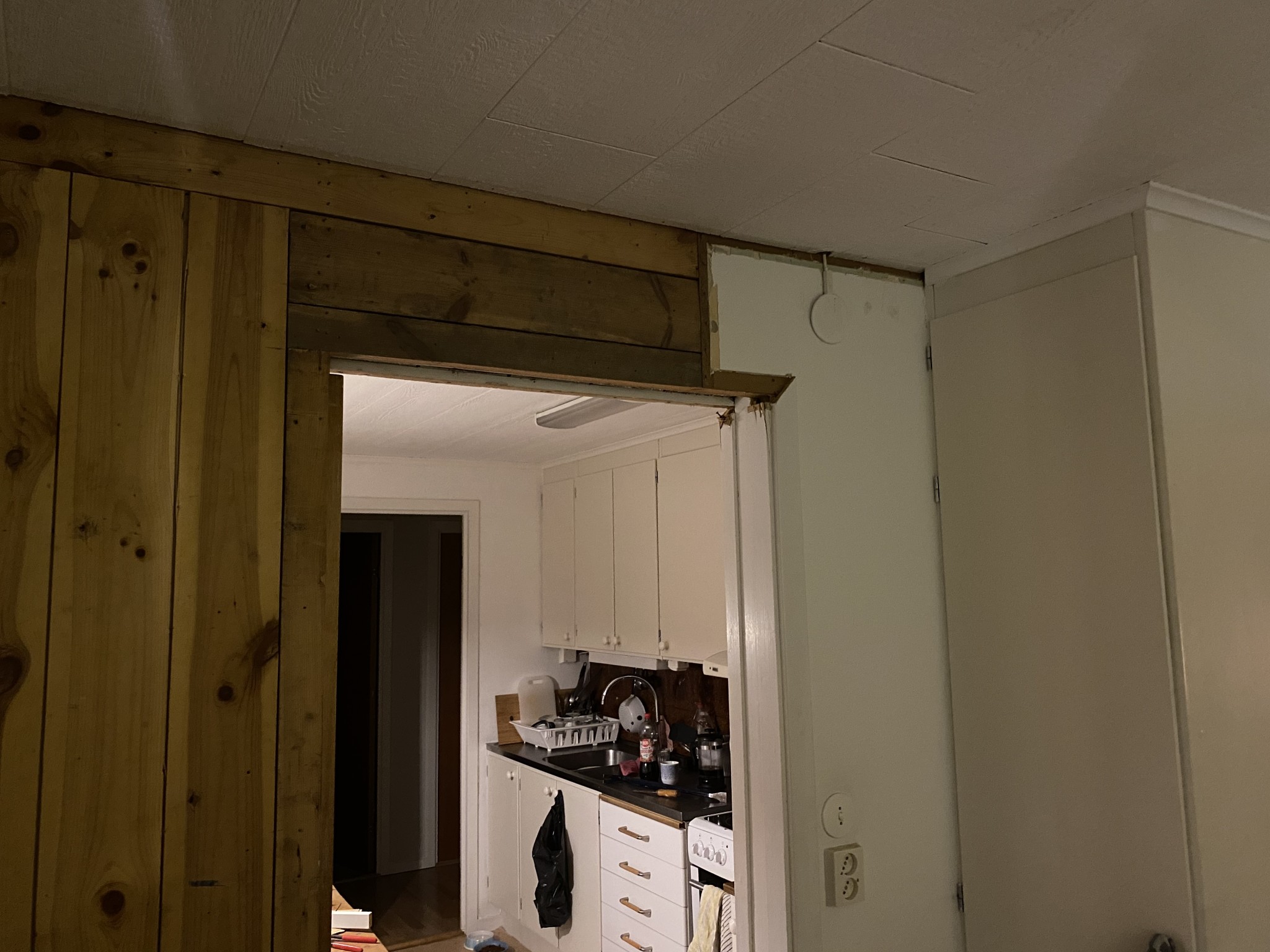
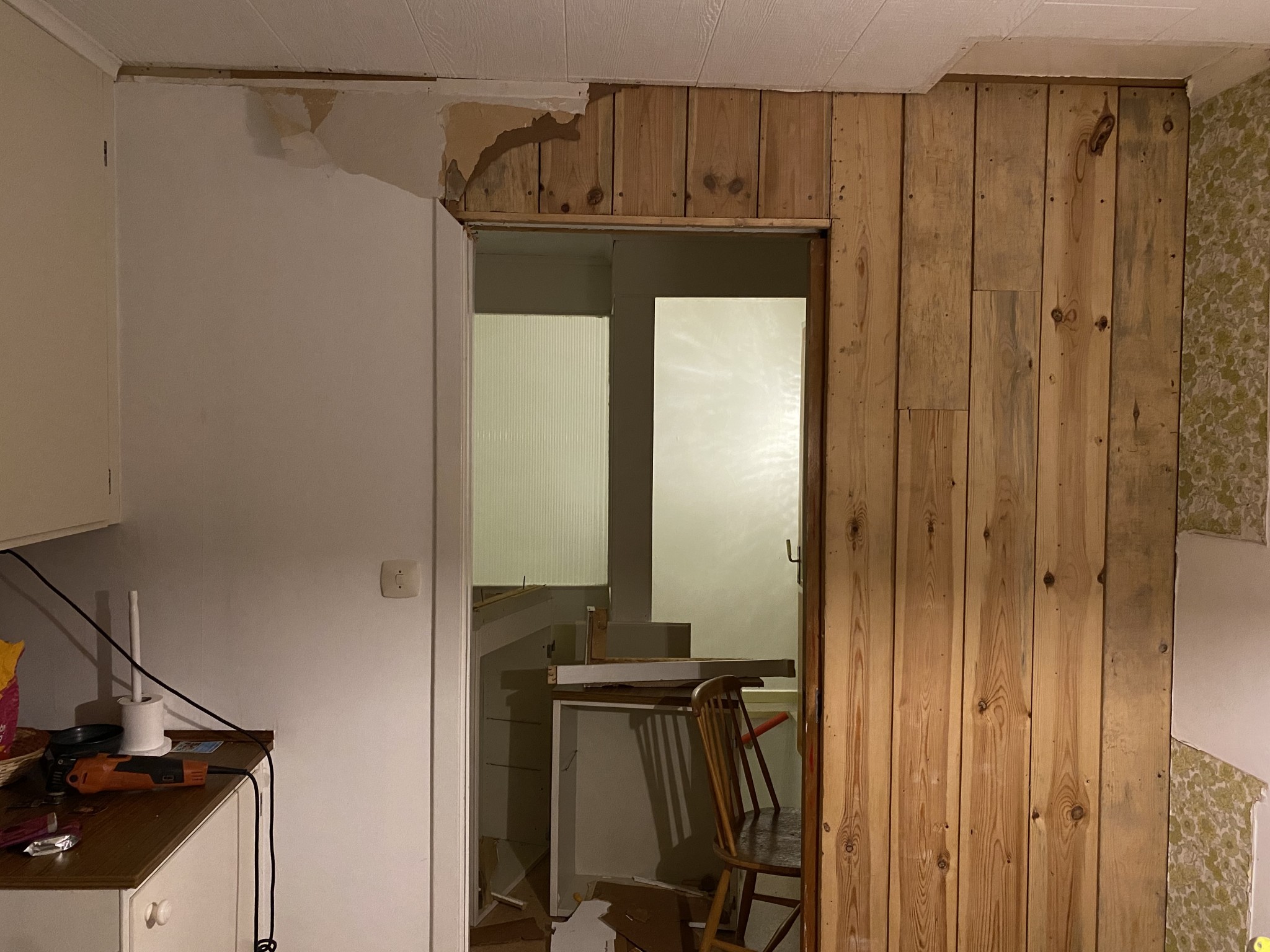
When I start investigating, by removing surface layers and the like, I quickly understand that this is a load-bearing wall (265cm) that runs from the chimney to the exterior wall. Moreover, a sliding door goes inside the living wall. The wardrobe in the third picture should of course be removed as well.
I have looked at HEA beams in all their sizes (maybe HEA100) but am considering if a glulam beam could do the job? I have absolutely no experience with steel beams.
I hope the pictures can be interpreted somewhat...
What do you think is an adequate solution for this?


Impossible to judge based on images alone.N Nickodemussnickrar said:[image] [image] [image] I'm planning to extend the kitchen and need to demolish a wall to optimize the spaciousness of the kitchen. Additionally, I want to remove an unnecessary hallway from the ground floor to the kitchen.
When I start investigating by removing the surface layers and the like, I quickly realize that this is a load-bearing wall (265cm) that runs from the chimney to the exterior wall. Furthermore, a sliding door is inside the fitting wall. The closet in the third picture should obviously be removed as well.
I have looked at HEA beams in all its sizes (perhaps HEA100) but wonder if a glulam beam could do the job? I have absolutely no experience with steel beams.
I hope the pictures can be somewhat deciphered…
What do you think is an adequate solution for this?[image][image][image][image][image][image][image]
Alongside BirgitS's advice, I would contact an engineer to assess the conditions (roof structure, dead loads, wind loads, snow load) to come up with a sustainable solution.
Alternatively, a supplier of glulam beams may be able to assist with calculations (moelven for example).
Keep in mind that any modifications to load-bearing structures require a construction notification and start permit from the city building authority. They usually also require a certified supervisor responsible for control.
Regards
Last edited by a moderator:
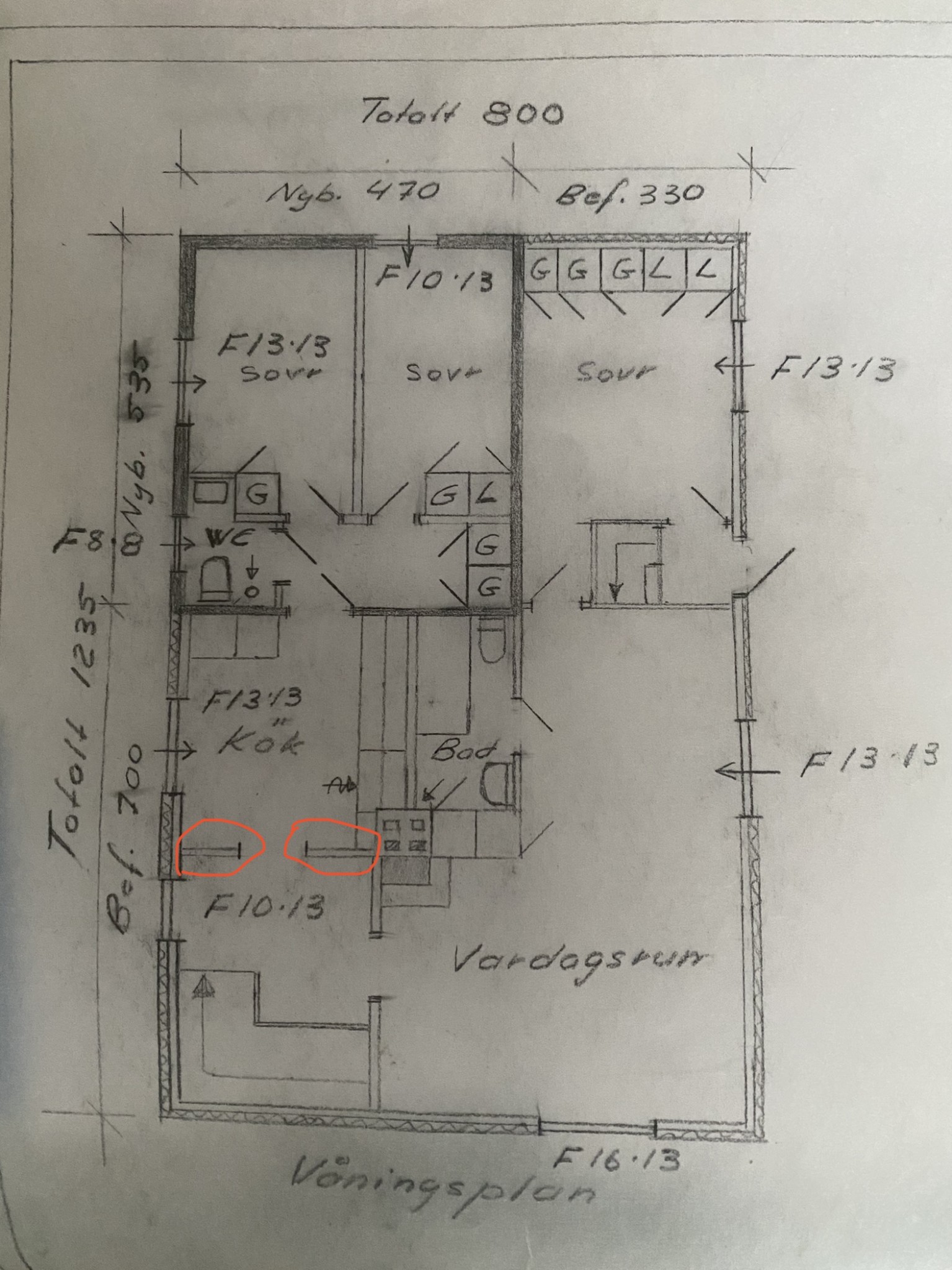
The house built in 1959 is located in snow zone 1.5. Apparently quite a low amount of snow as I understand it. I am attaching an image with the drawing of the floor plan. The walls are not "filled in" on the drawing, and as far as I understand, "filled-in" walls on a drawing indicate load-bearing walls. But, this could be an exception.BirgitS said:
Type of roof?N Nickodemussnickrar said:The house built in 1959 is located in snow zone 1.5. Apparently quite a low amount of snow as I understand it.
I am attaching an image with the floor plan drawing. The walls are not "filled in" on the drawing, and from what I understand, "filled in" walls on a drawing indicate load-bearing walls. But, this could be an exception.
Where do the roof trusses go?
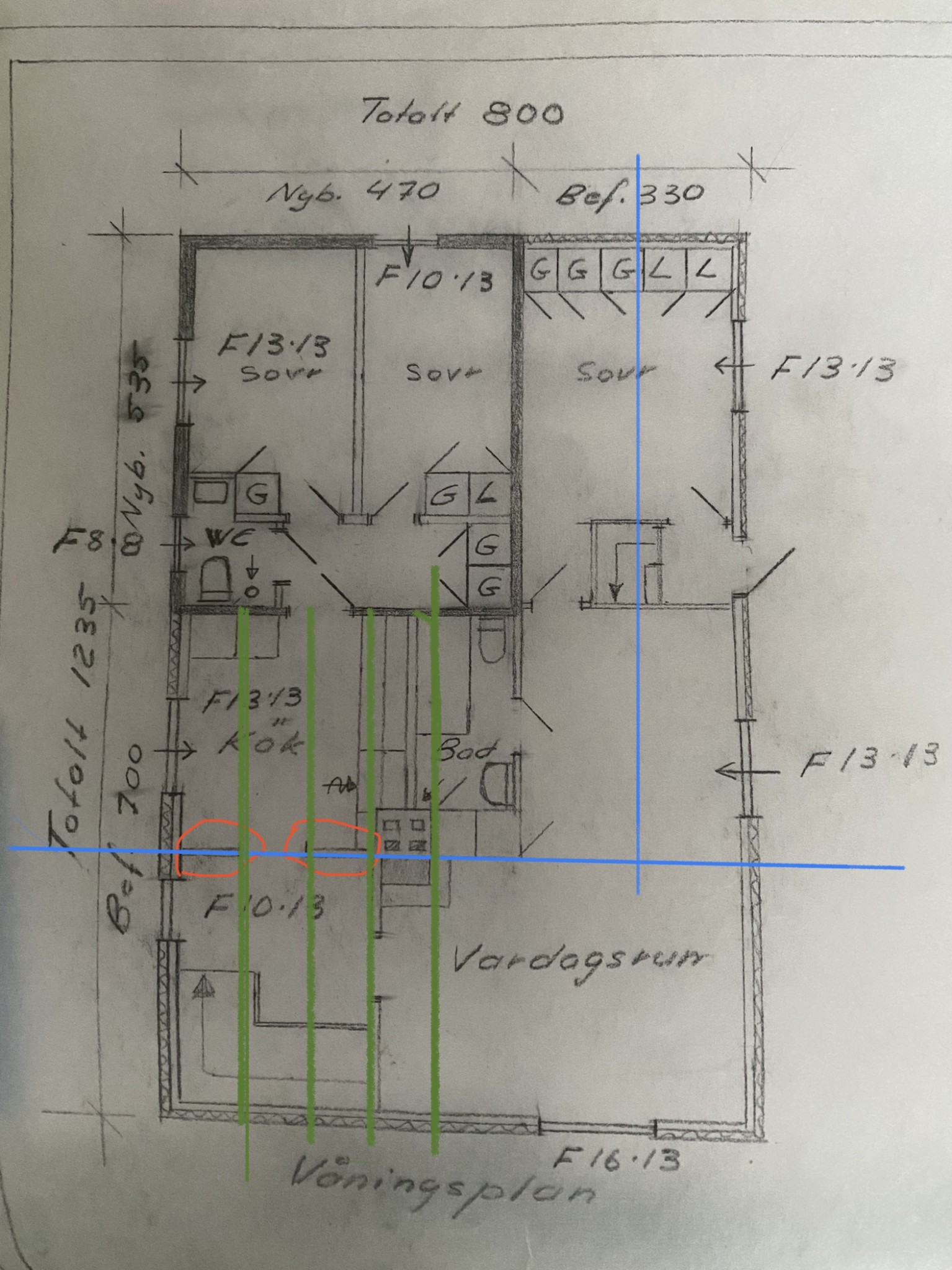
The house has been extended at least once. I guess the latest extension is from 1959 while the original house is older, as it seems to have a plank frame. I probably need to change my mind. Your marked wall is load-bearing. It can be replaced with a beam and two pillars. The dimensions don't need to be frightening since the opening's size is limited.
An effective way to remove a load-bearing wall is to buy a T-beam in steel that is recessed into the ceiling upside down.
If you want to remove the pillars at the ends, these must also be recessed (into the walls).
A heck of a job with props, planks, and a Fein multi-tool. But it turns out well.
If you want to remove the pillars at the ends, these must also be recessed (into the walls).
A heck of a job with props, planks, and a Fein multi-tool. But it turns out well.
A T-bar might be good in certain situations (shorter span/smaller load) but hardly here. Without knowing exactly what loads are in question, at least an HEA 140 is needed. It is stiffer than the largest T-bar.
how the hell can you tell it's a timber frame?!?! Absolutely right but how do you see that?J justusandersson said:The house has been extended at least once. I guess the latest extension is from 1959 while the original house is older, as it seems to have a timber frame. I might have to change my mind. Your marked wall is load-bearing. It can be replaced with a beam and two columns. The dimensions don't have to be daunting since the opening size is limited.
Education, age, and experience... Your images reveal it. Lumber dimensions and the way to use it. The wood's age and character. Pine with large amounts of heartwood. Old timber. Everything indicates that the original house was built before 1950.
If the exterior walls and even interior walls have a plank frame, then congratulations! Every single plank contributes to the load-bearing capability. Big difference compared to a stud frame, which is mostly air.N Nickodemussnickrar said:
Get a structural engineer to take a look. They will understand in 5 minutes. It has to do with snow load, but also with the slope of the outer roof, heavy or light roofing, model of the roof truss freestanding or not, span of the roof trusses, meaning the width of the room.
The wall you want to remove contributes to the building's overall load-bearing capability. But that's not the same as it being vitally load-bearing. I'm like an experienced amateur who has done a lot of similar work to what you want to do, and when I eyeball the pictures, the wall looks too thin to be a load-bearing wall. But if it is, it can be resolved in a neat and proper way. As I said, a pro will see this quickly.

