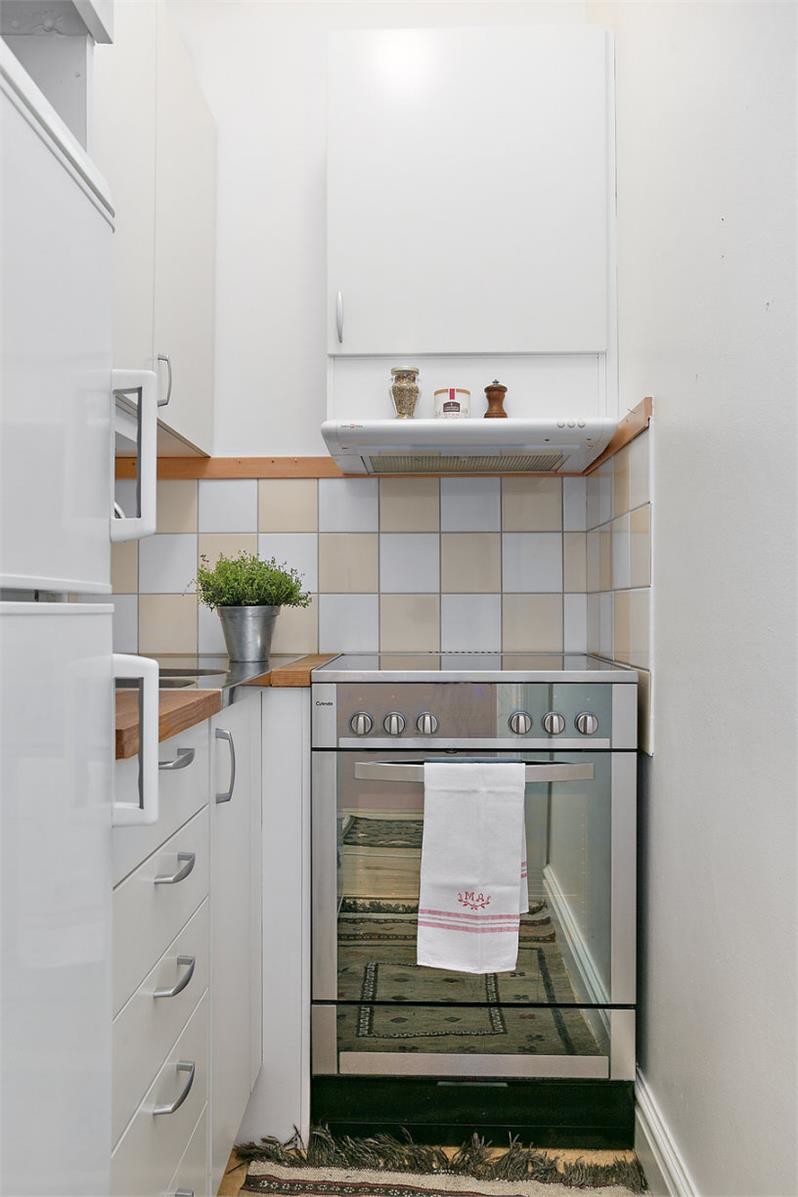
I have a project underway where I plan to demolish parts of a wall between the kitchenette and the room to make my small studio feel a bit airier. At the same time, I'm planning to replace the kitchen. In the picture, it's the wall on the right. When you remove the plaster, it's lightweight concrete (most likely blue concrete, though not high-radiation considering the moderate measured radon levels). The house is from 1933.
I have a statement from the structural engineer that the wall is not load-bearing and I'm waiting for permission from the association. According to the statement, the demolition direction should be from the doorway towards the other wall.
I received a quote for about 15,000 SEK to take down the wall, 18,000 SEK including big bag disposal.
I'm tempted to take down the wall myself, preferably with a lightweight concrete saw, as I think it will produce the least dust (even though it might be heavy work). I'm considering renting a dust-separating professional vacuum cleaner so someone can stand in the room while sawing (costs about 300 SEK/day).
How would you have done it? Is it better to use a reciprocating saw? Or is it possible to remove maybe A4-sized parts of the wall by hand as I'm thinking? I'm not in any rush.
A reciprocating saw and vacuum cleaner are relatively dust-free, but use pieces larger than A4 to minimize sawing. Take as heavy pieces as you can carry.
There are construction fans with filter fabric available for rent that effectively remove dust from the air. But it needs to be single-phase in that apartment, right? Otherwise, a light water mist can be sprayed on the wall to bind the dust, which can then be vacuumed up with a wet vacuum.
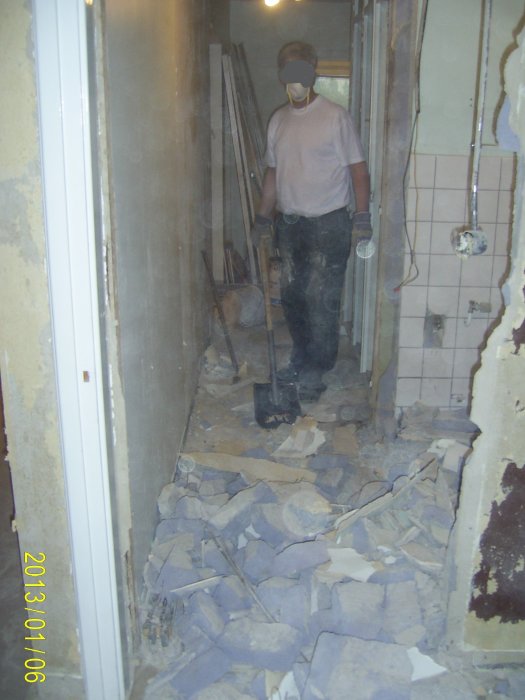
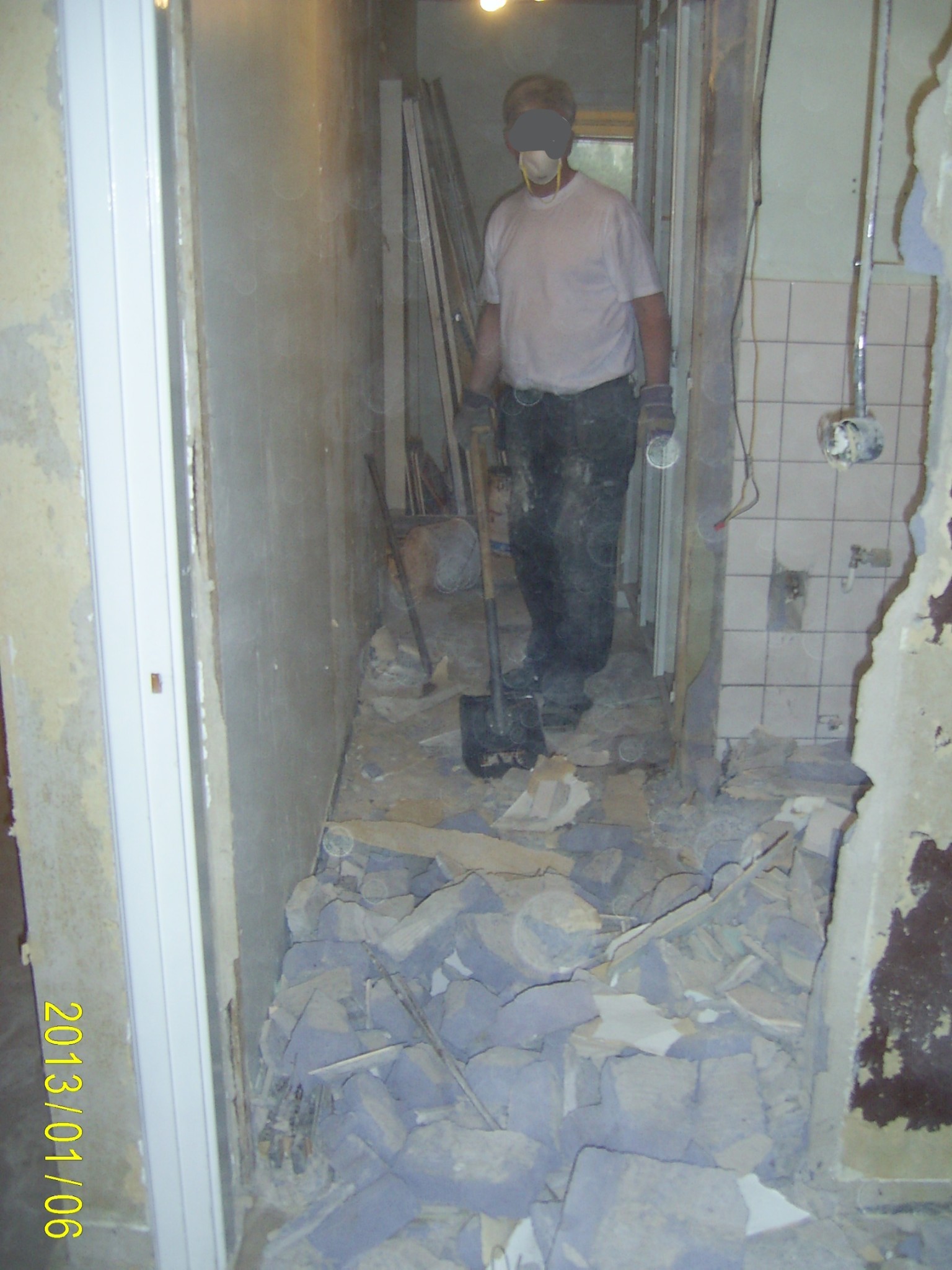
The image below is the result of "Tjocka Berta" = 8 kg sledgehammer!
There are construction heaters with filter cloth available for rent that effectively remove dust from the air. But it needs to be single-phase in that apartment, right? Otherwise, a light water mist sprayed on the wall can bind the dust, which can then be vacuumed up with a wet vacuum cleaner.
A reciprocating saw can definitely work fine, but you should opt for a larger one than the WSR 22A. I would rather say that a WSR 1400 is a more suitable choice, admittedly corded but it has considerably more power and is simply more built for the purpose in my experience, it's the hole-cutters' choice among reciprocating saws
There are special blades for reciprocating saws designed to cut lecablock and aerated concrete, with aggressive teeth. Buy 2 at once, they hold up well. They don't produce much dust.
I can also add that there are special supports for the larger Hilti reciprocating saws with a vacuum connection. So you can connect it to an industrial vacuum cleaner that will definitely minimize the dust!
Have torn down aerated concrete walls with a reciprocating saw and the dust isn't too bad. You can hang up wet sheets around where you're working to catch the dust.
Regarding blades, it's easy to saw in the aerated concrete but it goes much slower in the reinforcement in the wall. A tip is to alternate between blades with large teeth (for aerated concrete/leca) and blades with small teeth (for metal).
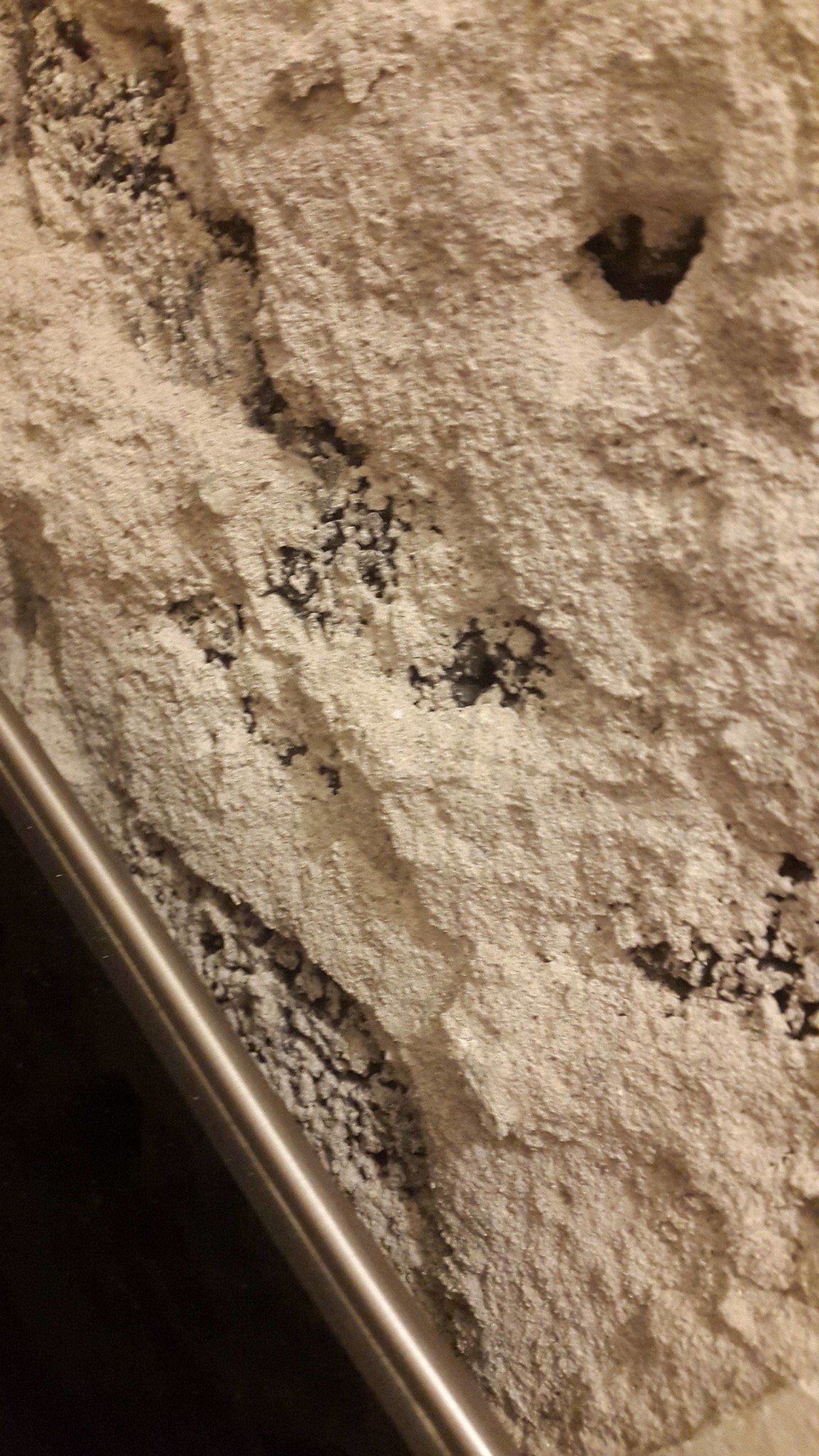
From the little that can be seen of the wall behind the plaster, I think the surface is too rough to be lightweight concrete, I believe it's more likely slag plates. Don't saw them with a reciprocating saw, they create a terrible amount of dust, pitch-black dust, and the mortar between the plates quickly wears out the blades. Without plaster, the plates are only 7 cm thick, so it's best to knock them down with a sledgehammer.
I think the hardest part will be getting 20 cm to hang from the ceiling. You'll probably need to put in some kind of beam, is my guess.
Yes, I think so too. I was thinking maybe to attach a plank as a beam, thinking that might be enough. In the worst case, completely remove the ceiling.
What is the purpose of saving 20cm? I mean, is there any specific reason?
At first, I was thinking of having a shinier color in the kitchen and then I thought it might feel natural with a small boundary for the lighting's sake, but I'm starting to consider scrapping it.
Vi vill skicka notiser för ämnen du bevakar och händelser som berör dig.




 in my experience, it's the hole-cutters' choice among reciprocating saws