Six years ago, I had a soapstone stove installed.
A stove that now needs to be dismantled and replaced.
Before taking it down and installing a new stove, I'm trying to sort out a few things:
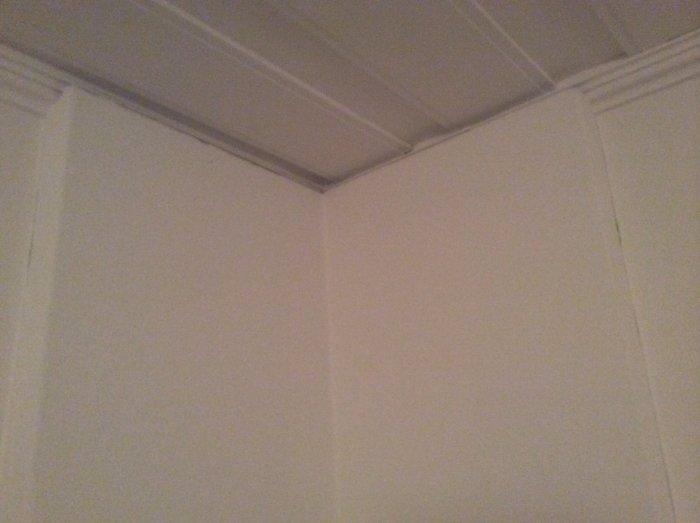
I can't remember if the wall behind the stove already existed or if it was created when the stove was installed. The corner sounds a bit "hollow" when you knock on it, not as dull/muted as when you knock on my original old chimney.
I'm trying to figure out if the corner is new or old.
Each side is about 52 cm wide, with the stove centered in the middle.
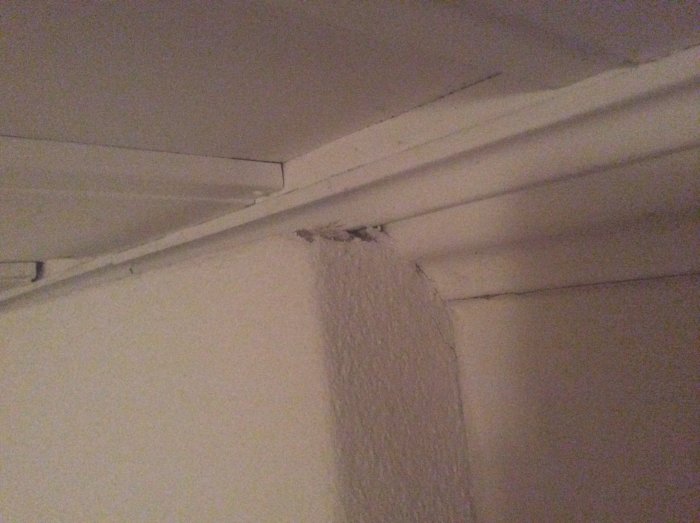
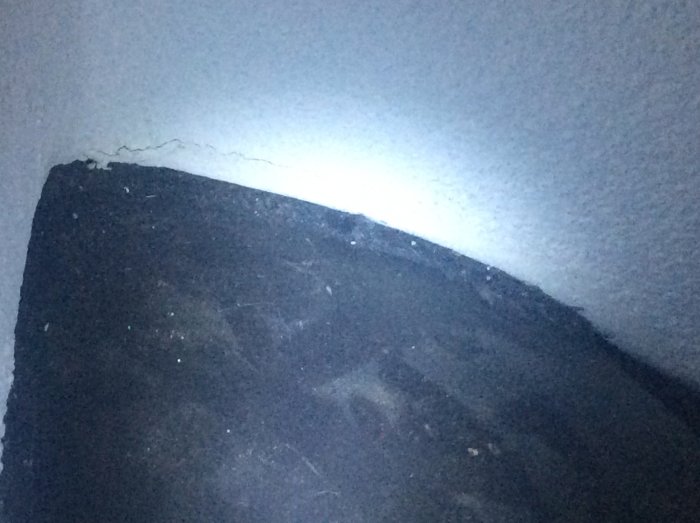
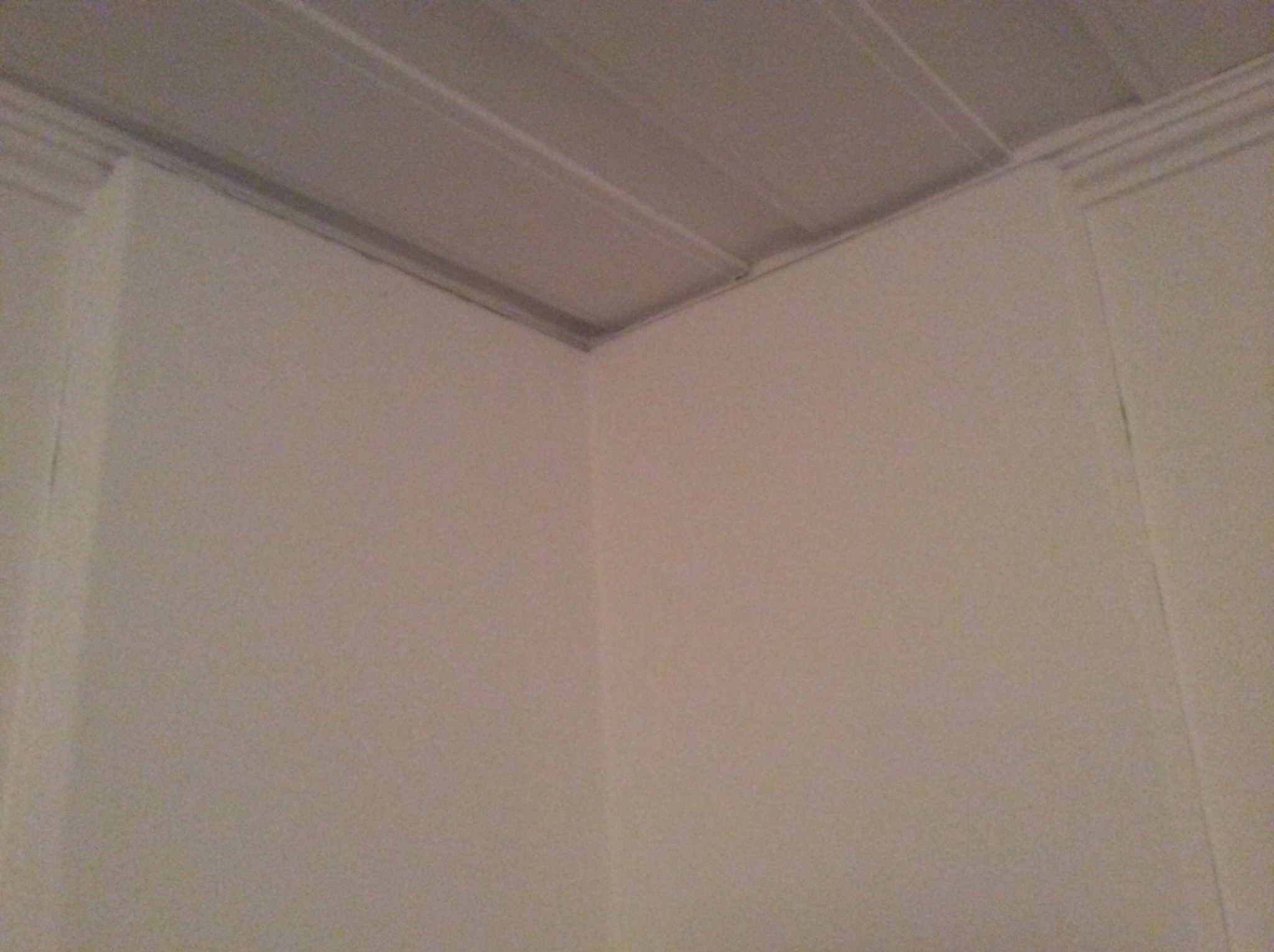
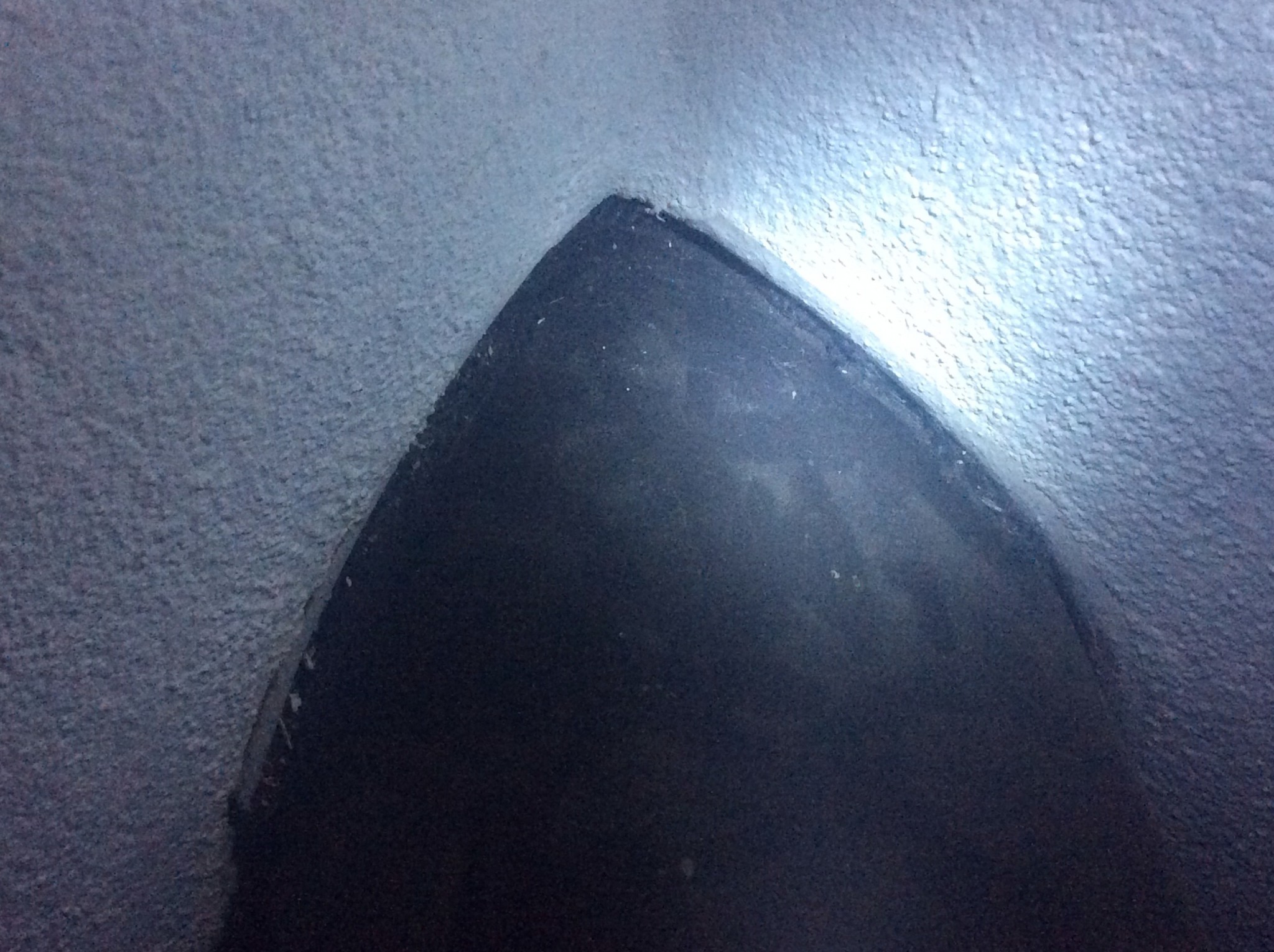
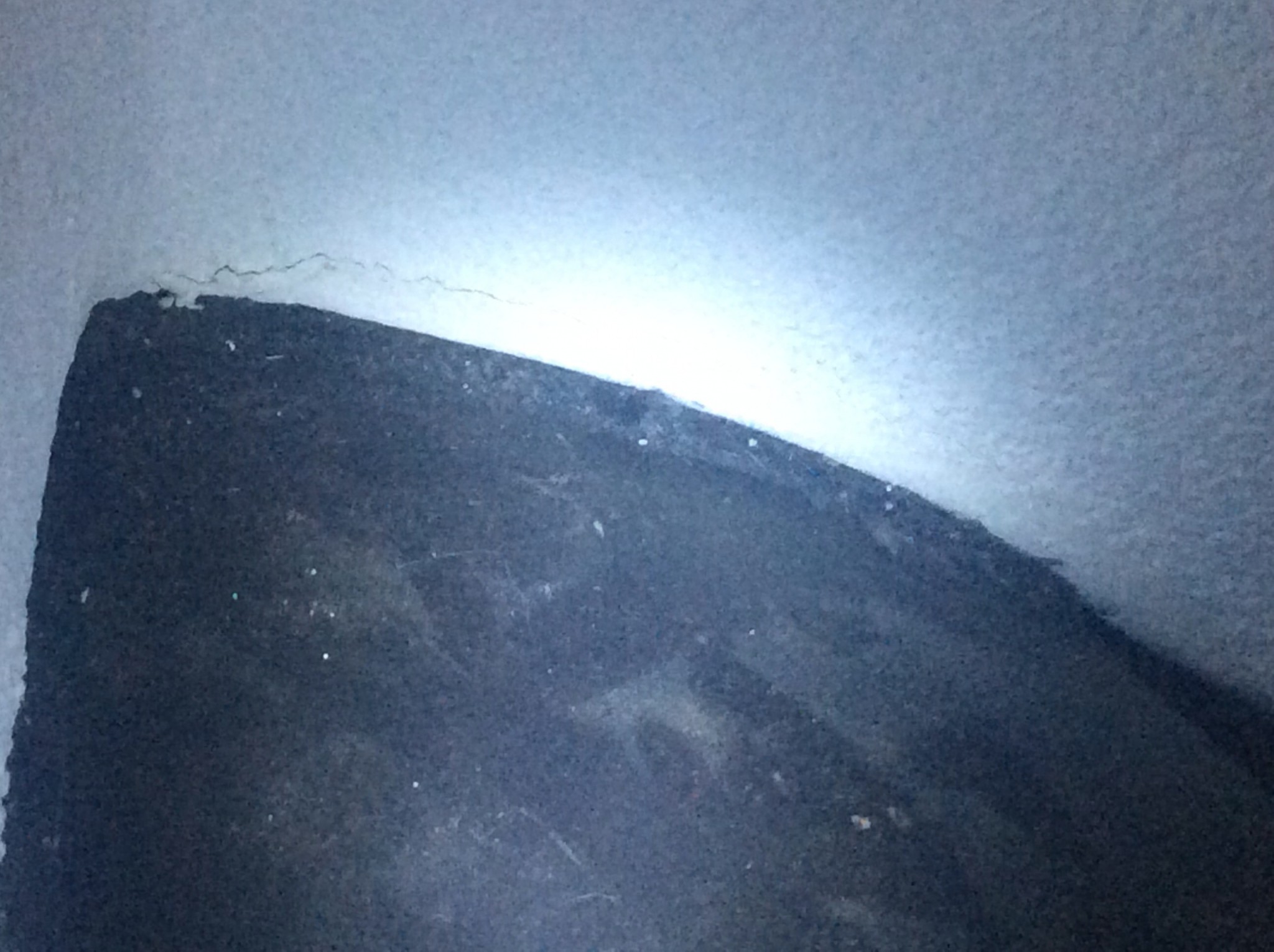
Up against the ceiling molding, it looks like current masonry or panels are "cut" against the molding, i.e., you can see the molding behind. It looks like a plastered surface, grayish in color, grainy.
If you feel the edge at the top against the ceiling, which is unpainted, it feels like plaster on the surface, but a more "smooth" cut surface further in. The depth on the right/left side is between 6-7 cm, differing slightly.
What do you think? Newly created or old "corner" behind the stove?
Could it be newly installed fireproof panels with a plastered surface?
And is that why it differs between 6-7 cm on the right and left sides?
I.e., different thicknesses of plaster on some kind of panel.
Could it be new ytong or what does such a panel look like? Does it feel smooth on the cut surface?
Is ytong usually plastered? Does ytong have any standard measurements?
My corner, left and right side, is about 52 cm wide and 6-7 cm deep.
Is it common to use ytong behind soapstone stoves nowadays?
What else could it be?
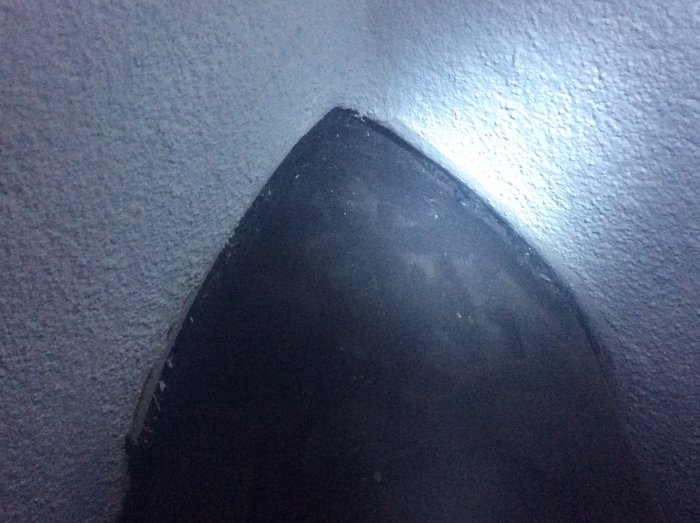
Where the pipe from the stove goes into the wall, it looks like some black fibrous material.
Probably some kind of seal. What is it?
Is it just a matter of pulling the stove off here when it needs to be dismantled, i.e., at the connection between pipe from the stove and pipe/hose into the chimney?
Since the stove is so nicely centered in this corner, I get the feeling that the corner (panels) must have been newly installed during the installation. It seems unlikely that the stove would fit so perfectly in a corner that was already built or paneled from before. Now it sits in the middle with the same measurements in both directions.
What do you think?
If it is a fireproof panel, e.g., ytong, that was installed six years ago, do you think it is screwed, mortared, glued, or what?
And the base is probably plasterboard, maybe double for fire safety. And a thin plasterboard indeed sounds "hollow" when knocked, unlike lightweight concrete.
My guesses. How does it look from the other side of the wall?
Pizzaputs? Did they do that in 2008? Or do you mean it's old?
And what makes you think it's just that?
And what is it really?
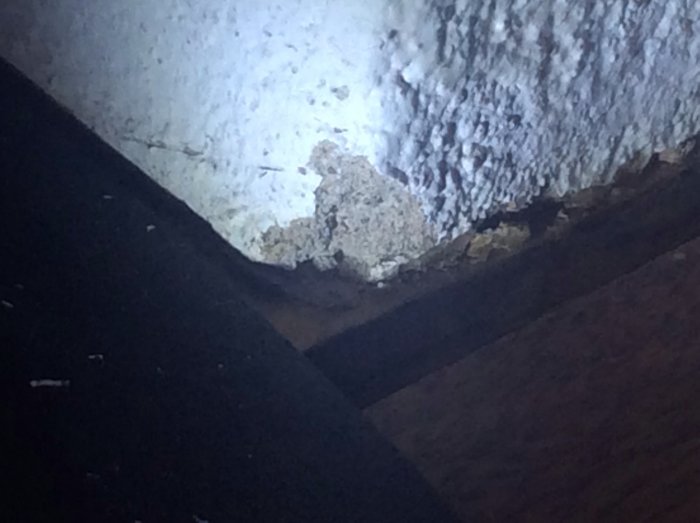
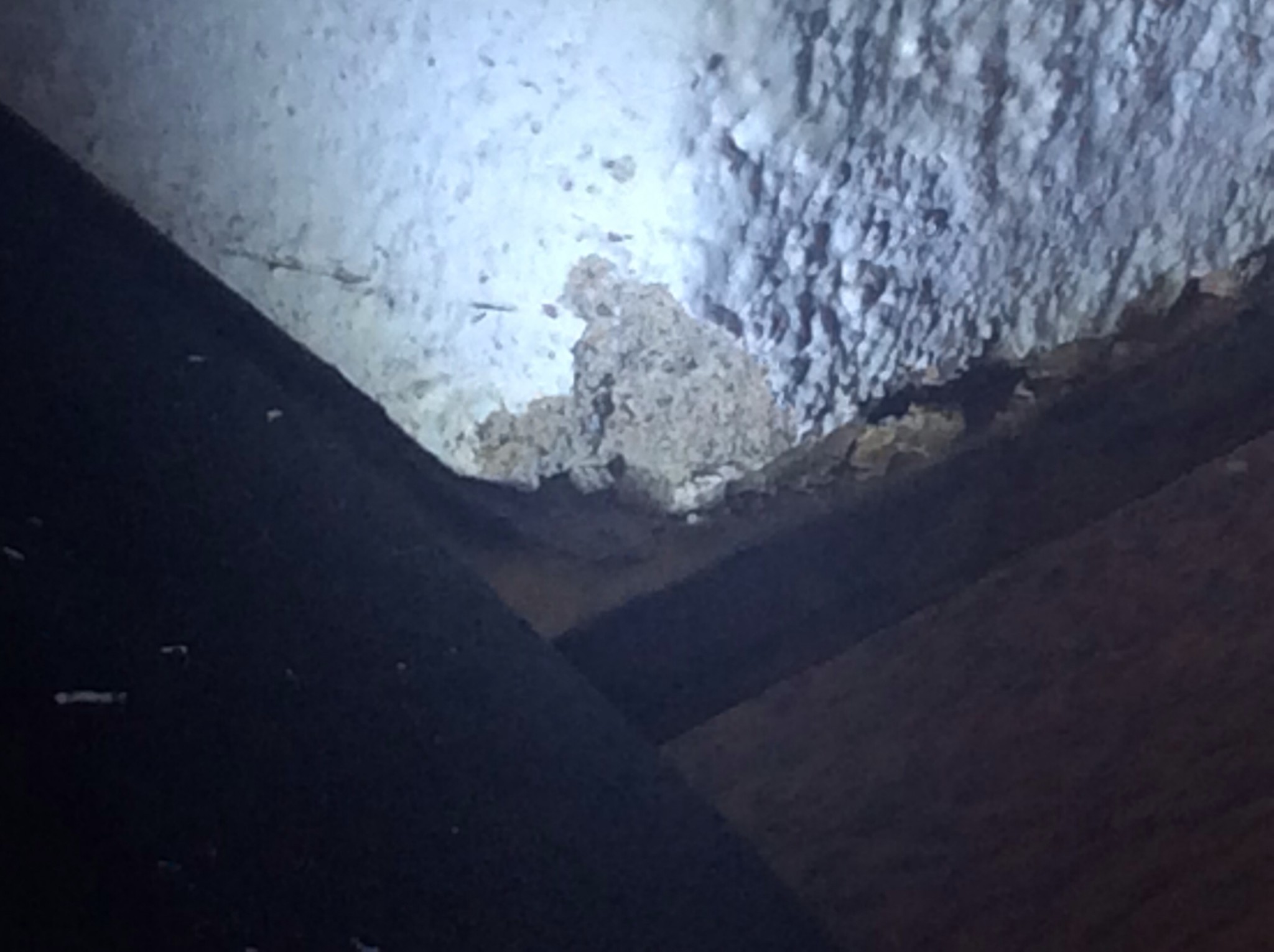
In the second picture, you see what I mean by "puts," where it's broken and the paint has come off.
When I feel the cross-section at the top against the ceiling trim, I don't feel a seam, like there would be double plasterboards.
Shouldn't I have felt it if it's plaster? And the thickness is about 6-7 cm, isn't that too thick if it's plaster, even if it's two boards?
And did they put up plaster behind a soapstone fireplace in 2008?
Could it be some form of fireproof board, like ytong?
I've heard it can also sound a bit "hollow."
Am I wrong?
Or do you mean it's an old corner?
On the other side of the wall, you also have a chimney, but the original one, i.e., bricks, mortar, plaster.
Harder, more dull/solid when you knock on it.
When I once installed a stove, I replaced the wooden wall with plasterboard on steel studs. This is probably the most common way to arrange fire-resistant surfaces on old walls. If it was your house when the stove was installed 6 years ago, I find it a bit hard to understand that you don't remember at all what was done.
You have received my guesses, nothing else, I wrote that clearly, didn't I? What you show in the second picture actually looks most like sand filler to me.
And I can actually offer one more guess: The wall behind the stove looks so thick, 6 - 7 cm as you write, may be because they put 45 mm steel studs with plasterboard as fire protection on the old wall. 45 + 13 + 13 = 71 mm.
Haha, I know it's strange that I don't remember. I'll blame it on the fact that it was my ex who ordered this job, not me. I was neither home nor involved. And he, he doesn't remember either. It's strange... I also find it odd that the company that did the job doesn't remember or have any documents that show what was actually done.
What is sandspackel?
Could it have been smeared on outside a gypsum board, to get a plaster-like texture, and then painted?
On the ceiling molding, I think I see remnants of something gray that has "splashed" on the white molding and the wall behind.
That's why I also think that maybe they plastered a surface before it was painted white.
Of course, I could be wrong.
Is sandspackel gray by the way?
Yes, you're clear that these are guesses!
Thanks for your guesses, by the way!
...
Where the pipe from the stove goes into the wall, it looks like some black, fibrous material.
Probably some kind of sealing. What?
Is it just to pull the stove here when it should be dismantled, i.e., in the connection between the pipe from the stove and the pipe/hose into the chimney?
...
a) Why not knock away a bit of the wall panel down in a corner to see what material it is.
b) The fibrous material should be fiberglass rope. It seals the flue pipes.
c) There should not be any problem pulling the stove from the chimney.
Why are you changing it, by the way, isn't the stove good?
By the way, I checked my soapstone stove.
It is completely round, cylinder-shaped, and stands with the back 17 cm from the wall. And the wall is wood panel.
So there was apparently no problem with fire safety.
But maybe your stove has metal/iron that gets hotter at the back?
I will replace the stove as it has to be dismantled anyway. I'm going to change the floor it's on.
I want a stove that fits the house better, a bit more old-fashioned style. Possibly one in cast iron.
There is nothing wrong with the soapstone stove! It has worked great!
I think mine has metal on the back..
Yes, maybe it will be a matter of simply chiseling away a part of the panel.
The question is how, so I don't crack too much..
I still find it unlikely that it would be lightweight concrete.
Do you really not dare to scrape away a little plaster/spackle in a corner to see what's behind it?
You can just spackle it again afterwards.
Besides, you can see it if you move the stove and peek into the hole into the chimney.
By the way, what difference does it make what's behind the "plastered" surface?
Okay, I thought that sometimes nowadays, and in the past, some form of fireproof/fire-resistant panels were installed behind stoves. That's why I'm rambling about Ytong.
Since a hose is routed through the chimney opening and all the way up to the chimney, I unfortunately can't peek in to see what the wall is made of.
Sure, I'll simply have to try to cut out a piece, at the bottom for example. The reason I want to know is to decide if it's something "old junk" that I should take the opportunity to replace when I'm dismantling the current stove and before I install a new one. I want to ensure that it really is fireproof and a suitable material in this context.
Sand putty, what I see as plaster in the second picture, right?! Does it look like plaster? Do you think it's the stove company or is it the painters who smeared this on in the next step? Or is it part of creating a fireproof wall, i.e., probably done by those who installed the stove? Is sand putty used to get a surface that resembles a masonry wall, or why?!
The company that did the installation does not remember 100%, but when I called them now they say that "we probably put ytong there and plastered the surface." Ytong, which apparently comes in small blocks, is something that you build up with.
Demmpa, what are the boards/blocks you are thinking of called?
How thick are they?
What are the fiber cement boards called that you mean, which are now used instead of asbestos?
How thick are they? What are they made of? And is it common to create a plastered surface on these?
Does anyone know how thick ytong blocks can be? What different dimensions are there? That can be built up behind stoves.
I think it might be those and that someone then applied some form of plaster on the outside.
Since it extends over the cornice, you should be basically sure that it's "new." If there was no fireplace there before you installed the stove, it's likely done to fireproof the wall. There's no reason to do something that looks like this otherwise. Do you need to know exactly what material? http://www.brandskyddsforeningen.se/i-hemmet/sotning/brandsakert_placering
If it sounds hollow, I would think more of "radiation protection" than "fireproof wall."
If you need to know to determine what can be installed at the site, isn't it easier to ask the chimney sweeper who will then approve it how he assesses the matter? Especially if it's an older stove without type approval being installed. Or base it on 25 cm from the info in the link above, and it should be fine, provided you don't encounter a picky person with their interpretations.
Vi vill skicka notiser för ämnen du bevakar och händelser som berör dig.