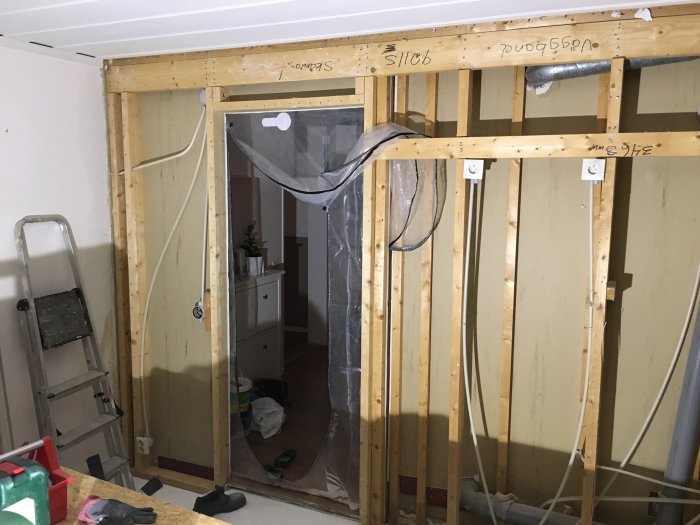
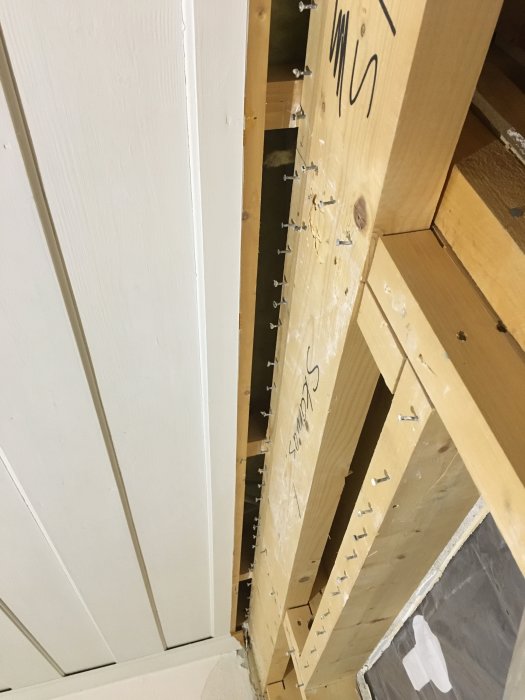
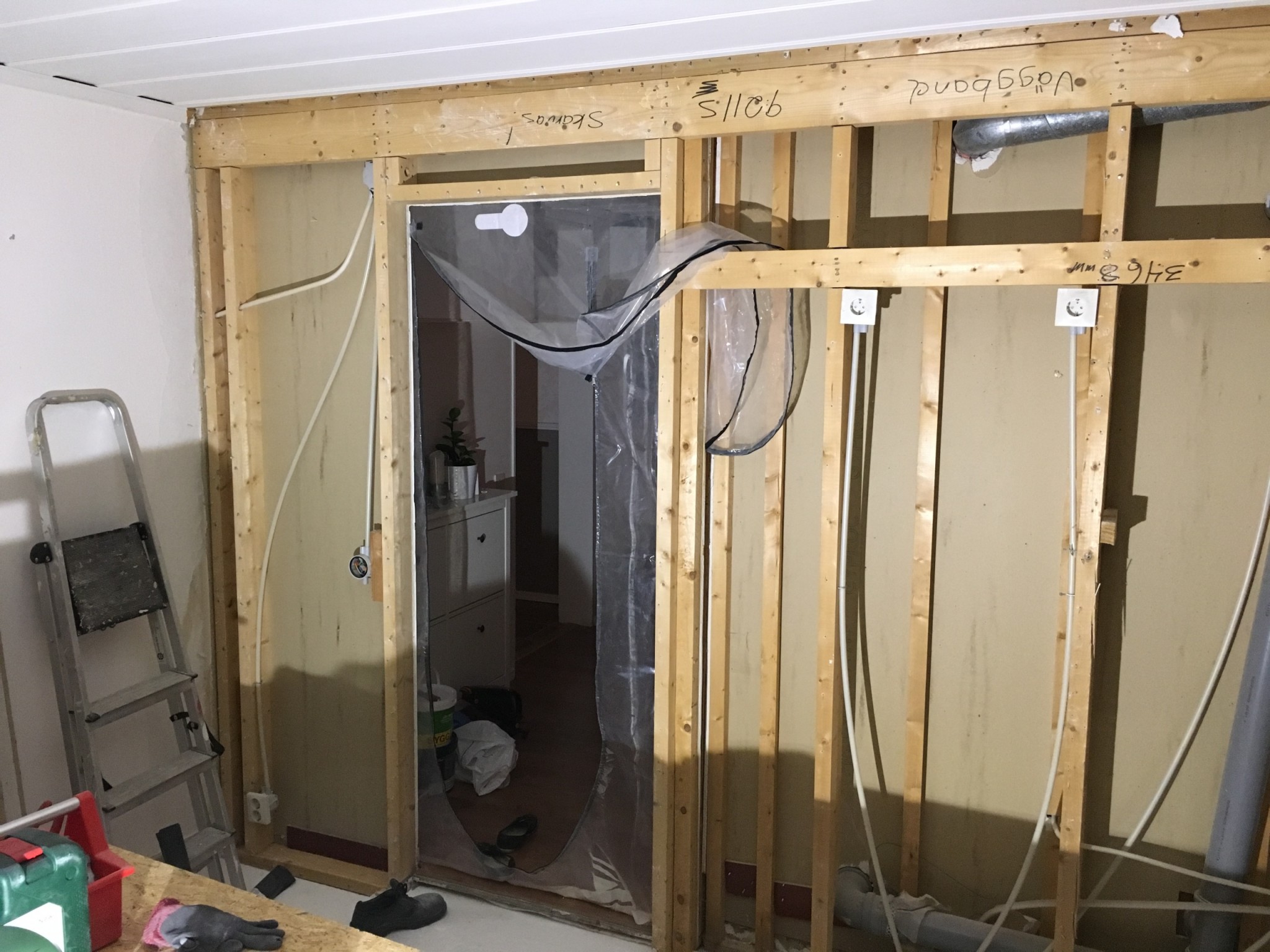
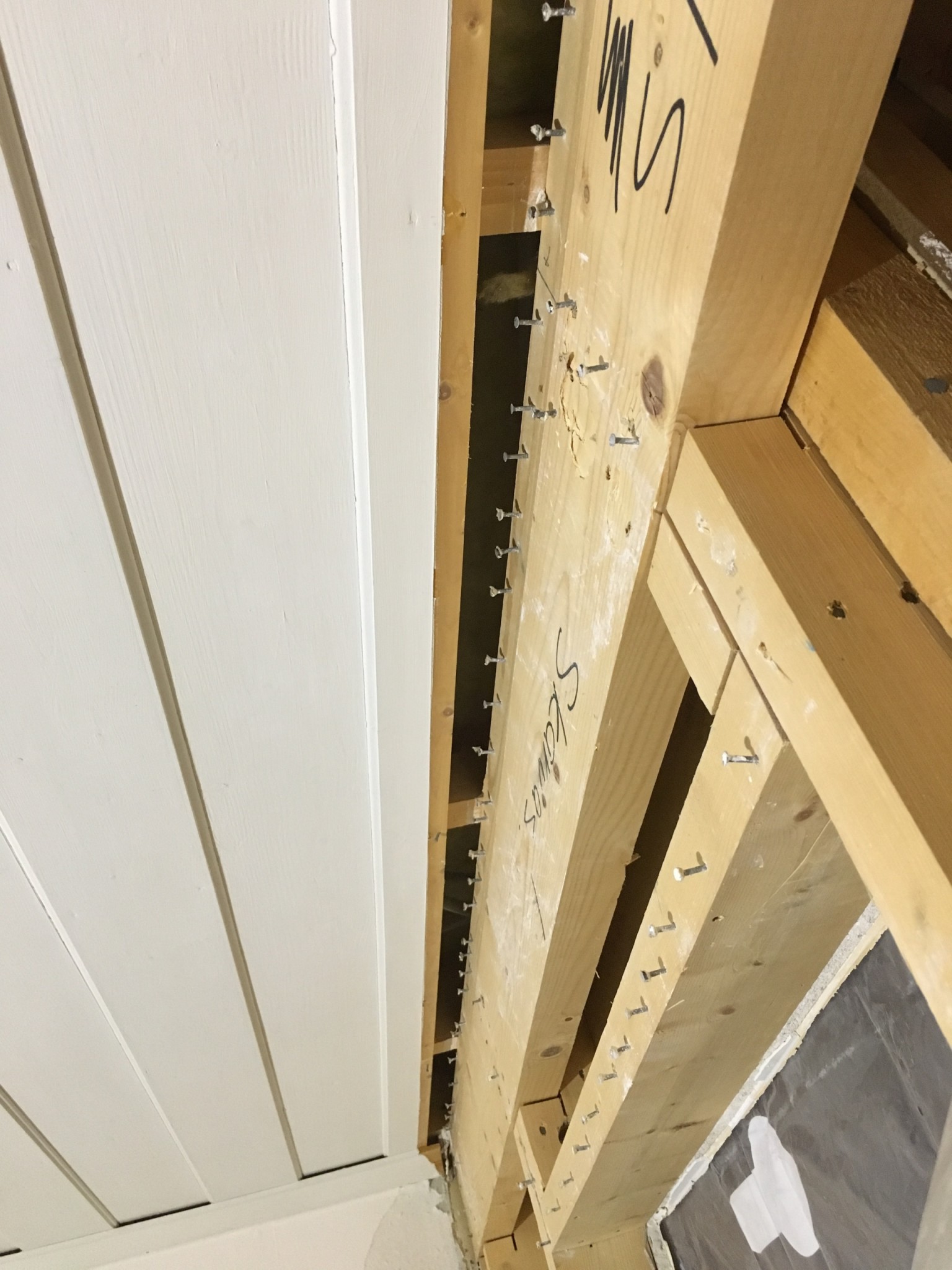
We want to make the opening to our kitchen (2-story house) larger. Everything indicates the wall is load-bearing since there is a beam at the top on which the intermediate floor rests. It says väggband on it.
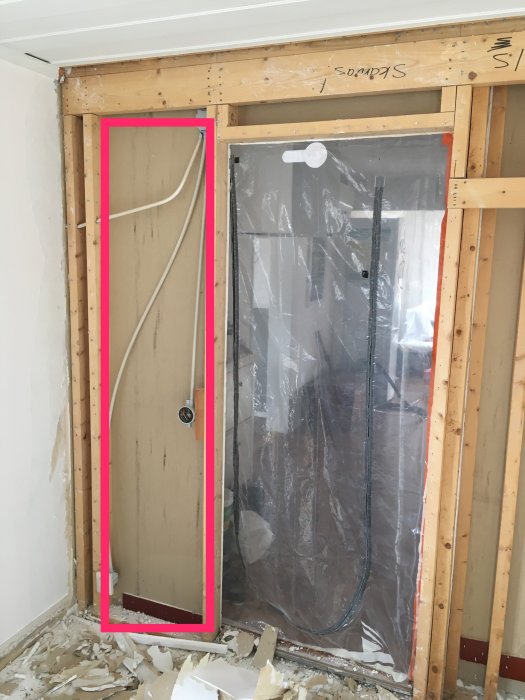
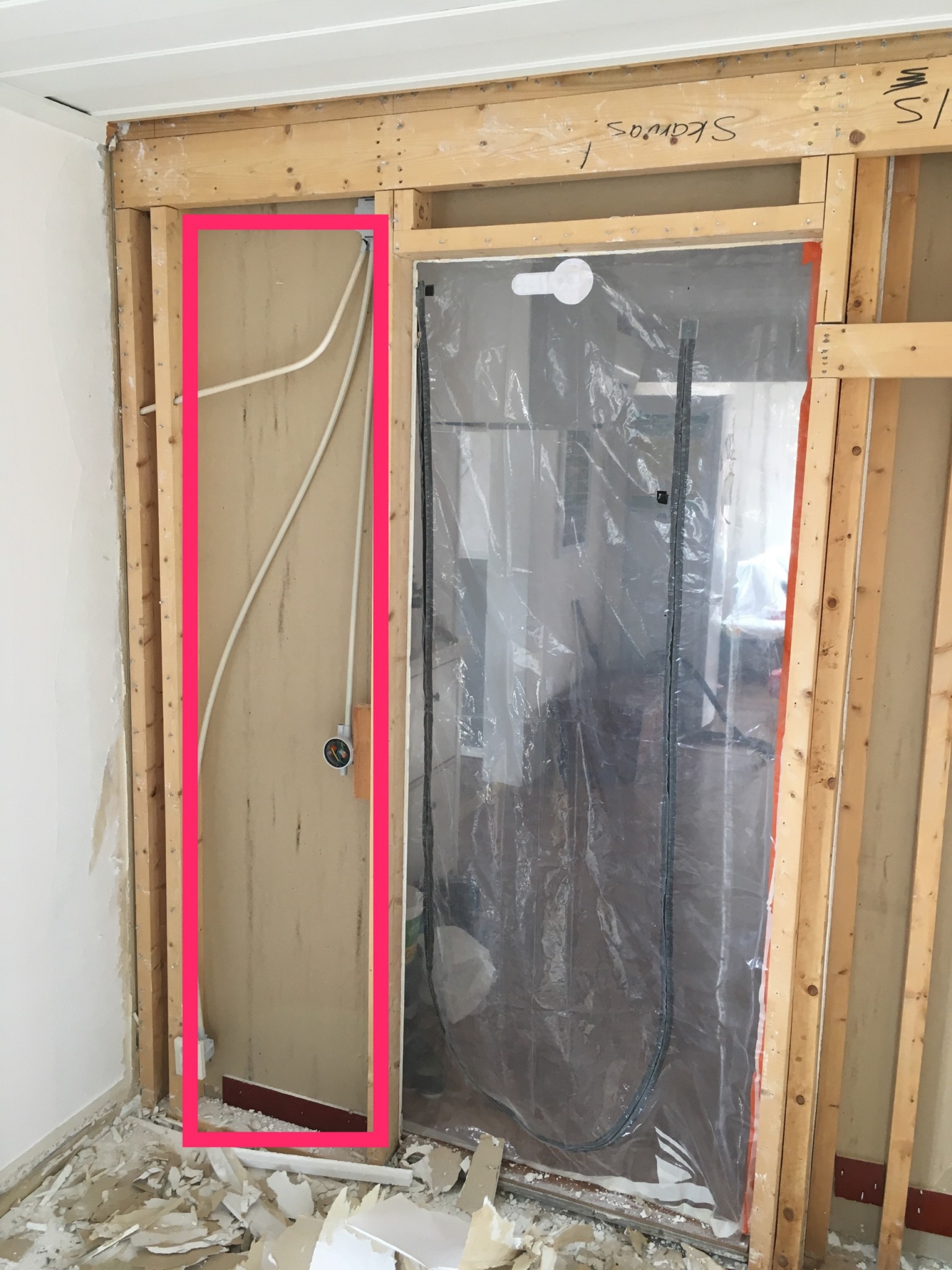
The beam is 190x45mm and the current opening is 850mm, we want to increase it to 1440mm according to the picture below. The wall is framed with 90x45mm, though some of the studs feel "loose" and some are cut through as there are pipes and water in the wall.
Is it possible to calculate this? There will be two floor joists over the opening.
If it is a 45x195 board (45x190 is not a standard size) in the lowest quality class (C14) and it is 1.4 meters long, it can handle a point load in the middle of about 350 kg. Therefore, you probably don't need to do anything at all; it depends a bit on how the structure looks and what is on the floor above. If you want to reinforce, glue and screw a piece of board as high as it can be directly under the roof beam. It's also fine to insert a small steel beam.
If it is a 45x195 rule (45x190 is not a standard size) in the lowest quality class (C14) and it is 1.4 meters long, it can handle a point load in the middle of about 350 kg. Most likely, you won't need to do anything at all, it depends a bit on what the construction looks like and what is on the floor above. If you want to reinforce, glue and screw a rule piece as high as it can go directly under the roof beam. A small steel beam can also be inserted.
Thanks for the response!
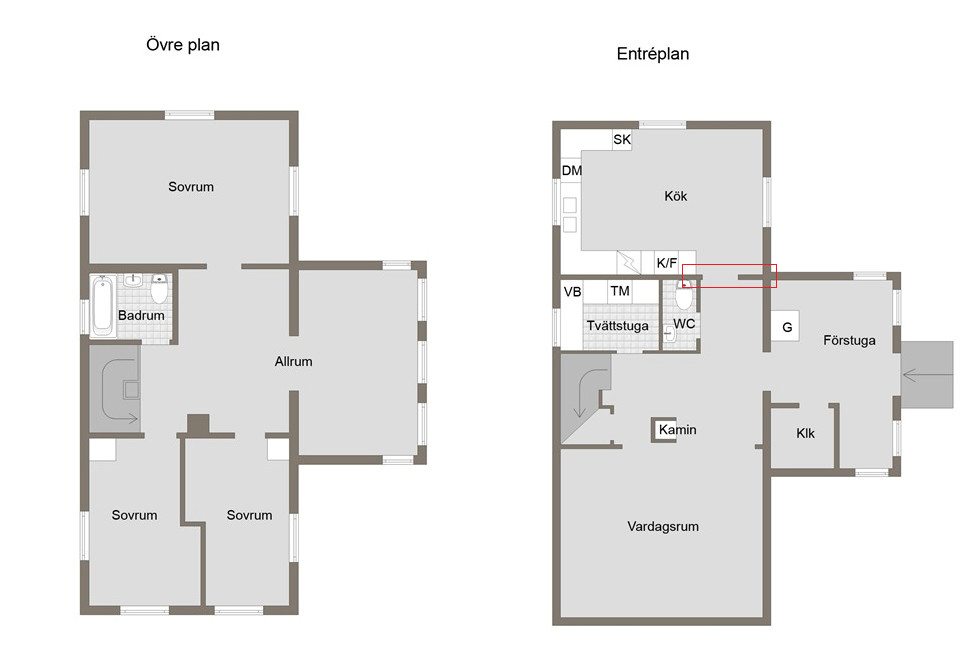
It is a two-part rule, visible if you click on the images to bring up a magnification, the upper one is about 45x45 (I'm not home so I can't measure right now). I'll try to add a bit more info, this is what the floor plan looks like, the main building is about 12.5m x 5.5m. The porch and the upstairs living room are extensions. The wall to the large bedroom located above the kitchen opening is not load-bearing.
The corresponding wall in the living room has been removed at the fireplace/stair height and replaced with a beam.
This is what the wall looks like to the right of the opening seen from the kitchen side, the standing rules are notched at various places for water/sewage and one feels basically loose.
With this new information and after a more careful study of all the photographs, I must retract what I wrote in my previous post. Just the floor rule in the joist above, resting directly on the beam above the current opening, represents a point load of about 600 kg. Therefore, reinforcement is necessary, preferably with a steel beam. Wooden joists stacked on top of each other without being glued do not have the same resistance to deflection. I can come back later today with suggestions for a suitable dimension for a steel beam.
Unfortunately, I don't think the house seems to be completely professionally designed. Some parts of the floor on the upper floor must be quite shaky due to the large spans. A certain amount of caution is therefore advisable.
Under normal circumstances, considering the drawing, I would say that the wall is absolutely not load-bearing. Load-bearing walls almost always run the length of the house, across the roof trusses so that the trusses are supported, and there you have nothing.
A slightly risky way to test this is to saw off the standing studs with a handsaw. If the saw gets stuck, the wall is probably load-bearing. In that case, leave the saw in place and prop up the roof until the reinforcement is installed. A steel stud takes up less space than a laminated beam.
Think that a 195x45 should be enough, nailed together with the existing beam above the actual opening. The new beam is securely attached to the standing studs on each side of the opening. This gives you essentially a load-bearing beam over the actual opening that is 90x190. Should be ample for a span of 1440 mm according to gut feeling. Possibly the side posts/wall studs need to be reinforced laterally.
If a 45x195 is to work, it should be at least C24 grade, preferably C30. The question is whether it fits in height without needing to lower the door height. In this case, I would opt for a steel beam to save height space. A VKR tube (rectangular hollow section) with dimensions 90x50 is definitely sufficient.
That the floor joists in the intermediate floor are in the length direction of the house is evident both from the third photo in the initial thread and the floor plans. However, I agree that it is unusual. See also my previous comment.
With this new information and after a more thorough study of all the photographs, I must retract what I wrote in my previous post. Just the floor joist in the ceiling above, resting directly on the beam over the current opening, represents a point load of about 600 kg. Reinforcement is thus necessary, preferably with a steel beam. Wooden joists stacked on top of each other without being glued have much less resistance to deflections. I can return later today with suggestions for an appropriate dimension for a steel beam.
Unfortunately, I don't think the house seems to be entirely professionally designed. Some parts of the floor on the upper level must be quite shaky given the large spans. A certain degree of caution is therefore warranted.
Okay, thanks for the input! You are very welcome to suggest a steel beam.
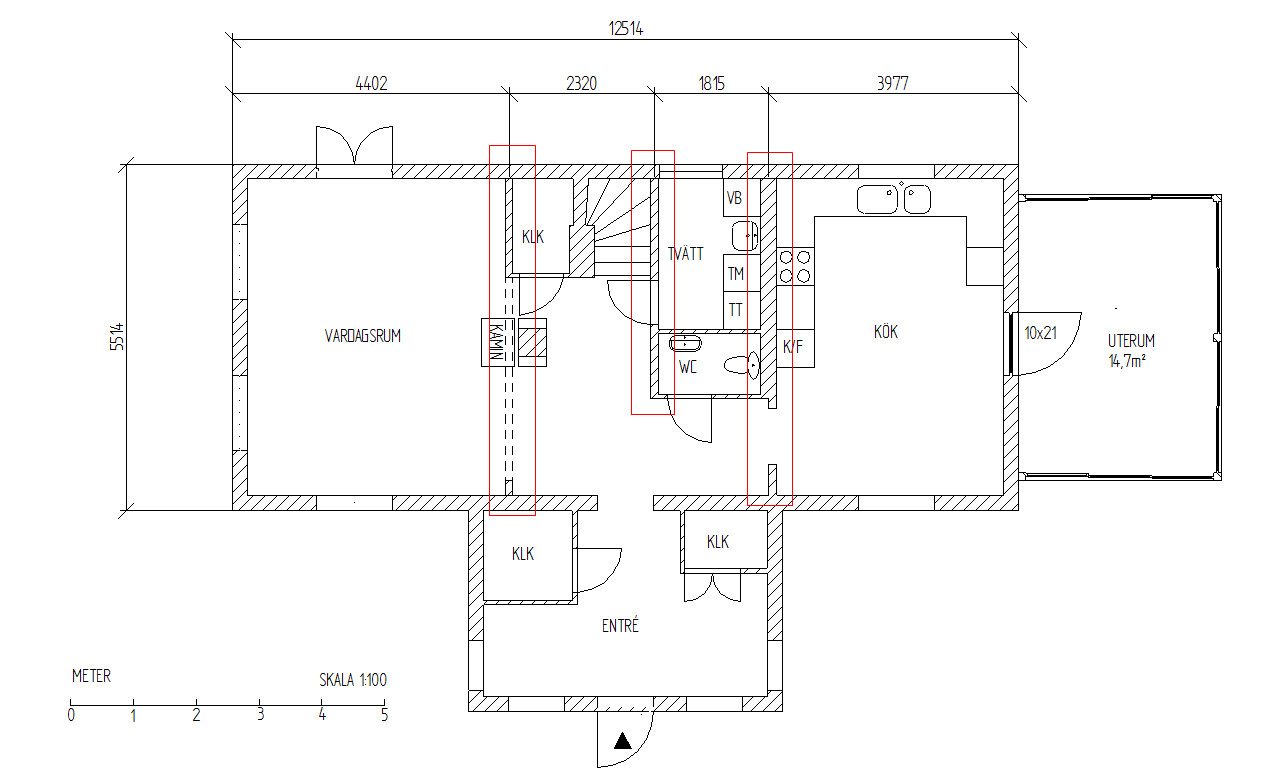
It doesn't sound too good if the house doesn't seem to be well built. The house is one of about 50 similar/identical modular houses in an area from -79. Below is a more dimensioned floor plan where I have circled the interior walls that I believe are load-bearing, other interior walls are 45x45 which, according to the technical description, are not supposed to be load-bearing.
I didn't say the house was poorly built, only that the planning (i.e., the original drawings) didn't seem quite professional. Don't be down about it. You have absolutely the right attitude towards changes.
The red-marked walls are definitely load-bearing. I have suggested a steel beam in a previous post.
If it is going to work with a 45x195, it should be at least C24 class, preferably C30. The question is whether it will fit in height without needing to lower the door height. In this case, I would opt for a steel beam to save height space. A VKR tube (rectangular hollow section) with dimensions 90x50 is definitely sufficient.
That the floor joists in the intermediate floor lie in the house's longitudinal direction is evident both from the third photo in the introductory thread and also from the plans. However, I agree that it is unusual. See also my previous comment.
Do you mean that the steel beam should completely replace the current joist? Or should it lie parallel to it inside the wall like Oldboys' suggestion?
justusandersson said:
I didn't say the house was poorly built, just that the design planning (i.e., the original drawings) didn't seem quite professional. Don't worry about it. You have absolutely the right attitude towards changes.
The walls marked in red are definitely load-bearing. I have provided a suggestion for a steel beam in a previous post.
The first floor plans I posted were from the realtor's listing from when we bought the house.
Unfortunately, I don't have the original drawings, which would have been good sometimes...
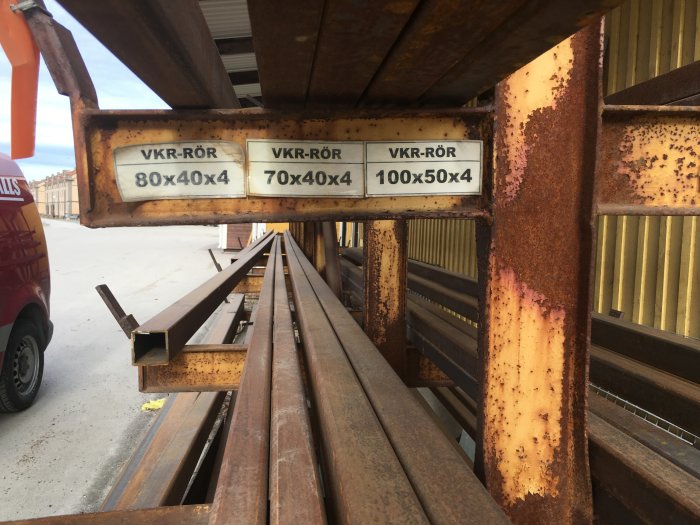
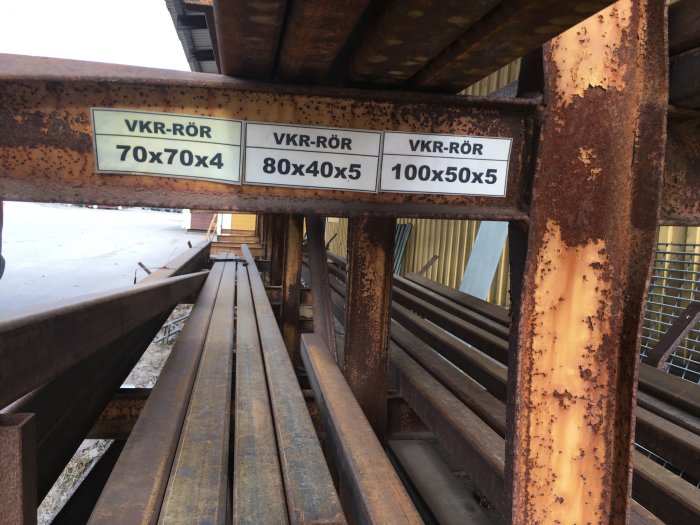
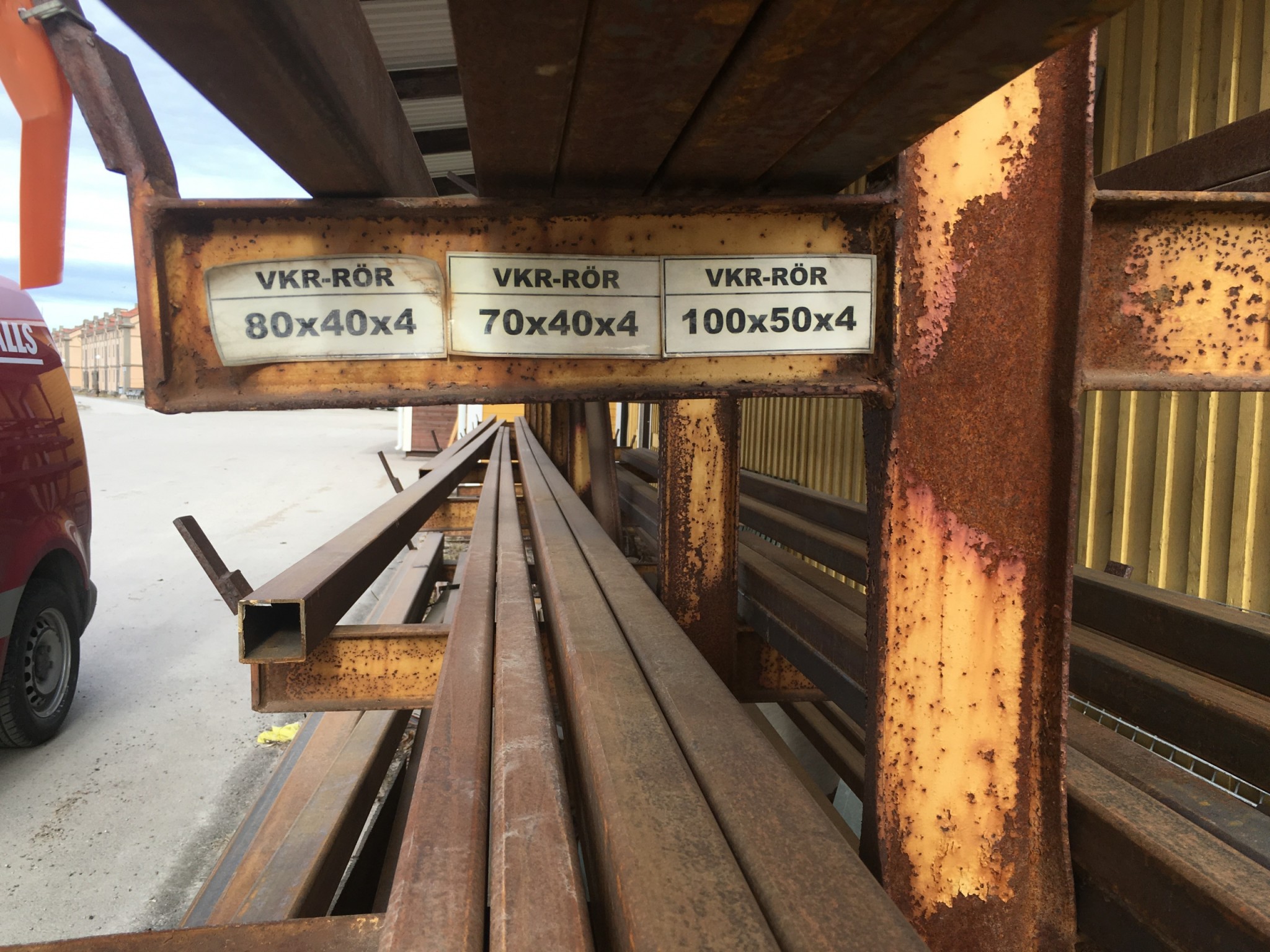
Now I have checked what my local hardware store has in stock, would 80x40x5 work?
Then the electricians have been to check since there is electricity in the wall that needs to be removed. His request is to fit a couple of boxes, so the opening will not be as large as I wrote above but rather about 1315mm.
Vi vill skicka notiser för ämnen du bevakar och händelser som berör dig.