Hi,
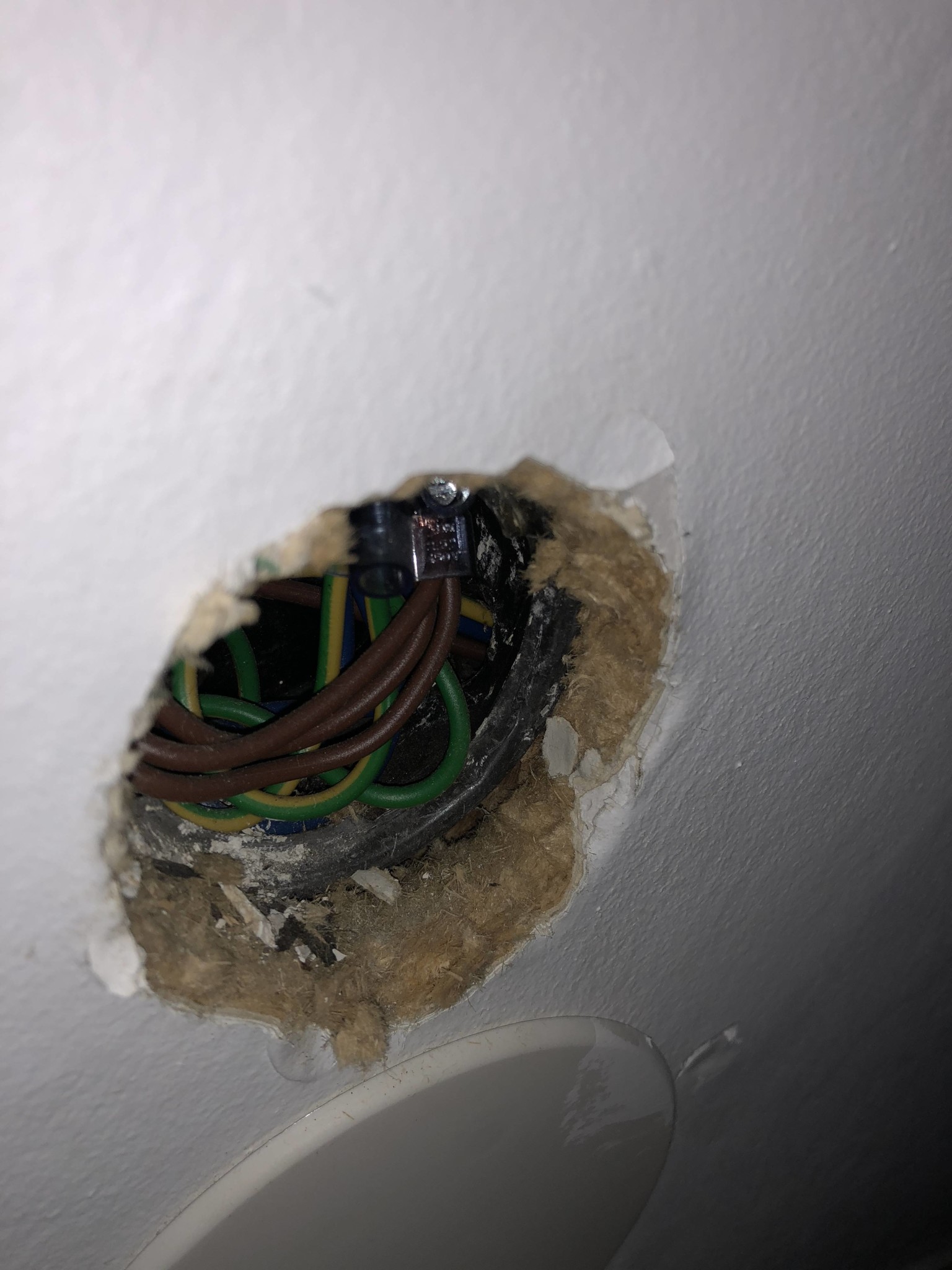
I'm going to take the opportunity to cut a channel for the electrician to pull some wiring while we're renovating a room. Uncertain about the exact material in the wall, but it's not drywall or concrete (see picture).
What tool should I aim to use to make it as smooth as possible?
congratulations, treetex is a hell. I don't have much advice to offer unfortunately, the boards are a bit like working with a damp cracker. Everything splinters very easily and it is very difficult to get nice edges. Maybe try cutting with a really sharp knife first and then a fine-toothed jigsaw...
congratulations, treetex is hell. Unfortunately, I don't have much advice to offer, the boards are a bit like working with a damp biscuit. Everything splinters very easily, and it's very difficult to get nice edges. Maybe it can be cut with a really sharp knife first and then a fine-toothed jigsaw...
I've done it, and it went really well. I guess ts should just try it before getting advice to tear it down??
I did it and it went really well. Isn't it just to try for ts before he gets the advice to tear it down??
How did you do it? It's a small room and I have no desire to start a project tearing out and putting up new panels. So I'd gladly take any tips on how I can handle the wall to create a channel.
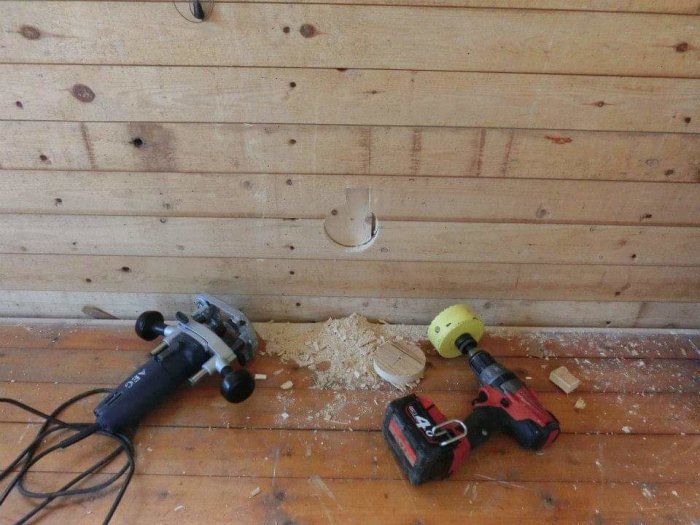
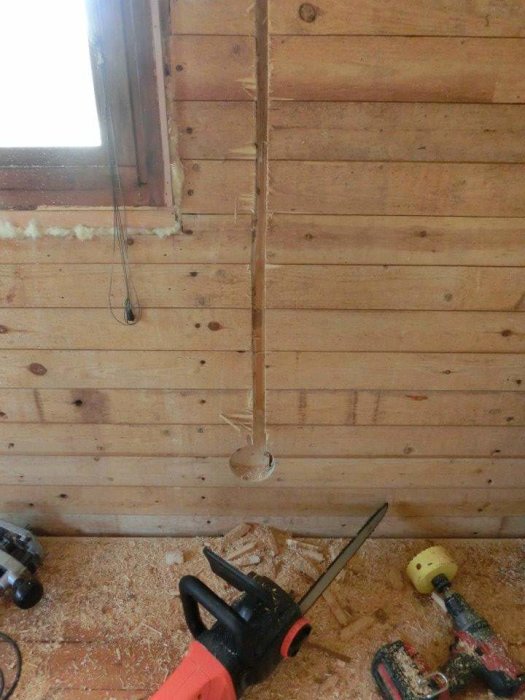
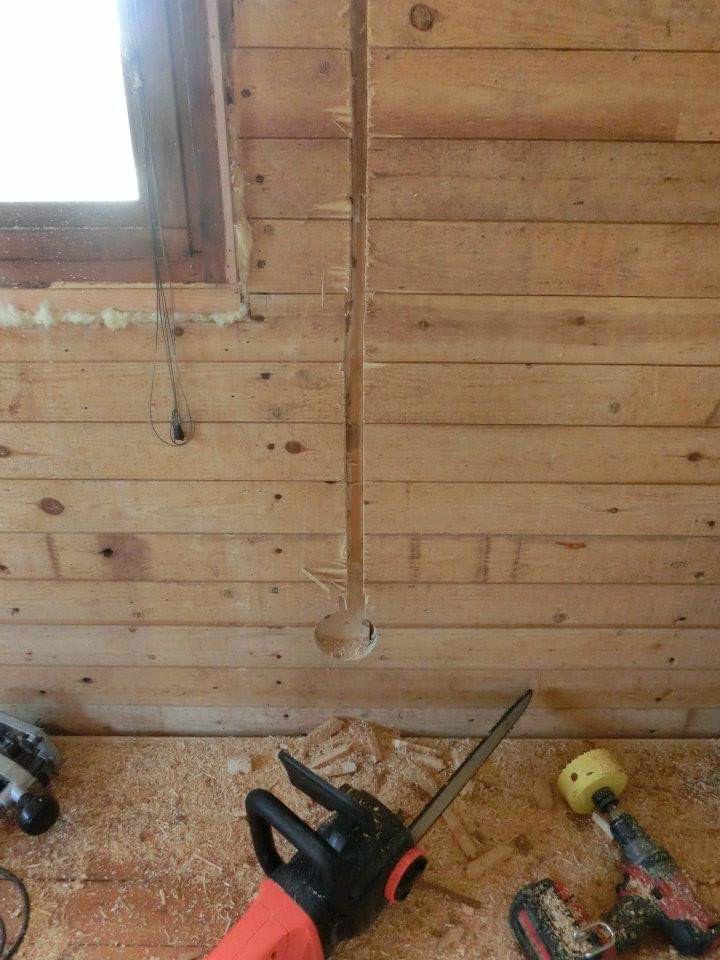
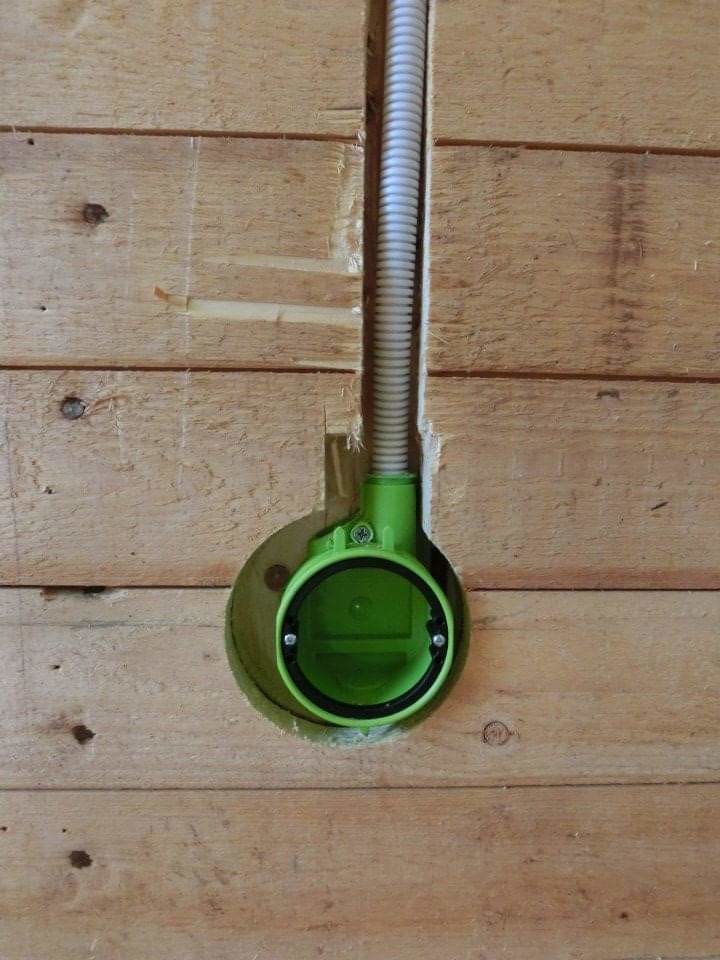
Used an electric chainsaw and set a stop with a clamp so as not to cut too deep, then you can cut both tretex and wood but I assume you plan to plaster over it later.
Tear down the boards, install new wiring and then put up OSB + Gypsum. That way, you'll have walls that can handle hanging things on them.
/M
As mgranbom, and even p-plats showed with pictures here in the thread, tear down the treetex first, then route in pipes and boxes and cover with gypsum, possibly OSB+gypsum.
But if you like listening to music, a bit more or less audiophile, it can be unfortunate to remove the treetex, as it usually results in very pleasant acoustics in rooms (houses) with plank or wood frame and treetex. It provides a bit of natural damping. I've lived in such a house myself, and I've never had better room acoustics, without additional measures, than there.
However, after all, the simplest way with the most guaranteed result is probably to remove the treetex and apply gypsum when all the electrical work is done.
In my dwelling, which I just wrote about, we brought in some extra electricity.
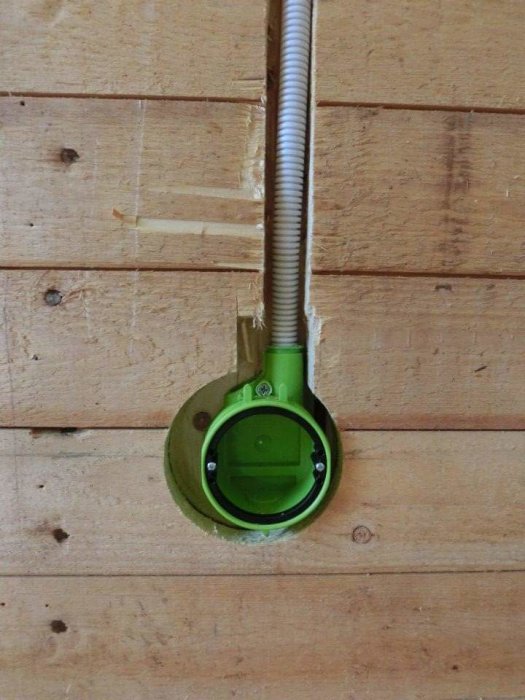
I routed right through the treetex and into the plank walls about 20-25mm deep. I attached VP pipes and finished by troweling over smoothly and then applied new wallpaper.
It worked for the few years I stayed there, but I suspect it may have started to crack later because troweling against treetex doesn't seem like a particularly stable construction.
If I were to do this today (but probably wouldn't) I would likely try to smooth trowel just in the routed area at first, let it dry, then glue paper tape over with fabric and wallpaper adhesive, and finish with a bit of broad troweling over the tape to ensure it doesn't show after the surface layer is in place.
But in any case, the easiest way with the most guaranteed result is probably to tear off the treetex and plaster once all the electrical work is finished.
Though tearing off treetex is quite a tough job too, since it's so difficult to remove it in large pieces... so whether it's the easiest I would say is questionable, but the best result is probably true.
Vi vill skicka notiser för ämnen du bevakar och händelser som berör dig.



major_tom said:
congratulations, treetex is hell. Unfortunately, I don't have much advice to offer, the boards are a bit like working with a damp biscuit. Everything splinters very easily, and it's very difficult to get nice edges. Maybe it can be cut with a really sharp knife first and then a fine-toothed jigsaw...CHEMAS said:



Mikael_L said: