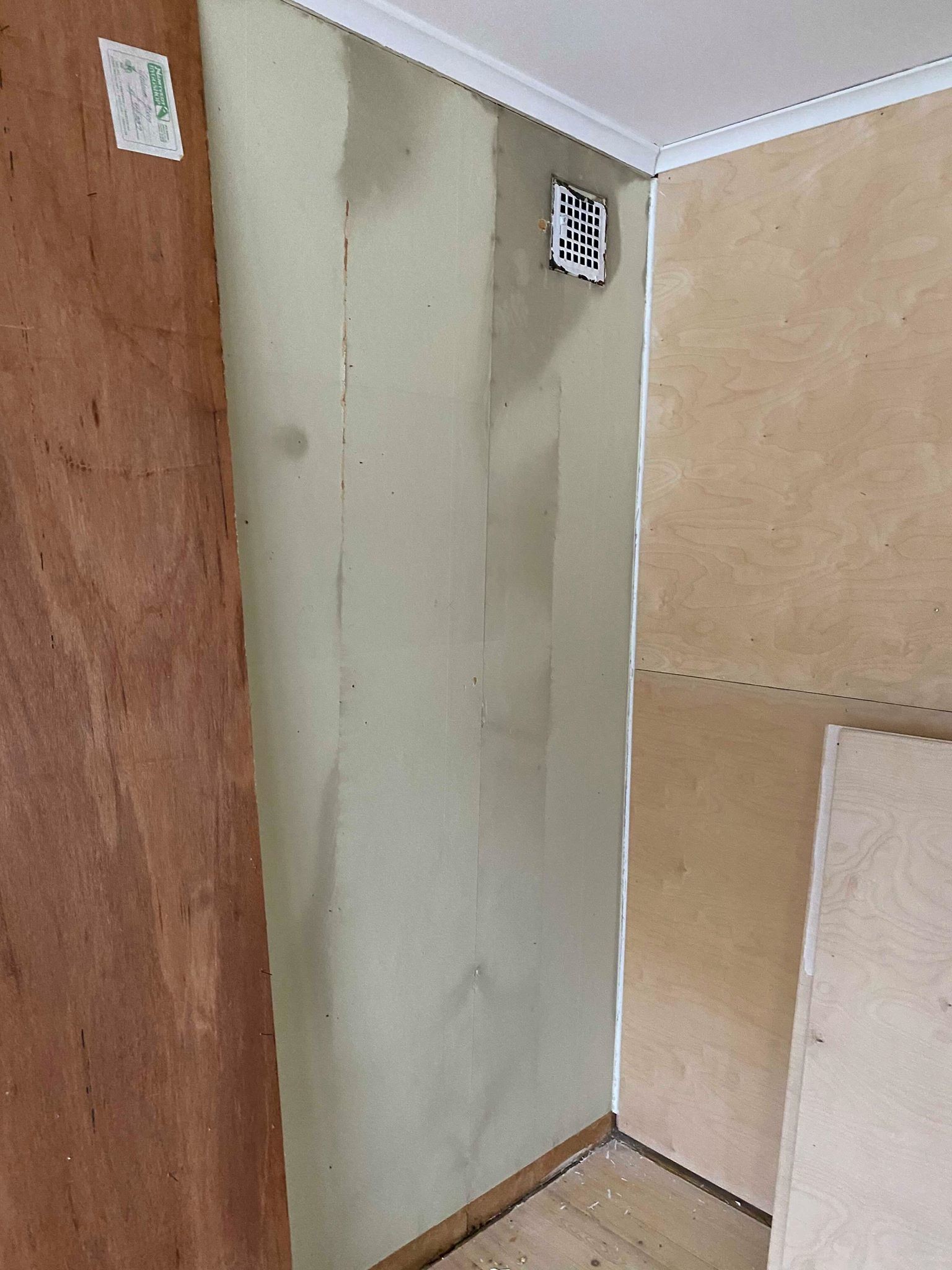
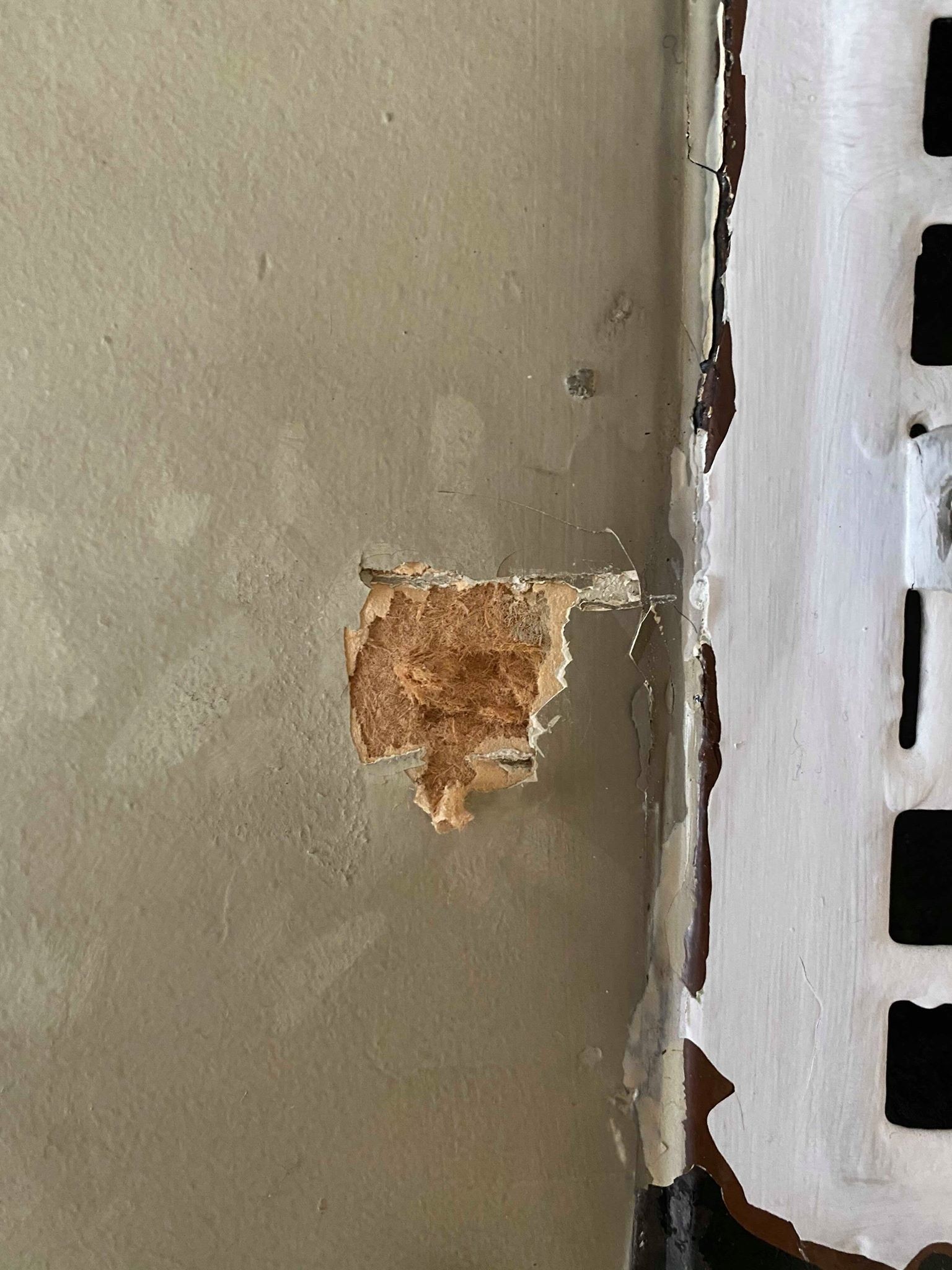
I am planning to put plaster (6mm) on tretex boards in a plastered brick house from 1958. I have just removed old veneer boards (or something similar) that were nailed on top of the tretex. The tretex, in turn, has a layer of what looks like paper and plaster. Behind the veneer boards, you can see blackish spots on the surface of the tretex boards. It's worst around joints, at nail heads, and especially at the vent. If you remove the surface of paper and plaster, the tretex looks completely fine and unaffected inside.
Since this is worst at the nail heads and the vent and is on the surface, this suggests that it is something that has occurred when indoor air met the coldest parts of the wall. The question is whether it's dirt, black mold, or something else unfortunate. And if there is a risk of building in moisture damage and mold in the wall if you put plaster over this?
What do you say, should the tretex boards be removed and replaced with plaster, or is it fine to put renovation plaster directly over this? There are generally no visible moisture damages in other parts of the house.