
Hello.
I am going to build a recording studio from scratch, which is obviously a lot of fun, but it does bring up a lot of questions that need answering, such as what to consider with the walls. I've done as much research as I can, but you can never ask a question too many times, and you all here are great at this
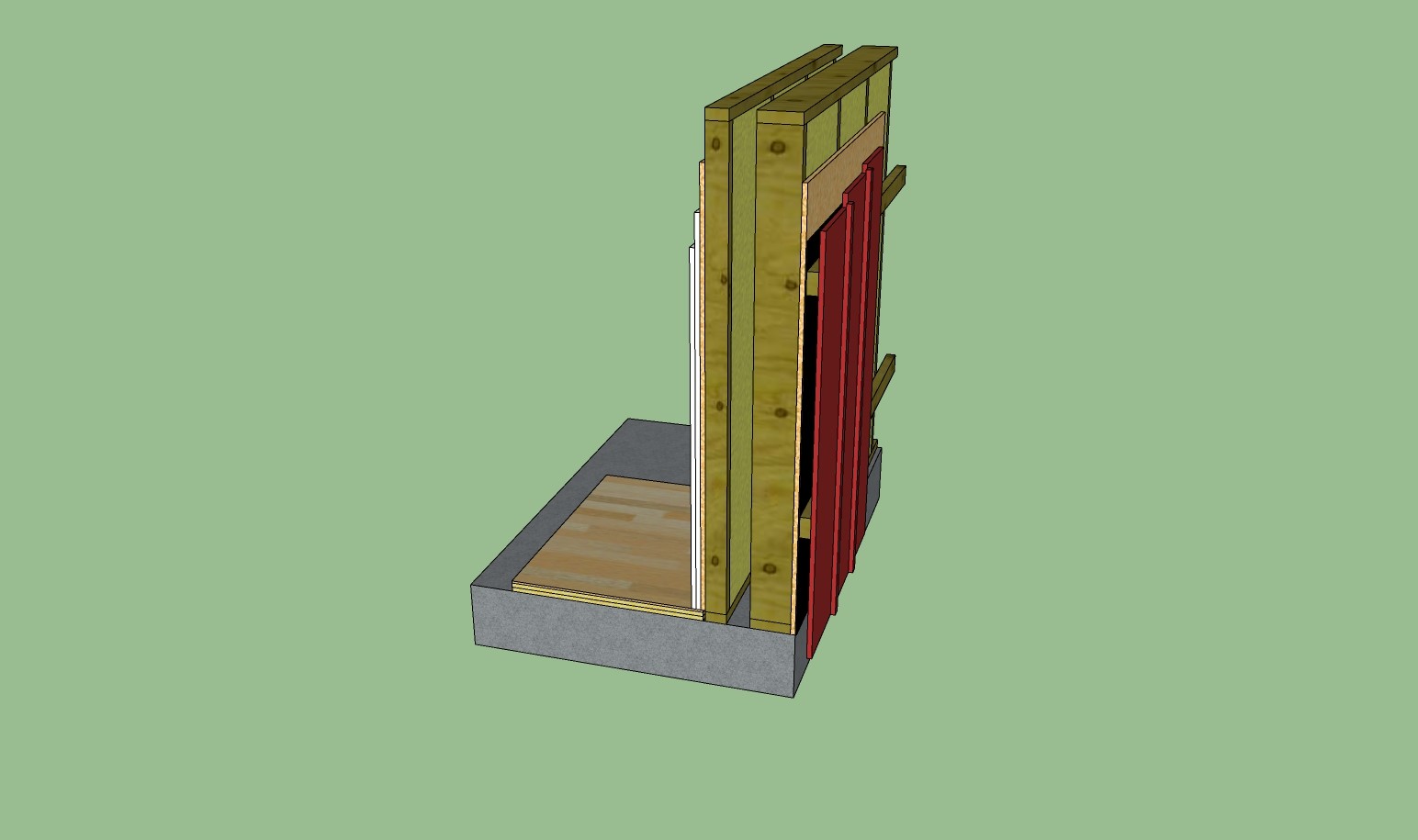
I've made a sketch in SketchUp of my plans. What I'm a bit uncertain about is how it works to put an OSB board under the outer panel. I've seen that many people do it and it seems to work, but I'm a bit unsure about how it works with our climate...
From inside out: 2 layers of gypsum, 1 layer of OSB, vapor barrier, 45x90 frame with insulation, air gap, 45x170 frame with insulation, OSB board, wind barrier (?), nail batten, 21x120 outer panel and covering batten 22x45, and a bit of painting as the icing on the cake.
Regards
I am going to build a recording studio from scratch, which is obviously a lot of fun, but it does bring up a lot of questions that need answering, such as what to consider with the walls. I've done as much research as I can, but you can never ask a question too many times, and you all here are great at this
I've made a sketch in SketchUp of my plans. What I'm a bit uncertain about is how it works to put an OSB board under the outer panel. I've seen that many people do it and it seems to work, but I'm a bit unsure about how it works with our climate...
From inside out: 2 layers of gypsum, 1 layer of OSB, vapor barrier, 45x90 frame with insulation, air gap, 45x170 frame with insulation, OSB board, wind barrier (?), nail batten, 21x120 outer panel and covering batten 22x45, and a bit of painting as the icing on the cake.
Regards
Hello
What you've seen might be in the states on TV? In Sweden, it's not common for people to put OSB behind the panel because they are sensitive to moisture; glued wood fiberboards and damp environments never mix well.
Check out
https://www.traguiden.se/om-tra/materialet-tra/trabaserade-produkter/skivmaterial1/osb-skivor/
They write a bit about OSB board and are fairly impartial regarding the specific use you're considering.
The board behind the panel is meant to provide stability and brace the studs; taller walls often require gypsum on the outside and wood board on the inside to ensure stable studs that don't bend in the weak direction.
Low walls under 3 meters often require it only on the inside, gypsum also helps stabilize the studs.
The board on the outside also makes the wall dense and resistant to wind, just like your wind paper.
Then we also get into small rodents that find the insulation in the wall appealing; there are metal chambers you can place at the bottom if using wind cloth.
The latest recommendation for air gap is now 34mm, worth considering when building new.
What you've seen might be in the states on TV? In Sweden, it's not common for people to put OSB behind the panel because they are sensitive to moisture; glued wood fiberboards and damp environments never mix well.
Check out
https://www.traguiden.se/om-tra/materialet-tra/trabaserade-produkter/skivmaterial1/osb-skivor/
They write a bit about OSB board and are fairly impartial regarding the specific use you're considering.
The board behind the panel is meant to provide stability and brace the studs; taller walls often require gypsum on the outside and wood board on the inside to ensure stable studs that don't bend in the weak direction.
Low walls under 3 meters often require it only on the inside, gypsum also helps stabilize the studs.
The board on the outside also makes the wall dense and resistant to wind, just like your wind paper.
Then we also get into small rodents that find the insulation in the wall appealing; there are metal chambers you can place at the bottom if using wind cloth.
The latest recommendation for air gap is now 34mm, worth considering when building new.
Thanks for your input!pjapen said:
Hi The ones you've seen might be in the states on TV? In Sweden, not many people put OSB behind the panel because they are sensitive to moisture; glued wood fiber boards and a damp environment are never a good combination.
Check out
[link]
They write a bit about OSB boards and are probably quite impartial about the specific usage you're considering.
The board behind the panel is there to provide stability and to cross-brace the studs, higher walls often require plasterboard on the outside and wood board on the inside so that you have stable studs that don't want to bend in the weak direction. Lower walls under 3 meters often only require it on the inside; plasterboard is also good for stabilizing the studs. The board on the outside also makes the wall dense and resistant to wind, similar to your wind protection sheet. Then we also come to small rodents that think insulation in the wall is nice; there are metal cages you can put at the bottom if you're using wind fabric.
The latest recommendation for an air gap is now 34mm; it's worth considering when you build new.
Not so much on TV, but it's true that I'm part of forums where most people build in the states, which is why I wanted to bounce the question here. The walls will be under three meters high, so I'm not worried about the stability itself, but about the sound level out. Therefore, I need to incorporate at least one layer of some kind of board material on the outer wall.

One more tip is to seal the two innermost layers with plaster. The innermost layer is usually sealed with putty and strips at the seams, but also make sure to get it as tight as possible between ceiling plasterboard and wall plasterboard. The gap that forms is best sealed with a flexible joint. For example, tec-7.
Also seal the next innermost layer of plaster in the same way and stagger the seams between the two layers of plaster if possible. You should also seal the seams on the outer plaster. Here, tape intended for the purpose is most suitable.
It might sound silly, but air tightness makes a big difference in sound insulation. For the same reason, you should give careful thought to ventilation.
Also seal the next innermost layer of plaster in the same way and stagger the seams between the two layers of plaster if possible. You should also seal the seams on the outer plaster. Here, tape intended for the purpose is most suitable.
It might sound silly, but air tightness makes a big difference in sound insulation. For the same reason, you should give careful thought to ventilation.
Absolutely! Small gaps here and there can be compared to one big hole in the wall if you add them up. Then all the layers are completely in vainV vectrex said:A tip is to seal both innermost layers with plaster. The innermost layer is normally sealed with putty and strips at the joints, but also make sure to make it as tight as possible between the ceiling plasterboard and wall plasterboard. The gap that remains is best sealed with a flexible joint filler. For example, tec-7.
Also seal the next innermost plasterboard layer in the same way and offset the joints between the two layers of plasterboard if possible. Even the outer plasterboard should have its joints sealed. Here, tape specifically designed for this purpose is most suitable.
It might sound silly, but airtightness makes a big difference in soundproofing. For the same reason, you should think carefully about the ventilation.
Where air leaks out, sound also leaks out, so as you say, ventilation becomes a challenge.
Tool enthusiast
· Stockholm
· 1 397 posts
I assume you are planning to build a semi-floating construction, i.e., not a floating inner shell but with decoupled wall frames and ceiling joists. On the outside, you apply exterior gypsum as already suggested. These can be mounted between the studs if you add some timber inside the stud bays. The number of layers you use depends on how much sound insulation you need. You mount the gypsum board without butt joints and with staggering (overlapping) in the corners. You can integrate sound traps for ventilation in the ceiling structure. No recessed electrical installations, and it seems you are aware of the importance of tight seals for penetrations.
Self-builder
· Stockholm
· 10 106 posts
There is a suspended screw specifically for silencer constructions.
https://byggteknikforlaget.se/en-smart-skruv-som-ljudisolerar-vaggar-och-tak/
https://byggteknikforlaget.se/en-smart-skruv-som-ljudisolerar-vaggar-och-tak/
Tool enthusiast
· Stockholm
· 1 397 posts
I assume it's a recording studio that is to be built and unfortunately this type of products won't help.
Click here to reply
Similar threads
-
Do these construction drawings describe load-bearing walls?
Building Materials and Construction Technology -
What is wrong with the construction? Moisture in exterior walls
Building Physics -
Takkonstruktion och bärande väggar i äldre hus, eventuellt åsar?
Tak & Vind -
Construction of exterior walls for torsional stiffness.
Building Materials and Construction Technology -
Bärande konstruktion för innerväggar i hus med grund fylld med skumglas?
Byggnadsvård