
4,947 views ·
28 replies
5k views
28 replies
Can you saw off the upper "corners" of a glulam beam
Hello, I am working on a project where I need to open holes in an outer wall and switch out three rafters for a laminated beam 90x315 supported by two laminated posts 90x90. The idea is for the underside of the laminated beam to be at the same height as the underside of the rafters, the rafters' "eave overhang" will be cut, and the rafters will be attached to the beam "from the side" using a joist hanger and a couple of substantial wood screws through the beam into the end grain of the rafter. The beam carries nothing but the three rafters and its own weight.
Now to my question: To facilitate later stages of the project, I would like to reduce the height of one corner of the beam (with about a 30-degree angle as the red line in the sketch). Does that part have any load-bearing function? How much (if any) can be cut without affecting the beam's function?
Now to my question: To facilitate later stages of the project, I would like to reduce the height of one corner of the beam (with about a 30-degree angle as the red line in the sketch). Does that part have any load-bearing function? How much (if any) can be cut without affecting the beam's function?
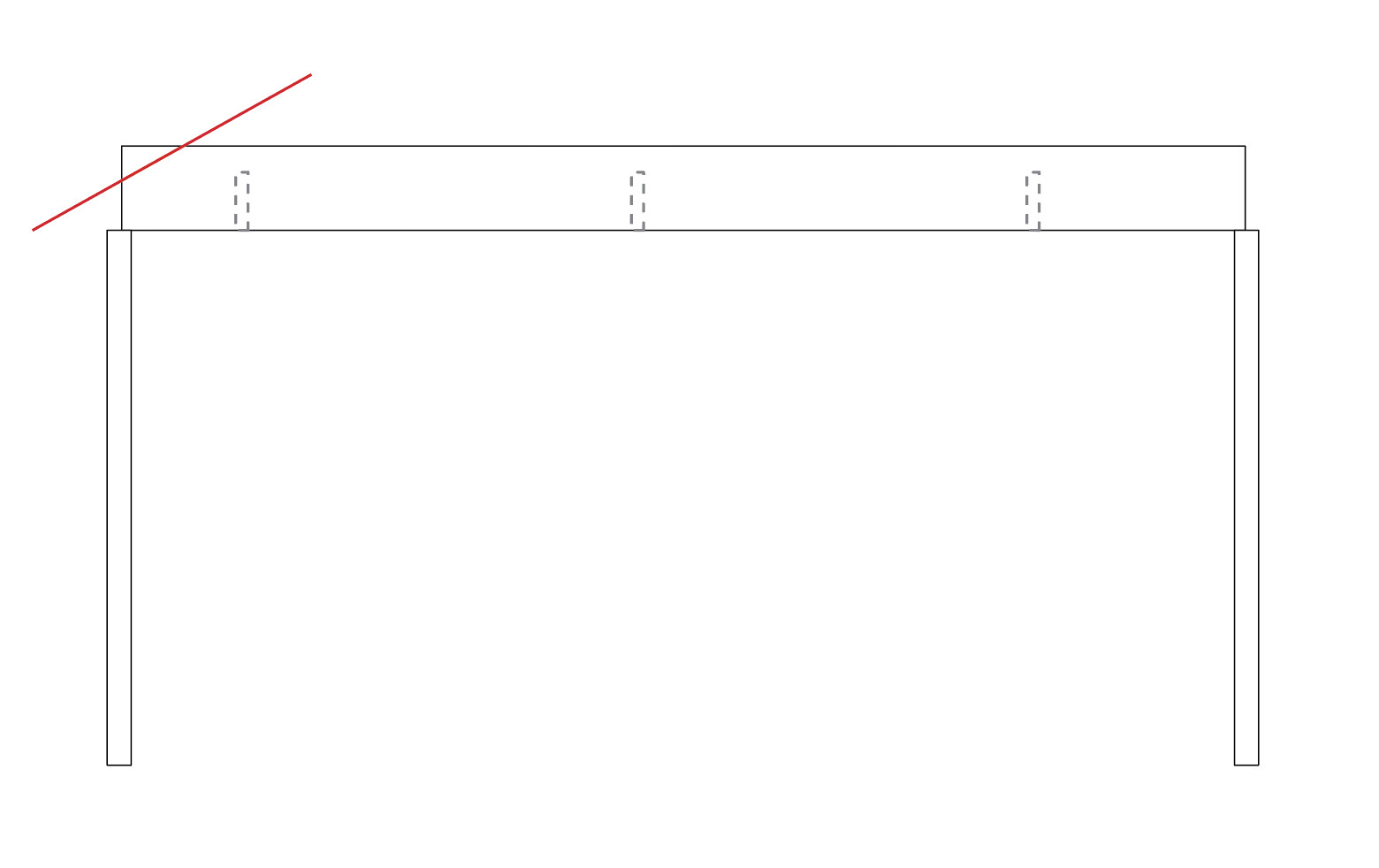
I would be more concerned about the rafters "hanging" on the side of the beam. If there's no load on these 3 rafters, then it's fine.L Laban said:Hello, I'm working on a project where I plan to open a hole in an exterior wall and replace three rafters with a glulam beam 90x315, supported by two glulam posts 90x90. The idea is for the underside of the glulam beam to align with the underside of the rafters. The "eaves overhang" of the rafters will be cut, and the rafters will be attached to the beam "from the side" using joist hangers and a couple of sturdy wood screws through the beam into the end grain of the rafter. The beam carries nothing other than the three rafters and its own weight.
Now to my question: To facilitate later stages of the project, I would like to reduce the height of one corner of the beam (by about a 30-degree angle as the red line in the sketch). Does that part have any load-bearing function? How much (if any) can be cut without affecting the beam's function?
Regarding the beam's function, I have no idea

This is what the rough calculation for the beam looks like. I understand that it's not possible to calculate this exactly, but I was more interested in getting a theoretical idea if the upper corner has any function based on how the forces are distributed in the beam, maybe someone knowledgeable here can comment in general terms. I will not do anything "in real life" without having checked the solutions with an engineer.

You write that the beam is only supposed to support itself and the trusses.
Is it only for decoration?
Otherwise, shouldn't there be additional load?
Is it only for decoration?
Otherwise, shouldn't there be additional load?

The supports and the center of the beam are normally the sensitive parts of a beam. The beam's ability to withstand shear forces, which occur at the supports, depends on its cross-sectional area. 90x315 can handle a shear force of about 36 kN, 90x180 about 21 kN. How much you can cut the beam therefore depends on the total loads it needs to handle.
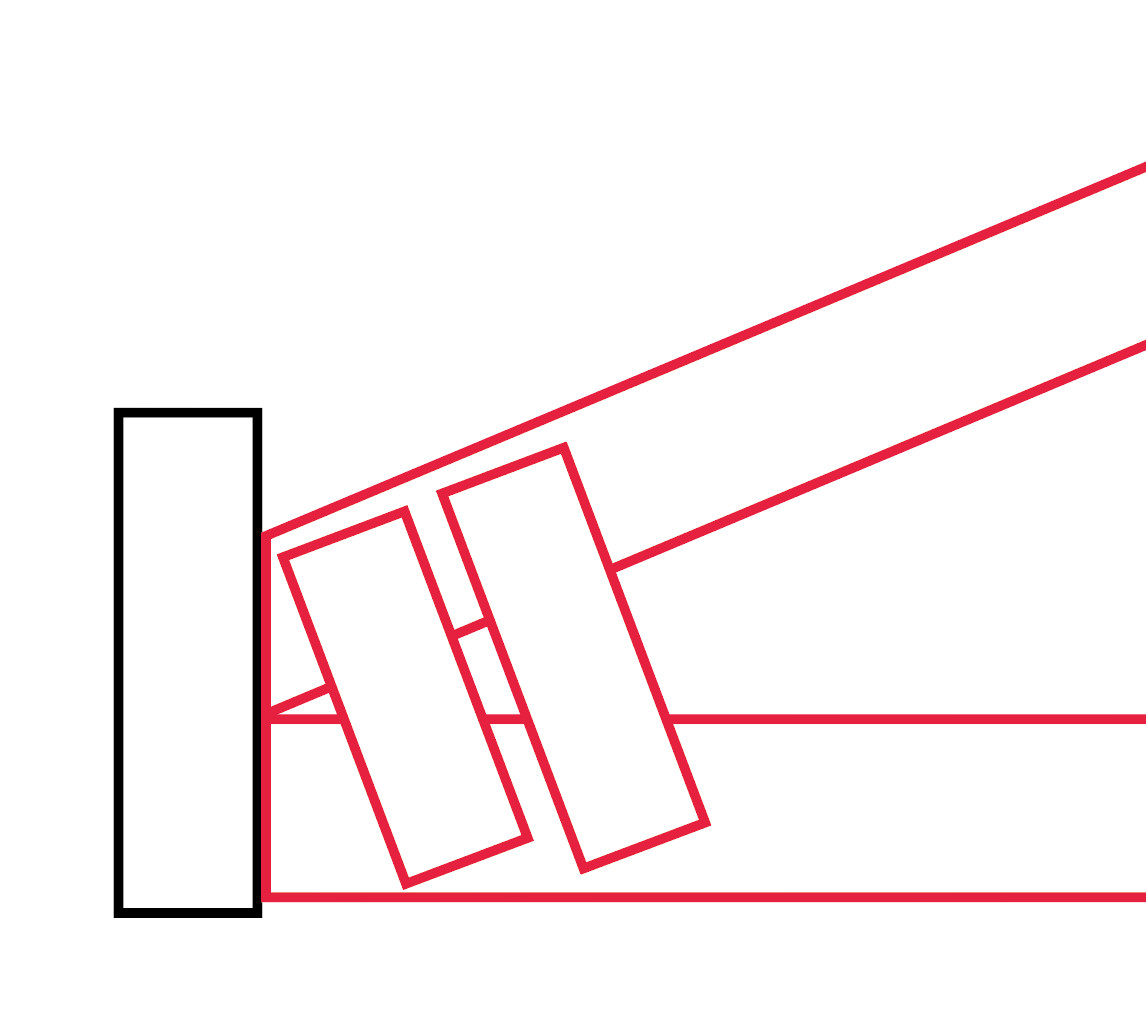
Mja, I don't know. When I say "hang," I mean that the rafter (red in the image below) does not stand on the beam (black in the image below) but is attached from the side. For this, I understand that a suitable fitting is necessary, like a substantial joist hanger, possibly even some type of hanger strap.P Pappa1986 said:
Sorry if I was unclear, I mean that the roof trusses only bear themselves and what they currently support, that is a part of the house's roof and anything that might accumulate on the roof when it snows.Dowser4711 said:
I haven't calculated at all. But intuitively, that corner shouldn't affect the strength at all.

Member
· Södermanlands län0
· 983 posts
As Justus says, a certain cross-sectional area in the material of the beam at the support point is needed to handle shear forces. Theoretically, one could compensate for the cross-sectional area that is cut away by adding material to the sides and making the beam wider at the support, which would also reduce the pressure on the bearing surface.L Laban said:Hi ...
Now to my question: In order to facilitate later stages in the project, I would like to reduce the height of one corner of the beam (with about a 30-degree angle as the red line in the sketch). Does that part have any load-bearing function? How much (if any) can be cut without affecting the beam's function?
OK. Can one compare the shear force with the support reaction in the calculation example from byggbeskrivningar.se above in the thread? There it states a support reaction of about 15 kN so if you can compare that figure with the shear force, you might be able to cut away perhaps half the beam's height?J justusandersson said:The supports and the middle of the beam are normally the sensitive parts of a beam. The beam's ability to handle shear forces, which occur at the supports, is dependent on its cross-sectional area. 90x315 can handle a shear force of about 36 kN, 90x180 about 21 kN. How much you can cut from the beam thus depends on how large the loads it needs to handle are overall.
No, my intuition also went in that direction, but I've learned that intuition doesn't always work so well. In this particular case, I really want to have the weakest possible beam with as much cut-off corner as possible. When I use my intuition, it usually ends with over-dimensioning.D Daniel 109 said: