
16,758 views ·
45 replies
17k views
45 replies
Can the upstairs really collapse?
Villa built in '54. The upper floor consists of one room (summer room when we bought the house) and a cold attic. Between the attic and the room is a small hall where the stairs to the lower floor go. The attic is completely unrenovated with no proper floor, more like planks laid over the joists or whatever they're called... The summer room looked pretty much like the other rooms in the house. Wallpaper and plastic flooring. Electricity was also drawn. But no heating element. When we moved in, the room was insulated and renovated, and a radiator was installed, functioning as a bedroom. The floor wasn't opened because it was (seemed!!) solid, good, and level. The plastic flooring was removed and laminate was installed. Now no one lives there, so it functions a bit like storage. Now I read to my horror about houses where the upper floor simply collapsed because people had too heavy things and the structure didn't hold (maybe because it wasn't meant to store so much in the first place...who knows what the original intentions were). No idea what the construction looks like in our house. Never even considered the idea that it wouldn't be livable since there was already a room! Help?? Pictures of what the room looks like (just with more stuff in it now 😵💫)

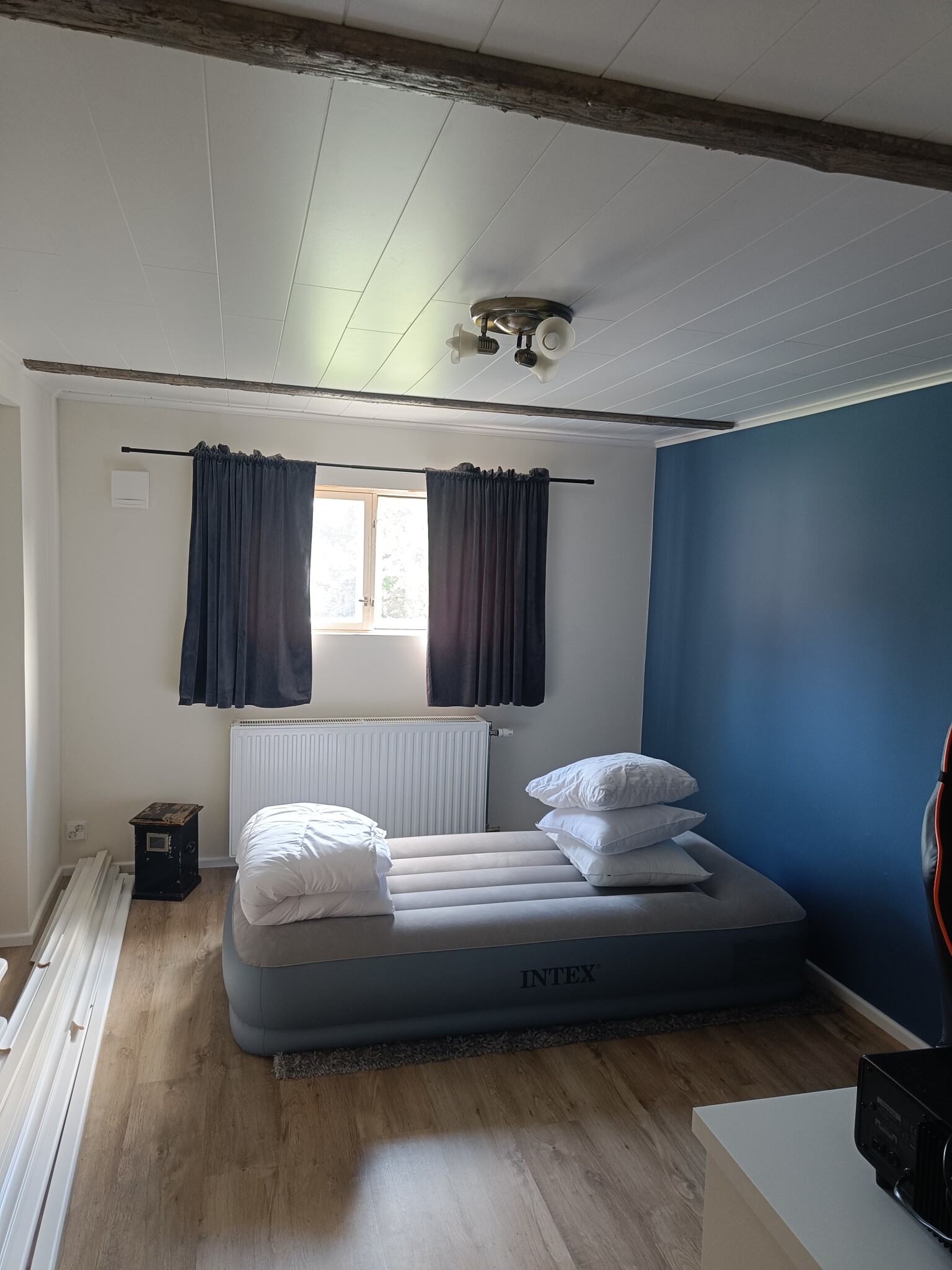

Yes, the upper floor can collapse if it is overloaded beyond its capacity. Whether this is a problem for you or not is harder to answer. The pictures don't directly indicate any significant load.
About 10 years ago or so, there was a townhouse for sale where the realtor didn't enter the house and didn't want to let in interested parties because the previous resident (estate) was a collector. There were stacks from floor to ceiling, leaving only narrow paths to get through. Imagine piles of paper from floor to ceiling; it gets heavy, really heavy.
About 10 years ago or so, there was a townhouse for sale where the realtor didn't enter the house and didn't want to let in interested parties because the previous resident (estate) was a collector. There were stacks from floor to ceiling, leaving only narrow paths to get through. Imagine piles of paper from floor to ceiling; it gets heavy, really heavy.
If no changes have been made to the load-bearing structure (e.g., removing load-bearing walls on the ground floor) and there is no rot, termites, or similar infestations, then you probably have no reason to worry.


No, it's about a bed, a TV stand, a small chest of drawers (Ikea's particle board junk), 2 chairs, a TV, and 10-15 moving boxes with some dishes, household items, and the like. No pianos 🫣R roke said:
No walls have been removed, and hopefully no rot (but what do I know about what might be hiding somewhere deep inside) 😱B b8q said:
The pictures were taken before more things arrived there 😐 They're not from floor to ceiling, and the floor isn't covered with things. But how on earth do you know if the construction is weak? I mean, the whole house could collapse in principle.. they hardly had as many things in the 50s-60s as we have today 😵💫Fairlane said:
Yes, the upper floor can collapse if it is loaded with more than it can handle. Whether this is a problem for you or not is more difficult to answer. The pictures don't directly indicate any major load.
About 10 years ago or so, there was a townhouse for sale, where the realtor didn't enter the house and didn't want to let interested parties in because the person who had lived there (estate) was a collector. There were stacks from floor to ceiling so that there were only narrow passageways to get through. Imagine piles of paper from floor to ceiling, it becomes heavy, really heavy.
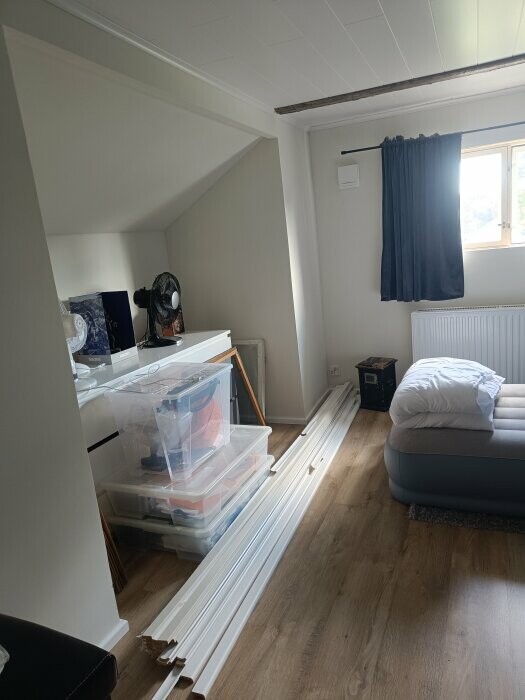
They are still behind. I think... now I'm unsure how they look behind that wall... The chimney comes up just before there... I have to go up and check. On the other side, the kattvinden is intact.Nissens said:
Ok, you weaken the roof trusses if you cut away the walls to the attic space without reinforcing them. This can show during snow loads, strong winds, and floor loading.D DorisDoris said:
If you had blueprints of the second floor, it would be clearer. Maybe the municipality has them?

I thought about that part too when I first saw the image, but if that’s the case, it affects more the roof's bearing capacity than the floor's.
@DorisDoris. If you can stand on the floor and "rock" without everything feeling like it’s swaying, it’s probably fine. Your drawing shows that there are quite a few walls on the floor below, even if we don't know exactly where this room is located.
If the floor bounces when you "provoke" it, it is primarily a comfort issue, but then it might be worth bringing in a structural engineer to look at a reinforcement.
But the fact that the room wasn't insulated from the start shouldn't have affected how the construction was dimensioned, so I think you can be completely at ease.