Hello!
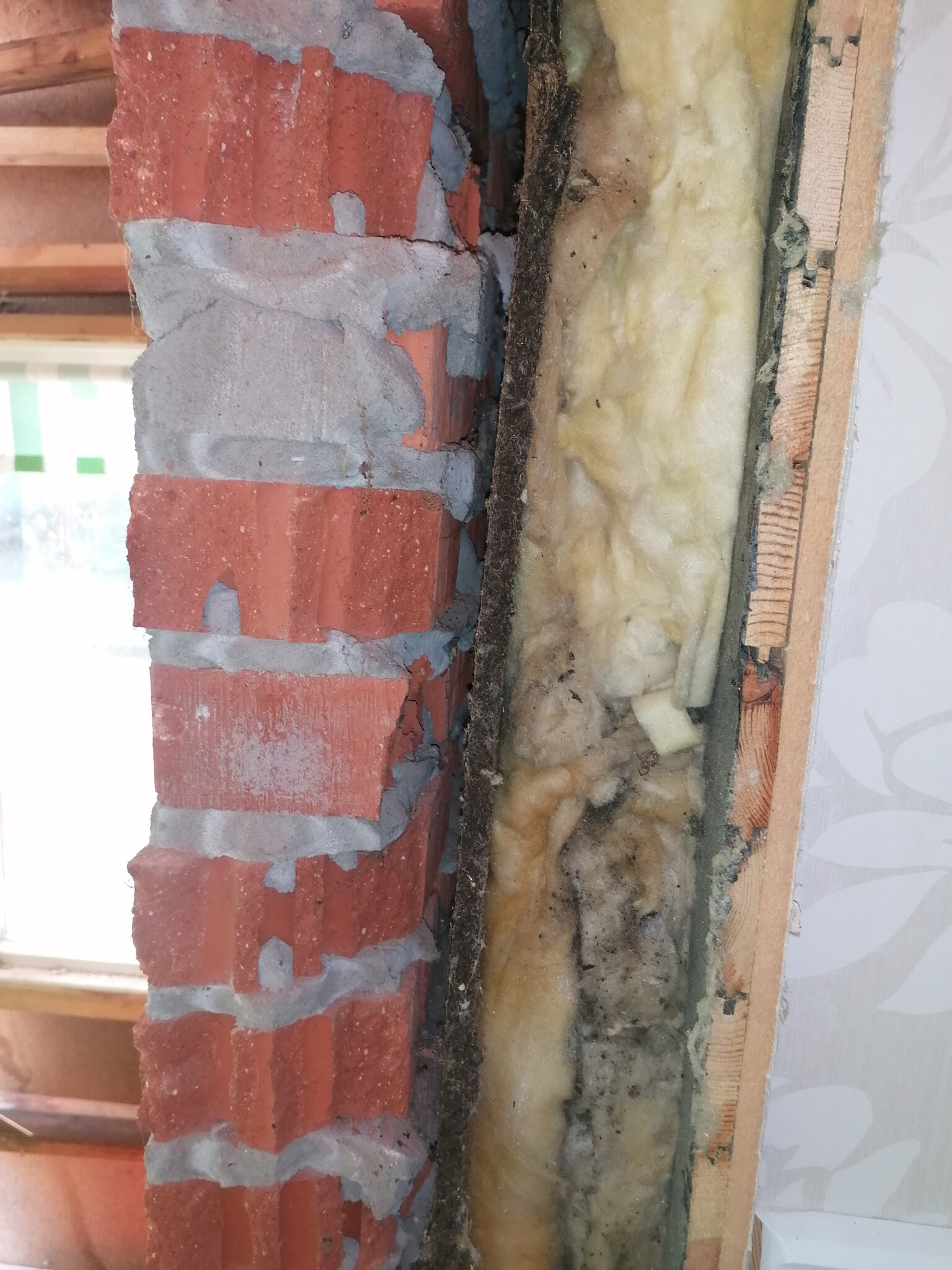
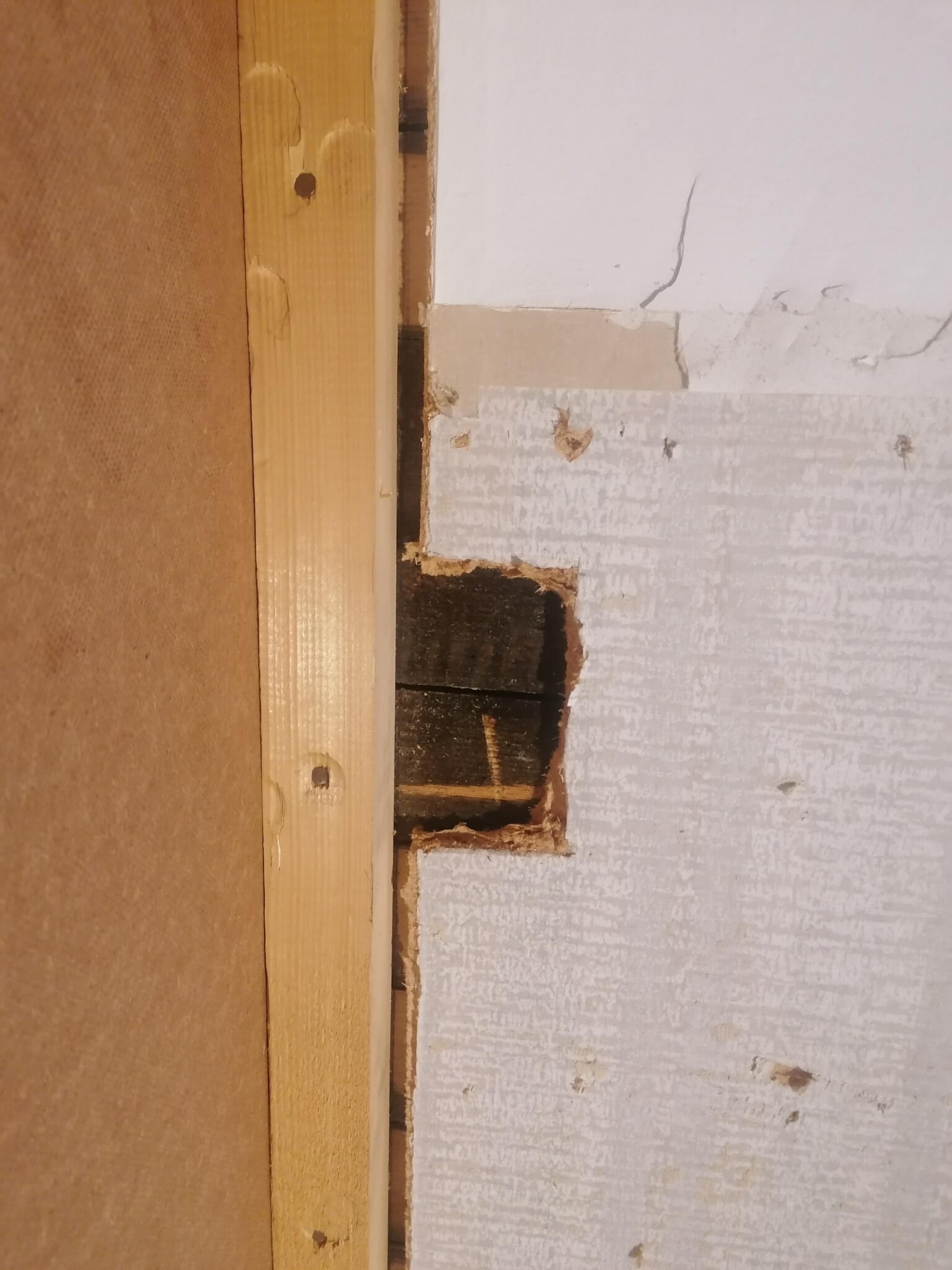
I am renovating a brick villa from '65. It appears that the tongue-and-groove boards in the exterior walls are blackened, it looks like it's coming from all the joints. I'm worried it might be caused by mold but can't figure it out since it's likely the same in all the walls everywhere. Could it be due to another cause? Could the older asphalt-like vapor barrier they used back then blacken in this way? I couldn't measure any moisture in the wall, and it hasn't blackened at all on the inside of the fiberboard or against the insulation. My concern is that it is hazardous to health and I would appreciate responses from people who actually know and have experience with this. I am attaching a picture of the entire wall construction (previous owners opened up the wall to install a door) and an area where I am now going to build the surface layer.

Best regards
 
  • Brick wall with exposed layers showing insulation and discolored wood sheathing, possibly due to asphalt vapor barrier; renovation in progress.
  • Close-up of a wall with exposed blackened wood, likely due to age or material effects, adjacent to a panel with a cut-out section in a 1965 brick house.
If it's the 60s, the planks might be treated. That was the decade when the number of impregnation facilities in Sweden increased a lot. There are different treatments one could do and colors used at that time to resist rot, etc. Probably not great to eat, but otherwise, it should be fine. Our house had black/brown-painted planks on everything visible.

It's probably nothing to worry about; if the wood is dry and doesn't smell musty, I think you can leave it as is.

Source: https://traskydd.com/traskyddsforeningen/traskyddsbranschen/branschhistorik/
 
Click here to reply
Vi vill skicka notiser för ämnen du bevakar och händelser som berör dig.