I'm going to buy a new solid oak countertop for the kitchen, and the question is whether I should spend extra money to have it custom-cut or not.
The countertop I have today, I cut out myself. The difference between today's countertop and the new one is only that the new one is a bit thicker. The one I have today, which I bought a few years ago now, was a mistaken purchase, you might say. It is 2.7 cm thick, but I need 3.0 cm.
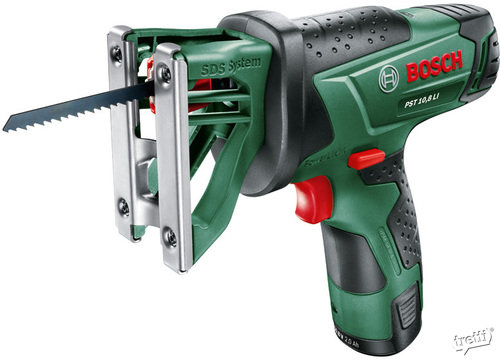
As mentioned, the previous one I cut out myself, but it was quite a hassle to measure and saw, and moreover, my small studio turned into a sawmill. However, the most annoying aspect was that my jigsaw I bought was probably very bad, resulting in crooked cuts. Was the blade too flimsy or something?
Anyway, here are today's options:
Option 1: Buy a countertop for 3740 SEK + custom cuts for 698 SEK = 4438 SEK from Fredells Option 2: Buy a countertop for 3330 SEK from Beijer and cut it out myself
So, you could say that it costs 1108 SEK extra to have it cut out.
The problem with angled cuts, I understand, is because the blade does not go through the material enough. But it doesn't matter much if it's angled as long as the hole is even on the top side. One option is to use a jigsaw blade with the teeth "in the wrong direction," then you can saw from the fine side without splintering.
It must be straight down, or it depends on the direction. I mean, if it becomes slanted outward, then the dimensions will be too small on the underside.
What could be the reason that the blade doesn't go through the material? Is the blade too short?
Miles: I have a plunge saw but it's only helpful for short stretches in this case. It's a small inner corner that needs to be cut out and a cut-out for the hob. So a jigsaw will still be needed.
Unfortunately, my plunge saw isn't that great either and I don't have a good environment to saw with a plunge saw. It becomes unstable when I have to balance the guide rail on the table here and have nothing to saw on underneath. Then I would need to buy some plywood material to place under. At that point, we're already talking about a project that starts to be worth those 1000 SEK at Fredells.
That rubber strip on the guide rail can't be followed either because the saw has cut into it sometimes and sawed off a few mm at various places along it. So it's a hassle to figure out how to keep it straight.
For 1108 SEK, you get a Bosch GST 90 e and some really good saw blades that more than do the job. A GST is a lifelong companion that you won't regret buying for a second. Now you even have the chance to get it "for free," so what are you waiting for?
Miles: I have a plunge saw, but it only helps for short distances in this case. It's a small inner corner that needs to be cut out and a cut-out for the hob. So a jigsaw will still be needed.
Unfortunately, my plunge saw isn't that great and I don't have a suitable environment to use the plunge saw. It becomes unstable when I try to balance the guide rail on the table here, and I have nothing to cut into underneath. Then I should buy some plywood material and place it underneath. Then we are already looking at a project that starts to be worth those 1000 kr at Fredells.
The rubber strip on the guide rail can't be used for guidance either since the saw has occasionally cut into it, taking away a few mm in different places along it. It's really tricky to figure out how to get it straight.
Ok! But you do use the plunge saw for the "straight stretches," right?
... I bought a Festool plunge saw with a rail + rail brackets (from ebay.de, it's a better price) = so incredibly good and used quite often on the house, most recently yesterday when I adjusted the doors a bit because I didn't want to scrape the newly painted thresholds. With a Kärcher vacuum attached, there were no problems cutting the doors in the kitchen With a couple of boards underneath and the saw set a few mm below the panel you're cutting, I've never needed any plywood underneath either.
That Meecen comes with a warning for vomit.
Sounds like you might want to send the plunge saw at the same time.
One should never skimp on machines or blades/discs when it comes to cutting tools.
If you start buying cheap things, the more expensive ones will just become even more costly when you eventually buy them, because then you’ve also paid for the cheap one.
Cut it yourself. It's not that much work, and a 30mm thick slab is really nothing to bite into.
I see that many suggest a plunge saw, yes they are great and totally awesome. I use a plunge saw myself when cutting holes in countertops, etc., but I also use a jigsaw just as often. It simply depends on my mood and how much space I have to work in, as well as how good the lighting is. The jigsaw is faster. You can get very fine cuts with a jigsaw if the blade is brand new.
I still suggest a jigsaw in this case.
When the cut starts to go crooked, it only has to do with the blade being dull and having done its job, and that you are pressing too hard. A dull blade generates more heat, which results in the blade bending. Reversed teeth is not something you need to worry about in this case. Yes, the cut will be nicer, but the saw jumps much more for people who are inexperienced with them.
1 - New blade of the longer model for wood, about 70-90mm long. Available in 5-packs.
2 - Tape with the 50mm yellow/orange construction tape (weak adhesive leaves no residue, easy to remove) on the board where you intend to cut. Draw ON/OVER the tape where you are going to cut. That is, estimate with your eyes where you think the cut will be and then tape over the middle of it. The easiest way to do this is to squat and look where you have the cabinet frame's inside. Then you can easily see where to place the tape approximately. When the tape is set, draw the outline where you are going to cut on the tape. Then you avoid jagged edges and splinters in the wood.
3 - Drill with a 10mm drill bit in each corner of the intended hole. (remember to keep the drill's center 5mm inside the corner's line so the hole does not go outside the saw line)
4 - Start by inserting the saw blade into one of the 10mm holes and cut both short sides.
5 - Screw a piece of wood (into the part you are going to cut/lift away ) spanning from short side to short side. This way, the piece will not fall down with a thud into the cabinet when you finish cutting, and you can keep both hands on the saw in peace.
6 - Carefully cut the long sides. Start with the innermost part, which is hardest to reach. Finish with the cut closest to you.
7 - Lift out the thick piece you have cut out using the piece of wood that holds it in place.
8 - Remove the tape.
9 - DONE. Time for a beer. =)
That rubber strip on the guide rail can't be relied upon either because the saw has sometimes cut into it, shaving off a few millimeters in various places along it. So it's really difficult to figure out how to get it straight.
buy a new rubber strip. They are available as spare parts. You have to replace them from time to time when they come loose or when you've sawed so much that they've worn out and don't align with the blade. When you've glued on the new one and made the first cut, it will align again. =)
Getting decision anxiety
...The one I have today that I bought a few years ago was a mistake purchase you could say. It is 2.7 cm thick but I need 3.0 cm...
No, I have a hard time understanding!
Give many thousands for a countertop 3 mm thicker, when the current one, as far as we know, serves its purpose well.
Why not place some 3.2 mm masonite strips under the existing countertop, then you're all set?
Vi vill skicka notiser för ämnen du bevakar och händelser som berör dig.