
27,242 views ·
27 replies
27k views
27 replies
Countertop in self-leveling compound with fibers sticking up.
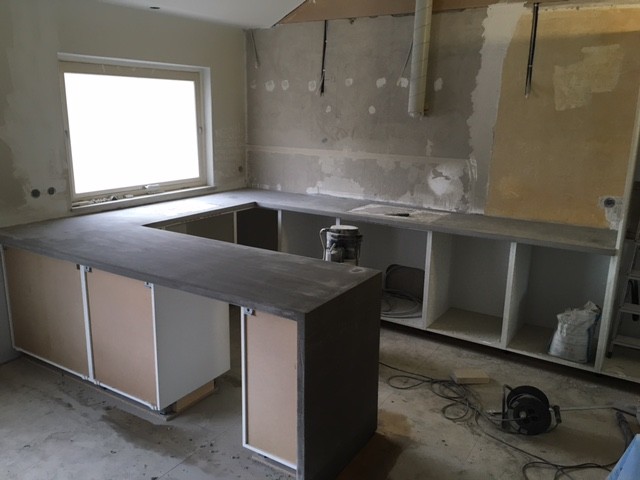
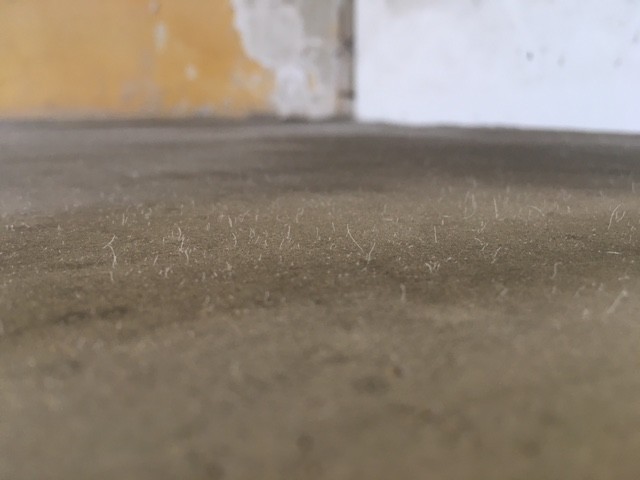
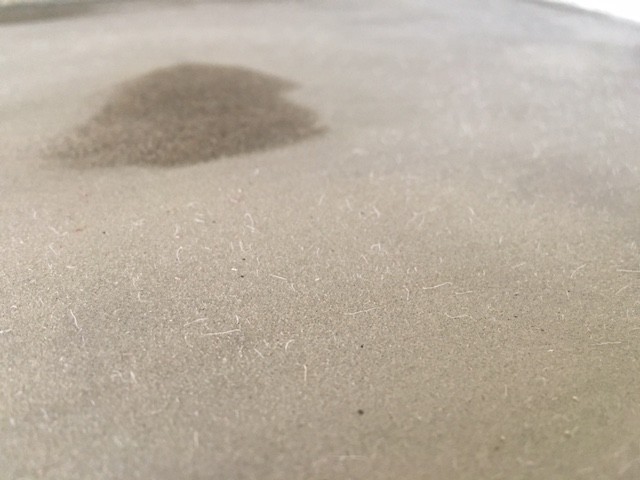
Hello. I have cast a countertop using self-leveling compound with fibers. But when I sand down the surface, the fibers stand up and create a fuzzy surface. What can be done about this? Is it something that disappears when you treat the surface with lacquer or sodium silicate? Can the fibers be burned off with a propane torch? I certainly don't want to ruin the countertop... or the house for that matter.
I'm also wondering what is recommended for treating the surface? I have read many tips here on the forum, but nothing specifically for self-leveling compound. It might not be any different from concrete. I would like a relatively low-maintenance surface that provides a durable surface, like lacquer (but recently I've read that lacquer should be avoided because it's heat sensitive) and preferably avoid oil and wax.
I'm also wondering what is recommended for treating the surface? I have read many tips here on the forum, but nothing specifically for self-leveling compound. It might not be any different from concrete. I would like a relatively low-maintenance surface that provides a durable surface, like lacquer (but recently I've read that lacquer should be avoided because it's heat sensitive) and preferably avoid oil and wax.



Epoxy might work
Yes, me too. The reason I used self-leveling compound was because I cast on-site so I could have the entire countertop, including the end panel, in one piece. Since the countertop wasn't cast upside-down, I wanted the top to be as nice as possible, so I used self-leveling compound which flows nicely and provides a flat surface.
Enk Project, what do you mean by epoxy? As a surface layer or as a method to remove the fibers? I have considered using epoxy as a surface layer, but it feels a bit tricky. Is there a reason you recommend it? It's not the most common thing you hear about for a countertop.
Enk Project, what do you mean by epoxy? As a surface layer or as a method to remove the fibers? I have considered using epoxy as a surface layer, but it feels a bit tricky. Is there a reason you recommend it? It's not the most common thing you hear about for a countertop.

Have you tried rolling with a lint roller or laying out a strip of tape and pulling it off?
It might seem like a weird suggestion, but what do you have to lose?
It might seem like a weird suggestion, but what do you have to lose?

What kind of surface do you want when it's finished?
600 wet sandpaper removes these small hairs, but you have used the wrong product from the beginning, you should not use fiberglass reinforced materials for countertops. Wet sand and oil with cold-pressed linseed oil and then polish with wadding until you are satisfied, linseed oil binds the "hair," fills small holes (bubbles), and prevents the countertop from releasing dust! It requires 3-5 oilings to saturate the surface.
Hm, no, wet sanding paper doesn't remove small strands. They brought them out. I wet sanded with 120, 180, 400, and 800 paper. When I was done, I had brought out the fibers. Why shouldn't you use self-leveling compound with fibers in it for a countertop? What goes wrong? I had read that it was supposed to be good in several places.
The suggestion with linseed oil to bind the fibers, is it also for the surface finish, or should you, in addition to that, lacquer, glass-water, oil, wax, or whatever method should be used?
I also wonder if a heat gun can burn away the fibers, but I don't know what the countertop can handle.
TotalControl, I will try with tape/roller, but they might be too stuck for that.
The suggestion with linseed oil to bind the fibers, is it also for the surface finish, or should you, in addition to that, lacquer, glass-water, oil, wax, or whatever method should be used?
I also wonder if a heat gun can burn away the fibers, but I don't know what the countertop can handle.
TotalControl, I will try with tape/roller, but they might be too stuck for that.
Last edited:
