
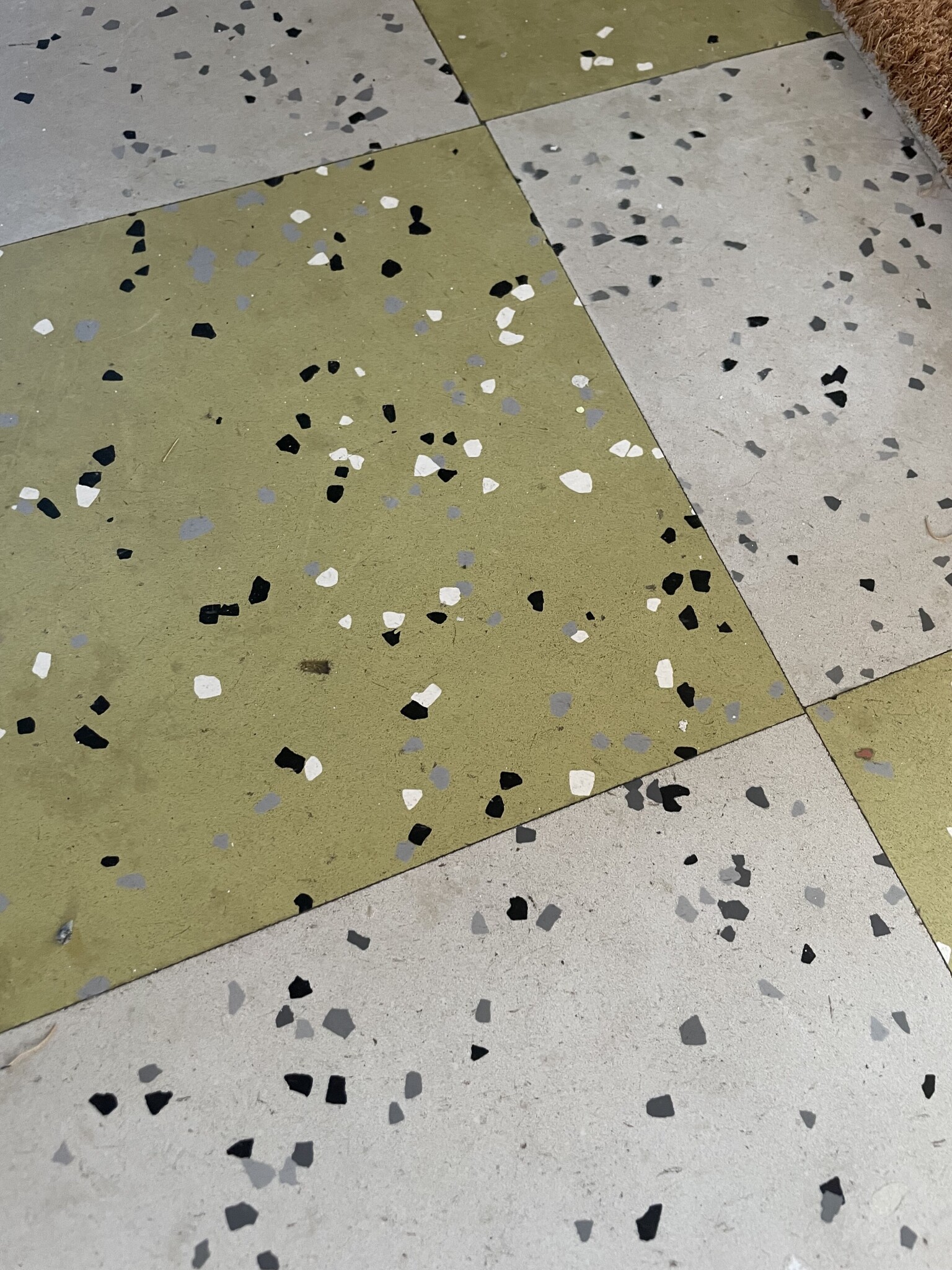
What do you think about these?
We had a craving to bring out the shine on these and got a tip to lightly sand and then varnish/polish. It didn't go so well. We didn't feel any effect. It's as if the sanding did nothing at all. Hard tiles.
Later, the worry starts to set in. Is there a risk that I released asbestos into the air when I sanded these? I didn't sand with water as an additive, but there wasn't any sanding dust to speak of either.
I haven't sent these for testing, but I guess about 95% that these indeed contain asbestos. It seems to have been a common additive in vinyl/linoleum tiles.
Now it was some time ago, but it still makes you worry, and then for future risks, if you've been vacuuming, are asbestos fibers being released every time I vacuum now?
We had a craving to bring out the shine on these and got a tip to lightly sand and then varnish/polish. It didn't go so well. We didn't feel any effect. It's as if the sanding did nothing at all. Hard tiles.
Later, the worry starts to set in. Is there a risk that I released asbestos into the air when I sanded these? I didn't sand with water as an additive, but there wasn't any sanding dust to speak of either.
I haven't sent these for testing, but I guess about 95% that these indeed contain asbestos. It seems to have been a common additive in vinyl/linoleum tiles.
Now it was some time ago, but it still makes you worry, and then for future risks, if you've been vacuuming, are asbestos fibers being released every time I vacuum now?
Last edited:

Nothing to worry about. Asbestos is often found in the adhesive of older plastic/linoleum floors. It has also been used as a filler material in the tiles themselves, but it’s not in the surface layer, rather in the "bearing layer" underneath.
And even IF there had been asbestos in the material you sanded, a single exposure like that is practically harmless. Those who have suffered from asbestos-related cancer have in most cases worked in asbestos factories where they stood and sawed, drilled, and milled asbestos-containing material 8 hours a day for years without any protective equipment. Testimonials speak of the air in the factories being foggy with asbestos dust. Furthermore, many others who have been regularly exposed in their occupation have been affected, but not to the same extent.
But in principle, no one has been affected who cannot be linked to this type of regular, large exposure. There are a few isolated cases that could not be linked to regular exposure, but here it is believed that they were still unknowingly exposed. For example, wives of asbestos workers have been affected because they washed the work clothes regularly.
So, one should not worry about a single accident with weak exposure. But one should respect asbestos, use respiratory protection, and avoid all exposure.
But if you want to remove the floor, you should send both the adhesive and a piece of the tile for analysis. And use respiratory protection even if it’s not asbestos; all demolition dust is unhealthy.
And even IF there had been asbestos in the material you sanded, a single exposure like that is practically harmless. Those who have suffered from asbestos-related cancer have in most cases worked in asbestos factories where they stood and sawed, drilled, and milled asbestos-containing material 8 hours a day for years without any protective equipment. Testimonials speak of the air in the factories being foggy with asbestos dust. Furthermore, many others who have been regularly exposed in their occupation have been affected, but not to the same extent.
But in principle, no one has been affected who cannot be linked to this type of regular, large exposure. There are a few isolated cases that could not be linked to regular exposure, but here it is believed that they were still unknowingly exposed. For example, wives of asbestos workers have been affected because they washed the work clothes regularly.
So, one should not worry about a single accident with weak exposure. But one should respect asbestos, use respiratory protection, and avoid all exposure.
But if you want to remove the floor, you should send both the adhesive and a piece of the tile for analysis. And use respiratory protection even if it’s not asbestos; all demolition dust is unhealthy.
How old are the tiles?
As mentioned above, pure asbestos tiles were placed on roofs and sometimes on exterior walls. Not indoors, and they certainly do not have such a surface. So no, you have not sanded directly on asbestos.
You are absolutely right that it's the dust that is dangerous, but this applies to all dust generated when demolishing something. You should take care of your lungs and always use good respiratory protection when demolishing, sanding, drilling, etc. Not just where you suspect/know/believe there is asbestos.
No, your vacuum cleaner is not contaminated, but if you are very worried, you can change the bag and filter in it, can't you?
As mentioned above, pure asbestos tiles were placed on roofs and sometimes on exterior walls. Not indoors, and they certainly do not have such a surface. So no, you have not sanded directly on asbestos.
You are absolutely right that it's the dust that is dangerous, but this applies to all dust generated when demolishing something. You should take care of your lungs and always use good respiratory protection when demolishing, sanding, drilling, etc. Not just where you suspect/know/believe there is asbestos.
No, your vacuum cleaner is not contaminated, but if you are very worried, you can change the bag and filter in it, can't you?
I have a great respect for the subject and am quite anxious as a person. My grandfather died of lung fibrosis, but he was exposed to everything possible during his lifetime. A lot of arsenic (and probably also some asbestos), and he was a smoker for 20-30 years. We will lay another floor over it, this one will remain underneath. If it's true that the asbestos is not near the surface layer, it calms me somewhat.H hempularen said:Nothing to worry about. Asbestos is often found in the adhesive on older plastic/linoleum floors. It has also been used as a filler material in the tiles themselves. But then it's not in the surface layer, but in the "carrier layer" underneath.
And even IF there had been asbestos in the material you sanded, a one-time exposure like that is practically harmless. Those affected by asbestos-related cancer have, in most cases, worked in asbestos cement factories where they have stood and sawed, drilled, and milled asbestos-containing materials 8 hours a day for years, completely without protective equipment. Testimonials speak of the air in the factories being foggy with asbestos dust. Then many others who have been regularly exposed in their profession have also been affected, but not to the same extent.
But practically no one has been affected who cannot be linked to this type of regular high exposure. There are a few isolated cases that have not been linked to regular exposure, but it is believed that they were still exposed unknowingly. For example, wives of asbestos cement workers have been affected; they regularly washed the work clothes.
So you shouldn't worry about a single accident with weak exposure. But you should have respect for asbestos, use respiratory protection, and avoid all exposure.
But if you want to remove the floor, you should send both adhesive and a piece of the tile for analysis. And use respiratory protection even if it's not asbestos, all demolition dust is unhealthy.
The house was built in '55 and we initially thought it was pure linoleum tiles, but I have now understood that it was not so common. In the 50s, asbestos was mixed into linoleum and vinyl floor tiles, like these.KristinaRT said:
How old are the tiles?
As mentioned above, pure asbestos tiles were laid on roofs and sometimes placed on walls outside. Not indoors, and they definitely do not have such a surface. So no, you have not sanded directly on asbestos.
You are entirely right that it's the dust that's dangerous, but that applies to all dust formed when demolishing something. You should take care of your lungs and always use good respiratory protection when demolishing, sanding, drilling, etc. Not only when you suspect/know/believe there is asbestos.
No, your vacuum cleaner is not contaminated, but if you are very worried, you can change the bag and filter in it?
Lung fibrosis can be caused by various things, and smoking is one of them. Today, there is much more awareness that inhaling dust is dangerous, so you shouldn't worry about that.Filzone said:
I have a lot of respect for the subject and am very anxious as a person. My grandfather died of lung fibrosis, but he was exposed to all sorts of things during his lifetime. A lot of arsenic (and probably also some asbestos), and he was a smoker for 20-30 years. We will cover the floor with another one, leaving this in place underneath. If it's true that the asbestos is not near the surface layer, it calms the concern somewhat.
However, it is wise to be careful about your lungs.
Yes, I am aware that his lifestyle was significantly more risky than mine.
Building conservationist
· 105 posts
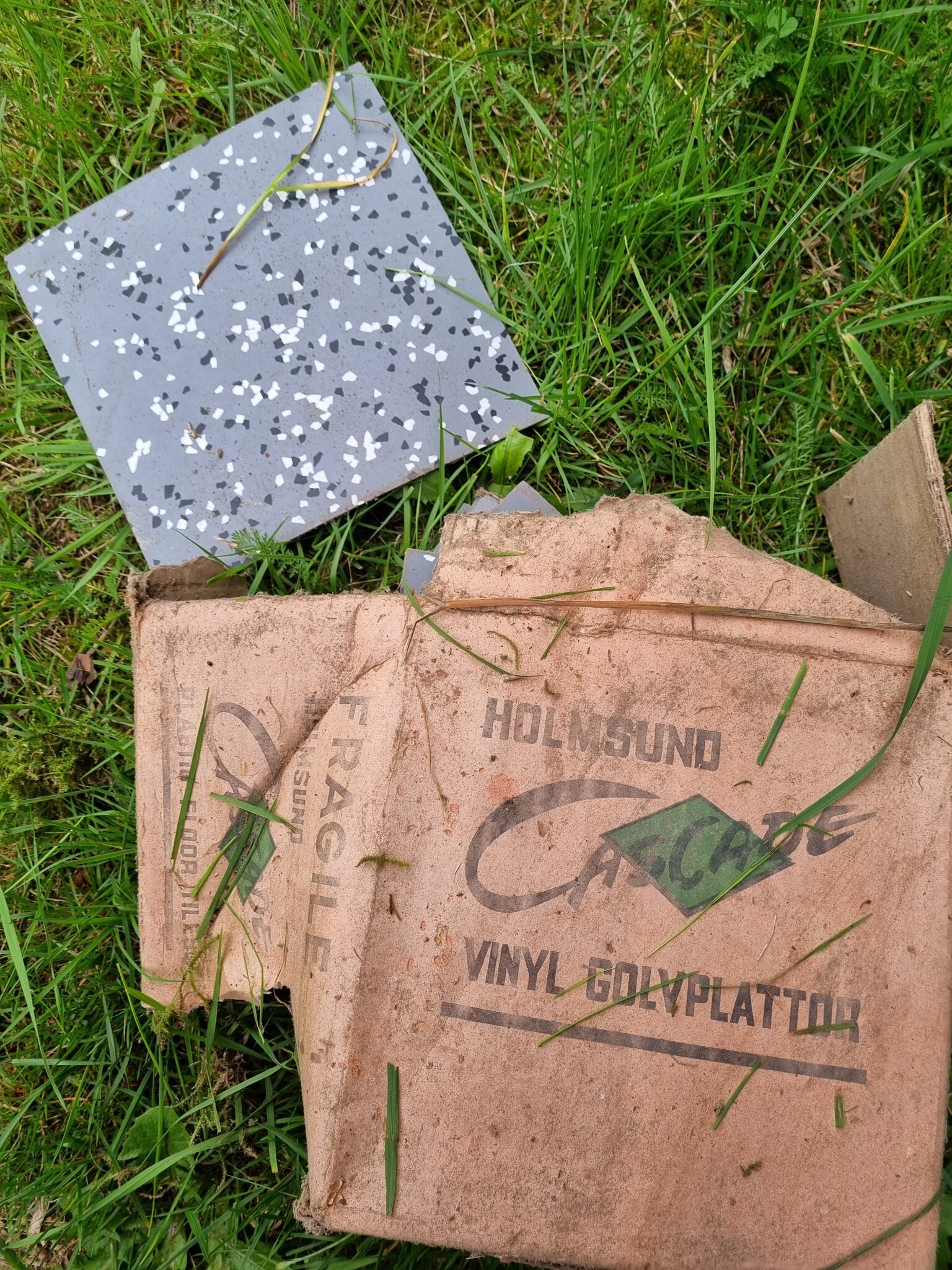
Have tested these, not asbestos. But it doesn't really answer your question since a product line could contain an asbestos, another one not. There's even a whole series called "viny-best" that looked the same as yours and my flooring.
A damn high-quality floor, by the way. Mine have lasted over 50 years and have had dogs and gravelly shoes on them every day. Hardly any scratches.
A damn high-quality floor, by the way. Mine have lasted over 50 years and have had dogs and gravelly shoes on them every day. Hardly any scratches.
Click here to reply
Similar threads
-
Borrade hål i fasad, bör jag vara orolig för asbest?
Fasad -
Oro för asbest – någon med erfarenhet?
Gifter, farliga byggmaterial & skadedjur -
Någon som vet vad det här är för golvplattor? Vinylasbestos?
Golv -
Rev upp gammal matta av någon typ av tyg bör jag vara orolig? Asbest??
Gifter, farliga byggmaterial & skadedjur -
Riva plastmatta men orolig om det är asbest i golvmatta / lim
Golv