
12,799 views ·
15 replies
13k views
15 replies
Asbestos in carpet?
We just removed a needlefelt carpet, and I thought it had been in the house since it was built, but underneath it were two more carpets. After consulting others here in the forum, it seems the bottom carpet is kirkoplast and the one above it is some other plastic carpet. I fear there might be asbestos in the glue under the bottom carpet, and since we haven't moved it, it should be fine. If it’s original, they installed it in 1974, which is why I fear there might be asbestos in the glue. Since the other two carpets were added later, I hope there isn't asbestos under them because it was banned in 1978, and I find it hard to imagine that they were installed before 1980. In the pictures, you can see both the corkoplast carpet that we haven't touched and the plastic carpet that lies on top. There are glue residues on the plastic carpet that come from the needlefelt carpet (the most recent carpet). Could it contain asbestos, do you think?
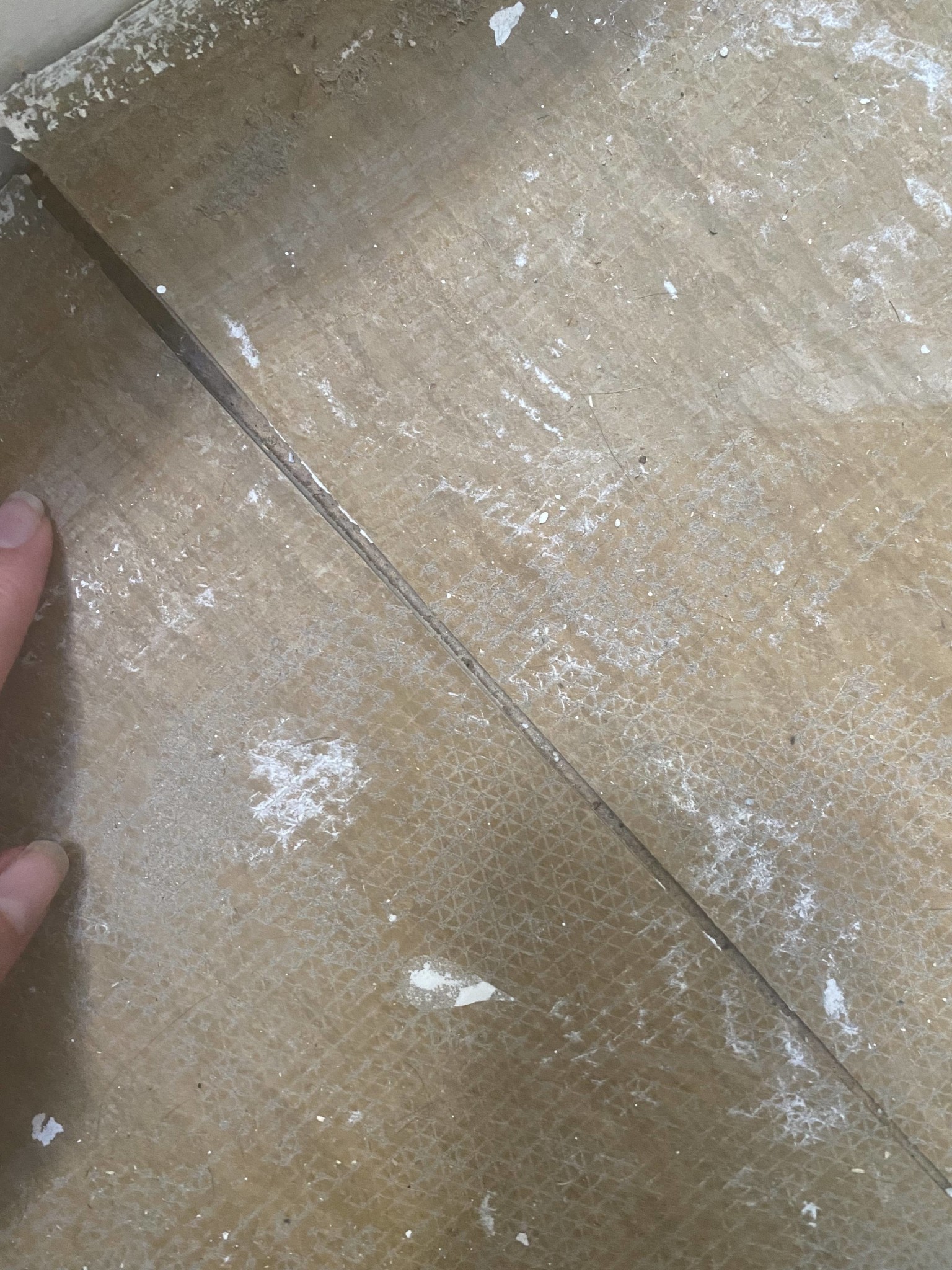
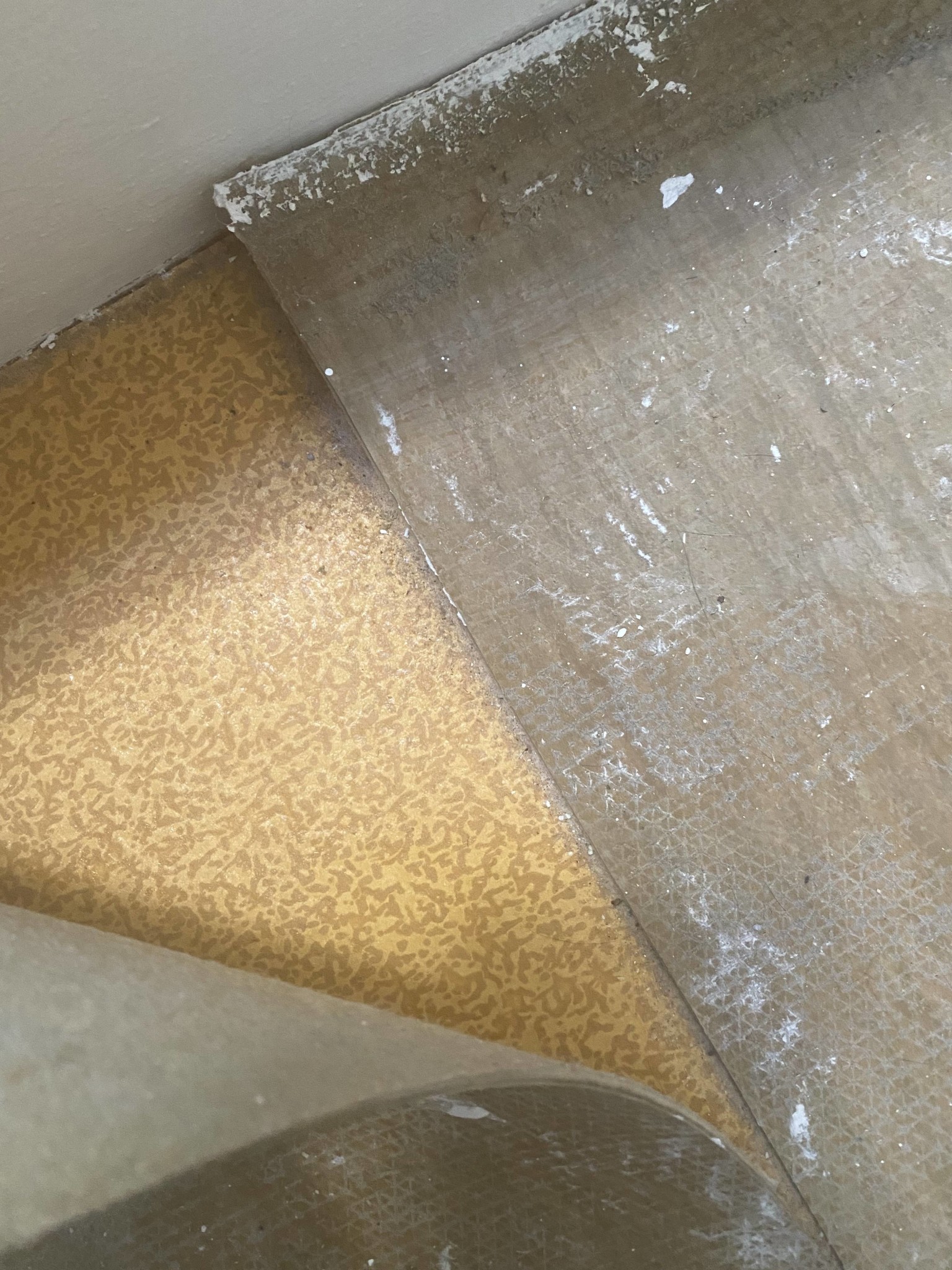
I forgot to mention that the white spots are paint. It's the gray ones I'm worried about.L Llvin said:We have just removed a needle felt carpet and I thought it had been in the house since it was built, but underneath it were two more carpets. After consulting others here in the forum, it seems that the bottom carpet is made of kirkoplast and the one above it is some other vinyl flooring. I fear there may be asbestos in the glue under the bottom carpet, and we haven't moved it, so it should be fine. If it is original, they installed it in 1974, so that's why I fear there may be asbestos in the glue. Since the other two carpets were added later, I hope there's no asbestos under them because it was banned in 1978, and I find it hard to believe they were installed before 1980. In the pictures, you can see both the kirkoplast carpet we haven't touched and the vinyl flooring on top. There are glue residues on the vinyl flooring from the needle felt carpet (the most recent carpet). Could it contain asbestos, do you think?


I'm not sure I really understand. It's the needlefelt carpet you're worried about and there are two other carpets UNDER this one?
So the needlefelt carpet is not original? The house was built in 1978, so the needlefelt carpet was added after this year. Very unlikely that it would contain asbestos. Why are you worried about the needlefelt carpet specifically?
So the needlefelt carpet is not original? The house was built in 1978, so the needlefelt carpet was added after this year. Very unlikely that it would contain asbestos. Why are you worried about the needlefelt carpet specifically?
I felt a bit calmer when I realized that the needle-punched carpet hasn't been there since 1974, but we have torn up the entire carpet, and now the other carpet is significantly more exposed, so I became uncertain. We are going to lay flooring over that carpet. I had no knowledge of asbestos at all before we started renovating (more than it being carcinogenic for those who have worked with it for a long time), hence the uncertainty.KristinaRT said:
I'm not sure I quite understand. It's the needle-punched carpet you're worried about and there are two other carpets UNDER this one? So the needle-punched carpet is not original? The house was built in 1978, so the needle-punched carpet was added after that year. Very unlikely that it would contain asbestos. Why are you worried about the needle-punched carpet specifically?
Which carpet is unprotected, and why would that be a concern? Why not just lay the new flooring and be satisfied with that?L Llvin said:I became a bit calmer when I realized that the needlefelt carpet hadn't been there since 1974, but we have removed the entire carpet, and now the other carpet is significantly more exposed, so I became uncertain. We are going to lay flooring over that carpet. I had no knowledge at all about asbestos before we started renovating (other than that it is carcinogenic for those who have worked with it for a long time), hence the uncertainty
If you've torn out the carpet, it's gone; does it matter if you investigate the possible presence of asbestos in a carpet that was likely installed after '84 when asbestos was completely banned?
You decide for yourselves regarding testing, but a lot of "testing companies" have emerged that prey on the general public's insecurity and lack of knowledge about asbestos.
The carpet that is now unprotected, I mean, is the one at the top of the picture (the one that is brownish and made of plastic). Exactly, that has already been done, and I realize that the need to test this carpet is more about calming myself down. But we're going to tear out a carpet from 77 in another room, and I will probably (for my own sake) want to test that one too, so I might as well send in a piece of this one.Which carpet is unprotected and why would it be a concern? Why not just put down the new floor and be satisfied with it?
If you've torn out the carpet, it's gone, does it matter if you later investigate the possible presence of asbestos in a carpet likely installed after 84 when asbestos was completely banned?
You can do what you want regarding testing, but there's been a rise in "testing companies" that play on the general public's uncertainty and lack of knowledge about asbestos.
I understand there's a lack of knowledge about asbestos, but when you haven't thought about what materials, etc., are present in the construction industry, it's hard to know where to turn. Most of the information available is about people who have worked with asbestos daily for many years. I know that most people who tear out, for example, bathrooms do not test the material beforehand and do not decontaminate as if they were handling asbestos. But as I said, when you have zero prior knowledge, it's hard to determine if you're being overly cautious or if many of us are careless.
Thought I would update the thread now that I've received answers regarding the asbestos analysis. There was asbestos in the flooring that is folded up in the picture. There were no asbestos fibers in the glue underneath or in the glue residues that were left after the flooring above was removed, but asbestos fibers are present in the flooring itself. Luckily for me, there were no asbestos fibers in the glue, only in the flooring itself, so no asbestos fibers were released when we removed the one on top (or when we walked on it, for that matter). I asked the people at Evema about this, and they said it was not a problem since we hadn't removed the actual flooring with asbestos fibers. It would have become hazardous only if we had shredded that flooring or similar.
It feels quite frightening, though, because it doesn't look like an "asbestos flooring," and I actually thought it would be the glue that posed the danger here.
I can highly recommend hiring Evema. They conducted a very thorough analysis and took the time to explain exactly what the situation is and how it should be handled.
It feels quite frightening, though, because it doesn't look like an "asbestos flooring," and I actually thought it would be the glue that posed the danger here.
I can highly recommend hiring Evema. They conducted a very thorough analysis and took the time to explain exactly what the situation is and how it should be handled.
I just wanted to chime in that, for me, what you're saying doesn't match, that it doesn't look like an asbestos mat. I sample quite a few mats at work, and when it comes to older plastic mats that are brown (and black), they often contain asbestos.L Llvin said:I thought I would update the thread now that I've received a response regarding the asbestos analysis. There was asbestos in the mat that is folded up in the picture. There were no asbestos fibers in the glue that was underneath or in the glue residues from the mat that was on top, but asbestos fibers are present in the mat itself. Lucky for me that it wasn't in the glue but only in the mat itself, so no asbestos fibers were released when we removed the one that was on top (or when we walked on it, for that matter). I asked the people at Evema about this, and they said it was not a risk since we didn't remove the mat with asbestos fibers. It would only have become dangerous if we had shredded that mat or something similar.
It is, however, frightening since it doesn't look like an "asbestos mat," and I honestly thought it was the glue that would have been the hazard here.
I can really recommend you to hire Evema. They did a very thorough analysis and took the time to explain exactly how things stand and how the situation should be handled.
Then you are probably right! I was just going off other pictures I've seen, and I didn't think this one looked so dangerous, but if you work with sampling, you have much better insight than I do.BiFuel said:
I wanted to post the picture to show that it's not just the thick black glue that's dangerous and that it can be worth testing mats so that you don't unknowingly spread asbestos throughout the house. It's unfortunate that it's present in so many materials. It's not uncommon to buy houses from the 60s and 70s, and the knowledge about which materials contain asbestos is limited. I personally had no idea about it until about a month ago. There must be many people who unknowingly tear out materials containing asbestos quite often.

Member
· Korpilombolo
· 3 762 posts
It's precisely that knowledge disappears when the older generation who were there when it happened are phased out, and it's excellent that we share knowledge, for example here, so that new homeowners are made aware of where the risks are.
Yes, it was thanks to this forum that I learned about asbestos. No one I know who has renovated has ever sent anything for analysis, but I will do so in the future.
It was also nice to talk to someone from Evema because they know how dangerous it is and how the situation should be handled.