
5,539 views ·
26 replies
6k views
26 replies
Is the wall load-bearing?
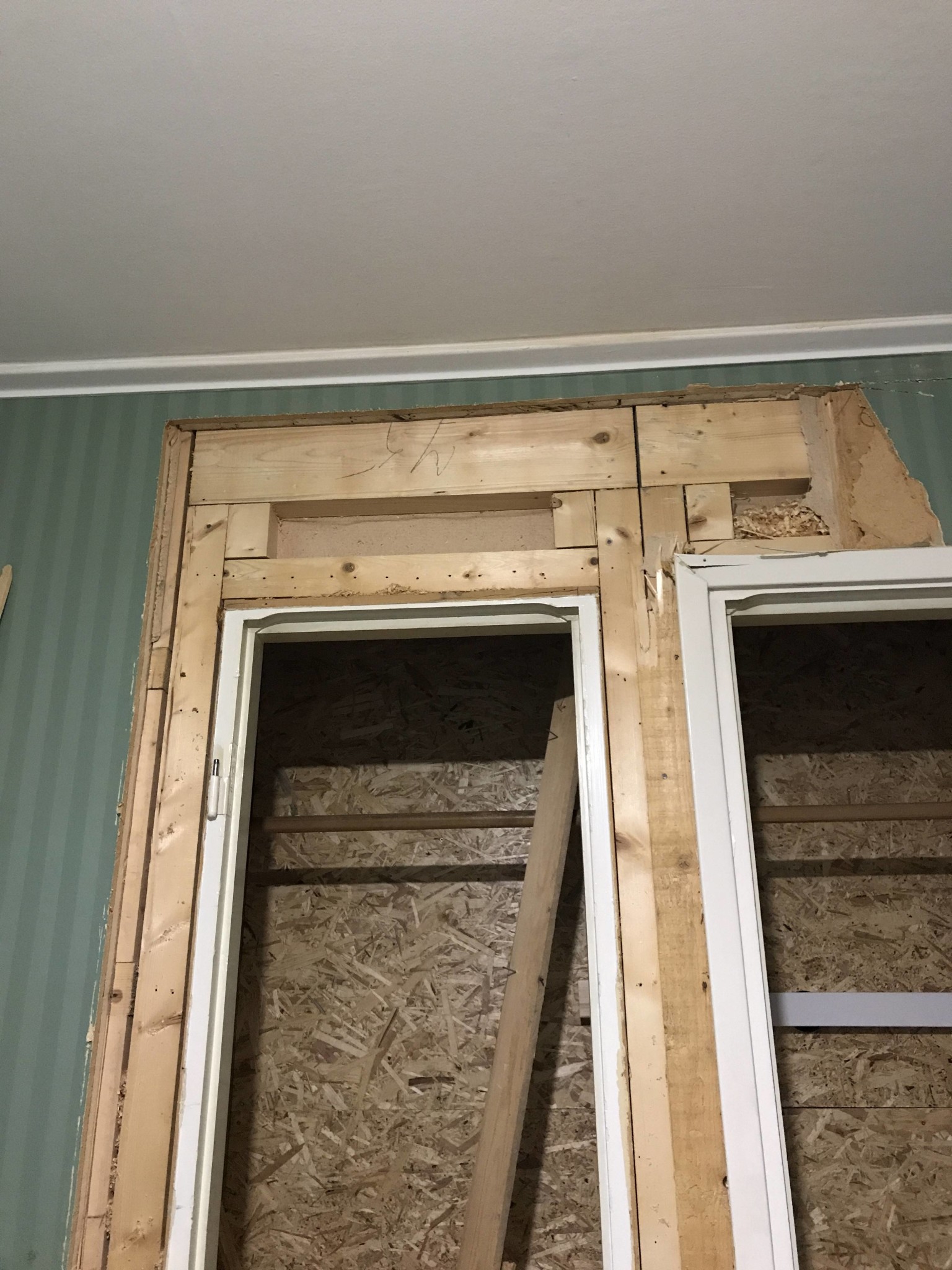
We started tearing out the old built-in wardrobes in the bedroom to inset Ikea frames. Then we discovered some heavy beams above the wardrobes, and entire vertical studs, which indicate a load-bearing wall... However, when we uncovered a bit more (to the left of the wardrobe), we found a "regular" wall section made up of segmented vertical studs, forming compartments along with several horizontal studs. This type of section doesn't seem to be load-bearing...
Now to the question... Is the construction around the wardrobes load-bearing? The wall is perpendicular to the roof trusses, and the house is about 7m wide.
Neither an exterior wall nor an extension!L Liteavvarje said:
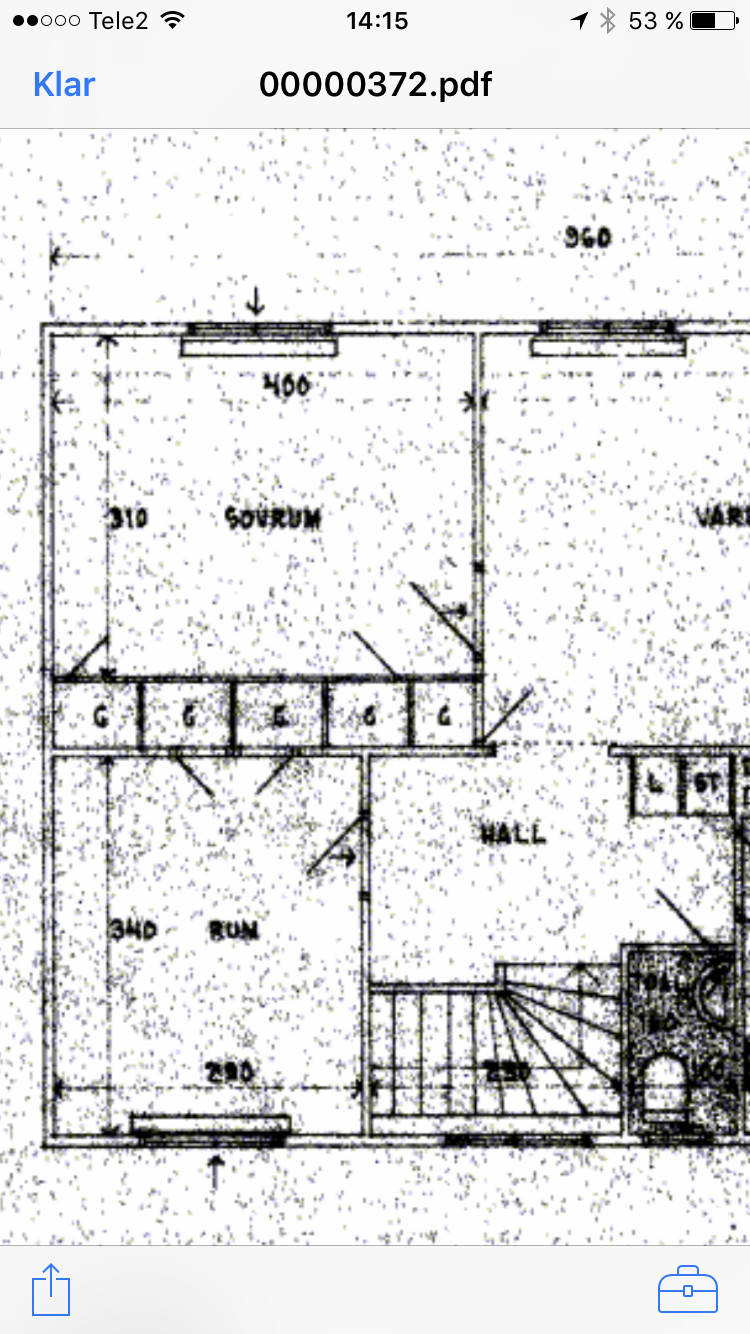
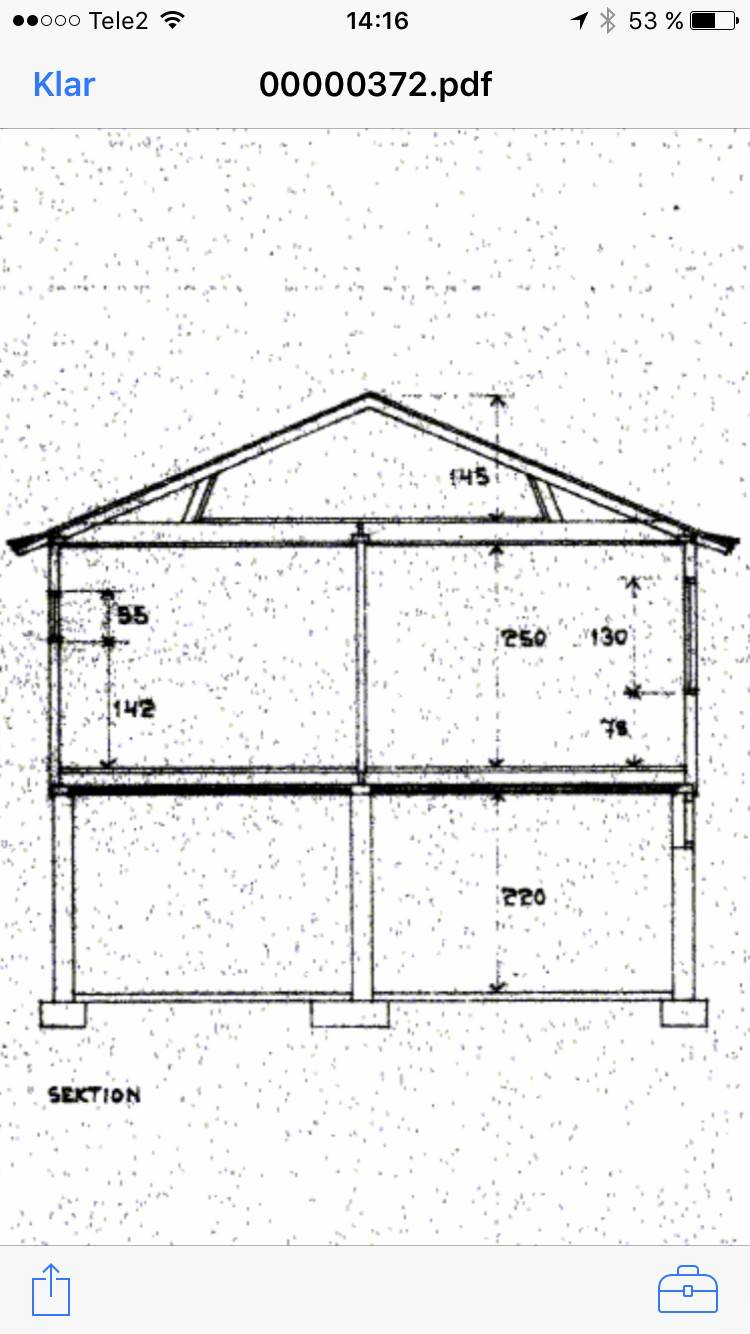
Attaching images of the original drawing.
It's the wall between "room" (below called bedroom) and "bedroom" (below called living room) seen from "room". There are 4 closets, where the two in the middle go into our bedroom and the two outer ones go into the living room.
The wall towards the living room is very thin and the wall towards the bedroom is a "real" wall.
In the cross-section drawing, there's a wall drawn right under the ridge. This could mean there's a load-bearing wall there.
Is it tar paper and tretex outside the studs? Built in the 40s? According to one of your other posts, you're renovating a 40s house? Looks like my home. "Egnahemshus" or "Småstuga" or whatever it's called. It could be load-bearing, but it's hard to say. Many of these houses (if it's one of those) were built by construction teams consisting of other new builders on the street and/or family and friends, so there's quite a bit of variation and often no construction plans. The houses can be quite sensitive to alterations, especially if they were constructed from modules, which the unusual seam might indicate. I would guess this is an interior wall running approximately in the middle of the house? Does it align with a similarly placed so-called heart wall in the basement? I'm wondering about the wall at the back of the closets, it should also be an interior wall and in that case could be load-bearing? Or both?
Check my previous post.. the wall at the back isn't load-bearing.. Only one layer of plank. It's true that it's an "egnahemshus" built with modulesFulkemisten said:
Fibreboard and tretex on the outside of the studs, right? Built in the 40s? According to one of your other posts, you're renovating a 40s house? Looks like my home. "Egnahemshus" or "Småstuga" or whatever it's called. It could be load-bearing, but it's hard to say. Many of these houses (if that's what this is) were built by teams consisting of the other new builders on the street and/or family and friends, so there is quite a bit of variation and often no construction drawings exist. The houses can be quite sensitive to openings, especially if they were built of modules, which the unusual jointing could indicate. I would guess this is an interior wall that runs in the middle of the house, roughly? Does it run directly over a similarly positioned so-called heart wall in the basement? I'm pondering the wall at the back of the closets, that should also be an interior wall and if so, it could be load-bearing? Or both?
 even though there can be some variation between the houses, the trusses should be the same.. Either self-supporting or not.. right?
Ok, exact same floor plan as my place. Yes, it's a shame it wasn't the thin wall that needed to go. I'm pretty sure that wall is load-bearing. Self-supporting trusses in these houses look different with more struts like a framework. PM me if you need tips about the house otherwise.
What do you mean by how the trusses look if they are self-supporting?

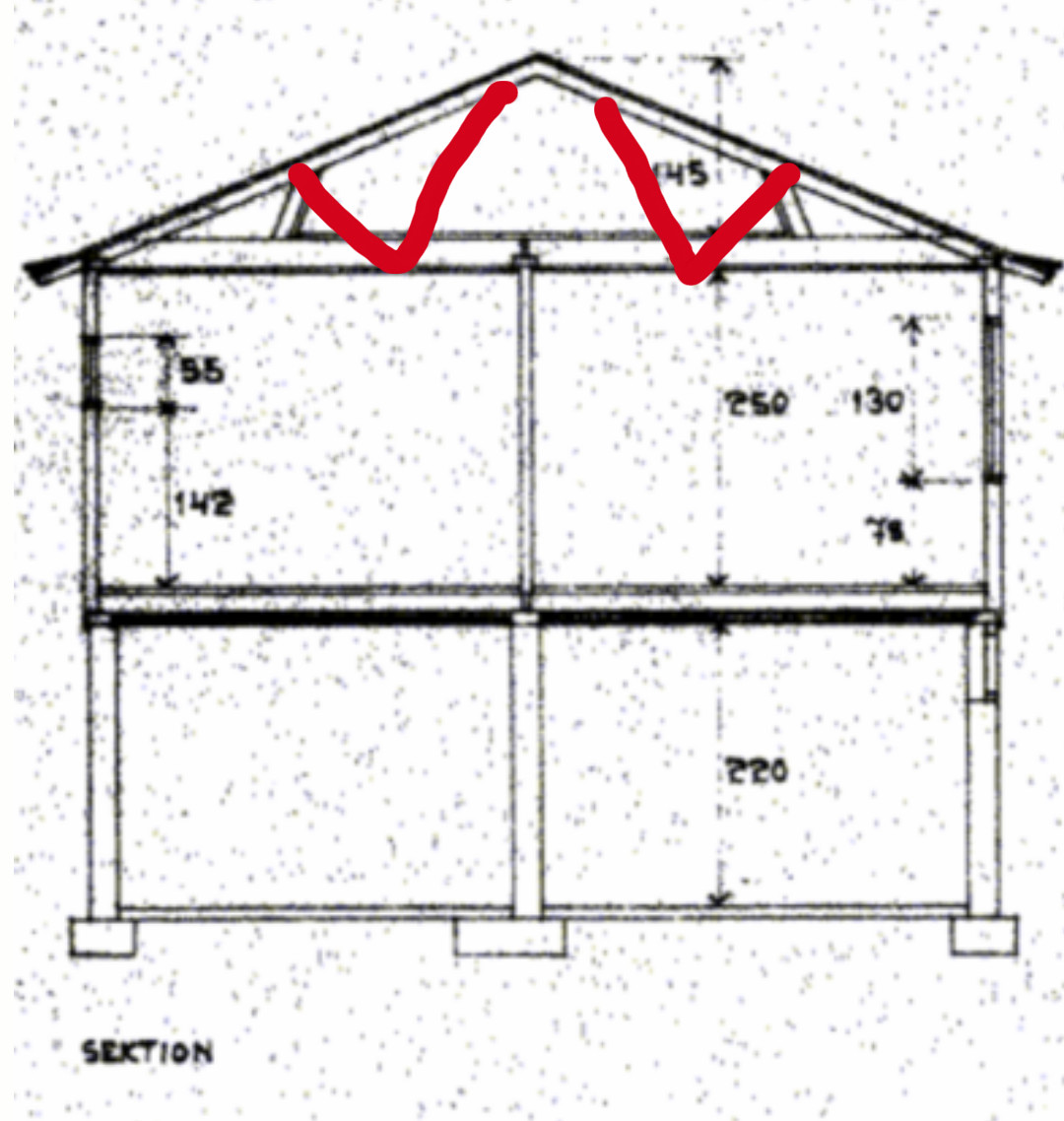
Exactly. That's how my neighbor's roof trusses look, and they have a slightly different type of house with a different original layout. They expanded and made alterations, and they had a structural engineer who defined them as self-supporting. They've taken down a wall right under the roof ridge. We should take this information with a grain of salt. This is what my neighbor told me, I haven't seen any paperwork, but the house is still standing.
Those who built it had some ideas about something; the white in the first photo is the remaining window frames, seems to have originally been an exterior wall, with half a hinge left. Have they turned the house around when it was built, considering it might be modules according to Fulkemisten's theory. According to the plans, which I hope are aligned with the house's direction, the roof trusses might lie on the wall you are removing. Maybe if you go up to the attic and look, there's a gable tip there. If so, that roof truss rests directly on the (old exterior wall) and supports there.
Thank you for all the answers! In my world, it just feels so strangely built... that they didn't place a long bearing beam, but mixed load-bearing sections with non-load-bearing ones... We will talk to a carpenter who has worked a lot with this type of house to see if it can be solved somehow... the idea right now is to see if it's possible to widen the bearing section so that we can fit in two frames...
The white frames are the door frames to the old closet doorsL Liteavvarje said:Those who built it had some ideas about something, the white on the first photo are remaining window frames, seemingly originally an outer wall, with half a hinge left. Have they turned the house when it was built, as it might be modules according to Fulkemisten's theory. According to the drawings, which I hope are aligned with the house's direction, the rafters could lie on the wall you plan to remove. Maybe if you go up in the attic and take a look, there might be a gable there; if so, the rafter lies directly on (old outer wall) and rests there.
so there have always been closets there. The problem was that the closets are both wider and higher than the doors. Therefore, we thought about opening up for a larger opening to better utilize the space. However, we now realize that the doors are so small because they are limited by the load-bearing structure. The closet space extends behind the visible studs.OK has slightly misinterpreted the photo, the depth isn't really visible, and the hinge confused me. Looked a bit extra. It's two walls with space between them and wardrobes in it, if the wall visible at the back of the wardrobe is thin as you say, then an extra wall has been added to make the wardrobes flush with the wall and no backside visible. Then the front wall becomes load-bearing and has been offset above the door frames.
That's the thing. The houses are built this way, strangely. With modules. Just the right size to be delivered on a small truck with a wood gas generator and carried up and erected on site by about 4 men. They are then put together with something so damn intense with long and many nails. That's why a long beam is missing at the top. It was tough during the war...T Tompsa said:Thanks for all the answers! In my world, it just feels so strangely built... that they didn't put in a long load-bearing beam, but mixed load-bearing sections with non-load-bearing ones... We're going to talk to a carpenter who has worked a lot with this type of house to see if it can be resolved in any way... the idea right now is whether it's possible to widen the load-bearing section so that we can fit in two frames...

I think it is very clear that the wardrobe wall is part of a load-bearing heart wall. The roof truss is a variant of the so-called Swedish truss that is not free-standing. The beams above the wardrobe doors are transfers. If you want to remove them, they must be replaced with something else, such as a small steel beam or a glulam beam. You have to calculate it. If you want to make it easy for yourself, you can start from the existing beams and calculate backwards.