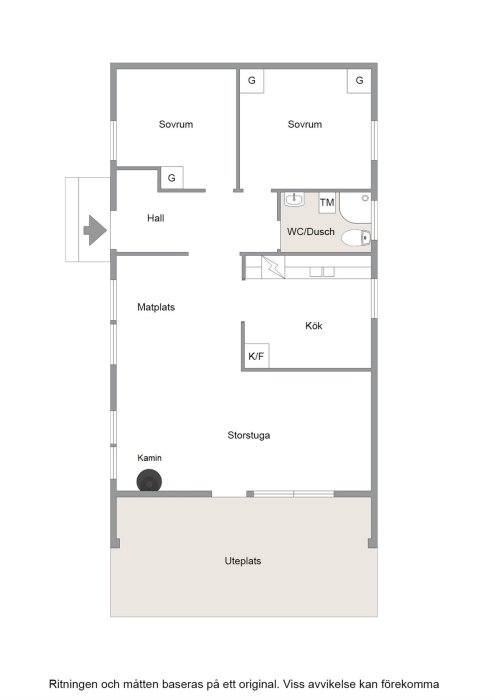
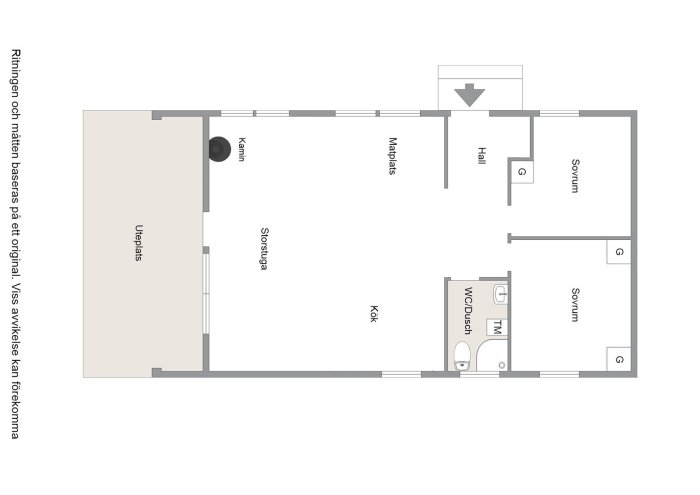
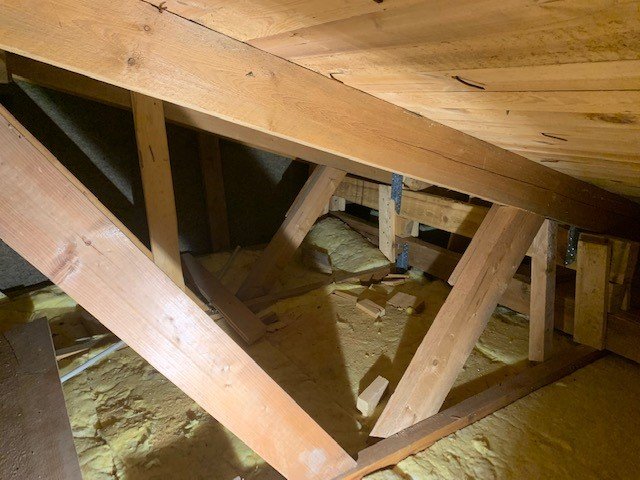
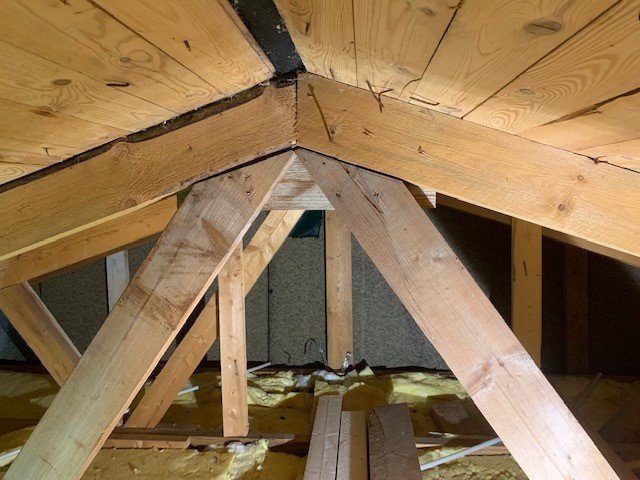
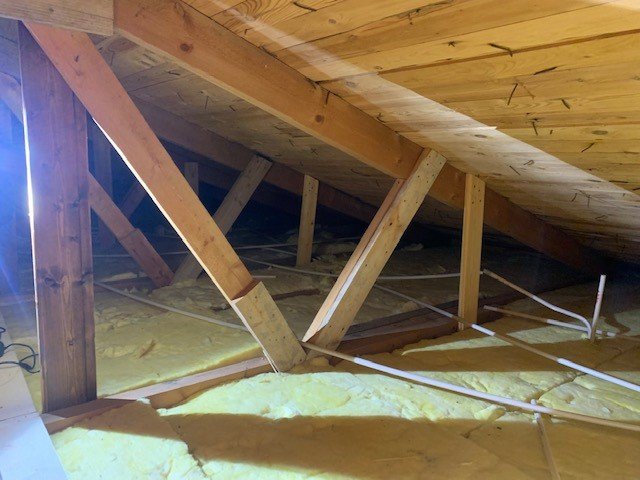
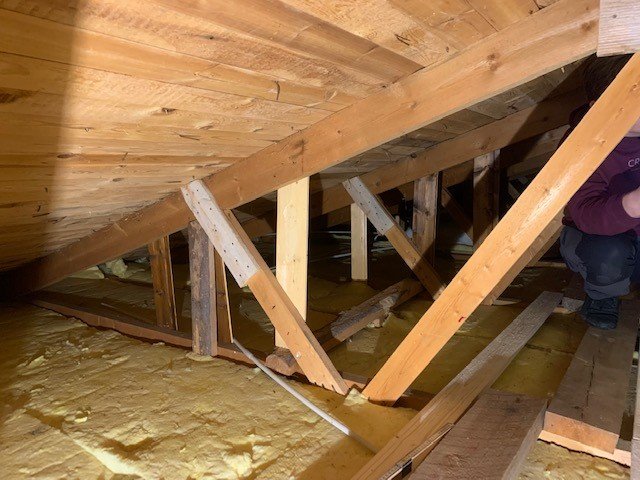
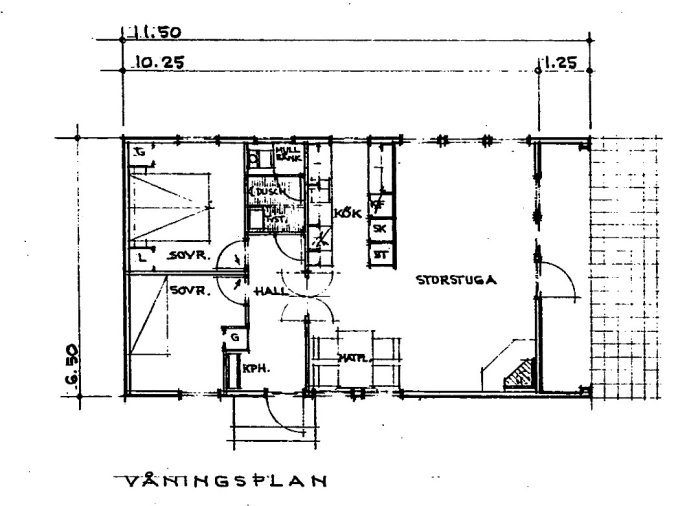
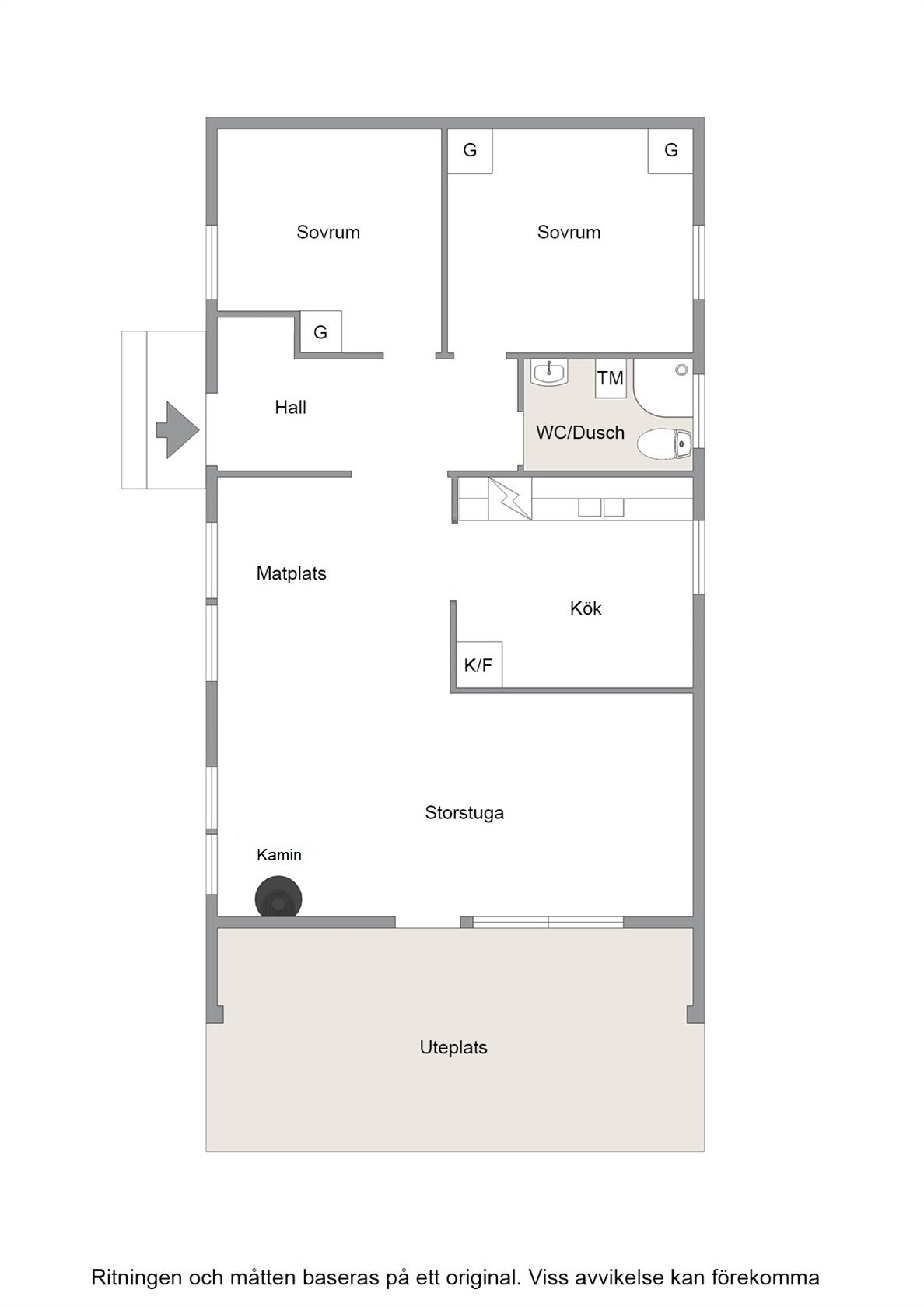
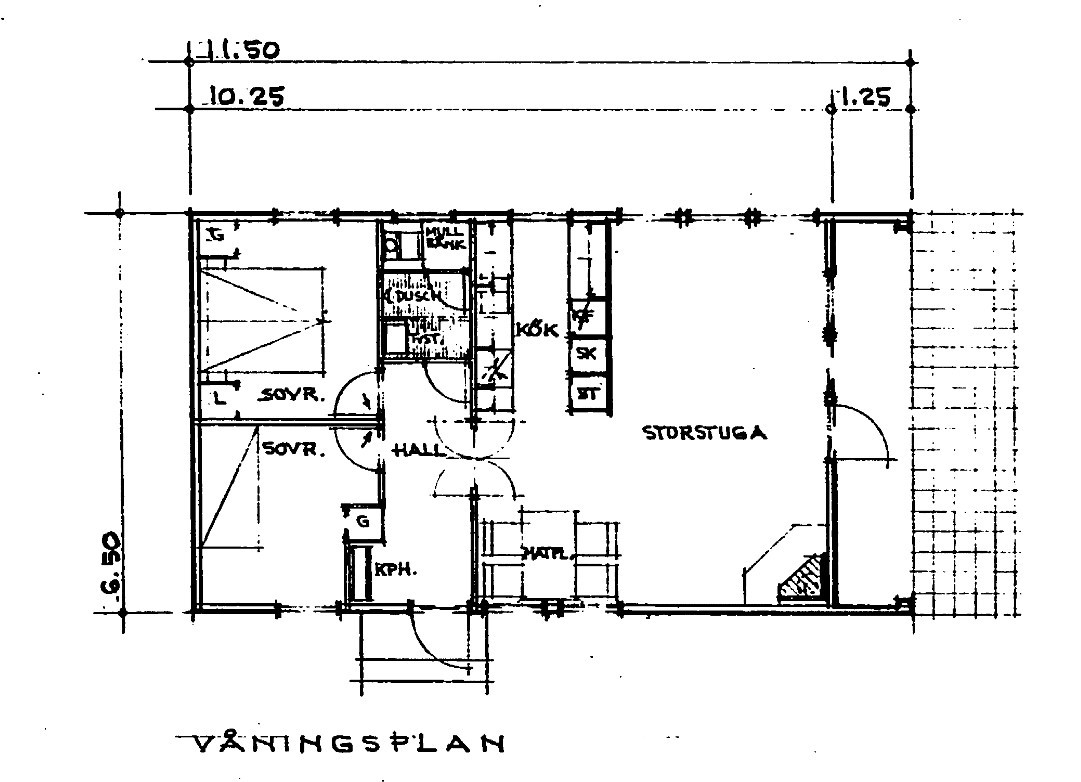
My partner and I have just bought our first house (or cottage...) and started renovating. The idea with the renovation is, among other things, to remove two walls to create a more open space between the kitchen and the living room. See the current and desired floor plans.
Current floor plan
Desired floor plan
I have demolished the wall that runs parallel to the short side of the house without any issues.
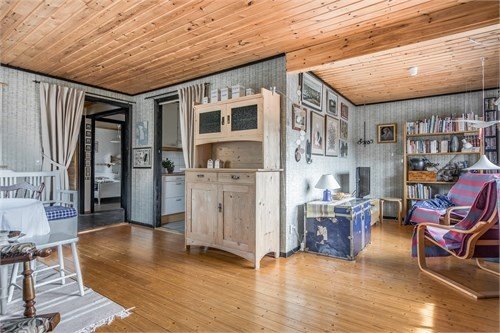
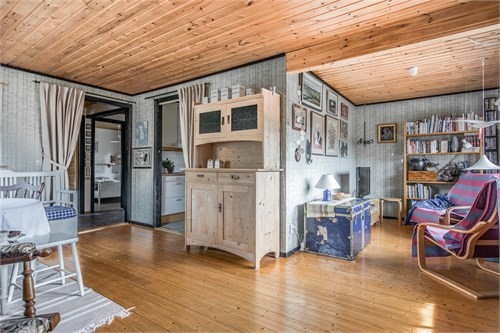
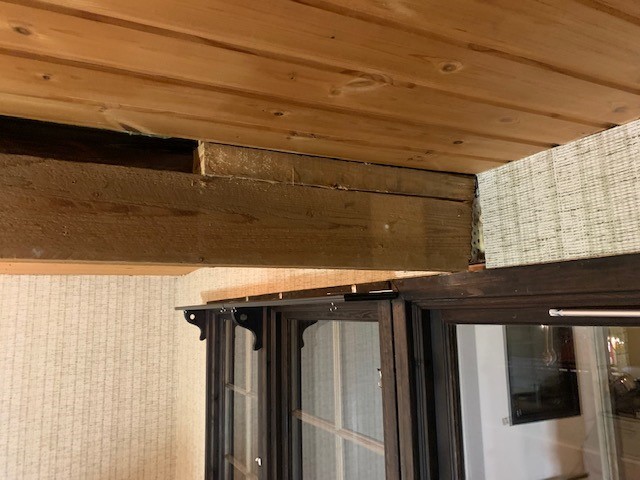
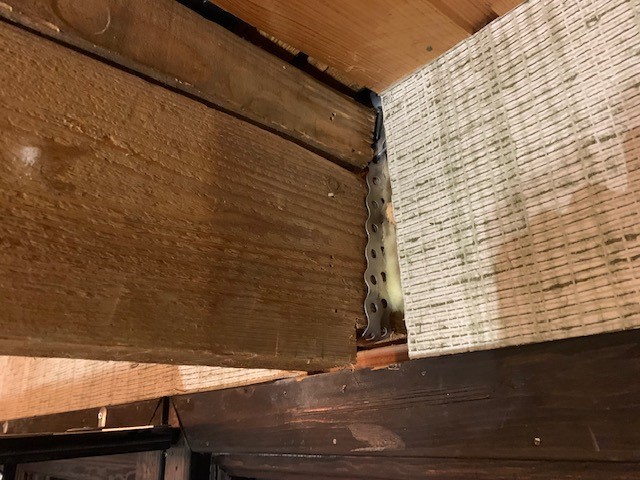
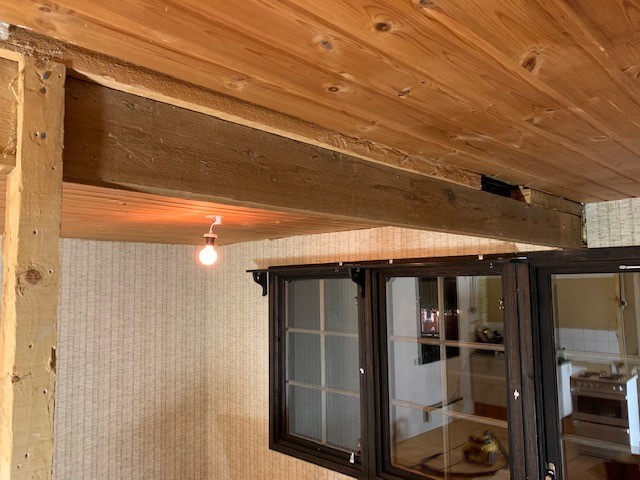
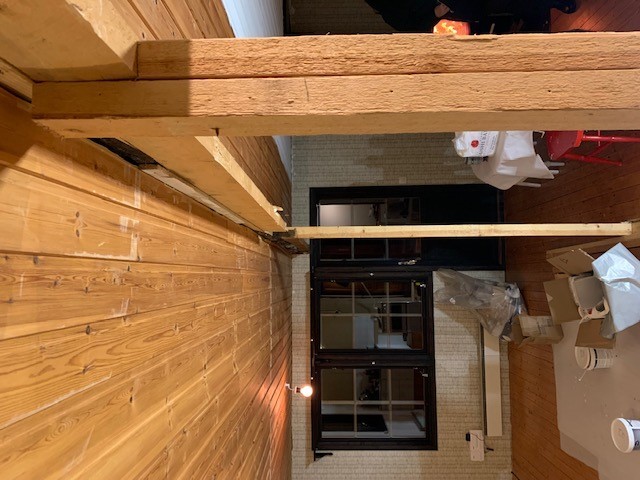
When it comes to the wall running parallel to the long side of the house, I became more uncertain. It runs roughly in the middle of the house, and where it ends, a "beam" clad with panel in the ceiling continues, resting above the patio door. I only have a photo from Hemnet showing the walls to be demolished and the "beam."
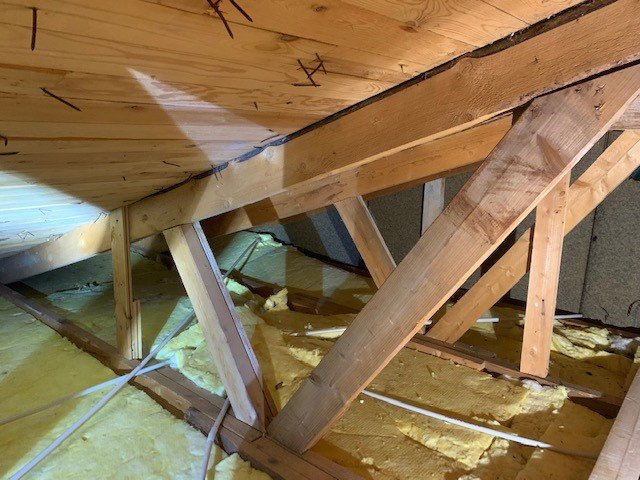
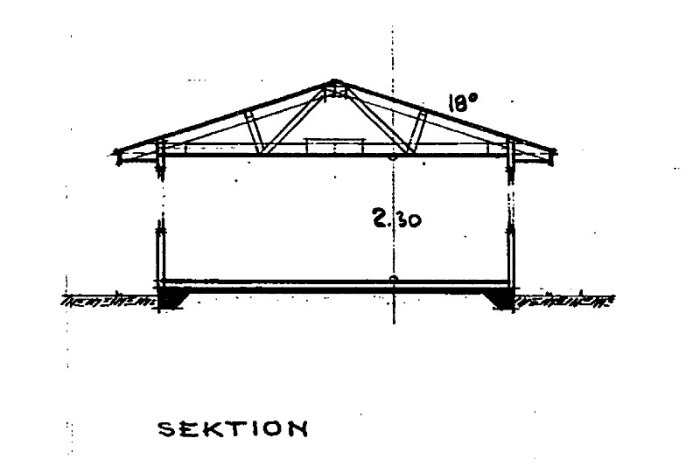
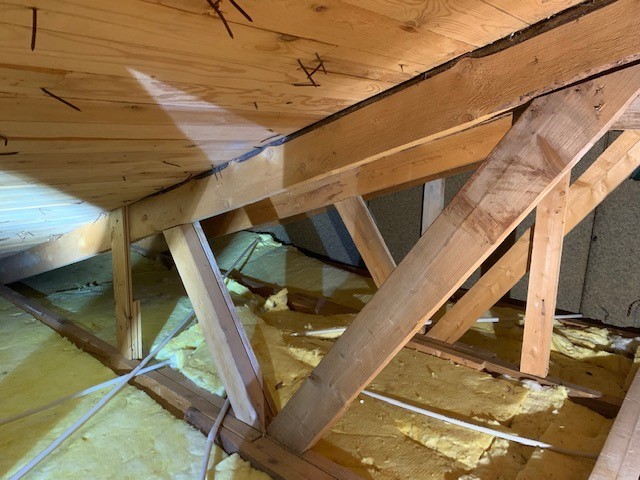
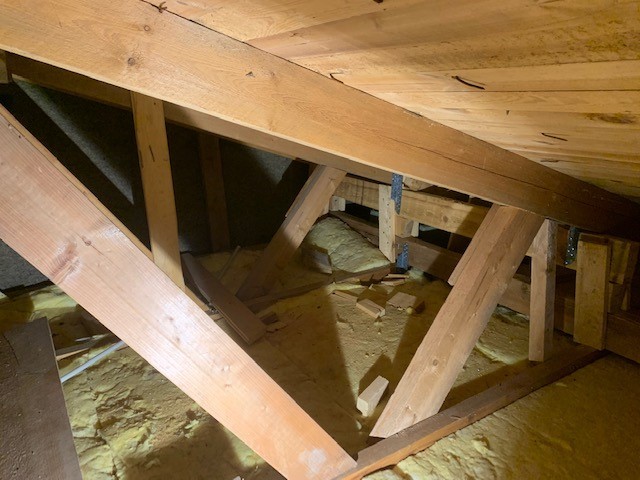
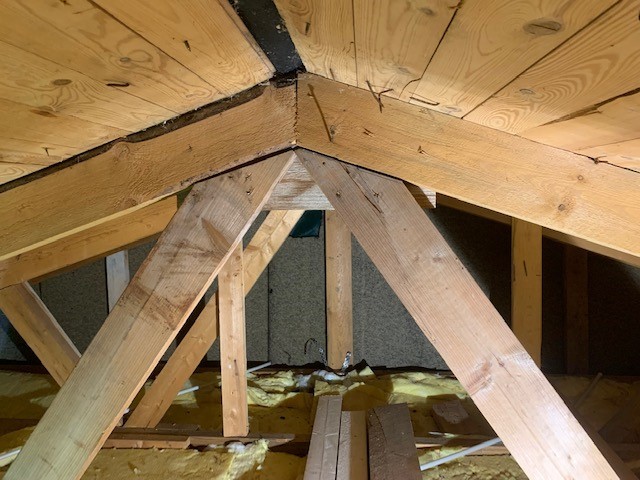
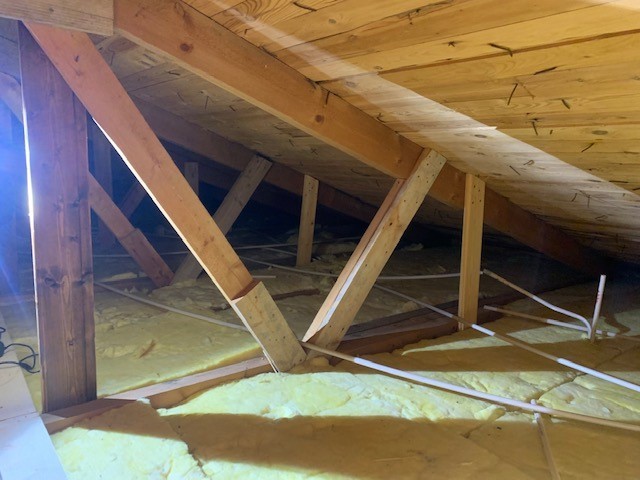
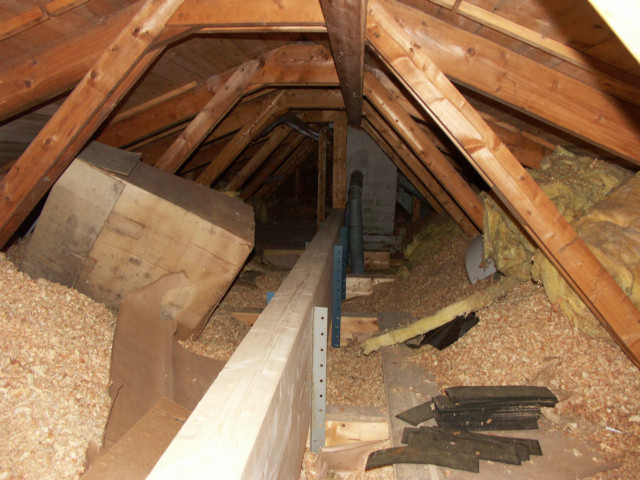
The house has W-trusses with the following dimensions:
Bottom chord 50x150
Top chord 50x125
Diagonal rods 35x85
CC 120
Plus, extra material that seemed to be left over during the build has been added
In addition, I have the following information:
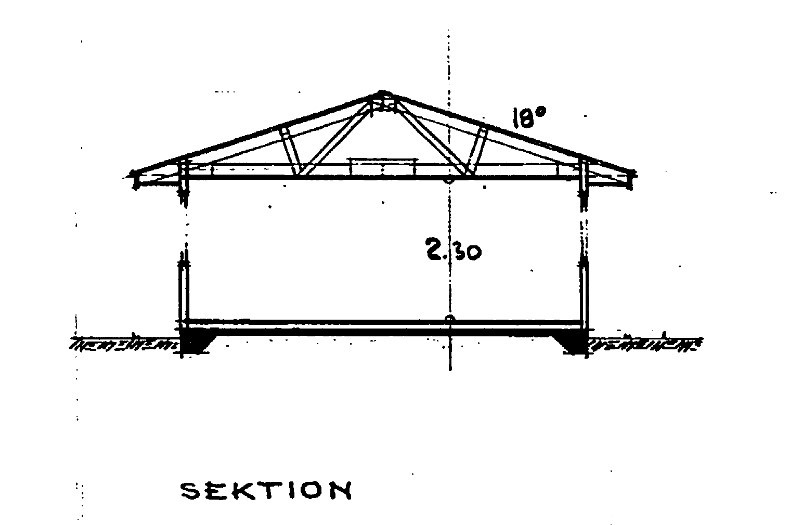
Roof slope 18°
Standing seam metal roof
Snow zone 3.5
It was previously a tiled roof, but it was replaced in 2016 with a standing seam metal roof
Snow guards
House width 6.50m
House length 11.50m
Attached are building permit drawings and a section drawing from '77
Can I demolish the wall without adding a beam? The distance from the exterior wall where the patio door is to the wall between the bedrooms will be about 7m long.
It turned out to be a long post with many pictures; I hope it is understandable.
The beam suggests that the wall against the kitchen cannot be removed without arranging support under the middle of the truss/load transfer. However, the original drawings compared to how it looks today make me confused.
The dimensions of the upper frame are quite weak; I would at least assume that a supporting beam or central wall is needed until someone whose expertise is reliable determines that this is not the case.
In comparison to the recommendations from Träguiden for the dimensions of the top chord of a W-truss with a 14° pitch and a span of up to 7 meters in snow zone 3.5, there's quite a significant difference. They suggest 45x195! Admittedly, the snow load map has been redrawn several times since 1977, and the reporting principle has partially changed, but the change doesn't explain the difference in dimensioning. My guess is that the building permit drawing is a type drawing that, during construction, was supplemented with a beam through the living room and a wall into the kitchen. You cannot remove the wall to the kitchen, as the beam will fall down. The beam rests on that wall. What you can do is 1) nothing (cheapest), 2) replace the beam with a longer one (which will then need to be stronger), or 3) reinforce the top chords of the trusses, at least in the affected part of the roof (a lot of work in a cramped space).
Thank you for two very informative answers. I suspected there would be problems.
Is it physically possible/reasonable to do according to 2) and replace the beam with a longer one that runs all the way from the short side of the house to the wall between the bedrooms? I'd prefer to avoid a pillar on that stretch which will be about 7m.
3) How do you go about reinforcing the headers?
If it turns out that it is not physically possible or reasonable with a 7m beam without pillars, is it possible to offset with a beam on top of the rafters in the attic?
I see another thing, the electrical wiring above the insulation, have you removed anything? Normally, they should go under the insulation to prevent condensation, which can drip into junction boxes/switches/wall outlets. It's okay if there is cable in the conduits and not loose wires. Check how it looks in a junction box, there should not be any moisture.
Is it physically possible/reasonable to do according to 2)
It depends on the dimensions you arrive at. It's not entirely clear how to calculate. What are the dimensions of the existing beam (the one in the living room ceiling)?
Strengthening the top chords is easiest by gluing and screwing joists from below. You need to loosen a couple of diagonal braces at a time. It's doable if you do it in the summer.
GAlfredK said:
is it then possible to install a beam on top of the rafters in the attic?
A bit tricky to get it there. You probably don't want to make a hole in the metal roof, do you?
Det beror på vilka dimensioner man kommer fram till. Det är inte helt solklart hur man räkar. Vad har den befintliga balken för mått (den i taket i vardagsrummet)?
Förstärker överrmarna gör man enklast genom att limskruva reglar underifrån. Man får lossa ett par diagonalstänger i taget. Det går bra om man gör det på sommaren.
Lite knöligt att få dit den. Du vill väl inte gärna ta hål på plåttaket?
Jag kan ta bättre bilder och mått på den befintliga balken ikväll.
Jag tänkte mig i såfall att öppna gavelspetsen och trä in balken den vägen.
But you have to rotate it 90° between rafters that have many pins in the way. I think it's too much to lift yourself by your own bootstrap.
I don't know if I'm completely off track, but if you lay it across the tie beams so that it rests on the tie beam that is supported by the wall plate on the short side, and then let it rest on the tie beam that is supported by the wall between the bedrooms. And thereafter attach the other tie beams to the laminated beam?
Something like that, found the picture when I googled.
Though perhaps that doesn't help the issue that the upper frames are too weak? But on the other hand, I'm wondering if the existing wall and beam do?
I see another thing, the electrical wiring above the insulation, have you removed anything? Normally they should go under the insulation to avoid condensation in them, which can drip into junction boxes/switches/power outlets. It's okay if it's cable in the pipes and not loose wires. Check how it looks in any junction box, there should not be moisture.
Thanks for the good point. Haven't removed anything.
The purest solution is to reinforce the top chords. Trusses should preferably only be loaded at their nodes so that both top chords and bottom chords are moment-free, which is not the case with beams supporting the bottom chords in the middle. I am awaiting the measurements of the existing beam.
It is fine to add insulation on top, and then the pipes will be in an insulated space; otherwise, it is a lot of work to move them down, not worth the trouble.
The purest solution is to reinforce the upper frames. Trusses should preferably only be loaded at their nodes so that both upper and lower frames are moment-free, which is not the case with beams supporting the lower frames in the middle. I am waiting for the measurements of the existing beam.
I have now taken some pictures and measurements of the "beam".
The one above the patio door is 50x150 with a 50x75 above.
The one continuing in the "kitchen wall" is 45x120 with a 50x75 above.
The "support" of the beam above the door section could have looked better. Calculating backwards, it is a quite small load that the beam (50x150) can handle. If you transfer that load condition to a 7 m long beam, it would need to have the dimension 50x300 with the same type of timber. A corresponding glulam beam could have the dimension 115x225.
The beam's "support" over the door section could have looked better. Working backwards, it's a relatively small load that the beam (50x150) can handle. Transferring that load condition to a 7 m long beam, it would need to have dimensions of 50x300 with the same type of wood. A corresponding glulam beam could have dimensions of 115x225.
Okay, yes I was surprised myself when I saw the beam's support over the door section. I'll have to figure out a better solution for that.
How many columns are accounted for then?
Can I manage this span without any columns?
Again, big thanks for helping out
Click here to reply
Vi vill skicka notiser för ämnen du bevakar och händelser som berör dig.