
9,886 views ·
10 replies
10k views
10 replies
Wide spackling or put up drywall
We have been planning to wallpaper a room and started removing the old wallpaper. The old wallpaper had peeled off in many places, and when we got quite a bit down, we noticed that the wall is also quite uneven and bulging. Initially, I thought about skim coating it, but I'm beginning to realize it would be quite a complex job. The alternative is to put up renovation drywall. Or to completely tear down the old walls, which are 15mm masonite, and then put up new drywall. Behind the masonite is solid wood sheathing, so there shouldn't be any problem putting up new boards.
What do you think is best, to spackle, put up renovation drywall, or tear down and put up new drywall? I want to make it as good/easy as possible around the door and window trims. The door trim is against one corner, so putting renovation drywall there directly would seem a bit odd. Or how is it best to handle new drywall if you want to keep the current trim? Can you remove these and put up new drywall and then reuse them? The door and window trims are kind of integrated with the frames. See pictures for how it is resolved around the door.
What do you think is best, to spackle, put up renovation drywall, or tear down and put up new drywall? I want to make it as good/easy as possible around the door and window trims. The door trim is against one corner, so putting renovation drywall there directly would seem a bit odd. Or how is it best to handle new drywall if you want to keep the current trim? Can you remove these and put up new drywall and then reuse them? The door and window trims are kind of integrated with the frames. See pictures for how it is resolved around the door.
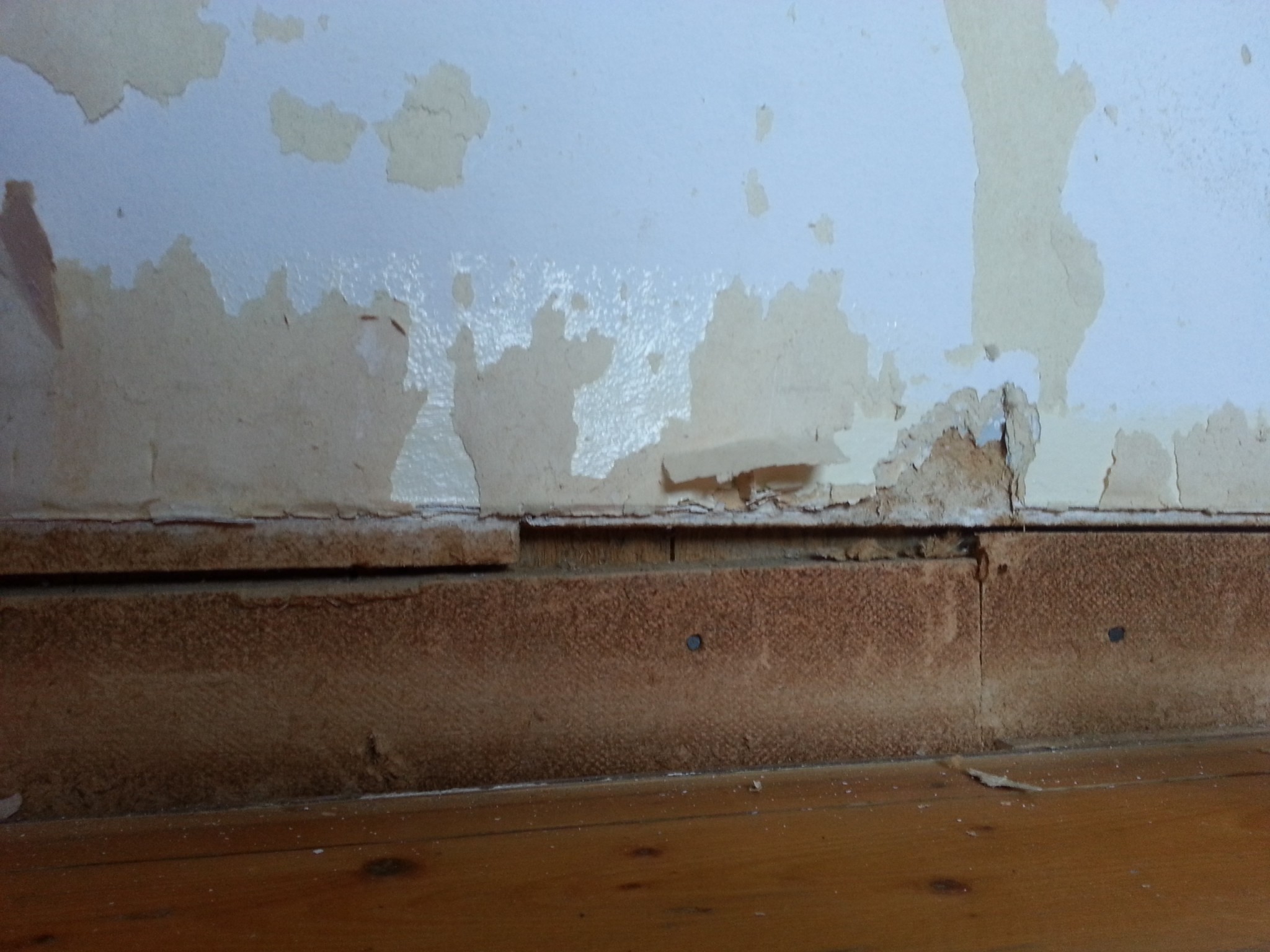
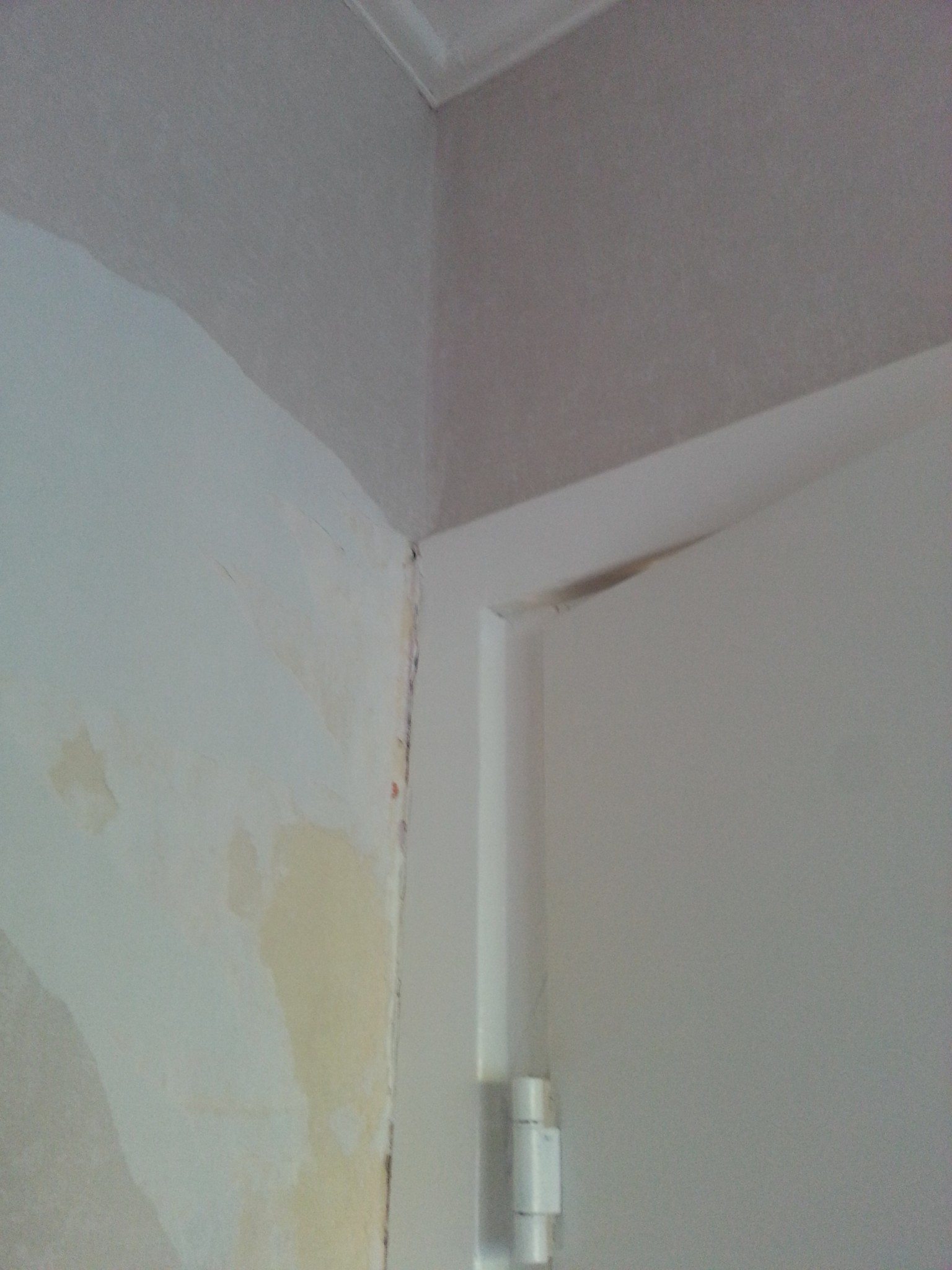
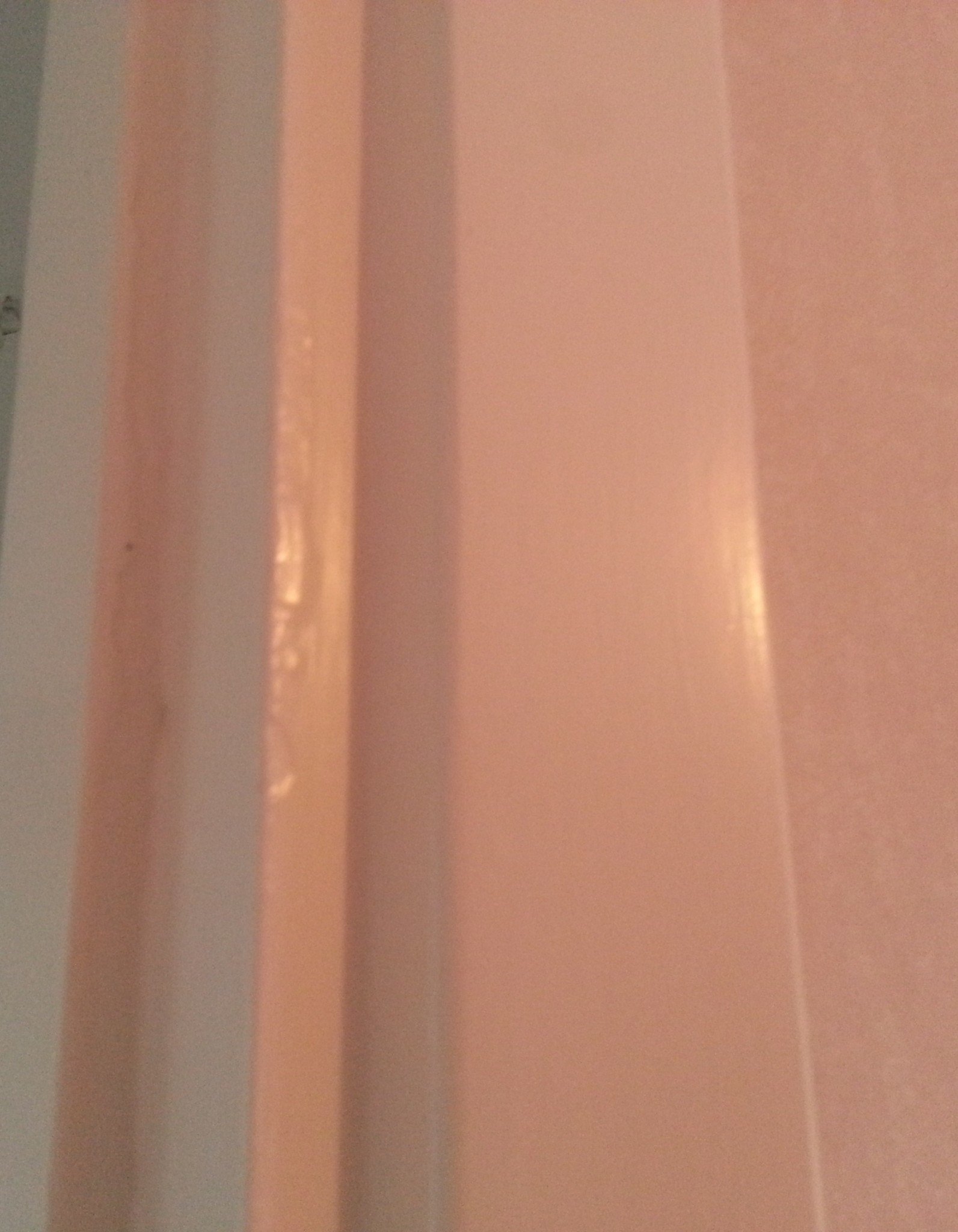
I would probably have torn down the masonite and put up regular drywall. Partly because renovation drywall is more expensive than regular drywall, and if the wall is uneven, it could partly be due to the masonite, it feels more like a source of error than a help to have it behind. Then it also makes it easier for your door casings.



Looks like tretex (porous board). It's a crap material in my opinion. Tear it down and put up drywall...
You can remove the trims if you're very careful. They can be brittle if they are old. Often it's better to pull the nail through the trim than to pull it out (as big splinters can break off).
You can remove the trims if you're very careful. They can be brittle if they are old. Often it's better to pull the nail through the trim than to pull it out (as big splinters can break off).
Thanks for the answers. Leaning towards tearing everything down and putting up drywall.
I'm considering how it will be insulation-wise with drywall instead of masonite/tretex. One wall is an exterior wall with a window, and another partially goes against the garage. I'm not sure how the house is insulated otherwise. But do you think it can make a difference?
Then it will probably be 13 mm drywall. How do you think the solution against the casing will be since masonite/tretex is 15 mm? I don't want a gap against the wall. Maybe it can be solved with some form of trim piece?
I'm considering how it will be insulation-wise with drywall instead of masonite/tretex. One wall is an exterior wall with a window, and another partially goes against the garage. I'm not sure how the house is insulated otherwise. But do you think it can make a difference?
Then it will probably be 13 mm drywall. How do you think the solution against the casing will be since masonite/tretex is 15 mm? I don't want a gap against the wall. Maybe it can be solved with some form of trim piece?
It is probably tretex that was the insulating board of the past, it has its advantages, but doesn't always give a smooth wall 
I would try to keep the tretex board and put gypsum on top. (mainly to retain the insulation and avoid the work of removing it) if you can remove the trim, maybe you can make room for the gypsum board?
I would try to keep the tretex board and put gypsum on top. (mainly to retain the insulation and avoid the work of removing it) if you can remove the trim, maybe you can make room for the gypsum board?
Will probably keep it on the outer walls to retain some insulation. But have now torn down the Tretex on the inner walls that were in the worst condition. How even a base is needed to install 13 mm gypsum. The rough plank that was underneath has some level differences in certain places. Do you need to put up battens to make it completely flat, or can you try to smooth it with a planer and put thin masonite in between?
As long as there aren't deep waves, 13mm gypsum can handle unevenness. I believe that if you measure with a straightedge or level on the wall, you can handle waves of 5-10mm without problems, and up to 20-25mm with some form of mortar or adhesive. Some screws for initial strength, and the adhesive to make it adhere to the waves.
Ok! Went over with a level and it's around 5 mm. Some planks bulge out a bit more. But then I can put them up with just screws without worrying that there will be any visible unevenness on the drywall?
Is it just individual planks or the entire wall?
If it's planks that sink in relative to the rest of the wall, it's not a problem.
But if they stick out, it will show through when the rest of the board is pressed against the wall, in that case, I would plane a bit on those you were considering.
If it's planks that sink in relative to the rest of the wall, it's not a problem.
But if they stick out, it will show through when the rest of the board is pressed against the wall, in that case, I would plane a bit on those you were considering.
Click here to reply
Similar threads
-
Flytta elcentral eller sätta en till närmare kök?
El -
Set up sparse or not here? Picture
Building Materials and Construction Technology -
Ljusslinga altan: Ersätta solceller med led-driver?
Villalarm & Hemautomation -
Skall jag riva bort glasfiberväv eller bredspackla över?
Färg, Måla & Tapetsera -
Bredspackla på PIR skivor eller annat toppskickt
Isolering