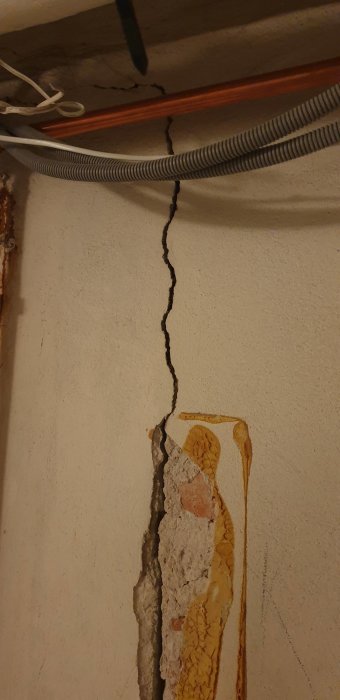
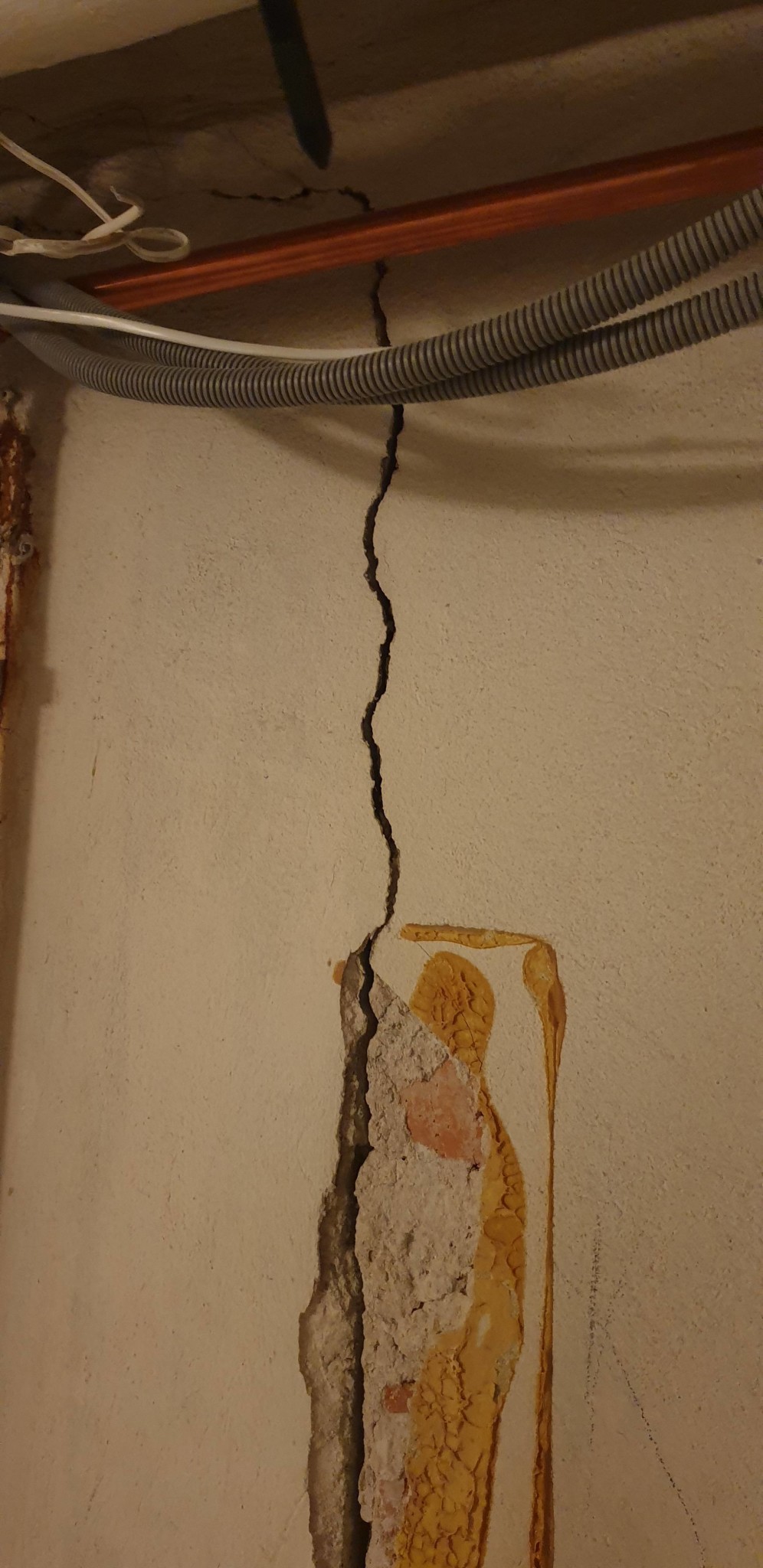
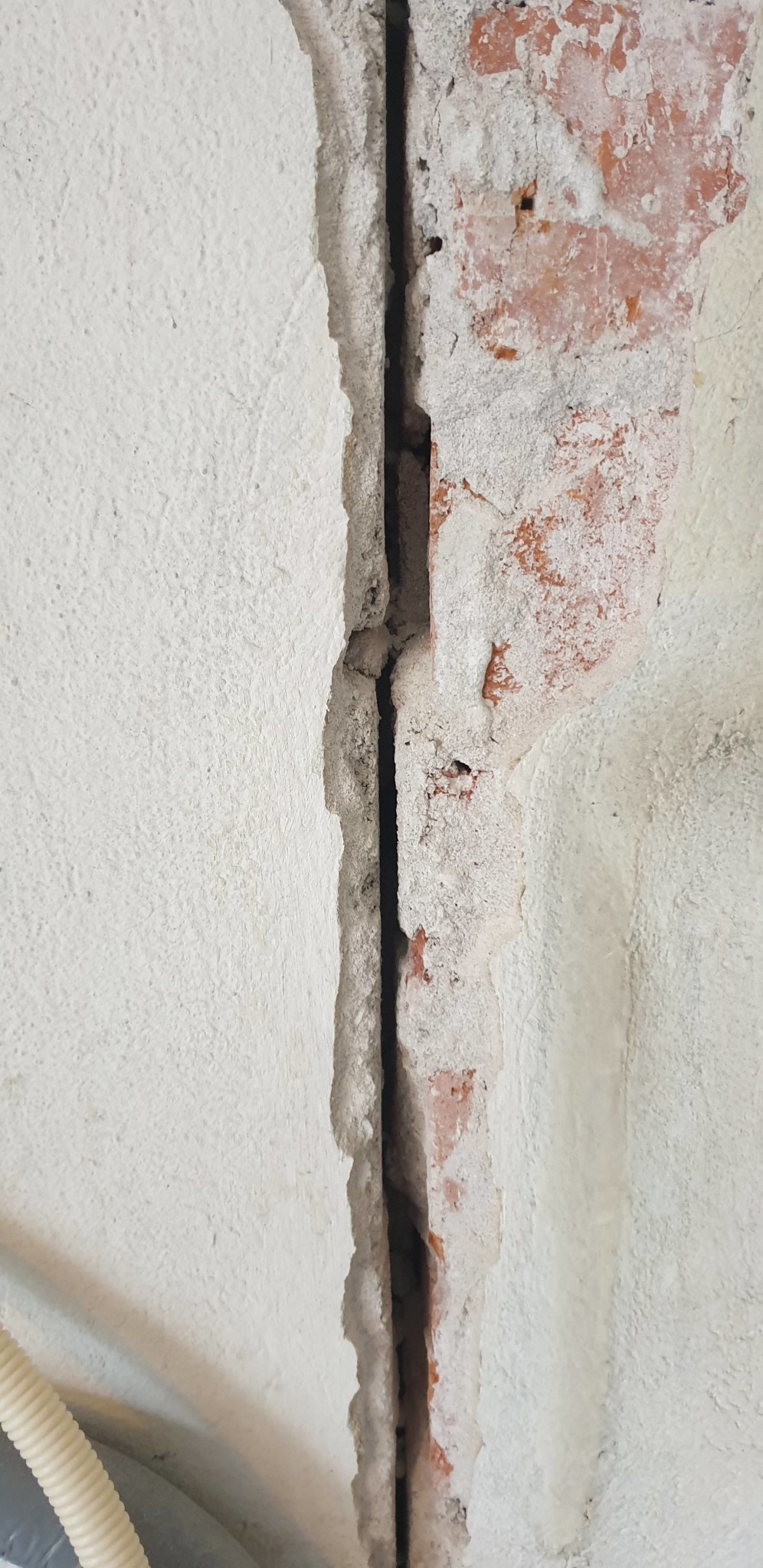
Discovered an old crack in the chimney breast when I removed a plasterboard wall. There's no doubt that the render should be lime mortar—the question is whether I should insert something else between the bricks where the crack is widest (about 1-1.5 cm).
I've read that there are sealants in tubes for this—but I'm unsure if that's wise in a chimney breast used for heating (wood stove in winter).
The crack runs alongside the smoke and ventilation channels—so tightness is not an issue in this case.
If it looks like that, it must be due to something... I would probably strip away the remaining plaster and see if the crack goes through the stones as well. Or is there some other kind of "joint" there?
If it looks like that, it must be due to something...I would probably remove other plaster and see if the crack goes through the stones too. Or is there some other kind of "joint" there?
Mm. My thought too - it's probably because they changed the pipe to the street many years ago and then dug under the house by that wall to connect it - probably filled it in the wrong way and caused a settlement (30 years ago..) on the other side of the wall the crack isn't visible - we've lived there for 12 years so it's old sins..
I'm going to chip away more so I can see how bad it is...
Have knocked down along the crack now. It is a natural straight gap - no bricks that are cracked.
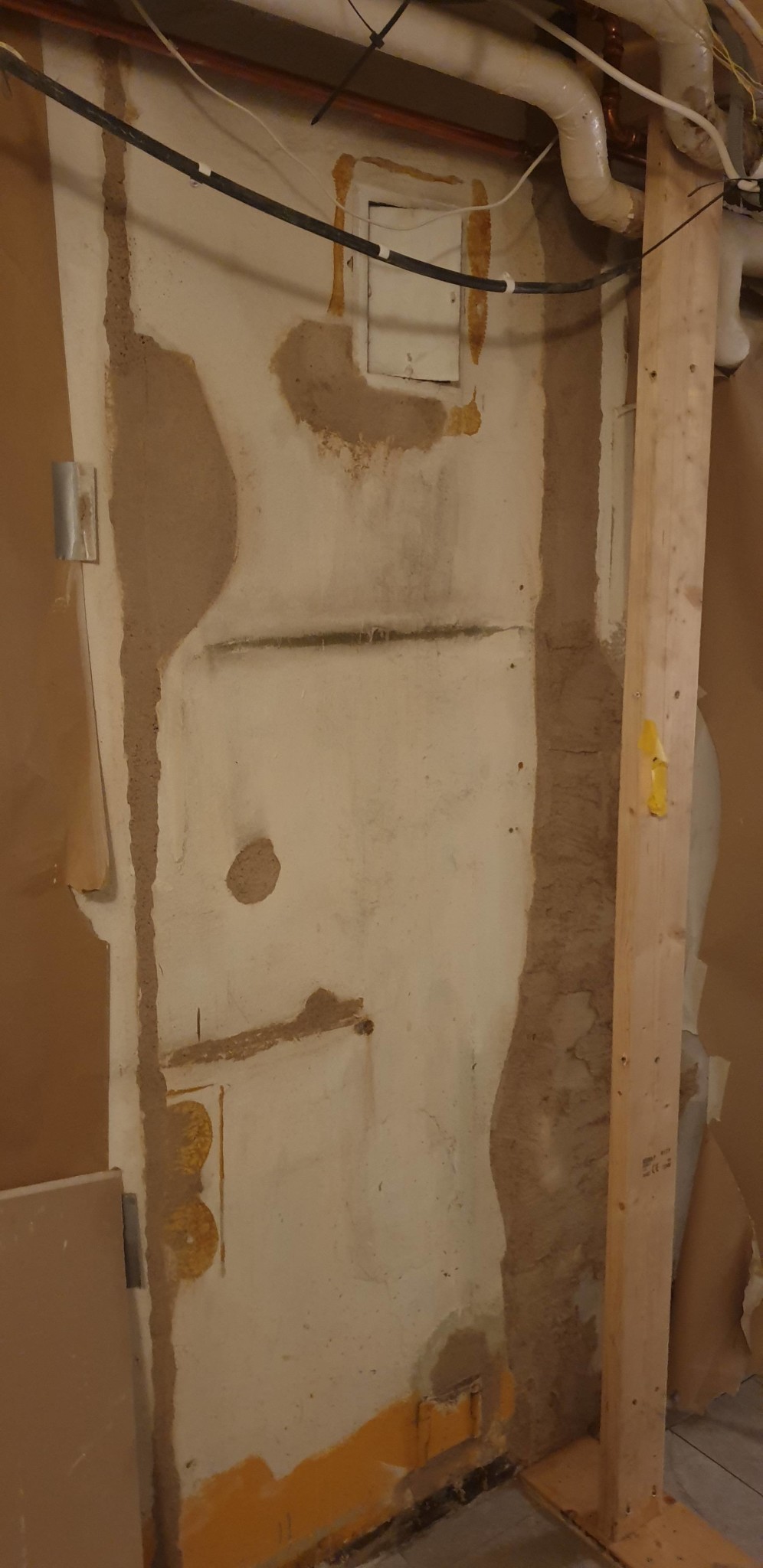
The plan is now to brush and water - then insert new lime mortar and plaster!
But if no stone is cracked, then it must be something extra mortared onto the primary stack itself? Otherwise, the stone is bonded.
Correctly observed - unless they built the chimney stack separately during the 1939 construction, the left side must have been built up later - however, it's not visible on any of the original drawings. The entire wall is load-bearing. They might have opened up a door there at some point in history that was later closed up...
Anyway - the problem is now solved (used Weber 148 Hydraulic lime mortar)
Click here to reply
Vi vill skicka notiser för ämnen du bevakar och händelser som berör dig.